News you may have missed #0102

  • NSA helped UK arrest convicted bomb plotters. Email correspondence intercepted by the US National Security Agency in 2006 helped lead to the arrest and conviction of three Muslim militants, who were planning attacks in Britain. IntelNews learns that this case was brought up by American intelligence officials who recently threatened to terminate all intelligence cooperation with the UK, in reaction to the release from a Scottish prison of convicted Libyan bomber Abdelbaset al-Megrahi.
  • Bush Administration tried to alter “enforced disappearances” international treaty standards. The aim of the global treaty, long supported by the United States, was to end official kidnappings, detentions and killings like those that plagued Latin America in the 1970s and 1980s, and that allegedly still occur in Russia, China, Iran, Colombia, Sri Lanka and elsewhere. But the documents suggest that initial US support for the negotiations collided head-on with the then-undisclosed goal of seizing suspected terrorists anywhere in the world for questioning by CIA interrogators or indefinite detention by the US military at foreign sites. So the Bush Administration tried to alter the language of the treaty from 2003 to 2006, reveals The Washington Post.

Bookmark and Share

News you may have missed #0098

Bookmark and Share

News you may have missed #0095

  • New revelations about Bulgarian domestic spying case. It appears that Operation GALLERY (a.k.a. Operation GALERIA), by the Bulgarian State Agency for National Security (DANS), was primarily aimed at the Bulgarian tabloid newspaper Weekend and journalist Dimitar Zlatkov. Journalist Ognyan Stefanov, who was nearly beaten to death after authoring an article implicating DANS officials in illicit trafficking activities (see previous intelNews coverage), appears to have been simply collateral damage.
  • Taliban use CIA-supplied mines against US-led forces in Afghanistan. Evidence from the US Defense Department, Canadian forces in Afghanistan and the Taliban itself suggest that the increased damage to NATO tanks by Taliban forces has come from anti-tank mines provided by the US to the jihadi movement in Afghanistan in the 1980s.
  • Massive domestic spying revealed in Russia. From January to June this year, Russian intelligence agents surreptitiously opened 115,000 letters, listened in on 64,000 personal phone conversations, and broke into 11,000 private homes according to information from Russia’s Supreme Court.

Bookmark and Share

Colombian security agency intensifies illegal wiretaps, intimidation

Semana cover

Semana cover

By JOSEPH FITSANAKIS | intelNews.org |
You would think that right after the most extensive purge in its modern history, Colombia’s Administrative Department of Security (DAS) would scale down its illegal activities. But, according to the country’s leading weekly publication, Semana, illegal intelligence activities by DAS agents have intensified in recent months. In its lead article this week, the magazine says it has in its possession recordings that prove DAS continues to monitor the communications of politicians, journalists, human rights activists, union officials, and even Supreme Court Judges. Earlier this year, the Colombian government was forced to fire 33 DAS agents for illegally wiretapping the phones of several public figures, including the chief of the Colombian National Police, minister of defense Juan Manuel Santos, former President Cesar Gaviria, supreme court judges, prominent journalists, union leaders and human rights campaigners. It this week’s report, Semana says that DAS operatives are now being used by the government to intimidate members of Congress, who may have to vote in a possible referendum to permit President Alvaro Uribe to run for a third term, which is currently unconstitutional. Read more of this post

News you may have missed #0092

Bookmark and Share

News you may have missed #0088

Bookmark and Share

Has Skype’s VOIP encryption been broken?

NSA HQ

NSA HQ

By IAN ALLEN | intelNews.org |
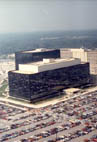
I have explained before that the US National Security Agency (NSA) and other intelligence agencies have found it impossible to intercept Skype’s instant messaging and voice traffic. Like other voice-over-Internet protocol (VOIP) communications providers, Skype uses technology that converts audio signals to data, and transports them through most of the Internet infrastructure in binary, rather than audio, format. Furthermore, Skype uses very complex algorithms to encrypt its customers’ communications. Skype has repeatedly pointed to the technical complexities of VOIP communications, arguing that it is often technically impossible to facilitate communications interception requests by government authorities. There are rumors among communications interception specialists that the NSA is offering billions to anyone who can come up with a reliable eavesdropping model for Skype. Remarkably, on August 25, a Swiss software developer released what he claims is the source code of a program for tapping into encrypted Skype communications. I don’t know whether the source code (essentially a trojan) is effective. He claims it is. If this is confirmed, then several people in Fort George F. Meade, Maryland, will be really close paying attention.

Bookmark and Share

British report reveals over 500,000 domestic spying requests in 2008

ICC report

ICC report

By JOSEPH FITSANAKIS | intelNews.org |
An annual report published Monday by Britain’s Interception of Communications Commissioner has revealed that UK government agencies made 504,073 official requests for communications data of citizens in 2008. The report by Sir Paul Kennedy shows that UK authorities authorized every single one of the half a million requests for access to telephone and email traffic data, such as phone numbers dialed and the dates and times of email exchanges. The authorizations did not cover the content of communications. The total number of requests for 2008 amount to more than 1,400 a day and nearly 10,000 a week. Overall, around 1,2 million official government requests for access to communications data have been made in Britain from 2006 to 2008 –the equivalent of one request for every 21 adults living in Britain.

Bookmark and Share

News you may have missed #0056

  • South Korean spy agency seeks increased access to financial intelligence. The National Intelligence Service is pushing for legal revisions that will allow it to access information on financial transactions of over 20 million won (US$16,000) without a warrant. The agency claims the new powers will help track down “terrorism-related funds”.
  • Nepal to create new spy agency. The Maoist Nepali government is preparing to set up a powerful intelligence body that will be directly accountable to the Prime Minister. IntelNews hears that Indian government advisors are actively involved in setting up the new agency, which will “gather information on foreign intervention in Nepal”.
  • Peru’s Defense minister denies alleged espionage against Chile. Rafael Rey has denied any participation by Peru’s government in the case of Business Track, a company accused of telephonic and electronic interception to Chilean Army officers.

Bookmark and Share

Charges finally announced in Colombia wiretap scandal

Alvaro Uribe

Alvaro Uribe

By IAN ALLEN | intelNews.org |
Colombia’s chief prosecutor has finally announced criminal charges against ten former government officials accused of spying on political opponents of Colombian President Alvaro Uribe. As intelNews reported in April, Colombia’s Administrative Department of Security (Departamento Administrativo de Seguridad, or DAS) suffered one of the most extensive purges in its history, when 22 (later joined by 11 more) of its detectives were fired for illegally wiretapping several public figures. Those targeted by the wiretaps included the chief of the Colombian National Police, minister of defense Juan Manuel Santos, former President Cesar Gaviria, supreme court judges, prominent journalists, union leaders and human rights campaigners. Read more of this post

NSA spying more aggressive than ever, says Bamford

James Bamford

James Bamford

By JOSEPH FITSANAKIS | intelNews.org |
The US National Security Agency (NSA) has for the first time in its history appointed a “director of compliance”, whose office will supervise the lawfulness of NSA’s communications surveillance and other spy activities. The Agency, America’s largest intelligence organization, which is tasked with worldwide communications surveillance as well as communications security, has appointed John DeLong to the new post. But in a new column for Salon magazine, James Bamford argues that the gigantic agency is still overstepping its legal framework in both domestic and international spying. Read more of this post

Wiretap whistleblower shunned by US Congress, media

Mark Klein

Mark Klein

By IAN ALLEN | intelNews.org |
Those of you who have been following the ongoing revelations about STELLAR WIND, the National Security Agency (NSA) warrantless wiretapping scheme authorized by the Bush Administration in the wake of 9/11, will know about Thomas M. Tamm. Tamm was the Justice Department official who in 2005 first notified The New York Times about the existence of the project. But Tamm was not the only whistleblower in the case. He was joined soon afterwards by another insider, Mark Klein. Klein had just retired from AT&T as a communications technician when he read The New York Times revelations about STELLAR WIND. As soon as he read the paper’s vague description of the NSA project, Klein realized he had in his possession AT&T documents describing exactly how the company shared its customers’ telephone communications with the NSA, through a secret room at the AT&T Folsom Street facility in San Francisco. To this day, Klein remains the only AT&T employee to have come forward with information on STELLAR WIND. But, apparently, nobody cares. Read more of this post

Attorney behind NSA domestic wiretapping defends his views

John Yoo

John Yoo

By JOSEPH FITSANAKIS | intelNews.org |
The former US Justice Department lawyer who authored legal memos sanctioning the legality of the Bush administration’s secret wiretapping program has defended his views. John Yoo, who on 9/11 was a deputy assistant attorney general in the Justice Department’s Office of Legal Counsel, has penned an article in The Wall Street Journal, in which he voices disagreement over a recently published US government report that criticizes the wiretap program’s secrecy and dubious legal basis. The report was authored by the Offices of Inspectors General of the Department of Defense, Department of Justice, CIA, NSA, and Office of the Director of National Intelligence. It says that the Bush administration’s decision to keep NSA’s domestic wiretap program secret even from senior Department of Justice and intelligence officials hampered the broader intelligence community’s ability to use the program’s output, and subverted the government’s ethical standing in the so-called “war on terrorism”. Read more of this post

News you may have missed #0029

  • Iranians revolting against Nokia for alleged spying complicity. Consumer sales of Nokia handsets in Iran have allegedly fallen by up to 50%, reportedly because of the company’s membership in the Nokia Siemens Networks (NSN) partnership. As intelNews has been pointing out since last month, NSN allegedly helped supply the Iranian government with some of the world’s most sophisticated communications surveillance systems.
  • Analysis: Why NSA’s Einstein 3 project is dangerous. This editorial argues that US President Barack Obama’s decision to proceed with a Bush administration plan to task the National Security Agency with protecting government computer traffic on private-sector networks is “antithetical to basic civil liberties and privacy protections” in the United States.
  • New US government report says Bush secrecy hampered intelligence effectiveness. A new report from the Offices of Inspectors General of the Department of Defense, Department of Justice, CIA, NSA, and Office of the Director of National Intelligence, says that the Bush administration’s decision to keep NSA’s domestic wiretap program secret seriously hampered the broader intelligence community’s ability to use the program’s output.

Bookmark and Share

News you may have missed #0024

  • Guantánamo prisoner asked to spy on homeland radicals. Umar Abdulayev, from Tajikistan, who has been held in Guantánamo for seven years, claims in court filings that he was visited by Tajik intelligence agents in Guantánamo, who asked him to spy on Tajik Muslim radicals in exchange for his release. Abdulayev has refused the offer and has asked for asylum at a third country.
  • We were not hacked, says NZ spy agency. A New Zealand Government Communications Security Bureau (GCSB) spokesman has denied the agency’s website was hacked on July 9. Those visiting the GCSB website on that day were presented with an error message.
  • Saudi charity lawyers ask federal judge to outlaw NSA wiretap program. Saudi-based charity Al-Haramain was taken to court in September 2004 by the US government, which accused it of maintaining terrorist links. But its lawyers have managed to reverse the case, and may now be close to getting a US federal judge to rule against warrantless NSA wiretapping.
  • Cyber attacks came from 16 countries. South Korea’s National Intelligence Service (NIS) officials have disclosed that the cyberattacks that paralyzed major South Korean websites last weekend were mounted from at least 16 different countries. Earlier this week, NIS said it believed North Korea or pro-Pyongyang forces were behind the attacks, which also affected US government websites.

Bookmark and Share