News you may have missed #783
August 23, 2012 Leave a comment
 By IAN ALLEN | intelNews.org |
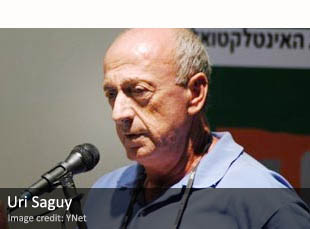
►►Israeli ex-intel chief says warns of ‘hysteria’ over Iran. Major General Uri Saguy (a.k.a. Uri Sagi), who was head of the IDF’s Operations Directorate during the 1982 Lebanon war, and Military Intelligence chief from 1991 to 1995, has warned of an “orchestrated and purposely timed hysteria that puts the country into a state of anxiety, artificial or not”, regarding the Iranian nuclear issue. Saguy, who resigned from the IDF in 1995 due to a conflict between him and the Chief of General Staff, added that “it would be a mistake if Israel uses force, certainly now, in order to thwart the Iranian nuclear potential”. The essence of Saguy’s message, notes Ha’aretz‘s Amir Oren, is that Israel’s citizens cannot trust Defense Minister Ehud Barak or Prime Minister Benjamin Netanyahu.
►►Australian spy chief warns of economic espionage. The director-general of the Australian Security Intelligence Organisation, David Irvine, has warned that the online revolution has left Australian companies increasingly vulnerable to cyber attacks and commercial espionage. Speaking to a business audience in Canberra, Irvine said that most online attacks in the business world go undetected, despite growing awareness of the threat. Asked how much commercial cyber crime went undetected, he said: “I would be very surprised if we who are active in this area are picking up the greater proportion of it, in fact, quite the reverse”.
►►Top US military official objects to attack on Iran. As Israeli officials are telling local reporters that they’re really, really ready to attack Iran’s nuclear facilities, and they mean it this time, the top US military officer is saying what a terrible idea that would be. “I may not know about all of [Israel’s] capabilities”, said General Martin Dempsey, the chairman of the Joint Chiefs of Staff. “But I think that it’s a fair characterization to say that they could delay but not destroy Iran’s nuclear capabilities”. Left unsaid: in a few years, the US and Israel would be back to the same standoff with Iran —except this time it might do so amidst a proxy terrorist war to avenge the Iranians.









 intelNews.org
Australia fears Asia backlash over PRISM surveillance revelations
June 26, 2013 by Joseph Fitsanakis 8 Comments
The government of Australia is concerned that American whistleblower Edward Snowden may leak classified information that could damage Australia’s relations with its Asian neighbors, including China and Malaysia. Early this month, Snowden, a former technical assistant for the United States Central Intelligence Agency (CIA), disclosed the existence of PRISM, a clandestine electronic surveillance program operated by the US National Security Agency (NSA). Information provided by Snowden to British newspaper The Guardian suggests that Washington routinely shares PRISM intelligence with Canada, New Zealand, the United Kingdom and Australia. These four countries, along with the United States, are signatories to the so-called UKUSA agreement, a multilateral accord for cooperation in signals intelligence (SIGINT) collection, which was established secretly in 1946. Australian media reported on Wednesday that the Australian Parliament’s Joint Committee on Intelligence and Security had been briefed by senior intelligence officials on Australia’s role in PRISM. The Sydney Morning Herald said that David Irvine, Director of the Australian Security Intelligence Organisation, and Ian McKenzie, who heads Australia’s Defence Signals Directorate, were among those who briefed the parliamentary Committee. Its members were reportedly told that the disclosures about PRISM were likely to damage Canberra’s relations with several Asian countries, in ways that are difficult to predict. One unidentified Australian intelligence official told The Herald that Snowden had “very wide access” to classified information held by the NSA, and that some of it probably includes “much detail of communications intelligence cooperation between the US and Australia”. One source went as far as to say that Snowden’s disclosures have already “damaged […] Australia’s intelligence capabilities”. Read more of this post
Filed under Expert news and commentary on intelligence, espionage, spies and spying Tagged with ASIO, AUSCANZUKUS, Australia, China, David Irvine, Defence Signals Directorate (Australia), Edward Snowden, Ian McKenzie, intelligence cooperation, Malaysia, News, PRISM surveillance program, UKUSA, United States