News you may have missed #745

Sir Dominic AsquithBy IAN ALLEN | intelNews.org |
►►Algeria sentences man to 20 years for spying. Noureddine Benziane, an Algerian psychologist and expert on anti-terrorism, has been sentenced in absentia to 20 years in jail on conviction of spying after a stay in Iraq. According to the charge sheet, Benziane went to Iraq on humanitarian missions several times between 2005 and 2007, but he allegedly founded a training camp for potential suicide bombers of several nationalities. Benziane later acknowledged contacting several diplomatic missions in Algiers to give them details of the information he had recovered. However, he neglected to inform the Algerian security services of his findings, according to his prosecutors.
►►Egypt pulls TV ads warning foreigners may be spies. An unnamed Egyptian media official says authorities have pulled a television advertisement that warned against talking to foreigners who may be spies, after criticism that they fueled xenophobia. The official said Sunday that the ads were aired on state TV and private networks for a few days before Minister of Information Ahmed Anis ordered them off the air.
►►British diplomat attacked in Libya. Britain’s ambassador to Libya, Sir Dominic Asquith, was in a convoy of cars that came under attack in the eastern city of Benghazi on Monday, in what British media described as the most serious assault on foreign targets in Libya to date. The attack came amid mounting concern for the welfare of an Australian lawyer and three colleagues working for the International Criminal Court after they were detained in Libya. They were accused of spying when they visited Saif al-Islam Gaddafi.

News you may have missed #711 (ex-spy edition)

Glenn L. CarleBy IAN ALLEN | intelNews.org |
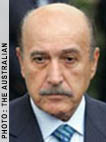
►►Egypt ex-spy chief to run for President. Omar Suleiman, 74, announced his candidacy on Friday and collected around 72,000 signatures of eligible voters in one day, more than twice the 30,000 required. Hosni Mubarak’s former intelligence chief insisted that his bid for the presidency does not have the support of Egypt’s military rulers and accused Islamists of sending him death threats. Mr Suleiman, made vice-president by Mubarak in the last days of his three-decade rule, symbolizes that era’s tough security regime and poses a threat to Islamists, who were routinely harassed and arrested during Mubarak’s era, and to liberals, who spearheaded Mubarak’s ouster. But his candidacy might appeal to some Egyptians hoping for an end to political instability.
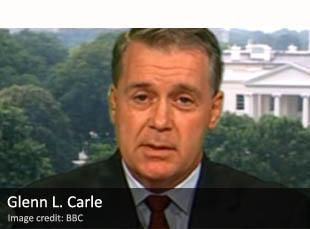
►►Ex-CIA officer says evidence in alleged case was flawed. Information from the US Central Intelligence Agency used by Canada to link accused Ottawa terrorist Mohamed Harkat to al-Qaeda was untrue, according to Glenn Carle, a retired CIA case officer who interrogated Harkat at secret CIA black site prisons in 2002. Speaking to promote his blistering memoir about the case, The Interrogator: An Education, Carle said that Harkat, who was thought to be Osama bin Laden’s main financial administrator, “wasn’t the senior member of al-Qaeda that we had assessed. He wasn’t even a member of al-Qaeda”. Yet as recently as 2010, Canadian Security Intelligence Service evidence and testimony before the Federal Court of Canada continued to point to Harkat’s relationship with Haji Pacha Wazir as evidence of Harkat’s ties to the bin Laden terror network.
►►Ex-KGB agent wins South Ossetia vote. Former senior KGB agent Leonid Tibilov has won a tense run-off to lead Georgia’s rebel pro-Russian region of South Ossetia, after two earlier polls ended in turmoil. Tibilov won 54.12 percent of the vote with all ballots counted against human rights commissioner David Sanakoyev’s 42.65 percent. The peaceful end to the election contrasts sharply with the angry protests that followed a November 27 ballot in which Alla Dzhioyeva, a female candidate who opposed the local administration was disqualified after coming out ahead in the poll. Dzhioyeva was then hospitalized in February after being interrogated and allegedly beaten by police following allegations that she planned to seize power.
News you may have missed #700: analysis edition

Tal DekelBy IAN ALLEN | intelNews.org |
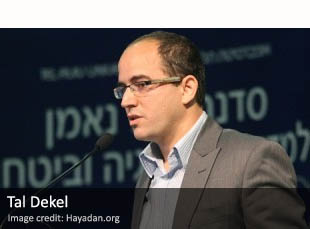
►►Egypt struggles to advance spy satellite program. Since Egyptian technicians lost touch two years ago with an observation satellite they hoped would help carry the country into the “space club”, the country has struggled to make progress in gaining intelligence satellite capabilities, but it remains committed to the program. This is according to Tal Dekel, a research fellow at Tel Aviv University’s Yuval Ne’eman Workshop for Science, Technology and Security. He said few are aware of the extent of Egypt’s satellite program: “People talk about the Iranians, but no one talks about Egypt’s program, which includes much more than a satellite”.
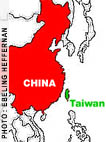
►►China spying on Taiwan despite thaw. When Taiwanese security personnel detained a suspected spy for China at a top secret military base last month, they may have had a sense of déjà vu. Four suspected spies have been detained in Taiwan during the last fourteen months. The cases show that China is seeking information about systems that are integral to Taiwan’s defenses and built with sensitive US technology. A major breach could make Taiwan more vulnerable to Chinese attack.
►►US intel says water shortages threaten stability. Competition for increasingly scarce water in the next decade will fuel instability in regions such as South Asia and the Middle East that are important to US national security, according to an intelligence report from the US Director of National Intelligence. The report, drafted principally by the Defense Intelligence Agency, reflects a growing emphasis in the US intelligence community on how environmental issues such as water shortages, natural disasters and climate change may affect US security interests.

News you may have missed #695

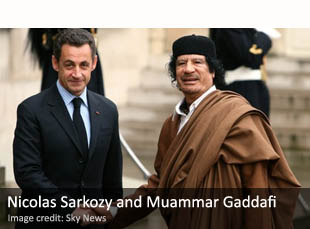
Nicolas Sarkozy and Muammar GaddafiBy IAN ALLEN| intelNews.org |
►►Spies meet over Syrian crisis. CIA chief David Petraeus met Turkey’s Prime Minister Recep Tayyip Erdogan on Tuesday for closed-door talks focusing on the crisis across the border in Syria. Meanwhile, General Murad Muwafi, who heads Egypt’s General Intelligence Directorate, left Cairo on Tuesday for a visit to Riyadh, Saudi Arabia. Also, US General Ronald Burgess, Defense Intelligence Agency Director, has arrived in Egypt and is expected to meet with several Egyptian officials to discuss the situation in Syria.
►►Gaddafi contributed €50m to Sarkozy election fund. Damaging new claims have emerged about the funding of Nicolas Sarkozy’s 2007 election campaign and his links with former Libyan leader Muammar Gaddafi. The French investigative website Mediapart claims to have seen a confidential note suggesting Gaddafi contributed up to €50 million to Sarkozy’s election fund five years ago.
►►Analysis: US relations on the agenda for Pakistan’s new spy chief. Yusuf Raza Gilani has appointed Lieutenant General Zahir ul-Islam as the new chief of the Inter-Services Intelligence (ISI) agency, the main spy arm of the Pakistani military, ending weeks of speculation he would extend the term of Lieutenant Gen Ahmed Shuja Pasha, due to retire on March 18. The new spymaster faces a tough task fixing ever-worsening ties with the United States, but analysts say he is unlikely to reform an institution accused of helping militants in Afghanistan.

News you may have missed #627

Omar Suleiman

Omar Suleiman

►►Egyptian ex-spy chief appointed security adviser to Saudi Crown Prince. Saudi Arabia’s Crown Prince Nayef bin Abdul Aziz has appointed Egypt’s former Director of General Intelligence, Omar Suleiman, as his security advisor. From 1986 until his forced resignation in spring this year, Suleiman had been the main conduit between Washington, Tel Aviv and the government of Hosni Mubarak.
►►Russia’s spy chief in rare interview. It is very rare that the men that run Russia’s powerful intelligence services give detailed interviews. But that’s just what Alexander Shlyakhturov, the head of military intelligence service, known as the GRU, did earlier this month with the Russian newspaper Rossiyskaya Gazeta.
►►US intel agencies brace for budget cuts. After seeing spending double over a decade, US intelligence agencies are bracing for about $25 billion in budget cuts over the next 10 years. “We’re going to have less capability in 10 years than we have today”, said Director of National Intelligence James Clapper, who sits atop the 16 departments, agencies and offices that comprise the US intelligence community and spend a combined $80 billion a year.

News you may have missed #625

Ahmed Al Hawan

Ahmed Al Hawan

►►Egypt’s most famous spy dies at 74. Egypt’s most famed spy on Israel, Ahmed Al Hawan, 74, has died after a long fight with illness, local media reported on Wednesday. Al Hawan worked for the Egyptian intelligence service during the years that followed Egypt’s military defeat by Israel in 1967. He supplied the Israelis with mistaken and misleading information that was crucial in Egypt’s war with Israel in 1973.
►►Analysis: Dark days for Taiwan’s spies. When Taiwan’s government last month announced budget cuts in military intelligence, the Ministry of National Defense (MND) insisted operations against mainland China would not be affected. However, media paint a vastly different picture, suggesting Taiwan’s future leaders will be completely deaf and blind to secretive developments across the Taiwan Strait.
►►US cyberespionage report names adversaries. A US intelligence report released last week concluded China and Russia are “the most aggressive collectors” of US economic information and technology online. But the report also states that America’s “allies and partners“, including the “French and the Israelis” are also stealing the s vital industrial and commercial secrets by infiltrating computer networks.

News you may have missed #617

Ilan Grapel

Ilan Grapel

►►Analysis: Is the CIA Still an Intelligence Agency? Early September 2011, a former intelligence official commented to The Washington Post that, “The CIA has become one hell of a killing machine”. He then attempted to retract, but his words were on record. But is that really what it should be: a hell of a killing machine?
►►US National Security Agency helps Wall Street battle hackers. The National Security Agency, a secretive arm of the US military, has begun providing Wall Street banks with intelligence on foreign hackers, a sign of growing US fears of financial sabotage. While government and private sector security sources are reluctant to discuss specific lines of investigations, they paint worst-case scenarios of hackers ensconcing themselves inside a bank’s network to disable trading systems for stocks, bonds and currencies, trigger flash crashes, initiate large transfers of funds or turn off all ATM machines.
►►Israel okays deal with Egypt to free alleged spy. Israel’s security cabinet unanimously approved an agreement Tuesday for the release of Israeli-American law student Ilan Grapel (pictured), who has been in jail in Egypt since June 12 on spying allegations that were later reduced to incitement. In exchange, Israel will release 22 Egyptian prisoners, most of them Bedouin from the Sinai jailed for smuggling drugs or weapons.

News you may have missed #609

Ilan Grapel

Ilan Grapel

►►Questions over Chinese spy hang over Putin visit. The arrest of a Chinese spy in Moscow has cast a cloud over Vladimir Putin’s two-day visit to Beijing. Tong Shengyong was arrested last October for allegedly trying to buy plans to the Russian S-300 anti-aircraft missile system. But perplexingly, the news of his arrest only emerged last week, in what appears to have been a deliberate leak by Russia’s Federal Security Service (FSB).
►►Egypt steps up charges against suspected Israel spy. Egypt’s State Security Prosecutor has added additional criminal offenses against alleged Israeli spy Ilan Grapel. Meanwhile, there are indications that Egypt seeks the release of 78 Egyptian prisoners held in Israeli jails in return for Grapel. Israel may agree with the proposal.
►►CIA to be last out of Afghanistan. US Special Forces and the CIA are girding for the moment when Afghanistan’s security rests once again with them, working together with Afghan forces against the Taliban. Recent remarks from the White House suggest the CIA and special operations forces will be hunting al-Qaida and working with local forces long after most US troops have left.

News you may have missed #602 (Israel edition)

Ahmed Jamal Daif

Ahmed Jamal Daif

►►Lebanon arrests three suspected of spying for Israel. Lebanon has arrested three people suspected of spying for Israel and trespassing, the London-based Al-Hayat newspaper reported Tuesday. According to the report, an Egyptian citizen and his wife were arrested on suspicion of spying, and an Arab-Israeli man was arrested on suspicion of trespassing. The Israeli, Ahmed Jamal Daif (pictured), was found on Monday in a diving suit on a beach in the southern Lebanese border town of Naqoura, a Lebanese army source said.
►►Egypt may release alleged Israel spy. Agence France Presse is reporting that Cairo is considering the release of alleged Israeli spy Ilan Grapel, in exchange for “political and economic incentives” offered by the United States. Grapel was arrested by Egyptian state security officers in June, on charges of spying for Israel. According to one source, former CIA Director and current US Defense Secretary Leon Panetta is set to visit Egypt today and is supposed to “take Grapel with him at the end of his visit”.
►►Jordanian accused of spying for Israel pleads not guilty. A Jordanian telecommunications engineer, who is on trial in Egypt on charges of spying for Israel, pleaded not guilty on Sunday. Bashar Ibrahim Abu Zeid was detained in Egypt last April after intelligence information allegedly showed he was spying for the Mossad, with Ofir Herari, an alleged Mossad agent, being tried in absentia.

News you may have missed #594

David Irvine

David Irvine

►►Egypt extends detention of alleged Israel spy. An Egyptian court has extended the detention of alleged Israeli spy Ilan Grapel by 45 days, the Egyptian Al-Ahram newspaper reported on Wednesday. Grapel was arrested in Cairo in June.
►►Australian spy chief raises cyberespionage concerns. The advent of cyberespionage is serving only to reinvigorate the craft of espionage, making such spying easier than ever, the Australian Security Intelligence Organization chief, David Irvine, has told a conference in Canberra. Espionage, which has taken a back seat to terrorism since the attacks of September 11, 2001, is alive and well, said Irvine.
►►US intel official says al-Qaeda operations could end in two years. Michael G. Vickers, the US undersecretary of defense for intelligence, said at a defense conference that if the current pace of US operations continues, “within 18 to 24 months, core al-Qaeda’s cohesion and operational capabilities could be degraded to the point that the group could fragment”. Vickers’s remark represents the first time that a senior US official has offered a time frame for achieving the collapse of the organization responsible for the 9/11 attacks.

News you may have missed #593

Omar Suleiman

Omar Suleiman

►►Libyan woman spy guided NATO bombs to Gaddafi targets. The NATO bombing campaign which fatally weakened Muammar Gaddafi’s rule had a secret asset: a 24-year-old Libyan woman who spent months spying on military facilities and passing on the details to the alliance. The woman, operating under the codename Nomidia, used elaborate methods to evade capture –constantly changing her location, using multiple mobile telephone SIM cards and hiding her activities from all but the closest members of her family.
►►Canadian ex-spy wins court claim against CSIS. Marc-André Bergeron, who was fired four years ago by the Canadian Security Intelligence Service (CSIS) for alleged incompetence, has been vindicated by winning his claim of wrongful dismissal. In doing so, he has revealed a rather remarkable state of affairs at CSIS. Its bosses lament that they are held to impossible legal standards in court cases involving terrorism, but couldn’t muster sufficient proof to fire one of their own.
►►Mubarak’s spy chief testifies in Egypt trial. One of the most secretive figures of Hosni Mubarak’s inner circle testified Tuesday at the ousted leader’s trial under a complete media blackout. Omar Suleiman, who was Mubarak’s longtime intelligence chief and was named vice president during the last weeks of his rule, is the first in a string of members of the ousted leader’s senior leadership to appear in the court.

News you may have missed #570

Nassr al-Mabrouk Abdullah

Abdullah Nassr

►►Libya internal security chief defects. Egyptian airport officials said Nassr al-Mabrouk Abdullah, Muammar al-Gaddafi’s interior minister, landed in a private plane in Cairo with nine family members traveling on tourist visas. Nassr was the minister responsible for police, civil defense, domestic intelligence, and some border security units.
►►S. Korea admits 1962 death occurred in spy training camp. A special committee is reviewing whether the family of a South Korean man who died half a century ago while being trained as a spy for elite missions into North Korea is eligible for compensation. South Korea’s military intelligence command admitted in a July 14 letter that “Mr. Jeon Gwang-su died during training on Sept. 30 of 1962 ahead of being dispatched for a mission in the North”.
►►NSA announces ‘hiring blitz’. The National Security Agency, America’s largest cryptologic intelligence agency, has announced its intention to hire as many as 3,000 people over the next two years, many of them cybersecurity experts. In fact, NSA recruiters even took a trip to Las Vegas in the last few weeks to look for potential hires at DefCon, a high-profile hacker conference there.

News you may have missed #569

China & Taiwan

China & Taiwan

►►Taiwan begins to deal with its amateur spies caught by China. We have written before about the army of businessmen recruited by Taiwan’s Military Information Bureau (MIB). Many of these amateur spies were sent to collect intelligence in mainland China, often with minimal training or institutional support. Predictably, many were arrested, and dozens are believed to remain in China’s prisons today.
►►Egypt to try Israeli on espionage charges. And, no, it’s not Ilan Grapel, the American-Israeli who was arrested on espionage charges earlier this summer, and who is still in prison in Egypt. This case concerns another alleged Mossad operative, Ofir Herari, who has allegedly escaped and will be tried in absentia. Another man, Jordanian telecommunications engineer Bashar Ibrahim Abu Zeid, has been apprehended on charges of collaborating with Herari. He will be tried for “spying for a foreign country with the purpose of harming Egyptian national interests”.
►►Pakistan ‘gave China access’ to US copter used in bin Laden raid. According to a report in The New York Times, in the days after the raid that killed Osama bin Laden, Pakistan’s intelligence service “probably allowed” Chinese military engineers to examine the wreckage of a stealth American helicopter that crashed during the operation. This is the view of Read more of this post

News you may have missed #538

Wali Karzai

Wali Karzai

By IAN ALLEN | intelNews.org |
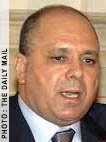
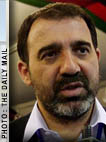
►►Egyptian diplomat dead in London after bizarre suicide attempt. Police in London are trying to solve the mysterious apparent suicide of Ayman Mohammed Fayed, a 41-year-old employee of the Egyptian embassy, who plunged to his death from one of the embassy’s third-floor windows last week. Embassy officials said he did so after hurriedly signing a brief suicide note to his family. Interestingly, one witness saw him trying to get back into the building from the window, apparently having changed his mind about killing himself. But, says The Daily Mail, he seems to have “lost control and fell”. The death does not seem to be related to the political changes that have taken place in Egypt this year. ►►CIA agent Wali Karzai dead in Afghanistan. Another death, that of Afghan President Hamid Karzai’s brother, has featured all over the news media in the past few days. Ahmed Wali Karzai, Afghan drug lord and influential strongman, was shot dead by his bodyguards last Tuesday. Wali Karzai’s role as a CIA agent is less widely advertised in obituaries (with a few notable exceptions). IntelNews readers will remember that, in October of 2009, The New York Times revealed that Wali Karzai had been financially sustained by the CIA ever since the initial US invasion of Afghanistan, in 2001, and that he was still —as of 2009— receiving “regular payments” from the Agency.  Read more of this post

News you may have missed #528