Tunisia suspects espionage after Belarusians are caught with several passports

Sfax TunisiaTunisian authorities are investigating two Belarusian men who were found to be in possession of several forged passports and electronic surveillance equipment. The two men were reportedly arrested on Tuesday in Sfax, Tunisia’s second most populous city, which is located on the Mediterranean coast. It is worth noting that Sfax was also the home of Mohamed Zaouari, the 49-year-old Hamas avition engineer who was shot dead in December 2016 by a group of assailants using gun silencers. Hamas claims that he was Zaouari was killed by Israel’s Mossad intelligence agency.

Tunis Afrique Presse, a private news agency headquartered in Tunis, said on Monday that the two Belarusians arrived in Sfax in early June, and checked into a hotel using Belarusian passports. They reportedly attracted the attention of the hotel staff, because Sfax is not a noted tourist destination and attracts few of the foreigners who visit the North African country. Hotel staff alerted the authorities after the two Belarusians forbade anyone, including hotel cleaning staff, to enter their room. Tunisian security officers then monitored the two Belarusians for two weeks before entering their room and searching their belongings, after receiving permission from their superiors. The search reportedly produced several forged passports from Ukraine, the Maldives and Poland, as well as SIM cards and electronic surveillance equipment. At a press conference in Sfax on Monday, Mourad Turki, a court official, said that the Tunisian Prosecutor’s Office decided to issue an arrest warrant for the two Belarusians. An investigation has been launched, he said.

Tunisia and Belarus do not have active diplomatic relations. There have been several high-level meetings between Tunisian and Belarusian officials in recent years, but diplomatic relations between the two countries have remained stagnant. Belsat TV, a Belarusian news network based in Poland, contacted the Belarusian Ministry of Foreign Affairs but a spokesman refused to comment on the cases of the two men. The United States-based Radio Free Europe was told by a government official in Minsk that the Belarusian government is looking into the matter.

Author: Ian Allen | Date: 04 July 2019 | Permalink

Spy services seeking access to Angela Merkel’s medical file, reports claim

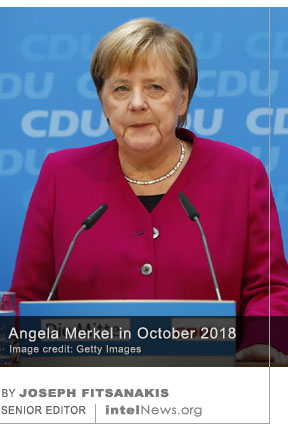
Angela MerkelForeign intelligence agencies are allegedly trying to acquire the medical file of German Chancellor Angela Merkel after she was seen trembling uncontrollably in public twice in as many weeks. Reports about foreign spy interest in Merkel’s health emerged in German and British newspapers last weekend, after the German chancellor was seen trembling during high-level meetings earlier this month. The first incident took place during an official meeting with Ukrainian President Volodymyr Zelensky on June 18. The German Chancellery said Merkel had suffered from dehydration and “felt like herself again after drinking a few cups of water”. But the tremors were back again on June 27 during the German leader’s visit to Japan for the G20 Summit. Reports stated that the chancellor was seen “clutching her arms in a failed attempt to prevent herself shaking” during the ceremonial part of the proceedings. At a press conference afterwards, Merkel told reporters that the trembling had been caused by “psychological stress” and that she was convinced it would “disappear just like it appeared”. But she avoided answering questions about whether she had sought medical attention about the trembling.

On June 30, British newspaper The Sunday Times said that foreign spies were showing interest in finding out Merkel’s medical state. The paper added that “one Western intelligence agency believed that the German leader was suffering from a ‘neurological problem’”, but did not specify the agency or the alleged condition. Two days earlier, on June 28, the German tabloid Bild claimed that foreign intelligence agencies had been detected attempting to gain access to the German leader’s private medical file. The paper said that foreign governments in Europe and beyond were suspicious of Merkel’s health state following her refusal to speak openly about it to the media. Several intelligence agencies were therefore “trying to get their hands on Merkel’s medical records” in an attempt to verify whether her trembling was caused by stress and dehydration, or whether it may denote a deeper neurological cause, it said. The paper added that the German leader’s medical records were kept “in a secure military facility” somewhere in Germany.

There has been intense speculation in the German media in the past four days about whether Chancellor Merkel will be able to stay in power until the end of her final term as leader of the country. In October 2018, the German leader announced that she would not seek reelection as Chancellor once her current term expires in 2021. She is scheduled to be replaced by Annegret Kramp-Karrenbauer, who last year also replaced her as leader of the Christian Democratic Union Party.

Author: Joseph Fitsanakis | Date: 01 July 2019 | Permalink

Iran announces arrest of 16 oil ministry officials for spying for CIA

Iran Petroleum Oil MinistryIranian state media announced on Sunday the arrest of 16 officials in the country’s Ministry of Petroleum, allegedly for sabotaging Iranian energy policy. It is not known whether these arrests are in any way connected with Tehran’s announcement last week that it had dismantled “one of the most complicated” espionage operations by the United States Central Intelligence Agency in several countries. According to the state-owned Fars News Agency, the 16 officials were arrested over the weekend in synchronized pre-dawn raids. All of them had managerial positions in Iran’s oil industry —including in the areas of exploration, production and distribution of Iran’s oil and petrochemical products inside the country as well as abroad.
The report about the latest arrests cited Hossein Ali Haji Deligani, a senior legislator representing the most conservative political wing in the Iranian parliament. Deligani said that the ministry employees “operated under a woman”, whom he did not name. Working in concert, the employees had been “able to influence […] the oil ministry to put off important decisions” and to “make wrong decisions”. These decisions were “in line with the enemies’ goals and against Iran’s national interest”, and ultimately delivered “a blow to the country in the United States economic war against Iran”, said Deligani. He did not elaborate on the topic and did not discuss whether the arrests were linked to the dismantling of an alleged CIA cyber espionage operation, which Iran announced last week.

Sunday’s announcement by the Fars News Agency comes two days after the execution of Jalal Haji Zavar, an employee of Iran’s Aerospace Industries Organization, which operates under the Iranian a unit of the Ministry of Defense. Zavar was executed on Friday after a military court found him guilty of having committed espionage against Iran on behalf of the CIA. Media reports said that unspecified incriminating documents and “spying equipment” were found in Zavar’s home.

Author: Joseph Fitsanakis | Date: 25 June 2019 | Permalink

Israeli officials announce arrest of alleged deep-cover spy for Iran

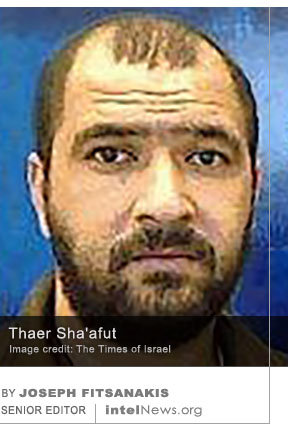
Thaer Sha'afutIsraeli authorities announced on Thursday the arrest of a deep-cover intelligence operative who allegedly attempted to establish a base for Iranian intelligence in Israel and the West Bank, according to news reports from Israel. Shin Bet, Israel’s domestic security and counterintelligence agency, said it arrested Thaer Sha’afut (pictured), a Jordanian national, on espionage charges. The arrest reportedly occurred in April, but was only announced this week. According to Shin Bet officials, Sha’afut was an accredited deep-cover intelligence operative for the Iranian spy services. He was allegedly was commissioned “to carry out missions that were meant to establish a network in Israel and the West Bank, which would be used for covert operations by the Iranians”.

Israeli officials said Sha’afut received instructions from his Iranian handlers to enter Israeli territory between July and August of 2018. After entering Israel, his goal was “to form business ties” in the West Bank and in Israel proper. He planned to do that, said the Shin Bet, by hiring Shiite Muslims to staff a new factory in Jordan and then use the new venture “as an anchor for future Iranian activities in Israel and the West Bank”. These activities included the eventual recruitment of “spies who would help collect intelligence for Iranian interests”, according to court documents. The Shin Bet said that Sha’afut’s handlers were two Arabic-speaking Iranian intelligence officers based in Lebanon and Syria, who went by the names Abu Sadek and Abu Jaffar. They allegedly provided Shafut with “an encrypted communication device”, which he used to arrange clandestine meetings with them throughout 2018 and 2019.

Sha’afut’s Iranian handlers allegedly planned to use him as a conduit for transferring funds to spies in the West Bank and Israel. They had told Sha’afut that Iranian intelligence would make an initial investment of $500,000 in his factory venture in Jordan and to an import-export business, in order to sustain his base of operations, with more funds to follow. Once the factory was set up, Sha’afut was expected to travel clandestinely to Iran in order to complete his training as a deep-cover case officer. Israeli daily Haaretz said on Thursday that Sha’afut was indicted earlier this month by military prosecutors in Jerusalem for “contact with an enemy country, contact with a hostile organization, and conspiracy to funnel money from an enemy entity”.

Author: Joseph Fitsanakis | Date: 21 June 2019 | Permalink

Iran says it dismantled a ‘complicated’ CIA cyber operation in several countries

Ali ShamkhaniA senior Iranian security official said on Monday that Tehran had dismantled “one of the most complicated” espionage operations by the United States Central Intelligence Agency, leading to “arrests and confessions” of suspects in several countries. The announcement was made by Ali Shamkhani (pictured), secretary of the Supreme National Security Council of Iran, the Islamic Republic’s highest security decision-making body, which is chaired by the country’s president.

Speaking in Tehran to reporters from pro-government news agencies, including IRIB and Fars News, Shamkhani said that Iran had “exposed” what he described as a CIA-run cyber espionage network, which carried out “operations in different countries”. He said the alleged espionage network had been detected by Iranian counterintelligence agencies “some time ago and was dismantled”. Iran’s counterintelligence actions had led to the “identification and arrest of CIA intelligence agents”, said Shamkhani, many of whom had been arrested “in different countries”. The arrests occurred after Iran “shared the information about the exposed network with our allies”, said Shamkhani, which led to the “disclosure and dismantling of a network of CIA officers” as well as the “detention and punishment of several spies”. Shamkhani did not specify the number of people arrested, or in which countries, but appeared to refer to both CIA personnel and local assets. He concluded his remarks by saying that Iran was building a regional alliance “to counter American espionage”. He also urged Iran’s Ministry of Intelligence to release “videos and confessions” relating to the arrests.

Meanwhile, Iranian anti-government groups based abroad alleged on Monday that a senior official in the Islamic Revolutionary Guard Corps was arrested in Tehran for allegedly working for Israel. The unidentified individual is believed to have helped Israel’s Mossad intelligence agency gain access to the archive of the Iranian nuclear program in 2018, and steal an unspecified number of classified documents. It is not known whether this alleged arrest is connected with Shamkhani’s announcement on Monday.

Author: Joseph Fitsanakis | Date: 18 June 2019 | Permalink

North Korean leader’s half-brother worked with CIA before his death, paper claims

Kim Jong-nam murderKim Jong-nam, the half-brother of North Korean leader Kim Jong-un, held regular meetings with American intelligence officers before he was assassinated with VX nerve gas at a busy airport terminal in Malaysia. Two women approached Kim Jong-nam as he was waiting to board a plane at the Kuala Lumpur International Airport on February 13, 2017. The estranged half-brother of the North Korean leader was about to travel to the semi-autonomous Chinese territory of Macau, where he had been living in self-exile since 2007. Soon after his encounter with the two women, Kim collapsed and eventually died from symptoms associated with VX nerve agent inhalation.

But a new book published on Tuesday by a Washington Post reporter, and an article that came out in The Wall Street Journal on the same day, allege that Kim Jong-nam was working with the United States Central Intelligence Agency and was in fact in Malaysia to meet with his American spy hander when he was killed. The Wall Street Journal article said that many details of Kim Jong-nam’s precise relationship with the CIA remain “unclear”. It is doubtful that the late half-brother of the North Korean leader had much of a powerbase in the land of his birth, where few people even knew who he was. So his usefulness in providing the CIA with crucial details about the inner workings of the North Korean regime would have been limited. However, the paper quoted “a person knowledgeable about the matter” as saying that “there was a nexus” between the CIA and Kim. The article also alleges that Kim met with CIA case officers “on multiple occasions”, including during his fateful trip to Malaysia in February of 2017.

In her just-published book The Great Successor, Anna Fifield, a correspondent with The Washington Post, claims that Kim spent a number of days on the island of Langkawi, a well-known resort destination in Malaysia. Security footage at his hotel showed him meeting with “an Asian-looking man [Korean-American, according to The Wall Street Journal] who was reported to be an American intelligence [officer]”. It was one of regular trips Kim took to places like Singapore and Malaysia to meet his spy handlers, according to Fifield, who cites “someone with knowledge of the intelligence”. She adds that, although meeting with this CIA handler may not have necessarily been the sole purpose of Kim’s fateful trip to Malaysia, it was certainly a major reason. Fifield alleges that the backpack Kim was carrying when he was killed at the Kuala Lumpur International Airport was found to contain $120,000 in cash. The Wall Street Journal claims that, in addition to meeting with the CIA, Kim held regular meetings with spy agencies of other countries, including China.

Meanwhile, two South Korean government agencies, the National Intelligence Service and the Ministry of Reunification, said on Tuesday that they were unable to confirm that Kim was indeed an asset of the CIA or any other intelligence agency. They also said that they could not confirm whether Kim had traveled to Malaysia to meet with a CIA case officer at the time of his assassination.

Author: Joseph Fitsanakis | Date: 12 June 2019 | Permalink

Despite spying allegations, African Union deepens ties with Chinese telecoms firm

African UnionDespite allegations in the French press that China has been spying for years on the internal communications of the African Union, the organization appears to be deepening its ties with a leading Chinese telecommunications firm. The allegations surfaced in January of last year in the Paris-based Le Monde Afrique newspaper. The paper claimed in a leading article that African Union technical staff found that the computer servers housed in the organization’s headquarters in Addis Ababa, Ethiopia, were secretly communicating with a server facility in Shanghai, China. The secret communications reportedly took place at the same time every night, namely between midnight and 2 in the morning. According to Le Monde Afrique, the African Union servers forwarded data to the servers in Shanghai from 2012, when the building opened its doors, until early 2017.

Beijing donated $200 million toward the project and hired the state-owned China State Construction Engineering Corporation to build the tower, which was completed in 2012. Since then, the impressive 330 feet, 19-storey skyscraper, with its reflective glass and brown stone exterior, has become the most recognizable feature of Addis Ababa’s skyline. The majority of the building material used to construct the tower was brought to Ethiopia from China. Beijing even paid for the cost of the furniture used in the impressive-looking building. The paper noted that, even though the organization was allegedly notified about the breach by its technical staff in January of 2017, there was no public reaction on record. However, according to Le Monde Afrique, African Union officials took immediate steps to terminate the breach. These included replacing the Chinese-made servers with new servers purchased with African Union funds, without Beijing’s mediation. Additionally, new encryption was installed on the servers, and a service contract with Ethio Telecom, Ethiopia’s state-owned telecommunications service provider, which uses Chinese hardware, has been terminated.

Last week, however, the African Union deepened its ties with Huawei Technologies, the Chinese telecommunications firm that provided all the hardware, as well as much of the software, used in the organization’s headquarters. Last week, at a meeting in the Ethiopian capital, Thomas Kwesi Quartey, deputy chair of the African Union’s Commission signed a memorandum of understanding with Philippe Wang, Huawei’s vice president for North Africa. According to the memorandum, Huawei will increase its provision of hardware and services to the African Union “on a range of technologies”. These range from broadband telecommunications to cloud computing, as well as 5G telecommunications capabilities and artificial intelligence systems. The Chinese firm will also continue to train African Union information technology and telecommunications technicians. Both the African Union and the government of China have denied the Le Monde Afrique allegations.

Author: Joseph Fitsanakis | Date: 07 June 2019 | Permalink

In a surprise move, Iran releases Washington resident accused of espionage

Nizar ZakkaIran has announced that it will release a Lebanese national and United States permanent resident, who has served nearly half of his 10-year prison sentence for allegedly spying for Washington. Nizar Zakka, 52, was born in Lebanon but was schooled in the US, where he lived permanently until 2015. In September of that year, Zakka traveled to the Iranian capital Tehran at the invitation of the government of Iran, where he spoke at a conference on Internet-based entrepreneurship. He attended the event as an information technology expert who worked for companies like Cisco and Microsoft before setting up his own company called IJMA3. Based in Washington, DC, IJMA3 lobbies investors to help build online networks in the Middle East in order to develop the region economically, socially and politically.

But on September 18, 2015, as Zakka was traveling to the Imam Khomeini International Airport in Tehran for his return flight, he was detained by Iranian security officers and never made it out of the country. A year later, he was convicted of spying for the US and sentenced to 10 years in prison. The court also handed him a $4.2 million fine, allegedly for “collaborating with a government that was hostile to Iran”. Iran’s state-run media said Zakka was a “treasure trove” of intelligence on the American military. But the Lebanese IT expert denied all charges leveled against him. He said he was tortured during his interrogation and he went on frequent hunger strikes to protest his innocence and the conditions of his detention. Throughout his imprisonment, the Lebanese government pressured Iran for his release. The US also raised the issue through Congress and the Department of State. But Washington’s ability to influence Iran was limited, as it does not have diplomatic relations with Tehran.

On Tuesday, however, Lebanon’s Ministry of Foreign Affairs said it had received word from Iran’s ambassador to Lebanon that Zakka would be released soon. The Iranians reportedly said they decided to release Zakka following personal interventions by Lebanon’s Prime Minister Saad Hariri and the country’s President Michel Aoun. Additionally, said the Iranian ambassador, Zakka would be released as “a goodwill gesture” during Eid al-Fitr, a Muslim holiday that marks the end of Ramadan, the Islamic holy month of fasting. The statement added that Iran’s President Hassan Rouhani was “ready to receive a Lebanese delegation at any time for the extradition of the Lebanese prisoner Nizar Zakka”.

Author: Ian Allen | Date: 05 June 2019 | Permalink

Leaked documents show Cuban spies targeted Miami International Airport

Miami International AirportDocuments that were allegedly leaked by a Cuban intelligence insider show that Cuban spies targeted the Miami International Airport (MIA) and may have acquired MIA internal files, passwords and other sensitive information. The documents were published on Monday by CiberCuba, an online news portal that was founded in 2014 by Cuban exiles in Spain. The website said that it was given access to several batches of classified Cuban intelligence files by an “anonymous source”. The files allegedly contain copies of internal emails and email attachments, personnel contracts, financial information, as well as intelligence collected on “persons of interest” to the Cuban government.
The Spain-based website said on Monday that the leaked documents, which it dubbed “CiberCubaleaks”, constitute one of history’s largest and most significant disclosures of internal files of the Cuban Ministry of Interior. In a lading article on Monday, CiberCuba published six documents from the Ministry’s Directorate of Counterintelligence, which are dated between mid-2015 and late 2017. The documents contain information provided by two spies in the United States, codenamed CHARLES and EL GORDO. They contain internal passcodes that can be used to access secure areas at MIA, sensitive records relating to the commercial airlines that use the airport, and descriptions of restricted areas at MIA.

But in a statement made to The Miami Herald, the Director of Aviation for Miami-Dade County, Lester Sola, dismissed the information in the leaked documents as “not credible”. Sola said that the description of MIA documents in the leaded files did not seem accurate and missed some basic clues, such as a correct description of the colors of MIAs security protocols. Consequently, said Sola, “nothing in the [CiberCuba] report poses a credible security threat”. However, his office did not ignore the information and shared it with government agencies; consequently, the Federal Bureau of Investigation was “looking into” the CiberCuba report as of Monday morning, he said.

Author: Joseph Fitsanakis | Date: 04 June 2019 | Permalink

Pakistan sentences two, including senior military officer, to death for espionage

Inter-Services Public Relations PakistanA military court in Pakistan has sentenced two men to death and one to 14 years in prison for espionage. The alleged spies, who have been named, include a lieutenant general and civilian employee of a security agency. In February, several Pakistani news outlets reported that “an international spying network” had been dismantled in the country following the arrests of at least five intelligence and security officials who were working for foreign interests. Soon afterwards, the online reports were taken down and nothing more was said about the arrests. But on Thursday, Pakistan’s Inter-Services Public Relations (ISPR), the media wing of the country’s Armed Forces, said in a statement that three men had been sentenced for “espionage/leakage of sensitive information to foreign agencies” which “prejudiced national security”.

The three men were identified as Lieutenant General Javed Iqbal, Brigadier (ret.) Raja Rizwan, and Dr. Wasim Akram, who was reportedly “employed at [an unidentified] sensitive organization”. Iqbal and Akram were sentenced to death, while Rizwan was sentenced to 14 years of “vigorous imprisonment”, according to ISPR. Reports in local media said that General Qamar Javed Bajwa, the Pakistani Army’s Chief of Staff, had approved the sentences handed to the men by the military judges. This means that the sentences will be carried out unless Pakistan’s President, Arif Alvi, pardons them. Interestingly, the ISPR statement noted that the three men were tried in separate military courts for separate cases. No further information was provided. As intelNews reported in February, Pakistani media claimed at the time that those arrested included a Pakistani official with diplomatic credentials who was serving in a Pakistani embassy “in a European capital”.

No information has emerged about the country or countries to which the alleged spies gave sensitive information. Back in February, Pakistan’s leading conservative daily, The News International, claimed that the spies’ handlers belonged to an intelligence agency of one of “the world’s most powerful countries”. The paper also hinted that the alleged spy network may have been working for the United States Central Intelligence Agency, but provided no information to support this claim. It added that the network had been “completely dismantled” following a counterintelligence operation that an unnamed source described to the paper as “remarkable”.

Author: Joseph Fitsanakis | Date: 31 May | Permalink

Jonathan Pollard, US spy for Israel, complains of neglect by Israeli state

Jonathan PollardJonathan Pollard, an American who spied on his country for Israel in the 1980s, and is now free after spending 30 years in prison, has spoken of his frustration with the Israeli government, which it claims has forgotten about him. Pollard, a former intelligence analyst for the United States Navy, was released from an American prison in 2015, after serving a lengthy sentence for selling US government secrets to Israel. Throughout Pollard’s time in prison, the government of Israel lobbied for his release, claiming that the convicted spy did not harm American interests, but was simply trying to help Israel. But the US Intelligence Community and successive American presidents consistently rejected Israel’s claims, arguing that Pollard’s activities were severely detrimental to US interests. Pollard was eventually released after serving the entirety of his sentence. Ever since his release, Pollard has been required to wear an ankle monitor at all times. His Internet browsing is strictly regulated by the US government and he is not permitted to leave his New York home after sunset. He is also not permitted to leave the US, and Washington has refused to allow him to move to Israel.
Last week, Israel’s Channel 12 television station aired a rare interview with Pollard, in which the former spy claimed he had been “forgotten” by the Israeli government. Speaking from a restaurant in New York with his wife Esther by his side, Pollard told Channel 12 that no officials from the Israeli government had made contact with him since his release. He added that he felt “there is always something more urgent than me” for the government of Israel, whether it is “the [nuclear] deal with Iran or the [US] embassy’s move to Jerusalem, or the sovereignty of the Golan Heights”. When the Channel 12 reporter asked him whether he was disappointed by Israel’s perceived lack of efforts to bring him to Israel, Pollard replied that he would be “very depressed” if his “faith in God and [his] love for Israel and its people [was not] so strong”. At another point in the interview, Pollard appeared to criticize the Israeli government of Prime Minister Benjamin Netanyahu. “I am very concerned about what this entails for the [government’s] commitment and for [Israel’s] security”, he said. “If you do not care about someone like me, who spent 30 years in prison for the land of Israel and its citizens, how much concern is there for others in the country, [whether they are] soldiers or civilians?”.

In November of 2017, Israel’s Channel 2 television reported that Israeli Prime Minister Netanyahu had asked the United States President Donald Trump to allow Jonathan Pollard to move to Israel. However, despite the popular perception of the Trump administration as strongly pro-Israel, there are no indications that such a move may be taking place any time soon.

Author: Joseph Fitsanakis | Date: 27 May 2019 | Permalink

Family of alleged UAE spy who died in Turkish prison call for investigation

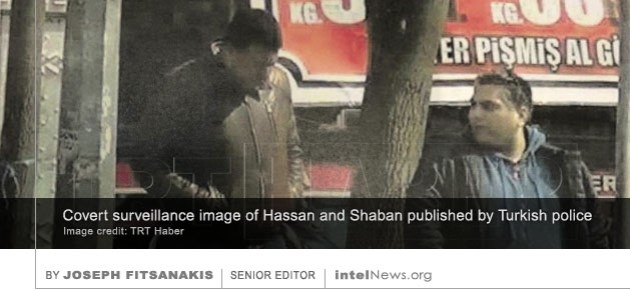
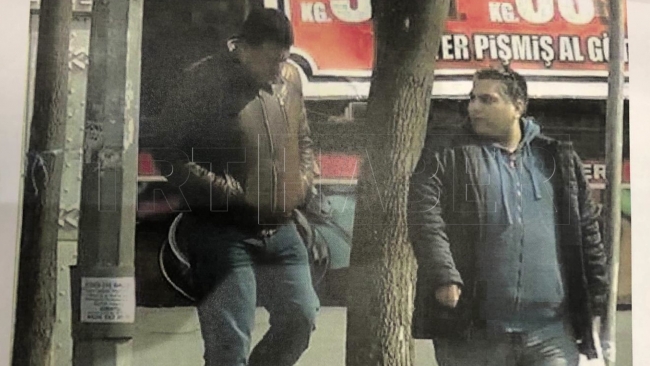
Zaki Mubarak Hassan and Samer ShabanThe family of a man who died in a Turkish prison on Sunday while awaiting trial for allegedly spying for the United Arab Emirates has called for an international investigation into this death. Zaki Mubarak Hassan and Samer Shaban —both Palestinians— were reportedly arrested by Turkish police on April 21 and charged with espionage. Turkish counterintelligence officials suspect that at least one of the suspects may have been involved in a spy operation that relates to the murder of Jamal Khashoggi, a Saudi journalist who was killed last October inside the Saudi Arabian consulate in Istanbul by a 15-member team of Saudi intelligence officers.
Shortly after the two men were arrested, the Reuters news agency cited an anonymous “senior Turkish official” who said that one of two men arrived in Turkey just days after Khashoggi’s murder. He was allegedly monitored by Turkish counterintelligence for a period of six months and his activities led investigators to the second man. The latter is believed to have traveled to Turkey in order “to help his colleague with the workload”, said Reuters. The source added that the two UAE nationals had undergone several hours of interrogation, during which they had confessed that they were employees of the UAE intelligence service. They had also admitted to recruiting local residents as informants. Their activities and targets were consistent with intelligence operations aimed at exiled Arab nationals and students living in Turkey, said the source. The unnamed Turkish official told Reuters that authorities had amassed “extensive evidence” on “covert activities on Turkish soil” by the two men, and described the case against them as “airtight”.

Yesterday, however, the Turkish government announced that one of the men, Zaki Mubarak Hassan, had been found dead in his prison cell in Istanbul. Press reports said that Hassan was found “Sunday morning hanging from a bathroom door” in his cell, and that prosecutors were investigating the formal cause of his death. Late on Monday, his family told the Saudi Arabian Arab News channel that they did not believe Hassan had killed himself. Speaking to Arab News from his home in Bulgaria, Hassan’s brother, Zakeria, said that agents of the Turkish government killed his brother because they realized he was not a spy for the UAE and “they didn’t want to show that they made a mistake”. He added that he had notified the Palestinian ambassador in Ankara of his brother’s arrest, but the ambassador did not seem interested in assisting the family. Meanwhile, the uncle of the second man, Samer Shaban, told another Saudi news channel, Al Arabiya, that his nephew had left the Gaza Strip in 2007 for Egypt. Zaki Mubarak said that Shaban, a Palestinian police officer, was a Fatah supporter and eventually moved from the Hamas-dominated Gaza Strip to the UAE, where he began working as an employee of the Palestinian Authority’s consulate in Dubai. His goal, said Mubarak, was to immigrate with his family to Turkey and from there to Europe.

Author: Joseph Fitsanakis | Date: 30 April 2019 | Permalink

British spy agency calls Trump’s espionage claim ‘utterly ridiculous’

GCHQThe Government Communications Headquarters (GCHQ), Britain’s primary signals-intelligence agency, has called claims by United States President Donald Trump that it spied on his election campaign “utterly ridiculous”. President Trump’s allegations are not new. They apparently rest on claims made in March 2017 by a Fox News commentator, that the GCHQ spied on Trump on orders of then-US President Barack Obama. The claim was repeated on March 17 at the White House by Sean Spicer, Trump’s then-press secretary, who said that Obama had used the GCHQ to spy on Trump so as to evade American privacy laws. At the time, Spicer’s claim prompted an angry response from the British government in London and from the British spy agency itself. In a rare public comment, GCHQ called the allegations “utterly ridiculous”.
This past Wednesday, the US president appeared to repeat his claim that GCHQ had spied on his election campaign, via a post on the popular social networking platform Twitter. Responding to a reiteration of the claim on the conservative cable television channel One America News Network, Trump tweeted “WOW! It is now just a question of time before the truth comes out, and when it does, it will be a beauty!”. The president’s tweet appeared just hours after the British government confirmed that Trump had been invited for a four-day state visit to the United Kingdom in June. The visit is believed to include a meeting with British Prime Minster Theresa May and dinner with Queen Elizabeth II at Buckingham Palace.

Following Trump’s tweet, the US newsmagazine Newsweek contacted GCHQ with a request for a response to the US president’s allegation. A GCHQ spokesperson referred the newsmagazine to the agency’s 2017 statement, and repeated: “The allegations that GCHQ was asked to conduct ‘wire tapping’ against the then president-elect are nonsense. They are utterly ridiculous and should be ignored”. It is extremely rare for GCHQ —one of Britain’s most secretive and publicity-shy agencies— to respond publicly to stories in the media. Late on Wednesday, British Foreign Affairs Secretary Jeremy Hunt said that the invitation to President Trump to visit London would not be rescinded, and insisted that Britain’s “special relationship” with the US remained “intact”.

Author: Joseph Fitsanakis | Date: 25 April 2019 | Permalink

Turkey announces arrests of two alleged UAE intelligence officers in Istanbul

UAE nationals arrested in Turkey on espionage charges

Covert surveillance photograph of two UAE nationals arrested in Turkey on espionage charges (TRT Haber)

Turkish authorities have announced the arrest of two men believed to be intelligence officers for the United Arab Emirates; the two have already confessed to recruiting local informants, according to Reuters. The news agency said Turkish counterintelligence officials suspect that at least one of the suspects may be involved in a spy operation that relates to the murder of Jamal Khashoggi, a Saudi journalist who was killed last October inside the Saudi Arabian consulate in Istanbul by a 15-member team of Saudi intelligence officers.

Last Friday, Reuters cited an anonymous “senior Turkish official” who said that both men are Emirati nationals and that one of them arrived in Turkey just days after Khashoggi’s murder. He was allegedly monitored by Turkish counterintelligence for a period of six months and his activities led investigators to the second man. The latter is believed to have traveled to Turkey in order “to help his colleague with the workload”, said Reuters. Turkey’s state-owned news agency, TRT Haber, published Turkish police photographs of the two men in custody, but did not name them. It also published covert surveillance photographs of the two men, presumably taken by Turkish counterintelligence. A source told Reuters that Turkish counterintelligence officials had entered an Istanbul apartment used by the two men as a safe house, where they found an encrypted computer “in a hidden compartment”. The source added that the two UAE nationals had undergone several hours of interrogation, during which they had confessed that they were employees of the UAE intelligence service. They had also admitted to recruiting local residents as informants. Their activities and targets were consistent with intelligence operations aimed at exiled Arab nationals and students living in Turkey, said the source.

The unnamed Turkish official told Reuters that authorities had amassed “extensive evidence” on “covert activities on Turkish soil” by the two men, and described the case against them as “airtight”. However, when contacted by Reuters, Turkey’s Ministry of Interior declined to comment on the arrests. A spokesman for Istanbul’s Police Department confirmed that a police operation against the two Emirati nationals was ongoing. Turkish media reports on Saturday said that the two men had appeared before a court in Istanbul and that they were being kept in custody on charges of espionage against the Turkish state.

Author: Joseph Fitsanakis | Date: 22 April 2019 | Permalink

Senior Belgian counterintelligence officer arrested on suspicion of spying for Russia

NATO HQ BrusselsA senior counterintelligence official in Belgium’s external intelligence service is under house arrest on suspicion of sharing classified documents with Russian spies, according to a Belgian newspaper. Additionally, the chief of the agency’s counterintelligence directorate has been barred from his office while an internal investigation is underway on allegations that he illegally destroyed government documents. These allegations surfaced last Thursday in a leading article in De Morgen, a Flemish-language daily based in Brussels.


Citing anonymous sources from the General Information and Security Service —Belgium’s military intelligence agency— the paper said that the arrestee has the equivalent rank of major in the General Intelligence and Security Service. Known as GISS, the agency operates as the Belgian equivalent of the United States Central Intelligence Agency or Britain’s Secret Intelligence Service —better known as MI6. GISS officers collect information abroad and are not permitted to operate within Belgium’s borders. The man, a career counterintelligence official, is suspected of having passed secrets to Russia with the help of a woman who claims to be Serbian, but who is in fact believed to be an operative for Russian intelligence. It is not known whether the compromised information included secrets involving the North Atlantic Treaty Organization, of which Belgium is a founding member. In the same article, De Morgen also said that Clement Vandenborre, who serves as chief of GISS’s counterintelligence directorate, has been barred from his office while an investigation is taking place into allegations of mismanagement. He is also accused of having shredded classified government documents without permission. It is not believed that this case is connected with the alleged Russian penetration.

De Morgen quoted a spokesperson for Belgium’s Ministry of Defense, who confirmed that an investigation into alleged foreign espionage targeting a GISS employee was underway, but added that “no comment” would be made on the subject so as “not to hinder” the probe. Ironically, German newspaper Die Welt am Sonntag reported last week that the European Union’s diplomatic agency warned officials in Belgium to watch out for “hundreds of spies” from various foreign countries, including from Russia and China. The warning, issued by the European Union’s diplomatic agency, the European External Action Service (EEAS), said that “approximately 250 Chinese and 200 Russian spies” were operating in Brussels.

Author: Joseph Fitsanakis | Date: 18 February 2019 | Permalink