Two US citizens charged with spying for Pakistan

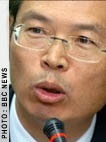
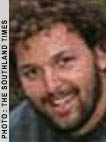
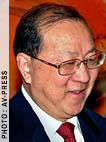
Syed Ghulam Nabi Fai

Syed Fai

By JOSEPH FITSANAKIS | intelNews.org |
American counterintelligence officers have indicted two US citizens of Pakistani origin with trying to influence Congress and the White House on behalf of the government of Pakistan. According to court documents filed on Tuesday by the FBI in Virginia, Zaheer Ahmad (who escaped arrest and may be currently in Pakistan) and Syed Ghulam Nabi Fai acted as unregistered agents of a foreign government (legal terminology for espionage) while operating under the direction of Pakistan’s Inter-Services Intelligence directorate (ISI). Both men were leading members of the Kashmiri American Council, a lobby group that propagates Pakistan’s territorial claim to the northwester Indian region of Kashmir. Pakistan and India fought over Kashmir in 1947 and 1967, and have been engaged in constant low-intensity conflict over the territory ever since. The Kashmiri American Council is one of three Kashmir Councils in the West, the other two being in London, UK, and Brussels, Belgium. But the FBI court affidavit claims that the Kashmir Centers are ISI front-organizations, and that the activities of their employees are directed by the ISI. Specifically, the FBI alleges that Fai, who acted as the Council’s director in Washington, routinely coordinated his endeavors with his ISI handlers, usually communicating with them via email. The court documents mention a witness testimony that claims Fai has been an ISI operative for over two decades, and that in recent years he has been receiving between $500,000 and $700,000 per annum from Pakistani intelligence. Much of this money ended up in the pockets of influential American politicians, in the form of campaign donations. Read more of this post

New Zealand investigates ‘suspicious’ Israeli spy activity [updated]

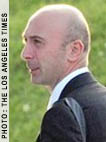
Ofer Benyamin Mizrahi

Ofer Mizrahi

By JOSEPH FITSANAKIS | intelNews.org |
Authorities in New Zealand have confirmed that they investigated a series of suspicious actions by alleged Israeli intelligence operatives, in the days following last February’s earthquake in Christchurch. According to publicly available data, at least three of the 181 people who died in the February 22 earthquake were Israelis. Admittedly, the number of Israeli victims was relatively small, which is why New Zealand authorities were baffled by the Israeli government’s intense concern about the earthquake. On the day of the disaster, Israeli Prime Minister Benjamin Netanyahu spoke on the telephone no fewer than four times with his New Zealand counterpart, John Key, which some New Zealand officials found odd at the time. Even stranger was a subsequent encounter between an armed New Zealand security force and an unauthorized Israeli rescue squad, in the days following the earthquake. The Israeli squad was found roaming in Christchurch’s cordoned ‘red zone’, without an official rescue accreditation by either the United Nations or the New Zealand government. After a brief but tense exchange, the Israelis were escorted out of the ‘red zone’, and the episode led to “intense diplomatic exchanges” between Wellington and Tel Aviv, according to New Zealand media. A possible solution to the riddle came with the discovery in Christchurch of the dead body of an Israeli named Ofer Benyamin Mizrahi. Mizrahi, who died when part of a building fell on the van he was riding in, was found to be carrying at least five different passports bearing his photograph. Read more of this post

News you may have missed #542

Sir John Chilcot

Sir John Chilcot

By IAN ALLEN | intelNews.org |
►►Ex-spy says MI6 cut corners to back Blair’s Iraq war case. Britain’s ongoing Iraq Inquiry headed by Sir John Chilcot, heard last week from a former spy, identified in documents only as “SIS2”. The witness said that MI6 was “probably too eager to please” the government and was guilty of “flying a bit too close to the sun”. He was referring to the intelligence support provided by MI6 in support of the case for entering the Iraq War, made by the Labour government of Prime Minister Tony blair in 2003. He also told the committee that “the pressure to generate results, I fear, did lead to the cutting of corners”. ►►Medical group criticizes CIA’s vaccination scheme. A whimiscal tone prevails in most articles on the recent revelation that the CIA tried to collect DNA evidence on Osama bin Laden by running a phony vaccination program in Abbottabad, Pakistan. But medical groups engaged in organizing vaccination schemes are not amused. French-based international medical aid charity Médecins Sans Frontières has lashed out at the CIA because, it said, by using a medical cover for its assassination scheme, the Agency endangered those who conduct life-saving immunization work around the world. Read more of this post

Georgia charges photojournalists with spying for Russia

Irakli Gedenidze

Irakli Gedenidze

By JOSEPH FITSANAKIS | intelNews.org |
Three well-known Georgian photojournalists have been arrested and charged with conducting espionage on behalf of the Russian Federation. They include Irakli Gedenidze, Georgian President Mikhail Saakashvili’s personal photographer, as well as Giorgi Abdaladze, who works for Georgia’s Ministry of Foreign Affairs. The leader of the alleged spy ring is Zurab Kurtsikidze, who works for Frankfurt-based European Pressphoto Agency. All three were arrested in early morning raids last Thursday, during which their homes and offices were searched by Georgian counterintelligence officers. A Georgian government statement issued the following day stated that the searches uncovered confidential information about the daily itinerary of Mr Saakashvili, as well as a classified diagram of the Presidential office. According to the statement, the classified documents were secretly accessed and photographed by Gedenidze and Abdaladze, who then passed them on to Kurtsikidze. He in turn turned them over to the GRU, the Main Intelligence Directorate of the Russian Defense Ministry. Along with the statement, Georgian government prosecutors released surveillance recordings of telephone exchanges between the three photographers, in which they are heard discussing payment arrangements in return for classified documents surrendered to the Russians. Read more of this post

News you may have missed #535

Stella Rimington

Stella Rimington

By IAN ALLEN | intelNews.org |
Last Monday’s Daily Telegraph carried a lengthy interview with Dame Stella Rimintgon, who headed MI5, Britain’s domestic intelligence agency, from 1992 to 1995. The interviewer notes that Rimington’s answers are often “so long you forget what you asked in the first place”, and when it comes to questions on MI5, she appears “practiced in the use of abstract generalities. I suspect is intentional”, she adds. No kidding. On July 10, the same newspaper revealed that, in the 1980s, an internationally renowned cancer researcher used his post at Britain’s Imperial Cancer Research Fund laboratories to steal samples and equipment on behalf of Eastern Bloc intelligence services. Jiri Bartek was working for the StB, Czechoslovakia’s secret intelligence service, says the paper. The paper notes that the revelation, which is based on declassified documents from the time, shows that Bartek (codename ‘Raki’), was probably “only one of dozens of Czech spies who used scientific positions in the West as cover for espionage”. Meanwhile, in South Africa, the country’s troubled National Intelligence Agency (NIA) has been hit an embarrassing revelation. It appears that Andre Vorster, a NIA specialist technical adviser at the agency’s Pretoria headquarters, claimed to have two doctorate degrees, both of which are fake. He also tried to swindle a leading British charity foundation by claiming to be acting on behalf of South African President Jacob Zuma. Vorster’s duties at the NIA included countersurveillance and the safeguarding of South African embassies and key installations around the world.

News you may have missed #534

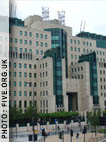
MI6 HQ

By IAN ALLEN | intelNews.org |
According to extracts from the diary of Alastair Campbell, British Prime Minister Tony Blair’s communications director from 2000 to 2003, officials from the MI6 intelligence agency told Blair that France and Germany aimed to “exploit his feud” with then Chancellor of the Exchequer Gordon Brown. Gotta love European unity. In Kuwait, meanwhile, the oil state’s Al-Shahed daily quotes “knowledgeable sources”, who claim that “a lot of spy networks exploit the Kuwaiti environment” and use the country as a transit point to spy on neighboring countries. Hopefully the Kuwaitis will not emulate authorities in Dubai, which in March of last year called on all foreign spies “to leave the region within a week. If not”, they warned, “we will cross that bridge when we come to it”. In the nearby state of Israel, public opinion is still divided about former Mossad chief Meir Dagan’s criticism of the Netanyahu government. As Bloomberg columnist Jeffrey Goldberg notes, Dagan has “called into question the wisdom –and, privately, even the sanity– of any Israeli leader who contemplates a preemptive strike on Iran’s nuclear facilities”. But why is he doing it, and could it backfire?

News you may have missed #533

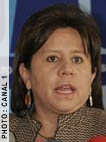
María del Pilar Hurtado

María Hurtado

By IAN ALLEN | intelNews.org |
The government of Colombia will –finally– officially request from Panama the extradition of Maria Pilar Hurtado, former director of Colombia’s disgraced DAS intelligence agency, who was granted political asylum in the Central American country last year. The Colombian government has been contemplating this move for some time, as the investigation into illegal activities by the DAS is progressing extremely slowly. In Iran, the government says that it plans to try dozens of American intelligence officials in absentia. The announcement has raised the possibility that Tehran may out US spies which the Iranians claim attempted to recruit locals as part of a sophisticated intelligence-gathering operation. One former CIA operative, Glenn Carle, voluntarily came out a few years ago, following retirement, and made news headlines last month, in connection with alleged CIA spying on American academic Juan Cole. Carle, who worked for the CIA for 23 years, in Africa, the Balkans and Latin America, among other locales, has written a book. It focuses on a several-month period he spent questioning a suspected leader of al-Qaeda. The interrogations took place in two countries, which he says he is not permitted to name.

News you may have missed #530

  • Another spy ring reportedly busted in Kuwait. Kuwait has allegedly busted another spy ring, working for the intelligence services “of an Arab country [that] is currently embroiled in political turmoil”, reports Al-Jaridah daily. The paper also said that information gathered by the spy ring was sent to a liaison officer in the embassy of that country. Last April, two Iranians and a Kuwaiti national, all serving in Kuwait’s army, were sentenced to death for belonging to an Iranian spy ring.
  • How defectors come in from the cold. Interesting historical account of how defectors adjust to their new lives, from the BBC’s News Magazine. Sadly, much of the article is about –you guessed it– the Cambridge Five, which the British seem unable to get over, half a century later.
  • UK report says hackers should fight cyber spies. Britain faces losing its position at the leading edge of technology unless new ideas are developed to fight cyber attacks, including recruiting computer hackers to help fight organized cyber crime and espionage by foreign powers. This is the conclusion of a new report by the University College London’s Institute for Security and Resilience Studies.

Taiwanese spy operation led to Chinese official’s dismissal, claims leaked cable

Jin Renqing

Jin Renqing

By JOSEPH FITSANAKIS| intelNews.org |
The puzzling resignation of China’s minister of finance was caused by his sexual involvement with a Taiwanese spy, who extracted classified information from him, according to a leaked American diplomatic cable. At the time of his 2007 resignation, Jin Renqing, a Communist Party bureaucrat with over 40 years of financial affairs experience, was regarded as Asia’s preeminent finance technocrat. His rise to China’s most powerful financial post, in the early years of our century, coincided with the country’s meteoric economic rise. When he quietly stepped down, a brief press statement by the Chinese government said Jin had resigned for “personal reasons”. But according to a diplomatic cable authored in September 2007 by a US State Department diplomat, Jin’s resignation was in fact a summary dismissal, caused by his sexual involvement with a much younger woman, who is now believed to have worked for Taiwanese intelligence. The cable, which has been leaked by whistleblower website WikiLeaks, describes the alleged Taiwanese spy as a “promiscuous socialite” and a “social butterfly”, who had successive affairs with a host of senior Chinese officials. The list included the country’s former Minister for Agriculture, Du Qinglin and Chen Tonghai, Director of China’s powerful Petroleum and Chemical Corporation, also known as Sinopec. Read more of this post

News you may have missed #521 (Israel edition)

  • Lebanese officer gets 20 years for spying for Israel. Mansour Diab’s sentence marks the first time a Lebanese officer was convicted of spying for Israel. Meanwhile, Lebanon’s militant Shiite group Hezbollah has arrested several of its own members on suspicion of spying for Israel. Last weekend the Kuwaiti daily Al-Rai al-Aam reported that the group “was dumbfounded over the Israeli infiltration”, which appears to have been substantial.
  • Israel pressures US to temporarily release jailed spy. Several Israeli leaders on Sunday urged the United States to allow jailed Jewish-American spy Jonathan Pollard to attend his father’s funeral, after he was not granted permission to join him at his bedside before he died.
  • Israel seeks prisoner exchange for Ilan Grapel. Israel is pursuing a prisoner exchange for Ilan Grapel, a 27-year-old American-Israeli dual citizen, who was arrested by Egyptian state security officers at his downtown Cairo hotel last Sunday on charges of spying for Israeli intelligence. Meanwhile, both the US and Israel insist Grapel is no spy.

News you may have missed #519

  • Australian ex-spy wins right to compensation. The former spy, known only as FXWZ, worked for the Australian Security Intelligence Organisation for almost 15 years before leaving it in 1979. Now at 67, he has won the right to compensation claiming that his work for ASIO induced a mental disorder.
  • Eritrea releases UK citizens detained for espionage. The four British men, two of whom are former Royal Marines, were arrested in Eritrea last December on suspicion of espionage, after they were caught in possession of arms including 18 different types of snipers, ammunition and night vision equipment. They have been released after a months-long diplomatic row between Eritrea and Britain.
  • Pakistan to deport US national suspected of spying. Twenty-seven year-old Matthew Craig Barrett has been arrested for allegedly scouting nuclear facilities near the Pakistani capital Islamabad, and is expected to be deported soon.

News you may have missed #515

  • US spies tracked suspected terrorists in Sweden. US intelligence agents have staked out suspected terrorists in Sweden without the authorization of the government there, Svenska Daglbadet newspaper has reported. Last November, Norway, Sweden and Denmark launched official investigations into reports that US embassies there operated illegal intelligence-gathering networks.
  • Aussie spy agency reported on WikiLeaks. Australian Prime Minister Julia Gillard’s department has revealed that WikiLeaks and its founder, Julian Assange, were the subject of Australian intelligence reporting last year, as the government anticipated the whistleblower website would spill “highly sensitive and politically embarrassing” secrets.
  • Former Taiwanese general accused of spying. Taiwanese government prosecutors are seeking a life sentence for Major General Lo Hsien-che, the most senior Taiwanese official to be arrested on espionage charges in the country since the early 1960s.

Expelled Israeli spy was after Russian-Arab arms deals, says FSB

Vadim Leiderman

Vadim Leiderman

By IAN ALLEN | intelNews.org |
The military attaché at the Israeli embassy in Moscow, who was unceremoniously expelled by the Russian government last week, was allegedly gathering intelligence on Russian arms exports to the Arab world. The FSB, Russia’s foremost counterintelligence agency, said Soviet-born Vadim Leiderman, a colonel in the Israeli army, was “caught red-handed” during a sting operation in Moscow, which is said to have occurred on May 12. His arrest led to the first expulsion of an Israeli diplomat from Russia in over two decades. Commenting on the case, a spokesperson from Russia’s Ministry of Foreign Affairs said that the Kremlin had intended to conceal Leiderman’s expulsion from the media, as a “gesture of goodwill” to Israel. But its effort to keep the operation secret collapsed after Russia’s RBC TV aired a surveillance video of Leiderman’s arrest by a group of FSB officers, as the seemingly unsuspecting Israeli diplomat was dining with another man at an exclusive Moscow restaurant. Read more of this post

Iran arrests dozens in connection with alleged CIA spy ring

Iran

Iran

By IAN ALLEN | intelNews.org |
The Iranian intelligence services have announced the arrest of at least 30 individuals accused of being part of an elaborate CIA “espionage and sabotage network” operating in the country. According to Iran’s Fars News Agency, spy ring members, which include government administrators, were handled from abroad by as many as 42 CIA operatives, whose identities are allegedly known to Iranian counterintelligence investigators. Iran’s Intelligence Ministry claims that spy ring members, who are believed to be Iranian, were recruited by CIA officers operating out of US embassies in several predominantly Muslim countries, including the United Arab Emirates, Turkey and Malaysia. They were then trained and sent into Iran to gather intelligence on energy projects, academic research, as well as telecommunications installations and border control systems. Read more of this post

News you may have missed #511