News you may have missed #410

  • Clapper confirmed as US DNI in Senate-White House deal. Retired general James Clapper has been unanimously confirmed by the Senate as US National Intelligence Director, after a series of last-minute deals between objecting Republican Senators and the White House, which nominated Clapper several months ago.
  • Canada rejects residency request by Pakistani ex-ISI spy. The Canadian government has refused a permanent residency application by Haroon Peer, a Danish citizen, who worked for three Pakistani intelligence agencies, including the Inter-Services Intelligence directorate. Haroon is married to a Canadian-born woman and has three Canadian-born children.
  • Lebanon in shock after ex-general’s arrest on spy charges. Last week’s arrest of Fayez Karam, a well-respected retired general and politician with the Hezbollah-allied Christian Free Patriotic Movement (FPM), on suspicion of spying for Israel, has sent shock waves through Lebanon and left many wondering how deep the Jewish state has infiltrated the country.

Bookmark and Share

News you may have missed #408

  • Russian military spy supervised Czech prisons. Robert Rakhardzho, a Russian spy whose relationship with a Czech female Army major prompted the resignation of three senior Czech military officials, worked as a psychologist at the Czech Prison Service headquarters until last September. Rakhardzho is now hiding in Russia.
  • US undercover feds able to easily obtain fraudulent passports. Gregory Kutz, an investigator for the US Government Accountability Office, testified last week to a Senate panel about how his team of undercover Federal agents was able to get the State Department to issue five of the seven e-Passports it requested using fraudulent information. The government apparently failed to detect such basic red flags as a fake driver’s license.
  • Russia widens powers of KGB successor agency. Russian president Dmitry Medvedev has signed a law widening (again) the powers of the Federal Security Service, the KGB’s main successor agency. The new law allows the FSB to issue warnings to people suspected of preparing to commit “crimes against Russia’s security”. Perpetrators face fines or up to 15 days detention.

Bookmark and Share

Lebanon releases German suspected of spying for Israel

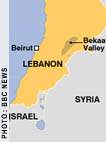
Bekaa Valley, Lebanon

Bekaa Valley

By JOSEPH FITSANAKIS | intelNews.org |
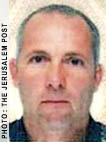
German officials have confirmed reports from Lebanon that a German citizen has been released after being questioned in connection with Israeli espionage activity in eastern Lebanon. Manfred Peter Mog, 58, who has lived in Lebanon since 1999, was detained on Monday by Lebanese counterintelligence officers, who suspected him of sharing “sensitive information” with Israeli intelligence operatives. It is believed that Mr. Mog, an engineer who has worked since 2009 at the Liban Lait dairy factory in Lebanon’s Bekaa Valley, was questioned in connection to “sophisticated transmitters” found in his possession. But the German Foreign Ministry on Wednesday firmly denied that the German citizen had had any charges brought against him by the Lebanese government. Soon afterwards, unnamed Lebanese officials confirmed that Mr. Mog had indeed been released without charges, following intense questioning by counterintelligence officers. It is worth noting that there have recently been several intelligence stories linking Israel and Germany. Read more of this post

News you may have missed #402

Bookmark and Share

Did fugitive spy Metsos lead to Russian spy arrests?

Christopher Metsos

C.R. Metsos

By JOSEPH FITSANAKIS | intelNews.org |
Soon after the June 27 arrests of 10 Russian non-official-cover (NOC) spies in several US cities, one name came to the attention of intelligence observers: Sergei Tretyakov. Tretyakov was a senior Russian Foreign Intelligence Service (SVR) officer who defected to the US in 2000, while second-in-command at the SVR station in Russia’s United Nations mission in New York –the same outfit that run the deep-cover operatives arrested in June by the FBI. The Bureau’s own admission that it began monitoring the operatives around 2001, has caused many to believe that Tretyakov, who died suddenly on June 13, at age 53, may have tipped off the FBI about the NOCs. But Russian investigative journalist Yulia Latynina has raised a second possibility, no less intriguing than the first. Namely that it was not Tretyakov who betrayed the deep-cover operatives to the FBI, but rather the mysterious so-called 11th spy, Christopher R. Metsos, a seasoned SVR operative who is said to have acted as a go-between and financier for all 10 Russian spies. Read more of this post

News you may have missed #401

Bookmark and Share

News you may have missed #399

  • Alleged Lebanese spy for Israel flees to Germany, says Lebanon. Lebanese media claim that Rasan al-Jud, who Lebanese authorities accuse of having aided Israel with the help of employees at Alfa, Lebanon’s state-owned cellular telecommunications provider, has fled Lebanon and is currently in Frankfurt, Germany. But a German Foreign Ministry spokesman has said that “the Foreign Ministry does not have any particular knowledge about the news item”.
  • Japan defends costly visit by Korean spy. Japan’s government has defended a costly four-day visit by Kim Hyun-Hee,  a former North Korean spy, who blew up a South Korean jet in 1987, killing 115 people. Despite the high expectations, the former spy produced little news about Japanese nationals kidnapped decades ago by Pyongyang.
  • Analysis: Slaying the US intelligence behemoth. Commenting on the recent Washington Post investigative series on the US intelligence complex, author Philip Smucker comments that there is an essential disconnect at work. Namely, Islamic perceptions are not understood to be ‘hard intelligence’. The US is still trying to fit a square peg into a round hole, or to apply conventional intelligence to an asymmetrical world.

Bookmark and Share

News you may have missed #384


Bookmark and Share

News you may have missed #383 (Russian spy ring edition IV)

  • Analysis: Why Russia and the US still spy. The sensationalist media coverage of the FBI’s recent bust of a Russian spy ring in the US has failed to examine this development in light of the post-Cold War relations between Russia and the United States. The fact is that espionage will continue, even as the United States and Russia work out a new post-Cold War modus vivendi, says Peter Earnest, a 35-year CIA veteran.
  • Analysis: The lure of the SVR. For most Russians, getting a job in the country’s vast bureaucracy is a happy career step. Even more glamorous is the FSB, Russia’s ubiquitous domestic intelligence service. But the most prestigious agency of all is still the SVR, Russia’s equivalent of MI6, which is responsible for all foreign intelligence operations abroad, including the long-term, deep cover espionage ring just busted by the FBI. The Cold War may be over, but the SVR still offers a globe-trotting career for a small, elite group of ambitious graduates with the right connections.
  • Analysis: Was the Russian spy operation worth the trouble? The FBI has alleged no espionage or loss of classified materials as a result of the operations of the 11-member Russian spy ring. Indeed, much of what it maintains the Russians were seeking could be gleaned from a Google search. So the wider ramifications of the spy arrests may turn out to be primarily political rather than cloak-and-dagger.

Bookmark and Share

Analysis: What we know about the Russian spy ring case

SVR seal

SVR seal

By JOSEPH FITSANAKIS | intelNews.org |
If you are frustrated with the increasingly idiotic and sex-obsessed media coverage of the Russian spy ring recently busted by the FBI, you are not alone. Less than a week since news of the arrests in the US of ten alleged deep-cover agents of Russia’s SVR intelligence agency emerged, sensationalist media hacks have left no stone unturned. Thankfully, Stratfor Global Intelligence has produced an excellent early summary of this developing story, complete with a useful diagram of the known members of the SVR spy ring. The summary correctly points out some of the critical issues in the espionage case, including the fact that the 11 suspects appeared to be primarily run out of the SVR residence at the Russian mission to the United Nations in New York, and not out of the Russian Embassy in Washington DC. Read more of this post

News you may have missed #382 (Russian spy ring edition III)

Bookmark and Share

News you may have missed #381 (Russian spy ring edition II)

  • Accused Russian spies lived perfect Boston lives. It is almost certain that the members of the Russian spy ring, arrested by the FBI last weekend, trained for years in Moscow’s most elite SVR intelligence school to pass as Canadians or Americans. Their real-life identities and backgrounds may never be learned.
  • Russian spies blended well, sought contacts. The 11 people arrested and accused of being members of a Russian spy ring operating under deep cover in America’s suburbs were active in the East Coast networking circuit.
  • Kremlin adopts calmer tone on US spy affair. Moscow on Wednesday softened its initially furious reaction to this week’s spy scandal in the US, when it said that the arrest of 11 people accused of working for Russian intelligence would not have a negative impact on bilateral relations. Earlier in the week, Vladimir Putin had accused US authorities of having “gone on a rampage”.

Bookmark and Share

Wanted Russian spy ring member skips bail in Cyprus

Achilleos Hotel

Achilleos Hotel

By JOSEPH FITSANAKIS | intelNews.org |
Police in the Mediterranean island nation of Cyprus have issued an arrest warrant for a member of an alleged Russian spy ring in the United States, who had been released on bail following his capture on Tuesday. The FBI says that Christopher R. Metsos, who holds Canadian citizenship, was the financial go-between in the 11-member Russian spy ring, which was busted in a series of coordinated raids across several US states on Saturday. On June 25, Interpol issued an international arrest warrant for Metsos, who escaped arrest in the US because he was in Cyprus, where he had arrived on June 17. He was arrested at the island’s Larnaca International Airport on Tuesday, while trying to board a flight for Budapest, Hungary. Remarkably, however, Metsos was soon released on bail, awaiting an extradition request from Washington. Predictably, on Wednesday, he failed to report to Larnaca police, as stipulated in his bail release court order. Read more of this post

News you may have missed #380 (Russian spy ring edition I)

Bookmark and Share

Canadian politicians work for foreign powers, says Canada spy chief

Richard Fadden

Richard Fadden

By IAN ALLEN | intelNews.org |
The Canadian state’s senior intelligence executive caused an uproar last weekend after he claimed that several Canadian politicians were under the control of foreign governments. In an interview for an investigative program on state-owned CBC television, Richard Fadden, Director of the Canadian Security Intelligence Services (CSIS), said that his intelligence officers are aware of “some political figures who have developed quite an attachment to foreign countries”. He also claimed that CSIS investigators were aware of at least two cabinet ministers in two Canadian provinces, who were “agents of influence”, as well as other public officials that were secretly representing “foreign interests”.  Read more of this post