South Korea busts alleged North Korean spy ring, handler remains at large
April 29, 2022 Leave a comment
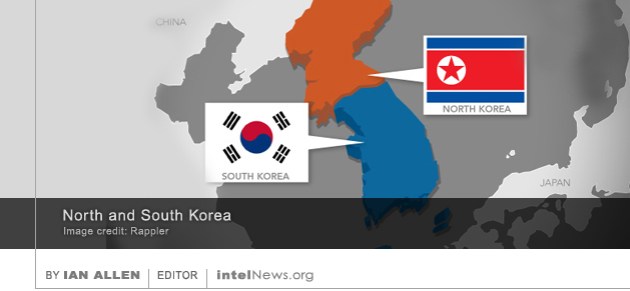 SOUTH KOREAN AUTHORITIES HAVE busted an alleed spy ring run by a North Korean handler, who remains at large. Two men have been arrested so far in connection with the ring. One of them, identified only as “Lee”, is reportedly the chief executive of a South Korean cryptocurrency exchange. The other man, a Republic of Korea Army officer, is identified as “Captain B.” in court documents.
Lee was arrested on April 2, while Captain B. was arrested on April 15. They are facing charges of violating South Korea’s 1948 National Security Act. Prosecutors alleged that the two men divulged to their North Korean handler the log-in credentials to the online command-and-control portal of the Republic of Korea Armed Forces. The men are accused of having received substantial financial compensation in return for their services.
According to the prosecution, Lee was approached in July 2021 by a North Korean intelligence officer, who recruited him to work for North Korean intelligence. In August of the same year, Lee approached Captain B., and recruited as a subcontractor, with the promise of substantial financial compensation in the form of bitcoin. Captain B. then began giving military secrets to Lee, who passed them on to the North Koreans.
Eventually, Lee’s handler allegedly provided him with a miniature camera hidden inside an electronic watch. Lee gave this spy device to Captain B., along with a hacking device hidden inside a flash drive, which is commonly known as a “poison tap”. This device gave the North Korean handler access to the laptop used by the men to access the South Korean military’s command-and-control portal. The two alleged spies were compensated with nearly $600,000 in bitcoin for their services.
South Korean authorities claim that the North Korean handler of the spy ring, as well as a man who worked as a courier between the handler and the two agents, remain at large. Public court documents do not specify the kind of information that was allegedly accessed by the North Koreans as a result of this breach.
► Author: Ian Allen | Date: 29 April 2022 | Permalink
 CHINESE STATE-OWNED MEDIA has stepped up warnings of an alleged Western espionage offensive, to mark China’s annual “national security education day”, a new initiative promoted by the Chinese Communist Party (CPC). The decision to designate April 15 “national security education day” was adopted by the CPC in 2015, during its 12th National People’s Congress. Since then, the Chinese government has promoted the day as an effort to create a “positive atmosphere of national security” across the nation.
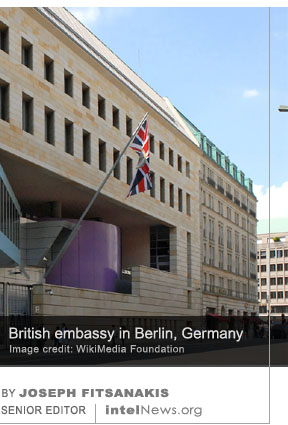 A BRITISH CITIZEN, WHO worked as a security guard at the British embassy in Berlin, has been charged with spying for the Russian intelligence services. Authorities in the United Kingdom announced on Wednesday that David Ballantyne Smith, 57, who lives in Potsdam, Germany, has been charged on nine different offenses under the 1911 Official Secrets Act.
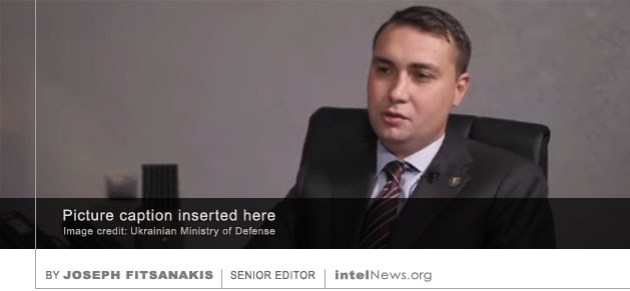 UKRAINE’S MILITARY INTELLIGENCE AGENCY has published a list that contains the names, addresses and passport numbers of 600 Russians, who it alleges are employees of the Russian Federal Security Service (FSB). The FSB is Russia’s domestic security and counterintelligence agency, but its personnel also operate in former Soviet republics, including Ukraine. It has been
 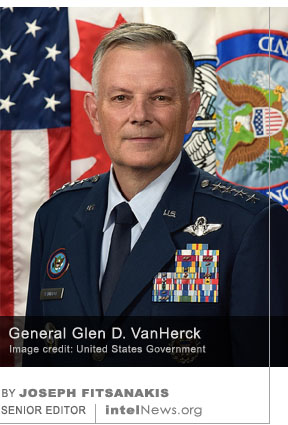 THE PRESIDENT OF MEXICO has stated that his country is “sovereign” in response to comments, made by a senior United States military official, that Mexico hosts more Russian intelligence personnel than any other country in the world. These
 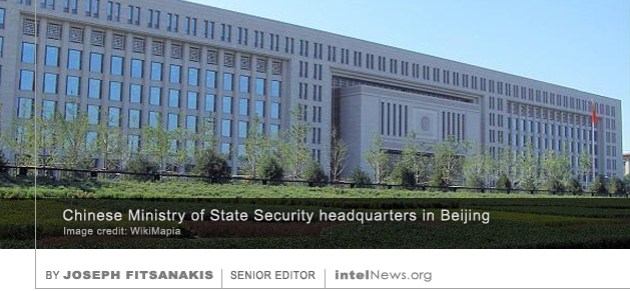 AUTHORITIES IN THE UNITED States have indicted five members of an alleged spy ring for the Chinese Ministry for State Security (MSS), who engaged in sabotage, bribing, harassment, intimidation and entrapment operations. The Federal Bureau of Investigation (FBI)
  AUSTRALIAN CITIZENS WITH ACCESS to sensitive information are being targeted for recruitment by foreign spies, who are increasingly using social media platforms, including dating applications, according to a new government report. The report, known as the Annual Threat Assessment, was issued on Wednesday by the Australian Security Intelligence Organisation (ASIO), which operates as the nation’s counter-terrorism and counterintelligence agency.
 AUTHORITIES IN ISRAEL CLAIM they busted a ring of spies for Iran, which was composed solely of middle-aged Jewish women. The Israel Security Agency, known as Shin Bet, said on Thursday that it had arrested four Jewish women, all of them Iranian-born Israeli citizens. The four women were charged with espionage against the state of Israel. The Shin Bet described the case as “serious” and as part of a broader plan by Iran to build a sophisticated espionage network inside the Jewish state.
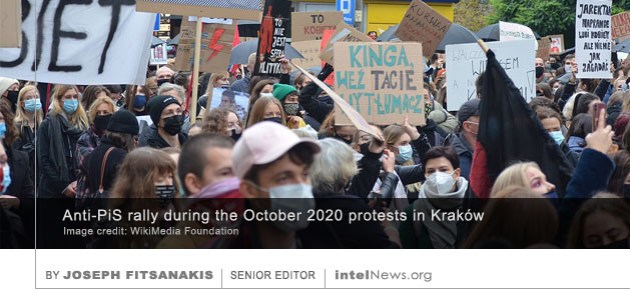 CENTRAL FIGURES OF POLAND’S opposition coalition, which narrowly lost the 2019 parliamentary election, had their cell phones hacked with a surveillance software used by the country’s spy services, according to a new report. A major target of the hacks was Krzysztof Brejza, a member of the lower chamber of the Polish parliament and campaign director of the Civic Coalition, a centrist-liberal alliance. In the parliamentary election of 2019, the Civic Coalition challenged the all-powerful Law and Justice Party (PiS), which has ruled Poland for much of the past decade.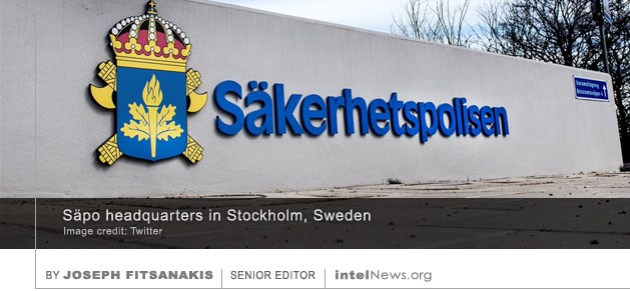

 A POPULAR TURKISH NEWSPAPER has published an interview with a member of a network of spies who were allegedly recruited by the Israeli agency Mossad to spy on Palestinian students living in Turkey. As intelNews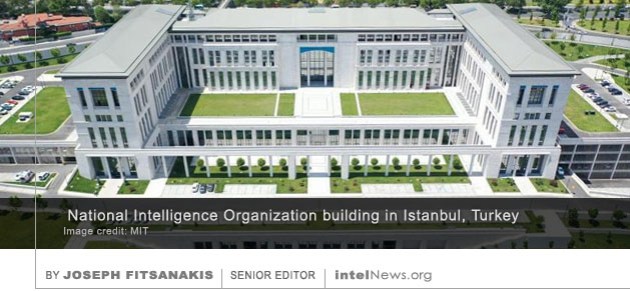








 intelNews.org
In rare speech, Australian intelligence chief stresses urgent need to recruit more spies
May 10, 2022 by Joseph Fitsanakis 1 Comment
Symon’s talk was hosted in Sydney by the Lowy Institute, an independent Australian think-tank that focuses on international affairs. During his talk, which was made available afterwards on the Lowy Institute’s website, Symon spoke about a range of issues relating to Australia’s geopolitical priorities and their connection to intelligence operations. He told the audience that the primary task of ASIS, which is to recruit foreign subjects to spy on behalf of Australia, remained as crucial as ever.
He added, however, that a growing number of pressing concerns made “the need to recruit new spies” more essential than ever before. According to Symon, ASIS needs to “recruit and work with even more vigor and urgency than at any other point in our 70-year history”. In this task, China remains a strategic focus for ASIS, given its role in the region. Symon claimed there were signs that increasing numbers of Chinese state “officials [and] individuals” were “interested in a relationship” with ASIS. This was because many Chinese are becoming concerned about what he described as the rise of “an enforced monoculture” in China, and wish to stop it, said Symon.
Later in his speech, the ASIS director touched in broad terms on the challenge posed by technology on human intelligence (HUMINT) operations, in which ASIS specializes. He described these challenges as “extraordinary”, and said they resulted from an interaction between “a complex strategic environment [and] intensified counter-intelligence efforts” by Australia’s adversaries, as well as a host of “emergent and emerging technologies”. These technologies are in many ways posing “a near-existential” risk to the types of HUMINT operations carried out by ASIS, as the organization’s collection activities run the risk of becoming “increasingly discoverable”, said Symon.
► Author: Joseph Fitsanakis | Date: 10 May 2022 | Permalink
Filed under Expert news and commentary on intelligence, espionage, spies and spying Tagged with Australia, Australian Secret Intelligence Service, China, espionage, HUMINT, Paul Symon