Congo accuses Rwandan spy cell of plot to shoot down president’s plane
January 4, 2023 Leave a comment
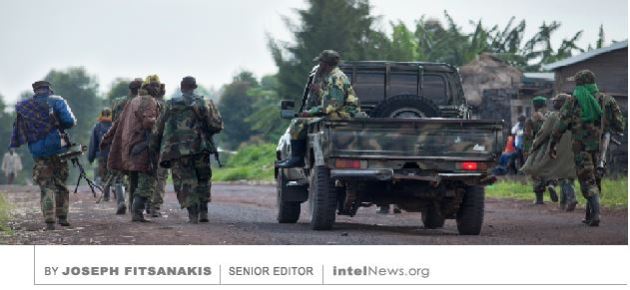 THE GOVERNMENT OF THE Democratic Republic of the Congo (DRC) has dismantled an alleged Rwandan spy network and has charged its members with plotting to assassinate the country’s president. This development, which was announced late last week by authorities in Kinshasa, has plunged relations between the two neighboring countries into a new low.
The DRC has long accused Rwanda of training and equipping members of the so-called March 23 Movement (M23), who have been engaged in a decade-long conflict with the Congolese state in the North Kivu province. Since March of last year, DRC government forces have been engaged in a major offensive against the M23, but the rebel group continues to control several strategic towns and villages in North Kivu. Meanwhile, Rwanda has accused the DRC of using the offensive as a pretext to invade Rwanda. Late last year, the Rwandan Defense Forces (RDF) captured Congolese territory, in what authorities in Kigali described as an attempt to create a buffer zone between Rwanda and the DRC military offensive. In response, the DRC suspended a host of bilateral agreements with Rwanda and expelled the Rwandan ambassador from Kinshasa.
Last Thursday, the DRC’s Deputy Minister of the Interior, Jean-Claude Mandongo, posted a video on social media, announcing the arrest of several members of an alleged Rwandan spy ring. According to Mandongo, the spy ring consisted of two alleged Rwandan spies and two Congolese accomplices. The two Rwandans have been identified in DRC media reports as Dr. Juvenal Nshimiyimana and Moses Mushabe, who is allegedly a serving intelligence officer in the RDF. According to Mandongo, the two Rwandans were stationed in the DRC in a non-official-cover capacity, as employees of a humanitarian non-governmental organization called African Health Development Organization (AHDO).
Authorities in the DRC seem to believe that the AHDO serves as a proprietary cover for Rwandan intelligence, although they have provided no evidence for this claim. Officials in Kinshasa also claim that Rwandan spies are operating in other AHDO branches across the DRC. Statements from the Ministry of the Interior suggest that more arrests of alleged Rwandan spies are imminent. According to DRC officials, AHDO facilities were strategically located adjacent to the N’djili International Airport in Kinshasa, in order to monitor the movements of the presidential air fleet. In a report published on Tuesday, DRC authorities claimed that the alleged Rwandan spy cell planned to assassinate DRC President Félix Tshiskedi, by shooting down his presidential jet. The Rwandan government has rejected these claims.
► Author: Joseph Fitsanakis | Date: 04 January 2023 | Permalink
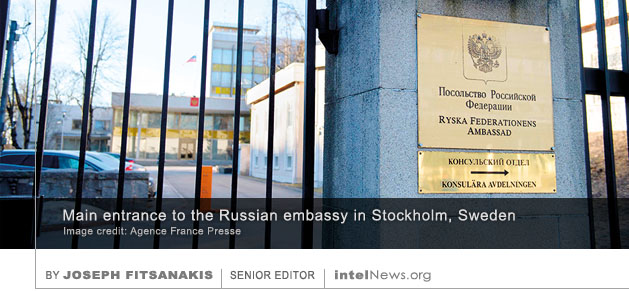 NUMEROUS UNANSWERED QUESTIONS SURROUND the arrest of a Russian married couple in Sweden, on charges of espionage. The arrest took place in dramatic fashion in the early hours of Tuesday, November 22.
 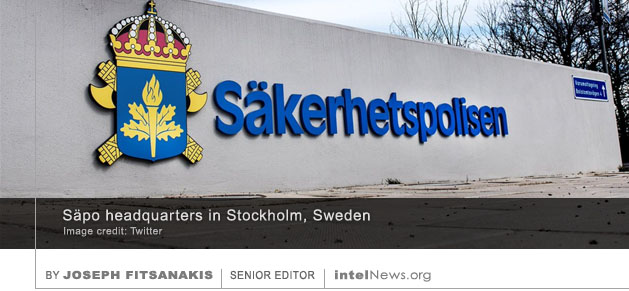 AUTHORITIES IN SWEDEN HAVE charged two brothers, one of whom worked in a highly secretive Swedish intelligence unit, with spying for Russian military intelligence for a decade, according to news reports. The charges resulted from a six-year investigation led by the Swedish Security Service (SAPO), which is the country’s counterintelligence agency. SAPO reportedly launched the probe in 2017, based on suspicions that it harbored a spy in its personnel ranks.
 AN ALLEGED RUSSIAN DEEP-cover intelligence operative, who was arrested by Norwegian police last week, spent years building his fake cover in Canada, while studying there as a Brazilian citizen, according to reports. Norway’s Police Security Service (PST)
 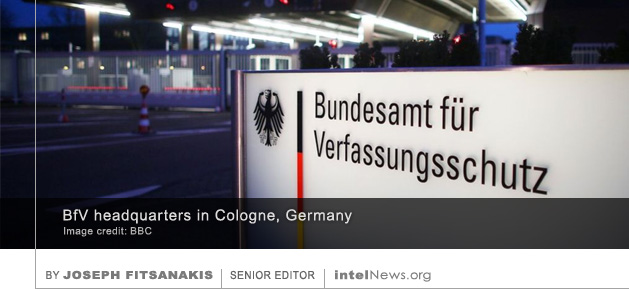 LAST SUMMER, GERMAN EMBASSY staff in Russia issued an entry visa to a Russian national, despite warnings by at least two European security agencies that he was a known intelligence officer, according to a report. The incident has fueled persistent allegations that Berlin’s counterintelligence posture against Russia is ineffective.
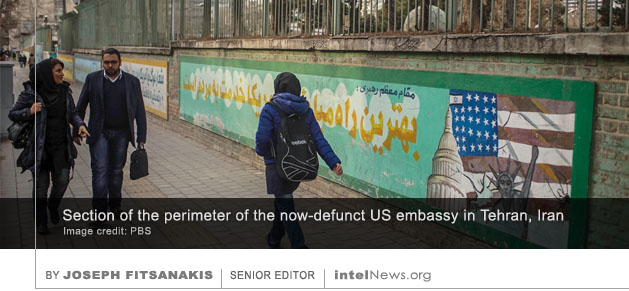 A YEAR-LONG INVESTIGATION by the Reuters news agency attempts to shed light on the alleged arrests of more than a dozen Iranian spies, who claim to have worked for the United States Central Intelligence Agency. Periodically Iran claims to have captured members of alleged CIA spy rings operating across its territory. For instance, in 2019 Iran’s Ministry of Intelligence
 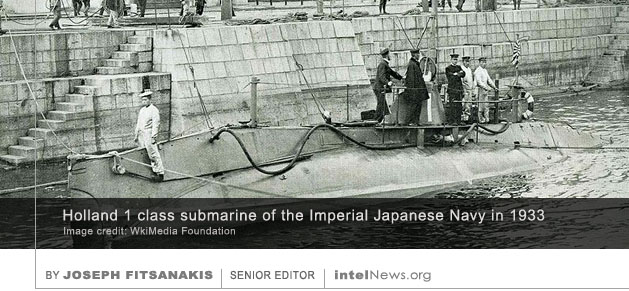 MUCH HAS BEEN WRITTEN about the wartime intelligence exploits of the Allies against Japan. Such exploits range from the United States’ success in breaking the Japanese JN-25 naval code, to the
  Attachés, and Intelligence Failures: The Imperial Japanese Navy’s Efforts to Establish Espionage Networks in the United States Before Pearl Harbor”.
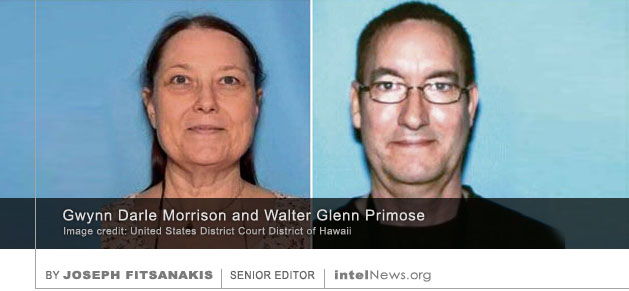 A FEDERAL JUDGE IN HAWAII has denied bail to a married American couple, who are believed to have assumed the identities of dead children in order to lead double lives for over 20 years, according to prosecutors. Local media reports
 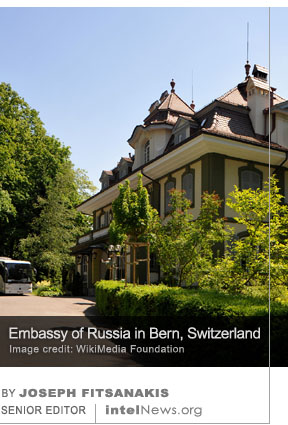 SINCE LATE FEBRUARY, WHEN Russian troops invaded Ukraine, over 500 Russian diplomats have been expelled from Western countries. Even former Russian allies have contributed to the growing list of expulsions —most recently Bulgaria, which
 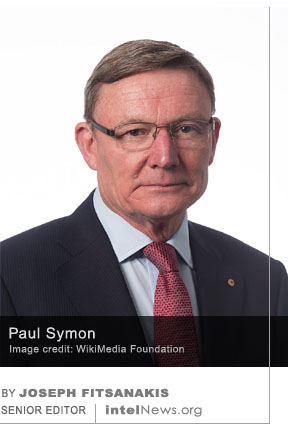 AUSTRALIAN INTELLIGENCE MUST recruit foreign spies with more urgency than at any time since the opening years of the Cold War, according to the head of Australia’s main foreign intelligence agency. Paul Symon, director of the Australian Secret Intelligence Service (ASIS), was speaking at a public event to mark the 70th anniversary of the organization’s history. It was a rare public speech by the head of Australia’s secretive main foreign intelligence service.
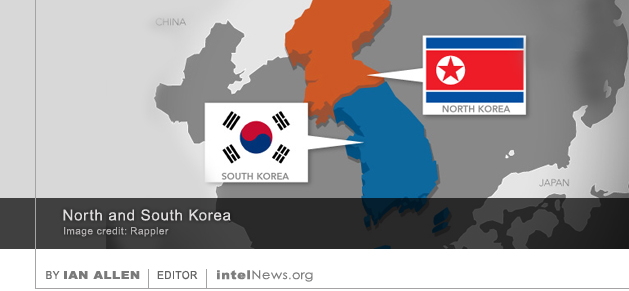 SOUTH KOREAN AUTHORITIES HAVE busted an alleed spy ring run by a North Korean handler, who remains at large. Two men have been arrested so far in connection with the ring. One of them, identified only as “Lee”, is
  CHINESE STATE-OWNED MEDIA has stepped up warnings of an alleged Western espionage offensive, to mark China’s annual “national security education day”, a new initiative promoted by the Chinese Communist Party (CPC). The decision to designate April 15 “national security education day” was adopted by the CPC in 2015, during its 12th National People’s Congress. Since then, the Chinese government has promoted the day as an effort to create a “positive atmosphere of national security” across the nation.
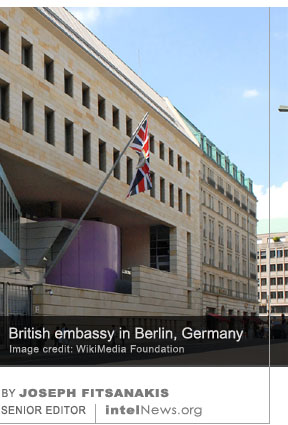 A BRITISH CITIZEN, WHO worked as a security guard at the British embassy in Berlin, has been charged with spying for the Russian intelligence services. Authorities in the United Kingdom announced on Wednesday that David Ballantyne Smith, 57, who lives in Potsdam, Germany, has been charged on nine different offenses under the 1911 Official Secrets Act.
 UKRAINE’S MILITARY INTELLIGENCE AGENCY has published a list that contains the names, addresses and passport numbers of 600 Russians, who it alleges are employees of the Russian Federal Security Service (FSB). The FSB is Russia’s domestic security and counterintelligence agency, but its personnel also operate in former Soviet republics, including Ukraine. It has been








Western intelligence agencies alarmed by arrest of Russian spy in Germany
January 10, 2023 by Joseph Fitsanakis 4 Comments
The official, named only as “Carsten L.”, in compliance with Germany’s strict privacy laws, has been charged with “high treason” and is currently awaiting trial. When announcing his arrest, German officials said they were tipped by a foreign intelligence agency that detected a document from the BND’s internal files in the possession of a Russian spy agency. The identity of the intelligence agency that provided the tip is among several important details about the case that remain unknown for the time being. Among them are the duration of Carsten L.’s alleged espionage for Moscow, as well as his motives.
Some reports suggest that Carsten L. may have been blackmailed by the Russians as a result of a kompromat. It has also been reported that the alleged spy was found to be in possession of material relating to the Alternative for Germany (AfD), a far-right party known for its friendly stance toward the Kremlin. But such reports are largely speculative. No information about Carsten L.’s motives has been released by the office of the German prosecutor. It is clear, however, that at least some of the information that Carsten L. gave the Russian government relates to the ongoing war in Ukraine.
Additionally, the suspect’s seniority within the BND allowed him to access several compartmentalized areas of information, including secrets shared with the BND by other Western intelligence agencies. These almost certainly include the United States Central Intelligence Agency and National Security Agency, as well as a host of British intelligence agencies. On Monday, British newspaper The Telegraph quoted German intelligence expert, Erich Schmidt-Eenboom, who said that British intelligence officials were “most incensed” with the case. He added that British intelligence leaders were “considering whether they will continue to provide the BND with their most sensitive information”. The German expert concluded that the Carsten L. case may have “deep implications for future cooperation between the BND and other Western spy agencies”.
► Author: Joseph Fitsanakis | Date: 10 January 2023 | Permalink
Filed under Expert news and commentary on intelligence, espionage, spies and spying Tagged with BND, Carsten L., espionage, Germany, News, Russia