NSA operates ‘secret collection program’ out of US embassies

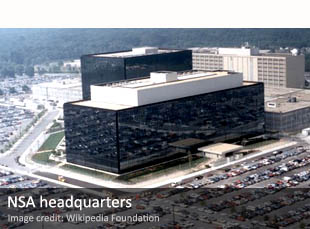
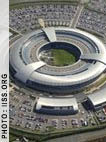
NSA headquartersBy JOSEPH FITSANAKIS | intelNews.org |
Documents leaked by American intelligence defector Edward Snowden point to the existence of a sizable signals intelligence collection program operating out of dozens of United States embassies and consulates located around the world. The documents, given by Snowden to German newsmagazine Der Spiegel, contain details of a monitoring program known as the Special Collection Service (SCS), which appears to operate under the auspices of the National Security Agency (NSA). The NSA is America’s largest intelligence agency —it is bigger than the CIA and the FBI combined— and is tasked by the US government with intercepting electronic communications worldwide. Snowden was a technical contractor for the NSA before he defected to Russia this past summer, where he was offered political asylum. Der Spiegel says that Snowden’s documents point to the existence of the SCS, which allegedly operates covert listening posts in over 80 American embassies and consulates worldwide. These listening posts operate clandestinely, without the knowledge or permission of the host countries. The German newsmagazine identifies the United Nations (UN) headquarters in New York as being among the SCS’s principal listening targets. In the summer of 2012, says Spiegel, an SCS operation managed to compromise the UN headquarters’ internal video conferencing system, by breaking the encryption used to secure the communications of resident diplomats. One NSA document seen by Spiegel hails the “dramatic improvement of data [collected] from video teleconferencing and the ability to decrypt the traffic”. It goes on to state that intercepted communication exchanges rose from 12 to nearly 500 within three weeks following the SCS penetration. Read more of this post

Germany plans to limit NSA’s access to European communications

Philipp Rösler and Angela MerkelBy JOSEPH FITSANAKIS | intelNews.org |
The government of Germany plans to implement a series of measures designed to limit America’s access to the communications of European citizens and institutions, according to senior German cabinet officials. The move is part of a broader German response to news in July that the United States spies on the communications of Germany and other European Union countries with the same intensity it spies on China or Iraq. The information was leaked by American defector Edward Snowden, a former computer expert for the Central Intelligence Agency (CIA) and the National Security Agency (NSA), who is now living in Russia. Speaking to reporters on Wednesday, Germany’s Vice Chancellor and Minister of Economics and Technology, Philipp Rösler, said Germany will take action to limit NSA’s ability to spy on European Union communications traffic. The first step in the process will be to build “a strong European information technology industry which can offer alternatives” to American-owned firms that collaborate with the NSA, said Rösler. Further steps will include augmenting the security of European cloud computing processes and structures, and strengthening contacts between established information technology companies and start-up enterprises. At the same time, Germany will enter negotiations with the European Commission (the European Union’s executive arm) aimed at strengthening European data protection legislation and legally forcing the US to stop its indiscriminate surveillance of European communications networks. Read more of this post
Luxembourg government resigns following spy scandal

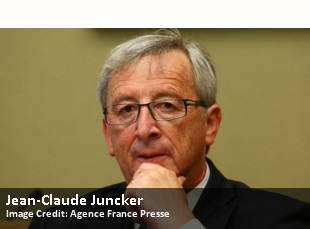
Jean-Claude JunckerBy JOSEPH FITSANAKIS | intelNews.org |
The prime minister of Luxembourg announced his intent to resign on Thursday, after a parliamentary investigation revealed scores of illegal operations conducted by the country’s intelligence service. Jean-Claude Juncker, a longtime member of Luxembourg’s Christian Social People’s Party, is Europe’s longest-serving elected leader, having been in power constantly since 1995. But on Wednesday, the astute center-right politician, who is also President of the Eurogroup —the eurozone’s finance ministers’ group— announced on Wednesday that he would step down, following seven hours of heated debate in the Luxembourg parliament. Juncker announced his intention to resign after the junior partner of his governing coalition, the Luxembourg Socialist Workers’ Party, which is the country’s second-largest, said it could no longer lend its support to the government. The reason is a parliamentary inquiry, which found that the country’s State Intelligence Service (SREL) has been engaging in serious criminal activity. The investigation was launched last year, after a local newspaper alleged that SREL’s Director, Marco Mille, had employed a surreptitious recording device disguised as a watch to record a private conversation with Prime Minister Junkcer. The parliamentary inquiry, which was released last week, found that SREL has been carrying out countless illegal wiretaps around the country and that it maintains detailed secret files on over 13,000 citizens and residents of Luxembourg. The report also alleges that SREL had set up a front company in order to facilitate the transfer of $10 million from a corrupt Russian businessman to a Spanish intelligence operative, as a personal favor to the Russian. The report did not confirm allegations, made in the country’s press, that the Grand Duke of Luxembourg has been a trusted informant of MI6, Britain’s Secret Intelligence Service. Read more of this post

World reaction to Snowden’s spying revelations continues

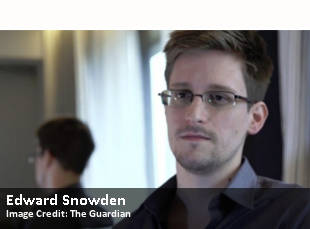
Edward SnowdenBy JOSEPH FITSANAKIS | intelNews.org |
Governments around the world continue to issue sharp official reactions to the revelations of large-scale spying by the United States, as Washington attempts to minimize the diplomatic fallout from the disclosures. The President of the European Commission, Jose Manuel Barroso, told a session of the European Parliament on Tuesday that, if confirmed, the claims of US espionage against European Union institutions would be “very disturbing”. He was referring to allegations, aired last week by German newsmagazine Der Spiegel, that America spies on the communications of many of its allies, including European Union (EU) agencies, with the same intensity it spies on China and Iraq. The claims were based on documents supplied by American whistleblower Edward Snowden, a former technical expert with the Central Intelligence Agency, who is currently believed to be in Russia. Numerous EU officials have contacted the US with requests for clarification, while EU ambassadors are scheduled to hold a meeting in Brussels, Belgium, on Thursday, to discuss how to commonly respond to Der Spiegel’s revelations. Some of the strongest criticisms against US intelligence policies have been issued by German officials, as some business figures in the country are raising concerns about US economic espionage against German financial interests. Christian Social Union politician Hans Michelbach reminded participants in a German parliamentary session this week that the EU may be a political ally of the US, but “is indeed a strong competitor in the global economy”. He added that business circles in Berlin are concerned that US intelligence collection aimed at German businesses would give Washington “dishonest advantages”. In Italy, the country’s Minister of Foreign Affairs, Emma Bonino, attended a special parliamentary session on Thursday, in which she assured those present that the Italian embassy in Washington was not being spied upon by US intelligence services. She noted that Italy’s “secret services have not unearthed elements of espionage in our [Washington] embassy”. The government of India, meanwhile, expressed strong concerns on Wednesday over reports that US intelligence services have especially targeted nearly 40 diplomatic missions in Washington, including that of India. Ministry of External Affairs spokesman Syed Akbaruddin said New Delhi would “take up the issue with US authorities”. But the strongest reactions to Snowden’s revelations have come from the government of Bolivia. Read more of this post

US spies on Germany, EU agencies, as much as on China and Iraq

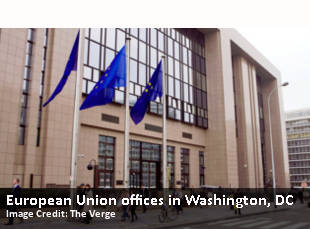
European Union offices in Washington, DCBy JOSEPH FITSANAKIS | intelNews.org |
America spies on the communications of German and other European Union agencies with the same intensity it spies on China and Iraq, documents show. German newsmagazine Der Spiegel aired these claims on Sunday, based on documents it said it obtained from American whistleblower Edward Snowden. Snowden, a former technical expert with the Central Intelligence Agency, remains holed up inside the transit section of Moscow’s Sheremetyevo International Airport, as Russian authorities have rejected repeated requests by Washington to extradite him to the US. According to Spiegel, American intelligence operatives placed interception equipment in the offices of the European Union’s representation in Washington, DC, before infiltrating the building’s computer network. Similar methods were aimed at the EU’s official representation to the United Nations in New York, and even in Brussels, Belgium, where the EU is headquartered. In a separate article, also published on Sunday, Der Spiegel said the National Security Agency, America’s foremost communications interception agency, monitors data from over half a billion communications exchanges taking place in Germany each month. The data is derived from telephone calls, emails, mobile text messages, and even chat transcripts, said the newsmagazine. The information appears to suggest that United States communications intelligence agencies are far more active in Germany than in any other of the EU’s 28 member states. Late on Sunday, a spokeswoman at the Office of the German Federal Prosecutor told Spiegel that the question of whether German citizens’ rights have been violated by illegal American intelligence activities is currently being looked at, and that “criminal charges” relating to the spying revelations “appear likely”. Read more of this post

Germany probes UK spy program revealed by CIA whistleblower

Sabine Leutheusser-SchnarrenbergerBy JOSEPH FITSANAKIS | intelNews.org |
Germany wants to know whether its citizens were spied on under a British government surveillance program revealed by American intelligence whistleblower Edward Snowden. The program, codenamed Project TEMPORA, was disclosed earlier this week by Snowden, a former technical assistant for the United States Central Intelligence Agency (CIA). Snowden remains holed up at Moscow’s Sheremetyevo International Airport, as Russian authorities have rejected repeated requests by Washington to extradite him to the US. According to British newspaper The Guardian, which first wrote about Project TEMPORA on June 21, Britain’s General Communications Headquarters (GCHQ) has been able to “plug into the cables that carry internet traffic into and out” of the United Kingdom. The agency, which is tasked with communications interception, has therefore collected and stored massive quantities of foreign telephone call data and email messages, and has shared much of it with its US counterpart, the National Security Agency. On June 25, Germany’s Federal Minister of Justice, Sabine Leutheusser-Schnarrenberger, wrote a letter to her British counterpart, Chris Grayling, asking for immediate clarification on the precise legal basis for Project TEMPORA. In her letter, which was copied to the British Home Secretary, Theresa May, the German cabinet minister also inquires whether TEMPORA has been authorized by the appropriate judicial authorities. She argues that “European institutions should shed light on this [issue] immediately” and warns her British colleagues that she plans to raise the subject during the July 2013 meeting of European  Union Justice and Home Affairs ministers, which will be held in Brussels, Belgium. Read more of this post

Analysis: PRISM revelations harm US political, financial interests

NSA headquartersBy JOSEPH FITSANAKIS | intelNews.org |
Ever since June 6, when Edward Snowden, a former United States Central Intelligence Agency (CIA) technician, exposed a vast communications spying system called PRISM, observers have focused on the ramifications of this controversy inside America. But in an excellent analysis written for ComputerWorld magazine’s New Zealand edition, Taylor Armerding points out that Snowden’s revelation could result in extensive international blowback for the United States, in both the political and economic realms. Armerding quotes Toronto University political science professor Ron Deibert, who argues that this latest revelation of massive communications interception activity by the National Security Agency (NSA) carries with it “unintended consequences […] that will undermine US foreign policy interests”. Deibert points out that the spy scandal has the potential to undercut America’s role and influence in global Internet governance. In the words of renowned security expert Bruce Schneier, many around the world are beginning to view the US as “simply too untrustworthy to manage the Internet”. Even policymakers and ordinary users friendly to Washington are worried about what they perceive as the “huge disadvantages” of their dependence on US-managed Internet networks that host the content of social media sites, cloud computing databases, or telecommunications exchanges, says Deibert. But the biggest potential damage to US interests, argues Armerding, is not political, but economic. “It is not just personal information that is being swept into the NSA’s massive databases”, he notes; “it is corporate data as well”. Indeed, the vast foreign and domestic spying represented by PRISM poses a direct threat to the global competitiveness of the American technology sector. Read more of this post

News you may have missed #836

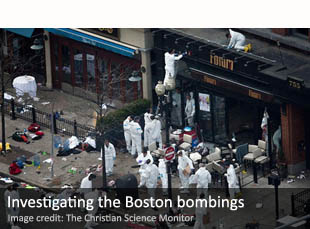
Investigating the Boston bombingsBy IAN ALLEN | intelNews.org |
►►NSA guide explains how to access private info on Google. In 2007, the US National Security Agency produced a book to help its spies uncover intelligence hiding on the World Wide Web. The 643-page tome, called Untangling the Web: A Guide to Internet Research (.pdf), has just been released by the NSA following a FOIA request filed in April by MuckRock, a site that charges fees to process public records for activists and others. Although the author’s name is redacted in the version released by the NSA, Muckrock’s FOIA indicates it was written by Robyn Winder and Charlie Speight.
►►Are the EU’s unofficial spy services growing out of control? Since its founding, the European Union has been building its own spy programs, often triggered by specific needs, in an ad-hoc manner, without strategy and without a coherent concept about their structure, methods, and people. Unofficially, the has been building an intelligence apparatus of six services so far, some of them brand new, populated already by 1,300 specialists. But because they are technically not conducting covert operations, they simply deny being intelligence services.
►►Hearing on Boston bombings exposes intelligence failures. The US House Committee on Homeland Security’s hearing on the Boston Marathon bombings on Thursday amounted to more than the usual political posturing: it exposed clear deficiencies in communications among intelligence- and law-enforcement agencies. whatever the cause of the intelligence breakdown, the failure to share vital information —and the continued finger-pointing between agencies yesterday— shows the need to improve coordination.

Germany releases Mongolian spy master wanted for abduction, torture

Bat Khurts

Bat Khurts

By JOSEPH FITSANAKIS | intelNews.org |
On May 15, 2003, Mongolian refugee and political-asylum seeker Enkhbat Damiran was kidnapped outside a McDonald’s restaurant in Le Havre, France. According to Amnesty International, Damiran was apprehended by a team of officers of the General Intelligence Agency of Mongolia (GIAM), who kicked him, drugged him and beat him with electric batons, before ushering him to the Mongolian embassy. From there, Damiran was illegally smuggled into Germany, where he stayed for a few days, before being transported to Mongolia, through Belgium. Once back in his homeland, Damiran effectively ‘disappeared’ in the custody of GIAM, where he was allegedly subjected to systematic torture by his captors. The latter believe him to be connected with the 1998 assassination of Zorig Sanjaasürengiin, Mongolia’s former Minister of Infrastructure. Following complaints about the abduction from the European Union, the Mongolian government apologized to the governments of France, Germany and Belgium. But Damiran’s abduction has continued to be at the root of a diplomatic rift between Europe and Mongolia, which has widened in recent years. Things became even more heated in September 2010, when British intelligence, acting on a Europe-wide arrest warrant, captured Bat Khurts, former Director of GIAM, who is believed to be responsible for Damiran’s abduction and torture. Khurts was arrested in London, after being lured there in a carefully planned and executed intelligence operation. This past July, the British government decided to extradite Khurts to Germany, where was scheduled to be tried on abduction charges on October 24. So it was a bit of a surprise to say the least, when, yesterday, the Mongolian former spymaster was unexpectedly released by German authorities, after having all charges against him dropped. Read more of this post

News you may have missed #588

Thomas Hammarberg

Hammarberg

►►Thai court convicts three of spying. A Thai court on Tuesday jailed three men, a Cambodian, a Vietnamese and a local, for two years each for espionage. The trio were arrested in June in Kantharalak District, near the disputed border with Cambodia, amid a territorial row between Thailand and its neighbor. Police said that the three were carrying maps with military facilities marked on them.
►►Council of Europe wants truth on CIA black sites. Thomas Hammarberg, the human rights commissioner for the Council of Europe, urged countries that have hosted secret CIA prisons to come clean Monday, as the 10th anniversary of 9/11 approaches. Well, that would be…let’s see…pretty much all of them.
►►Doctor who helped CIA find bin Laden barred from leaving Pakistan. Before bin Laden’s death in May, Shakil Afridi helped the CIA set up a fake vaccination programm in Abbottabad, in the hope of obtaining DNA samples from the house where the al-Qaida chief was suspected of living. But now he has been detained by Pakistani security and cannot go abroad without permission.

News you may have missed #576 (Europe edition)

GCHQ

GCHQ

►►Inside Britain’s signals intelligence agency. This account of the work of Britain’s General Communications Headquarters is a bit basic, but it’s not every day that the GCHQ grants access to a journalist to its Cheltenham base.
►►Czech telecoms to share data with intel services. The Czech Interior Ministry has placed a clause in the planned amendment to the electronic communications law, under which operators of communication networks will have to provide data on cell phones and the Internet to the civilian and military counterintelligence.
►►Dutch F-16 pilot suspected of espionage. A Dutch former F-16 pilot suspected of espionage, identified only as Chris V., had more state secrets in his possession than he previously admitted to, according to public prosecutors in The Hague. The pilot was arrested last April and stands accused of leaking state secrets to a colonel from Belarus.

Lithuania recalls Austria ambassador over ex-KGB general’s release

Mikhail Golovatov

Mikhail Golovatov

By JOSEPH FITSANAKIS | intelNews.org |
The government of Lithuania has recalled its ambassador to Vienna, in protest over the release by Austria of a former Soviet intelligence official, who is wanted in Vilnius for war crimes. Last Thursday, Austrian authorities arrested Russian citizen Mikhail Golovatov, a former general of the KGB, who was stationed in Lithuania during the final years of the Soviet Union. Golovatov’s detention was facilitated by a European arrest warrant issued by the office of the Lithuanian prosecutor. The latter accuses Golovatov of authorizing crimes of war as head of Alpha Group —also known as Spetsnaz Grupp Alfa— a special forces unit within the KGB’s First Chief Directorate. On January 13, 1991, Alpha Group forces spearheaded a counterinsurgency attack on the State Radio and Television Building and the Vilnius TV Tower in the Lithuanian capital, in an attempt to quash the Soviet Republic’s growing secessionist movement. The latter had unilaterally declared Lithuania’s independence on March 11, 1990. The attack resulted in the death of 14 and the injury of over 700 people. During the past two decades, the Lithuanian state has sponsored an international campaign for the arrest of numerous officials who represented the Soviet security apparatus in Lithuania during the final months of the USSR’s existence. But, to Vilnius’ shock, Austrian authorities released Golovatov 24 hours after arresting him, arguing that the European arrest warrant issued by the Lithuanian prosecutor’s office was “too vague” to justify the former KGB general’s continued detention. Read more of this post

News you may have missed #534

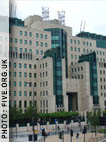
MI6 HQ

By IAN ALLEN | intelNews.org |
According to extracts from the diary of Alastair Campbell, British Prime Minister Tony Blair’s communications director from 2000 to 2003, officials from the MI6 intelligence agency told Blair that France and Germany aimed to “exploit his feud” with then Chancellor of the Exchequer Gordon Brown. Gotta love European unity. In Kuwait, meanwhile, the oil state’s Al-Shahed daily quotes “knowledgeable sources”, who claim that “a lot of spy networks exploit the Kuwaiti environment” and use the country as a transit point to spy on neighboring countries. Hopefully the Kuwaitis will not emulate authorities in Dubai, which in March of last year called on all foreign spies “to leave the region within a week. If not”, they warned, “we will cross that bridge when we come to it”. In the nearby state of Israel, public opinion is still divided about former Mossad chief Meir Dagan’s criticism of the Netanyahu government. As Bloomberg columnist Jeffrey Goldberg notes, Dagan has “called into question the wisdom –and, privately, even the sanity– of any Israeli leader who contemplates a preemptive strike on Iran’s nuclear facilities”. But why is he doing it, and could it backfire?

Security minister, ex-spy directors arrested in Hungary

Gyorgy Szilvasy

Gyorgy Szilvasy

By JOSEPH FITSANAKIS | intelNews.org |
One former government minister and two former directors of Hungary’s domestic intelligence service have been arrested on suspicion on espionage, according to reports. On June 28, Hungarian police arrested Lajos Galambos, who was Director of Hungary’s National Security Office (NBH) from 2004 to 2007. Three days later, on July 1, police forces arrested Sandor Laborc, who succeeded Galambos as NBH director, and Gyorgy Szilvasy (pictured), who was minister in charge of overseeing the civilian security services from 2007 to 2009. All three served in key government positions during the socialist government of former Prime Minister Ferenc Gyurcsany. Despite repeated media request, government prosecutors have refused to disclose the precise nature of the charges against the three officials, except to say that they are suspected of having committed “crimes against the state”. One Hungarian daily, Tabloid Blikk, suggested that the arrests are linked to the Egymasert Public Foundation, headed by wanted fugitive Robert Jakubinyi.  Egymasert was found last year to have been used to facilitate money laundering and the illegal sale of shares. But other reports interpret the high-level arrests as a form of political payback for the so-called ‘UD Zrt affair’, also known as ‘the Hungarian Watergate’, which rocked Hungarian public opinion in 2008. Read more of this post

US helped France go nuclear to keep Europe divided, documents show

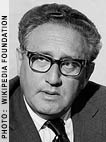
Henry Kissinger

Henry Kissinger

By JOSEPH FITSANAKIS| intelNews.org |
The government of the United States secretly helped France expand its nuclear arsenal, in order to promote its rivalry with Britain, according to newly declassified documents. The clandestine assistance to France, which tested its first nuclear bomb in Africa in 1960, began during the Richard Nixon administration, and was actively directed by Henry Kissinger, Nixon’s senior National Security Advisor. The documents, which were obtained by researchers at the George Washington University and the Woodrow Wilson International Center for Scholars, include a 1973 memorandum authored by Kissinger, in which he writes: “We want to keep Europe from developing their unity as a bloc against us. If we keep the French hoping they can get ahead of the British, this would accomplish our objective”. Toward that goal, the US ought to provide the French with information that will make them “drool but doesn’t give [them] anything but something to study for a while”. By doing so, Washington would be able to force Britain to stop “behaving shitty” and conform to American foreign policy objectives: “if they know we have another option, they might buck up”, writes Kissinger. Read more of this post