News you may have missed #390 (Russia-US spy swap edition I)

  • In spy swap, agents were pawns in a practiced game. The US arrests were not made to facilitate a swap, said a US official, speaking on condition of anonymity. Rather, they were precipitated, at least partly, by the plans of several of the Russians to leave this country this summer.
  • Russian spies get tepid reception in Moscow. The 10 spies who pleaded guilty to acting as foreign agents in the United States, including one Peruvian, were given a tepid, uneasy reception in Russia on Friday. State-controlled national television channels reported their return briefly, with no patriotic fervor. No national TV channels carried live coverage of the plane’s landing, even though it was available from international news agencies.
  • Russian, US spies start new lives but mystery swirls. The 14 spies swapped by Moscow and Washington were starting new lives in Russia and the West last weekend, but mystery shrouded their precise whereabouts. In one case, Igor Sutyagin, a Russian nuclear arms expert who allegedly spied for the US, found himself at a hotel somewhere in Britain, without a visa and still wearing his Russian prison clothes.

Bookmark and Share

Dead defector not connected to Russian spies, insists friend

Sergei Tretyakov

Sergei Tretyakov

By IAN ALLEN | intelNews.org |
On July 2, based on an excellent analysis by Stratfor of the 10 Russian deep-cover agents arrested in the US in June, we entertained the possibility that Sergei Tretyakov, a senior Russian SVR agent who defected to the US in 2000, may have helped the FBI identify the Russian spy ring. Last Friday, it emerged that 53-year-old Tretyakov had died at his home in Florida. When he defected to the US, along with his wife and daughter, Tretyakov was second-in-command at the SVR (Russian external intelligence) station operating out of Russia’s United Nations mission in New York. This is the same outfit that coordinated the 10 Russian deep-cover agents arrested by the FBI in June. Tretyakov’s death was announced by the late Russian spy’s friend and confidante Pete Earley, who in 2008 wrote a book about the defector. It is worth noting that Tretyakov actually died on June 13, but his wife, Helen Tretyakov, requested that his death not be publicly announced until the precise cause of death was determined. Read more of this post

Russia, US, in largest spy swap since World War II

Igor Sutyagin

Igor Sutyagin

By IAN ALLEN | intelNews.org |
The Russian and American governments have agreed to conduct one of history’s largest spy exchanges, as ten Russian agents captured in the US last month have been swapped for four Russian citizens imprisoned by Moscow for spying for the US and Britain. The ten Russians arrested by the FBI in June were non-official-cover (NOC) operatives, otherwise known as ‘illegals’, a term used to identify deep-cover intelligence operatives not associated with a country’s diplomatic representation. According to reports, they were all instructed by the SVR, Russia’s equivalent of MI6, which is responsible for all foreign intelligence operations abroad, to plead guilty to “acting as unregistered foreign agents” a charge not equivalent to espionage in either seriousness or repercussions. They were then legally forbidden from ever returning to the United States and summarily expelled. They were taken from the courtroom directly to the airport, where they boarded a plane to Vienna, Austria. In return, Russian government sources have confirmed that four Russian citizens, arrested in recent years for spying on behalf of the US or Britain, will be released from prison and delivered to US authorities. Read more of this post

News you may have missed #380 (Russian spy ring edition I)

Bookmark and Share

FBI busts alleged Russian spy ring, 11 arrested [updated]

Anna Chapman

Anna Chapman

By JOSEPH FITSANAKIS | intelNews.org |
Ten members of an alleged Russian spy ring operating in America’s East Coast were arrested in a series of coordinated raids on Sunday. US Department of Justice insiders said that the arrests, which took place in Arlington, New Jersey, New York, and Boston, marked the culmination of an FBI counterintelligence operation initiated during the second administration of President Bill Clinton. It appears that the alleged Russian agents were non-official-cover (NOC) operatives, otherwise known as ‘illegals’, a term used to identify deep-cover intelligence operatives not associated with the diplomatic representation of the Russian Federation in the United States. Eight of the arrestees were married couples and all were using fake identities. Almost all are fluent in several languages; they include “Vicky Pelaez”, who worked for a New York Spanish-language newspaper, another woman identified as “Anna Chapman” (see photo), and “Mikhail Semenko”, who is said to be fluent in English, Spanish, Russian, and even Mandarin. An eleventh alleged member of the spy ring, named as “Christopher R. Metsos”, remains at large and is wanted by the FBI was captured by Greek-Cypriot authorities at Larnaca airport earlier today, while trying to board a flight for Hungary. Read more of this post

News you may have missed #373 (CIA edition)

Bookmark and Share

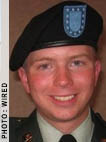
US Army intel analyst arrested over Wikileaks probe

Bradley Manning

Bradley Manning

By IAN ALLEN | intelNews.org |
Speaking last Thursday at the annual Personal Democracy Conference in New York, Daniel Ellsberg said he was amazed that the US National Security Agency “can’t crack” Wikileaks. The former Pentagon employee, who in 1971 leaked the Pentagon Papers, was referring to the activist website that anonymously publishes secret governmental and corporate documents from around the world. But Ellsberg may have been talking too soon. On Sunday, Wired magazine’s Threat Level blog revealed that a US Army intelligence analyst had been detained for allegedly giving Wikileaks secret video footage and “hundreds of thousands of classified State Department records”. Specialist Bradley Manning, 22, was reportedly detained two weeks ago by the US Army’s Criminal Investigation Division while stationed in Forward Operating Base Hammer, near Baghdad, Iraq. Read more of this post

News you may have missed #361

  • FBI linguist jailed in leak probe. The Obama administration’s crackdown on government whistleblowers continued on Tuesday with the jailing of Shamai Leibowitz, a former FBI contract linguist who disclosed classified information to the media.
  • Yemen sentences alleged Iranian spies to death. Two members of an alleged Iranian spy cell operating in Yemen were sentenced to death on Tuesday. The Yemeni government accuses Iran of arming the Shiite so-called Sa’adah insurgency along the Yemeni-Saudi border.
  • New Turkish intel chief has big plans. Among the changes that Hakan Fidan, new chief of Turkey’s National Intelligence Organization (MİT), intends to spearhead is “starting a separate electronic intelligence organization like the American NSA or the British GCHQ”.

Bookmark and Share

News you may have missed #335

  • Leading al-Qaeda expert to leave FBI. J. Philip Mudd, one of the US intelligence community’s leading al-Qaeda analysts, has quietly retired from the FBI, where he was the National Security Branch’s associate executive director. He will be replaced by 23-year FBI veteran Sean Joyce.
  • Three more domestic spying programs revealed. The US Department of Homeland Security has acknowledged the existence of three more government programs charged with spying on American citizens in the aftermath of 9/11. The programs, Pantheon, Pathfinder and Organizational Shared Space, used a variety of software tools to gather and analyze information about Americans.
  • NSA Utah facility contractors shortlisted. We have mentioned before that for contractors in northern Utah, where the NSA is preparing to build a million-square-foot facility, at Camp Williams, it’s party time. Five of them, including three from Utah, have now been shortlisted by the government.

Bookmark and Share

NSA whistleblower prosecutions continue under Obama

Thomas Drake

Thomas Drake

By JOSEPH FITSANAKIS | intelNews.org |
Legal observers were surprised late last week when a grand jury in Baltimore indicted a former senior official of the US National Security Agency (NSA) for leaking classified information to a local newspaper reporter. The indictment, which was publicized last Thursday, accuses Thomas A. Drake of exchanging hundreds of email messages with a reporter, in which he exposed aspects of the NSA’s alleged mismanagement and operational deficiencies. Court documents do not identify the reporter, or the news outlet for which she worked. But most observers have identified her as Siobhan Gorman, who now works for The Wall Street Journal. Between 2006 and 2007, while working for The Baltimore Sun, Gorman authored a series of articles on the NSA, exposing, among other things, severe mismanagement of outsourced signals collection programs, as well as the Agency’s trouble in securing enough electrical supply for its computational requirements. Read more of this post

News you may have missed #329

  • Iran insists US hikers had intelligence links. Iran’s intelligence minister, Heydar Moslehi, has said that Americans Shane Bauer, Joshua Fattal and Sarah Shourd, who were arrested on Iranian soil last July, “were in contact with intelligence services”. The evidence would “soon be made public”, he said.
  • Gerdes case shows difficulty of CIA jobs. The case of CIA employee Kerry Gerdes, who was recently convicted for falsifying interview reports while performing background checks on CIA employees and potential employees, reveals how difficult the job is for young CIA recruits, who expect it to be exciting or glamorous, according to seasoned investigators.
  • US still denying India access to Headley. There has been intense speculation in India and Pakistan that David Coleman Headley, a former US Drug Enforcement Administration informant, who was arrested by the FBI in October for plotting an attack on a Danish newspaper, is in fact a renegade CIA agent. Could this be why the US is denying India access to Headley?

Bookmark and Share

News you may have missed #321 (CIA edition)

  • Uruguay ex-president sent to prison for 1973 coup. Declassified documents show that, at the time of the coup, Juan María Bordaberry told the US ambassador that “Uruguay’s democratic traditions and institutions […] were themselves the real threat to democracy”.
  • FSB ‘dropped the ball’ in Moscow metro bombings. Two Russian intelligence observers argue that Russia’s new strategy has shifted toward preventing coordinated actions by large groups of militants, which has come at the expense of taking measures to prevent individual suicide attacks, such as those of last Monday in Moscow.
  • Calls for expanded DoJ probe of FBI killing of Detroit imam. The US Justice Department is probing the killing of Detroit-area Islamic cleric Imam Luqman Ameen Abdullah, who was shot dead during an FBI raid shortly after being indicted on charges of conspiracy to commit federal crimes. The FBI said Abdullah was shot after he opened fire, but critics say he may have been targeted for assassination.

Bookmark and Share

More on alleged Mossad spy arrested in Algeria

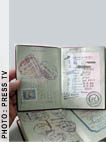
Forged passports

Forged passports

By JOSEPH FITSANAKIS| intelNews.org |
On March 29, intelNews reported on allegations by the Algerian government that an Israeli intelligence agent had been arrested in the country, after he was found to be carrying a forged Spanish passport. The next day, Algerian authorities identified the man only as “Alberto”, and insisted he was a member of the Mossad, Israel’s foremost external intelligence agency. News sources have now identified the man’s forged identity as “Alberto Vagilo”, which appears to be the name listed on his Spanish travel documentation. According to Algerian government officials, the man, whose year of birth is listed as 1975 in his Spanish passport, entered the North African country in mid-March, via a regularly scheduled flight from Barcelona, Spain. Read more of this post

News you may have missed #319

  • CIA asks Gulf countries to monitor terrorist funding. The CIA has reportedly asked Arab/Persian Gulf countries “to tighten surveillance and look for any suspicious movement of funds” in regional banks.
  • Questions remain in Headley terrorism case. The New York Times has aired an update on the court case of Pakistani-American David Coleman Headley, a former US Drug Enforcement Administration informant, who was arrested by the FBI in October for plotting an attack on a Danish newspaper. The paper points out that Headley “moved effortlessly between the United States, Pakistan and India for nearly seven years, training at a militant camp in Pakistan on five occasions”. There has been intense speculation in India and Pakistan that Headley is in fact a renegade CIA agent.

Bookmark and Share

News you may have missed #318

  • US State Dept. lawyer defends CIA drone attacks. State Department legal adviser Harold Koh has told a conference that “the considered view of this administration” is that the controversial CIA-operated drone attacks inside Pakistan “comply with all applicable law, including the laws of war”.
  • How the CIA let Anwar al-Aulaqi escape to Yemen. Last year, the Yemeni government asked the CIA to help collect intelligence on US-born al-Qaeda recruiter Anwar al-Aulaqi. But the CIA refused, and so did US Special Forces officials, who had been asked by the Yemenis to help them pursue Aulaqi. Just months later, US Army Major Malik Nidal Hasan, who was in contact with al-Aulaqi, killed 13 US soldiers at Fort Hood, Texas.
  • More on alleged Israeli spy caught in Algeria. Algerian authorities insist that a man (identified only as “Alberto”), who was captured after entering Algeria using a forged Spanish passport, is a Mossad agent. There are also rumors that the US embassy in Algiers has been involved in the case, and that it was for this reason that FBI deputy director John Pistole traveled to Algeria last week.

Bookmark and Share