US revokes Peruvian ex-defense minister’s visa over alleged spy links

Vicky Peláez and  Mikhail VasenkovBy JOSEPH FITSANAKIS| intelNews.org |
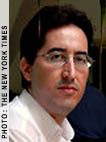
The United States has allegedly revoked an entry visa previously issued to the former Deputy Minister of Defense of Peru, over suspicions that he is connected to a major Russian espionage ring found operating in the United States. Fabián Novak had his visa revoked after he was allegedly included on a list drawn by the US Federal Bureau of Investigation, containing names of individuals connected to a Russian illegals program caught operating in the US in 2010. According to El Comercio, Peru’s oldest newspaper, Novak, who served as the country’s Deputy Defense Minster between 2006 and 2008, met repeatedly with two members of the 11-member Russian spy ring, which was busted in a series of coordinated raids across several US states in July of 2010. The Lima-based daily quotes an anonymous “high-level [US] government source” who claims that Novak directly contacted two of the 11 Russian spies, who entered the United States from Peru, using Uruguayan and Peruvian travel documentation. The two, Vicky Peláez, who posed as a journalist, and her husband Mikhail Anatolyevich Vasenkov (alias Juan Lazaro), an adjunct professor, were among nearly a dozen Russian illegals swapped less than two weeks after their arrests by the FBI with several CIA spies held in Russian prisons. The El Comercio source claimed that, according to the FBI, Novak met with two officials from the Russian embassy in Lima at least twice, in 2001 and 2006, to discuss the activities of Peláez and Vasenkov in the US. Read more of this post

Ex-CIA officer John Kiriakou’s indictment made simple

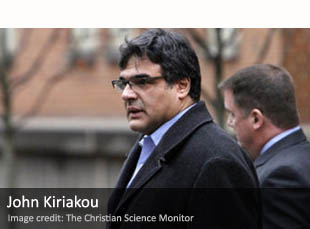
John KiriakouBy JOSEPH FITSANAKIS | intelNews.org |
On Monday, the United States Department of Justice charged former Central Intelligence Agency officer John Kiriakou with leaking classified government information to reporters and deceiving a CIA review board. An FBI press release accused Kiriakou of repeatedly providing secrets to journalists between 2007 and 2009, and said the former CIA officer would be tried under the Espionage and the Intelligence Identities Protection Acts. The latter forbids the disclosure of the identities of undercover intelligence personnel, which is precisely what Kiriakou is accused of having done. An American of Greek descent, Kiriakou joined the CIA in 1990 and did tours in Greece, Pakistan, and elsewhere, before retiring in 2004. While in Pakistan he commanded the CIA team that helped capture senior al-Qaeda logistician Abu Zubaydah. In 2010 he published a memoir titled The Reluctant Spy.  Two years earlier, Kiriakou had made international headlines by becoming the first US intelligence official to publicly acknowledge that a terrorism suspect —in this case Zubaydah— had indeed been waterboarded while in CIA custody. Speaking on ABC News, the former CIA officer recognized that waterboarding was torture, but said it was “necessary” in the “war on terrorism”. In subsequent interviews, however, he questioned whether any actionable intelligence had been extracted from waterboarding, and opined that torturing terrorism detainees “caused more damage to [America’s] national prestige than was worth it”. Kiriakou’s skepticism, at a time when the incoming President, Barack Obama, publicly condemned waterboarding as torture, worried the CIA. Eventually, the Obama Administration backed down on its public proclamations about torture, and ruled out criminal prosecutions of CIA personnel. But he Agency didn’t forget Kiriakou’s role. Read more of this post
News you may have missed #623

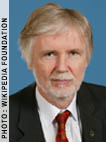
Erkki Tuomioja,

Erkki Tuomioja,

►►Finnish FM washes hands of CIA flights. Erkki Tuomioja, the Finnish foreign minister, said last week that Finnish officials had no means to investigate allegations that a number of CIA prisoner flights touched down in Finland during the so-called war on terrorism. Tuomioja urged human rights groups to take action instead.
►►Australian defense documents stolen by foreign intelligence. A report has revealed that secret documents of Major-General John Cantwell, Australia’s most senior commander in the Middle East, were stolen by a foreign intelligence service last year. The documents were apparently in an encrypted drive stored in an aide’s backpack –contrary to protocol– and was thought lost when a large amount of luggage went missing for several days from Islamabad airport.
►►US soldier arrested by FBI counterintelligence. William Colton Millay, of Owensboro, Ky., was arrested last week at Joint Base Elmendorf-Richardson in Anchorage in an investigation conducted by the US Army and FBI. For now, both agencies are withholding information about the spy case. But an Army spokesman said that Millay did not leak or send information using the Internet and did not harm US security.

News you may have missed #622

SVR seal

SVR seal

►►Russian spies in Germany focused on politics and military. A married couple arrested on suspicion of spying for Russia is believed to have been gathering information on political developments and military affairs, according to German newsmagazine Der Spiegel. The two have been identified as Andreas and Heidrun Anschlag. German prosecutors accuse them of spying for SVR, the successor to the KGB’s First Chief Directorate.
►►Israel releases spy who gave information to Iran. Israel has released Nahum Manbar, who was sentenced to 16 years in prison in 1997, after he was convicted of harming state security and selling information and supplies to create chemical weapons to Iran. Israel’s Attorney General Yehuda Weinstein approved the early release of Manbar on Monday, one and a half years before the end of his sentence. This was the third time Manbar had requested to be released early.
►►FBI releases Russian illegals’ photos and videos. Documents released Monday, including photos, videos and papers, offered new details about the FBI’s decade-long investigation into a ring of Russian sleeper agents who, US officials say, were trying to burrow their way into American society to learn secrets from people in power. The investigation was apparently code-named Operation GHOST STORIES because six of the 10 Russian agents had assumed the identities of dead people. If you are wondering what these spies are doing now, read this informative update from the Associated Press.

Canada memos decry use of Canadian passports by Russian spies

Canadian passport

Canadian passport

By JOSEPH FITSANAKIS | intelNews.org |
In June of 2010 media headlines were dominated by news of a Russian spy ring in the United States that was busted by the Federal Bureau of Investigation. On June 27, eleven people, all sleeper agents of the SVR, Russia’s Foreign Intelligence Service, were arrested in early morning raids across several US states. The arrestees, who included media sensation Anna Chapman, were later exchanged for four alleged CIA agents serving time in Russian jails. What is less known however, is the fact that four of the members of the busted spy ring were claiming to be Canadian citizens. SVR operative Natalia Pereverzeva was caught using a forged Canadian passport under the fake name ‘Patricia Mills’. Two other SVR officers, Andrei Bezrukov and Elena Vavilova, were claiming Canadian nationality under the forged names Donald Heathfield and Tracey Foley. A fourth alleged member of the spy ring, ‘Christopher Metsos’, was apprehended in Cyprus, after using a forged Canadian passport to enter the Mediterranean island. He later disappeared, having skipped bail. Now, sixteen months after the arrests of the Russian spies, The Canadian Press has acquired several hundred pages of memoranda and internal emails from Canada’s Department of Foreign Affairs and International Trade (DFAIT). Substantial portions of the documents, which were acquired through Canada’s Access to Information Act, remain censored; but The Press reports that they show that employees of DFAIT’s Passport Canada office held “urgent meetings and high-level briefings” in the days following the FBI arrests, in order to address the revelations concerning SVR’s illegal use of Canadian passports. In the documents, Canadian officials opine that the use by Russian spies of forged Canadian travel documents poses a “troubling threat to the integrity of Canadian [passports] and identity security”. Read more of this post

News you may have missed #598 (US edition)

Brian Kelley

Brian Kelley

►►CIA officer wrongly accused of being KGB mole dies. CIA officer Brian J. Kelley, who was falsely accused by his own agency, as well as by the FBI, of supplying covert information to Moscow, has died at the age of 68. The real mole, the FBI agent-turned-spy Robert P. Hanssen, was apprehended in 2001, but not before Mr Kelley had been followed, interrogated, suspended and told that he might well be charged with a capital offense.
►►NSA working on secure smartphone technology. Troy Lange,  mobility mission manager at the US National Security Agency, says he is developing a secure smartphone that can be used to access classified information and apps while on the move. He is working on a pilot project using a smartphone that looks like any bought in stores but with security configurations to allow top-secret communication.
►►Kabul attack kills CIA contractor. An Afghan working for the US government killed a CIA contractor and wounded another American in an attack on the intelligence agency’s office in Kabul, making it the latest in a series of high-profile attacks this month on US targets. An anonymous US official in Washington said the Afghan attacker was providing security to the CIA office and that the American who died was working as a contractor for the CIA.

US spy Pollard tried to spy for Australia before spying for Israel

Jonathan Pollard

Jonathan Pollard

By JOSEPH FITSANAKIS | intelNews.org |
Lobbyists campaigning for the release of jailed spy Jonathan Pollard portray him as a genuine Jewish patriot, who risked his freedom to spy on the United States for Israel. But in her first-ever public interview, Pollard’s FBI interrogator has revealed that he also spied for South Africa and tried to spy for Australia, before working as an agent for Israel. Lydia Jechorek was the FBI agent assigned to the case of Jonathan Pollard, after the United States Navy analyst was arrested for spying against his country, by handing countless classified documents over to his Israeli handlers. She spent countless hours with Pollard, interrogating him in jails in Washington, DC, and Lewisburg, PA. On Monday, Jechorek, who has never publicly commented about her role in the Pollard case, spoke to Newsmax, after having received clearance from the FBI to do so. She told the website that, during his FBI interrogation sessions, Pollard said that, before spying for Israel, he had attempted to spy on the United States for a “friendly country”. Jechorek did not mention the “friendly country” by name. But John L. Martin, who supervised the Pollard case on behalf of the Counterespionage Division of the United States Department of Justice, told Newsmax that the “friendly country” was Australia. It appears that Pollard approached Australian officials in the United States and offered to provide them with classified US government documents. It was only after they rejected his offer that Pollard accosted Israeli intelligence officers and began spying for Tel Aviv. Read more of this post

News you may have missed #589

James Risen

James Risen

►►US lawmakers want audit of Colombia intelligence aid. Two US lawmakers on Wednesday requested the White House to scrutinize US assistance to Colombia’s intelligence agency DAS, after media reports that American money and training was used by the DAS for the illegal spying on government opponents.
►►Judge quashes subpoena to reporter in CIA leaker case. New York Times investigative reporter James Risen will not have to reveal the identity of his confidential source when he testifies in the criminal trial of Jeffrey Sterling, an alleged CIA leaker, a US federal judge recently held in a case involving the highest-profile journalist subpoena in recent years.
►►Ex-White House scientist pleads guilty in spy case tied to Israel. Stewart D. Nozette, a former senior government scientist who held the highest US security clearances, pleaded guilty to espionage on Wednesday and agreed to a 13-year prison term for selling top-secret information on military satellites and other technology to an FBI agent posing as an Israeli spy.

US spies on Israel (shock, horror)

Shamai Leibowitz

Shamai Leibowitz

By JOSEPH FITSANAKIS | intelNews.org |
Ever since Monday, when The New York Times exposed the reason behind the May 2010 incarceration of FBI linguist Shamai Leibowitz, US and international media have been buzzing with prominent headlines like: “US government spied on Israel’s Washington embassy”. Although these headlines are accurate, they —like the articles themselves— miss the actual story behind the revelations: namely the extent of Israeli covert propaganda operations inside the United States. As intelNews reported in May 2010, Leibowitz, a lawyer with dual American-Israeli citizenship, who worked as a translator for the FBI, was sentenced to right under two years in prison, for leaking classified information. The government disclosed no further information at the time of Leibowitz’s conviction, saying only that he had been jailed for “having unlawfully disclosed classified documents to an unidentified blogger”. Now the “unidentified blogger” has come forward to reveal the details of Leibowitz’s court case, and to defend the former FBI linguist “as an American patriot and a whistle-blower”. Richard Silverstein, a Jewish American scholar, who writes a blog called Tikun Olam, said that Leibowitz gave him about 200 pages containing transcripts of conversations intercepted by the FBI in its monitoring of the Israeli Embassy in Washington, DC. Most of the transcripts contain what appear to be telephone exchanges between staff at the Israeli embassy and outside contacts, though some appear to be the products of eavesdropping of face-to-face conversations conducted inside the Israeli embassy premises. This may be seen as evidence that the FBI’s Operational Technology Division, which is responsible for maintaining interception systems targeting foreign embassies on US soil, conducts extensive monitoring of the goings on at the Israeli embassy. Read more of this post

News you may have missed #583

Chiou I-jen

Chiou I-jen

►►Ex-Akamai worker pleads guilty to spy charge. Elliot Doxer, an American employee of Massachusetts-based Akamai Technologies, is charged with providing inside company information to an FBI agent posing as an Israeli spy. Ironically, Israel may have helped the Bureau nab Doxer.
►►Taiwan ex-spy cleared of corruption charge. Chiou I-jen, Taiwan’s ex-spy chief and right-hand man of jailed former president Chen Shui-bian, was cleared Tuesday of embezzling diplomatic funds during Chen’s term in office. The former head of the National Security Bureau, was acquitted of pocketing $500,000 –earmarked for expanding Taiwan’s participation in international affairs– in 2005, due to a lack of evidence.
►►Wiretaps seen as key in hunt for Gaddafi. “There are some groups who are looking for him and also trying to listen to his calls. Of course he doesn’t use the phone, but we know the people around him who use the phones”. This is according to Hisham Buhagiar, a senior military official in Libya’s National Transitional Council, who is coordinating efforts to find Muammar al-Gaddafi.

News you may have missed #581

Jin Yinan

Jin Yinan

►►CIA wants to censor book by ex-FBI agent. The agent, Ali H. Soufan, argues in the book that the CIA missed a chance to derail the 9/11 plot by withholding from the FBI information about two future 9/11 hijackers living in San Diego. He also says that torture interrogation methods against terrorism detainees were unnecessary and, ultimately, counterproductive. Both these things are known and have been publicly discussed. As The Independent correctly notes, the CIA’s objections are “less for national security reasons than out of a desire to avoid re-airing incidents that show the Agency in an unflattering light”.
►►New scandal at India’s SIGINT agency. The Indian government founded the National Technical Research Organisation (NTRO) in 2004, as a potential communications nerve center for all of India’s intelligence agencies. But the SIGINT agency has been involved in one financial scandal after the other, most recently relating to an elaborate procurement scam.
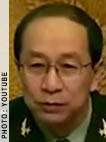
►►China silent about spy lecture leak. China has remained quiet as a recently leaked video of a Chinese general’s candid remarks on sensitive spying cases continued to draw international attention. The ministries of defense and foreign affairs have not responded to media inquiries, and numerous phone calls to National Defense University, where the general, Jin Yinan (pictured), teaches, went unanswered. State media made no mention of the story.

News you may have missed #565 (United States edition)

DHS seal

DHS seal

►►Secret watch-list proposal causes US privacy groups protests. The US Department of Homeland Security (DHS) is planning to duplicate the FBI’s Terrorist Screening Database to expand an extensive database called Watchlist Service. The proposed database will include names, birthdays, photos and biometrics of targeted individuals. But the DHS has proposed to exempt the database from Privacy Act provisions, which means that a person can never know if they are on it.
►►US blacklists Syrian banks over WMD ties. The Obama administration unveiled punitive measures on Wednesday against two Syrian financial institutions for their alleged ties to nuclear proliferation in Syria and North Korea. The government-run Commercial Bank of Syria and a subsidiary, the Syrian-Lebanese Commercial Bank, are now prohibited from engaging in transactions with US individuals and from accessing any assets under US control. The US Department of the Treasury alleges that the banks have carried out transactions on behalf of the Scientific Studies and Research Center in Syria and the Tanchon Commercial Bank in North Korea, both of which the US blacklisted several years ago for supporting “WMD proliferation activities”.
►►FBI revises surveillance exam after cheating revelations. About a year ago, the US Federal Bureau of Investigation revealed that hundreds of its agents were caught having cheated on an examination about new surveillance guidelines (known as Read more of this post

News you may have missed #560 (new books edition)

Khalil al-Balawi

Khalil al-Balawi

►►New book on CIA’s Khost bomb disaster. Washington Post reporter Joby Warrick has authored a new book, examining the December 31, 2009, killing of seven CIA operatives by Jordanian doctor Humam Khalil al-Balawi in Khost, Afghanistan. In the book, entitled The Triple Agent, Warrick quotes several “anonymous” sources from within CIA and Jordan’s General Intelligence Department (GID), which was involved in running al-Balawi. Aside from blaming GID, Warrick says the CIA’s Amman station chief was partly responsible for the botched operation.
►►Hollywood producer was Mossad spy, says new book. The book Confidential: The Life of Secret Agent Turned Hollywood Tycoon Arnon Milchan, says that Milchan was a full-fledged operative for Israel’s now-defunct intelligence agency, Lakam. The agency, which was also known as Israel’s Bureau of Scientific Relations, collected scientific and technical intelligence abroad. It was disbanded in 1986 following the arrest of US Navy analyst Jonathan Pollard for engaging in espionage on behalf of Israel. The book’s authors, Meir Doron and Joseph Gelman, argue that Milchan, who produced such movies as Love and Other Drugs and Knight and Day, worked for Israeli intelligence by supervising government-backed accounts and front companies that financed “the special needs of the entirety of Israel’s intelligence operations outside the country”.
►►Book alleges US-Russian spy swap deal. In 2010 the CIA considered a swap deal that would have delivered to Moscow two Americans currently imprisoned in the US for spying for Russia. This information is included Read more of this post

News you may have missed #554

Bat Khurts

Bat Khurts

►►UK and US tried to delay Pakistan nuclear weapons program. We have written before about attempts by the CIA to delay or stop Pakistan’s nuclear program. Now newly declassified documents show that the United States and Great Britain undertook a coordinated secret diplomatic campaign between 1978 and 1981 to prevent Pakistan’s attempted covert purchasing of “gray area” technology for its nuclear weapons program.
►►FBI monitoring new phone technologies. According to an internal FBI document, obtained by the Federation of American Scientists through a FOIA request, the FBI continuously monitors the surveillance challenges posed by new mobile phone technologies. The document highlights the Bureau’s concerns that that 4G will require agencies to “deal with significantly higher data rates than in current wireless network intercepts”.
►►Mongolian ex-spy chief to be extradited to Germany. Britain has decided to extradite Bat Khurts, former director of the General Intelligence Agency of Mongolia, to Germany. Read more of this post

Nixon White House may have bugged Pentagon leadership

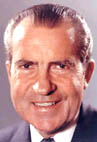
Richard Nixon

Richard Nixon

By JOSEPH FITSANAKIS | intelNews.org |
Everyone familiar with American political history knows about the ‘White House Plumbers’, a covert special investigations unit established during the Presidency of Richard Nixon, and tasked with spying on his political opponents. The unit’s bungled attempt to burgle the Watergate offices of the Democratic National Committee, in 1972, eventually led to Nixon’s resignation. But the Watergate burglary was but one of many operations conducted by the ‘Plumbers’, who were one of several ‘dirty tricks’ units managed by the Nixon White House. Now, nearly 40 years after the Watergate scandal erupted, veteran intelligence correspondent Jeff Stein provides new information that suggests the Nixon White House may have bugged the Pentagon telephones of senior American military officials. Stein managed to track down Dave Mann, a former member of the Pentagon’s Counterintelligence Force, who in 1971 stumbled upon a classified report claiming that listening bug signals had been detected emanating from offices in the Joint Chiefs of Staff. The signals had been picked up by a technical surveillance countermeasures (TSCM) team during a routine sweep of the Pentagon, in search of unauthorized interception devices. Mann run some tests to verify the TCM team’s report, and discovered that the bug signals originated from the personal office telephone line of General William Westmoreland, who was then the US Army’s Chief of Staff. He also discovered that the telephone of his assistant had been compromised, as well as the telephone lines belonging to the US Army’s assistant secretary, its logistics director, and at least one general. Mann’s personal conclusion was that the phone lines were most likely bugged with the cooperation of the Chesapeake and Potomac Telephone Company, which was at that the time considered an operational wing of the FBI, under Director J. Edgar Hoover. Read more of this post