News you may have missed #408

  • Russian military spy supervised Czech prisons. Robert Rakhardzho, a Russian spy whose relationship with a Czech female Army major prompted the resignation of three senior Czech military officials, worked as a psychologist at the Czech Prison Service headquarters until last September. Rakhardzho is now hiding in Russia.
  • US undercover feds able to easily obtain fraudulent passports. Gregory Kutz, an investigator for the US Government Accountability Office, testified last week to a Senate panel about how his team of undercover Federal agents was able to get the State Department to issue five of the seven e-Passports it requested using fraudulent information. The government apparently failed to detect such basic red flags as a fake driver’s license.
  • Russia widens powers of KGB successor agency. Russian president Dmitry Medvedev has signed a law widening (again) the powers of the Federal Security Service, the KGB’s main successor agency. The new law allows the FSB to issue warnings to people suspected of preparing to commit “crimes against Russia’s security”. Perpetrators face fines or up to 15 days detention.

Bookmark and Share

News you may have missed #383 (Russian spy ring edition IV)

  • Analysis: Why Russia and the US still spy. The sensationalist media coverage of the FBI’s recent bust of a Russian spy ring in the US has failed to examine this development in light of the post-Cold War relations between Russia and the United States. The fact is that espionage will continue, even as the United States and Russia work out a new post-Cold War modus vivendi, says Peter Earnest, a 35-year CIA veteran.
  • Analysis: The lure of the SVR. For most Russians, getting a job in the country’s vast bureaucracy is a happy career step. Even more glamorous is the FSB, Russia’s ubiquitous domestic intelligence service. But the most prestigious agency of all is still the SVR, Russia’s equivalent of MI6, which is responsible for all foreign intelligence operations abroad, including the long-term, deep cover espionage ring just busted by the FBI. The Cold War may be over, but the SVR still offers a globe-trotting career for a small, elite group of ambitious graduates with the right connections.
  • Analysis: Was the Russian spy operation worth the trouble? The FBI has alleged no espionage or loss of classified materials as a result of the operations of the 11-member Russian spy ring. Indeed, much of what it maintains the Russians were seeking could be gleaned from a Google search. So the wider ramifications of the spy arrests may turn out to be primarily political rather than cloak-and-dagger.

Bookmark and Share

News you may have missed #370

  • Ukrainians ‘not spying any more’ on Russian FSB. Ukrainian counterintelligence services have stopped monitoring Russian Federal Security Service (FSB) officials stationed in Ukraine, according to a leading Ukrainian weekly. Ukrainian-Russian relations have dramatically improved since February, when Ukraine’s pro-Moscow leader Viktor Yanukovych was elected President.
  • US House votes to allow auditing of spy agencies. Despite several veto threats from the White House, the US House of Representatives has adopted an amendment to defense authorization bill HR 5136, which would give the Government Accountability Office the power to audit intelligence agencies.
  • Leading Turkish daily wiretapped. Turkish former deputy police chief Emin Aslan, who was arrested in 2009 in a drug trafficking investigation, says he was told in 2008 that the phone lines at Turkey’s leading daily Milliyet were wiretapped. The wiretapping appears to be connected to the notorious Ergenekon affair.

Bookmark and Share

News you may have missed #369

  • UN official criticizes US over drone attacks. The use of targeted killings by the CIA, with weapons like drone aircraft, poses a growing challenge to the international rule of law, according to Philip Alston, United Nations special rapporteur on extrajudicial killings.
  • Russian spies less active during Obama administration. The Czech Republic’s Military Intelligence Service said in its annual report on Tuesday that Russian agents have reduced their activities in the country since US President Barack Obama abandoned Bush-era plans for missile defense systems in Eastern Europe.
  • Analysis: A look back at US intelligence reform. The 2004 US Intelligence Reform and Terrorism Prevention Act was supposed to “address institutional obstacles that had complicated the intelligence community’s struggle to adapt to new technologies and a changing national security environment”. But five years later, many of those original obstacles remain in place.

Bookmark and Share

Russian intelligence arrests, extradites fmr Kyrgyz interior minister

Moldomusa Kongantiyev

Kongantiyev

By JOSEPH FITSANAKIS | intelNews.org |
If there were any doubts that Russia is aggressively courting the new interim government in Kyrgyzstan, they were dispelled earlier today with the announcement that Russian authorities arrested the Central Asian republic’s former interior minister. Kyrgyzstan’s National Security State Service (NSSS) announced that Moldomusa Kongantiyev was arrested on Sunday in Moscow, by agents of Russia’s Federal Security Service (FSB), and will be extradited to Bishkek, where he will face charges of using state repression against demonstrators. Kongantiyev had escaped to Russia in mid-April, after he was abducted and viciously beaten by Kyrgyz opposition demonstrators, who released him after his family paid a significant amount of money as ransom. IntelNews hears that Kongantiyev suspected that Moscow planned to extradite him to Kyrgyzstan, and that some of the supporters of the deposed regime in Russia offered to hide him. But their attempt to smuggle him out of a hospital in Moscow, where he was receiving medical care, was thwarted by the FSB, after a tip from  NSSS. Read more of this post

News you may have missed #321 (CIA edition)

  • Uruguay ex-president sent to prison for 1973 coup. Declassified documents show that, at the time of the coup, Juan María Bordaberry told the US ambassador that “Uruguay’s democratic traditions and institutions […] were themselves the real threat to democracy”.
  • FSB ‘dropped the ball’ in Moscow metro bombings. Two Russian intelligence observers argue that Russia’s new strategy has shifted toward preventing coordinated actions by large groups of militants, which has come at the expense of taking measures to prevent individual suicide attacks, such as those of last Monday in Moscow.
  • Calls for expanded DoJ probe of FBI killing of Detroit imam. The US Justice Department is probing the killing of Detroit-area Islamic cleric Imam Luqman Ameen Abdullah, who was shot dead during an FBI raid shortly after being indicted on charges of conspiracy to commit federal crimes. The FBI said Abdullah was shot after he opened fire, but critics say he may have been targeted for assassination.

Bookmark and Share

News you may have missed #296

Bookmark and Share

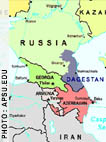
Russia accuses Georgia of aiding al-Qaeda in North Caucasus

Dagestan

Dagestan

By IAN ALLEN | intelNews.org |
It may not make headlines in Western media, but Russia’s low-intensity war in Chechnya and Dagestan continues, with scores of separatists and government agents dying on an almost daily basis. Last week, Vyacheslav Shanshin the Dagestan regional director of the Federal Security Service (FSB), the main successor to the Soviet-era KGB, announced the killing by FSB agents of Makhmoud Mokhammed Shaaban. Egyptian-born Shaaban is said to have co-founded the al-Qaeda network in the Russian North Caucasus, along with Saudi-born Ibn al-Khattab, whom the FSB managed to poison in 2002, with the help of a double agent. Shanshin also said that, like al-Khattab, Shaaban was partially funded and equipped by the Georgian secret services. Read more of this post

News you may have missed #0229

  • Russians claim outing ‘100 spies’ in Novosibirsk in 2009. Siberian scientific centers in Novosibirsk, and especially in its suburb of Akademgorodok, nicknamed “science city” by the Russians, are noted for their research in the fields of oil and gas geology, nanotechnology, creation of new materials, and biochemistry, among other subjects. See here for previous intelNews reporting on this issue.
  • Obama proposes liaison exchange with North Korea. US President Barack Obama has proposed setting up a liaison office in North Korea –something like a US Interests Section– in a letter to leader Kim Jong Il. Such a move would help augment the US’ meager intelligence gathering in North Korea.
  • Estonian phone, web data tapped by Swedish intelligence? The Estonian Security Police (KaPo) has cautioned Estonian telecommunications users to avoid discussing “sensitive subjects” by phone and on the Internet, after an Estonian newspaper revealed that large chunks of Estonia’s telecommunications traffic pass through Sweden before reaching the outside world.

Bookmark and Share

Spy agencies closely monitoring climate change talks

Defence Signals Directorate logo

DSD logo

By JOSEPH FITSANAKIS | intelNews.org |
I have written before about the increasing involvement of intelligence agencies in ongoing climate change negotiations between the world’s governments. In October, the CIA announced the establishment of its Center on Climate Change and National Security, despite fierce opposition by Republican lawmakers. Earlier this month, it was alleged that the hackers who stole and leaked onto the Internet hundreds of University of East Anglia’s Climatic Research Unit emails were operating via a Russian military and security network, a claim that has been disputed by the Russian FSB (Federal Security Service). However, a recent article in Australian daily The Canberra Times provides the first mainstream indication that a Western intelligence agency is “giving top priority” to the 2009 United Nations Climate Change Conference currently taking place in Denmark. Read more of this post

News you may have missed #0217

Bookmark and Share

Comment: Did Russian Intelligence Hack Climate-Change Emails?

Tomsk, Siberia

Tomsk, Siberia

By JOSEPH FITSANAKIS* | intelNews.org |
For over a fortnight, the world’s news services have focused on the so-called ‘Climategate’, the hundreds of University of East Anglia’s Climatic Research Unit emails that were hacked from the university’s server and leaked onto the Internet. The stolen emails, some of which date back to 1996, have reignited conspiracy theories about the role of human activity in climate change. But there is surprisingly little discussion about who hacked into the university’s server and stole the personal emails.

Read more of this post

News you may have missed #0202

Bookmark and Share

London ex-official admits falling for Chinese honey trap

Ian Clement

Ian Clement

By JOSEPH FITSANAKIS | intelNews.org |
London’s former deputy mayor, Ian Clement, has admitted he was lured by a female Chinese secret agent, who drugged him and ransacked his Beijing hotel room after having sex with him. Clement said he fell for “the oldest trick in the book”, euphemistically known as ‘honey trap’ in intelligence circles, while accompanying UK Olympics Minister Tessa Jowell to Beijing to “build contacts with potential investors” for the 2012 Summer Olympics in London. He said he became acquainted with an attractive Chinese woman at the exclusive official party on the opening night of the 2008 Summer Olympics in Beijing, and had a few drinks with her. He then invited her to his hotel room, where he eventually became unconscious. Upon waking up, several hours later, he found that “the woman had rifled through confidential documents and downloaded details about how the capital is run from his BlackBerry Smartphone”. Read more of this post

Russia jails man for passing military secrets to US Pentagon

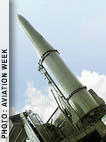
Iskander missile

Iskander missile

By IAN ALLEN | intelNews.org |
A Serb national was given an eight-year sentence by a Russian court earlier today, for allegedly passing classified information on Russian defense projects to an agent of the US Defense Intelligence Agency (DIA). Agents with Russia’s Federal Security Service (FSB), the main successor to the Soviet-era KGB, arrested the 61-year-old man, named Aleksandar Georgijevic, at a Moscow airport in 2007, as he was reportedly trying to leave Russia. They accused him of giving secret documents to Farid Rafi, whom the Russians claim was “working in the interests of the intelligence agency of the US defense ministry”. Georgijevic’s trial took place behind closed doors. But Russian media report that he began collecting classified information in as early as 1998, focusing primarily on the Russian military’s R-500 supersonic cruise missile, as well as the Iskander, Blokada and Khrizantema-C  tactical missiles. Read more of this post