Snowden leaks reveal GCHQ’s reliance on NSA money, data

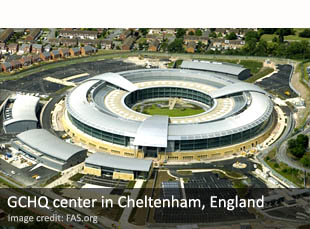
GCHQ center in Cheltenham, EnglandBy JOSEPH FITSANAKIS | intelNews.org |
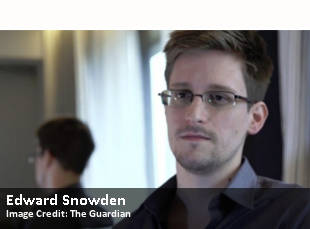
Information provided by American defector and former intelligence insider Edward Snowden shows that Britain’s signals intelligence agency is very much the junior partner in an uneven relationship with its American counterpart. Snowden, a former computer expert for the Central Intelligence Agency (CIA) and the National Security Agency (NSA), has been given political asylum in Russia. In June, he revealed a number of enormous intelligence-collection programs, including PRISM and TEMPORA. The latter is administered by the General Communications Headquarters (GCHQ), Britain’s signals intelligence organization. The program enables the agency to access communications traffic carried through fiber optic cables worldwide. But GCHQ also receives data from PRISM, a massive electronic surveillance program operated by the NSA, which provides access to millions of email and online chat exchanges facilitated by some of the world’s foremost Internet service providers. Because of these arrangements, GCHQ’s access to electronic data increased by 7,000 percent between 2008 and 2012, according to an internal GCHQ document provided to The Guardian newspaper by Snowden. The agency’s immense access to information has propelled it to a leading role within Britain’s intelligence establishment. It currently receives over half of Britain’s £1.9 billion annual intelligence budget, while its employee size is more than twice that of Britain’s domestic (MI5) and external (MI6) intelligence agencies combined. Its headquarters, the so-called “doughnut building” in Cheltenham, Gloucestershire, was Europe’s largest single construction project when it was being built in the early 2000s.  But the documents provided by Snowden show that, despite its considerable wealth and access to resources, GCHQ’s intelligence planners are deeply concerned about “being left behind by technology” in the fiber optic age. One internal report highlights “the pressure on the agency to deliver” and warns that “the complexity of [GCHQ’s] mission has evolved to the point where existing mission management capability is no longer fit for purpose”. Read more of this post

Germany ends spy treaty with US, UK, in response to Snowden leaks

Edward SnowdenBy JOSEPH FITSANAKIS | intelNews.org |
The German government has announced the termination of a Cold-War era surveillance cooperation treaty with the United States and the United Kingdom in response to revelations made by American defector Edward Snowden. Snowden, a former computer expert for the Central Intelligence Agency (CIA) and the National Security Agency (NSA), has been given political asylum in Russia. Earlier this summer, he told German newsmagazine Der Spiegel that the United States spies on the communications of Germany and other European Union countries with the same intensity it spies on China or Iraq. In an interview with British newspaper The Guardian, Snowden also revealed the existence of Project TEMPORA, operated by Britain’s foremost signals intelligence agency, the General Communications Headquarters (GCHQ). Snowden told the paper that GCHQ collected and stored massive quantities of foreign telephone call data and email messages, many of them from Germany, and shared them with its US counterpart, the NSA. On Friday, Germany’s Minister of Foreign Affairs, Guido Westerwelle, issued a statement saying that the government in Berlin had decided to scrap a longstanding surveillance cooperation agreement with Western countries in response to Snowden’s revelations. The agreement was signed in 1968 between the governments of West Germany, the US, UK, and France. It gave Western countries with military bases on West German soil the right to conduct surveillance operations in Germany in support of their military presence there. In the statement, Foreign Minister Westerwelle argued that the cancellation of the surveillance agreement was “a necessary and proper consequence of the recent debate about protecting personal privacy”. Read more of this post

UK to pardon genius wartime cryptanalyst convicted of ‘indecency’

Alan TuringBy IAN ALLEN | intelNews.org |

One of the greatest mathematical minds of modern times, who is widely considered the father of computer science and is credited with helping the Allies win World War II, is to receive a posthumous pardon by the British government, who in 1952 convicted him of homosexuality. Alan Turing, a mathematician and logician, with careers at the universities of Cambridge and Princeton, worked as a cryptanalyst for the British government during World War II. His work for Britain’s Government Code and Cypher School (GC&CS) at Bletchley Park, the British Armed Forces’ wartime joint codebreaking center, was instrumental in helping the British crack German military ciphers. Turing is personally credited with devising a complex method for compromising the Enigma machine, a highly secretive message-encoding device used by the German military and intelligence services. In 1952, while working for the Department of Mathematics at the University of Manchester, Turing was charged with “gross indecency” under Section 11 of the Criminal Law Amendment Act of 1885, which criminalized homosexuality. After pleading guilty to having a sexual relationship with a 19-year-old unemployed man, Turing was convicted and given a choice of imprisonment or undergoing “chemical castration”. The latter was a hormonal treatment based on injections of synthetic estrogen, aimed at reducing a person’s sexual drive. Turing chose the latter option, which rendered him impotent and caused massive chemical imbalance in his brain. Read more of this post

UK to probe Chinese telecoms firm over security concerns

Huawei TechnologiesBy IAN ALLEN | intelNews.org |

The British government has confirmed that it will review the involvement of a Chinese telecommunications hardware manufacturer in a cybersecurity testing center in Oxfordshire, England. The facility, called Cyber Security Evaluations Centre, has been operating since 2010 in the town of Banbury, 64 miles northeast of London. Its establishment was part of a 2005 agreement between firm British Telecom and Chinese telecommunications hardware manufacturer Huawei. According to the stipulations of the agreement, British Telecom would purchase switches and other hardware equipment from the Chinese company, if the latter agreed to set up “the Cell”, as it is known, in Banbury, to test the equipment’s security features. However, last month, a report (.pdf)  by the British Parliament’s Intelligence and Security Committee (ISC) raised strong concerns about Huawei’s involvement at the Centre. The ISC report called the government’s attention to “the risks of Huawei effectively policing themselves” and stressed that Britain’s national security could potentially be compromised by Huawei’s alleged links to the Chinese military. The report based its concerns on the fact that virtually every member of staff at the Banbury testing facility is an employee of Huawei, barring its Director, who is a former deputy director of Britain’s General Communications Headquarters (GCHQ). The parliamentary report urged the government to overcome its “fear of jeopardizing trade links with Beijing” and pressure British Telecom to amend its agreement with Huawei. Instead of Huawei technicians, the ISC report suggested that the Banbury Centre should be staffed exclusively with personnel from GCHQ —Britain’s communications intelligence agency. Late last week, the UK Cabinet Office announced it was in agreement with the principal recommendations of the ISC report and said that a review of the Banbury testing facility will take place. Read more of this post

Germany probes UK spy program revealed by CIA whistleblower

Sabine Leutheusser-SchnarrenbergerBy JOSEPH FITSANAKIS | intelNews.org |
Germany wants to know whether its citizens were spied on under a British government surveillance program revealed by American intelligence whistleblower Edward Snowden. The program, codenamed Project TEMPORA, was disclosed earlier this week by Snowden, a former technical assistant for the United States Central Intelligence Agency (CIA). Snowden remains holed up at Moscow’s Sheremetyevo International Airport, as Russian authorities have rejected repeated requests by Washington to extradite him to the US. According to British newspaper The Guardian, which first wrote about Project TEMPORA on June 21, Britain’s General Communications Headquarters (GCHQ) has been able to “plug into the cables that carry internet traffic into and out” of the United Kingdom. The agency, which is tasked with communications interception, has therefore collected and stored massive quantities of foreign telephone call data and email messages, and has shared much of it with its US counterpart, the National Security Agency. On June 25, Germany’s Federal Minister of Justice, Sabine Leutheusser-Schnarrenberger, wrote a letter to her British counterpart, Chris Grayling, asking for immediate clarification on the precise legal basis for Project TEMPORA. In her letter, which was copied to the British Home Secretary, Theresa May, the German cabinet minister also inquires whether TEMPORA has been authorized by the appropriate judicial authorities. She argues that “European institutions should shed light on this [issue] immediately” and warns her British colleagues that she plans to raise the subject during the July 2013 meeting of European  Union Justice and Home Affairs ministers, which will be held in Brussels, Belgium. Read more of this post

UK/US spy agencies targeted heads of state at London G20 meeting

NSA/GCHQ listening station in Menwith HillBy JOSEPH FITSANAKIS | intelNews.org |
British and American intelligence agencies targeted the communications of heads of state and other senior officials during a G20 summit held in London in 2009, according to documents. The summit was hosted by the then British Prime Minister Gordon Brown and was attended by delegates from 20 major world economies, including then Russian President Dmitry Medvedev, who was specifically targeted in the spy operation. British newspaper The Guardian, which published the information, said that delegates had their personal computers and cellular telephones monitored during a joint effort by the US National Security Agency (NSA) and Britain’s General Communications Headquarters (GCHQ). The two agencies, which are tasked with intercepting communications signals on behalf of their respective governments, maintain a jointly administered listening base inside the Royal Air Force station in Menwith Hill near Harrogate, North Yorkshire. According to one of the documents, entitled “Russian Leadership Communications in support of President Dmitry Medvedev at the G20 summit in London —Intercept at Menwith Hill station”, the listening facility was utilized to spy on the communications of the Russian President during his stay in London. The targeting began as soon as President Medvedev and the Russian delegation arrived in the British capital on April 1, and continued for several days. The top-secret document, which was shared between British, American, Australian, Canadian, and New Zealand intelligence services, noted “a change in the way Russian leadership signals have been normally transmitted” through satellite links from the Russian embassy in London. Another set of documents, also published by The Guardian, indicate that some G20 summit delegates were “tricked into using Internet cafes [that] had been set up by British intelligence agencies” in order to intercept their email communications. Read more of this post

UK planned to spy on 2009 Commonwealth heads of state meeting

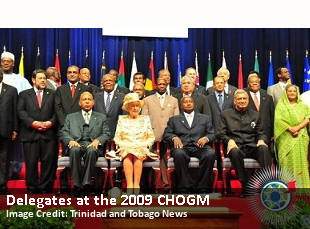
Delegates at the 2009 CHOGMBy JOSEPH FITSANAKIS | intelNews.org |
British intelligence agencies had plans to spy on a British Commonwealth meeting, which was attended by Queen Elizabeth and the President of France, among other heads of state. The plans to spy on the meeting, which was held in 2009, are revealed in a document disclosed to The Guardian newspaper by American whistleblower Edward Snowden. Earlier this month, Snowden, a former technical assistant for the United States Central Intelligence Agency (CIA), disclosed the existence of PRISM, a clandestine national security electronic surveillance program operated by the United States National Security Agency (NSA). The Guardian said on Sunday that it had in its possession a page from an internal classified document given to NSA by Britain’s General Communications Headquarters (GCHQ), which is tasked with collecting signals intelligence. The document apparently outlines plans to spy on international delegates in order to “give UK ministers an advantage in talks with their Commonwealth counterparts”. Some “key intelligence [collection] requirements” at the summit, which took place in 2009 in Trinidad, included “intelligence on South Africa’s views on Zimbabwe”, as well as “climate change reporting”. The document, says The Guardian, also sets out a schedule for various British intelligence agencies to arrive and begin operations in the South American island-nation. GCHQ is instructed to initiate its surveillance activities following the arrival of the international delegates. On the other hand, the Secret Intelligence Service (SIS, also known as MI6), which is Britain’s primary external intelligence agency, is expected to set up operations in Port of Spain several days prior to the event. Read more of this post

News you may have missed #837

Alexander LitvinenkoBy IAN ALLEN | intelNews.org |

►►Russian ex-spy ‘would testify’ in Litvinenko inquiry. The 2006 murder of former Russian spy Alexander Litvinenko has never been solved and remains the subject of conflicting narratives and still-deepening intrigue over who may have killed him and why. Now a key witness, a US-based former Russian spy who worked with Litvinenko in the months leading up to his death, says he is willing to give evidence at a public inquiry. British police considered him such a vital witness that they visited the US three times to persuade him to give evidence at the inquest.
►►Assange reveals GCHQ messages discussing extradition. Authorities at GCHQ, Britain’s eavesdropping agency, face embarrassing revelations about internal correspondence in which WikiLeaks founder Julian Assange is discussed, apparently including speculation that he is being framed by Swedish authorities seeking his extradition on rape allegations. The records were revealed by Assange himself in a Sunday night interview with Spanish television. A message from September 2012, apparently says: “They are trying to arrest him on suspicion of XYZ. It is definitely a fit-up. Their timings are too convenient right after Cablegate“.
►►North Korean defector accused of spying by his sister. Earlier this year, Yoo Woo-sung, one of the most prominent North Korean defectors living in South Korea, was arrested on charges of espionage. Now court documents have shown that Yoo was arrested after testimony from his sister, who said he had been sent on a mission by North Korea’s secret police to infiltrate the defector community and pass back information about the people he met. The Washington Post reports that defectors from the North are increasingly facing the brunt of this suspicion.
►►Iran hangs two men for spying for Israel and US. Mohammad Heydari was found guilty of passing intelligence on “security issues and national secrets” to Israeli Mossad agents in exchange for cash. Kourosh Ahmadi was convicted of providing intelligence to the CIA, Tehran’s prosecutor’s office said. It is not clear when Heydari and Ahmadi were arrested or where they were tried. Their execution was handed down by Tehran’s Revolutionary Court and confirmed by the Supreme Court, Iran’s Fars news agency reported.

News you may have missed #820

H. Keith MeltonBy IAN ALLEN | intelNews.org |
►►World’s best known spy collector displays his home. And now for something completely different. Most intelNews readers will be aware of H. Keith Melton, the author of more than 25 nonfiction works on espionage (including The Ultimate Spy Book) and the world’s largest private collector of spy memorabilia. The question is, where does he keep all this stuff? The 68-year-old author invited Forbes magazine to his Boca Raton house, which includes his two-story private spy museum. The article is here, a photo gallery here, and a video of the house (but not the museum) is here.
►►Acting CIA director criticizes ‘Zero Dark Thirty’. IntelNews has ignored the commentary that has flooded the Web about Zero Dark Thirty, the feature film fictional account of the assassination of al-Qaeda founder Osama bin Laden. But when the Director of CIA, the agency behind the real-life operation to kill bin Laden, publicly comments, it is time to pay attention. Michael J. Morell, who took over as CIA Director from General David Petraeus last month, has criticized the film, saying it exaggerates the role of coercive interrogations in producing clues to bin Laden’s whereabouts.
►►British police says MI6 expert ‘killed himself’. British police say MI6 cryptology expert Gareth Williams, who was found dead inside a sports bag in August 2010, probably locked himself into the sports bag, where his naked body was found, and was not the victim of a hit by the security services. Williams, 31, worked for Britain’s secret eavesdropping service GCHQ but was attached to MI6 when his remains were found inside the bag in a bathtub at his London apartment.

News you may have missed #814

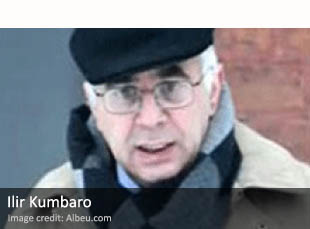
Ilir KumbaroBy IAN ALLEN | intelNews.org |
►►Israel accuses Palestinian of spying for Hezbollah. Israel’s Shin Bet internal security agency says a Palestinian man has been charged with relaying information to Hezbollah in Lebanon about sensitive government sites, including parliament. It identified the suspect as Azzam Mashahara, a resident of east Jerusalem, which Israel captured in 1967. Palestinian residents of east Jerusalem, unlike Palestinians from the West Bank or the Gaza Strip, have Israeli identity cards that allow them to travel freely within Israel. Mashahara was charged with maintaining contacts with a foreign agent and relaying information to the enemy.
►►UK agency tries to crack coded message from WWII-era carrier pigeon. The note, written on official stationary with the heading “Pigeon Service,” was discovered in a red canister attached to the skeletal leg of a pigeon in a chimney in Surrey, England. The message is made up of 27 seemingly random five-letter blocks and though it’s undated, government analysts believe the pigeon met his end while on a secret mission during the Second World War. The note is signed “Sjt W Stot” and was intended for the destination “XO2”. In a statement, Britain’s Government Communications Headquarters (GCHQ), said that during the war secret communications would often utilize specialized codebooks “in which each code group of four or five letters had a meaning relevant to a specific operation, allowing much information to be sent in a short message”. The GCHQ said that those messages may have been put through an additional layer of security by being re-coded with what’s known as a one-time pad.
►►Albania court convicts fugitive ex-spy chief. An Albanian court has convicted Ilir Kumbaro, the country’s fugitive former intelligence chief, of murder for the 1995 death of a suspect who was illegally detained for an alleged plot to murder the President of the Republic of Macedonia. The victim, businessman Remzi Hoxha, an ethnic Albanian from Macedonia, was abducted by the secret police 17 years ago along with two other suspects for allegedly planning to kill then-Macedonian President Kiro Gligorov during a visit to Albania. The court said the three suspects were held illegally and tortured during questioning. Kumbaro traveled to Britain in 1996 under a false identity, claiming to be a refugee from Kosovo. He has been missing for a year, after skipping an extradition hearing in London. Hoxha was never found and is presumed to have died in custody.

News you may have missed #801

Alan TuringBy IAN ALLEN | intelNews.org |
►►Israel charges Arab man with spying for Hezbollah. Israel has charged Milad Khatib, a 26-year-old Arab Israeli truck driver, who was arrested a month ago, with spying for Hezbollah, making contact with a foreign agent, conspiring to aid the enemy and belonging to an illegal group. According to the indictment, Khatib was in contact with a man named Barhan, a Hezbollah agent who operated in various European locations. The two allegedly met several times between 2007-2009 in Barhan’s home in Denmark, with all of Khatib’s expenses, including food, hospitality and entertainment, covered by Barhan.
►►Britains’ GCHQ praises Alan Turing legacy. In a rare public speech, Iain Lobban, the Director of GCHQ, Britain’s signals intelligence agency, has praised the legacy of British mathematician and codebreaker Alan Turing. Widely considered the father of computer science and artificial intelligence, Turing committed suicide in 1954, after the British government prosecuted him for being a homosexual. In 2009, British Prime Minister Gordon Brown offered a public apology for Turing, who is also credited with cracking the Nazi Enigma code —a vital part of the Allied effort in World War II.
►►Canada’s SIGINT agency to get new headquarters. Canada’s electronic spy organization believes that the state-of-the-art headquarters now being built in an Ottawa suburb will make it a leader among its allies and attract the best and brightest of spies, according to newly released Canadian government documents obtained by The Ottawa Citizen. When finished in 2015-16, the Canadian Communications Security Establishment’s new $880-million spy campus in Gloucester is expected to be home to more than 1,800 employees.

News you may have missed #796

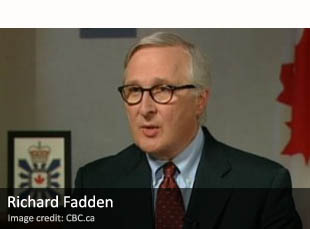
Richard FaddenBy IAN ALLEN | intelNews.org |
►►Iranian spy scandal sparks outrage in Turkey. After a nearly yearlong investigation into an alleged Iranian spy ring in Turkey, seven people were charged in early September with “providing information related to state security and establishing an [illegal] organization”. The charges against five Turkish citizens and two Iranian nationals followed a raid on the suspects’ residences and workplaces on August 29, in which videos and pictures of border security, documents, correspondence with Iranian intelligence and weapons were found, according to the investigation materials. Tehran denied any connections to those arrested, while officials in Ankara revealed more alleged evidence showing that Iran is providing support to the PKK.
►►British SIGINT agency ‘helps US drone attacks’. Britain’s former Director of Public Prosecutions, Lord Macdonald, has said there is “pretty compelling” evidence that the British government’s signals intelligence agency, GCHQ, is passing information to the United States to help it locate targets for controversial drone attacks in Pakistan. Earlier this year David Anderson, the British state’s independent reviewer of terrorism-related legislation, warned that the British government faced “a raft of civil cases” over possible complicity in the CIA drone attacks.
►►Canada’s top spy dismisses call for human rights scrutiny. In a newly declassified memo, CSIS director Richard Fadden appears to dismiss the Canadian Human Rights Commission’s recommendation that national security agencies do more to ensure they are not taking part in racial profiling or other objectionable practices. “I am confident in the service’s existing human rights policies and procedures, as well as our accountability and review structures”, Fadden says in the January 2012 memo, which is addressed to Canada’s Public Safety Minister Vic Toews. The memo —initially classified secret— was discovered by Mike Larsen, a criminology instructor in British Columbia, who obtained it under the Access to Information Act.

News you may have missed #794

GCHQ center in Cheltenham, EnglandBy IAN ALLEN | intelNews.org |
►►Racism charge against GCHQ settled out of court. The British government’s SIGINT agency, GCHQ has been spared having its inner workings broadcast in public after a potentially embarrassing racism case was settled out of court at the last minute. The racial harassment and constructive dismissal lawsuit had been filed by Alfred Bacchus, a 42-year-old former employee. There are unconfirmed reports that, as part of the settlement, the plaintiff has signed a non-disclosure agreement banning him from revealing any more details about his complaints.
►►US spy agencies renew call for electronic surveillance rights. US intelligence officials had made a public plea on Tuesday, the 11th anniversary of the September 11, 2001, attacks, for quick Congressional action to extend a sweeping but controversial US electronic surveillance law. If the law, which expires at the end of 2012, is not extended, US spy agencies say they would lose access to what they describe as a “very, very important source of valuable intelligence information”. But at least one congressional critic of the surveillance law, Democratic Senator Ron Wyden, says he is willing to use legislative tactics to stall the bill, which has been passed by the House, unless the administration and other legislators agree to include stronger provisions to protect Americans’ civil liberties.
►►Yemen claims arrest of ‘Mossad agent’. Al-Nas, a Yemeni weekly associated with the Islamist Yemeni Reform Party, reported last weekend that an Israeli citizen, identified only by his initials and year of birth, 1982, was arrested in the southwestern city of Taizz. He reportedly admitted to smuggling children out of Yemen to neighboring countries and from there to Israel “through Zionist organizations”. Bizarrely, the man reportedly told his Yemeni interrogators that he “spent three years in a Greek prison for researching the biographies of well-known computer hackers”.

News you may have missed #793

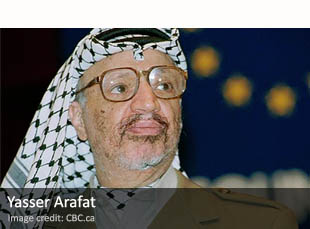
Yasser ArafatBy IAN ALLEN | intelNews.org |
►►Britain recruits tech start-ups for spy gadgets. British security services seem to have decided to widen the net for suppliers of state-of-the-art spyware for “covert surveillance”. Traditionally, British intelligence organizations including MI5 and GCHQ, have relied on a network of trusted contractors. But the change in approach represents an opportunity for burgeoning technology companies. According to a senior Whitehall official, who spoke to The Financial Times, these agencies “are appealing to a wide range of innovators, small and large, and saying: ‘Here are some problems we encounter. Can you solve them?’”.
►►French investigators to exhume Arafat’s remains. Three French investigating magistrates will travel to Ramallah in the West Bank to exhume the remains of the late Palestinian President Yasser Arafat so they can take tissue samples to determine what killed him. New evidence emerged from an investigation in July by the Al Jazeera television network when the Institut de Radiophysique, in Lausanne, Switzerland, said it had discovered significant traces of the rare radioactive element polonium-210 on the late leader’s clothing and toothbrush.
►►Panetta speaks out against book on bin Laden killing. As former US Navy SEAL Matt Bissonnette continues to make headlines about his book, No Easy Day, about the killing of al-Qaeda founder Osama bin Laden, US Defense Secretary Leon Panetta has spoken out publicly on the subject for the first time. The former Director of the CIA said “the American people have a right to know about this operation”. But, he added, “people who are a part of that operation, who commit themselves to the promise that they will not reveal the sensitive operations and not public anything […] when they fail to do that, we have got to make sure that they stand by the promise that they made to this country”.

News you may have missed #789

Mikhail FradkovBy IAN ALLEN | intelNews.org |
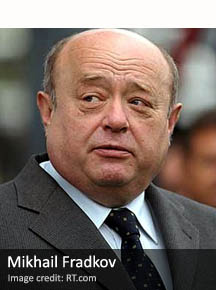
►►Putin adds spy chief to energy commission. Russian President Vladimir Putin has reinforced a presidential commission seen as Kremlin’s vehicle for vying for control over the country’s crucial oil and gas sector, by adding the country’s top police officer and senior spy to its ranks. They are Interior Minister Vladimir Kolokoltsev and Mikhail Fradkov, director of the Foreign Intelligence Service, formerly a department of the KGB. The commission is driven by Igor Sechin, a former KGB officer and close ally of President Putin.
►►US spy sat agency plans major expansion. The National Reconnaissance Office (NRO), America’s secretive spy satellite agency, operates a vast constellation of spy satellites in orbit. But these surveillance spacecraft have traditionally only been able to gaze down on a few small areas of the planet at a time, like flashlights probing the dark. And this, only with careful advance planning by human operators on the ground. Now the NRO wants to expand the current flashlight-like satellite deployment to a horizon-spanning, overhead spotlight that can illuminate vast swaths of the planet all at once. The agency also wants new spacecraft that can crunch the resulting data using sophisticated computer algorithms, freeing the satellites somewhat from their current reliance on human analysts.
►►GCHQ warns of ‘unprecedented’ cyberattack threat. The British government’s electronic eavesdropping and security agency, GCHQ, has warned the chief executives of Britain’s biggest companies about an allegedly “unprecedented threat” from cyber-attacks. “GCHQ now sees real and credible threats to cybersecurity of an unprecedented scale, diversity, and complexity”, said Ian Lobban, the agency’s director. The magnitude and tempo of the attacks pose a real threat to Britain’s economic security’, Lobban adds, but notes that about 80% of known attacks would be defeated by embedding basic information security practices.