Canadian diplomats spied for the CIA in Cuba, claims new book

Embassy of Canada in Havana, CubaBy JOSEPH FITSANAKIS | intelNews.org |
Several accredited Canadian diplomats were recruited by the United States Central Intelligence Agency to spy on Cuba in the aftermath of the 1962 missile crisis, according to a new book. Authored by Canadian retired diplomat John Graham, the book, entitled Whose Man in Havana? Adventures from the Far Side of Diplomacy, is to be published this week by Penumbra Press. In it, Graham claims that he was among a number of Canadian diplomats stationed in Cuba, who were secretly recruited by the CIA. The US agency had been essentially forced out of the island after Washington and Havana terminated diplomatic relations in 1961, soon after the government of Fidel Castro declared itself a proponent of Marxism. The closure of the US embassy meant that the CIA had no base from which to operate in the Caribbean island. Two years later, in May 1963, US President John F. Kennedy personally asked Canadian Prime Minister Lester Pearson for assistance in intelligence-gathering efforts in Cuba. The Canadian leader consented and, according to Graham, Canadian diplomatic officials actively assisted the CIA until at least 1970. The author states in his book that he himself operated in Cuba for two years, from 1962 until 1964, under the official cover of Political Officer at the Canadian embassy in Havana. Prior to that, he says, he was provided with rudimentary training by the CIA, which consisted of spending “just a few days” at the Agency’s headquarters in Langley, VA. He was then tasked with conducting physical surveillance of Soviet military bases on Cuba and, if possible, identifying weapons and electronic security measures, and noting troop movements. Read more of this post

News you may have missed #801

Alan TuringBy IAN ALLEN | intelNews.org |
►►Israel charges Arab man with spying for Hezbollah. Israel has charged Milad Khatib, a 26-year-old Arab Israeli truck driver, who was arrested a month ago, with spying for Hezbollah, making contact with a foreign agent, conspiring to aid the enemy and belonging to an illegal group. According to the indictment, Khatib was in contact with a man named Barhan, a Hezbollah agent who operated in various European locations. The two allegedly met several times between 2007-2009 in Barhan’s home in Denmark, with all of Khatib’s expenses, including food, hospitality and entertainment, covered by Barhan.
►►Britains’ GCHQ praises Alan Turing legacy. In a rare public speech, Iain Lobban, the Director of GCHQ, Britain’s signals intelligence agency, has praised the legacy of British mathematician and codebreaker Alan Turing. Widely considered the father of computer science and artificial intelligence, Turing committed suicide in 1954, after the British government prosecuted him for being a homosexual. In 2009, British Prime Minister Gordon Brown offered a public apology for Turing, who is also credited with cracking the Nazi Enigma code —a vital part of the Allied effort in World War II.
►►Canada’s SIGINT agency to get new headquarters. Canada’s electronic spy organization believes that the state-of-the-art headquarters now being built in an Ottawa suburb will make it a leader among its allies and attract the best and brightest of spies, according to newly released Canadian government documents obtained by The Ottawa Citizen. When finished in 2015-16, the Canadian Communications Security Establishment’s new $880-million spy campus in Gloucester is expected to be home to more than 1,800 employees.
News you may have missed #795

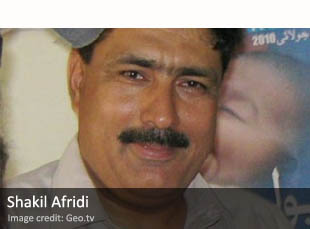
Shakil AfridiBy IAN ALLEN | intelNews.org |
►►US ‘cannot verify authenticity’ of Afridi interview. The US says it cannot verify an alleged interview by Shakeel Afridi, a Pakistani medical doctor who helped the CIA find Osama bin Laden. In May, a Pakistani court sentenced Afridi to 33 years in jail after he was arrested following the killing by US troops of bin Laden in May 2011 at his compound in the town of Abbottabad. US television channel Fox News said Tuesday it had obtained an exclusive phone interview with Afridi from behind bars, in which he detailed months of torture by Pakistan’s shadowy Inter-Services Intelligence.
►►Evidence suggests US covered up Soviet massacre in Poland. New evidence appears to back the idea that the US administration of President F.D. Roosevelt helped cover up Soviet guilt for the 1940 Katyn massacre, in which more than 22,000 Poles were killed by the Soviets on Stalin’s orders. Historians said documents, released by the US National Archives, supported the suspicion that the US did not want to anger its wartime ally, Joseph Stalin. The documents show that American prisoners of war sent coded messages to Washington in 1943 saying that the killings must have been carried out by the Soviets, rather than the Nazis. Information about the massacre was suppressed at the highest levels in Washington, say historians.
►►Yemen President sacks intel agency heads. Yemeni President Abd-Rabbu Mansour Hadi has sacked the heads of the National Security Agency and  Military Intelligence, just a few hours after two suicide car bombs targeted the country’s Defense Minister in the capital Sana’a killing at least 12 people. The National Security Agency’s Ali Mohammed al-Anisi has been replaced with Ali Hassan al-Ahmadi, while the head of Military Intelligence, Mujahid Ali Ghuthaim, has been replaced with Ahmed Muhsin al-Yafiee. Hadi took office in February this year after year-long street protests forced former President Ali Abdullah Saleh to step down as part of an UN-backed power transfer deal in return for immunity from prosecution.

CIA declassifies internal review on Iraq ‘intelligence failure’

Report cover pageBy JOSEPH FITSANAKIS | intelNews.org |
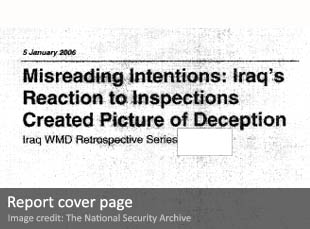
An internal report on the alleged failure of the Central Intelligence Agency to accurately read the intentions of the Iraqi regime in the run-up to the 2003 invasion by the United States, has been declassified. The report, entitled Misreading Intentions: Iraq’s Reaction to Inspections Created Picture of Deception, was authored in 2006, classified ‘secret’. It was prepared by the CIA’s Directorate of Intelligence (DI), the part of the Agency that is responsible for collating and assessing gathered intelligence in order to assist the decisions of US policy-makers on key foreign issues. The report describes what it sees as the DI’s intelligence failure to assess the true state of Iraq’s purported weapons of mass destruction program in the run-up to the US invasion. It says that invalid predispositions and “analytic liabilities” among CIA analysts prevented the Agency from seeing the issue of weapons of mass destruction from the viewpoint of the Iraqi government. Although heavily redacted, the report seems to state that CIA analysts spent little time examining the view, held by many at the time, that the Iraqi regime had in fact terminated its WMD program by 1995. Furthermore, Agency analysts failed to realize in time that, although it had terminated its WMD program, the Iraqi regime maintained a deliberate policy of ambivalence about the purported existence of the program, in order to save face, deter potential adversaries and appear more dangerous than it actually was. Such a policy of deception was well within the character of the Iraqi regime and should have been detected by American intelligence experts, says the report. Read more of this post

News you may have missed #788

U-2 surveillance aircraftBy IAN ALLEN | intelNews.org |

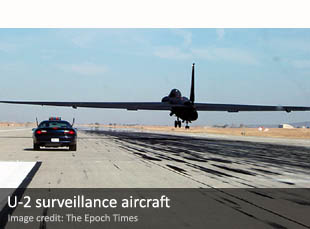
►►US spy planes violated Israeli airspace in 1950s. American U-2 espionage planes repeatedly entered Israeli airspace in the 1950s for a series of secret spy missions, according to new information to be published by the Israel Air Force magazine next week, bringing to an end a decades-long mystery. At the time, Israel’s defense establishment was baffled by the entrance of high-flying crafts. For years, officials in IAF command disagreed on the identity of the mystery crafts, with some claiming that they were British Vickers-Valiants, and others saying they were American Vought F-8 Crusader planes, that had been stationed on a US aircraft carrier. According to documents to be published next week, it was the USSR that aided Israeli officials to expose the identity of the mystery planes, after a US U-2 espionage plane was shot down over Soviet soil.
►►US guard pleads guilty to espionage. A civilian guard at a new US consulate in China pleaded guilty on Thursday to attempting to sell Chinese security officials photographs and access to the compound so they could plant listening devices. According to a court proffer, Bryan Underwood had lost a significant amount of money in the stock market and hoped to make between $3 million and $5 million by supplying classified photos and information to China’s Ministry of State Security. Underwood, 32, appeared in federal court in Washington and pleaded guilty to one count of attempting to communicate national defense information to a foreign government.
►►CIA torture probe ends without any charges. The US Department of Justice has ended its investigation into the CIA’s interrogation program for terror detainees, without bringing charges. Attorney General Eric Holder said there was not enough evidence to “sustain a conviction beyond a reasonable doubt”. Jameel Jaffer, deputy legal director of the American Civil Liberties Union, said the investigation’s conclusions were a “nothing short of a scandal”. But CIA officials welcomed the decision. CIA Director David Petraeus thanked his staff for co-operating with the investigation. “As intelligence officers, our inclination is to look ahead to the challenges of the future rather than backwards at those of the past”, he said. No surprises here, surely.

News you may have missed #786

Richard Masato AokiBy IAN ALLEN | intelNews.org |
►►US Pentagon wants to share intel with Egypt. The US Department of Defense is offering Egypt a package of classified intelligence-sharing capabilities designed to help it identify military threats along its border with Israel. According to an unnamed senior US official, the Pentagon leadership is concerned about “rising militancy” along the Egyptian-Israeli border. The purported intelligence package includes satellite imagery, data collected through unmanned drones, as well as intercepts of cell phone and other communications among militants suspected of planning attacks. The Egyptian intelligence chief was summarily fired earlier this month, after more than a dozen Egyptian soldiers were killed near Israel’s border when gunmen attacked a post and tried to enter Israel.
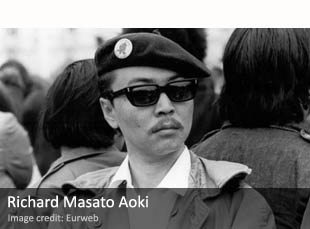
►►Researcher disputes Aoki was FBI informant. Last week author Seth Rosenfeld alleged that prominent 1960s Black Panther Party member Richard Masato Aoki, who gave the Black Panthers some of their first firearms and weapons training, was an undercover FBI informer. But the claim, which is detailed in Rosenfeld’s new book, Subversives, is disputed by another researcher, Diane C. Fujino. A professor and chair of Asian American studies at UC Santa Barbara, and author of the recently published Samurai Among Panthers, Fujino argues that Rosenfeld has not met the burden of proof on Aoki, and that he “made definitive conclusions based on inconclusive evidence”.
►►Russian intelligence to monitor blogosphere. Russia’s Foreign Intelligence Service, the FSB, says it plans to fund a program that monitors the Internet’s “blogosphere”, with an aim to “shape public views through social networking”. Citing unnamed sources from inside the FSB, Russian newspaper Kommersant said that the project’s research stage will cost around $1 million. The article implies that the online surveillance and opinion-shaping program will target both Russian- and foreign-language online users. This is not the first time that the FSB has displayed interest in online social networking in recent years.

News you may have missed #782 (history edition)

John A. McConeBy IAN ALLEN | intelNews.org |

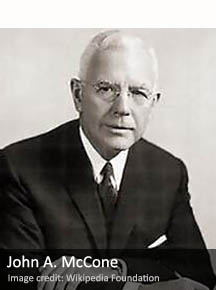
►►Did US DCI McCone authorize CIA assassinations? By the CIA’s own admission, we do know the Agency was involved in attempts to kill or overthrow several Third World leaders during the Cold War. But the doctrine of plausible deniability meant there is no paper trail identifying those who ordered such operations. Evidence is reasonably clear that Allen W. Dulles, who served as Director of Central Intelligence (DCI) for nearly nine years, sanctioned them. But what about John A. McCone (pictured), whom Kennedy appointed as DCI in 1961? Is it possible that the CIA carried out assassination plots without his approval or even in the face of his disapproval? Newly discovered notes from a cryptic telephone call McCone made to Secretary of State Dean Rusk on August 21, 1962, support the claim that, while McCone opposed any open discussion of assassination proposals, he did not oppose the efforts as a matter of principle.
►►Ronald Reagan was FBI informant (Note: this is not new information, but it helps to refresh one’s memory from time to time). In the early stages of the Cold War, FBI Director J. Edgar Hoover feared a ‘Kremlin-controlled conspiracy’ to infiltrate Hollywood and use the world’s largest producer of motion pictures to manipulate public opinion against America. In 1945, Ronald Reagan, then an actor, passed along some political gossip of special interest to Hoover. Eventually, Reagan served as an informer in the Bureau’s investigation of alleged communist infiltration of the radio and television industry. He was listed as “Confidential Informant T-36”. Agents described him as “reliable”.
►►Senior Black Panther member was FBI informant. Prominent 1960s Black Panther Party member Richard Masato Aoki, who gave the Black Panthers some of their first firearms and weapons training, was an undercover FBI informer in California, a former agent and FBI report reveal. Aoki’s role inside the Black Panthers was discovered by Seth Rosenfeld while researching his book Subversives: The FBI’s War on Student Radicals, and Reagan’s Rise to Power, which was published today by Farrar, Straus and Giroux. Aoki’s life in the Black Panthers was documented in a 2009 film, Aoki and a 2012 biography titled Samurai Among Panthers. Neither mentioned his work with the FBI. Rosenfeld said Aoki had contended in a 2007 interview it wasn’t true he was an informant, but added: “people change. It is complex. Layer upon layer”.

Missing section of Cold War spy tunnel unearthed in Germany

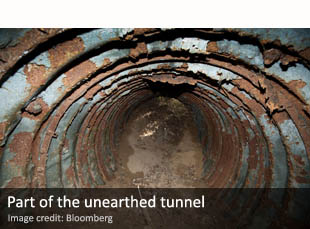
Part of the unearthed tunnelBy JOSEPH FITSANAKIS | intelNews.org |
A missing section of a secret tunnel, constructed by British and American intelligence agencies to spy on Soviet and East German government communications during the Cold War has been unearthed in Germany. The tunnel, believed to be nearly half a kilometer (1/3 mile) long, was part of the Central Intelligence Agency’s Operation GOLD, also known as Operation STOPWATCH in Britain. It was based on an idea initially suggested to the Americans in the early 1950s by Britain’s Secret Intelligence Service (MI6), which had carried out a similar scheme in Soviet-occupied Austria. The CIA adopted and funded the program at the cost of nearly $7 million. At its completion, the underground tunnel connected a secret entry-point in Rudow, West Berlin, to a location beneath Alt-Glienicke in East Berlin. The aim behind the project was to tap into underground telephone cables facilitating Soviet and East German military and civilian government communications. But the KGB, the Soviet Union’s foremost intelligence agency during the Cold War, was aware of the project almost from its infancy, thanks to George Blake, a British informant who was later convicted to 42 years in prison, but managed to escape to Moscow in 1966. Interestingly, the KGB did not reveal the tunnel’s existence to the Soviet and East German militaries, fearing that a sudden rerouting of communications cables would expose Blake as a Soviet mole. Instead, they allowed the tunnel to operate for nearly a year before publicly exposing its existence in 1956. At that time, Soviet and East German authorities dug up the eastern section of the tunnel and bussed in hundreds of international reporters, as well as tens of thousands of East Germans, to view the tunnel, in a massive propaganda campaign. In 1997, part of the tunnel that crossed West Berlin was excavated and transported to the Allied Museum in Berlin. Read more of this post

Interview with editors of H-INTEL, a new intelligence email list (Part II)

By JOSEPH FITSANAKIS | intelNews.org |
Yesterday we posted an interview with Dr. Mark Stout, of Johns Hopkins University and the International Spy Museum in Washington, DC, who in June of this year announced the creation of H-INTEL, a new scholarly discussion list. The list, which now has over 200 members, and is actively seeking more, is an ambitious project that aims to provide an online venue for the scholarly discussion of intelligence. In doing so, it brings together academics, researchers, journalists, practitioners, and others, with an active interest in intelligence studies and intelligence history, ranging from antiquity to our times. Today we post the second part of our exclusive interview on H-INTEL, this time with List Editor Damien Van Puyvelde, a PhD candidate at Aberystwyth University in the United Kingdom. Damien, who specializes in the intensification of public-private intelligence relations in the ‘global war on terrorism’, is also a member of the Centre for Intelligence and International Security Studies (CIISS) at Aberystwyth. Originally from France, Damien is currently H-INTEL’s primary List Editor. Read more of this post

Interview with editors of H-INTEL, a new intelligence email list (Part I)

H-INTEL list-serv logoBy JOSEPH FITSANAKIS | intelNews.org |
In late June of this year, Dr. Mark Stout, of Johns Hopkins University and the International Spy Museum in Washington, DC, announced the creation of H-INTEL, a new scholarly discussion list. H-INTEL is an ambitious project that aims to provide an online venue for the scholarly discussion of intelligence. In doing so, it brings together academics, researchers, journalists, practitioners, and others with an active interest in intelligence studies and intelligence history, ranging from the ancient times to today. The list, whose message logs are located on Michigan State University’s H-Net server in East Lansing, has already over 200 members from several countries —and it is actively seeking more. In an effort to spread the world about this worthwhile effort, intelNews spoke with two individuals spearheading this project: Advisory Board member and List Editor Mark Stout; and List Editor Damien Van Puyvelde, a PhD candidate and member of the Centre for Intelligence and International Security Studies at Aberystwyth University in the United Kingdom. Below is our interview with Mark. To read Damien’s interview, click here for Part II of this post. Read more of this post

News you may have missed #777

KH-9 HexagonBy IAN ALLEN | intelNews.org |
►►Egypt sacks spy chief after border attacks.  Egypt’s President Mohamed Morsi sacked the Director of the General Intelligence Directorate, Murad Muwafi, two generals and the governor of north Sinai region on Wednesday, after gunmen killed 16 border guards there on Sunday before last. Mowafi was the most high-profile official who lost his job, forced into early retirement as Egypt’s intelligence agencies were criticized for missing or ignoring warnings about the attack.
►►Photos reveal CIA deep-sea rescue of a spy satellite. On July 10, 1971, America’s newest photo reconnaissance satellite, the KH-9 Hexagon, dropped a capsule loaded with film toward the Earth. Due to a technical error, the capsule sunk in the Pacific Ocean. Last week, the CIA declassified documents and photographs showing how it went 16,000 feet into the sea to recover the Hexagon capsule.
►►Pre-inquest review into death of ex-KGB officer Litvinenko. A British High Court judge will soon hold a pre-inquest review into the death of Russian spy Alexander Litvinenko, officials have said. Litvinenko, who was working for MI6 following his defection from Russia, is believed to have been poisoned with radioactive polonium-210 in London, in November 2006. British prosecutors accuse former KGB operatives Andrei Lugovoy and Dmitry Kovtun for the murder. However, earlier this year Lugovoy reportedly passed a lie detector test on the subject of Litvinenko’s death, which was administered in Moscow by the British Polygraph Association.

News you may have missed #774 (lawsuit edition)

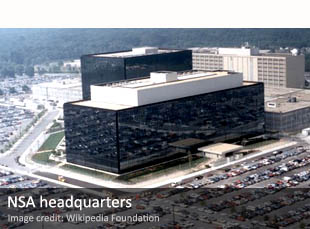
NSA headquartersBy IAN ALLEN | intelNews.org |

►►NSA whistleblower sues over property seized in leak raid. Diane Roark, a former staffer for the US House of Representatives Permanent Select Committee on Intelligence, has filed a lawsuit to seek return of computers, electronic devices and papers seized from her home in 2007. Roark, who handled the House’s oversight of the National Security Agency from 1997 to 2002, was suspected by the FBI of being a source for The New York Times‘ disclosure of the NSA’s warrantless wiretapping program STELLAR WIND, which she denies.
►►Lawsuit forces US agency to disclose CIA files. The US Veterans Administration has been ordered to disclose documents relating to the CIA’s Cold War-era experimentation on American soldiers. Beginning in the 1950s, the military and CIA utilized former Nazi scientists to test the effects of 400 types of drugs and chemicals, including mescaline, LSD, amphetamines, mustard gas, and nerve agents, on US soldiers, according to a lawsuit brought by the Vietnam Veterans of America and individual soldiers. Under the lawsuit, a judge in California has ruled the VA must hand over documents pertaining to the use of at least 7,800 service personnel as “human guinea pigs” by the US Army and the CIA.
►►Syrian spy tried to infiltrate German intelligence. A suspected Syrian spy who was arrested in Germany earlier this year and has now been charged with espionage, once tried to infiltrate the country’s intelligence services, according to German officials. The man, identified only as Akram O., was employed by Syria’s embassy in Berlin, and tasked with keeping tabs on Syrian opposition activists living in Germany. His application to work for the German federal government was made “at the behest of his intelligence agency handlers”, according to prosecutors. His application was turned down, however. The Syrian national applied for German citizenship in 2009, which was also denied.

Guest Comment: Radio Still Medium of Choice for Many Spies

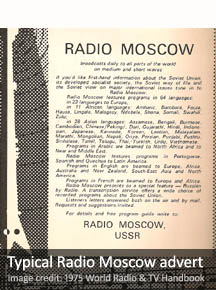
Typical Cold-War-era advert of Radio Moscow By PAUL BEAUMONT* | intelNews.org |
In 1975 whilst the Cold War was still being fought, short wave listeners were treated nightly to whatever stations they chose to listen to from wherever, propagation permitting. These broadcast stations carried a catholic mix of information, political views and insights, propaganda, religious ideology (usually with a political point) and music and other cultural statements of the government of the day. Broadcast stations with good signals were the BBC World Service, Voice of America, and Radio Moscow. But not all was as it seemed. Radio Moscow used very high powers so that those furthest from their transmitters still received signals at good strength whilst the propagation conditions ensured the frequencies were selected for the most efficient transfer of radio programs. One could sit in one’s armchair with no more than a telescopic antenna raised from the radio set and hear news from a foreign station and quickly retuning, could hear the same news but with a totally different bent. Even the music was not what it seemed, especially for two particular British spies, one being Frank Clifton Bossard, an officer with Britain’s Ministry of Defence Missile Guidance Branch, the other John Symonds, an ex-Detective Sergeant wanted in connection with Operation COUNTRYMAN.  Bossard was strapped for cash and approached the KGB, whilst finding himself overseas with no funds Symonds found himself working for the KGB as a ‘Romeo Spy’ seducing wives of diplomats for information. Interestingly MI5 denied that Symonds acted as he did and suggested such actions were a figment of John Symonds’ imagination. Read more of this post

The mysterious case of Glenn Souther, US defector to the USSR

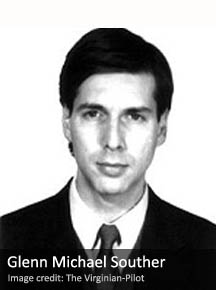
Glenn Michael SoutherBy JOSEPH FITSANAKIS | intelNews.org |
This past June marked 23 years from the death of Glenn Michael Souther, a United States Navy photographer who defected to the Soviet Union in 1986. Despite the passage of time, a thick veil of mystery remains over the life and works of Souther, an ideological defector to the USSR, who was one of the very few foreign agents and defectors given officer rank in the KGB, the Soviet Union’s foremost intelligence agency during most the Cold War. In 1975, following his graduation from high school, Souther joined the US Navy, and was stationed in Italy in the early 1980s. It was there where he married an Italian woman, and where –it is believed– he was recruited by the KGB’s Boris Solomatin, a legendary Soviet intelligence officer who is believed to have handled US spy John Anthony Walker. In 1982, Souther left the US Navy and enrolled at Old Dominion University, where he studied Russian literature, while at the same time working as a reservist in the US Navy. During that time, Souther worked for naval intelligence, specializing in processing satellite-reconnaissance photographs; he is also believed to have had access to classified intercepts circulating within the US Navy’s communications network. In May 1986, soon after the Federal Bureau of Investigation started to suspect Souther may be working for a foreign intelligence agency, he suddenly disappeared. Two years later, an article in the morning edition of Soviet newspaper Izvestia, official publishing organ of the Soviet Presidium, announced that Souther had been granted political asylum in the USSR. Later that evening, Souther appeared on Soviet Central Television, criticizing American foreign policy and explaining his decision to defect to the Soviet Union. However, on June 22, 1989, an article in Krasnaya Zvezda, official newspaper of the Soviet Ministry of Defense, announced that Souther had killed himself in the garage of his home. Read more of this post

Research sheds light on famed psychoanalyst’s espionage activities

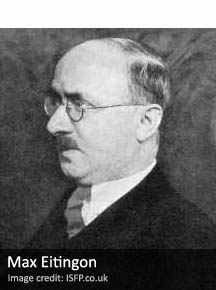
Max EitingonBy JOSEPH FITSANAKIS | intelNews.org |
An early student of Sigmund Freud, who introduced psychoanalysis in what is today Israel, was likely an agent of Soviet intelligence, according to historical evidence stemming from his life and the lives of his close relatives and friends. Max Eitingon, who was a member of Freud’s inner circle of students, funded and directed the Psychoanalytic Institute and polyclinic in Berlin, Germany, in the 1920s and early 1930s. In 1933, the rise of German national socialism prompted Eitingon, who was Jewish, to emigrate to Palestine, where he continued his psychoanalytic work. The view that Eitingon may have actively collaborated with Soviet intelligence in both Germany and Palestine was famously discussed in a lengthy letter exchange in The New York Review of Books in the summer of 1988. Although the debate continues among intelligence historians, two researchers, Isabella Ginor and Gideon Remez, both of the Hebrew University’s Truman Institute, believe that there is “a preponderance of circumstantial evidence” that Eitingon did collaborate with Soviet intelligence in Germany and Palestine. In a paper published in March of this year, the two researchers argue that Eitingon’s services to the Soviets included dispatching messages and providing safe houses for Moscow’s operatives. But in a fascinating research update, published yesterday in online journal Tablet, Ginor and Remez contend that historical evidence pertaining to the activities of Eitingon’s Russian-born wife, Mirra, and other relatives and friends, adds credence to the view that the famed psychoanalyst was working for Soviet intelligence. The two scholars point out that Mirra Eitingon, née Burovsky, had a son from a previous marriage, named Yuli Borisovich Khariton. Yuli, who remained close to his mother even after she left Russia, grew up to become the principal designer of the Soviet atomic bomb. Additionally, Ginor and Remez call attention to the role of two of Eitingon’s professional acquaintances: Adolf Yoffe, the Soviet Union’s first ambassador to Germany, and his successor, Viktor Kopp, both of whom shared Eitingon’s psychoanalytic interests. Specifically, Kopp was second-in-command at the Soviet Psychoanalytic Association, while Yoffe had been mentored by Alfred Adler, one of the psychoanalytic movement’s co-founders in Austria. In this sense, Ginor and Remez argue that psychoanalysis and intelligence work were “intertwined” in Eitingon’s life and career. Read more of this post