News you may have missed #761

Robert de La RochefoucauldBy TIMOTHY W. COLEMAN | intelNews.org |
►►US aircraft company owner charged with supplying Venezuelan military. Kirk Drellich, owner and president of SkyHigh Accessories in Florida, has pleaded not guilty to charges that he illegally supplied Venezuelan military contacts with pressure switches and cooling turbines, as well as other airplane parts. Court documents indicate that the aircraft parts were to be used for Venezuelan F-16 jets, attack helicopters and other military crafts. Prosecutors in Florida have filed charges (.pdf), stemming from violations of the Arms Export Control Act, on three other individuals who are supposedly involved in the conspiracy to export arms to Venezuela. Other defendants in the case include Alberto Pichardo and Freddy Arguelles, both former members of Venezuela’s Air Force, as well as Victor Brown, a local businessman.
►►Trial delayed again in Delisle espionage case. As previously reported on this blog, the espionage case against Sub-Lt. Jeffrey Paul Delisle, the Canadian navy intelligence officer accused of spying for Russia, has again been delayed. The attorney for Delisle requested an adjournment based on the governments disclosure of new documents and evidence in the case. The adjournment is expected to last until July 17.
►►Legendary WWII spy de La Rochefoucauld dies. Robert de La Rochefoucauld, a French national who became a legendary British spy, helping direct and organize the Free French forces in England and underground movements in France during World War II, has died of natural causes at the age of 88. De La Rochefoucauld’s exploits as a spy have all the makings of a movie. As a little boy, he met Adolf Hitler, and as a spy he twice escaped execution by the Nazi’s. He was a knight in the French Legion of Honor, received the Medal of Resistance from France, was widely herald for his exceptional service by the British and he is believed to have been the last remaining French member of Winston Churchill’s Special Operations Executive.

Revealed: British government minister spied for Czechoslovakia

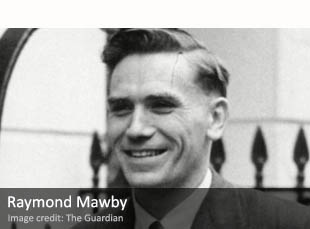
Raymond MawbyBy JOSEPH FITSANAKIS | intelNews.org |
The BBC has uncovered evidence that a Conservative Party minister was a longtime paid informant for Czechoslovakia’s Cold-War-era secret intelligence service. The discovery was made earlier this month by the BBC’s security correspondent, Gordon Corera, while visiting the declassified archives of the Czechoslovakian ŠtB to investigate an alleged attempt to blackmail British Conservative politician Edward Heath in the 1970s.  Corera’s discovery shows that Raymond Mawby, who was a Tory Member of Parliament from 1955 until 1983, spied for the ŠtB in return for money for nearly a decade, starting in 1961.  The BBC describes Mawby, who served as assistant Postmaster General from 1963 to 1964, and rose to the rank of junior minister in 1963, as “an unusual Tory”, since he was “a working class trade unionist” from Devon. Indeed, his extensive ŠtB file, uncovered by the BBC, shows that he was not as loyal to conservative values as one might think. Mawby was first approached by Czechoslovakian intelligence in November 1960, while attending a cocktail reception at the Czechoslovakian embassy in London. His contacts with his ŠtB handlers became more frequent during the following year when, operating under the codename Laval, he began providing them with political information from the British Houses of Commons, in exchange for regular payments of £100. By 1964, he was on a £400 monthly retainer by the ŠtB, in return for supplying the Czechoslovaks with documents from Parliament, details about the personal lives of his colleagues, and lists of Parliamentary committee members. In one instance, Mawby even supplied his foreign handlers with a hand-drawn floor plan of the office of the Prime Minister at 10 Downing Street. Read more of this post
Did Czechoslovakian spies plan to blackmail British leader?

Ted HeathBy JOSEPH FITSANAKIS | intelNews.org |
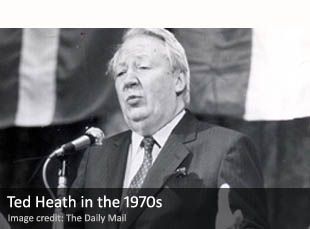
In 1975, Czechoslovakian intelligence officer Josef Frolík, who had defected to the United States, published a book titled The Frolik Defection: The Memoirs of an Intelligence Agent. Among several revelations in the book was an alleged plot by the ŠtB, Czechoslovakia’s Cold-War-era secret intelligence service, to sexually blackmail British Conservative politician Edward “Ted” Heath. According to Frolík, the ŠtB had concluded that Heath, a lifelong bachelor and Britain’s Prime Minister from 1970 to 1974, was gay. Based on this —highly questionable— belief, Jan Mrázek, an ŠtB officer working out of the Czechoslovakian embassy in London, had allegedly devised a plan in the mid-1960s, which aimed to expose Heath to homosexual blackmail. Frolík claims in his book that Mrázek developed the plot around Heath’s well-known preoccupation with classical music. Specifically, he planned to recruit Czechoslovakian classical organist Jiří Reinberger, who would be instructed to meet the British conservative politician in London and invite him to Prague for a concert. While there, the ŠtB hoped that a romantic affair would ensue, under the watchful eye of Czechoslovakian spies, who would make sure to capture the more intimate moments of the two men on camera. The audiovisual evidence would, the ŠtB believed, convince Heath to spy for Czechoslovakian intelligence. According Frolík, the plan was put to action but was eventually scrapped after MI5, Britain’s counterintelligence agency, warned Heath that a trip to Czechoslovakia would expose him to blackmail by that country’s intelligence service. When Frolík’s book came out, Heath, who had stepped down from his post as Britain’s Prime Minister and leader of the Conservative Party, dismissed the story as a fabrication, and threatened to sue the author. But was Frolík telling the truth? Read more of this post

U-2 pilot captured by USSR in 1960 to receive posthumous Silver Star

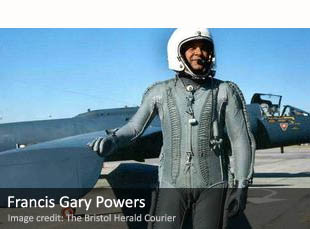
Francis Gary PowersBy JOSEPH FITSANAKIS | intelNews.org |
An American Central Intelligence Agency pilot, who was criticized during the Cold War for allowing Soviet forces to capture him alive during the 1960 U-2 incident, is to be posthumously awarded a military decoration for valor. Francis Gary Powers was one of several pilots who participated in Project HOMERUN, a joint effort by the CIA and the National Security Agency that surreptitiously gathered signals and photographic intelligence on Soviet military sites. The program, which has been described by some historians as one of the most successful intelligence projects in US history, relied on the U-2’s ability to fly beyond 70,000 feet over the Soviet Union, thus avoiding detection or attack by Soviet forces. But this impression was false; in reality, Soviet radars had been able to detect nearly every U-2 flight over Soviet territory. Eventually, on May 1, 1960, Soviet forces were able to shoot down one of the U-2 flights using a surface-to-air missile. Shortly after the USSR announced that an American plane had been shot down over Soviet territory, the US administration of President Dwight Eisenhower pretended that the plane was a NASA weather research aircraft that had “drifted into Soviet airspace” when the pilot had “lost consciousness”. At that point, however, Washington had no idea that the CIA pilot, Francis Gary Powers, had been captured alive by Soviet forces. This was later announced by Soviet Premier Nikita Khrushchev, who scored a major diplomatic coup for the Soviets. Following his arrest, Powers spent nearly two years in a Moscow prison before being exchanged for Soviet KGB spy Rudolf Abel, who had been captured in the US in 1957.  Recently declassified documents show that some CIA analysts had refused to believe that the USSR was capable of shooting down a U-2 aircraft, and thought that Powers had voluntarily defected to the Soviet Union. Read more of this post

News you may have missed #736

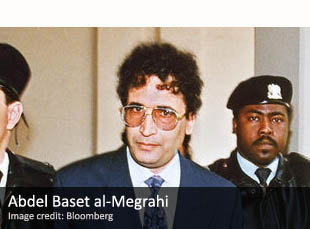
Abdel Baset al-MegrahiBy IAN ALLEN | intelNews.org |
►►Convicted Lockerbie bomber dies. Abdelbaset al-Megrahi, a former Libyan intelligence officer who was the only person ever convicted in the 1988 Lockerbie bombing, died at home in Tripoli Sunday, nearly three years after he was released from a Scottish prison to the outrage of the relatives of the attack’s 270 victims. He was 60. Scotland released Mr. al-Megrahi on Aug. 20, 2009, on compassionate grounds to let him return home to die after he was diagnosed with prostate cancer. Anger over the release was further stoked by subsequent allegations that London had sought his release to preserve business interests in the oil-rich North African nation, strongly denied by the British and Scottish governments.
►►Federal appeals panel to hear CIA leak case. A federal appeals panel in the United States will hear the case of ex-CIA officer Jeffrey Sterling, who has been charged with leaking classified information about Iran’s nuclear program to New York Times reporter James Risen. Prosecutors say Sterling was a key source in Risen’s 2006 book, State of War. They are also challenging the court’s decision to strike two government witnesses and allow disclosure of the identities of covert CIA operatives to Sterling’s lawyers.
►►New study of British Empire’s spies published. British newspaper The Guardian has published a review of William Beaver’s newly published book, Under Every Leaf: How Britain Played The Greater Game From Afghanistan to Africa. Much of the book concerns the creation in the mid-1850s of the British War Office Intelligence Department. According to the review, the book does much to restore the “missing dimension” to Britain’s military-imperial history between 1855 and the creation of her modern intelligence agencies in the early 1900s.

How an ambitious Nazi spy operation in the US ended in failure

Norden bombsightBy IAN ALLEN | intelNews.org |
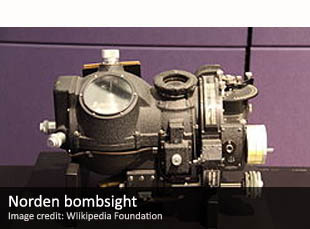
A well-researched article in The Chicago Tribune revisits one of the least known covert action episodes of World War II, which involved an ambitious Nazi espionage operation on US soil. The article, written by Ron Grossman, centers on Herbert Haupt, one of several American citizens and Nazi sympathizers, who were involved in the ruse. The German-born Haupt grew up in Chicago’s North Side and was working in West Garfield Park, at a factory that produced parts used for the Norden bombsight. The Norden bombsight was a sophisticated device that calculated the trajectory of a bomb dropped by an airplane, based on real-time flight conditions; moreover, it was connected to the aircraft’s autopilot, and was thus able to alter bomb trajectories according to changes in the wind, altitude, aircraft speed, or other effects. The Norden bombsight facilitated unprecedented bombing accuracy from high altitudes, and was thus rightly considered one of America’s most highly valued military secrets. In 1941, shortly before the United States entered World War II, Haupt took a leave of absence from his factory job and disappeared from the streets of Chicago’s North Side. It was later revealed that he traveled to Mexico City and presented himself at the German embassy there, offering to conduct espionage work for Nazi Germany. After securing a sum of money from German embassy officials, Haupt sailed to Japan and eventually made his way to Germany. A few months later, he illegally re-entered the US, sailing on a German U-boat that landed secretly in Florida carrying four German agents, all fluent English speakers. A second U-boat, carrying another four German agents, had landed almost simultaneously on Long Island. Haupt’s mission was to reenlist at the Norden bombsight factory in Chicago, so as to provide Nazi Germany with access to the top-secret device. Read more of this post

US judge denies release of CIA report on Bay of Pigs invasion

Court documentsBy JOSEPH FITSANAKIS | intelNews.org |

On April 17, 1961, a brigade of 1,300 CIA-funded and -trained anticommunist Cubans mounted a surprise assault on the Caribbean island. But prior intelligence collected by  spies working for Havana, and stiff resistance by pro-Castro troops, resulted in the CIA’s biggest known covert action failure. Approximately 1,200 surviving members of the CIA’s army were captured by pro-Castro forces, many of whom were severely interrogated or executed in subsequent years. The intelligence fiasco led to a five-volume CIA report, whose final volume was authored in the early 1980s by CIA resident historian Jack Pfeiffer. It essentially contains the CIA’s counterargument to a previous report, authored by the Agency’s Inspector General, which placed the blame for the failure on the invasion squarely on the shoulders of the CIA. Volume III of the report was voluntarily released by the CIA in 1998, but was not discovered by researchers until 2005, when an academic found it among the Kennedy Assassination Records Collection at the US National Archives. Following an unsuccessful Freedom of Information Act request, George Washington University’s National Security Archive sued the CIA in 2011, eventually forcing the Agency to declassify Volumes I, II and IV last April. This left Volume V, which is the subject of an ongoing dispute between historians and the CIA. But in a decision aired late last week, US District Court judge Gladys Kessler agreed with the Agency that the volume was not subject to US declassification rules because it had been “rejected for inclusion in the final publication” of the report. According to judge Kessler, the volume written by Dr. Pfeiffer, the CIA historian, was not a finished product, but rather a draft manuscript, and was therefore exempt from public disclosure under the Freedom of Information Act. Read more of this post

News you may have missed #726

Barbara Annette RobbinsBy IAN ALLEN | intelNews.org |
►►Portrait of first female CIA officer to die in line of duty. In 1965, a 21-year-old American woman, Barbara Annette Robbins (photo), was among the victims of a car bombing at the US Embassy in Saigon, South Vietnam. Washington said she was a diplomat. But, at a ceremony last year, the CIA admitted she was an employee of the Agency. This makes her the first woman at the male-dominated CIA killed in the line of duty. She is also the youngest CIA employee ever killed. And she appears to be the first American woman to die in the Vietnam War. The Washington Post has an interesting article about her short life and career.
►►US Jewish leader says release of Israeli spy Pollard ‘inevitable’. The release of Jonathan Pollard, who is serving a life sentence in a US prison for spying on the US for Israel, is “inevitable” and could take place shortly on “technical grounds”, according to Jack Rosen, a prominent Jewish leader and supporter of US President Barack Obama. A New York City real estate executive who hosted Obama at his Upper East Side home for a Democratic Party fundraiser last November, Rosen said that “there are some technical reasons, I’m told, why [Pollard] will be released. I think there’s an inevitability to that happening”.
►►Senior reshuffle at South Korean spy agency. South Korean President Lee Myung-bak reshuffled two top posts at South Korea’s main intelligence agency Monday in a shake-up that also affected five other vice-ministerial posts. Nam Joo-hong, a former well-known security scholar who has so far served as ambassador to Canada, was named the first deputy chief of the National Intelligence Service, while Cha Moon-hee, a veteran intelligence official, was tapped as the agency’s second deputy chief. The spy agency’s first and second deputy chiefs are in charge of its overseas and domestic operations, respectively.

News you may have missed #716 (analysis edition)

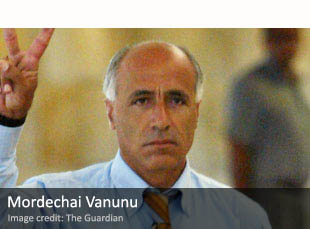
Mordechai VanunuBy IAN ALLEN | intelNews.org |

►►Kabul attacks show intel failures in Afghanistan. Dozens, possibly hundreds of people would have been involved in training, equipping and then infiltrating into the heart of Kabul the large number of insurgents who were prepared to fight to a certain death in the Afghan capital last Sunday. Yet neither Afghan nor foreign intelligence operatives appeared to have any idea that an unprecedented wave of attacks was about to engulf both Kabul and several other key locations around the country. So it seems that Afghan President Hamid Karzai may have a point when he says that the “infiltration in Kabul and other provinces is an intelligence failure for us and especially for NATO and should be seriously investigated”.
►►Report claims China spies on US space technology. China is stealing US military and civilian space technology in an effort to disrupt US access to intelligence, navigation and communications satellites, according to a report authored by the State and Defense Departments. The report (.pdf) argues China should be excluded from recommendations made to the US government to ease restrictions on exports of communications and remote-sensing satellites and equipment. Chinese officials have denied the report’s allegations, calling it a “Cold War ghost”.
►►The long and sordid history of sex and espionage. Using seduction to extract valuable information is as old as the Old Testament —literally— Whether from conviction or for profit, women —and men— have traded sex for secrets for centuries. The Cold War provided plenty of opportunities for so-called “honey-pot” scandals. Perhaps the most dramatic case of seduction in recent times involved Israeli nuclear technician Mordechai Vanunu. In 1986 he visited London and provided The Sunday Times with dozens of photographs of Israel’s alleged nuclear weapons program. But Mossad was on his trail and a female agent —Cheryl Ben Tov— befriended him (reportedly bumping into him at a cigarette kiosk in London’s Leicester Square). She lured him to Rome for a weekend, where he was drugged and spirited to Israel.

Ex-CIA officer sheds light on 1977 spy arrests in Moscow

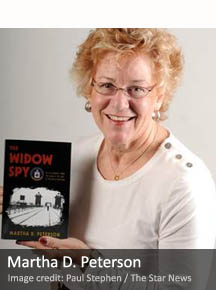
Martha D. PetersonBy JOSEPH FITSANAKIS | intelNews.org |
A recently retired CIA officer has spoken publicly for the first time about the 1977 arrest and eventual suicide of a Soviet double agent considered one of the Central Intelligence Agency’s most important assets during the Cold War. Aleksandr Dmitryevich Ogorodnik was an official in the Soviet diplomatic service who, while stationed at the Soviet embassy in Bogotá, Colombia, was compromised and later blackmailed by Colombian intelligence into spying on Moscow. Ogorodnik was initially handled by the Colombians, with little success. Later, however, when he was moved to a sensitive post in the Soviet Ministry of Foreign Affairs in Moscow, the Colombians turned him over to the CIA. He was handled by CIA officer Aldrich Ames —himself a double spy for the Soviet KGB— who gave Ogorodnik the codename TRIGON. After establishing contact with him in Moscow, the CIA provided Ogorodnik with a miniature camera and other essentials, which he used regularly to take photographs of classified Soviet documents. As a go-between, the Agency selected Martha D. Peterson, the first female CIA case officer ever to be posted in Moscow. Peterson was a fresh CIA recruit, who had completed her Career Training program in 1974, less than a year before being sent to the Soviet capital. Having retired in 2003, after 31 years with the CIA, Peterson has now published a memoire entitled The Widow Spy. In it, she reveals that she coordinated regular dead-drops with Ogorodnik for nearly two years, picking up his used film while supplying him with fresh film and other espionage accessories. On July 15, 1977, however, her mission was abruptly terminated after she was arrested by a large team of KGB officers underneath a railway bridge in Moscow, a few minutes after conducting a dead-drop for Ogorodnik. She was taken to the KGB’s Lubyanka prison, where she says she was interrogated for three days before being released by way of her diplomatic immunity, and ordered to leave the USSR. Ogorodnik was not so fortunate. A few months prior to his arrest, he had requested that the CIA provide him with a poison pill, which he could take in case he was arrested by the KGB. Read more of this post

News you may have missed #708

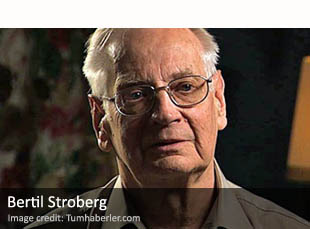
Bertil StrobergBy IAN ALLEN | intelNews.org |

►►Swedish Cold War spy dies at 79. Bertil Stroberg, a former Swedish air force officer, who was convicted of spying for Poland during the Cold War, but always maintained his innocence, has died, following a yearlong battle against cancer. He was sentenced to six years in prison for spying in 1983, but released on parole after serving three years. The key evidence in his case was a letter the prosecution said he had written to the Polish embassy offering to sell military secrets. The letter was signed Sven-Roland Larsson and asked that money be sent in that name to the Central Post Office. Stroberg was arrested when he went to the post office to collect Larsson’s mail.
►►US keeping Britain in the dark on intel issues. American intelligence agencies are increasingly keeping their British counterparts in the dark on key information, for fear those secrets could end up on full display in UK courts. “The Americans have got nervous that we are going to start revealing some of the information and they have started cutting back, I’m sure, on what they disclose”, Ken Clarke, the United Kingdom’s justice secretary, said in a Wednesday interview with the BBC. The American intelligence community has become wary about sharing sensitive intelligence with the UK ever since a 2008 court case forced the British government to disclose specific details on terror detainee operations.
►►Bush official says CIA ‘committed war crimes’. Philip Zelikow, who was a top adviser to former Secretary of State Condoleezza Rice, warned the Bush administration that its use of “cruel, inhuman or degrading” interrogation techniques like waterboarding were “a felony war crime”. What is more, newly obtained documents reveal that State Department counselor Zelikow told the Bush team in 2006 that using the controversial interrogation techniques were “prohibited” under US law —“even if there is a compelling state interest asserted to justify them”. Zelikow’s memo was an internal bureaucratic push against an attempt by the Justice Department to flout long-standing legal restrictions against torture.

Senior Soviet KGB ex-official found dead in Moscow apartment

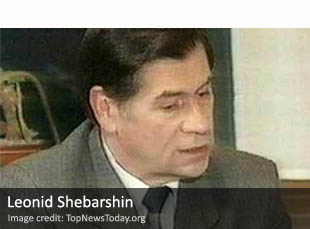
Leonid ShebarshinBy JOSEPH FITSANAKIS | intelNews.org |
Leonid Shebarshin, a retired General of the KGB, who was often referred to as “the last Soviet spy” was found dead in his downtown Moscow apartment over the weekend. Police said a pistol and an apparent suicide note were found next to his body. In a separate statement on Saturday, law enforcement investigators said Shebarshin had shot himself. Born in 1935, Shebarshin was posted as an interpreter at the Soviet embassy in Islamabad, Pakistan, shortly after graduating from the Moscow Institute of International Relations. He eventually became personal assistant to the Soviet Ambassador to Pakistan, who recommended him to the KGB. Shebarshin returned to Moscow in 1962 to attend the KGB’s training school, before being sent back to Pakistan in 1964, this time as an intelligence officer. In 1975, he moved to India, where he became rezident (station chief) of the KGB’s field station in New Delhi. Two years later he was transferred to the KGB’s field station in Tehran, Iran, which he headed through the 1979 Islamic Revolution. In 1982, however, his meteoric rise within the ranks of the KGB was temporarily halted by the defection of Soviet Vladimir Kuzichkin, a Major in the KGB, who escaped to Turkey with the help of the British Secret Intelligence Service —also known as MI6. The British brought Kuzichkin in contact with the CIA, which in turn passed along the defector’s debriefing notes to the government of Iran. This information led to the summary expulsion from Tehran of nearly 20 Soviet KGB field officers, including Shebarshin himself. After a brief period in Moscow, Shebarshin returned to the field, this time to Soviet-occupied Afghanistan, where he traveled at least 20 times. He was in Russia on August 19, 1991, during the so-called ‘August coup’, when a group of hardline communist officials took power in Moscow and temporarily arrested Soviet Premier Mikhail Gorbachev. But, even though he headed the KGB’s First Chief Directorate (now renamed to Foreign Intelligence Service), Shebarshin persisted in remaining neutral during the coup, and spent all of August 19 playing tennis at his summer residence. Read more of this post

News you may have missed #702

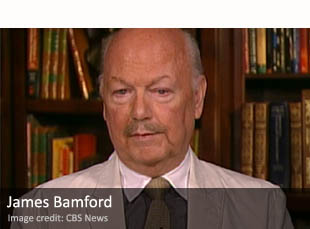
James BamfordBy IAN ALLEN | intelNews.org |

►►NSA chief denies domestic spying allegations. In a rare break from the NSA’s tradition of listening but not speaking, National Security Agency chief General Keith Alexander was grilled last week on the topic of eavesdropping on Americans in front of a House subcommittee. The questioning from Rep. Hank Johnson (D-Georgia) was prompted by Wired magazine’s cover story earlier this month on the NSA’s growing reach and capabilities. But author James Bamford (photo) and NSA whistleblower Thomas Drake insist that the NSA is quietly building America’s the largest spy center in Utah, as part of a secret domestic surveillance program codenamed STELLAR WIND.
►►NY police says it monitored Iran operatives taking photos. Speaking before the US House Homeland Security Committee, Michael Silber, director of New York Police Department Intelligence Analysis, said New York City Police have observed Iranian operatives photographing key transportation sites at least six times since September 11, 2001. He gave an example of six men on an East River sightseeing cruise in 2005, who paired off with maps and cell phones while taking photographs and videos of the bridges over the river. The NYPD determined each was on the payroll of Iranian government, one employed at Iran’s mission to the United Nations.
►►Major Canadian Cold War era mole hunt operation revealed. Newly released archival records show that even the cream of Canada’s foreign service was not immune from scrutiny in a top secret RCMP investigation known as Operation FEATHER BED. The probe, which stretched from the late 1950s into the 1970s, saw RCMP security branch investigators pore over the backgrounds of possible Communist sympathizers in the public service and political sphere —including a future Mountie spy chief. There is no evidence the highly confidential investigation ever identified a Soviet agent.

News you may have missed #699

Hilda MurrellBy IAN ALLEN | intelNews.org |
►►Diplomatic war over the arrest of Gaddafi’s spy chief. The Libyan authorities have confirmed the arrest in Mauritania of former Libyan leader Muammar Gaddafi’s intelligence chief, Abdullah al-Senussi, who was reportedly detained at Nouakchott airport. Senussi, 63, was Gaddafi’s brother-in-law, and has been described as one of his most trusted aides. But his arrest has kicked off an international row about which of his alleged crimes —ranging from terrorism to war crimes and mass murder— should take precedence in the pursuit of justice. The Mauritanians are now saying that they are willing to extradite al-Senussi, but this remains to be seen in practice.
►►Azerbaijan arrests 22 in alleged Iran spy plot. Azerbaijan has arrested 22 of its own citizens, on suspicion of spying for Iran. Weapons and ammunition were seized, authorities say, accusing the group of links to Iran’s Islamic Revolutionary Guard Corps. Their alleged targets included the US and Israeli embassies as well as Western-linked companies. Surveillance by the Azeri security services is reported to have helped foil the alleged Iranian-sponsored plot.
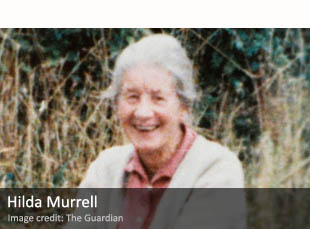
►►Was there MI5 link to murder of UK nuclear activist? One of Britain’s leading human rights lawyers, Michael Mansfield QC, has demanded a fresh police inquiry to establish what the British intelligence services knew about the murder of a prominent anti-nuclear campaigner. The lawyer said new evidence meant that an independent police force should be appointed to examine enduring concerns and inconsistencies relating to the death of Hilda Murrell, in March 1984.

Irish government ‘refused cooperation’ with probe into IRA attack

Warrenpoint ambushBy JOSEPH FITSANAKIS| intelNews.org |
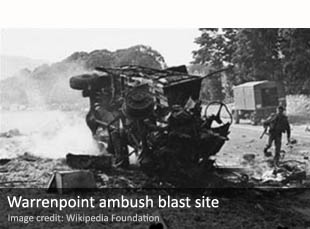
The government of the Republic of Ireland allegedly ordered senior police officials not to assist an investigation into a 1979 attack by the Provisional Irish Republican Army that killed 18 British soldiers in the UK province of Northern Ireland. The attack, known as the Warrenpoint ambush, took place in the afternoon of August 27, when a British military convoy was blown up by a remote-controlled 500-pound fertilizer bomb hidden in a lorry loaded with straw bales. It was soon followed by a second massive bomb blast at a nearby house, and resulted in the British Army’s greatest loss of life in a single incident during the Northern Ireland Troubles. Now a retired officer of the Royal Ulster Constabulary (RUC), as the British police body in Northern Ireland was then known, has told an official government inquiry that the Irish government refused to collaborate with the investigation into the Warrenpoint ambush, and even ordered its senior police officers to distance themselves from it. The man, who testified behind closed doors through a video link from Belfast, cannot be named and is instead referred to in tribunal documents as ‘Witness 68’. All that is known about him is that he is a retired detective and retired from the RUC with a rank of Deputy Assistant Chief Constable. He told the Smithwick Tribunal that the government of the Republic of Ireland instructed its intelligence and law enforcement personnel to view the Warrenpoint ambush as a political crime and to abstain from the British-led criminal investigation into the killings. Consequently, in April 1980, when British RUC officials met with senior officers from the Garda’s (Irish police) Criminal Intelligence Division in Dublin, the Irish delegation informed British officials that the Irish Prime Minister, Jack Lynch, had given specific instructions that “no assistance would be given to the RUC”. Subsequently, the RUC discovered that a site located in the Republic of Ireland, which the British suspected had been used to detonate the bomb that exploded a few yards away at Warrenpoint, had been destroyed before forensic teams were able to examine it. Read more of this post