News you may have missed #686

Folkert Arie van KoutrikBy IAN ALLEN| intelNews.org |
►►WikiLeaks to publish 5 million StratFor emails. In its latest high-profile data dump, WikiLeaks is to reveal five million internal and external emails from StratFor today. In a press release late Sunday, Wikileaks said the emails “show StratFor’s web of informers, pay-off structure, payment-laundering techniques and psychological methods”, and reveal “how StratFor has recruited a global network of informants who are paid via Swiss banks accounts and pre-paid credit cards. Stratfor has a mix of covert and overt informants, which includes government employees, embassy staff and journalists around the world”.
►►Analysis: Blurred line between espionage and truth under Obama. “There is plenty of authorized leaking going on, but this particular boat leaks from the top. Leaks from the decks below, especially ones that might embarrass the administration, have been dealt with very differently […]. And it’s worth pointing out that the administration’s emphasis on secrecy comes and goes depending on the news. Reporters were immediately and endlessly briefed on the “secret” operation that successfully found and killed Osama bin Laden. And the drone program in Pakistan and Afghanistan comes to light in a very organized and systematic way every time there is a successful mission”.
►►Nazis had spy in MI5 but failed to use him. Dutchman Folkert Arie van Koutrik was the first German agent to ever infiltrate MI5 when he was employed by them in 1940, just a month before Anthony Blunt, who was later exposed as a Soviet spy. Koutrik had already worked for Abwehr, the German secret service, before the war as a double agent with MI6 in Europe and exposed some of the UK’s top agents. But, incredibly, after he moved to the UK and joined MI5 all contact appears to have broken off.

News you may have missed #684

Boris KarpichkovBy IAN ALLEN | intelNews.org |
►►Pakistan sacks health workers who helped CIA locate bin Laden. Seventeen local health workers have been fired in Abbottabad for their part in a CIA scheme to try to confirm the presence of Osama bin Laden in the northern Pakistani town. The low-ranking health department employees were punished for helping Dr Shakil Afridi, who was assigned by the CIA to set up a fake vaccination scheme in Abbottabad, ahead of the US military operation that found and killed the al-Qaida leader there.
►►Estonia arrests couple for spying for Russia. Estonian prosecutors said Aleksei Dressen, who works for Estonia’s security police, and his wife, Viktoria Dressen, were arrested at Tallinn airport as she was boarding a flight to Moscow on February 22. Aleksei Dressen allegedly went to the airport to give his wife a folder that contained classified information. Meanwhile, in neighboring Lithuania, the government has released the names of 238 citizens who were reservists for the KGB during the Cold War.
►►KGB defector talks to British newspaper. Since fleeing to Britain in the late 1990s Boris Karpichkov has preferred to keep a low profile —unlike another, better-known Moscow agent who fled to London, one Alexander Litvinenko. He says he ran audacious disinformation operations against the CIA and broke into and planted bugs in the British embassy in Riga. But in 1995 he grew unhappy with the increasingly corrupt FSB (the KGB’s successor), which, he says, failed to pay him. He spent several months in a Moscow prison before slipping into Britain on one of the false passports he was given as a KGB officer. He hasn’t been back to Russia since.
News you may have missed #683

Lech WalesaBy IAN ALLEN | intelNews.org |

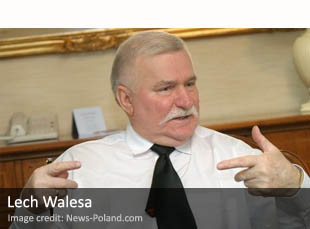
►►Walesa scorns new claims he was communist informant. Poland’s former President and Solidarity founder Lech Walesa has brushed off new claims that crucial documents concerning his alleged collaboration with Poland’s communist secret services may be stored in the Polish parliament’s archives. “I know that if there are any papers on me that are unknown, they are only toilet paper”, he said in an interview with Polish television network TVN. Rumors and accusations that Walesa, an anti-communist union leader was in fact a secret communist informant have been circulating for years in Poland.
►►Israeli embassy in Singapore dismisses Barak assassination plot. The Israeli embassy in Singapore confirmed Friday that Defense Minister Ehud Barak had visited the city-state, but dismissed reports of an assassination plot targeting him. Kuwaiti newspaper Al Jarida wrote recently that Barak had been targeted for assassination by three members of a Hezbollah militant cell during his trip to Singapore from February 12-15.
►►Moves to question Turkish spy chiefs quashed. State prosecutors have abandoned an attempt to question Turkey’s spy chiefs over past secret contacts with Kurdish militants, after government moves to curb their investigation of the intelligence agency (MİT). State media said on Monday that prosecutors lifted an order summoning MİT head Hakan Fidan. Nice to be reminded who is really in charge in 21st-century ‘democratic’ Turkey.

News you may have missed #682

Lieutenant General Ronald BurgessBy IAN ALLEN | intelNews.org |
►►Is there a Mossad base near Iran? The London-based Sunday Times has published an interview with a man claiming to be an Azerbaijan-based agent of Israeli intelligence agency, who confirmed the existence of such a base. The man, identified in the article as “Shimon,” told the paper that there were dozens of Israeli Mossad agents working out of the base. The meeting between the agent and the London Times‘ reporter took place in Baku, near the Israeli Embassy, the report said.
►►Analysis: CIA report on Soviet bioweapons still secret. It has been three decades since the Reagan administration accused the Soviet Union and Vietnam of using chemical weapons known as yellow rain. We still do not know how the US came to this conclusion, but have good reason to believe that it was based on flawed or distorted intelligence. A classified critique of the intelligence behind those charges, written several years ago for the Central Intelligence Agency, could shed light on what happened. Last year, Matthew Meselson, a Harvard expert on chemical and biological weapons, filed a Freedom of Information Act request to get the report released. He was turned down.
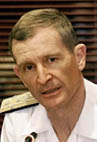
►►US official says Iran unlikely to strike first. Lieutenant General Ronald Burgess, director of the US Defense Intelligence Agency, said the Iranian military is unlikely to intentionally provoke a conflict with the West. He said Iran probably has the ability to “temporarily close the Strait of Hormuz with its naval forces”, as some Iranian officials have threatened to do if attacked or in response to sanctions on its oil exports by the US and European Union. But, he added, “Iran is unlikely to initiate or intentionally provoke a conflict or launch a preemptive attack”.

News you may have missed #677: Analysis edition

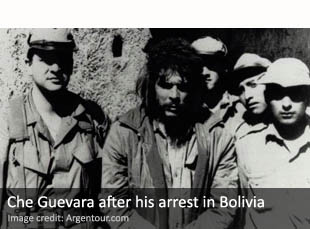
Che Guevara after his arrest in BoliviaBy IAN ALLEN | intelNews.org |

►►New book ties Johnson administration to Che Guevara’s death. Michael Ratner and Michael Steven Smith are the co-authors of a new book about the US role in the killing of Cuban revolutionary Ernesto “Che” Guevara. In their book, Who Killed Che?, Ratner and Smith draw on previously unpublished government documents to argue the CIA played a critical role in the killing. “The line of the [US] government was that the Bolivians did it, we couldn’t do anything about it. That’s not true”, Smith said. “This whole operation was organized out of the White House by Walt Whitman Rostow. And the CIA, by this time, had become a paramilitary organization”.
►►CIA digs in as US withdraws from Iraq and Afghanistan. The CIA is expected to maintain a large clandestine presence in Iraq and Afghanistan long after the departure of conventional US troops as part of a plan by the Obama administration to rely on a combination of spies and Special Operations forces to protect US interests in the two longtime war zones, US officials said. They added that the CIA’s stations in Kabul and Baghdad will probably remain the agency’s largest overseas outposts for years.
►►Indian Army ‘preparing for limited conflict with China’. Noting that India is increasingly getting concerned about China’s posture on its border, James Clapper, US Director of National Intelligence, said this week that the Indian Army is strengthening itself for a “limited conflict” with China. “The Indian Army believes a major Sino-Indian conflict is not imminent, but the Indian military is strengthening its forces in preparation to fight a limited conflict along the disputed border, and is working to balance Chinese power projection in the Indian Ocean,” he said.

News you may have missed #669

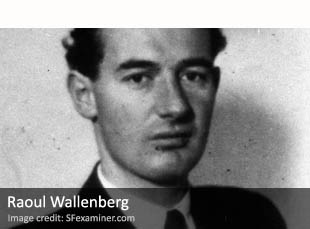
Raoul WallenbergBy IAN ALLEN | intelNews.org |
►►UK admits using fake rock to spy on Russians. Britain has admitted for the first time that it was caught spying when Russia exposed its use of a fake rock in Moscow to conceal electronic equipment. Russia made the allegations in January 2006, but Britain has not publicly accepted the claims until now. Jonathan Powell, then Prime Minister Tony Blair’s chief of staff, told a BBC documentary it was “embarrassing”, but “they had us bang to rights”. He added: “clearly they had known about it for some time”.
►►New book examines forgotten CIA officer Jim Thompson. The CIA’s longtime man in Southeast Asia, Jim Thompson, fought to stop the agency’s progression from a small spy ring to a large paramilitary agency. Now a new book, The Ideal Man: The Tragedy of Jim Thompson and the American Way of War, by Joshua Kurlantzick, examines the life and exploits of the man known as “Silk King” Jim.
►►Sweden to probe fate of WWII hero Wallenberg. Raoul Wallenberg (pictured) was a shrewd businessman who, in the summer of 1944, was posted as Sweden’s ambassador in Budapest, Hungary. He was also an American intelligence asset, having been recruited by a US spy operating out of the War Refugee Board, an American government outfit with offices throughout Eastern Europe. He was abducted by Soviet intelligence officers in the closing stages of World War II, and his fate is one of the unsolved mysteries of 20th century espionage. Now Sweden says it will open a new probe into his disappearance.

News you may have missed #666 (superstition edition)

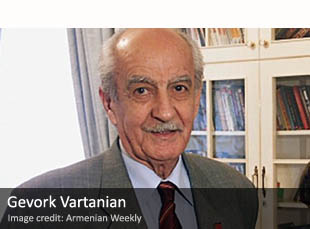
Gevork VartanianBy IAN ALLEN | intelNews.org |

►►Soviet spying legend Gevork Vartanian dies. Legendary Soviet spy Gevork Vartanian, who helped foil Operation LONG JUMP, a Nazi plot to kill the three main Allied leaders in Tehran during World War II, has died in Moscow, aged 87. Operating in Tehran during World War II, he tracked German commandos, including the infamous Nazi operative Otto Skorzeny, who had arrived to attack a summit attended by Stalin, Roosevelt and Churchill.
►►Turkey arrests ex-armed forces chief over coup charges. Turkish government prosecutors allege that Ilker Basbug, who retired as Turkey’s chief of staff in 2010, led a terrorist organization and plotted to overthrow the government. Remarkably, most English-language sources, including the Financial Times, managed to report Basbug’s arrest without mentioning Ergenekon, the ultra-nationalist network uncovered by Turkish police in 2007, which has resulted in hundreds of arrests, including that of Basbug.
►►Lebanon claims arrest of ‘longtime’ Israeli spy. The Lebanese army has detained a man on suspicion of collaborating for years with Israel’s Mossad spy agency. The man, identified as Elias Younes, is a retired employee of the state telecommunications company Ogero. Hezbollah-affiliated sources said Younes had been dealing with Israel for “over 35 years”. See here if you are wondering where you have heard before about Lebanese telecommunications employees allegedly spying for Israel.

News you may have missed #660

Margaret ThatcherBy IAN ALLEN | intelNews.org |
►►Taiwan President accused of spying on political opponents. Taiwan’s opposition challenger for the presidency, Tsai Ing-wen, has accused intelligence services under the control of incumbent President Ma Ying-jeou of tracking her campaign events for political advantage. The allegations – unproven and denied by Ma – conjure up memories of Taiwan’s one-party past when Ma’s party, the Nationalists, used their total control of the state apparatus to persecute opponents.
►►Analysis: Has Israeli-Australian spy relationship been restored? Intelligence sharing between Israel and Australia was halted this time last year, when a Mossad hit squad with forged Australian passports assassinated senior Hamas official Mahmoud al-Mabhouh in in Dubai. But Australian newspaper The Age reports that “the flow of top secret intelligence between the two countries has now been restored”, in a move apparently initiated by the Australian side.
►►Thatcher threatened to ban BBC program on MI5 and MI6. The Conservative government of British Prime Minister Margaret Thatcher threatened to “veto” a BBC investigative program about British intelligence services MI5 and MI6, because it would reveal details about how they operated and question their public accountability. In a letter marked “top secret and personal”, cabinet secretary Sir Robert Armstrong, recommended that Margaret Thatcher consider invoking the rarely used power, saying that “the government has the power to ban any program”. Thatcher wrote on the note: “I would be prepared to use the veto”.

Australian government feared KGB spy scandal, documents show

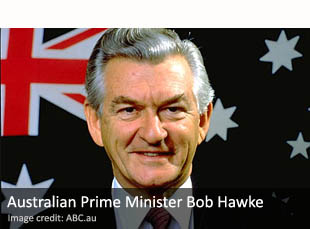
Bob HawkeBy JOSEPH FITSANAKIS | intelNews.org |
Declassified papers from a 1983 Australian Cabinet meeting reveal that the Labor government of the day feared it could be brought down by revelations of spying by a Soviet diplomat in Canberra. The spy was Valeriy Nikolayevich Ivanov, First Secretary at the Soviet embassy in the Australian capital. Suspecting the Soviet diplomat of espionage activities, the Australian Security Intelligence Organisation (ASIO) had bugged his home, and by 1982 had concluded that he was “a professional KGB intelligence officer”. Moreover, ASIO counterintelligence officials believed that Ivanov had been actively cultivating a relationship with an Australian citizen with a possible view to recruitment. Their concern apparently intensified after the Australian citizen began meeting Ivanov at his diplomatic residence, at the Soviet official’s request. On April 20, 1983, ASIO Director General Harvey Barnett met newly installed Australian Prime Minister Bob Hawke, and informed him that the Australian citizen in question was no other than David Combe. A former National Secretary of the Australian Labor Party (ALP) from 1973 to 1981, Combe was also the Prime Minster’s personal friend and close associate. A member of the Australia-USSR Friendship Society, Combe had come to know Ivanov in 1982, when he asked the Soviet embassy in Canberra for assistance in preparing for a business trip to the Soviet Union. Combe had exited politics before the 1983 national election, which had resulted in a landslide victory for the ALP, and he had entered a career as a business consultant and lobbyist. But his close relationship with Hawke alerted senior ALP officials. Meeting minutes of the government’s National and International Security Committee, released last week by the National Archives of Australia, show that Hawke chose to take Director General Barnett and other ASIO officers with him to brief senior cabinet members on April 21, the day after he himself had been briefed about the Ivanov affair. Read more of this post

CIA installed nuclear surveillance device atop Himalayas mountains

Nanda DeviBy JOSEPH FITSANAKIS | intelNews.org |
The United States Central Intelligence Agency tried at least twice to install a nuclear-powered surveillance device atop the Indian Himalayas, in an effort to spy on China. The decision to plant the device was taken in 1964, soon after communist China detonated its first nuclear bomb. In 1965, a team of CIA operatives attempted to climb Nanda Devi in the Garhwal Himalayas, which, at 25,645 feet (7,816 meters), is the highest mountain peak located entirely within Indian territory. But the top-secret mission failed miserably after adverse weather forced the CIA team to give up its effort approximately 2,000 feet below the summit. Battling against a heavy snowstorm, the CIA officers abandoned the 125-pound device, which was eventually swept away (.pdf document) by an avalanche. Incredibly, the team members deserted the surveillance device even though they knew it contained plutonium 238, which can emit radioactivity for over 500 years. In 1966, the same CIA team returned to Nanda Devi, in an effort to recover the complex surveillance instrument, but failed to locate it. In response to the second failed mission, the Agency decided to close the book on Nanda Devi, and instead constructed an identical surveillance device, which was transported and installed on Nanda Kot, a mountain peak located about nine miles (15 km) southeast of Nanda Devi. At 6,861 meters, Nanda Kot is about 3,000 feet shorter and far less steep than Nanda Devi. In 1967, a successful CIA attempt was made to reach the peak of Nakda Kot, where the radioactive surveillance device was installed. It is believed that it served its purpose before being abandoned there in 1968. Ten years later, in 1978, both operations were revealed in an article published in US-based Outside magazine. The revelation caused a major political uproar in India, as many Indians consider the Himalayas ‘sacred’ ground. Now the National Archives of India has released a batch of previously classified internal documents from India’s Ministry of External Affairs. Read more of this post

British Nazi was in fact MI5 double spy, new book reveals

Arthur OwensBy JOSEPH FITSANAKIS | intelNews.org |
A Welsh nationalist, whose aversion to British rule led him to spy for Nazi Germany during World War II, was in fact a double spy for Britain, and was instrumental in helping he Allies win the war, a new book reveals. The book, Snow: The Double Life of a World War II Spy, by Madoc Roberts and Nigel West (At Her Majesty’s Secret Service, A Matter of Trust, etc), centers on the life of Arthur Owens, who was recruited by the Abwehr, Germany’s military intelligence, in 1935, during a business trip to the Continent. Given the operational codename JOHNNY O’BRIEN by the Germans, he quickly began providing Berlin with inside information on Britain’s military buildup in the run-up to the War. But, according to Roberts and West, who base their account on declassified government documents, British counterintelligence agency MI5 became aware of Owens’ espionage activities and eventually recruited him as a double agent for the Crown. According to the book, Owens, who was given the codename SNOW by his British masters, became one of the human intelligence cornerstones of MI5’s XX (Double-Cross) System. Consisting of a close-knit group of deception specialists, XX is known for a series of outrageous —and often highly successful— covert operations during World War II, including Operation FORTITUDE, a plan to deceive the Germans about the location of the invasion of Europe by the Western Allies. The authors claim that agent SNOW’s activities successfully lured a large number of Nazi agents into the arms of MI5, thus eventually paving the way for some of MI5’s greatest wartime counterintelligence successes. In fact, it is believed that Owens’ pro-Nazi activities were so convincing, and his operational cover so deeply buried within the XX System, that in 1941 his MI5 handlers recommended that he be interned in a British prison. But the book alleges that, while in prison in Dartmoor, England, SNOW continued his intelligence collection for the Crown and kept feeding his handlers with information extracted from the prison’s German inmates. Read more of this post

New book on British double spy Kim Philby published in Russia

Kim Philby

Kim Philby

By JOSEPH FITSANAKIS | intelNews.org |
An important new biography of H.A.R. “Kim” Philby, the British MI6 officer who defected to Russia during the Cold War, has been published in Moscow. It is based on candid interviews with his surviving fourth wife, Rufina Pukhova-Philby, as well as on an array of declassified documents from Russian state archives. The book, titled just Kim Philby, is authored by Nikolai Dolgopolov, editor of Moscow-based daily Rossiiskaya Gazeta, which acts as the official organ of the Russian state. Aside from Pukhova-Philby, the book, whose publication is set to coincide with the 100th anniversary of Kim Philby’s birth, on January 1, enjoyes the official blessing of Russia’s Foreign Intelligence Service (SVR), the successor organization to the KGB’s external intelligence directorate. The SVR allowed Dolgopolov access to previously secret documents on Philby, including a newly declassified Russian translation of the British double spy’s personal account of the events that led to his 1963 defection, as well as a description of his escape to Russia through Lebanon. Dolgopolov’s books describes Philby as “one of the greatest Soviet spies”, thus siding with the mainstream view in intelligence research literature, which recognizes Philby as one of the most successful double spies in history. While working as a senior member of British intelligence, Philby spied on behalf of the Soviet NKVD and its successor, the KGB, from the early 1930s until his 1963 defection. Two years later, he was awarded the Order of the Red Banner. The Soviet authorities buried him with honors when he died in 1988. Read more of this post

News you may have missed #641 (US edition)

Dennis Blair

Dennis Blair

►► US Navy memo had warned Roosevelt of 1941 attack. Three days before the December 7, 1941, Japanese attack on Pearl Harbor, US President F.D. Roosevelt was warned in a memo from US naval intelligence that Tokyo’s military and spy network was focused on Hawaii. The 20-page memo has been published in the new book December 1941: 31 Days that Changed America and Saved the World, by Craig Shirley.
►►US spy agencies cut their holiday parties. Holiday gatherings have provided rare opportunities for US congressional staff, embassy aides, government officials, and the media to mix it up —off the record— with the spy set. But this year, agency budget Scrooges have taken aim at high-priced holiday merriment. The Director of National Intelligence has canceled holiday parties altogether, and the Central Intelligence Agency has drastically downsized its guest list and lavish spread by more than 50%.
►►Ex-DNI Blair wants Pentagon in charge of drone strikes. The United States’ former Director of National Intelligence Dennis Blair, who previously proposed scaling back the armed drone operation run in Pakistan by the CIA, is now urging that the program be publicly acknowledged and placed in the hands of the US military.

German spy agency destroyed employee files of former Nazi members

BND seal

BND seal

By JOSEPH FITSANAKIS | intelNews.org |
Germany’s primary spy agency has admitted that it recently destroyed the personnel files of some of its employees who used to be members of Nazi-era organizations during World War II, before they were hired to spy for West Germany in the postwar era. The discovery of the destruction of the files was made by a group of German historians  appointed by the government to investigate the extent to which the Bundesnachrichtendienst (BND), Germany’s postwar foreign intelligence agency, relied on former Nazi officials. It has been known for some time that a tenth of the BND’s postwar personnel had been members of the Hitler-era National Socialist German Workers’ Party, the Gestapo, the SS and its intelligence wing, the SD. Earlier this year, however, the BND’s outgoing Director, Ernst Uhrlau, appointed an independent commission of historians to research the BND’s attitude toward the hundreds of former Nazi officials within its ranks. Now the independent commission has told German media that, in 2007, the spy agency destroyed approximately 250 personnel files belonging to BND employees with Nazi pasts. The commission’s spokesman, Dr Klaus-Dietmar Henke, told German newsmagazine Der Spiegel that the destroyed files primarily related to people who occupied “significant intelligence positions in the SS, the SD or the Gestapo”. Der Spiegel, which described the incident as “a true historical scandal”, said that the destruction of the files “inevitably raises suspicions that agency employees have deliberately tried to obstruct […] efforts to investigate the organization’s history”. Read more of this post

News you may have missed #637

Dmitri Bystrolyotov

D.A. Bystrolyotov

►►South African spy boss to quit. Director General of the State Security Agency Jeff Maqetuka, who has been entangled in a never-ending war with Minister Siyabonga Cwele, is expected to step down this week, according to South Africa’s Sunday Independent. The paper claims that that plans are afoot to expedite Maqetuka’s departure from the country’s intelligence infrastructure by placing him on summer leave and then making sure he would not return to work in 2012.
►►Slovakian defense minister resigns over wiretap scandal. The interception of journalists’ telephone calls by the Slovakian Defense Ministry’s counterintelligence arm has cost the country’s Defense Minister, Lubomír Galko, his job. The scandal involved Slovakia’s Military Defense Intelligence (VOS). It has also emerged that the VOS operation involved wiretapping of the head of TV news channel TA3 and two senior Defense Ministry employees, according to leaked documents obtained by Slovak media outlets.
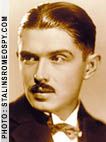
►►Book on Soviet spy Dmitri Bystrolyotov. Excerpt from Emil Draitser’s book Stalin’s Romeo Spy: The Remarkable Rise and Fall of the KGB Most Daring Operative (Northwestern University Press, 2010), about one of the 20th century’s most outstanding undercover operatives. Bystrolyotov acted in Western Europe in the interwar period, recruiting and running several important agents in Great Britain, France, Germany, and Italy.