News you may have missed #293

  • US DHS monitors websites. According to a document released by the US Department of Homeland Security, Cryptome, Wired‘s Danger Room blog, and WikiLeaks, are among websites the DHS systematically monitors “in order to provide situational awareness and establish a common operating picture”. IntelNews wants to take this opportunity to say ‘hi’ to members of the DHS lurking around.
  • Russian spy lived in Dayton, stole secrets. Iowa-born and -bred communist and US Army engineer, George Koval, was a master at blending in. And, as it turns out, he was also a master spy for the Soviet Union. He did just that while working on the Manhattan Project in Dayton for six months in 1945.
  • Niger army suspends constitution. No word yet in Niger about the elections promised by the military coup plotters who appear to have staged a successful coup. For those who may not know, in international politics, Niger means uranium –lots of it. It’s also worth asking what ten agents of Bulgaria’s counterterrorism unit were doing in Niger on the day of the coup.

Bookmark and Share

Mossad has long history of assassination operations

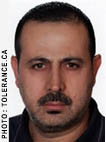
Mahmoud al-Mabhouh

Al-Mabhouh

By JOSEPH FITSANAKIS | intelNews.org |
The recent assassination of Hamas military official Mahmoud al-Mabhouh has sparked a public debate about the history of the Kidon (formerly known as Caesarea), Mossad’s elite assassination unit. Several participants in this debate frequently mention the infamous Black September killings of the 1970s (operation BAYONET), which exterminated almost every original member of the Palestinian group that perpetrated the massacre of the Israeli athletes in the 1972 summer Olympic Games in Munich. In reality, however, these operations were not conducted by the Kidon, but by a separate unit outside Mossad’s operational structure, created specifically for this purpose. The same applies to other extrajudicial assassinations of Palestinians in the Occupied Territories, which are usually perpetrated by the Israel Defense Forces (IDF) and Shin Bet, Israel’s domestic intelligence agency. Read more of this post
News you may have missed #0288

CIA declassifies controversial submarine recovery project

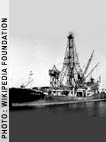
Glomar Explorer

Glomar Explorer

By IAN ALLEN | intelNews.org |
I have written before about the CIA’s controversial 1974 project to recover a Soviet submarine that had sunk in 1968, in 17,000 feet of water, about 750 miles northwest of Hawaii. The project involved the infamous ship Hughes Glomar Explorer and was led by CIA agent Christopher Fitzgerald, who died last year. But the CIA recovery team nearly caused a nuclear explosion when the submarine split while being raised, and its body hit the ocean floor. Now the CIA has for the first time declassified a substantial document relating to the project, codenamed AZORIAN. The document is a lengthy article first published in 1985 in the mostly classified CIA research journal Studies in Intelligence, written by an unnamed CIA team member who participated in the recovery effort. Read more of this post

News you may have missed #0281

  • US intel director confirms CIA can kill US citizens abroad. It’s official; speaking before the House Intelligence Committee, US Director of National Intelligence Dennis Blair acknowledged that President Obama is continuing a Bush-era policy authorizing the killing of US citizens if they are considered “a terrorist threat to the United States”.
  • Funny sign at CIA gift shop. Actual notice displayed at a CIA gift store inside the Agency’s Langley, VA, headquarters: “Don’t forget! If you are undercover, you cannot charge! It will blow your cover”. Good point.
  • Gordon Thomas’ Secret Wars out in paperback. IntelNews has received the new paperback edition of Gordon Thomas’ Secret Wars: 100 Years of British Intelligence. Joseph Fitsanakis reviewed the hardback edition last May.

Bookmark and Share

News you may have missed #0280

  • Interview with Canadian ambassador who worked for the CIA. Iran’s Press TV has published an extensive interview with Ken Taylor, Canada’s former ambassador to Iran, who recently admitted that he secretly worked for the CIA in the late 1970s, after the US embassy in Iran was taken over by students during the Islamic Revolution. Part one of the interview is here. Parts two and three here, and parts four, five and six here.
  • US Pentagon’s black budget tops $56 billion. About $56 billion of the US Defense Department’s publicized 2010 budget goes simply to “classified programs” or to projects known only by their code names, like “Chalk Eagle” and “Link Plumeria”. That’s the Pentagon’s black budget, an it’s about $6 billion more than last year.
  • CIA agents working for private companies on the side. In the midst of two US wars and the fight against al-Qaeda, the CIA is offering operatives a chance to peddle their expertise to private companies on the side –a policy that gives financial firms and hedge funds access to the nation’s top-level intelligence talent.

News you may have missed #0278

  • Israelis arrest two alleged Hamas informants. Israeli security service Shin Bet says 24-year olds Murad Kamal and Murad Nimer were recruited by Hamas in Saudi Arabia and Turkey.
  • Descendant of Richard Sorge’s accomplice receives Soviet-era award. An updated report on the 81-year-old niece of Yotoku Miyagi, a Japanese accomplice of famous German-born Comintern spy Richard Sorge, who has been awarded the Soviet Order of the Patriotic War medal in a ceremony at the Russian embassy in Tokyo, Japan. The medal was originally granted in 1965, but Miyagi was unable to collect it, as he had been executed by the Japanese, along with Sorge, in 1944.

Bookmark and Share

News you may have missed #0272

  • Outcry in Turkey over revealed coup plot. Turkish daily Taraf has revealed a military coup plot, which included detailed plans to trigger chaos in the country with the ultimate goal of a military takeover. This appears to be a new plot, not associated with the ongoing Ergenekon coup plot investigation.
  • US jails Sri Lankan LTTE operatives. A US federal court has sentenced Thiruthanikan Thanigasalam and Sahilal Sabaratnam to 25 years in prison for trying to purchase almost $1 million worth of high-powered weaponry for the Liberation Tigers of Tamil Eelam (LTTE), which the US considers a terrorist organization.
  • Czechoslovakian spy lookout to be opened to public. The bell tower on St. Nicholas’ Church in Prague, where 20 years ago the Czechoslovakian secret police, the StB, kept a hidden lookout on activities outside nearby embassies, especially that of the US, is to be opened to the public later this year.

Bookmark and Share

News you may have missed #0270

  • S. Korean court orders damages in alleged spy case. Lee Soo-geun was a senior North Korean government apparatchik, who defected to the South and joined its intelligence service in 1967. Later, however, when he attempted to flee to a third country, he was arrested by South Korean counterintelligence agents, charged with working as a double agent, and shot. But now a court in Seoul has concluded that Lee’s confession was extracted by force, and has ordered that damages be paid to Lee’s niece, who was imprisoned for allegedly helping him.
  • Belarus reshuffles KGB leadership. Last week, Belorussian President Alexander Lukashenko carried out a major reshuffle in the country’s State Security Committee (KGB), a surprise move which affected all KGB deputy chairs and regional department heads. Retired KGB lieutenant colonel Valery Kostka explains the reasoning behind the reshuffle.

Bookmark and Share

News you may have missed #0258

Bookmark and Share

News you may have missed #0256

  • Descendant of Richard Sorge’s accomplice receives Soviet-era award. The 81-year-old niece of Yotoku Miyagi, a Japanese accomplice of famous German-born Comintern spy Richard Sorge, has been awarded the Soviet Order of the Patriotic War medal in a ceremony at the Russian embassy in Tokyo, Japan. The medal was originally granted in 1965, but Miyagi was unable to collect it, as he had been executed, along with Sorge, by the Japanese in 1944.
  • Analysis: Alleged US spy’s arrest in Cuba affects bilateral relations. Cuban officials say that a US citizen working for Maryland-based aid group Development Alternatives Inc., who was arrested in Havana last month, was actually recruiting local Cubans to spy on the government. This development means that initial hopes for better US-Cuban relations after Barack Obama’s election success may be fading.
  • CIA, DoD drone attacks in Afghanistan intensify under McChrystal. Under the command of US and NATO forces by US Army general Stanley McChrystal, unmanned drone strikes in Afghanistan have been steadily increasing. A good question to ask is who is in charge of similar strikes in Pakistan, which are also on the increase.

Bookmark and Share

News you may have missed #0247

  • US government lowers threshold for inclusion on no-fly lists. According to senior US State Department officials, the government has already lowered the threshold for information deemed important enough to put suspicious individuals on a watch list or no-fly list. CNN reports that suspects will now include citizens of the notorious Islamist country of Cuba….
  • CIA starts sharing data with climate scientists. This blog has kept an eye on the CIA’s Climate Change Center, which was established late last year. It now turns out the Agency had started monitoring climate change in 1992, under project MEDEA (Measurements of Earth Data for Environmental Analysis), but the program was shut down in 2001 by the Bush Administration. The Climate Change Center, therefore, represents the re-establishment of an earlier effort.
  • How the KGB tried to recruit an NBC News reporter. FBI files show that the Soviet KGB tried to recruit the late NBC News reporter Irving R. Levine, while he was stationed in Moscow in the 1950s.

Bookmark and Share

Comment: Is There a ‘DNA Problem’ in US Spying?

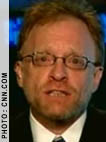
Sam Tanenhaus

Sam Tanenhaus

By IAN ALLEN* | intelNews.org |
The controversy of the apparent ineffectiveness of US intelligence agencies to uncover the so-called Christmas Day bomb plot has reignited the discussion about the operational shortcomings of the US intelligence community. Sam Tanenhaus, editor of of The New York Times Book Review, has authored an interesting commentary, in which he delves into some of what he sees as the design deficiencies in American intelligence.

Read more of this post

Files reveal previously unknown UK-Soviet diplomatic scuffle

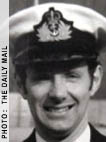
Aubone Pyke

Aubone Pyke

By JOSEPH FITSANAKIS | intelNews.org |
A previously unknown fracas between two British diplomatic officials, their wives, and a team of Soviet intelligence agents, has been revealed in declassified British government reports. The documents, which were released last weekend, show that two employees of the British embassy in Moscow were detained, along with their wives, allegedly for photographing a Soviet military installation. The British diplomats were Lieutenant-Commanders Ian Clapham and Aubone Pyke, who was the embassy’s assistant military attaché. Escorted by their wives, the two officials were allegedly taking a tour of Leningrad (now St. Petersburg), in February of 1979, when a group of “about 25” Soviet intelligence agents rapidly approached them. The agents proceeded to confiscate a cameral belonging to Pyke, after rapidly pulling down his trousers, an old trick aimed to prevent a suspect from running away. Read more of this post

News you may have missed #0240

  • Major purge in Gambian security services continues. Ngorr Secka, the former deputy director general of Gambia’s National Intelligence Agency, has reportedly been arrested. The arrest marks the latest development in a major purge that began last July, after the chief of the country’s armed forces, Lt. Colonel Sainey Bayo, fled to the United States reportedly while being “investigated for supplying sensitive state secrets to an unnamed Western country”.
  • Jerusalem memorial may honor British Auschwitz spy. The Yad Vashem Holocaust Memorial in Jerusalem may honor Denis Avey, 91, who as a British prisoner of war in Monowitz (a.k.a. Monowice or Auschwitz III) prisoner camp, convinced Ernst Lobethall, a Jew held at nearby Auschwitz concentration camp, to give him his ID badge and concentration camp uniform. He then walked back to Auschwitz on two occasions, gathering valuable evidence about the Nazis’ Final Solution.

Bookmark and Share