Israeli intelligence using Microsoft servers to store intercepted phone call data
August 11, 2025 2 Comments
 ISRAELI INTELLIGENCE IS USING Microsoft’s cloud service to store recordings and metadata from millions of intercepted telephone conversations placed by residents of Gaza and the West Bank, according to a new investigation. The investigation was jointly conducted by British newspaper The Guardian and Israeli weekly magazine Sikha Mekomit (Local Call), which published it last week.
Citing conversation with 11 sources from Microsoft and within Israel, the investigation reveals that Israel Defense Forces (IDF) Unit 8200 is the primary force behind the interception and data storage project. Operating under Aman, Israel’s military intelligence directorate, Unit 8200 is responsible for collecting signals intelligence (SIGINT), cyber warfare, and code decryption, among other tasks.
Israeli security sources cited in the report explain that the commander of Unit 8200, Brigadier General Yossi Sriel, approached Microsoft because the Israeli intelligence unit lacked enough storage space and processing power to store “billions of files”. General Sriel has led a large-budget project that has significantly expanded the scope of information-gathering on Palestinians and has integrated various databases.
In November 2021, an meeting, described in the report as “extraordinary”, took place at Microsoft’s headquarters in Seattle, Washington. On one side were Microsoft Chief Operating Officer, Satya Nadella, and other company executives, while on the other side were General Sriel and other senior officials of Unit 8200. The agenda centered on a plan, promoted by Sriel, to transfer intelligence information held by the Unit to the computing giant’s servers. According to an internal Microsoft document, which was leaked by The Guardian, Sriel requested the transfer to Microsoft’s cloud of 70% of the unit’s data, including “secret and top secret” data.
The meeting allegedly led to the development of one of the world’s most invasive surveillance systems, which has been employed by Israel to monitor Palestinians in Gaza and the West Bank. According to documents cited by The Guardian, as of July this year, 11,500 terabytes of Israeli military data—equivalent to 862 billion documents or 195 million hours of audio—were stored on Microsoft Azure public cloud servers in the Netherlands. A smaller portion of the data was stored in Ireland and Israel. Read more of this post
 THE OFFICIAL INTERNAL INVESTIGATION into the performance of Israel’s Military Intelligence Directorate (MID) during the run-up to the Hamas attack of October 7, 2023, has been released. Known as The Road to War, the report addresses the central question of: how did the MID –the main military intelligence body of the Israel Defense Forces, or IDF– miss all the signs of the pending Hamas attack, and how did all the available warnings go unheeded?
 SINCE OCTOBER 7, WHEN Hamas launched its surprise attack on Israel, many more details about the intelligence failure have emerged. It appears that Israeli intelligence officials have warned for years about military exercises held by Hamas in the Gaza Strip, which have included practice raids on cities deep inside Israel. However, the Israel Military Intelligence (IMI) did not heed to the warnings, because it considered Hamas operationally incapable of carrying out such raids. Instead, the IMI estimated that the Hamas leadership aimed to arrive at a settlement with Israel. That seems like the result of a highly successful disinformation operation, which added significantly to the effectiveness of the sudden attack on Israel on October 7.
 large number of settlements simultaneously. It also believed that such an operation would go against the spirit of Hamas leadership’s spirit intention to settle with Israel.
 Indeed, a preventive course of action should have been in place even in the absence of specific intelligence warnings —if only to enable the IDF to repel a surprise attack by Hamas. There was no need to estimate what Hamas would do in order to prepare for a surprise attack.
 IN A RARE MOVE, Israel released the identity last weekend of a special operations officer who was killed by Islamic Hamas during a 2018 covert mission in the Gaza Strip. As intelNews
 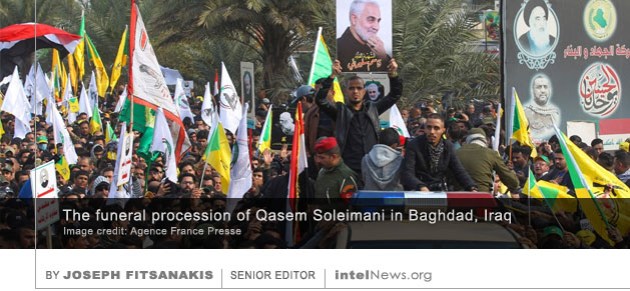 THE RECENTLY RETIRED DIRECTOR of Israel’s military intelligence agency has claimed in an interview that Israel had a role in the assassination of Qassem Soleimani, who led Iran’s Islamic Revolutionary Guard Corps (IRGC). Soleimani was arguably Iran’s most revered military official. He was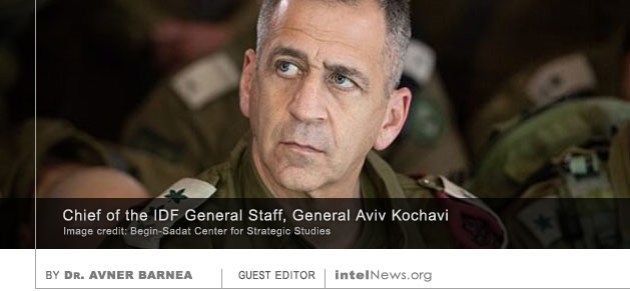
 Israeli officials have denied reports that the head of the country’s internal security service was asked by the prime minister to spy on the director of the Mossad intelligence agency and the head of the military. The denials were prompted by allegations that will be made in full on Thursday, when the latest installment of the investigative news program Uvda (Fact) will be aired on Israel’s Channel 12 television channel. According to the program, the Israeli Prime Minister Benjamin Netanyahu requested that the personal phones of senior Israeli security officials, including those of the heads of the Mossad and the military, be wiretapped for security reasons.
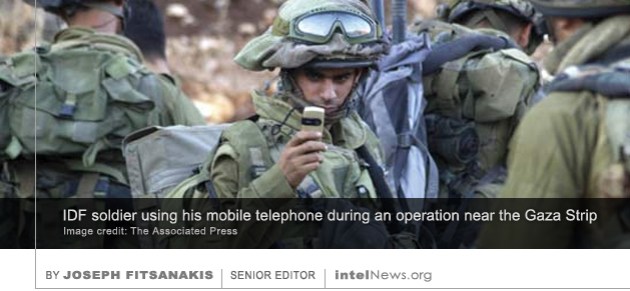 The Israel Defense Forces told a press conference on Wednesday that hackers belonging to the Palestinian militant group Hamas lured Israeli soldiers by posing as young women online. Wednesday’s press conference was led by an IDF spokesman who requested to remain anonymous, as is often the case with the Israeli military. He told reporters that the hackers used carefully crafted online profiles of real Israeli women, whose personal details and photographs were expropriated from their publicly available social media profiles. The hackers then made contact with members of the IDF and struck conversations with them that in many cases became intimate over time. At various times in the process, the hackers would send the Israeli soldiers photographs of the women, which were copied from the women’s online public profiles.
 The head of the United States’ largest intelligence agency secretly visited Israel last week, reportedly in order to explore forging closer ties between American and Israeli cyber intelligence experts. Israeli newspaper Ha’aretz
 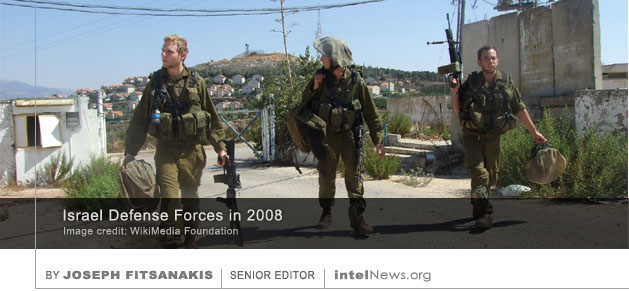 Israel’s military intelligence agency has issued a warning to all soldiers in the Israeli armed forces to resist attempts by the United States Central Intelligence Agency (CIA) to recruit them. The existence of the highly unusual warning was









 intelNews.org
Israelis with high-level clearances betted on military operations on Polymarket
February 23, 2026 by intelNews 2 Comments
Polymarket users are invited to bet “yes” or “no” on whether specific events will occur. These events may relate to political, sporting, cultural, security, environmental, or other fields. Prediction market platforms such as Polymarket match buyers and sellers for each event and hold the funds until the event occurs.
An Israeli court permitted publication that the two individuals were identified during a joint operation conducted by the Israel Security Agency (ISA) and the police. According to the indictment, the civilian and the reservist are charged with serious security offenses, alleging that they placed bets on the Polymarket website based on classified military information. The indictment further states that, in the course of their IDF duties, they were exposed to the inside information on which they relied when making bets. The reservist had access to classified intelligence concerning future IDF operations, and the civilian opened an account on Polymarket and placed the bets.
At the conclusion of the investigation, after an evidentiary foundation had been established against the civilian and the reservist, the prosecutor’s office indicted them on charges of serious security offenses, bribery offenses, and obstruction of justice. According to a formal statement: “It should be noted that in June 2025, the two successfully bet on the occurrence of four security events in Israel related to Operation ‘Am Kalavi’ (the Israeli attack on Iran in June 2025). They wagered tens of thousands of dollars and were correct, with remarkable accuracy, in predicting: Israel will attack Iran on Friday; Israel will attack Iran by the end of June 2025; Israel will announce the end of the operation in Iran by July; Israel will attack Iran before July.” According to one source, they earned $150,000.
It was further stated that: “the execution of such bets, relying on secret and classified information, poses a real security risk to the activities of the IDF and to state security. The State of Israel views the acts attributed to the defendants with great severity and will act resolutely to thwart and bring to justice any person involved in the illegal use of classified information.” According to the findings of the investigation, no operational harm resulted from the Israeli attack on Iran in June 2025. The statement added: “The IDF will not tolerate this type of conduct. Following the incident, steps were taken, and procedures will be tightened across all IDF units to prevent similar incidents from recurring.”
The remaining details of the affair remain prohibited from publication for security reasons.
► Author: Avner Barnea* | Date: 23 February 2026 | Permalink
* Dr. Avner Barnea is a research fellow at the National Security Studies Center of the University of Haifa in Israel. He served as a senior officer in the Israel Security Agency (ISA). He is the author of We Never Expected That: A Comparative Study of Failures in National and Business Intelligence (Lexington Books, 2021).
Filed under Expert news and commentary on intelligence, espionage, spies and spying Tagged with Avner Barnea, corruption, IDF, Israel, News, Polymarket, prediction markets