Mossad had ‘some 100 agents’ on the ground in Iran on June 13, Israeli officials claim

Mossad inside IranTHE MOSSAD, ISRAEL’S PRIMARY covert action agency, had “some 100 agents” on the ground in Iran at the start of the Twelve-Day War, according to senior Israeli government officials who participated in a television documentary. The documentary was aired last week on Israel’s Channel 13 television channel. It features interviews with senior Israeli government officials, including Prime Minister Benjamin Netanyahu, Minister of Defense Israel Katz, Minister of Foreign Affairs Gideon Sa’ar, and National Security Adviser Tzachi Hanegbi.

According to the documentary, several new intelligence units focusing on Iran were established across the Israeli military establishment in the summer of 2023, in anticipation of a war with the Islamic Republic. These units acted in coordination with the Mossad in the lead-up to June 13, when Israel launched the opening salvos of the Twelve-Day War. The documentary claims that around 100 Mossad agents were active on the ground in the early hours of June 13. It appears that the term “agents”, as used in the documentary, refers primarily to Iranian Mossad assets, rather than Mossad officers.

Israeli officials describe the Mossad operation as “unprecedented” in scale, as never before had so many operatives been simultaneously activated for a single mission. It was also unprecedented in complexity, because it involved the deployment missile systems, the documentary claims. These systems had been previously smuggled into Iran and were used to destroy Iran’s anti-aircraft installations and ballistic missile launchers. Iranian war planners had not considered the possibility of missile attacks against their military installations originating from within Iran’s borders.

In addition to the Mossad-led component of the operation, members of the Israel Defense Forces were also active outside Israel’s borders that day. According to Brigadier General Gilad Keinan, commander of Israeli Air Forces’ Air Operations Group, Israeli troops were “on the ground somewhere in the Middle East” on the evening of June 13. He did not provide further details.

Author: Joseph Fitsanakis | Date: 22 September 2025 | Permalink

Senior Mossad veteran discusses recruitment of Iranian assets in rare interview

Mossad - ABTHE MOSSAD, ISRAEL’S PRIMARY foreign-intelligence agency, played a crucial role in Israel’s most recent attack on Iran. It is clear that, without unique intelligence on key Iranian figures and nuclear sites, much of it gathered by the Mossad, the Israeli Air Force could not have been so precise and deadly against Iranian targets.
It is a rare occasion to hear directly from a senior veteran of the Mossad. Oded Eilam (or Ailam), now 71, served in the Mossad for 24 years. In an interview with the German newspaper Bild, Eilam described the strategy that allowed the Israeli intelligence agency to successfully recruit and maintain an “extensive network” of spies inside Iran.

According to Eilam, the key to the Mossad’s success lies in Iran’s complex social structure. “Only 40% of [Iran’s] population of 90 million are Persians,” Eilam said, explaining that the ethnic divide makes it difficult for the Iranian government to control the population. “The [Iranian government’s] surveillance system has huge gaps; you can’t compare it to what the Stasi did in East Germany,” he added.

The former Mossad official explained that various ethnic groups inside Iran, such as Kurds, Turkmen, Baluchis, and Azeris, make up a potential pool for recruiting agents. According to Eilam, the motivation for cooperating with the Mossad is not necessarily support for Israel or financial reward, but often stems from dissatisfaction with the Iranian regime.

“Many people in Iran are unhappy. Large parts of society live in poverty,” explained Eilam. “While Iran has significant gas reserves, instead of investing this money in their country, the clerics have funneled billions into terrorist organizations like Hezbollah,” he added. Another factor that helps Mossad’s activities, according to Eilam, is Iran’s long territorial borders and the difficulty of monitoring them thoroughly. “This makes it possible to smuggle everything into the country,” he noted.

Eilam also emphasized the Mossad’s commitment to safeguarding its assets. “When someone works for us, we take care not only of them but also of their family,” he said, clarifying that the Mossad is dedicated to bringing its spies and their families to safety if needed. Although there are many opportunities to recruit agents in Iran, the Mossad is not in a rush. Eilam highlighted that the organization spends a significant amount of time on the process of selecting and screening candidates. “When we are looking for agents, we don’t just choose someone; we take a lot of time to ensure that the person is suitable.”

“When someone works for us,” the former officer noted, “the importance the Mossad attaches to verifying information. For a target, we do not use information from just one agent, but always multiple sources to be sure that the right person is hit,” said Eilam, also hinting at the extensive vetting processes the organization conducts before operational actions.

Eilam’s interview is a unique source of insight into the espionage operations of the Mossad. It is unclear why it was published—possibly to warn the Iranians to think twice before taking any offensive actions against Israel.

Author: Dr. Avner Barnea* | Date: 22 July 2025 | Permalink

Dr. Avner Barnea is a research fellow at the National Security Studies Center of the University of Haifa in Israel. He served as a senior officer in the Israel Security Agency (ISA). He is the author of We Never Expected That: A Comparative Study of Failures in National and Business Intelligence (Lexington Books, 2021).

Israeli spy agency set up bases deep inside Iran years before June 13 strike

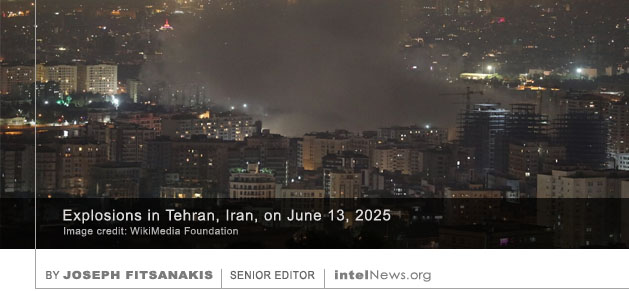
Tehran IranTHE MOSSAD, ISRAEL’S PRIMARY external intelligence agency, had set up forward-operating bases deep inside Iranian territory several years prior to last week’s attacks, which targeted Iran’s military and nuclear infrastructure. In some cases, Mossad operatives, including commando forces, were operating inside the vicinity of the Iranian capital Tehran for months prior to June 13, according to Israeli media outlets.

June 13 marked the commencement of Operation RISING LION, a joint Mossad/Israel Defense Force (IDF) campaign to decimate Iran’s military leadership, diminish its defense capabilities, and destroy its nuclear infrastructure. The assault, which is ongoing as of today, has been described by the Associated Press as the largest attack suffered by Iran since the Iran-Iraq War of the 1980s.

Reports that emerged in the past 48 hours suggest that the success of the Israeli operation hinged decisively on a network of bases that the Mossad had managed to establish deep inside Iranian territory for quite some time. The bases had been set up by Mossad operatives that, in some cases, had managed to operate inside Iran for years. Additional support was allegedly provided by “special units of Iranian operatives working for Mossad”, according to one report.

The Mossad bases hosted “precision weapons” that had been smuggled in from Isarel over time. These were used to target selected Iranian surface-to-air missile installations shortly prior to the main phase of the attack, which was carried out by over 200 IDF fighter jets. With key Iranian defensive installations destroyed, the IDF fighter jets were able to carry out their missions without obstruction in the early hours of June 13.

Moreover, the Mossad appears to have //penetrated// the battle plans that were to be followed by the Islamic Republic’s senior military leadership during a possible military confrontation with Iran. Therefore, as the IDF attack commenced, Israeli missiles destroyed the top-secret bunker that was used by the leadership of the Artesh (Iran’s conventional military force) and the Islamic Revolutionary Guard Corps (IRGC). At least two dozen senior Artesh and IRGC commanders were killed as a result of this intelligence penetration, according to reports.

Author: Joseph Fitsanakis | Date: 16 June 2025 | Permalink

Austrian intelligence service report draws international attention over Iran nuke claims

Direktion Staatsschutz und NachrichtendienstON MAY 26, THE Austrian domestic intelligence service, Direktion Staatsschutz und Nachrichtendienst (DSN) in Vienna officially presented its annual report: the Verfassungschutzbericht (VSB) [Constitution Protection Report].  The document can be downloaded [PDF] via the official homepage of the DSN.
First published in 1997 by the predecessor of the DSN and then titled Staatsschutzbericht [State Protection Report], these reports offer rare official insights into the work of Austria’s domestic intelligence service. While their form and scope have varied over the nearly 30 years of the service’s existence, their aim and structure have roughly stayed the same: the VSB informs the public about the duties of the service, and about recent developments in the fields it is tasked with, monitoring and policing, during the calendar year prior to its publication.

Featured chapters nearly always include political extremism, terrorism, espionage, proliferation of weapons of mass destruction, protection of critical infrastructure and, since their emergence, sometimes also cyber threats. Often—thought not always—the reports feature anonymized cases from the year before and specialized essays about certain relevant topics. Traditionally the media and public give most attention to those parts of the report that deal with extremism and terrorism of all kinds inside Austria.
VSB 2024 Receives International Attention

This year, however, several paragraphs in the chapter titled “International Illicit Arms Trade and Proliferation” [“Internationaler Illegaler Waffenhandel und Proliferation”] have drawn international attention. The proliferation section—starting on page 154 of the report—deals with a number of states that can be described as partly or fully antagonistic to “the West”. In addition to Russia, China, Pakistan and North Korea, the Islamic Republic of Iran and its activities are described in the chapter. Regarding the Shia theocracy and its nuclear program, the report states (translated by the author with assistance by DeepL):

In order to assert and enforce its political claims to regional power, the Islamic Republic of Iran is striving for comprehensive armament. Nuclear weapons are intended to make the regime untouchable and to expand and consolidate its dominance in the Middle East and beyond. The Iranian program to develop nuclear weapons is well advanced. An arsenal of ballistic missiles is ready to carry nuclear warheads over long distances. [Emphasis added]

All efforts to prevent Iran’s armament with sanctions and agreements have so far proved ineffective. On the contrary: the Islamic Republic of Iran is producing weapons and weapons delivery systems on a large scale—and not just for its own use. [p.158]

Iranian intelligence services are entrusted with the development and implementation of circumvention structures for the procurement of armaments, proliferation-relevant technologies, and materials for weapons of mass destruction. They use front companies and networks inside and outside the Islamic Republic of Iran for this purpose. In particular, the [Islamic] Revolutionary Guards Corps’ widely ramified and difficult to oversee company empire serves proliferation purposes. [p.159]

The report clearly describes a program by Iran to develop nuclear weapons as a fact. It does not only suggest that it might be well advanced, but states this as a given. The report furthermore establishes that transport systems to deploy nuclear weapons—once finalized—are in place and could reach long-distance targets.

Fox News Picks Up VSB 2024

The VSB was picked up by the American media giant Fox News. The network reported on it under the title “Explosive new intelligence report reveals Iran’s nuclear weapons program still active” on May 28. The Fox News report begins by pointing out that “[t]he startling intelligence gathering of Austrian officials contradicts the assessment of the US Office of the Director of National Intelligence (ODNI)”. It goes on to note that “[t]he Austrian intelligence findings could be an unwanted wrench in President [Donald] Trump’s negotiation process to resolve the atomic crisis with Iran’s rulers because the data outlined in the report suggests the regime will not abandon its drive to secure a nuclear weapon.”
Fox News quotes David Albright, a physicist and founder/president of the Institute for Science and International Security in Washington, DC, as saying: “[t]he ODNI report is stuck in the past, a remnant of the fallacious unclassified 2007 NIE [National Intelligence Estimate]. The Austrian report in general is similar to German and British assessments. Both governments, by the way, made clear to [the] US IC [Intelligence Community] in 2007 that they thought the US assessment was wrong that the Iranian nuclear weapons program ended in 2003.”

The Fox News report also states that “[t]he danger of the Islamic Republic of Iran as a state sponsor of terrorism [and its illegal atomic weapons program] was cited 99 times in the 211-page report that covers pressing threats to Austria’s democracy.” All in all, Fox News’ reporting paints a picture that the small European state’s intelligence service has information that contradicts the assessment of the much larger American IC and insinuates that the American assessment—and by implication the political approach to dealing with Iran—is wrong. Read more of this post

Israeli soldiers working for Iranian intelligence spied on the Iron Dome

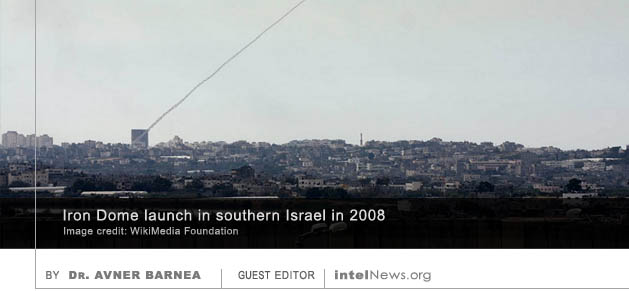
Iron Dome IsraelLAST MONTH, ISRAEL ARRESTED two reservists following an investigation that lasted several months and centered on uncovering espionage for an Iranian state entity during wartime. The two reservists had completed their regular military service before joining the reserves.
The two soldiers, identified as Yuri Eliasfov and Georgi Andreyev, held sensitive positions, and a least one was serving as a member of staff in Israel’s Iron Dome air defense system. The soldier serving in the Iron Dome is accused by the police, the Israel Security Agency (ISA), and the Israel Defense Forces (IDF), of aiding the enemy during wartime, for which the penalty is life imprisonment or death without the discretion of the court. A prosecutor’s statement has been filed against the two soldiers.

According to the investigation, the espionage affair began when one of the suspects, who served in a classified security system, sought to make contact with Iranian intelligence on social media. During his search, he contacted an Iranian operator, who asked him to complete various tasks in exchange for payments. The investigation revealed that the two soldiers were recruited by Iranian intelligence through the Internet to carry out missions in exchange for payments.

They two men were initially required to spray anti-government graffiti in Tel Aviv and in Israel’s the northern region. Giorgi Andreyev, fearing the consequences of such actions, withdrew from the operation. “We are working for Iran and doing something dangerous,” he told Eliasfov. Despite this, however, Eliasfov, who is reportedly the main suspect in the case, continued his activities.

The undercover investigation revealed that Eliasfov, who serves in the Iron Dome system, filmed a video while participating in a classified information, which he then sent to his Iranian handler. He received $3,500 from the same Iranian official, while his at-times accomplice received $70. During his interrogation, Eliasfov claimed that he committed the acts due to being in a difficult financial situation and because he sought to obtain money easily.

One of the interesting findings that emerged from the investigation of the suspects was that other soldiers and family members were aware of Eliasfov’s initial actions and warned him that he was connecting himself with Iranian elements. Despite that, Eliasfov continued his espionage activities, which included filming a video from inside an Iron Dome facility. The footage reportedly contained classified material that could significantly endanger the security of the State of Israel. Read more of this post

Analysis: Assad’s collapse in Syria was a strategic surprise to Israel

Syria IsraelTHE COLLAPSE OF THE regime of Syrian President Bashar al-Assad on December 8 caught the Israel Defense Forces (IDF) and Israel’s intelligence community —mainly Israel Military Intelligence (IMI) and the Mossad— by surprise. Assad’s collapse occurred much faster than Israel had estimated. Israel did not expect that the Syrian Arab Army would disintegrate so resoundingly, within 48 hours of the attack by the Syrian rebels.
Israeli intelligence assessed that, despite the shocks it had suffered in recent months, the so-called Axis of Resistance against Israel —mainly Hezbollah, Syria, and Iran— was stable. A scenario of rapid collapse of the government in Syria had not been assessed as a possibility, or even given a low probability tag. That was primarily because the Assad family had governed Syria for almost 60 years.

Following the Assad regime’s collapse, the focus of Israel’s intelligence is on analyzing the intentions of the major rebel organization, Hayat Tahrir al-Sham, and understanding how —if at all— it will lead the new administration in Syria. Israel is also examining developments in southern Syria, as well as what is happening at the Syrian and Russian military bases in Latakia and Tartus. Moreover, the IDF is monitoring the activities of Iranian elements in Syria, including on the border with Lebanon, to prevent the possibility of military equipment being transferred from Syria to Hezbollah.
It is clear to Israel that Turkey stands behind the Hayat Tahrir al-Sham organization and that Ankara armed and supported the group for a significant period. What is less clear is whether and how Turkey’s involvement in Syria could threaten Israel’s interests, given that Israel’s relations with Turkey have deteriorated dramatically in recent years.

Assad was a key member of the pro-Iranian Axis of Resistance. Following his fall from power, Iran and Hezbollah could lose their main logistical hub for producing, transferring, and storing weapons, as well as training their forces and militias. Additionally, Syria under Assad constantly posed the threat of turning into yet another battlefront against Israel. Without Assad, Russia could lose its grip on Syria —the only country in the Middle East where Russian influence dominates that of the United States. The Russians could also lose access to their military bases in Syria, which offered the Russian Navy access to the waters of the Mediterranean.

Despite the fall of the bitter enemy that was Assad’s Syria, and the deep shock suffered by the Iranian-led Axis of Resistance camp that has been dominant in the Middle East in recent decades, Israeli intelligence is not optimistic about the emerging situation in post-Assad Syria. Syria is a collection of minorities —Druze, Kurds, Alawites, and Christians— that have been artificially joined together despite carrying bitter, bloody scores. The latter may erupt sharply, especially against the Alawites. Concepts such as liberal politics, civil society, or a cohesive nation-state, have never existed inside Syria.

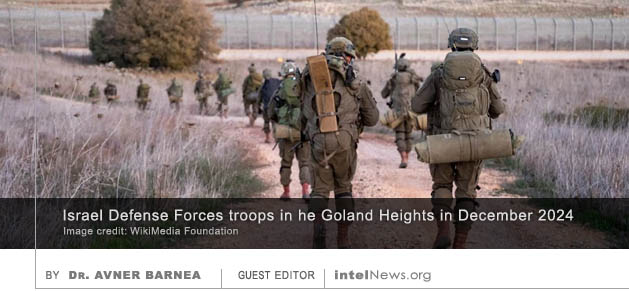
It follows that Israel is very concerned about the emerging uncertainty in Syria. Immediately after the fall of Assad, the IDF strengthened its defenses on the Golan Heights border to ensure that the chaos in Syria did not spill over into Israel. Meanwhile, Israel is in contact —both directly and through intermediaries— with several Syrian rebel groups, including Hayat Tahrir al-Sham. The Israeli message at this stage is a demand that the rebels not approach the border, along with a warning that, if they violate the separation of forces agreement, Israel will respond with force.

And a final note: assessments in relation to the Syrian regime’s collapse continue to emerge in the IDF and the Israeli intelligence community. These assessments concern the extent to which the lessons of October 7 have been sufficiently analyzed and assimilated within Israel. Specifically, there are questions about whether this new intelligence surprise in Syria may stem from the fact that an in-depth investigation into the lessons of October 7 has yet to be carried out during the 14 months of the war with Hamas.

Author: Avner Barnea* | Date: 20 December 2024 | Permalink

Dr. Avner Barnea is research fellow at the National Security Studies Center of the University of Haifa in Israel. He served as a senior officer in the Israel Security Agency (ISA). He is the author of We Never Expected That: A Comparative Study of Failures in National and Business Intelligence (Lexington Books, 2021).

British soldier who spied for Iran found guilty of espionage and terrorism

Wandsworth prisonDANIEL KHALIFE, A BRITISH soldier who spied for Iran, has been found guilty of espionage and terrorism, in a case that has revealed serious vulnerabilities in the British security clearance-vetting system. The then-20-year-old Khalife was arrested in January 2022 while serving on active duty in Staffordshire, in Britain’s Midlands region. He was charged with violating the Official Secrets Act 1911 and the Terrorism Act 2000.
Prior to his arrest, Khalife was reportedly seen by his fellow soldiers and superiors as a promising soldier. Having joined the British Army at 16, he was quickly promoted to lance corporal (the lowest ranking of a non-commissioned officer) and cleared to work in the area of signals intelligence. He had also expressed a strong interest in joining the Special Air Service (SAS), which are the British Army’s special forces.

However, on November 9, 2021, Khalife voluntarily called the national security concerns hotline of the British Security Service (MI5). He told the operator on the other end of the line that he was a British soldier who had been spying for Iran for “more than two years”, but had now decided to become a double agent by cooperating with the British government. Khalife called again, and although he did not identify himself during the telephone conversations, MI5 was able to track him.

It has since become known that Khalife began spying for Iran when he was just 17 years old, shortly after joining the British Army. Over the next two years, Khalife provided his Iranian handlers with information about the identities of SAS personnel, military computer systems, as well as government surveillance programs and hardware, including unmanned aerial vehicles. Throughout that time, he communicated with his Iranian handlers via the Telegram instant messaging service, or via dead drops in Britain, as well as during trips abroad.

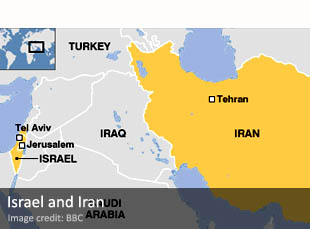
Shockingly, Khalife was temporarily able to escape justice twice following his arrest. In January 2023, he disappeared while on bail. He was found after nearly a month, living in a stolen van, which he had converted into a rudimentary camper. In September of that year, Khalife escaped from Wandsworth prison (pictured) in southwest London, by hiding beneath a delivery vehicle. He was captured three days later and eventually taken to court, where he was convicted and is now awaiting sentencing.

According to reports, British authorities are still unable to piece together the entirety of the information that Khalife shared with the Iranians. Consequently, the full extent of the damage he caused to British national security remains unknown. What is clear is that the Khalife case has exposed serious vulnerabilities in the security clearance-vetting process, which is “lacking in a lot of ways” —not least in the fact that it relies largely on self-reporting, as one expert told The Guardian newspaper on Saturday.

Author: Joseph Fitsanakis | Date: 02 December 2024 | Permalink

Israeli couple who spied for Iran made ample use of digital applications

Israel and IranTHE ISRAEL SECURITY AGENCY (ISA) recently announced the arrests of an Israeli couple of Azeri origin on suspicion of spying for Iran. The couple, both 32 years old, were allegedly recruited by an Iranian handler of Azeri origin named Elshan Agheev. As part of their activities, and for about two years, the couple gathered intelligence on critical infrastructure and security sites in Israel, and even conducted surveillance on an academic working for the Institute for National Security Studies, allegedly in order to kill her.

The case demonstrates how software that is easily accessible on the Internet makes it possible to encrypt information communicated between a handler and an agent, as well as how money is transferred to the agent. The official indictment reveals details about the couple’s modus operandi, including the identity of the particular software the spies used to communicate with their Iranian handler.

One of the applications the couple used is Zangi, which facilitates the exchange of encrypted instant messages. According to the company’s website, Zangi offers voice and video calling, text messaging, and file transfer services “without registration and without data collection”. In fact, according to Zangi, the data is saved on the user’s device only. In addition to using the Zangi application, the couple also appear to have used the Zolotaya Korona money-transfer platform. The couple allegedly used the platform in order to receive payments by their Iranian handlers, and to transfer funds to other parties involved in Iranian-led espionage activities inside Israel.

Another application allegedly used by the couple is Ecos Dos, a digital wallet for storing and transferring digital currencies. Ecos Dos is a software wallet that can be installed on a computer or mobile phone. It supports a wide variety of crypto-currencies and is used to store and transfer cryptocurrencies. It is known for its simplicity of use and friendly interface. It is popular among users who wish to maintain anonymity when transacting in digital currencies. It does not require identifying a user’s details when operating, so anyone can create an account and receive funds anonymously.

The suspects are also believed to have used a software called Encryptor in order to encrypt information. This software allows files and folders to be encrypted so that only those who have the encryption key can open them. The couple allegedly used Encryptor to encrypt the information they collected before passing it on to their Iranian handlers, thus making it difficult for Israeli authorities to decipher the information.

The use of these applications attests to the sophistication of the Iranian spy network that was recently busted in Israel, and its efforts to hide its activities inside the Jewish state. The recent indictment against the couple details a collection of serious security offenses, including aiding the enemy in war and providing information to the enemy to harm the security of the state. Iran is clearly stepping up its efforts to recruit Israeli citizens for espionage and terrorist activities.

Author: Avner Barnea | Date: 11 November 2024 | Permalink

Dr. Avner Barnea is research fellow at the National Security Studies Center of the University of Haifa in Israel. He served as a senior officer in the Israel Security Agency (ISA). He is the author of We Never Expected That: A Comparative Study of Failures in National and Business Intelligence (Lexington Books, 2021).

Israeli citizens arrested on suspicion of working for Iranian intelligence

Ronen Bar Israeli Security AgencyTHE ISRAELI SECURITY AGENCY (ISA) has announced the arrest of 18 Israeli citizens suspected of working for Iranian Intelligence. Among them are seven Israelis, who immigrated to Israel from Azerbaijan, and are suspected of having been in contact for two years with Iranian intelligence. Some of the seven were caught carrying out surveillance against a senior Israeli Air Force officer, whom they were reportedly planning to assassinate.
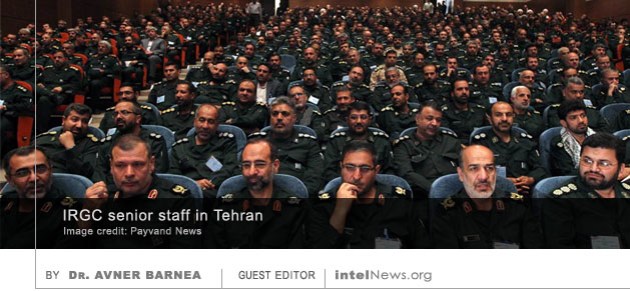
Israeli authorities accuse the suspects of photographing and collecting information on military bases and facilities, including Air Force bases, Iron Dome battery sites, a power plant, and other energy infrastructure facilities. The suspects are also accused of having received from their Iranian handlers a set of maps of Israeli strategic sites, including the Golani Brigade’s training base, where four Israeli soldiers were killed by a drone attack last week. In over two years, the suspects allegedly performed approximately 600 missions under the direction of two handlers from Iranian intelligence. They did so in return for hundreds of thousands of shekels, which were paid to them in cash and various crypto-currencies.

Another Israeli citizen, who was arrested on suspicion of spying for Iranian intelligence in return for payments, has been named as Vladimir Varehovsky, 35, from Tel Aviv. Among other tasks, Varehovsky is suspected of gathering information about an Israeli scientist, whom he agreed to murder in exchange for a $100,000 payment. The suspect had reportedly acquired weapons for the assigned task, but the ISA arrested him before he could carry it out.

In another counterintelligence operation, the ISA arrested seven young Palestinians from the east of Jerusalem, who have been charged with working for Iranian Intelligence. The main suspect recruited the other six to carry out tasks for a fee. Tasks included setting cars on fire, gathering information about a city mayor in Israel, and plotting to assassinate one of the country’s top scientists. The suspects used social media for recruitment purposes. They were reportedly arrested before they were able to execute their missions. Read more of this post

Notes on the assassination of Iranian IRGC Commander Hassan Mahdawi

IRGC - ABTHE TARGETED KILLING OF Hassan Mahdawi, a high-ranking member of Iran’s Islamic Revolutionary Guards Corps (IRGC) and the commander of the Quds Force in Syria and Lebanon, was carried out by Israel on April 1, 2024. The actual assassination was based on precise operational intelligence, while Israel’s assessment of Iran’s response was wrong.
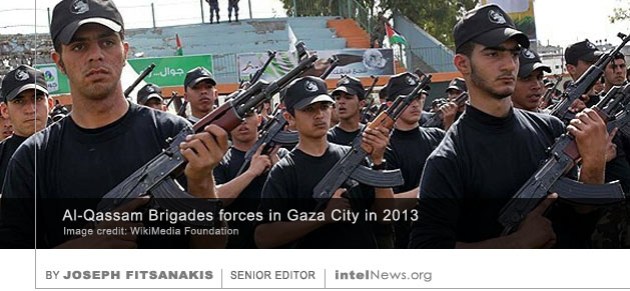
On the day of the attack, a building adjacent to the Iranian Embassy in the Syrian capital of Damascus was attacked with rockets. The attack killed seven IRGC members: General Muhammad Reza Zahedi, also known as Hassan Mahdawi, his deputy, and five additional officers. Mahdawi is the most senior Iranian commander to be killed since the assassination of IRGC Quds Force Commander Qasem Soleimani by the United States in 2020.

Mahdawi had close ties with Hezbollah. He maintained a close relationship with Hezbollah Secretary-General Hassan Nasrallah and was perceived by Israel to be directly coordinating the military attacks on Israel from Lebanon and Syria. In Tehran’s collective memory, Israel’s history of attacks against it includes numerous strikes on Iranian nuclear sites, assassinations of scientists within Iran, and actions against Iranian proxies in Syria, Lebanon, Iraq, and Yemen. Traditionally, these attacks have been invariably met with attacks by Iran’s proxies in the region.

This time, it was different. Iran recognized Mahdawi’s assassination as a direct attack on Iran that it could not tolerate, and had to respond to differently. Just days following Mahdawi’s assassination, Iran attacked Israel. According to the Israel Defense Forces, 99 percent of the more than 330 weapons fired at Israel (including at least 185 drones and 110 surface-to-surface missiles) were intercepted, mostly over the territory of countries adjacent to Israel. Iran’s attack on Israel was unprecedented. It was launched directly from Iranian territory in contrast to prior cases, when Iran has used its proxies, supposedly leaving its hands clean.

Israel could not tolerate such a blatant infringement on its sovereignty. After Israeli officials vowed a response to the Iranian attack, the Jewish State counter-attacked, causing minor damage to the Eighth Shekari Air Base in northwest Esfahan, a dozen kilometers from the Natanz nuclear facility. It was a calculated response designed to deliver a message to Iran that Israel could and would respond to an attack. Following Israel’s counterattack, the tensions between Iran and Israel have subsided for the time being.

While the attack on General Mahdawi was based on excellent operational intelligence, it became evident that the Israeli assessment regarding a possible Iranian response was erroneous. The Israeli assessment was that the Iranian response would be similar to what occurred in the past —namely limited attacks by Hezbollah on northern Israel and attacks on the Golan heights by Iranian proxies in Syria. Israel simply did not anticipate a direct Iranian attack on Israel from Iranian territory.

It seems that Israeli senior analysts were entangled in a conception of Iran’s past behavior and anticipated that Tehran’s response would be similar to prior cases, namely utilizing Iran’s proxies. Israel did not pay enough attention to the difference between Mahdawi’s assassination and previous attacks against Iran. This time, the attack targeted the Iranian embassy in Damascus and the target was a very senior official, who was close to Iran’s Supreme Leader Ali Khamenei.

It appears that Israel’s assessment of the Iranian response to Mahdawi’s assassination was a strategic failure. It appears more likely that the Israeli War Cabinet was provided with an incorrect assessment by the nation’s intelligence community, and less likely that it was provided with an incorrect assessment, which it then decided to ignore. There is concern in Israel that the intelligence assessment was once again wrong, after the colossal failure to anticipate the October 7 attack on Israel by Hamas.

Author: Avner Barnea | Date: 26 April 2024 | Permalink

Dr. Avner Barnea is research fellow at the National Security Studies Center of the University of Haifa in Israel. He served as a senior officer in the Israel Security Agency (ISA). He is the author of We Never Expected That: A Comparative Study of Failures in National and Business Intelligence (Lexington Books, 2021).

In entering Gaza, the IDF will be facing not just Hamas, but Iran’s ‘Axis of Resistance’

Hamas GazaARGUABLY NO COUNTRY BENEFITED more from the American invasion of Iraq than the Islamic Republic of Iran. In a war that lasted over a decade, Washington spent over $2 trillion of its own funds to eliminate one of Iran’s most powerful regional adversaries. In the process, the invasion facilitated the rise of Iraq’s militant Shia movement, which today forms the core of the Iraq’s Popular Mobilization Forces (PMF). Although it is technically an auxiliary branch of the Iraqi security forces, the PMF regularly looks to Tehran for guidance.

The PMF belongs to what Iranian leaders refer to as the ‘Axis of Resistance’ (mehvar–e moqâvemat in Farsi), a term that denotes the extraordinary expansion of Iran’s influence in the Middle East and Central Asia in recent years. In addition to the PMF in Iraq, the Axis of Resistance incorporates an international coalition of dozens of armed groups, militant factions, Shia tribes, and political parties. They range from the Houthis in Yemen and the Hezbollah in Lebanon, to entire branches of the Syrian Armed Forces, and even Shia militias in Afghanistan, Azerbaijan, and Bahrain. The coalition also includes a complex mosaic of armed Palestinian groups, such as Palestinian Islamic Jihad and —increasingly after 2018— Hamas.

These actors are certainly disparate, and often contrast with each other. For instance, relations between Hamas and the Syrians have been strained for years. All of them, however, are united in their common anti-Western stance and contempt for pro-Western states in the Middle East, including Saudi Arabia and Israel. Moreover, their ties under the Axis of Resistance umbrella remain informal and relatively loose. However, they all receive support —including funding and training— from Iran’s Islamic Revolutionary Guards Corps (IRGC), a branch of the Iranian Armed Forces that protects and promotes the ideological inheritance of the 1979 Islamic Revolution.


Since 2011, the IRGC has viewed the Axis of Resistance as a vital element of its asymmetric military strategy. Its purpose is to help Iran successfully confront its much stronger adversaries, two of which —the United States and Israel— are nuclear-armed. That is precisely why Tehran has invested nothing short of a fortune to transform Hezbollah into what experts describe as “a force multiplier” that can give Israel a run for its money. In 2014, Tehran launched a similar effort in the Gaza Strip, initially with Palestinian Islamic Jihad —a group that, very much like Hamas, emerged out of the Egyptian Islamic Brotherhood in the 1980s.

The financial arrangement between Palestinian Islamic Jihad and Iran alarmed Hamas, which has controlled Gaza since 2008. Over time, however, Hamas too began to flirt with Iran’s Axis of Resistance, enticed by the lucrative funding and training opportunities offered by Tehran. By 2020, Hamas was actively engaging with the IRGC under the Axis of Resistance umbrella. To a significant extent, the operational sophistication of the October 7 attack on Israel, which was jointly led by Hamas and Palestinian Islamic Jihad, provided clear evidence of Iran’s patronage of these two militant groups. Because of Iran, the Palestinian armed factions in Gaza are today better-armed and better-trained than at any time in the past. They will likely demonstrate that in the coming days or weeks, as the Israel Defense Forces (IDF) begin their ground offensive on Gaza.

The big question, however, is how the other components of the Axis of Resistance will respond to the impending IDF attack. Read more of this post

Turkey claims it uncovered Israeli spy cell that targeted Iran

Israeli consulate Istanbul TurkeyON MONDYA, TURKEY’S NATIONAL intelligence organization (MİT) announced the arrest of several members of an alleged spy network, who were reportedly recruited, trained and handled by Israel’s intelligence agency, the Mossad. Two members of the alleged spy ring were arrested two months ago, according to the Office of the Istanbul Chief Public Prosecutor and Turkey’s National Intelligence Organization (MİT).

The arrests reportedly came as a result of an investigation into a threatening package sent that was sent in the mail by one of the spy suspects. The investigation was initiated by the Istanbul branch of the General Directorate of Security (Turkish police), which later revealed a connection with a separate 18-month long counterintelligence investigation by the MİT. It eventually led to the arrest of  Selçuk Küçükkaya, a Turkish national, who is accused of operating as the head of the alleged spy ring.

On Monday, Istanbul police arrested 11 associates of Küçükkaya, who the MİT believes to be members of the alleged spy cell. Some reports indicate that Turkish authorities are still searching for two additional suspects who are believed to be part of the alleged spy ring. The MİT states that the spy ring had established a front company through which its members conducted business activities in Iran, with the assistance of intermediaries operating abroad.

The Istanbul Chief Public Prosecutor’s office alleges that Küçükkaya made contact with Israeli intelligence through a member of the so-called Gülen movement. The Gülen movement consists of supporters of Muslim cleric Fethullah Gülen, who runs a global network of schools, charities and businesses from his home-in-exile in the United States. The Turkish government has designated Gülen’s group a terrorist organization and claims it was behind the failed 2016 coup against Turkey’s President, Recep Tayyip Erdoğan.

Küçükkaya is further-accused of having had several in-person meetings with Mossad officers in various locations around Europe. During those meetings, Küçükkaya allegedly received assignments designed to test his intelligence-gathering abilities. It is alleged that Küçükkaya was eventually hired as a spy by the Mossad, who also provided him with instructions on how to use a clandestine communication system to contact his Israeli handlers.

The claim by the Turkish government that it has busted a Mossad spy cell operating in its territory is not unprecedented. In October 2021, the MİT disclosed the arrests of 15 members of an alleged Mossad spy ring following a series of raids across four Turkish provinces. Last December, Turkish media reported that 44 individuals had been detained and interrogated for allegedly spying on Palestinian exiles living in Turkey on behalf of the Mossad. What is new about this latest claim is the alleged connection between the Mossad and the Gülen movement, which the administration of Turkish President Erdoğan views as an existential domestic security threat.

Author: Joseph Fitsanakis | Date: 24 May 2023 | Permalink

Iran executes former deputy defense minister, accusing him of being an MI6 spy

Ali ShamkhaniIRAN ANNOUNCED ON SATURDAY one of the most high-profile executions in its recent history, involving Alireza Akbari, who served as the Islamic Republic’s deputy minister of defense in the 2000s. Akbari, 61, a dual Iranian-British citizen, was reportedly executed by hanging on or before January 14.

As a government official, Akbari was associated with the Iranian Reformists, who were particularly prominent in the early 2000s during the presidency of Mohammad Khatami. Akbari served as deputy defense minister under Defense Minister Ali Shamkhani (1997-2005), a two-star general. General Shamkhani (pictured), an Iranian Arab, currently chairs Iran’s Supreme National Security Council. He is among the few Reformists who today remain in positions of power in Iran.

Akbari’s tenure was cut short in 2005, when Khatami was succeeded in the presidency by Mahmoud Ahmadinejad, a hardliner, who made sweeping changes in government administration. After he was briefly detained by pro-Ahmadinejad hardliners, Akbari moved to the United Kingdom in 2008, and established a small but reputable think-tank. By 2019, he had acquired British citizenship and was active in Iranian politics, but from afar. But in 2019, Akbari was invited to visit Iran by an unnamed “senior Iranian diplomat”, ostensibly to assist in negotiations with Western powers over Iran’s nuclear program. Having previously helped in international negotiations at the conclusion of the Iran-Iraq War in the late 1980s, Akbari agreed to travel to Tehran.

However, the invitation was part of what the Iranians later described as a “deception operation”, which marked the culmination of a “long and multi-layered process involving counterintelligence”. Akbari’s arrest in Tehran’s Imam Khomeini International Airport was the last time Akbari was seen in public. Iranian prosecutors later described Akbari as a “key spy” for Britain’s Secret Intelligence Service (MI6) and accused him of working for an MI6 front company. In that role, they claimed, Akbari gave MI6 information about nearly 200 Iranian officials, for which he was paid over $2 million in a variety of currencies. Read more of this post

Israel beefs up protection of its senior spies, as proxy war with Iran intensifies

Iran UAV droneISRAELI AUTHORITIES HAVE STEPPED up measures to protect its senior intelligence and security figures, over concerns they may be targeted by agents of the Iranian state, according to news reports. The news comes amidst widespread concerns that the ongoing shadow conflict between Israel and Iran is escalating in the shadow of the Russo-Ukrainian war.

On Thursday, Israel’s state-owned broadcaster and news agency, Kan, reported that  the government of Israel had implemented additional security measures to protect current and former members of its security and intelligence agencies. The report added that the measures are focused largely on current and former members of Israel’s foreign intelligence agency, the Mossad, as well as those associated with Israel’s intelligence and security apparatus that are living abroad.

The report comes amidst concerns among security observers that a clandestine war between Israel and Iran is growing in intensity. To a notable extent, this growth is being fueled by the ongoing Russo-Ukrainian conflict. Iran’s supply of cheap and reliable attack drones appears to be enabling Moscow to subvert and outright destroy Ukraine’s national infrastructure. In what seems like a direct response to Iran’s actions, Israel war materiel is now flowing into Ukraine, reportedly through a NATO country.

There are indications that this proxy conflict between Israel and Iran is spreading in Europe and the Middle East. Seeing the success of the use of Iranian drones, some European countries with limited airstrike capabilities, like Serbia and Armenia, are reportedly considering purchasing drone attack systems from Tehran. Meanwhile, Israeli weapons exports to Arab states have skyrocketed since the normalization of Israel’s relations with a number Arab countries in recent years. According to a recent report, last year marked a historic record for the volume of Israeli military and security exports, which increased by 30 percent from 2020. Much of that increase is due to Israeli weapons exports to Arab states, such as Morocco, Bahrain and the United Arab Emirates.

Author: Joseph Fitsanakis | Date: 28 November 2022 | Permalink

Reuters investigation focuses on alleged loss of CIA spy networks in Iran

US embassy IranA YEAR-LONG INVESTIGATION by the Reuters news agency attempts to shed light on the alleged arrests of more than a dozen Iranian spies, who claim to have worked for the United States Central Intelligence Agency. Periodically Iran claims to have captured members of alleged CIA spy rings operating across its territory. For instance, in 2019 Iran’s Ministry of Intelligence announced the arrest of a “CIA network” consisting of 17 individuals who worked in the private sector and a number of government agencies.

The news agency said two of its reporters, Joel Schectman and Bozorgmehr Sharafedin, spent dozens of hours interviewing six Iranian former CIA assets, as well as 10 former employees of the United States Intelligence Community, who have “knowledge of Iran operations”. All six of the Iranians interviewed spent between five and 10 years in prison for their CIA connections. Two of them left Iran after serving their prison sentences, and are now refugees in central and northern Europe. At least one of them claims he was never contacted by the CIA after his release in 2019.

According to the Reuters investigation, CIA assets in Iran operate in a high risk environment, given that the United States has not had diplomatic facilities in the Middle Eastern country since 1979. Diplomatic facilities are regularly used to shelter CIA personnel, who recruit, train and handle foreign assets. Despite the absence of such facilities, the CIA is willing to take great risks in running agents inside Iran, because of the country’s geopolitical significance. The agency’s intensity in operating in Iran is matched by the Islamic Republic’s aggressive counterintelligence posture, which, according to the Reuters investigation, has “netted dozens of CIA informants” in recent years.

It is claimed that Iran’s counterintelligence efforts were inadvertently aided by a mass-produced CIA covert communications system, which the spy agency operated until 2013 in at least 20 countries around the world, including Iran. The Internet-based system was intended for use by CIA sources who were not fully vetted, but were still considered useful due to their access to secret information, according to Reuters. This appears to be a major update on a story that was first reported by Yahoo News in 2018. It claimed that that the CIA had suffered a “catastrophic” compromise of the system it used to communicate with spies, which caused the death of “dozens of people around the world” according to sources.

Reuters said it contacted CIA spokeswoman Tammy Kupperman Thorp, who declined to comment on specific allegations. The CIA spokeswoman dismissed the “notion that CIA would not work as hard as possible to safeguard” its assets around the world as “false”. The news agency said it also contacted Iran’s Ministry of Foreign Affairs and its Mission to the United Nations in New York, but received no responses.

Author: Joseph Fitsanakis | Date: 03 October 2022 | Permalink