Analysis: Did the US Central Intelligence Agency lose 17 spies in Iran?

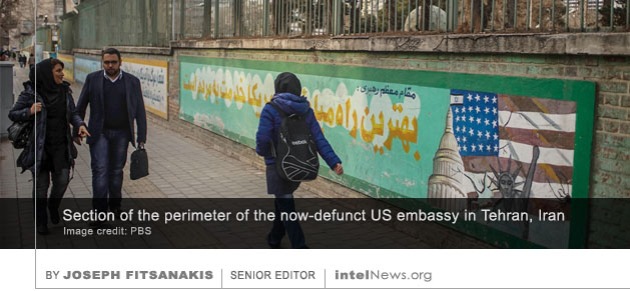
US embassy IranIf the announcements from Tehran are to be believed, the United States Central Intelligence Agency lost at least 17 spies in Iran in the months leading up to March 2019. According to Iran’s Ministry of Intelligence, the Islamic Republic busted an alleged “CIA network” operating in sensitive private sector companies and government agencies that relate to defense, aerospace and energy. At least some of the 17 alleged spies have reportedly been sentenced to death, though their exact number remains unknown.

Officials in Tehran said on Sunday that all of the purported spies are Iranian nationals and were lured by the CIA with promises of receiving visas to enter America. Others were already in possession of visas and were “blackmailed” to spy for the US in order to have them renewed by the US Department of State, according to Iranian media reports. Visa applicants were allegedly carefully selected based on their work in critical areas such as Iran’s nuclear program or defense procurement.

A government-sanctioned documentary, which aired on Iran’s state owned television on Monday, claimed that the 17 spies did not know each other, but all had been trained independently in clandestine tradecraft. This allegedly included setting up and using secret communications systems, as well as carrying out dead drops without being detected. Dead drops utilized containersQ Quote made to look like rocks, which were located “in parks and other mountainous areas” in Iran and elsewhere in the Middle East, according to Iranian officials. Some of the assets communicated with their handlers while attending science conferences through- out Europe, Africa and Asia.

The Iranian television documentary claimed that the 17 arrests had “dealt a lethal blow to US foreign intelligence”. But US President Donald Trump said in a tweet that Tehran’s allegations were “totally false” and contained “zero truth”, just “more lies and propaganda” from Tehran.

Who is right? To begin with, there is no question that the CIA recruits heavily in Iran, given that the Islamic Republic is one of America’s —indeed the world’s— primary intelligence targets. What is more, since 1979, when Washington lost its embassy in Iran, the CIA have found it more difficult to collect accurate information from inside the energy-rich country. Therefore, the need for dependable assets inside Iran has increased exponentially, and has become even more pressing now, given the importance placed on Iran by Donald Trump. Additionally, Read more of this post

Mossad chief sees historic shift of alliances as Arab states side with Israel against Iran

Yossi CohenIn a rare public appearance, the director of the Mossad spy agency said that the Middle East is witnessing a historic shift of alliances as many Arab states are forming tacit pacts with Israel against Iran and its proxies. Yosef “Yossi” Cohen spoke on Monday morning at the Herzliya Conference, a security-themed event organized by the Interdisciplinary Center, a university in Herzliya, just north of Tel Aviv.
In his 40-minute speech Cohen said that the Mossad had identified the present time as “a rare opportunity —perhaps the first in the history of the Middle East— to reach a regional understanding that would lead to an inclusive regional peace agreement” between Israel and most of the Arab states. He justified his reasoning by claiming that many Arab states are siding with Israel to pursue “common interests [such as] the fight against rivals like Iran and jihadist terrorism”. This historic shift in alliances is happening as Israel is enjoying “close relations with the White House” and keeping open “channels of communication with the Kremlin”, said the spy chief. These factors “combine to create what might be a one-time window of opportunity” for Israel to form a strategic alliance with the majority of its Arab neighbors, said Cohen.

The Mossad chief went on to allege that the Islamic Revolutionary Guard Corps (IRGC) were behind the recent bombings of commercial oil tankers in the Persian Gulf. He told the conference that he could “say with certainty that Iran was behind these attacks” and that they were “approved by the Iranian leadership and carried out by the [IRGC]”. Cohen cited “the best sources of Israeli and Western intelligence” but did not provide specific evidence to support his allegation, which Iran denies. Later in his speech, Cohen said that the IRGC and Iranian intelligence agencies had carried out assassinations throughout Europe and had discussed further plans to attack Jewish and Israeli targets in Denmark, Azerbaijan and the North America. “And that is only the tip of the iceberg”, said Cohen, and went on to claim that the IRGC had set up a network of 300 agents in the African continent and was heavily present in Syria, mainly through its Lebanese proxy Hezbollah.

At the conclusion of his speech, the Mossad chief repeated prior warnings by Israeli officials that the Jewish state would never allow the development of an Iranian nuclear arsenal. “Mossad and the State of Israel have not signed the nuclear deal and will do all to ensure Iran will never possess a nuclear arsenal”, said Cohen.

Author: Joseph Fitsanakis | Date: 02 July 2019 | Permalink

Iran announces arrest of 16 oil ministry officials for spying for CIA

Iran Petroleum Oil MinistryIranian state media announced on Sunday the arrest of 16 officials in the country’s Ministry of Petroleum, allegedly for sabotaging Iranian energy policy. It is not known whether these arrests are in any way connected with Tehran’s announcement last week that it had dismantled “one of the most complicated” espionage operations by the United States Central Intelligence Agency in several countries. According to the state-owned Fars News Agency, the 16 officials were arrested over the weekend in synchronized pre-dawn raids. All of them had managerial positions in Iran’s oil industry —including in the areas of exploration, production and distribution of Iran’s oil and petrochemical products inside the country as well as abroad.

The report about the latest arrests cited Hossein Ali Haji Deligani, a senior legislator representing the most conservative political wing in the Iranian parliament. Deligani said that the ministry employees “operated under a woman”, whom he did not name. Working in concert, the employees had been “able to influence […] the oil ministry to put off important decisions” and to “make wrong decisions”. These decisions were “in line with the enemies’ goals and against Iran’s national interest”, and ultimately delivered “a blow to the country in the United States economic war against Iran”, said Deligani. He did not elaborate on the topic and did not discuss whether the arrests were linked to the dismantling of an alleged CIA cyber espionage operation, which Iran announced last week.

Sunday’s announcement by the Fars News Agency comes two days after the execution of Jalal Haji Zavar, an employee of Iran’s Aerospace Industries Organization, which operates under the Iranian a unit of the Ministry of Defense. Zavar was executed on Friday after a military court found him guilty of having committed espionage against Iran on behalf of the CIA. Media reports said that unspecified incriminating documents and “spying equipment” were found in Zavar’s home.

Author: Joseph Fitsanakis | Date: 25 June 2019 | Permalink

Israeli officials announce arrest of alleged deep-cover spy for Iran

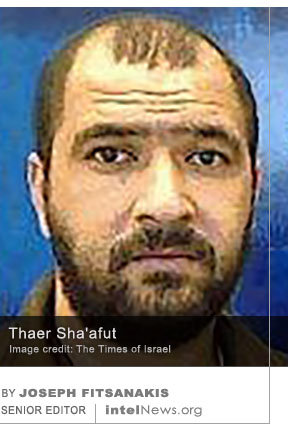
Thaer Sha'afutIsraeli authorities announced on Thursday the arrest of a deep-cover intelligence operative who allegedly attempted to establish a base for Iranian intelligence in Israel and the West Bank, according to news reports from Israel. Shin Bet, Israel’s domestic security and counterintelligence agency, said it arrested Thaer Sha’afut (pictured), a Jordanian national, on espionage charges. The arrest reportedly occurred in April, but was only announced this week. According to Shin Bet officials, Sha’afut was an accredited deep-cover intelligence operative for the Iranian spy services. He was allegedly was commissioned “to carry out missions that were meant to establish a network in Israel and the West Bank, which would be used for covert operations by the Iranians”.

Israeli officials said Sha’afut received instructions from his Iranian handlers to enter Israeli territory between July and August of 2018. After entering Israel, his goal was “to form business ties” in the West Bank and in Israel proper. He planned to do that, said the Shin Bet, by hiring Shiite Muslims to staff a new factory in Jordan and then use the new venture “as an anchor for future Iranian activities in Israel and the West Bank”. These activities included the eventual recruitment of “spies who would help collect intelligence for Iranian interests”, according to court documents. The Shin Bet said that Sha’afut’s handlers were two Arabic-speaking Iranian intelligence officers based in Lebanon and Syria, who went by the names Abu Sadek and Abu Jaffar. They allegedly provided Shafut with “an encrypted communication device”, which he used to arrange clandestine meetings with them throughout 2018 and 2019.

Sha’afut’s Iranian handlers allegedly planned to use him as a conduit for transferring funds to spies in the West Bank and Israel. They had told Sha’afut that Iranian intelligence would make an initial investment of $500,000 in his factory venture in Jordan and to an import-export business, in order to sustain his base of operations, with more funds to follow. Once the factory was set up, Sha’afut was expected to travel clandestinely to Iran in order to complete his training as a deep-cover case officer. Israeli daily Haaretz said on Thursday that Sha’afut was indicted earlier this month by military prosecutors in Jerusalem for “contact with an enemy country, contact with a hostile organization, and conspiracy to funnel money from an enemy entity”.

Author: Joseph Fitsanakis | Date: 21 June 2019 | Permalink

Iran says it dismantled a ‘complicated’ CIA cyber operation in several countries

Ali ShamkhaniA senior Iranian security official said on Monday that Tehran had dismantled “one of the most complicated” espionage operations by the United States Central Intelligence Agency, leading to “arrests and confessions” of suspects in several countries. The announcement was made by Ali Shamkhani (pictured), secretary of the Supreme National Security Council of Iran, the Islamic Republic’s highest security decision-making body, which is chaired by the country’s president.

Speaking in Tehran to reporters from pro-government news agencies, including IRIB and Fars News, Shamkhani said that Iran had “exposed” what he described as a CIA-run cyber espionage network, which carried out “operations in different countries”. He said the alleged espionage network had been detected by Iranian counterintelligence agencies “some time ago and was dismantled”. Iran’s counterintelligence actions had led to the “identification and arrest of CIA intelligence agents”, said Shamkhani, many of whom had been arrested “in different countries”. The arrests occurred after Iran “shared the information about the exposed network with our allies”, said Shamkhani, which led to the “disclosure and dismantling of a network of CIA officers” as well as the “detention and punishment of several spies”. Shamkhani did not specify the number of people arrested, or in which countries, but appeared to refer to both CIA personnel and local assets. He concluded his remarks by saying that Iran was building a regional alliance “to counter American espionage”. He also urged Iran’s Ministry of Intelligence to release “videos and confessions” relating to the arrests.

Meanwhile, Iranian anti-government groups based abroad alleged on Monday that a senior official in the Islamic Revolutionary Guard Corps was arrested in Tehran for allegedly working for Israel. The unidentified individual is believed to have helped Israel’s Mossad intelligence agency gain access to the archive of the Iranian nuclear program in 2018, and steal an unspecified number of classified documents. It is not known whether this alleged arrest is connected with Shamkhani’s announcement on Monday.

Author: Joseph Fitsanakis | Date: 18 June 2019 | Permalink

In a surprise move, Iran releases Washington resident accused of espionage

Nizar ZakkaIran has announced that it will release a Lebanese national and United States permanent resident, who has served nearly half of his 10-year prison sentence for allegedly spying for Washington. Nizar Zakka, 52, was born in Lebanon but was schooled in the US, where he lived permanently until 2015. In September of that year, Zakka traveled to the Iranian capital Tehran at the invitation of the government of Iran, where he spoke at a conference on Internet-based entrepreneurship. He attended the event as an information technology expert who worked for companies like Cisco and Microsoft before setting up his own company called IJMA3. Based in Washington, DC, IJMA3 lobbies investors to help build online networks in the Middle East in order to develop the region economically, socially and politically.
But on September 18, 2015, as Zakka was traveling to the Imam Khomeini International Airport in Tehran for his return flight, he was detained by Iranian security officers and never made it out of the country. A year later, he was convicted of spying for the US and sentenced to 10 years in prison. The court also handed him a $4.2 million fine, allegedly for “collaborating with a government that was hostile to Iran”. Iran’s state-run media said Zakka was a “treasure trove” of intelligence on the American military. But the Lebanese IT expert denied all charges leveled against him. He said he was tortured during his interrogation and he went on frequent hunger strikes to protest his innocence and the conditions of his detention. Throughout his imprisonment, the Lebanese government pressured Iran for his release. The US also raised the issue through Congress and the Department of State. But Washington’s ability to influence Iran was limited, as it does not have diplomatic relations with Tehran.

On Tuesday, however, Lebanon’s Ministry of Foreign Affairs said it had received word from Iran’s ambassador to Lebanon that Zakka would be released soon. The Iranians reportedly said they decided to release Zakka following personal interventions by Lebanon’s Prime Minister Saad Hariri and the country’s President Michel Aoun. Additionally, said the Iranian ambassador, Zakka would be released as “a goodwill gesture” during Eid al-Fitr, a Muslim holiday that marks the end of Ramadan, the Islamic holy month of fasting. The statement added that Iran’s President Hassan Rouhani was “ready to receive a Lebanese delegation at any time for the extradition of the Lebanese prisoner Nizar Zakka”.

Author: Ian Allen | Date: 05 June 2019 | Permalink

Analysis: Yemen conflict shows small-drone warfare ‘is here to stay’, say experts

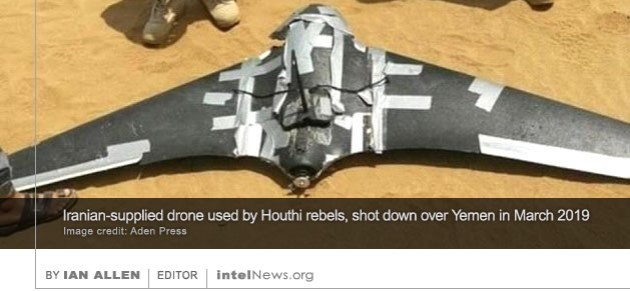
DroneThe current wars in the Middle East, especially the ongoing conflict in Yemen, are proof that the use of small drones in insurgencies is now a permanent phenomenon of irregular warfare, according to experts. Drones have been used in warfare in the Middle East for almost 20 years —including by outside powers like the United States. But National Public Radio’s Geoff Brumfiel reports that the wars in Iraq and Syria, and especially the war between the Yemeni government and Houthi rebels, clearly demonstrate that we have entered “a new era of drone warfare”.
The use of off-the-shelf small drones has been increasing since 2010, with the Syrian Civil War having served as a testing ground for military uses of drones by all sides involved in the conflict. Belligerents quickly realized that the use of drones —whether remotely operated from the ground, or guided by GPS coordinates— could provide useful air power “for a fraction of the cost of fighter jets” employed by national militaries, according to Brumfiel. He quotes numerous drone warfare expects who agree that the ongoing Yemeni Civil War provides the clearest sign yet of the proliferation of drones for military and paramilitary purposes. The Houthi rebels have employed drones to attack government targets and targets such as air fields, oil installations and military bases in neighboring Saudi Arabia. Most of these drones, and the knowledge of how to modify them for military use, are given to the Houthis by Iran, according to RAND Corporation expert Ariane Tabatabai, who is quoted in Brumfiel’s article.

Iran has been developing military drone technology since the 1980s, but did not begin to employ drones outside of its airspace until 2015. The change was prompted by the emergence of the Islamic State emerged as a major Sunni threat to Shiite populations in the region. Iranian drones are now everywhere, from Iraq and Syria to Yemen. These drones, including drones used by the Houthis, are major sources of concern for conventional armies, because they are difficult to detect and destroy, according to Center for a New American Security researcher Nicholas Heras. He told Brumfiel that small drones are difficult to locate by radar, and their flight paths are far more flexible than those of airplanes. Additionally, those drones controllers can use GPS systems to “navigate through holes” in air defenses, said Heras.

Author: Ian Allen | Date: 30 May 2019 | Permalink

US-Iran tensions may have been sparked by ‘misread intelligence’, claims report

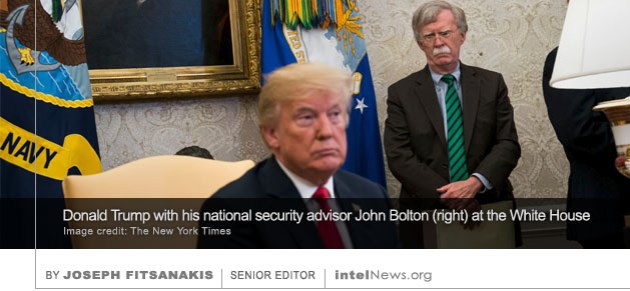
Trump BoltonThe escalating tension between the United States and Iran, and the ensuing military buildup in the Persian Gulf, may have resulted from a misreading of intelligence by both sides, according to a new report in The Wall Street Journal. Reports from the Middle East continue to describe the situation there as tense, while the political rhetoric by both Washington and Tehran remains heightened. Last week, the White House ordered the USS Abraham Lincoln carrier strike group to sail to Middle Eastern waters, following intelligence showing that “Iran or its proxies were planning attacks against US forces in Iraq, Syria and at sea”. Washington also evacuated all non-essential personnel from its embassy in Iraq. Meanwhile Iranian officials stated on Thursday that they were “prepared for war”, while the head of Iran’s Revolutionary Guard Corps, Major Genreal Hossein Salami, described the escalating crisis as “the most decisive moment in the [40-year history] of the Islamic Revolution”.
But a new report in The Wall Street Journal claimed on Thursday that the crisis between the two countries may have been caused by a misinterpretation of intelligence on each other’s moves. The paper said that new intelligence collected by American spy agencies appears to show that Tehran was under the impression that the US was about to launch attacks against it. There is no information about what precisely led the Iranians to draw that conclusion. But it is believed that Iran responded to the perceived threat from Washington by abruptly bolstering its military posture and placing its allies in the region —including Hezbollah in Lebanon and numerous Shiite militias in Iraq and Syria, on high alert. Those actions were interpreted by Washington as evidence that Iran was planning to launch an attack against American interests in the region, thus prompting the White House to send the USS Abraham Lincoln strike group to sail to the area, and to partially evacuate its embassy in Iraq. Citing “people familiar with the matter”, the Journal said that new intelligence that has been collected “in recent days” points to the initial actions taken by Tehran as “defensive in nature”.

However, said that paper, there continue to be “sharply differing views” about the situation among officials in the administration of US President Donald Trump. Specifically, some administration officials continue to argue that the available intelligence indicates that Iran “was planning to strike first”, and some even believe that Tehran is still “planning imminent attacks” on the US and its interests in the region. The paper also noted that President Trump is believed to have told senior officials in his administration —including the Secretary of Defense Patrick Shanahan— that he does not want to see a military confrontation with Iran.

Author: Joseph Fitsanakis | Date: 17 May 2019 | Permalink

British commander in Iraq contradicts US assessment of increased Iranian threat

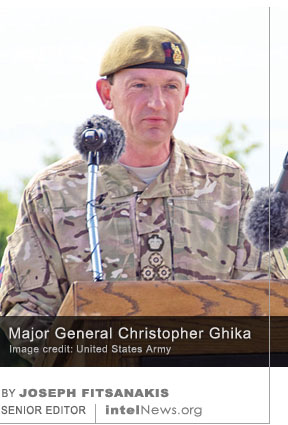
Christopher GhikaThe most senior British military officer in the war against the Islamic State contradicted American assessments of a heightened threat from Iran, prompting an unusually strong rebuke from Washington. Last week, the White House ordered the USS Abraham Lincoln carrier strike group to sail to Middle Eastern waters, following intelligence showing that “Iran or its proxies were planning attacks against US forces in Iraq, Syria and at sea”.
On Tuesday, however, this view appeared to be challenged by Major General Christopher Ghika, Britain’s most senior military official in the Middle East, who is deputy commander of Operation Inherent Resolve (OIR). The OIR umbrella brings together all pro-Western forces that are fighting the Islamic State in Iraq and Syria. General Ghika spoke to American reporters at the US Department of Defense via a live video-link from Baghdad, where he is currently stationed as OIR deputy commander. In responding to questions by reporters about alleged threats to Western forces from Iran or its proxies, General Ghika said that the OIR forces were “aware of that presence [or Iranian-led Shia militia groups in Iraq and Syria], clearly. And we monitor them along with a whole range of others because that’s the environment we are in”. However, added the general, “no, there has been no increased threat from Iranian-backed forces in Iraq and Syria”.

British newspaper The Guardian, which published General Ghika’s comments on Tuesday, noted that his statements appeared to directly contradict Washington’s claims of a heightened Iranian threat in the region. But in a statement released on Tuesday night local time, the US Central Command CENTCOM, whose responsibilities include the Middle East and Central Asia theaters, rejected General Ghika’s comments. “Recent comments from OIR’s Deputy Commander run counter to the identified credible threats available to intelligence from U.S. and allies regarding Iranian backed forces in the region”, said the statement. The Guardian described CENTCOM’s statement as “particularly striking” and “an extraordinary rebuke of an allied senior [military] officer”. The British Ministry of Defense had not responded to CENTCOM’s statement by Wednesday morning.

Author: Joseph Fitsanakis | Date: 15 May 2019 | Permalink

Emirates authorities confirm four ships targeted by ‘sabotage operations’

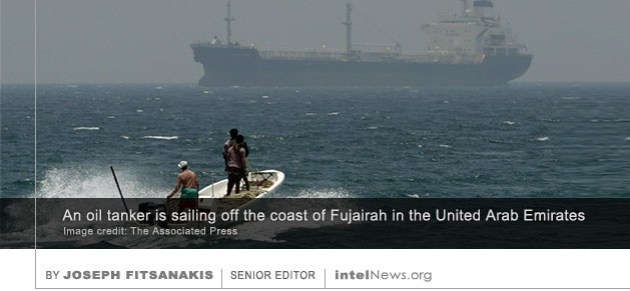
Fujairah UAE EmiratesAuthorities in the United Arab Emirates said on Sunday that four commercial ships were targeted by “sabotage operations”, but did not point to possible culprits. The announcement came hours after false reports circulated in Iranian and Lebanese media stating that explosions had been witnessed at the port of Fujairah, a major Emirati commercial shipping facility that borders the Sultanate of Oman and is visible from the coast of Iran. The alleged explosions were first reported by Al-Mayadeen, a Shiite-Lebanese satellite television station, and were then picked up by a host of Iranian news outlets.
The reports caused alarm in international energy market circles, as observers feared that the explosions may have resulted from deliberate attacks by Iranian forces. Located less than 100 miles from the Strait of Hormuz, through which over 30 percent of the world’s sea-transported oil is trafficked, the Port of Fujairah is the world’s second largest shipping fueling hub. Even a partial destruction of the port would cause major disruptions in the international energy transportation system. Several hours later, however, the Associated Press dismissed the reports as false, saying it had spoken to “Emirati officials and local witnesses” and had found the earlier reports of explosions at Fujairah to be “unsubstantiated”.

Later on Sunday, state-owned Emirates News Agency published a statement by the Ministry of Foreign Affairs, which said that four ships had indeed “suffered acts of sabotage” while sailing off the Emirati coast. The Foreign Ministry’s statement said that the ships were “civilian trading vessels of various nationalities” and that they had been “subjected to […] acts of sabotage”. It added that “subjecting commercial vessels to sabotage operations and threatening the lives of their crew is considered a dangerous development”. However, Emirati officials refused to elaborate on the nature of the sabotage that the ships allegedly suffered, or discuss the possible culprit or culprits of the alleged attacks. On Friday, the United States Maritime Administration (MARAD) warned that Iranian military forces could target “US commercial ships, including oil tankers”. There was also an “increased possibility” of “Iran or its regional proxies taking action against US and partner interests”, said MARAD.

Author: Joseph Fitsanakis | Date: 13 May 2019 | Permalink

‘Unusual’ high-level meeting held at CIA headquarters to discuss Iran, say sources

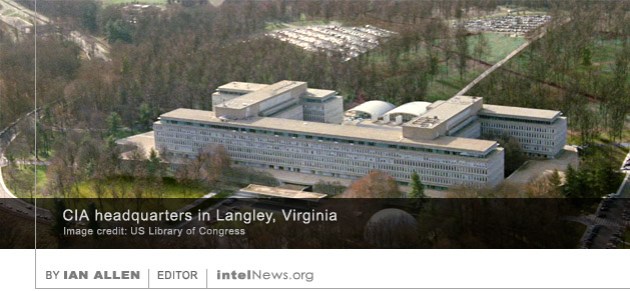
CIA headquartersAn untypical high-level meeting was convened at the headquarters of the United States Central Intelligence Agency last week to discuss Iran, according to NBC News. The meeting, which NBC described as “highly unusual” was convened by President Donald Trump’s National Security Adviser John Bolton. Participants allegedly included Secretary of State Mike Pompeo, Acting Secretary of Defense Patrick Shanahan, Director of National Intelligence Dan Coats, CIA Director Gina Haspel, and Chairman of the Joint Chiefs of Staff General Joe Dunford. Citing “six current US officials”, NBC said the meeting was held at 7 a.m. on Monday, April 29, in Langley, Virginia.

The list of participants refers to a high-level national security meeting. These are almost always held at the White House —typically in the Situation Room— says NBC. In general, it is extremely rare for senior White House officials, like Bolton, or members of the Cabinet, like Pompeo, to participate in meetings at CIA headquarters. It is also worth noting that, according to NBC’s sources, the meeting was not related to Washington’s recent decision send the USS Abraham Lincoln carrier strike group to the Middle East. This leaves two options, according to the NBC report: first, that the meeting concerned a “highly sensitive covert action” involving Iran or an Iranian proxy, such as the Lebanese Hezbollah. It could have been an update on an existing CIA operation, or a description of options for an impending operation. Alternatively the meeting could have been called due to a disagreement between the CIA and the White House about the results of an intelligence assessment or estimate about Iran.

NBC said it contacted the National Security Council to inquire about the April 29 meeting, but a spokesperson refused to comment. Meanwhile, Pompeo abruptly canceled the final leg of a four-nation tour of Europe on Thursday and returned to Washington, reportedly in light of heightening tensions between Washington and Tehran. Also on Thursday, the Iranian government described the Trump administration’s decision to deploy the USS Abraham Lincoln carrier strike group to the Middle East as “an action of psychological warfare” against the Iranian people. Late on Thursday, President Trump urged Iran to reach out to him: “What I would like to see with Iran, I’d like to see them call me”, said the US leader during a press conference at the White House. Iranian officials did not immediately respond to his comments.

Author: Ian Allen | Date: 10 May 2019 | Permalink

Intel that prompted US to deploy aircraft carrier to Middle East ‘came from Israel’

USS Abraham LincolnThe sudden decision by the United States to deploy significant firepower to the Middle East was partly in response to intelligence that was given to Washington by Israeli officials, according to a report. On Wednesday, the US announced that the USS Abraham Lincoln carrier strike group had received instructions to sail to the Middle East. The aircraft carrier is reportedly sailing alongside a cruiser and four destroyers, while an unspecified number of B-52 heavy long-range bombers have been ordered to fly to a US military base in Qatar.

Commenting on this last-minute development, US National Security Adviser John Bolton warned Iran that it would face “unrelenting force” if it threatened American interests in the Middle East and beyond. The Chairman of the Joint Chiefs of Staff, General Joseph Dunford, said that the move aimed to “deter Iran […] so that there would be no ambiguity about our preparedness to respond to any threat against our people or partners in the region”. Speaking in Congress, the US Acting Secretary of Defense Patrick Shanahan said that the decision to move a significant amount of firepower to the Middle East came in response to intelligence showing that Iran had “made plans to target US forces in Iraq and elsewhere in the Middle East”. According to ABC News, the intelligence suggested that “Iran or its proxies were planning attacks against US forces in Iraq, Syria and at sea”. But there was no further information reported about the precise nature of the alleged warnings.

Meanwhile, the American news and information website Axios said on Monday that the intelligence that caused Washington’s response was given to the US by Israeli officials. Citing “senior Israeli officials”, the website said that the intelligence given to the US had been gathered “primarily by the Mossad”, Israel’s main external intelligence agency. It added that the information about possible Iranian attacks against the US or its allies in the Middle East was “raised two weeks ago” during closed-door talks at the White House between a US team led by Bolton and an Israeli delegation headed by his Israeli counterpart, Meir Ben Shabbat. The intelligence, said Axios, showed that the US or its allies, including the United Arab Emirates or Saudi Arabia, would be targeted by Iran. The information is “understood to be part of the reason for Bolton’s announcement” this week, said Axios.

Author: Joseph Fitsanakis | Date: 09 May 2019 | Permalink

Malaysia is helping Iran evade US economic sanctions, intelligence sources claim

Petronas MalaysiaCiting “Western intelligence officials”, Israeli newspaper Haaretz said on Thursday that a deepening alliance between Malaysia and Iran is expected to enable Tehran evade some of the economic sanctions imposed on it by the United States. In the past, every time Washington has imposed economic sanctions on Iran, it has issued renewable waivers for a number of countries whose economies have historically depended on substantial Iranian energy imports. This is done in order to prevent these economies from entering a recession due to lack of access to sufficient energy supplies. This week, however, US President Donald Trump said that Washington would not renew waivers for these countries, which include Italy, India, Turkey, South Korea and China. These waivers are now expected to run out on May 2, 2019, after which date the US has threatened to impose economic sanction on all countries that have substantial financial dealings with Tehran.

Many observers believe that these new sanctions will have a deep and immediate impact on the Iranian economy. But, according to Haaretz, the American sanctions are bringing Iran closer to Malaysia. Throughout the past month, says the Israeli newspaper, “atypical numbers” of oil tankers have been sailing between the two countries —a sign of trying to move as much oil as possible out of Iran before the US sanctions hit. Citing “Western intelligence officials”, Haaretz claims that Iran plans to continue to funnel funds from oil and natural gas sales through Malaysian banks. Much of that assistance, which sources claim will grow in the next month, is facilitated through Petronas, Malaysia’s state-owned oil company. As one of the world’s largest companies and the most powerful corporate entity in Malaysia, Petronas has immense political power. Much of the country’s political elite connected with Petronas —including the country’s current Prime Minister, Mahathir Mohamad, who was a senior advisor to the company in the early 2000s. In 2017, Petronas signed a cooperation agreement with an Iranian refinery facility and announced its intention to develop an emerging oilfield in the Middle Eastern country. Then in late 2018, Petronas officials traveled to Iran to sign a memorandum of understanding on mutual cooperation between the Malaysian company and Iran’s state-owned energy producer and distributor, the National Iranian Oil Company.

Haaretz notes that cultural and political ties between Malaysia and Iran run deep. The Southeast Asian country is one of a handful of nations that allow Iranians to visit without first having to obtain a visa. If fails to note, however, that in recent times there have been tensions between the two countries, due to concerns in Kuala Lumpur that Iran is trying to spread a militant version of Shia Islam in Malaysia.

Author: Joseph Fitsanakis | Date: 26 April 2019 | Permalink

Iran abruptly replaces head of Revolutionary Guard Corps —no reason given

Hossein SalamiAuthorities in Tehran revealed on Sunday the sudden replacement of the head of the Islamic Revolutionary Guard Corps. The unexpected move was announced by pro-government media, but no explanation was given. Since 2007, the IRGC has been led by Major General Mohammad Ali Jafari, 61, a conservative military commander who is widely believed to have consolidated the IRGC’s role within Iran’s power structure. Under his leadership, the IRGC has come to be seen as the staunchest defender of the principles of the 1979 Iranian Revolution. Many Western observers describe the IRGC as a ‘praetorian guard’ whose members possess immense power and often wealth. Today the IRGC is a military force with a command structure that is distinct from that of Iran’s regular Armed Forces. It maintains its own army, navy and air force, has its own paramilitary and political protection units, and is in charge of Iran’s nuclear program.

But in a brief report aired on Sunday, Iranian state media announced that Jafari had stepped down from the leadership of the IRGC after 11 years at the helm. The report said that Jafari had been replaced by the IRGC’s deputy commander, Major General, Hossein Salami. Like Jafari, Salami, 59, is believed to be close to the Iranian regime’s hardliners; he is thus critical of the reformers who support President Hassan Rouhani —seen by most as the architect of the Iranian nuclear deal. Moreover, like Jafari, Salami is known for his asymmetrical warfare thinking, which the Iranians employed with considerable success in Iraq following the military invasion of the country by the United States in 2003. The same tactics were utilized by the IRGC in Lebanon during the 2006 conflict between Israel and Iranian ally Hezbollah.

Jafari’s surprise replacement came two weeks after Washington announced that it would designate the IRGC as a foreign terrorist organization —a move that most observers saw as a clear move by the White House to undermine the Iranian government. Explaining the decision, US President Donald Trump said in a statement that the IRGC was the primary vehicle through which the government in Tehran “directed and implemented […] terrorism as a tool of statecraft”. Among other things, the new designation means that the US government is now able to bring criminal charges against any individual or organization that is found to have political or financial dealings with the IRGC.

Author: Joseph Fitsanakis | Date: 24 April 2019 | Permalink

US prosecutors to use secret surveillance evidence in Huawei lawsuit

Huawei 2Prosecutors in the United States have informed lawyers representing the Chinese telecom- munications firm Huawei that they intend to use evidence obtained through secret surveillance in a lawsuit against the company. The case involves the arrest of Meng Wanzhou by Canadian authorities in December of last year. Meng, 47, is Huawei’s deputy chair and chief financial officer, and is the daughter of Ren Zhengfei, a former officer in the Chinese People’s Liberation Army, who founded the telecommunications giant in 1988. She was detained on December 1 in Vancouver at the request of the US, which claims it has evidence that she “tried to evade the American embargo against Iran”. On March 1, the Canadian Department of Justice formally commenced Meng’s extradition process to the US, which Huawei’s lawyers are currently seeking to prevent.

In a lawsuit brought by US government prosecu- tors against Huawei, the Chinese telecom- munications firm is accused of having conspired to defraud several multinational banks by misrepresenting its relationship with a company called Skykom Tech. Washington says that the company is in fact a front used to conceal illicit activities conducted by the Islamic Republic of Iran. American government prosecutors claim that Huawei worked with Skykom Tech to evade US-imposed economic sanctions on Iran. At a Thursday morning hearing in a federal court in Brooklyn, New York, Assistant US Attorney Alex Solomon said that US authorities had used “secret surveillance” to collect evidence against Huawei. He also said that the evidence had been obtained under a US Foreign Intelligence Surveillance Act (FISA) warrant, which is issued by a secret court and usually pertains to counterintelligence investigations —i.e. when a target is suspected of spying against the US.

Solomon said that the evidence against Huawei was “obtained […] from electronic surveillance and physical search”. He did not elaborate, but added that US government’s legal team had notified Huawei that it planned to use the FISA evidence in court. Last month Huawei rejected all charges filed against it. The company has not yet commented on the FISA evidence. The next date in the court case has been scheduled for June 19, 2019.

Author: Ian Allen | Date: 05 April 2019 | Permalink