News you may have missed #505 (bin Laden edition)

  • Bin Laden assassins confiscated digital devices. According to US officials, members of the US elite forces that raided Osama bin Laden’s residence in Pakistan “carried off five computers, 10 hard drives and more than 100 storage devices, such as DVDs and removable flash drives”.
  • Bin Laden compound was once spy agency safe house. Reports from the United Arab Emirates suggest that the compound in Abbottabad where Osama bin Laden was killed was once used as a safe house by the Inter-Services Intelligence Directorate, Pakistan’s premier spy agency.
  • CIA says it will release bin Laden pictures. The White House says that it intends to release images of Osama bin Laden’s assassination, but warns that they are “gruesome” and “could be inflammatory”.

Analysis: Myths and Questions on bin Laden’s Assassination

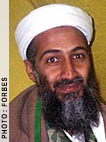
Osama bin Laden

Osama bin Laden

By J. FITSANAKIS and I. ALLEN | intelNews.org |
The assassination of al-Qaeda leader, Osama bin Laden, has helped dispel several myths about him and the organization he founded in 1988 in Soviet-occupied Afghanistan. Among them is the idea that the Saudi-born militant was leading a primitive existence in some remote hillside in Waziristan, sheltered by mountainous tribes that were supposedly loyal to him. Nothing could be further from the truth. Despite his reputation as a hardened mujahedeen, bin Laden had chosen to spend his days in the unmatched comfort of a sprawling luxury compound located only an hour’s drive from Pakistan’s capital, Islamabad. The compound is located in a relatively wealthy suburb of the city of Abbottabad, which is also home to the Kakul Military Academy, Pakistan’s elite army training school. More importantly, the descriptions of bin Laden’s luxurious hideout fly in the face of the predominant view of al-Qaeda as an organization that knows how to blend in with its surroundings. Not only did the compound stand out, but, according to one American official, it was “eight times larger than the other homes in the town”. It featured 3,000 feet of living space, to house bin Laden, his four wives, and several advisors and guards. It appears to have been custom-built to bin Laden’s specifications in 2005, which would explain the existence of numerous built-in security features, including at least two heavily fortified security gates, seven-foot-high perimeter walls, and even solid blast-proof enclosures on all balconies. Continue reading →


News you may have missed #504

  • Israel spy pleads to Obama for release. United States Navy analyst Jonathan Pollard, who was sentenced to life in prison in 1987 for spying for Israel, has pleaded for his release in a personal letter to President Barack Obama. The letter was apparently handed to Obama by Israeli President Shimon Peres when he visited the White House on April 5.
  • US-Pakistan spy feud boils over CIA drone strikes. The Pakistani government has voiced strong criticism of a fresh CIA drone attack, which has killed 26 people. But an anonymous US counterterrorism official, who spoke to the McClatchy news agency, said that “the Pakistanis should spend less time complaining to the press [about the drone strikes] and more time trying to root out terrorists within their country”.
  • Colombia to issue international warrant for ex-spy chief. Colombia’s Prosecutor General’s Office will issue an international arrest warrant for Maria Pilar Hurtado, former director of the country’s disgraced DAS intelligence agency, who was granted political asylum in Panama.

News you may have missed #497

  • Interview with Finnish ex-counterespionage officer. Finland’s Helsingin Sanomat has published a very interesting interview with Hannu Moilanen, who recently retired as a senior officer with SUPO, the Finnish Security Intelligence Service. Among other things, Moilanen says SUPO considered the CIA “the bad boys” of the Western bloc during the Cold War, because the Americans would not always disclose to SUPO the identities of CIA officers stationed in Finland, as they were supposed to.
  • European Union sent intelligence officers to Libya. But the EU’s Joint Situation Centre denies they were spies. “They were technical specialists who went to help with satellite phones and that type of thing”, said JSC Director Ilkka Salmi.
  • Talks aimed at mending rift between CIA and ISI. The CIA has agreed to reveal more about its operatives and their activities in Pakistan, and pledged expanded cooperation on drone strikes, US and Pakistani officials said. Meanwhile, however, the drone strikes on Pakistani soil appear to be continuing.

News you may have missed #462

  • CIA secrets could surface in Swiss nuclear case. A seven-year effort by the CIA to hide its relationship with the Tinners, a Swiss family who once acted as moles inside the world’s most successful atomic black market, hit a turning point on Thursday when a Swiss magistrate recommended charging the men with trafficking in technology and information for making nuclear arms.
  • Pakistan spy chief to ignore US summons. The Pakistani government has announced that hat there is “no possibility” that Lt. Gen. Ahmad Shuja Pasha, the head of Pakistan’s powerful Inter-Services Intelligence Directorate, would obey a summons requesting his appearance before a court in the United States relating to the 2008 Mumbai terrorist attacks.
  • Australia told to prioritize spy recruitment. Carl Ungerer, from the Australian Strategic Policy Institute, has advised the Australian intelligence agencies to “look at ways to improve information gathering from human sources”, as they undergo a period of reform.

News you may have missed #444

News you may have missed #410

  • Clapper confirmed as US DNI in Senate-White House deal. Retired general James Clapper has been unanimously confirmed by the Senate as US National Intelligence Director, after a series of last-minute deals between objecting Republican Senators and the White House, which nominated Clapper several months ago.
  • Canada rejects residency request by Pakistani ex-ISI spy. The Canadian government has refused a permanent residency application by Haroon Peer, a Danish citizen, who worked for three Pakistani intelligence agencies, including the Inter-Services Intelligence directorate. Haroon is married to a Canadian-born woman and has three Canadian-born children.
  • Lebanon in shock after ex-general’s arrest on spy charges. Last week’s arrest of Fayez Karam, a well-respected retired general and politician with the Hezbollah-allied Christian Free Patriotic Movement (FPM), on suspicion of spying for Israel, has sent shock waves through Lebanon and left many wondering how deep the Jewish state has infiltrated the country.

Bookmark and Share

News you may have missed #406

Bookmark and Share

Pakistanis question validity, timing, of Wikileaks files

Hamid Gul

Hamid Gul

By JOSEPH FITSANAKIS | intelNews.org |
Senior Pakistani government and intelligence officials have reacted angrily to leaked reports, which suggest that Pakistani spy agencies are secretly working with the Taliban to oppose US-led coalition forces in Afghanistan. The accusations have emerged as part of the largest document leak in US military history, which was made public on Sunday by anti-secrecy activist website Wikileaks. Among the nearly 92,000 intelligence and military files disclosed by Wikileaks are several reports suggesting that General Hamid Gul, who headed Pakistan’s Inter-Services Intelligence (ISI) directorate in the late 1980s, is among a number of high-profile Pakistanis who regularly help the Taliban organize strikes against US-led coalition troops and their supporters in Afghanistan. But on Monday General Gul, who is a well-known critic of the 2001 US-led invasion of Afghanistan, vehemently rejected the leaked reports, calling them “a pack of lies” and “utterly wrong”. Read more of this post

Largest leak in US military history reveals Afghan war details

WikiLeaks

WikiLeaks

By JOSEPH FITSANAKIS | intelNews.org |
American, British and German military planners are scrambling to contain the political impact of a massive cache of classified reports from Afghanistan, which has been leaked by an anti-secrecy activist group. It has now become known that, several weeks ago, the group Wikileaks.org handed over a total of 91,731 classified incident and intelligence reports from the US-led occupation force in Afghanistan to American newspaper The New York Times, British broadsheet The Guardian, and German newsmagazine Der Spiegel. All three outlets agreed to examine the material, abiding by Wikileaks’ condition that they would wait until Sunday, July 25, to release it. All three news media published news of the leak almost simultaneously on Sunday night, (see here, here and here), and posted several of the files, which provide an unprecedented six-year archive (from 2004 to 2009) of day-to-day US-led military operations in Afghanistan. This unprecedented disclosure is believed to represent the largest public leak of classified material in US military history. Read more of this post

News you may have missed #388

  • Political policing rising in US, ACLU report warns. A new report by the American Civil Liberties Union chronicles government spying and what it describes as the detention of groups and individuals “for doing little more than peacefully exercising their First Amendment rights”.
  • Mistrust still marks ISI-CIA ties, say US officials. John Tierney, chairman of the US House Armed Services Committee, told a Pakistani delegation that there is mistrust between the CIA and ISI, according to a report by the Pakistan Senate’s Standing Committee on Defence. Regular intelNews readers should not be surprised.
  • Britain releases secret document at heart of UKUSA agreement. Authorities in the UK have released a six-page document dating from 1946, which describes the “British-US Communication Intelligence Agreement”, known as BRUSA, later UKUSA. The deal has tied the US, UK, Canada, Australia and New Zealand into a worldwide network of electronic listening posts.

Bookmark and Share

News you may have missed #385

  • Indian, Pakistani spy chiefs meet in Islamabad. The meeting between the Director of India’s General Intelligence Bureau, Rajiv Mathur, and his Pakistani counterpart Javed Noor, took place in the aftermath of the arrest of Madhuri Gupta, second secretary at the Indian high commission in Islamabad, Pakistan, who is accused of passing on secrets to Pakistan’s ISI spy agency.
  • CIA releases documents on Korean War. The US Central Intelligence Agency has released a document collection that includes more than 1,300 redacted files consisting of national estimates, intelligence memos, daily updates, and summaries of foreign media concerning developments on the Korean Peninsula from 1947 until 1954.
  • Lebanon to probe top government officials in Israeli spy ring case. The arrest of a senior Lebanese phone firm manager, who is accused of spying for Israel, has prompted prosecutors to ask that several senior government officials be stripped of their immunity so that they can be investigated in relation to a nationwide crackdown on alleged Israeli spy rings in the country.

Bookmark and Share

News you may have missed #351

Bookmark and Share

News you may have missed #342

Bookmark and Share

News you may have missed #340

  • West Bank urged to drop Israeli cell phone companies. The Palestinian Authority (PA) is urging Palestinians to stop using the Israeli cellular companies Pelephone, Orange, Cellcom and Mirs. The official reasons are economic (Israeli companies don’t pay taxes to the PA), but the real reasons are probably related to communications security.
  • US police wiretaps up 26 percent in one year. The number of wiretaps authorized by US state and federal judges in criminal investigations jumped 26 percent from 2008 to 2009, according to a report released Friday by the Administrative Office of the US Courts.
  • Taliban group executes high-profile ex-ISI spy. Khalid Khawaja, one of two Pakistani former Inter-Services Intelligence directorate officers captured by a Taliban splinter group, named Asian Tigers, has been found dead. The other ex-ISI official, Sultan Amir Tarar, a.k.a. Colonel Imam, who was Taliban leader Mullah Mohammad Omar’s former handler, remains in captivity.

Bookmark and Share