Jailed US spy gave Israel information on Pakistan nuclear program

Jonathan Jay PollardBy JOSEPH FITSANAKIS | intelNews.org |
An American intelligence analyst, who was jailed in 1987 for spying for Israel, gave his spy handlers information on Pakistan’s nuclear weapons program, according to declassified documents. Former United States Navy intelligence analyst Jonathan Jay Pollard is currently serving a life sentence for selling classified information to the Israeli government between 1985 and 1987. On December 14, the Central Intelligence Agency declassified its official damage assessment of Pollard’s espionage, who some counterintelligence officials believe was the most prolific mole that ever spied on the US government for a foreign country. This was the second time that the CIA declassified the document, titled The Jonathan Jay Pollard Espionage Case: A Damage Assessment, following an appeal by George Washington University’s National Security Archive. Even though this latest version of the declassified document is still heavily redacted, it contains some new information. One new revelation is that Pollard’s Israeli handlers specifically asked him to acquire intelligence collected by the US government on the Pakistani nuclear weapons program. In a section titled “Implications of Compromises: What Israel Gained from Pollard’s Espionage”, the CIA assessment states that Pollard focused on “Arab and Pakistani nuclear intelligence” and gave his Israeli handlers information on a secret Pakistani “plutonium reprocessing facility near Islamabad”. Further information in the declassified report about this subject is completely redacted. The question is, what kind of information on Pakistan’s nuclear weapons program did Tel Aviv acquire from Pollard?  According to A.Q. Khan, the so-called father of the Pakistani nuclear bomb, Islamabad was able to detonate a nuclear device “within a week’s notice” by as early as 1984. Read more of this post

Iran accuses Israel of kidnapping former Deputy Defense Minster

Ali-Reza AsgariBy JOSEPH FITSANAKIS | intelNews.org |
Iran’s Deputy Defense Minister has accused Israel of kidnapping his predecessor in 2006, while he was on an official visit trip to Turkey. Brigadier General Ali-Reza Asgari, who once commanded Iran’s Revolutionary Guard Corps, disappeared on December 9, 2006, from his hotel room in Istanbul. His fate remains unknown. But on Saturday, Brigadier General Hossein Daqiqi, who is currently Tehran’s second most senior military official, pointed the finger at Israel’s foremost covert-action agency, the Mossad. He was speaking to reporters in the Iranian capital during a public ceremony to mark the sixth anniversary of Asgari’s disappearance. He told Iranian media that the government had “a lot of evidence proving that members of the Israeli intelligence service have kidnapped Asgari”. There are conflicting reports about Asgari’s whereabouts, but most observers seem to believe he is still alive. A year after his disappearance from Turkey, Hans Rühle, former Director of Policy Planning in the German Ministry of Defense, wrote in Swiss newspaper Neue Zuercher Zeitung that Asgari was in Western hands and that “information was obtained” from him. Israeli media have reported that the Iranian General is in the hands of the United States and that he is helping Washington crack the “most inner workings [of] Iranian nuclear development”. Danny Yatom, former director of the Mossad, told the London-based Times newspaper in 2007 that Israel had played no part in Asgari’s disappearance and that the Iranian General had willingly defected “to the West”, but that he didn’t know his exact whereabouts. Since then, other sources have echoed Yatom’s claim that Asgari defected willingly, including Dafna Linzer of the Washington Post and intelligence historian Gordon Thomas, in his 2009 book Secret Wars: One Hundred Years of British Intelligence (see intelNews book review). Read more of this post

Who leaked Iranian nuclear document that turned out to be a hoax?

The leaked documentBy JOSEPH FITSANAKIS | intelNews.org |
On November 27, the Associated Press published an alleged Iranian document which it said proved Iran was working on a nuclear bomb. The news agency said the disclosure was the latest in a series of similar leaks to the media by “officials from a country critical of Iran’s atomic program”. However, the authenticity of the document, which contained a diagram calculating the explosive force of a nuclear weapon, is now heavily disputed. An analysis of the leaked document in the latest issue of The Bulletin of the Atomic Scientists concluded that it was either massively erroneous or a hoax designed by amateurs. The Bulletin, a specialist publication founded by physicists involved in the Manhattan Project, said the document was “unlikely to have been made by research scientists working at a national level”. The obvious question is who leaked the disputed document and why? An article in British newspaper The Guardian cites unnamed “Western officials” who claim that the diagram, along with several previous disclosures of a similar nature, was leaked by Israel “in an attempt to raise international pressure on Tehran”. If this is so, the leak appears to have seriously backfired and may have compromised the credibility of an ongoing investigation into the Iranian nuclear program by the International Atomic Energy Agency (IAEA). This is because the leaked document was part of an intelligence file on Iran’s nuclear program, compiled by the IAEA, which formed the factual basis for a new set of penalties and sanctions imposed on Iran by the United States and the European Union in November of 2011. The question that some United Nations officials are now asking is, if the leaked document is indeed a hoax, how could the IAEA guarantee the authenticity of the remaining documents on its file on Iran? Read more of this post

Israel special forces conducting cross-border operations in Syria

Regional map of SyriaBy JOSEPH FITSANAKIS | intelNews.org |
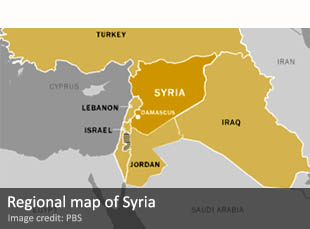
Teams of Israeli special forces are currently operating inside Syria in an effort to detect and sabotage the Syrian military’s chemical and biological arsenal. Citing an unnamed “Israeli source”, the London-based Sunday Times newspaper said yesterday that the operation is part of a wider “secret war” to track Damascus’ non-conventional weapons stockpiles and “sabotage their development”. The Israeli government refused comment on the paper’s allegation. However, Israel’s covert activities against the Syrian government’s chemical and biological arsenal go back almost 30 years. Reputedly, some of the more recent such activities may have involved the targeting of Russian scientists. Although Russia routinely denies it, it is believed that Syria’s non-conventional arsenal was significantly augmented in the late 1980s and early 1990s with the help of Russian retired general Anatoliy Kuntsevich. Kuntsevich, one of the Soviet Red Army’s top scientists, is said to have helped Damascus build its XV nerve agent stockpiles, which are still believed to be in existence today. Interestingly, Kuntsevich died suddenly in 2003 onboard a flight from the Syrian capital to Moscow. It was widely speculated at the time that the Mossad, Israel’s covert-action agency, may have played a role in the Russian general’s sudden death. In 2010, another retired Russian general, Yuri Ivanov, who had served as Deputy Director of the GRU, Russia’s military intelligence agency, died in unclear circumstances. The body of 52-year-old Ivanov was found in Turkey on August 16, 2010, several days after he had disappeared close to a Russian naval facility in Syria. Russian media did not report Ivanov’s death until several days later, when he was quietly buried in Moscow. According to reports in the Israeli press, the former GRU official was on his way to a meeting with Syrian intelligence officers when he went missing. Read more of this post

Israel asked for Jordan’s approval to bomb Syria, say sources

Regional map of SyriaBy JOSEPH FITSANAKIS | intelNews.org |
The government of Israel has sent Jordan at least two requests in the past two months to bomb targets in Syria, according to intelligence sources. The Atlantic magazine, which published the revelation on Monday, said Tel Aviv has been seeking Amman’s “permission” to move ahead with “a plan to take out many of Syria’s chemical weapons sites”. Citing unnamed “intelligence officials in two countries”, The Atlantic said that the Israeli requests were communicated to the Jordanian government by officials from the Mossad, Israel’s primary covert-action agency. In both instances, the Mossad delegation was allegedly dispatched to Amman on the orders of the Office of Benjamin Netanyahu, Israel’s Prime Minister. However, the Jordanians are so far resisting the Israeli proposals, says The Atlantic, telling their Jewish neighbors that “the time [is] not right” for direct military action. It is worth pointing out that Israel does not technically require Jordan’s permission to bomb Syria. Its air force can do so without assistance from Amman. This was demonstrated on September 6, 2007, when Israel bombed a target at Al-Kibar, deep in the Syro-Arabian Desert, thought to be the site of a nuclear reactor. Even though Tel Aviv has not officially admitted a role in the attack, Israeli officials have repeatedly hinted that Israel was behind it. According to German newsmagazine Der Spiegel, which published a detailed account of the bombing, the attack was codenamed Operation ORCHARD. The difference this time appears to be that many of Syria’s chemical weapons facilities, which Israel allegedly wants to destroy, are located along the Syrian-Jordanian border. Read more of this post

News you may have missed #814

Ilir KumbaroBy IAN ALLEN | intelNews.org |
►►Israel accuses Palestinian of spying for Hezbollah. Israel’s Shin Bet internal security agency says a Palestinian man has been charged with relaying information to Hezbollah in Lebanon about sensitive government sites, including parliament. It identified the suspect as Azzam Mashahara, a resident of east Jerusalem, which Israel captured in 1967. Palestinian residents of east Jerusalem, unlike Palestinians from the West Bank or the Gaza Strip, have Israeli identity cards that allow them to travel freely within Israel. Mashahara was charged with maintaining contacts with a foreign agent and relaying information to the enemy.
►►UK agency tries to crack coded message from WWII-era carrier pigeon. The note, written on official stationary with the heading “Pigeon Service,” was discovered in a red canister attached to the skeletal leg of a pigeon in a chimney in Surrey, England. The message is made up of 27 seemingly random five-letter blocks and though it’s undated, government analysts believe the pigeon met his end while on a secret mission during the Second World War. The note is signed “Sjt W Stot” and was intended for the destination “XO2”. In a statement, Britain’s Government Communications Headquarters (GCHQ), said that during the war secret communications would often utilize specialized codebooks “in which each code group of four or five letters had a meaning relevant to a specific operation, allowing much information to be sent in a short message”. The GCHQ said that those messages may have been put through an additional layer of security by being re-coded with what’s known as a one-time pad.
►►Albania court convicts fugitive ex-spy chief. An Albanian court has convicted Ilir Kumbaro, the country’s fugitive former intelligence chief, of murder for the 1995 death of a suspect who was illegally detained for an alleged plot to murder the President of the Republic of Macedonia. The victim, businessman Remzi Hoxha, an ethnic Albanian from Macedonia, was abducted by the secret police 17 years ago along with two other suspects for allegedly planning to kill then-Macedonian President Kiro Gligorov during a visit to Albania. The court said the three suspects were held illegally and tortured during questioning. Kumbaro traveled to Britain in 1996 under a false identity, claiming to be a refugee from Kosovo. He has been missing for a year, after skipping an extradition hearing in London. Hoxha was never found and is presumed to have died in custody.

News you may have missed #812

Yasser ArafatBy IAN ALLEN | intelNews.org |
►►Russia to help probe Yasser Arafat’s death. Russia will join an international investigation to determine whether the first Palestinian president, Yasser Arafat, was murdered, the current Palestinian leader, Mahmoud Abbas, has said. French and Swiss experts are due to exhume Arafat’s body in Ramallah later this month in an attempt to discover how he died after an al-Jazeera documentary in July suggested he was killed by a rare radioactive poison. Abbas asked Russian foreign minister Sergei Lavrov for Moscow’s help during talks in Jordan, Palestinian sources said.
►►Revisiting the foiled 1984 Nigerian kidnap plot. In London in 1984, a team of Nigerians and Israelis attempted to kidnap and repatriate the exiled former Nigerian minister Umaru Dikko. Mr. Dikko, who had fled Nigeria after a military coup, was accused of stealing $1bn (£625m) of government money. The plot was foiled by a young British customs officer and, as a result, diplomatic relations between the UK and Nigeria broke down and were only fully restored two years later. The Nigerian and Israeli governments have always denied involvement in the kidnapping.
►►Putin congratulates KGB double spy on his birthday. Russian President Vladimir Putin has congratulated famous double agent George Blake on his 90th birthday, the Kremlin press office has said. Blake betrayed British intelligence starting in the 1950s; he was found out in 1961 and sentenced to 42 years in prison. But he escaped five years later using a ladder of rope and knitting needles, made his way to the Soviet Union and has been living out his last years serenely in a cottage outside Moscow. After his escape from the Wormwood Scrubs prison in London, he was smuggled to Berlin in a wooden box in the back of a van. In the interview published last week, he said he then presented himself to border guards in East Berlin, asked to speak to a Soviet officer, and when told to wait, immediately fell into a deep sleep.

News you may have missed #811

Efraim HalevyBy IAN ALLEN | intelNews.org |
►►Former Mossad chief pushes for dialogue with Iran. After Meir Dagan, another former chief of Israeli intelligence agency Mossad has publicly called for a dialogue between the West and Iran. Speaking to Al-Monitor, an American website covering Middle-East news, Halevy, who directed the Mossad from 1998 to 2002, said that “the Iranians, in their heart of hearts, would like to get out of their conundrum”. IntelNews readers may remember Halevy’s comments in August, when he warned that Israel’s threats of a military attack on Iran were “credible” and “serious”, adding that, if he were an Iranian, he would be “very fearful of the next 12 weeks”.
►►UK says attack on Iran ‘not right course at this time’. The British government has reiterated that it does not believe military action against Iran would be appropriate at the moment, following the disclosure that Britain has rebuffed US requests to use UK military bases to support the buildup of forces in the Gulf. US diplomats have lobbied for the use of British bases in Cyprus, and for permission to fly from US bases on Ascension Island in the Atlantic and Diego Garcia in the Indian Ocean, both of which are British territories.
►►German spy agencies disclose spy tools in rare move. Most law enforcement agencies refuse to reveal the surveillance technologies they use, claiming doing so could threaten national security. But authorities in Germany have shown it is possible to be transparent without the sky falling in —by disclosing how they have spent millions on spy tools to help monitor Skype, email, and mobile phones. Earlier this year, German politician Jan Korte submitted a series of written questions to the country’s federal ministry of home affairs regarding surveillance tools. The answers Korte received were published in German in July, but have only this month been translated (.pdf) into English.

Mossad ‘tried to kill’ Saddam Hussein using ‘exploding book’

Saddam HusseinBy JOSEPH FITSANAKIS | intelNews.org |
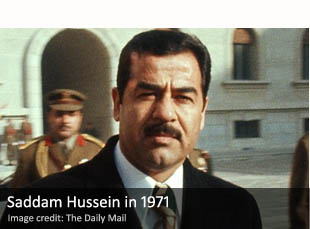
Israeli intelligence tried unsuccessfully to kill Iraqi leader Saddam Hussein in the 1970s using a bomb disguised as a book. This revelation is included in a new documentary film, which was aired on Monday evening on Israel’s Channel 1 television. The documentary, entitled Sealed Lips, focuses on the life and intelligence exploits of Yitzhak Hofi. Known informally as “Khaka”, Hofi was the fifth Director of the Mossad, Israel’s foremost covert-action intelligence agency, which he led form 1974 to 1982.  Aside from Hofi, who is still living in Israel, aged 85, the film includes interviews with five other former Directors of the Mossad, as well as with some of the agency’s best-known covert-action operatives. One of them is Brigadier General (ret.) Tzuri Sagi, said to have been the mastermind behind the plan to kill Hussein, who had assumed power in Iraq following a coup in 1968. According to the documentary, as soon as the Mossad tasked Sagi with assassinating Hussein, he employed the best-known bomb-maker in the Israeli intelligence and security services, known by his operational name, “Natan”. “Natan” put together a carefully constructed explosive device, which was hidden inside an Arabic-language book. The device was wired to detonate once the front cover of the book was opened. The film suggests that the Mossad did manage to find a way for the book to reach the Iraqi leader. However, Hussein appeared suspicious about the book and had one of his close aides, an unnamed senior Iraqi government official, open it. Read more of this post

News you may have missed #808 (Obama-Netanyahu edition)

Benjamin Netanyahu and Barack ObamaBy IAN ALLEN | intelNews.org |
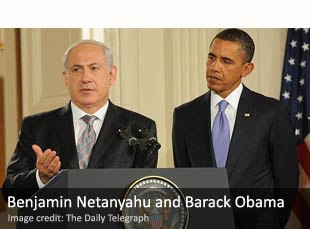
►►The other concession speech: Netanyahu congratulates Obama. At least there was no pretending. In the language of diplomacy, the greeting Israeli Prime Minister Benjamin Netanyahu extended to Barack Obama on the occasion of his re-election was “correct” and nothing more. “Prime Minister Netanyahu congratulates US President Barack Obama on his election victory,” read the public statement issued early Wednesday in Jerusalem. The next word out of Balfour Street, where Netanyahu mulled the returns, was a warning to members of his Likud party to shut up about how they figure the premier might really feel. By then, the deputy speaker of the Knesset had already called Obama “naïve” and vowed Israel would not “surrender” to him.
►►Netanyahu rushes to repair damage with US President. Over the past several years, Prime Minister Benjamin Netanyahu has on several occasions confronted or even undercut US President Barack Obama, taking his message directly to the Israel-friendly United States Congress, challenging Mr. Obama’s appeal to the Arab world, and seeming this fall to support his opponent, Mitt Romney. Mr. Netanyahu woke up Wednesday to find not only that his Republican friend had lost, but also that many Israelis were questioning whether he had risked their collective relationship with Washington.
►►Barack Obama victory spells trouble for Israel’s Netanyahu. Israeli Prime Minister Benjamin Netanyahu faces an even more awkward time with Washington and re-energized critics at home who accused him on Wednesday of backing the loser in the US presidential election. With Iran topping his conservative agenda, Netanyahu will have to contend with a strengthened second-term Democratic president after four years of frosty dealings with Barack Obama and a rift over how to curb Tehran’s nuclear program.

Mossad, IDF ‘resisted order’ to prepare for Iran war in 2010

Ehud Barak and Gabi AshkenaziBy JOSEPH FITSANAKIS | intelNews.org |
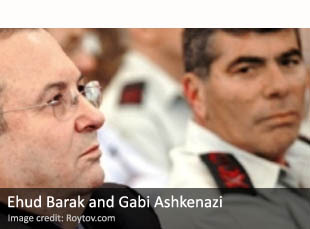
The heads of Israel’s army and main spy agency resisted an order issued by the Israeli Prime Minister to prepare for an all-out military attack on Iranian nuclear installations in 2010, according to a report aired today. According to Monday’s edition of Uvda (Fact), a popular investigative program on Israel’s Channel 2 television, the command to prepare for an attack was given by Israeli Prime Minister Benjamin Netanyahu and Minister of Defense Ehud Barak. The two men delivered the order to a meeting of senior cabinet ministers, telling them that the Israeli military’s preparedness level would be elevated to ‘P plus’, effective immediately. According to Uvda, ‘P plus’ meant that the Israeli armed forces should prepare to take military action at a moment’s notice. However, the then-Director of Israeli spy agency Mossad, Meir Dagan, who was present at the meeting, asked to speak and, according to Israeli newspaper Ha’aretz, which said it has seen the Uvda program, “came out sharply” against both Netanyahu and Barak. He told those present that elevating the military preparedness to ‘P plus’ was something that technically could only be decided at a meeting of Israel’s Political-Security Cabinet. Also known as “the inner cabinet”, the group, which consists of over a dozen Ministers and is led by the Prime Minister, is tasked with outlining and implementing Israel’s foreign and defense policy. Dagan told the two men that “only the [inner] cabinet is authorized to decide this” and warned them that they were “likely to make an illegal decision to go to war”. Dagan’s objection was later reinforced when General Gabi Ashkenazi, then-leader of the Israel Defense Forces, told the Prime Minister that the Israeli army was not ready to elevate its preparedness level to a ‘P plus’. Read more of this post

Israel admits assassinating Palestinian commander in Tunisia

Abu JihadBy JOSEPH FITSANAKIS | intelNews.org |
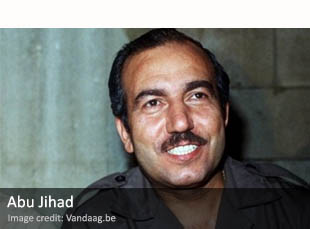
Authorities in Israel have authorized the publication of an interview acknowledging Israel’s role in the assassination of a senior Palestinian military commander in Tunisia in 1988. The target of the assassination was Khalil al-Wazir, better known as Abu Jihad, one of the co-founders of Fatah, the secular wing of the Palestinian Liberation Organization chaired by Yasser Arafat. In the 1960s and 1970s, Abu Jihad rose within the ranks of Fatah and eventually became commander of its armed wing, known as al-Assifa. However, he was killed on April 16, 1988, when a group of unidentified gunmen stormed his villa in Tunisian capital Tunis, before managing to slip away. In the past 23 years, the Israeli intelligence services have been repeatedly singled out as prime suspects in Abu Jihad’s assassination. Nearly 15 years ago, Israeli newspaper Yedioth Ahronot announced that it had secured an interview with an Israeli commando who had a leading role in the operation and had been the one who fired the shots that killed the Fatah commander. But the interview was blocked from publication by the Israeli military censors, who, under Israeli law, have the power to prevent the airing of information that might harm national security. In 2000, however, the commando, Nahum Lev, died in a motorcycle accident, which prompted the Israeli newspaper to renew its application for the ban on the interview to be lifted. This week, Israeli authorities officially lifted the ban, which allowed Yedioth Ahronot to run the interview with Lev. The airing of the interview was coupled by a more substantial account of the operation, which appeared in the specialist Israel Defense magazine. According to the article, the operation was planned over several months by the Israeli covert action agency Mossad and the Sayaret Matkal, a special forces unit of the Israel Defense Forces. It involved 26 commandos who allegedly reached the Tunisian shore on rubber boats. Several of them walked the streets of Tunis disguised as women tourists. Read more of this post

Analysis: Iranian-Israeli proxy war flares up in Sudan

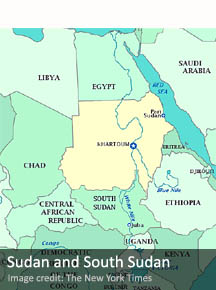
Sudan and South SudanBy JOSEPH FITSANAKIS | intelNews.org |
While much of the world focuses on the effects of hurricane Sandy in the eastern United States, the proxy war between Israel and Iran continues to flare up, this time in Africa. Last week, the government of Sudan accused Israeli of being behind a surprise bombing of a weapons factory in the Sudanese capital Khartoum. According to Sudan’s Minister of Information, Ahmed Belal Osman, four Israeli Air Force jets invaded Sudanese airspace and struck the Yarmouk military complex in Khartoum, inflicting heavy damages. There are unconfirmed claims that the factory was operated by the Iranian government and produced weapons that were smuggled through the Sinai Peninsula into the Gaza Strip, which is controlled by Palestinian group Hamas. On Tuesday, almost exactly a week after the alleged Israeli bombing took place, two Iranian warships arrived in Port Sudan, the country’s most important harbor, located on the Red Sea. The arrival of the vessels was confirmed by Iranian news agency IRNA, which said a helicopter carrier and a destroyer had docked at Port Sudan. The news agency, which is owned by the Iranian government, said the arrival of the ships was meant to contribute to anti-piracy efforts in the Red Sea. But non-Iranian news media, including British newspaper The Independent, quote observers who view the ships’ arrival in Sudan as an Iranian “show of support” for the Sudanese government. According to this explanation, Tehran’s decision to send the ships to the East African country is part of an ongoing proxy war between Iran and Israel taking place throughout the region. Read more of this post

Controversial ex-Mossad chief ‘fighting for his life’ following operation

Meir DaganBy JOSEPH FITSANAKIS | intelNews.org |
An Israeli former intelligence chief, who has been voicing strong public criticism of Israeli calls for an all-out war with Iran, is allegedly “fighting for his life” following a transplant operation in Belarus. An announcement aired late on Tuesday by Belarusian President Alexander Lukashenko said Meir Dagan, who led Israeli covert-action agency Mossad from 2002 to 2010, had undergone a kidney transplant at a hospital in Belarusian capital Minsk. Lukashenko claimed that the former Mossad strongman, who was born in Russia, had decided to undergo the operation in the former Soviet republic after consulting with him personally. The Belarusian president claimed that, prior to traveling to Minsk for the operation, Dagan had asked American, German and Swedish doctors to perform it, but that they refused, allegedly because “no one wanted to carry out a liver transplant operation on a former head of the Mossad”. According to the announcement, the former Mossad Director was operated on over a week ago and initially seemed to be doing well. However, complications soon set in and he is currently “recovering in isolation”, while it appears that his body is not receiving the transplant well. Reputable Israeli newspaper Ha’aretz said that Belarusian media had directed several queries to hospital staff in Minsk, who apparently confirmed that an organ transplant had been performed on a patient who was a citizen of Israel. But they refused to give the person’s name due to patient confidentiality rules. It is not clear why Dagan had to leave Israel in order to undergo the operation, or why he failed to notify the Israeli embassy in Belarus. Israeli diplomats in Minks told Israeli media that they had no idea about Dagan’s medical procedure or even presence in the eastern European country. Read more of this post

News you may have missed #801

Alan TuringBy IAN ALLEN | intelNews.org |
►►Israel charges Arab man with spying for Hezbollah. Israel has charged Milad Khatib, a 26-year-old Arab Israeli truck driver, who was arrested a month ago, with spying for Hezbollah, making contact with a foreign agent, conspiring to aid the enemy and belonging to an illegal group. According to the indictment, Khatib was in contact with a man named Barhan, a Hezbollah agent who operated in various European locations. The two allegedly met several times between 2007-2009 in Barhan’s home in Denmark, with all of Khatib’s expenses, including food, hospitality and entertainment, covered by Barhan.
►►Britains’ GCHQ praises Alan Turing legacy. In a rare public speech, Iain Lobban, the Director of GCHQ, Britain’s signals intelligence agency, has praised the legacy of British mathematician and codebreaker Alan Turing. Widely considered the father of computer science and artificial intelligence, Turing committed suicide in 1954, after the British government prosecuted him for being a homosexual. In 2009, British Prime Minister Gordon Brown offered a public apology for Turing, who is also credited with cracking the Nazi Enigma code —a vital part of the Allied effort in World War II.
►►Canada’s SIGINT agency to get new headquarters. Canada’s electronic spy organization believes that the state-of-the-art headquarters now being built in an Ottawa suburb will make it a leader among its allies and attract the best and brightest of spies, according to newly released Canadian government documents obtained by The Ottawa Citizen. When finished in 2015-16, the Canadian Communications Security Establishment’s new $880-million spy campus in Gloucester is expected to be home to more than 1,800 employees.