Israeli citizens arrested on suspicion of working for Iranian intelligence
October 28, 2024 2 Comments
 THE ISRAELI SECURITY AGENCY (ISA) has announced the arrest of 18 Israeli citizens suspected of working for Iranian Intelligence. Among them are seven Israelis, who immigrated to Israel from Azerbaijan, and are suspected of having been in contact for two years with Iranian intelligence. Some of the seven were caught carrying out surveillance against a senior Israeli Air Force officer, whom they were reportedly planning to assassinate.
Israeli authorities accuse the suspects of photographing and collecting information on military bases and facilities, including Air Force bases, Iron Dome battery sites, a power plant, and other energy infrastructure facilities. The suspects are also accused of having received from their Iranian handlers a set of maps of Israeli strategic sites, including the Golani Brigade’s training base, where four Israeli soldiers were killed by a drone attack last week. In over two years, the suspects allegedly performed approximately 600 missions under the direction of two handlers from Iranian intelligence. They did so in return for hundreds of thousands of shekels, which were paid to them in cash and various crypto-currencies.
Another Israeli citizen, who was arrested on suspicion of spying for Iranian intelligence in return for payments, has been named as Vladimir Varehovsky, 35, from Tel Aviv. Among other tasks, Varehovsky is suspected of gathering information about an Israeli scientist, whom he agreed to murder in exchange for a $100,000 payment. The suspect had reportedly acquired weapons for the assigned task, but the ISA arrested him before he could carry it out.
In another counterintelligence operation, the ISA arrested seven young Palestinians from the east of Jerusalem, who have been charged with working for Iranian Intelligence. The main suspect recruited the other six to carry out tasks for a fee. Tasks included setting cars on fire, gathering information about a city mayor in Israel, and plotting to assassinate one of the country’s top scientists. The suspects used social media for recruitment purposes. They were reportedly arrested before they were able to execute their missions. Read more of this post
 LEAKED INFORMATION PUBLISHED BY leading German media outlets has revealed Russia’s plans for an influence campaign targeting Israel. The information was leaked earlier this month by the German newspaper Süddeutsche Zeitung and German television stations Norddeutscher Rundfunk (NDR) and Westdeutscher Rundfunk (WDR), as well as by
  parliament— would support a possible transfer of military aid to Ukraine.
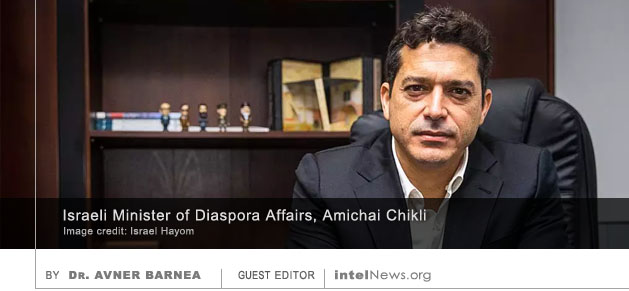 SEVERAL WEEKS AGO, ISRAEL’S Minister of Diaspora Affairs, Amichai Chikli, reportedly met with the chief executive officer (CEO) of Israeli private intelligence company Black Cube.
  THE OFFICIAL INTERNAL INVESTIGATION into the performance of Israel’s Military Intelligence Directorate (MID) during the run-up to the Hamas attack of October 7, 2023, has been released. Known as The Road to War, the report addresses the central question of: how did the MID –the main military intelligence body of the Israel Defense Forces, or IDF– miss all the signs of the pending Hamas attack, and how did all the available warnings go unheeded?
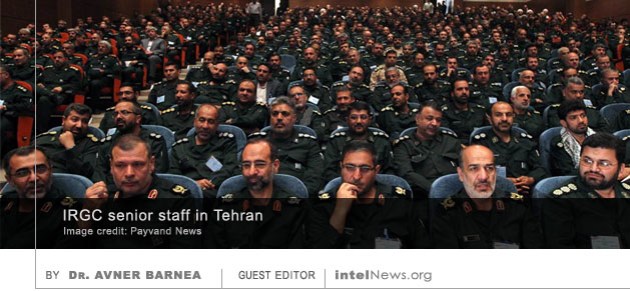 THE TARGETED KILLING OF Hassan Mahdawi, a high-ranking member of Iran’s Islamic Revolutionary Guards Corps (IRGC) and the commander of the Quds Force in Syria and Lebanon, was carried out by Israel on April 1, 2024. The actual assassination was based on precise operational intelligence, while Israel’s assessment of Iran’s response was wrong.
 ON MARCH 23, CHANNEL 12 of Israeli television aired a remarkable interview with Sassi Elya, the former director of technology at the Israel Security Agency (ISA). Better known by the acronyms Shin Bet or Shabak, the ISA is Israel’s domestic security service. The interview had initially been scheduled for broadcast as part of the evening news on October 7, 2023. However, its airing was canceled due to the attack on Israel by Hamas, which occurred that morning.
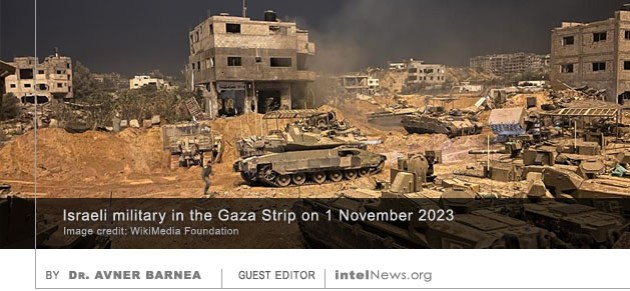 SINCE OCTOBER 7, 2024, when Israel was caught off guard by a sudden and highly damaging attack from Hamas, more information has surfaced regarding why there was no prior warning about the attack and the failures of Israeli intelligence in this regard.
 capabilities. Another important insight is that the counterintelligence structures inside Hamas were successful in preventing Israeli intelligence from recruiting agents who were close enough to Sinwar to be able to alert Israel about the impending attack. Furthermore, Israel’s collection and analysis of signals intelligence was unproductive, possibly because Hamas was successful in countering Israel’s ability to produce effective intelligence from signals intercepts.
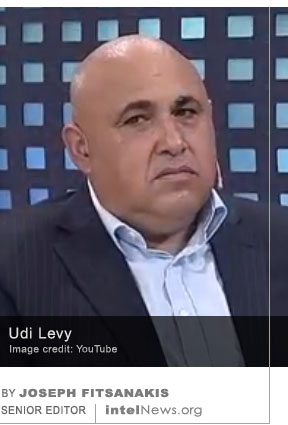 A RETIRED SENIOR MOSSAD official has alleged that Israeli Prime Minister Benjamin Netanyahu repeatedly ignored, and even frustrated, efforts to stop the flow of hundreds of millions of dollars to Hamas. This inaction may have enabled the Palestinian militant group to plan, organize and execute Operation Al-Aqsa Flood, which killed over 1400 Israelis on October 7, 2023, and sparked the current war between Israel and Hamas.
 THE OCTOBER 7 ATTACK on Israel was a total surprise. There was no warning. There were very few signs of a possible attack. Israeli intelligence evaluated these signs as elements of a routine military exercise by Hamas, and even assessed them as parts of an imaginary scenario. It therefore gave no warning to those Israeli Defense Forces (IDF) units that were stationed on the border with Gaza. Meanwhile, what we know about the intelligence failure of October 7 will likely pale before what the commission of inquiry will reveal once it is established. That was precisely what happened in the case of the Agranat Commission of Inquiry, which made significant revelations while investigating the intelligence failings of the IDF in the run up to the 1973 Yom Kippur War.
 time, in the first two days of the conflict the IDF was confused and acted without direction, in the apparent absence of relevant action plans for what to do in the event of a massive invasion. The IDF was clearly not ready for such a scenario.
 for those conclusions to become public. What is to be done in the meantime? There is public pressure to launch the inquiry soon.
 MIDDLE EAST OBSERVERS WERE hardly surprised by yesterday’s news of the apparent assassination of Hamas leader Saleh al-Arouri in Lebanon. Not only was al-Arouri a
  Yesterday’s assassination at the very heart of Hezbollah’s lair was nothing short of a demonstration of the Mossad’s competency in special operations.
 IT HAS BECOME CLEAR that Hamas had up-to-date intelligence on Israeli targets prior to the attack on October 7, 2023, the largest and most devastating terrorist attack in Israel’s history. Hamas did not have access to clandestine information sources but rather relied on open-source intelligence (OSINT) to understand the structure and weaknesses of Israel’s defense system along the border fence. In addition to publicly available maps, Hamas meticulously gathered online intelligence about specific sites within the Israeli communities near the Gaza Strip.
 interests of national security, the public’s ‘right to know’ purview is substantial. Thus, significant amounts of information are available online.
 the Israeli Military Intelligence was dissolved, for reasons that remain to be investigated. CNN was among many news outlets that have
  SINCE OCTOBER 7, WHEN Hamas launched its surprise attack on Israel, many more details about the intelligence failure have emerged. It appears that Israeli intelligence officials have warned for years about military exercises held by Hamas in the Gaza Strip, which have included practice raids on cities deep inside Israel. However, the Israel Military Intelligence (IMI) did not heed to the warnings, because it considered Hamas operationally incapable of carrying out such raids. Instead, the IMI estimated that the Hamas leadership aimed to arrive at a settlement with Israel. That seems like the result of a highly successful disinformation operation, which added significantly to the effectiveness of the sudden attack on Israel on October 7.
 large number of settlements simultaneously. It also believed that such an operation would go against the spirit of Hamas leadership’s spirit intention to settle with Israel.
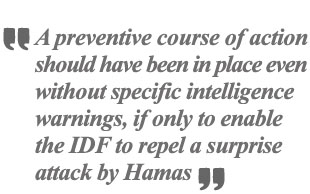 Indeed, a preventive course of action should have been in place even in the absence of specific intelligence warnings —if only to enable the IDF to repel a surprise attack by Hamas. There was no need to estimate what Hamas would do in order to prepare for a surprise attack.
 ARGUABLY NO COUNTRY BENEFITED more from the American invasion of Iraq than the Islamic Republic of Iran. In a war that lasted over a decade, Washington spent over
  branch of the Iranian Armed Forces that protects and promotes the ideological inheritance of the 1979 Islamic Revolution.






 intelNews.org
Israeli couple who spied for Iran made ample use of digital applications
November 11, 2024 by intelNews 3 Comments
The case demonstrates how software that is easily accessible on the Internet makes it possible to encrypt information communicated between a handler and an agent, as well as how money is transferred to the agent. The official indictment reveals details about the couple’s modus operandi, including the identity of the particular software the spies used to communicate with their Iranian handler.
One of the applications the couple used is Zangi, which facilitates the exchange of encrypted instant messages. According to the company’s website, Zangi offers voice and video calling, text messaging, and file transfer services “without registration and without data collection”. In fact, according to Zangi, the data is saved on the user’s device only. In addition to using the Zangi application, the couple also appear to have used the Zolotaya Korona money-transfer platform. The couple allegedly used the platform in order to receive payments by their Iranian handlers, and to transfer funds to other parties involved in Iranian-led espionage activities inside Israel.
Another application allegedly used by the couple is Ecos Dos, a digital wallet for storing and transferring digital currencies. Ecos Dos is a software wallet that can be installed on a computer or mobile phone. It supports a wide variety of crypto-currencies and is used to store and transfer cryptocurrencies. It is known for its simplicity of use and friendly interface. It is popular among users who wish to maintain anonymity when transacting in digital currencies. It does not require identifying a user’s details when operating, so anyone can create an account and receive funds anonymously.
The suspects are also believed to have used a software called Encryptor in order to encrypt information. This software allows files and folders to be encrypted so that only those who have the encryption key can open them. The couple allegedly used Encryptor to encrypt the information they collected before passing it on to their Iranian handlers, thus making it difficult for Israeli authorities to decipher the information.
The use of these applications attests to the sophistication of the Iranian spy network that was recently busted in Israel, and its efforts to hide its activities inside the Jewish state. The recent indictment against the couple details a collection of serious security offenses, including aiding the enemy in war and providing information to the enemy to harm the security of the state. Iran is clearly stepping up its efforts to recruit Israeli citizens for espionage and terrorist activities.
► Author: Avner Barnea | Date: 11 November 2024 | Permalink
Dr. Avner Barnea is research fellow at the National Security Studies Center of the University of Haifa in Israel. He served as a senior officer in the Israel Security Agency (ISA). He is the author of We Never Expected That: A Comparative Study of Failures in National and Business Intelligence (Lexington Books, 2021).
Filed under Expert news and commentary on intelligence, espionage, spies and spying Tagged with encryption, espionage, Iran, Israel, News