Flurry of diplomatic expulsions as European states respond to Russia spy allegations
April 27, 2021 Leave a comment
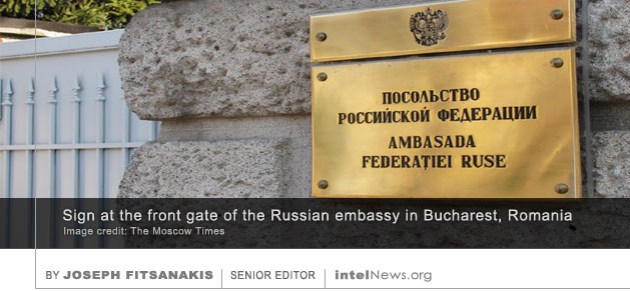 SEVERAL EASTERN EUROPEAN STATES announced plans to expel Russian diplomats this week, as Moscow declared an Italian diplomat persona non grata in a tit-for-tat dispute with Rome over espionage allegations. Earlier this month, the Czech Republic expelled 18 Russian diplomats in protest against an explosion that totaled a remote munition depot in the east of the country, which Prague claims was part of a Russian intelligence operation.
The explosion, which occurred in October of 2014, killed two people and destroyed a munitions storage facility belonging to the Military Technical Institute of the Czech Ministry of Defense. Czech investigators recently concluded it was perpetrated by Unit 29155, a Russian elite spy outfit that operates under the Main Directorate of the General Staff of the Russian Armed Forces, commonly known as GRU. The Kremlin responded to the expulsions of its diplomats by ordering 20 Czech diplomats to leave Russia, and condemning Prague’s move as an “unprecedented” and “a hostile act” that was designed “to please the United States”.
The Czechs retorted by calling their allies in the North Atlantic Treaty Organization and the European Union to “expelled officers of Russian special services” in solidarity. In recent days, five countries have answered Prague’s call. Seven Russian diplomats have been given just days to leave Slovakia, Lithuania, Latvia, Lithuania and Estonia. Meanwhile, Romania announced on Monday that it would expel Alexei Grichayev, who serves as a deputy military attaché at the Russian embassy in Bucharest. The Romanian government said Grichayev’s “activities and actions [were] contrary to the Convention of Vienna on diplomatic relations” —a phrase used to denote espionage in diplomatic parlance.
Also on Monday, the Romanian Ministry of Foreign Affairs summoned the Russian ambassador in order to file an official complaint, while Hungary, Poland and Slovakia issued a joint statement decrying what they described as “deplorable act[s] of aggression and breach of international law committed by Russia on European soil”. In a separate development, Moscow said on Monday it would expel an Italian diplomat in response to the expulsions of two Russian diplomats from its embassy in Rome last month. The two Russians were accused of recruiting an Italian Navy captain, who has been charged with spying for the Kremlin.
► Author: Joseph Fitsanakis | Date: 27 April 2021 | Permalink
 Latvian defense officials have hinted that Russia is trying to destabilize Latvia’s economy, as a Western-backed anti-corruption probe at the highest levels of the Baltic country’s banking sector deepens. Developments have progressed at a high speed since Monday of last week, when Latvia’s Corruption Prevention and Combating Bureau
 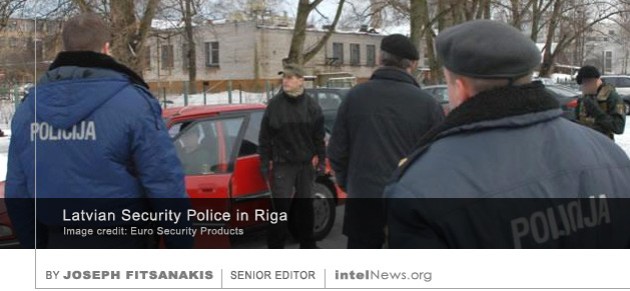 The Latvian Security Police have announced the arrest of a man who is suspected of spying for a foreign country, with some reports claiming it is Russia. The Latvian state-owned news agency, LETA,
  The role of the CIA in funding and helping to organize anti-Soviet groups inside the USSR has been known for decades. But, as intelNews explained in
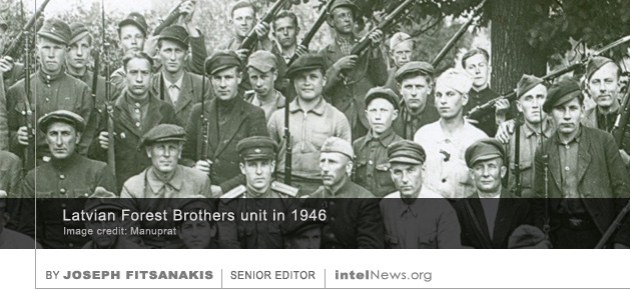
 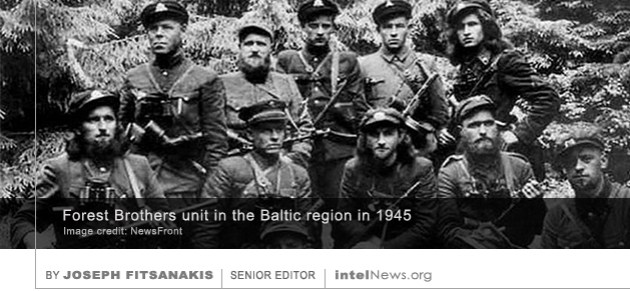 Recently declassified documents from the archive of the Central Intelligence Agency detail financial and material support given by the United States to groups of armed guerrillas in Soviet Latvia in the 1950s. The documents, initially marked ‘Top Secret’ but now declassified, show that the CIA was aware and supported the activities of an anti-Soviet guerrilla army known as ‘the Forest Brothers’. Known also as ‘the Forest Brethren’, the group was formed in the Baltic States in 1944, as the Soviet Red Army established Soviet control over the previously German-occupied states of Estonia, Latvia and Lithuania. The Soviet Union had previously occupied and annexed the three Baltic countries, in a failed attempt to pre-empt Germany’s eastward military expansion. Groups like the Forest Brothers consisted of the most militant members of anti-Soviet groups in the Baltic States, many of whom were ideologically opposed to Soviet Communism.
 A former employee of Germany’s spy agency, who was recalled from his post abroad after dating a foreign woman, has lost his legal battle to be compensated for lost earnings. The former intelligence officer, who has not been identified by name, worked for Germany’s Federal Intelligence Service, known by its initials, BND. From 2006 to 2008, he served as the BND’s station chief in Riga, Latvia. The post implies that he the highest-ranking German intelligence officer in the small Baltic state. According to court documents, the BND station chief had explicit directions from his employer, in writing, not to fraternize with locals while serving in the Latvian capital. The instructions expressly forbade romantic affiliations with locals.









 intelNews.org
Ex-Russian spy can sue British government for revealing his identity, court rules
October 30, 2023 by Joseph Fitsanakis 2 Comments
He then allegedly spied on Latvia for one of the KGB’s successor agencies, the Federal Security Service, before switching sides again and spying on Russia for the Latvians. He also claims to have spied on Russia for French and American intelligence. In 1998, carrying two suitcases filled with top-secret Russian government documents, and using forged passports, he arrived with his family in Britain, where he has lived ever since. Shortly after he was granted asylum, the British government issued Karpichkov with a new identity to protect him from the Russian security services. In 2018, Karpichkov claimed that, despite the British government’s efforts to protect him, Russian intelligence had tried to kill him three times since 2006.
Since Karpichkov’s relocation to the United Kingdom, Latvian authorities have twice attempted to have him extradited there. A High Court judge rejected the first extradition request, ruling that Karpichkov’s life would be in danger if he were to be handed over to Latvia. But in 2018 the Latvian authorities issued a follow-up request for Karpichkov’s extradition. At that time the United Kingdom’s National Crime Agency (NCA), which manages the UK Protected Persons Service, shared information about Karpichkov’s protected identity with the Latvians. A judge later quashed that extradition request too, warning that the former KGB intelligence officer had “an abundance of dangerous enemies in both Latvia and Russia”.
Karpichkov claims that the information that the NCA shared with the Latvians during the extradition negotiations, resulted in him receiving death threats from his enemies abroad. The NCA claims it was under a European Arrest Warrant legislation mandate to disclose Karpichkov’s protected identity to the Latvian authorities. On Friday, however, a High Court judge ruled that Karpichkov had the right to sue the NCA for unlawfully disclosing Karpichkov’s details in violation of data protection rules. This means Karpichkov is now entitled to file a lawsuit against the British government for allegedly misusing his private information.
► Author: Joseph Fitsanakis | Date: 30 October 2023 | Permalink
Filed under Expert news and commentary on intelligence, espionage, spies and spying Tagged with Boris Karpichkov, defectors, KGB, Latvia, National Crime Agency, News, Russia, UK