News you may have missed #788

U-2 surveillance aircraftBy IAN ALLEN | intelNews.org |
►►US spy planes violated Israeli airspace in 1950s. American U-2 espionage planes repeatedly entered Israeli airspace in the 1950s for a series of secret spy missions, according to new information to be published by the Israel Air Force magazine next week, bringing to an end a decades-long mystery. At the time, Israel’s defense establishment was baffled by the entrance of high-flying crafts. For years, officials in IAF command disagreed on the identity of the mystery crafts, with some claiming that they were British Vickers-Valiants, and others saying they were American Vought F-8 Crusader planes, that had been stationed on a US aircraft carrier. According to documents to be published next week, it was the USSR that aided Israeli officials to expose the identity of the mystery planes, after a US U-2 espionage plane was shot down over Soviet soil.
►►US guard pleads guilty to espionage. A civilian guard at a new US consulate in China pleaded guilty on Thursday to attempting to sell Chinese security officials photographs and access to the compound so they could plant listening devices. According to a court proffer, Bryan Underwood had lost a significant amount of money in the stock market and hoped to make between $3 million and $5 million by supplying classified photos and information to China’s Ministry of State Security. Underwood, 32, appeared in federal court in Washington and pleaded guilty to one count of attempting to communicate national defense information to a foreign government.
►►CIA torture probe ends without any charges. The US Department of Justice has ended its investigation into the CIA’s interrogation program for terror detainees, without bringing charges. Attorney General Eric Holder said there was not enough evidence to “sustain a conviction beyond a reasonable doubt”. Jameel Jaffer, deputy legal director of the American Civil Liberties Union, said the investigation’s conclusions were a “nothing short of a scandal”. But CIA officials welcomed the decision. CIA Director David Petraeus thanked his staff for co-operating with the investigation. “As intelligence officers, our inclination is to look ahead to the challenges of the future rather than backwards at those of the past”, he said. No surprises here, surely.

Judge orders CIA to release files on drug kingpin Pablo Escobar

Pablo EscobarBy JOSEPH FITSANAKIS | intelNews.org |
In the late 1980s, it was nearly impossible to sit through a primetime news bulletin without coming across the name ‘Pablo Escobar’. Born in 1949 in the town of Rionegro, Colombia, Escobar rose to become the leader of the Medellín cartel, history’s most notorious narcotics smuggling ring. By 1986, the Medellín cartel controlled over 80 percent of the global cocaine market, shipping daily around 15 tons of the drug (worth an estimated street value of $500,000) to the United States. In 1989, Forbes magazine included Escobar on his list of the world’s richest persons, with an estimated net worth of $3 billion. By that time, the Medellín cartel had become powerful enough to directly threaten the very institutional integrity of the Colombian state. At the same time, Escobar carefully cultivated his ‘Robin Hood’ image by regularly building hospitals, schools, and churches in some of Colombia’s most impoverished regions. He was thus able to surround himself with a sea of grateful and devoted supporters, who directly depended on his generosity for their livelihood. They also shielded him from the reach of the Colombian and United States government forces, which repeatedly went after him without success. Eventually, the Colombian government, in association with the US Drug Enforcement Administration and the Central Intelligence Agency, managed to stop Escobar by creating a rival organization called Los PEPES —a Spanish-language acronym that stands for ‘People Persecuted by Pablo Escobar’. Los PEPES, which consisted of members of rival drug smuggling cartels, as well as trained mercenaries belonging to Colombian rightwing militias, went after Escobar’s closest associates with indescribable ruthlessness. They hunted down and eventually tortured and killed several of his relatives, advisors and bodyguards. Ultimately, in 1993, they helped the Colombian National Police corner Escobar and shoot him dead at a Medellín barrio. The celebrations in Washington and Bogotá didn’t last long; as soon as Los PEPES disbanded, many of its leading members regrouped to found the United Self-Defense Forces of Colombia (AUC), a rightwing paramilitary group that has since killed thousands of civilians in Colombia’s bitter civil war. The AUC, which funds its operations through kidnappings and drug trafficking, is today a designated terrorist group by most Western governments, including the United States and the European Union. Read more of this post

Comment: Why did US Government Take Blackwater to Court?

Blackwater/Academi headquartersBy JOSEPH FITSANAKIS | intelNews.org |
Last week I gave a live television interview to the main news program of RT, about the company formerly known as Blackwater. As intelNews reported on August 8, the private military outfit, which rebranded itself to Academi in late 2011, agreed to pay $7.5 million to settle no fewer than 17 violations of United States federal laws, including several charges of illegal weapons exports. This was hardly the first time that the scandal-prone company made headlines for breaking the law. Last week’s settlement followed a separate $42 million settlement agreed in 2010 with the US Department of State. The latter had charged Blackwater/Academi with violating the US Arms Export Control and International Trafficking in Arms Regulations Acts. Those familiar with the murky world of private military contractors are aware that these companies are often hired by governments precisely because they are willing and able to break the law in pursuit of tactical directives. In fact, the main difference between Blackwater/Academi and other private military contractors is not its disregard for legal boundaries, but the lack of discretion with which it keeps breaking the law. This is precisely the reason why it regularly finds itself charged with a host of different criminal violations. Read more of this post

News you may have missed #774 (lawsuit edition)

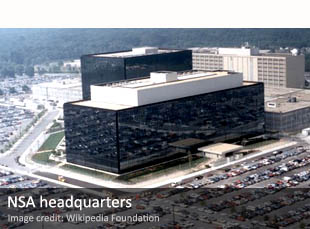
NSA headquartersBy IAN ALLEN | intelNews.org |
►►NSA whistleblower sues over property seized in leak raid. Diane Roark, a former staffer for the US House of Representatives Permanent Select Committee on Intelligence, has filed a lawsuit to seek return of computers, electronic devices and papers seized from her home in 2007. Roark, who handled the House’s oversight of the National Security Agency from 1997 to 2002, was suspected by the FBI of being a source for The New York Times‘ disclosure of the NSA’s warrantless wiretapping program STELLAR WIND, which she denies.
►►Lawsuit forces US agency to disclose CIA files. The US Veterans Administration has been ordered to disclose documents relating to the CIA’s Cold War-era experimentation on American soldiers. Beginning in the 1950s, the military and CIA utilized former Nazi scientists to test the effects of 400 types of drugs and chemicals, including mescaline, LSD, amphetamines, mustard gas, and nerve agents, on US soldiers, according to a lawsuit brought by the Vietnam Veterans of America and individual soldiers. Under the lawsuit, a judge in California has ruled the VA must hand over documents pertaining to the use of at least 7,800 service personnel as “human guinea pigs” by the US Army and the CIA.
►►Syrian spy tried to infiltrate German intelligence. A suspected Syrian spy who was arrested in Germany earlier this year and has now been charged with espionage, once tried to infiltrate the country’s intelligence services, according to German officials. The man, identified only as Akram O., was employed by Syria’s embassy in Berlin, and tasked with keeping tabs on Syrian opposition activists living in Germany. His application to work for the German federal government was made “at the behest of his intelligence agency handlers”, according to prosecutors. His application was turned down, however. The Syrian national applied for German citizenship in 2009, which was also denied.

Situation Report: Samsung accuses LG of corporate espionage

Samsung smartphones on display in KoreaBy TIMOTHY W. COLEMAN | intelNews.org |
Most technology companies spar with rivals over patent portfolio infringement, pricing arrangements, bundling of products and services with partners, and other trade practices. More recently, technology companies have been waging a war for talent and human capital. But in Korea, a dispute between Samsung and LG Electronics has been taken to a new level with Samsung publicly accusing LG of conducting corporate espionage. According to VenterBeat, Samsung has leveled corporate espionage charges against an employee at LG regarding particularly sensitive display technology that is used in smartphones and other mobile devices. This technology is of great value to Samsung, as its displays are used in nearly 98 percent of mobile phones around the globe. The critical display technology, active-matrix organic light-emitting diode, or MOLED, technology, is an extremely thin-film, which is a lynchpin technology for televisions and mobile devices. This technology replaced previously existing display technologies because it required significantly less power and therefore less battery drain and it also increased response rates to mere milliseconds. Such technology was perfectly positioned to help spur on the proliferation of the mobile and smartphone boom. Read more of this post

News you may have missed #766 (Arab world edition)

David SheddBy IAN ALLEN | intelNews.org |
►►Yemen busts alleged Iranian spy ring. Yemeni president Abd-Rabbu Mansour Hadi called on Tehran to stay out of Yemen’s internal affairs last week, after security officials in Sana’a, Yemen’s capital, announced they had uncovered an Iranian spy ring there. Yemen’s government-run SABA news agency said the spy cell, which was allegedly led by a former commander of Iran’s Islamic Revolutionary Guard corps, had operated in Yemen as well as in the Horn of Africa,  and that it had kept an operations center in Sana’a. An interior ministry official said all those detained were Yemenis.
►►CIA sued for killing US citizens in Yemen. Survivors of three Americans killed by targeted drone attacks in Yemen last year have sued top-ranking members of the United States government, alleging they illegally killed the three, including a 16 year-old boy, in violation of international human rights law and the US Constitution. The suit (.pdf), the first of its kind, alleges the United States was not engaged in an armed conflict with or within Yemen, prohibiting the use of lethal force unless “at the time it is applied, lethal force is a last resort to protect against a concrete, specific, and imminent threat of death or serious physical injury”. The case directly challenges the government’s decision to kill Americans without judicial scrutiny.
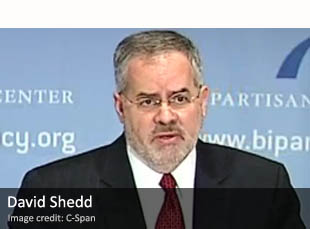
►►US intel official acknowledges missed Arab Spring signs. David Shedd, deputy director of the US Defense Intelligence Agency, the Pentagon’s intelligence arm, said analysts failed to note signs of the unrest across the Middle East and North Africa that exploded into the Arab Spring. Shedd’s comments were posted Thursday by the American Forces Press Service, a Pentagon information wire. They constitute a rare public acknowledgment of the US intelligence failure regarding the turmoil that has redrawn the Middle East’s political landscape, toppling autocratic rulers in Tunisia, Egypt, Yemen and Libya and now engulfing Syria.

News you may have missed #762

Danni YatomBy IAN ALLEN | intelNews.org |
►►Italy postpones court decision on wanted CIA operatives. The Washington Post has published a useful update on Sabrina De Sousa, one of nearly two-dozen CIA operatives who were convicted in Italy in 2007 for the kidnapping four years earlier of Egyptian cleric Hassan Mustafa Osama Nasr. The Americans kidnapped Nasr, known as Abu Omar, from the streets of Milan without the consent of Italian authorities. The Italians, who were themselves carefully monitoring Nasr, responded by convicting all members of the CIA team in absentia, and notifying INTERPOL. But last Friday, the Supreme Court of Cassation in Rome postponed its verdict after a two-day hearing aimed at deciding whether to uphold or overturn the Americans’ convictions.
►►Ex-Mossad chief urges Israel to prepare for military action in Syria. In an interview with British news network Sky News, former Mossad Chief Danni Yatom said last week that Israel must be prepared for the possibility of military attacks on Syria, which may deteriorate into war.  He said his warning stems from the fear that Syria’s hundreds of tons of chemical weapons will fall into the hands of terrorists. “We would have to pre-empt in order to prevent it. We need to be prepared to launch even military attacks […] and military attacks mean maybe a deterioration to war”, said the former Mossad Director.
►►British spy agencies failed to predict Arab Spring. The Intelligence and Security Committee of the British Houses of Parliament has said in its annual report that British spy agencies had been surprised by the spread of unrest during the Arab Spring and failed to predict the dramatic uprisings that swept the region. The report also noted that the Arab Spring had exposed Britain’s decision to scale back intelligence assets in much of the Arab world, in favor of monitoring Iran and al-Qaeda. We at intelNews wrote about this in 2011.

News you may have missed #761

Robert de La RochefoucauldBy TIMOTHY W. COLEMAN | intelNews.org |
►►US aircraft company owner charged with supplying Venezuelan military. Kirk Drellich, owner and president of SkyHigh Accessories in Florida, has pleaded not guilty to charges that he illegally supplied Venezuelan military contacts with pressure switches and cooling turbines, as well as other airplane parts. Court documents indicate that the aircraft parts were to be used for Venezuelan F-16 jets, attack helicopters and other military crafts. Prosecutors in Florida have filed charges (.pdf), stemming from violations of the Arms Export Control Act, on three other individuals who are supposedly involved in the conspiracy to export arms to Venezuela. Other defendants in the case include Alberto Pichardo and Freddy Arguelles, both former members of Venezuela’s Air Force, as well as Victor Brown, a local businessman.
►►Trial delayed again in Delisle espionage case. As previously reported on this blog, the espionage case against Sub-Lt. Jeffrey Paul Delisle, the Canadian navy intelligence officer accused of spying for Russia, has again been delayed. The attorney for Delisle requested an adjournment based on the governments disclosure of new documents and evidence in the case. The adjournment is expected to last until July 17.
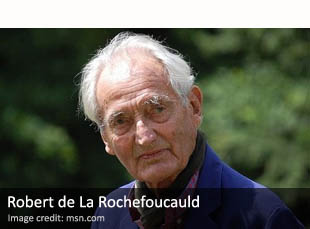
►►Legendary WWII spy de La Rochefoucauld dies. Robert de La Rochefoucauld, a French national who became a legendary British spy, helping direct and organize the Free French forces in England and underground movements in France during World War II, has died of natural causes at the age of 88. De La Rochefoucauld’s exploits as a spy have all the makings of a movie. As a little boy, he met Adolf Hitler, and as a spy he twice escaped execution by the Nazi’s. He was a knight in the French Legion of Honor, received the Medal of Resistance from France, was widely herald for his exceptional service by the British and he is believed to have been the last remaining French member of Winston Churchill’s Special Operations Executive.

News you may have missed #760

Aleksei DressenBy TIMOTHY W. COLEMAN | intelNews.org |
►►Turkey breaks up major military espionage ring. Turkish newspaper Hurriyet Daily News reported on July 9 that 51 active-duty soldiers from over twelve cities have been implicated in a major espionage ring involving Turkey’s military. Following a series of raids on July 7, at least 40 people were detained and four others were taken into custody. The raids were in response to an investigation launched in 2009, regarding warcraft radar locations in Turkey, illegal surveillance, as well as wiretapping of military officers.
►►Taiwan navy misplaces classified naval charts. During the decommissioning last June of Taiwan’s Hai Ou missile boats, classified naval charts were discovered to have gone missing during a final inventory check. The Taipei Times reports that the individual officer tasked with the responsibility of safeguarding the charts in question claimed to have burned one by accident, but was unable to account for the second chart. The classified charts contained information on Taiwanese naval activity including deployments in the Taiwan Strait.
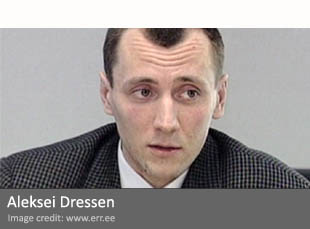
►►Estonia security official and wife jailed for treason. Aleksei Dressen, a former security official at Estonia’s Interior Ministry, and his wife, Viktoria, were both convicted of treason, receiving 16 years and 6 years respectively. During a closed trial the proceedings did not provide direct evidence as to whom Dressen and his wife were working for. However, reports indicate that Dressen’s handlers were most likely representatives of Russia’s FSB.  The prosecution alleged that Dressen brought classified state secrets from the Estonian Interior Ministry to the airport in an envelope and then passed them along to his wife, who acted as a courier to Russian handlers. Heili Sepp, the Estonian prosecutor, indicated that the sentencing of the Dressens was part of a plea bargain effort, noting: “To our knowledge, this is the harshest punishment meted out in plea bargain proceedings in Estonia”.

News you may have missed #749

Mohammed DahabiBy IAN ALLEN | intelNews.org |
►►Why did CIA Director secretly visit Czech Republic? The CIA Director, David Petraeus, is known to make frequent secret trips to places like Pakistan, Afghanistan, or Iraq. But why was his recent trip to the Czech Republic kept secret? Photographs published in a Czech daily paper showed the CIA director and his team boarding a military plane at Prague’s Ruzyne Airport, headed for their next destination, Sofia, Bulgaria. But neither the US Embassy in Prague, nor the CIA will respond to questions by Czech media about Petraeus’ secretive visit to the former Soviet Bloc nation.
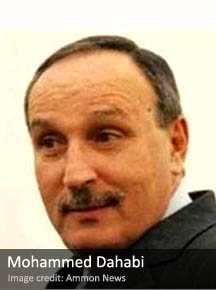
►►Jordan’s ex-spy chief on trial for corruption. Jordan’s former spy chief, General , who headed the General Intelligence Department (GID) from 2005 to 2009, has gone on trial in Amman on charges of corruption, which carry a maximum sentence of life imprisonment. In a case highlighting corruption in the country’s vaunted intelligence community, the prosecutor said Dahabi’s wealth had quadrupled during his years in office, reaching almost $40 million by the end of 2011. The money, he said, was held in several foreign currency accounts in a leading domestic bank.
►►CIA still refuses to comment on Predator drone attacks. The Central Intelligence Agency continues to refuse to confirm or deny the covert military use of drones to kill suspected terrorists overseas. This is despite numerous public comments on the CIA’s drone attacks in far-flung locales such as Yemen from various government officials, including former CIA Director Leon Panetta and US President Barack Obama. The development comes as 26 members of Congress asked Obama, in a letter, to consider the consequences of drone killing and to explain the necessity of the program.

News you may have missed #746

Jeffrey Paul DelisleBy IAN ALLEN | intelNews.org |
►►Germany charges alleged Moroccan spy. German Federal prosecutors on Tuesday said the suspect, identified only as Moroccan-German dual national Mohammed B., was spying for Moroccan intelligence on supporters of the POLISARIO Front, which seeks independence for the Western Sahara region. They say he was paid €22,800 for the work in 2011, and then falsified invoices to claim he had done work for Morocco’s state airline to disguise where the money originated. He was arrested in February but released from custody on June 5 after prosecutors say he admitted to the charges.
►►Delisle spy case in Canada adjourned until July 4. The case of Canadian navy intelligence officer Jeffrey Paul Delisle, who is accused of espionage, has been adjourned until next month, because his lawyer, Mike Taylor, says he needs more time to review information about his client. According to Taylor, much of the information he has received so far from the Canadian government has been redacted because of security concerns. Moreover, he said that the “voluminous” amount of information has to be vetted by several justice and intelligence agencies before it can be handed over to him, slowing down the process of moving the case forward.
►►Obama to deny Israeli calls for Pollard’s release. The administration of US President Barack Obama has indicated that it will reject any appeal by senior Israeli political figures to commute the life sentence of convicted Israeli spy Jonathan Pollard. “Our position has not changed and will not change today”, White House spokesman Jay Carney told reporters at his daily briefing last week. “Mr. Pollard was convicted of extremely serious crimes”, he said.

News you may have missed #740

Timo KivimäkiBy IAN ALLEN | intelNews.org |
►►Denmark professor accused of spying challenges court secrecy. Timo Kivimäki, a Finnish humanities professor at the University of Copenhagen, is accused of spying for the Russians and is being tried at the city court in the Danish city of Glostrup behind closed doors, meaning no information about the trial, including the precise charges, can be disseminated. But following demands from both Kivimäki’s lawyer and the Danish media, he has been granted permission to appeal against the decision to hold the trial in secret.
►►Analysis: CIA’s links with Hollywood are longstanding. Some US officials are suggesting that the producers of a new motion picture, which deals with the raid that killed al-Qaeda founder Osama bin Laden, received “extremely close, unprecedented and potentially dangerous collaboration” from the Obama administration, and particularly the US Intelligence Community. In light of this, a well-researched article in The Los Angeles Times reminds readers that the close connection between the movie industry and the US military and intelligence community goes back decades. The US military has been using movies to drive up recruitment since the 1920s; and the CIA these days even posts potential movie story lines on its website.
►►CIA funds helped launch literary journal. The Paris Review has been hailed by Time magazine as the “biggest ‘little magazine’ in history”. At the celebration of its 200th issue this spring, current editors and board members ran down the roster of literary heavyweights it helped launch since its first issue in 1953. Philip Roth, V. S. Naipaul, T.C. Boyle, Edward P. Jones and Rick Moody published their first stories in The Review; Jack Kerouac, Jim Carroll, Jonathan Franzen and Jeffrey Eugenides all had important early stories in its pages. But as American novelist Peter Matthiessen has told interviewers –most recently at Penn State– the journal also began as part of his CIA cover.

News you may have missed #739

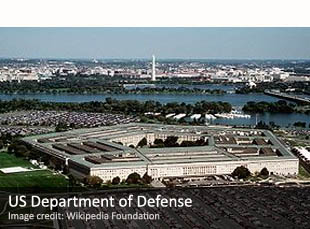
The US Department of DefenseBy IAN ALLEN | intelNews.org |
►►US Supreme Court to consider case on secret wiretapping. The Supreme Court has agreed to consider blocking a constitutional challenge to the government’s secret wiretapping of international phone calls and emails. At issue is whether Americans who have regular dealings with overseas clients and co-workers can sue to challenge the sweep of this surveillance if they have a “reasonable fear” their calls will be monitored. The case, to be heard in the fall, will put a spotlight on a secret surveillance program that won congressional approval in the last year of President George W. Bush’s presidency.
►►Analysis: Why is CIA applauding DoD’s intel grab? Last month, Director of National Intelligence James Clapper and Secretary of Defense Leon Panetta announced the creation of a new US espionage agency: the Defense Clandestine Service, or DCS. The new agency is expected to expand the Pentagon’s espionage personnel by several hundred over the next few years, while reportedly leaving budgets largely unchanged. The news nonetheless surprised some observers in Washington because the move appeared, at least initially, to be a direct challenge to the Central Intelligence Agency, whose National Clandestine Service leads the country’s spy work overseas. Then came a second surprise: former CIA officers and other intelligence experts started applauding. The question is why.
►►FBI forms secretive online surveillance unit. On May 22, CNet’s Declan McCullagh revealed that the FBI had quietly formed a new Domestic Communications Assistance Center (DCAC), tasked with developing new electronic surveillance technologies, including intercepting Internet, wireless, and VoIP communications. According to McCullagh, DCAC’s goal is “to invent technology that will […] more readily eavesdrop on Internet and wireless communications”. Read more of this post

News you may have missed #736

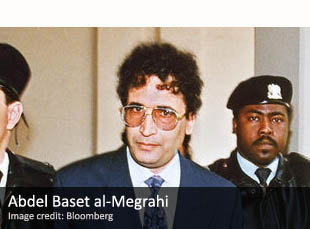
Abdel Baset al-MegrahiBy IAN ALLEN | intelNews.org |
►►Convicted Lockerbie bomber dies. Abdelbaset al-Megrahi, a former Libyan intelligence officer who was the only person ever convicted in the 1988 Lockerbie bombing, died at home in Tripoli Sunday, nearly three years after he was released from a Scottish prison to the outrage of the relatives of the attack’s 270 victims. He was 60. Scotland released Mr. al-Megrahi on Aug. 20, 2009, on compassionate grounds to let him return home to die after he was diagnosed with prostate cancer. Anger over the release was further stoked by subsequent allegations that London had sought his release to preserve business interests in the oil-rich North African nation, strongly denied by the British and Scottish governments.
►►Federal appeals panel to hear CIA leak case. A federal appeals panel in the United States will hear the case of ex-CIA officer Jeffrey Sterling, who has been charged with leaking classified information about Iran’s nuclear program to New York Times reporter James Risen. Prosecutors say Sterling was a key source in Risen’s 2006 book, State of War. They are also challenging the court’s decision to strike two government witnesses and allow disclosure of the identities of covert CIA operatives to Sterling’s lawyers.
►►New study of British Empire’s spies published. British newspaper The Guardian has published a review of William Beaver’s newly published book, Under Every Leaf: How Britain Played The Greater Game From Afghanistan to Africa. Much of the book concerns the creation in the mid-1850s of the British War Office Intelligence Department. According to the review, the book does much to restore the “missing dimension” to Britain’s military-imperial history between 1855 and the creation of her modern intelligence agencies in the early 1900s.

News you may have missed #730

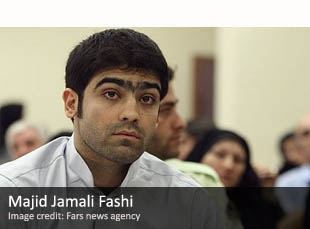
Majid Jamali FashiBy IAN ALLEN | intelNews.org |
►►Iran executes man convicted of killing nuclear physicist. Iran on Tuesday hanged Majid Jamali Fashi, convicted of playing a key role in the 2010 murder of Iranian nuclear scientist Masoud Ali Mohammadi, and of spying for Israel. Mohammadi, a particle physics professor at Tehran University who was killed in a bomb attack outside his home in January 2010.
►►Bahrain sentences man accused of spying for Iran. Bahraini authorities accused the unnamed 47-year-old man of having leaked high-level information on Bahrain’s military, Interior Ministry and US Naval Base. He was allegedly paid more than BD27,000 on behalf of Iran’s Revolutionary Guard by two Iranians who lived in Kuwait. The two Iranians, who worked as diplomats in the Iranian Embassy in Kuwait, were convicted in absentia for selling military, industrial and economic information to Iran between 2002 and last April.
►►NSA declassifies document after publishing it. The National Security Agency last week invoked a rarely-used authority in order to declassify a secret document that was mistakenly posted on the NSA website with all of its classified passages intact. The article (.pdf) is a historical study entitled Maybe You Had to Be There: The SIGINT on Thirteen Soviet Shootdowns of US Reconnaissance Aircraft. It was written by Michael L. Peterson and was originally published in the classified journal Cryptologic Quarterly in 1993.