MI5 arrests Royal Navy petty officer for trying to spy for Russia

Edward DevenneyBy JOSEPH FITSANAKIS | intelNews.org |
An member of the British Royal Navy has been arrested in a counterintelligence sting operation, after trying to sell top-secret government documents to people he believed were Russian operatives. Petty Officer Edward Devenney, who has been in the Royal Navy for over a decade, was arrested earlier this week while meeting with two MI5 officers posing as Russian spies. Originally from Northern Ireland, Devenney, 29, appears to have been motivated by disgruntlement against the Navy, after his planned promotion to commissioned officer was halted due to financial austerity measures imposed on the military by the British government. According to the court indictment, Devenney contacted an unnamed “embassy of a foreign country” in London, offering to provide classified information in exchange for money. It is unknown at this point how exactly MI5, the British government’s foremost counterintelligence organization, became privy to the content of Devenney’s communication with officials at the unidentified embassy. What is known is that, after several messages were exchanged between the parties, Devenney arranged to meet two people he believed were Russian government employees. In reality, the two individuals were MI5 officers, who were able to film the clandestine meeting. Devenney was apparently arrested on the spot, having first announced that he wished to “hurt the Navy” because his promotion to a commissioned officer had been “binned” by the British government. Read more of this post

MI5 official’s diaries reveal tensions between UK, US spy agencies

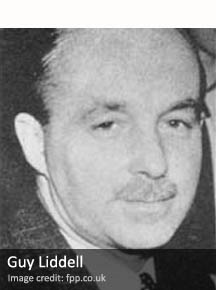
Guy LiddellBy JOSEPH FITSANAKIS | intelNews.org |
Newly declassified personal diaries belonging to a senior British intelligence official reveal tensions between British and American spy agencies in the years immediately following World War II. The National Archives, an executive agency operating under the United Kingdom’s Secretary of State for Justice, released the diaries on Friday. They belong to Guy Maynard Liddell, a longtime British intelligence operative who rose to the post of Deputy Director General of MI5, Britain’s domestic intelligence agency. Liddell meticulously kept a diary during most of the 1940s and 1950s, in which he detailed both personal information and details of his work at MI5. Two volumes of his diaries (from 1939 to 1945, edited by Nigel West) have already been published. Now a third installment has been declassified by the National Archives, containing Liddell’s diary entries from the late 1940s and 1950s. The diaries project what some intelligence historians describe as “a certain friction” between postwar British and American intelligence services. Even though the two countries were largely viewed as allies in the immediate postwar period, their respective intelligence agencies did not always see eye to eye. In one instance, Liddell describes his American colleagues as “utterly incapable […] of seeing anybody’s point of view except their own” and accuses them of being “quite ready to cut off their noses to spite their faces”. He also comes across as skeptical of the then-newly established Central Intelligence Agency, which, he writes, “someday” may be able to produce information that would be “worth disseminating, evaluating, or coordinating”. In 1947, shortly after the CIA’s founding, Liddell wrote with a degree of uncertainty that “in the course of time, [the Agency] may produce something of value”. Further on he relayed the opinion of CIA Deputy Director Edwin Kennedy Wright, who apparently told British intelligence officials that in American intelligence organizations “500 people were employed to do what 50 people would do” in the UK. Read more of this post

News you may have missed #785 (interview edition)

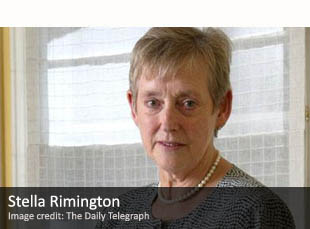
Stella RimingtonBy IAN ALLEN | intelNews.org |
►►Interview with first-ever NSA Compliance Director. John DeLong, the first-ever compliance director at the US National Security Agency, has given an interview to NextGov. In it, he says that “we’re nothing if we lose the confidence of the American people”. He is referring to frequent allegations, by whistleblowers and others, that the Agency is increasingly spying on Americans’ communications. As Compliance Director, DeLong is responsible for ensuring that the NSA abides by US law, which forbids it from intercepting electronic messages exchanged between US citizens or persons.
►►Ex-MI5 boss offers comment on WikiLeaks. Former MI5 Director-General Dame Stella Rimington has criticized “the indiscriminate pouring out into the public domain of streams of leaked documents by Julian Assange and his WikiLeaks organization”. But she also said that the US government should have taken better steps to prevent WikiLeaks from acquiring the information in the first place. Speaking at an international archiving conference in Brisbane, Australia, Dame Stella said that while the WikiLeaks saga could prompt the US government to come up with better databases, it would more likely encourage it to be even more secretive. This, she added, “must be absolutely the opposite effect of what WikiLeaks was seeking”.
►►Interview with NSA whistleblower. Filmmaker Laura Poitras interviews William Binney, a 32-year veteran of the US National Security Agency, who helped set up STELLAR WIND, the NSA’s top-secret domestic spying program, which was put in place after 9/11. The program was so controversial that it nearly caused top Justice Department officials to resign in protest in 2004. Binney, who resigned over STELLAR WIND in 2001, and began speaking out publicly in the last year, explains how the program he created for foreign intelligence gathering was turned inward on America.

Interview with NSA whistleblower

News you may have missed #755

Jeffrey Paul DelisleBy TIMOTHY W. COLEMAN | intelNews.org |
►►MI5 chief says al-Qaeda threatens UK from Arab Spring nations. Brittan’s domestic intelligence agency chief, Jonathan Evans, has stated that al-Qaeda is continuing to gather a foothold in nations that experienced the Arab Spring. In his speech, Evans, who directs the UK’s MI5, warned that al-Qaeda is attempting to reestablish itself in countries that had revolted, and that “a small number of British would-be jihadis [sic] are also making their way to Arab countries to seek training and opportunities for militant activity, as they do in Somalia and Yemen. Some will return to the UK and pose a threat here”. With a suspected 100-200 British born Islamist militants operating in the Middle East and Africa, the MI5 Director General warned that the coming summer Olympics in London made for an attractive target.
►►Russia to conduct airborne surveillance of Canada’s infrastructure. Canada’s National Post newspaper reports that Russian surveillance aircraft will conduct a flyover of Canada’s military and industrial infrastructure in what appears to be an annual Russian air reconnaissance mission. For the past ten years and under the Open Skies treaty, Russia is allowed to conduct flyovers of key Canadian sites. This will be the first flyover since the arrest last January of Jeffrey Paul Delisle (pictured), a Royal Canadian Navy officer, for allegedly spying on Canada on behalf of the Russians.
►►Japanese official who leaked DRPK missile info found dead. A Japanese Foreign Ministry official, who was largely thought to the source of leaked information regarding a Chinese missile technology transfer to North Korea in April, has been found dead. The official, previously under investigation for publicly disclosing national security information, was found hanged in his Chiba prefecture home on June 20. Additional details, including the individual’s name, were not made available, but Japanese government officials did indicate that the death did not appear to be suspicious.

News you may have missed #754

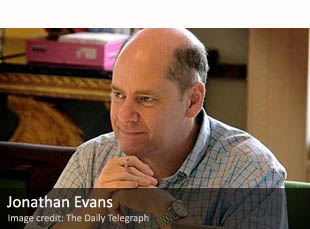
Jonathan EvansBy IAN ALLEN | intelNews.org |
►►New German spy HQ to open a year late. The BND, Germany’s foreign intelligence service, was due to move from its base in Pullach, near Munich, to an enormous newly built center in Berlin, at the end of 2014. But that has now been officially put back by a year. The Berliner Morgenpost newspaper quoted BND president Gerhard Schindler saying he was “regularly losing young new staff”, due to the delay. The uncertainty has meant “they leave our authority and find themselves another employer”, he said.
►►UK spy chief warns of ‘astonishing’ levels of cyberespionage. In a rare public speech, Jonathan Evans, director general of MI5, Britain’s domestic spy service, has said that the West now faces an “astonishing” cyberespionage threat on an “industrial scale” from specific nation states. He said that cyberespionage is now conducted “with industrial-scale processes involving many thousands of people lying behind both state-sponsored cyber espionage and organized cyber crime”. Surely, however, Evans does not mean to imply that the West’s role in cyberespionage is purely defensive?
►►Aussie spy agency lacks resources to vet asylum seekers. An official audit into the Australian Security Intelligence Organisation’s ability to vet asylum seekers for potential security threats, has found that it is struggling with the “sharp increase” in boat arrivals, rudimentary computer systems and 30 per cent fewer staff than needed. The audit report examined 411 cases as a sample of the almost 180,000 security assessments ASIO completes each year.

Did Czechoslovakian spies plan to blackmail British leader?

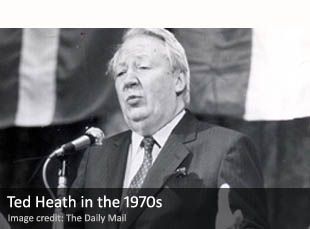
Ted HeathBy JOSEPH FITSANAKIS | intelNews.org |
In 1975, Czechoslovakian intelligence officer Josef Frolík, who had defected to the United States, published a book titled The Frolik Defection: The Memoirs of an Intelligence Agent. Among several revelations in the book was an alleged plot by the ŠtB, Czechoslovakia’s Cold-War-era secret intelligence service, to sexually blackmail British Conservative politician Edward “Ted” Heath. According to Frolík, the ŠtB had concluded that Heath, a lifelong bachelor and Britain’s Prime Minister from 1970 to 1974, was gay. Based on this —highly questionable— belief, Jan Mrázek, an ŠtB officer working out of the Czechoslovakian embassy in London, had allegedly devised a plan in the mid-1960s, which aimed to expose Heath to homosexual blackmail. Frolík claims in his book that Mrázek developed the plot around Heath’s well-known preoccupation with classical music. Specifically, he planned to recruit Czechoslovakian classical organist Jiří Reinberger, who would be instructed to meet the British conservative politician in London and invite him to Prague for a concert. While there, the ŠtB hoped that a romantic affair would ensue, under the watchful eye of Czechoslovakian spies, who would make sure to capture the more intimate moments of the two men on camera. The audiovisual evidence would, the ŠtB believed, convince Heath to spy for Czechoslovakian intelligence. According Frolík, the plan was put to action but was eventually scrapped after MI5, Britain’s counterintelligence agency, warned Heath that a trip to Czechoslovakia would expose him to blackmail by that country’s intelligence service. When Frolík’s book came out, Heath, who had stepped down from his post as Britain’s Prime Minister and leader of the Conservative Party, dismissed the story as a fabrication, and threatened to sue the author. But was Frolík telling the truth? Read more of this post

News you may have missed #733

Stella RimingtonBy IAN ALLEN | intelNews.org |
►►Women in US intelligence seek balance in life. Nada Bakos (photo) was one of many women serving as CIA analysts before 9/11, who then moved to the operations side after the terrorist attacks. She didn’t yet have a family when she accepted her assignment as a targeting officer in Iraq. After a couple of years, as Bakos was deep into her career on the operations side, she decided she wanted to start a family. That was a problem. At least 160 other women feel her pain. Women from the CIA, the National Security Agency, Naval Office of Intelligence and dozens of other agencies met last week at the Women in National Security conference in McLean, Virginia, to try and find a better way.
►►Interview with ex-MI5 Director Stella Rimington. Australian Radio hosts an interesting audio interview with Dame Stella Rimington, who headed MI5, Britain’s domestic intelligence agency, from 1992 to 1995. She speaks about the experience of being the first director of MI5 to be publicly identified and the sometimes sinister invasions to her privacy as a result. Moreover, she says the only thing that surprised her about the Leveson inquiry into phone hacking and the conduct of the British media is that nobody recognized it was going on before.
►►US government think-tank warns against strikes on Iran. The RAND Corporation, a think tank which advises the United States Department of Defense, warned last week Tuesday against an Israeli or American attack on Iran’s nuclear reactors, and recommended that the administration of Barack Obama try to “quietly influence the internal Israeli discussion over the use of  military force”. In 2009, before Stuxnet, a RAND report had argued that the US may be better off focusing on cyber-defense instead of resorting to cyberattacks.

News you may have missed #728 (foiled AQAP bomb plot edition)

YemenBy IAN ALLEN | intelNews.org |
►►UK had central role in foiled bomb operation. The Reuters news agency has quoted unnamed “counterterrorism sources” as saying that the undercover informant in the plot linked to Al Qaeda in the Arabian Peninsula (AQAP) was a British citizen, possibly of Saudi origin. The informant was allegedly working in cooperation with Britain’s two principal spy agencies, MI5 and MI6. The information appears to have leaked even though “British authorities put heavy pressure on theUS government not to discloseBritain’s role in the investigation”, said Reuters.
►►MI5 fears al-Qaeda to expose double agent’s identity. MI5 fears that militant Islamists will attempt to exact revenge on the British spy who penetrated al-Qaeda in theArabian Peninsula, by publishing his photograph on the internet –a move designed to incite extremists to hunt him down. The agent, a British passport holder of Saudi heritage, volunteered to take part in a suicide mission but instead escaped with an underwear bomb designed to blow up aUS airliner. Sources have described the British spy as “gold dust”, adding that he was one of just a handful of agents in the last ten years to have successfully penetrated one of the groups aligned to al-Qaeda’s concept of global Jihad.
►►Analysis: Foiled al-Qaeda plot reveals new world of US spying. There are lots of takes on the meaning of the foiled AQAP plot. This CNN analysis claims that the successful operation shows that “efforts to bolster human intelligence capability and work much more closely with foreign intelligence counterparts are paying off” in several ways. It also suggests that the operation “operation was the “poster child” for the influence of a greatly enhanced analytic community”.

News you may have missed #699

Hilda MurrellBy IAN ALLEN | intelNews.org |
►►Diplomatic war over the arrest of Gaddafi’s spy chief. The Libyan authorities have confirmed the arrest in Mauritania of former Libyan leader Muammar Gaddafi’s intelligence chief, Abdullah al-Senussi, who was reportedly detained at Nouakchott airport. Senussi, 63, was Gaddafi’s brother-in-law, and has been described as one of his most trusted aides. But his arrest has kicked off an international row about which of his alleged crimes —ranging from terrorism to war crimes and mass murder— should take precedence in the pursuit of justice. The Mauritanians are now saying that they are willing to extradite al-Senussi, but this remains to be seen in practice.
►►Azerbaijan arrests 22 in alleged Iran spy plot. Azerbaijan has arrested 22 of its own citizens, on suspicion of spying for Iran. Weapons and ammunition were seized, authorities say, accusing the group of links to Iran’s Islamic Revolutionary Guard Corps. Their alleged targets included the US and Israeli embassies as well as Western-linked companies. Surveillance by the Azeri security services is reported to have helped foil the alleged Iranian-sponsored plot.
►►Was there MI5 link to murder of UK nuclear activist? One of Britain’s leading human rights lawyers, Michael Mansfield QC, has demanded a fresh police inquiry to establish what the British intelligence services knew about the murder of a prominent anti-nuclear campaigner. The lawyer said new evidence meant that an independent police force should be appointed to examine enduring concerns and inconsistencies relating to the death of Hilda Murrell, in March 1984.

News you may have missed #686

Folkert Arie van KoutrikBy IAN ALLEN| intelNews.org |
►►WikiLeaks to publish 5 million StratFor emails. In its latest high-profile data dump, WikiLeaks is to reveal five million internal and external emails from StratFor today. In a press release late Sunday, Wikileaks said the emails “show StratFor’s web of informers, pay-off structure, payment-laundering techniques and psychological methods”, and reveal “how StratFor has recruited a global network of informants who are paid via Swiss banks accounts and pre-paid credit cards. Stratfor has a mix of covert and overt informants, which includes government employees, embassy staff and journalists around the world”.
►►Analysis: Blurred line between espionage and truth under Obama. “There is plenty of authorized leaking going on, but this particular boat leaks from the top. Leaks from the decks below, especially ones that might embarrass the administration, have been dealt with very differently […]. And it’s worth pointing out that the administration’s emphasis on secrecy comes and goes depending on the news. Reporters were immediately and endlessly briefed on the “secret” operation that successfully found and killed Osama bin Laden. And the drone program in Pakistan and Afghanistan comes to light in a very organized and systematic way every time there is a successful mission”.
►►Nazis had spy in MI5 but failed to use him. Dutchman Folkert Arie van Koutrik was the first German agent to ever infiltrate MI5 when he was employed by them in 1940, just a month before Anthony Blunt, who was later exposed as a Soviet spy. Koutrik had already worked for Abwehr, the German secret service, before the war as a double agent with MI6 in Europe and exposed some of the UK’s top agents. But, incredibly, after he moved to the UK and joined MI5 all contact appears to have broken off.

Ex-KGB spy Litvinenko was working for MI6 when he died

Alexander LitvinenkoBy JOSEPH FITSANAKIS | intelNews.org |
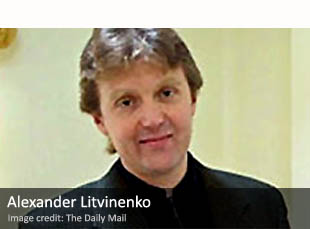
Confidential documents leaked to the British press show that a leading medical examiner wants to reinspect the 2006 death of a former Soviet intelligence officer, in light of new revelations. Alexander Litvinenko was an employee of the Soviet KGB and its successor organization, the FSB, who in 2000 defected with his family to the United Kingdom. He soon became known as an increasingly vocal critic of the administration of Russian President Vladimir Putin. In 2006, Litvinenko came down with radioactive poisoning soon after meeting a former colleague, Andrey Lugovoy, in a London restaurant. The latter is believed by British authorities to have assassinated Litvinenko “with the backing of the Russian state”. Although much of the case remains shrouded in mystery, an important new clue was added to the equation in October, when Litvinenko’s widow publicly admitted that her husband had been a paid employee of British intelligence services MI5 and MI6. Marina Litvinenko told British tabloid newspaper The Mail on Sunday that Alexander had advised both agencies on “combat[ing] Russian organized crime in Europe”. She had previously denied rumors that her husband had been working for British intelligence when he was killed —ostensibly by the Russian government. The revelation appears to have prompted a British coroner to request that the medical investigation into Litvinenko’s death be reopened. Documents leaked to The Mail on Sunday appear to show that Andrew Reid, a coroner at St Pankras Hospital in London, has formally requested that both MI5 and MI6 release all of their internal files on Litvinenko, in the context of a new investigation. Read more of this post

News you may have missed #665

Matthew M. AidBy IAN ALLEN | intelNews.org |
►►Joseph Fitsanakis interviewed on ABC Radio National. IntelNews‘ own Dr Joseph Fitsanakis was interviewed on Friday by reporter Suzanne Hill, for ABC Radio National’s flagship evening news program ‘PM‘. In the interview, which was about the assassination of Iranian nuclear scientist Mostafa Ahmadi-Roshan, Fitsanakis points the finger at the Mossad, and explains why he doesn’t believe the United States had anything to do with the killing. You can listen to the interview here. The transcript is here.
►►India releases diplomat jailed for spying. Last April, Madhuri Gupta, second secretary at the Indian high commission in Islamabad, Pakistan, was arrested for working for Pakistan’s ISI spy agency. She apparently had a “relationship of personal affection” with an aide of her Pakistani handler. On Tuesday, she was granted bail by an Indian court, after 21 months in prison.
►►Matthew Aid interviewed about his new book. Matthew M. Aid, author of The Secret Sentry, has written a new book, Intel Wars: The Secret History of the Fight Against Terror. You can listen to an extensive interview he gave on January 11 on NPR’s Fresh Air, in which Aid outlined his view that “overlapping jurisdictions, bureaucratic policies and a glut of data have crippled the intelligence community in its war against would-be terrorists”.
►►British spies to be cleared on torture allegations. The British government, including Scotland Yard and the Crown Prosecution Service, has just finished a four-year inquiry into the country’s security and intelligence services, sparked by allegations by terrorist suspects released from Guantanamo Bay, that they were severely tortured. The results have not yet been announced. But British media report that, according to information from trusted sources, the inquiry has concluded that (…drumroll…) there is no evidence that officers from either MI5 or MI6 were aware of the mistreatment of prisoners.

News you may have missed #662: UK edition

Edward VIII and Wallis Simpson with Adolf HitlerBy IAN ALLEN | intelNews.org |
►►Hacked StratFor info exposes thousands of intel officials. Customer user data obtained from StratFor by Anonymous last month includes the private details of 221 British military officials and 242 NATO staff. Civil servants working at the heart of the UK government —including several in the Cabinet Office as well as advisers to the Joint Intelligence Organisation, which acts as the British Prime Minister’s eyes and ears on sensitive information— have also been exposed.
►►Book claims MI5 tapped phones of King Edward. According to a new biography of Tommy Robertson, who pioneered Britain’s wartime counterintelligence operations, MI5 agents tapped the phones of King Edward VIII and his brother the Duke of York, at the height of the ‘abdication crisis’. Edward VIII was infatuated with –and, in 1936, gave up his throne to marry– American divorcee and socialite Wallis Simpson, who was suspected by many in the British government of having Nazi sympathies.
►►UK spy watchdog wants to stop court disclosure of state secrets. The parliamentary watchdog for Britain’s spies, the Intelligence and Security Committee (ISC), is lobbying the government to introduce sweeping curbs that could prevent UK courts from examining intelligence material. The committee claims that its proposed new powers would ensure that intelligence obtained from foreign agencies, such as the CIA, is never publicly disclosed. This proposal clearly goes back the case of Binyam Mohamed; he was detained in Pakistan, where he was questioned by MI5, and eventually ended up in Guantánamo Bay, where he says he was tortured. In late 2009, British courts clashed with David Miliband, the then foreign secretary, over the publication of a summary of US intelligence material relating to Mohamed.

News you may have missed #660

Margaret ThatcherBy IAN ALLEN | intelNews.org |
►►Taiwan President accused of spying on political opponents. Taiwan’s opposition challenger for the presidency, Tsai Ing-wen, has accused intelligence services under the control of incumbent President Ma Ying-jeou of tracking her campaign events for political advantage. The allegations – unproven and denied by Ma – conjure up memories of Taiwan’s one-party past when Ma’s party, the Nationalists, used their total control of the state apparatus to persecute opponents.
►►Analysis: Has Israeli-Australian spy relationship been restored? Intelligence sharing between Israel and Australia was halted this time last year, when a Mossad hit squad with forged Australian passports assassinated senior Hamas official Mahmoud al-Mabhouh in in Dubai. But Australian newspaper The Age reports that “the flow of top secret intelligence between the two countries has now been restored”, in a move apparently initiated by the Australian side.
►►Thatcher threatened to ban BBC program on MI5 and MI6. The Conservative government of British Prime Minister Margaret Thatcher threatened to “veto” a BBC investigative program about British intelligence services MI5 and MI6, because it would reveal details about how they operated and question their public accountability. In a letter marked “top secret and personal”, cabinet secretary Sir Robert Armstrong, recommended that Margaret Thatcher consider invoking the rarely used power, saying that “the government has the power to ban any program”. Thatcher wrote on the note: “I would be prepared to use the veto”.

British Nazi was in fact MI5 double spy, new book reveals

Arthur OwensBy JOSEPH FITSANAKIS | intelNews.org |
A Welsh nationalist, whose aversion to British rule led him to spy for Nazi Germany during World War II, was in fact a double spy for Britain, and was instrumental in helping he Allies win the war, a new book reveals. The book, Snow: The Double Life of a World War II Spy, by Madoc Roberts and Nigel West (At Her Majesty’s Secret Service, A Matter of Trust, etc), centers on the life of Arthur Owens, who was recruited by the Abwehr, Germany’s military intelligence, in 1935, during a business trip to the Continent. Given the operational codename JOHNNY O’BRIEN by the Germans, he quickly began providing Berlin with inside information on Britain’s military buildup in the run-up to the War. But, according to Roberts and West, who base their account on declassified government documents, British counterintelligence agency MI5 became aware of Owens’ espionage activities and eventually recruited him as a double agent for the Crown. According to the book, Owens, who was given the codename SNOW by his British masters, became one of the human intelligence cornerstones of MI5’s XX (Double-Cross) System. Consisting of a close-knit group of deception specialists, XX is known for a series of outrageous —and often highly successful— covert operations during World War II, including Operation FORTITUDE, a plan to deceive the Germans about the location of the invasion of Europe by the Western Allies. The authors claim that agent SNOW’s activities successfully lured a large number of Nazi agents into the arms of MI5, thus eventually paving the way for some of MI5’s greatest wartime counterintelligence successes. In fact, it is believed that Owens’ pro-Nazi activities were so convincing, and his operational cover so deeply buried within the XX System, that in 1941 his MI5 handlers recommended that he be interned in a British prison. But the book alleges that, while in prison in Dartmoor, England, SNOW continued his intelligence collection for the Crown and kept feeding his handlers with information extracted from the prison’s German inmates. Read more of this post