News you may have missed #651
December 22, 2011 Leave a comment
 By IAN ALLEN | intelNews.org |
►►Israel defense minister forbids spy official’s lecture. Israel’s Defense Minister Ehud Barak has refused to allow the head of research for Military Intelligence, Brigadier General Itai Baron, to lecture at the annual conference of Israel’s ambassadors unless the lecture is deemed ‘unclassified’. The conference deals with diplomatic and security issues and public affairs, and the lectures are given by senior Israeli government and military officials.
►►CIA agrees to look into OSINT FOIA request. Open Source Works, which is the CIA’s in-house open source analysis component, is devoted to intelligence analysis of unclassified, open source information. Oddly enough, the directive that established Open Source Works is classified. But in an abrupt reversal, the CIA said that it will process a Freedom of Information Act request by intelligence historian Jeffrey Richelson for documents pertaining to Open Source Works.
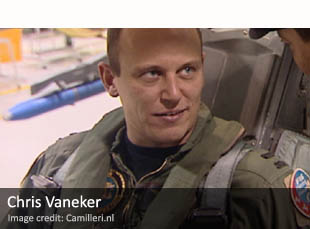
►►Dutch former pilot convicted of espionage. A court in The Hague has sentenced former F-16 pilot Chris Vaneker to five years in jail after finding him guilty of selling state secrets to a Russian diplomat. Vaneker wanted half-a-million euros for the information he was trying to sell to the military attaché at the Russian embassy in The Hague. The pilot and the Russian diplomat were arrested in March.













 intelNews.org
Turkey expelled Dutch spy posing as diplomat, says newspaper
January 17, 2012 by Joseph Fitsanakis 2 Comments
The government of Turkey secretly deported a Dutch intelligence officer posing as a diplomat, according to a leading Dutch newspaper. According to Amsterdam-based De Volkskrant, the unnamed Dutch spy held a diplomatic post at the embassy of the Netherlands in Turkish capital Ankara. In reality, however, he was an intelligence officer in the General Intelligence and Security Service (AIVD), Holland’s domestic intelligence agency. He was quietly expelled last year, says the paper, and is currently serving at another Dutch embassy in the Middle East. De Volkskrant notes that the reason why the Turkish government decided to expel the AIVD officer remains unclear. The paper quotes one unnamed member of the Dutch Ministry of Foreign Affairs who, when questioned about the expulsion, said simply: “sorry but that’s a no go zone […]; I love my career and my family”. However, the article hints that the intelligence spat may have been sparked by differences between Ankara and Amsterdam over Turkey’s Kurdish minority and its nationalist organizations, including the Kurdistan Workers Party (PKK). Founded in the 1970s, the PKK leads Kurdish secessionist aspirations for a Kurdish homeland incorporating parts of Turkey’s far-eastern Anatolia region, as well as parts of Iraq and Syria. According to De Volkskrant, in 2006 the AIVD stationed for the first time a liaison officer at the Dutch embassy in Ankara, whose mission was to collaborate with Turkey’s MİT intelligence service in collecting intelligence on Kurdish secessionist groups. However, the collaboration appears to have turned sour after Turkey accused the Dutch government of allowing many Kurdish activists, which it accuses of inciting terrorism, to claim political asylum in Holland. Moreover, Ankara has accused Dutch authorities of turning a blind eye to PKK recruiting and fundraising operations in Holland, organized by the sizeable Kurdish expatriate community in the country. Read more of this post
Filed under Expert news and commentary on intelligence, espionage, spies and spying Tagged with AIVD (Netherlands), diplomacy, diplomatic expulsions, Dutch embassy in Turkey, Netherlands, News, PKK, Turkey