News you may have missed #730

Majid Jamali FashiBy IAN ALLEN | intelNews.org |
►►Iran executes man convicted of killing nuclear physicist. Iran on Tuesday hanged Majid Jamali Fashi, convicted of playing a key role in the 2010 murder of Iranian nuclear scientist Masoud Ali Mohammadi, and of spying for Israel. Mohammadi, a particle physics professor at Tehran University who was killed in a bomb attack outside his home in January 2010.
►►Bahrain sentences man accused of spying for Iran. Bahraini authorities accused the unnamed 47-year-old man of having leaked high-level information on Bahrain’s military, Interior Ministry and US Naval Base. He was allegedly paid more than BD27,000 on behalf of Iran’s Revolutionary Guard by two Iranians who lived in Kuwait. The two Iranians, who worked as diplomats in the Iranian Embassy in Kuwait, were convicted in absentia for selling military, industrial and economic information to Iran between 2002 and last April.
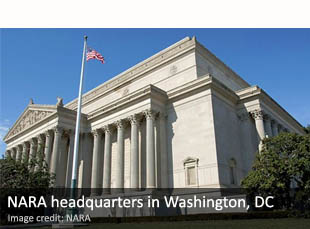
►►NSA declassifies document after publishing it. The National Security Agency last week invoked a rarely-used authority in order to declassify a secret document that was mistakenly posted on the NSA website with all of its classified passages intact. The article (.pdf) is a historical study entitled Maybe You Had to Be There: The SIGINT on Thirteen Soviet Shootdowns of US Reconnaissance Aircraft. It was written by Michael L. Peterson and was originally published in the classified journal Cryptologic Quarterly in 1993.

News you may have missed #729 (intel blunder edition)

Alleged Venezuelan 'spy crossword'By IAN ALLEN | intelNews.org |
►►US drones ‘incidentally’ spy on Americans. A leaked US Air Force document stipulates that a drone that happens to capture surveillance images of Americans may store them for a period of 90 days. The paper appears to justify spying on citizens, as long as it is “incidental”. The document accepts that the Air Force may not record information non-consensually; however it does state: “collected imagery may incidentally include US persons or private property without consent”. The report, dated April 23 was discovered by Steven Aftergood of the Federation of American Scientists and has been put online.
►►Indian intel blunder sparks anger in Pakistan. India’s Research and Analysis Wing (RAW) intelligence agency sparked outrage in Pakistan and self-deprecatory jokes in India itself last week, after it listed ordinary Pakistani shopkeepers as terrorists on a mission to attack some of India’s landmark institutions. RAW, which is considered India’s premier intelligence agency, issued an advisory to state governments in which it said that five trained militants from Pakistan’s banned Lashkar-e-Taiba group had sneaked into India with fake identities to attack a nuclear facility, oil refinery, seaport and defense academy. Within hours after photographs of the five men were released, a Pakistani television channel reported that two of the three men on the list were shopkeepers and one was a guard, all living in Lahore, and that none of them had ever left Pakistan.
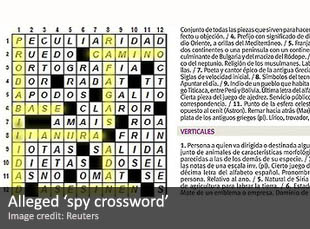
►►Venezuelan spies face criticism over ‘crossword puzzle’ plot. Venezuelan government critics, and even some supporters, are ridiculing a Venezuelan state TV host’s allegation that a newspaper crossword puzzle may have had a hidden call for a plot to kill President Hugo Chavez’s elder brother. Intelligence agents questioned Neptali Segovia, the author of the puzzle, after state TV presenter Miguel Perez Pirela pointed out that Wednesday’s crossword contained the word “ASESINEN”, or kill, intersecting with the name of Chavez’s brother, “ADAN”. He noted they were below the word “RAFAGAS”, meaning either gusts of wind or bursts of gunfire.

News you may have missed #728 (foiled AQAP bomb plot edition)

YemenBy IAN ALLEN | intelNews.org |
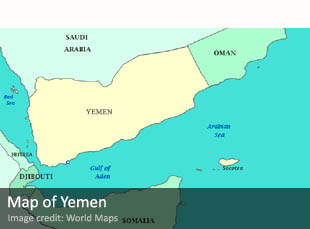
►►UK had central role in foiled bomb operation. The Reuters news agency has quoted unnamed “counterterrorism sources” as saying that the undercover informant in the plot linked to Al Qaeda in the Arabian Peninsula (AQAP) was a British citizen, possibly of Saudi origin. The informant was allegedly working in cooperation with Britain’s two principal spy agencies, MI5 and MI6. The information appears to have leaked even though “British authorities put heavy pressure on theUS government not to discloseBritain’s role in the investigation”, said Reuters.
►►MI5 fears al-Qaeda to expose double agent’s identity. MI5 fears that militant Islamists will attempt to exact revenge on the British spy who penetrated al-Qaeda in theArabian Peninsula, by publishing his photograph on the internet –a move designed to incite extremists to hunt him down. The agent, a British passport holder of Saudi heritage, volunteered to take part in a suicide mission but instead escaped with an underwear bomb designed to blow up aUS airliner. Sources have described the British spy as “gold dust”, adding that he was one of just a handful of agents in the last ten years to have successfully penetrated one of the groups aligned to al-Qaeda’s concept of global Jihad.
►►Analysis: Foiled al-Qaeda plot reveals new world of US spying. There are lots of takes on the meaning of the foiled AQAP plot. This CNN analysis claims that the successful operation shows that “efforts to bolster human intelligence capability and work much more closely with foreign intelligence counterparts are paying off” in several ways. It also suggests that the operation “operation was the “poster child” for the influence of a greatly enhanced analytic community”.

News you may have missed #727

Jeffrey Paul DelisleBy IAN ALLEN | intelNews.org |
►►US government-authorized wiretaps increased in 2011. The US Justice Department sought 1,745 secret wiretapping warrants in 2011, an increase of 239 over 2010, according to correspondence sent to Congressional leaders and oversight committees. The secret warrants are governed under the Foreign Intelligence Surveillance Act (FISA) and are used in terrorist and espionage investigations by the FBI. The letter, dated April 30, 2012, also notes that the FBI issued 16,511 National Security Letters (NSLs) to obtain certain records and information in investigations. It further asserts that the requests were for investigations relating to 7,201 different US persons. The number of NSLs declined dramatically from 2010 when the FBI had sought 24,287.
►►Australia axes spy agency funding. Large budget cuts by the Australian Labour government, which is trying to engineer a federal budget surplus, are expected to affect funding for the country’s intelligence agencies. The six agencies of the Australian intelligence community have been given a collective budget of $81 million over four years, a figure that is $20.4 million lower than previous budgets. The government said that savings will be “redirected to support other national intelligence priorities”.
►►Canada spy case adjourned until June. The case of Jeffrey Delisle, a Halifax naval intelligence officer accused of espionage, has been adjourned until next month because his lawyer has not yet received all of the files in the case. Delisle is charged with communicating information to a foreign entity —probably Russia— that could harm national interests. Until 2010, Delisle worked for both Canada’s Chief of Defence Intelligence and at the Strategic Joint Staff, which oversees virtually every major aspect of the military’s domestic and international plans and operations.

News you may have missed #726

Barbara Annette RobbinsBy IAN ALLEN | intelNews.org |
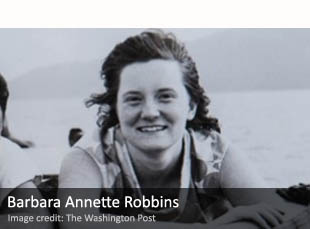
►►Portrait of first female CIA officer to die in line of duty. In 1965, a 21-year-old American woman, Barbara Annette Robbins (photo), was among the victims of a car bombing at the US Embassy in Saigon, South Vietnam. Washington said she was a diplomat. But, at a ceremony last year, the CIA admitted she was an employee of the Agency. This makes her the first woman at the male-dominated CIA killed in the line of duty. She is also the youngest CIA employee ever killed. And she appears to be the first American woman to die in the Vietnam War. The Washington Post has an interesting article about her short life and career.
►►US Jewish leader says release of Israeli spy Pollard ‘inevitable’. The release of Jonathan Pollard, who is serving a life sentence in a US prison for spying on the US for Israel, is “inevitable” and could take place shortly on “technical grounds”, according to Jack Rosen, a prominent Jewish leader and supporter of US President Barack Obama. A New York City real estate executive who hosted Obama at his Upper East Side home for a Democratic Party fundraiser last November, Rosen said that “there are some technical reasons, I’m told, why [Pollard] will be released. I think there’s an inevitability to that happening”.
►►Senior reshuffle at South Korean spy agency. South Korean President Lee Myung-bak reshuffled two top posts at South Korea’s main intelligence agency Monday in a shake-up that also affected five other vice-ministerial posts. Nam Joo-hong, a former well-known security scholar who has so far served as ambassador to Canada, was named the first deputy chief of the National Intelligence Service, while Cha Moon-hee, a veteran intelligence official, was tapped as the agency’s second deputy chief. The spy agency’s first and second deputy chiefs are in charge of its overseas and domestic operations, respectively.

Would be al-Qaeda bomber was Saudi double agent

YemenBy JOSEPH FITSANAKIS | intelNews.org |
The man tasked by al-Qaeda’s Yemeni branch to blow up an airliner bound for the United States last month, was a mole who had been recruited by Saudi intelligence. IntelNews understands that the double agent is a Saudi citizen who volunteered to act as an informant for Saudi authorities. The latter eventually tasked him with traveling to Yemen, joining al-Qaeda in the Arabian Peninsula (AQAP), and convincing its leaders that he was willing to carry out a suicide mission against Western targets. It is not known at this point whether the Saudis kept the United States Central Intelligence Agency in the loop from the moment the mole was sent to Yemen to join AQAP. What is known is that the man did indeed manage to penetrate AQAP and was eventually entrusted with attacking a civilian airliner with a custom-built bomb designed to fit seamlessly around his scrotum. However, instead of carrying out the suicide mission as agreed, the man left Yemen for Saudi Arabia and delivered both himself and the bomb to Saudi intelligence. The Saudis eventually notified the CIA of the foiled plot, before forwarding the deactivated explosive device to the Federal Bureau of Investigation, which is now studying it. Thus, initial media reports claiming that the CIA had foiled the attack appear somewhat stretched at this point, in light of the critical role of the Saudi mole inside AQAP. Read more of this post

News you may have missed #725 (al-Qaeda edition)

Fahd al-QusoBy IAN ALLEN | intelNews.org |
►►Al-Qaeda airline bomb plot thwarted by CIA. US intelligence services foiled a plot hatched by al-Qaeda in the Arabian Peninsula (al-Qaeda’s Yemeni affiliate) to blow up a plane bound for America using a more sophisticated version of the underwear bomb deployed unsuccessfully in 2009, according to the White House and the FBI. The Associated Press quoted unnamed US officials as saying that the would-be bomber, based in Yemen, had been given the bomb by al-Qaida, which had left the choice of plane and the timing to him. The CIA intervened to seize the bomb. The fate of the alleged bomber is still unknown.
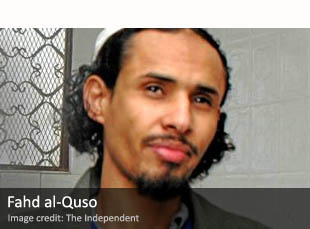
►►CIA kills al-Qaeda man wanted for attack on USS Cole. Fahd al-Quso, who was on the FBI’s most-wanted list for his part in the bombing of the warship USS Cole in 2000, was hit by a missile fired from the unmanned CIA aircraft on Sunday as he and another al-Qaeda operative stepped out of a vehicle in the southern province of Shabwa, Yemen. Al-Quso (photo) had served more than five years in a Yemeni prison for his role in the USS Cole attack and was released in 2007.
►►Al-Qaeda attacks Yemeni base hours after CIA strike. Al-Qaeda militants staged a surprise attack Monday on a Yemeni army base in the south, killing 20 soldiers and capturing 25 just hours after a US drone strike killed Fahd al-Quso, one of its senior figures, who had participated in the 2000 bombing of the USS Cole in Yemen. The militants managed to reach the base both from the sea and by land, gunning down troops and making away with weapons and other military hardware after the blitz attack.

News you may have missed #724

Shakil AfridiBy IAN ALLEN | intelNews.org |
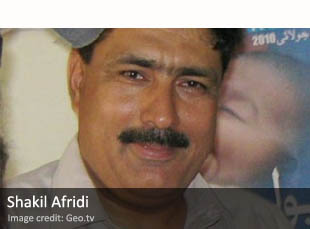
►►Aid group denies link to US intelligence in Pakistan. Aid group Save the Children denied accusations it has ties to US intelligence agencies in Pakistan. The organization’s denial came shortly after Dr. Shakil Afridi, a doctor the CIA recruited to help in the search for Osama bin Laden, told Pakistani interrogators that Save the Children played a role in his becoming involved with the CIA. Following Afridi’s interrogation, the Pakistani government banned some Save the Children members from leaving the country and aid supplies –including medical supplies– have been blocked by customs.
►►Is MI6 double spy’s case linked with Gareth Williams’ death? In 2010, British authorities jailed for a year MI6 employee Daniel Houghton, after he was caught trying to sell classified documents to MI5 spooks posing as foreign agents. According to newspaper The Daily Mirror, British police are now “probing a possible link between the Houghton’s case and the death of MI6 employee Gareth Williams, who was found dead in his London apartment in 2010. According to the paper, police detectives “want assurances from MI6 that Williams’ details [and] identity were not compromised” by Houghton.
►►Fears of spying hinder US license for China Mobile. China Mobile, the world’s largest mobile provider, applied in October for a license from the Federal Communications Commission to provide service between China and the United States and to build facilities on American soil. But officials from the FBI, the Department of Homeland Security and the Justice Department’s National Security Division are concerned that the move would give the company access to physical infrastructure and Internet traffic that might allow China to spy more easily on the US government and steal intellectual property from American companies. This is according to The Los Angeles Times, which cites “people familiar with the process who declined to be identified because the deliberations are secret”. US officials and lawmakers have expressed similar concerns about a Chinese telecommunications hardware manufacturer Huawei Technologies, which is alleged to have contacts with the Chinese People’s Liberation Army and the Ministry of State Security.

News you may have missed #722

Jose RodriguezBy IAN ALLEN | intelNews.org |
►►Vienna police say Libyan defector’s death probably an accident. Former Libyan oil minister Shukri Ghanem, whose body was found floating Sunday in the Danube river, died from drowning, Austrian police said. Autopsy results on Ghanem’s corpse showed no signs of violence, a police spokesman said, adding that Ghanem, 69, had complained to his daughter late Saturday that he was not feeling well. No suicide note has been found and there is no evidence Ghanem was under threat, according to police. The results of toxicological tests are expected later this week.
►►Canadian spymaster’s card found in Gaddafi’s intel complex. It appears that William “Jack” Hooper, former Deputy Director for the Canadian Security Intelligence Service (CSIS), was among the Western intelligence officials who had cultivated ties with Libyan security services under the regime of Colonel Muammar Gaddafi. Hooper’s business card was recovered last year in a trove of intelligence documents in Libya, providing a physical link between Canadian security agencies and Libyan spy services. Following his retirement in 2007, Hooper told The Toronto Star that Canada’s spy service has no choice but to team up with some unsavory foreign counterparts to protect Canada from terrorism.
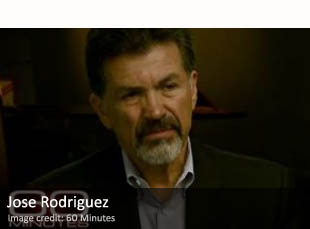
►►Ex-CIA official defends torture of terrorism detainees. In an interview Sunday, Jose Rodriguez, who headed the CIA’s Counterterrorist Center until his retirement in 2008, said waterboarding and other interrogation methods now banned by the Obama Administration were essential to fighting terrorism after September 11, 2001. He also said that he ordered the 92 videotapes showing his CIA colleagues torturing al Qaeda detainees in order “to protect them from possible retaliation by al-Qaeda”. He said he was afraid the material would be leaked: “you really doubt that those tapes would not be out in the open now, that they would not be on YouTube?”. After the tapes were destroyed in an “industrial-sized disintegrator”, he said, “I felt good”.

News you may have missed #721

Yuval DiskinBy IAN ALLEN | intelNews.org |
►►US spies clash with military over outsourcing spy satellites. Members of the US intelligence community and the military are finding themselves on opposite sides regarding the future of American spy satellites. Since the US first began using satellites to collect intelligence data, the government largely relied on its own technology. But in recent years, as private companies have developed sophisticated satellites of their own, Washington has been increasingly relying on commercial sources for spy missions. Now senior intelligence officials have urged the Obama administration to move away from relying on commercial satellite imagery.
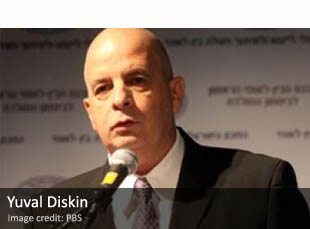
►►Israeli ex-spy criticizes plans for war with Iran. Many Israeli retired officials have criticized Prime Minister Benjamin Netanyahu’s government, but the censure from Yuval Diskin, who stepped down as head of the Shin Bet domestic intelligence service last year, was especially harsh. “I have no faith in the prime minister, nor in the defense minister”, Diskin said in the remarks broadcast by Israeli media on Saturday. “I really don’t have faith in a leadership that makes decisions out of messianic feelings”. Speaking in New York, former Mossad Director Meir Dagan said simply that Diskin “spoke his own truth”.
►►Litvinenko’s widow still waiting for answers. In 2000, after Vladimir Putin became President of the Russian Federation, KGB/FSB officer Alexander Litvinenko fled with his family to the UK, where they claimed political asylum and, later, British citizenship. During his time in London, Litvinenko consulted for MI5 and MI6, worked at a corporate security agency, and wrote two books, including Blowing Up Russia, which alleged that the Russian apartment bombings of 1999 were organized by the FSB, to justify war with Chechnya and sweep Putin into power. He died in 2006 of radioactive poisoning. Six years on, Litvinenko’s widow, Marina, says she is still waiting for answers.

News you may have missed #720

Betty SappBy IAN ALLEN | intelNews.org |
►►Lebanese national wanted for spying for Israel. A Lebanese military court has issued an arrest warrant for a Lebanese national suspected of spying for Israel. The judge in the case accused the suspect, whose name is yet to be released, of being in touch with Israel and passing on information about Ron Arad, an Israeli Air Force weapon systems officer who went missing in 1986.
►►Article sheds light on UK Home Office’s ex-spy official. An article in The Sunday London Times examines the role of Charles Farr, a former MI6 officer, who is considered as “the heart” of the British Home Office’s security policy. Farr, who joined MI6 some time in the 1980s, and served in South Africa and Jordan among other places, directs the Office’s Security and Counter-Terrorism unit. He is now in charge of the Home Office’s Communications Capabilities Development Programme, an attempt to augment online government surveillance. One former official, who had a showdown with Farr over policy, tells The Times: “He’s almost messianic. He’s like he’s on a mission to protect the nation. When you disagree with him he gets very emotional. He’s one of these guys who goes white and shakes when he loses his temper”.
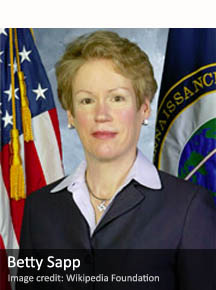
►►First woman tapped to lead US spy satellite agency. For the first time in its storied history, the secretive builder and operator of America’s spy satellites, the National Reconnaissance Office, will be run by a woman. Betty Sapp, currently principal deputy director at the spysat agency, will move up one slot and replace NRO Director Bruce Carlson, who many credit with turning around the agency’s problem-plagued acquisition system. While Sapp is the first woman to lead the NRO, she is the second woman to lead one of the major intelligence agencies. Letitia “Tish” Long, director of the National Geospatial Intelligence Agency, gets to claim the honor of first woman to break that glass ceiling.

News you may have missed #719

Benny GantzBy IAN ALLEN | intelNews.org |
►►Iran says it has cracked US spy drone secrets. Iran claims it has cracked the encryption on the computer software onboard a US RQ-170 Sentinel drone which crashed in the country in December. General Amir Ali Hajizadeh, head of the Revolutionary Guards aerospace division, said engineers were decoding the last pieces of data from the spy plane, which came down near the Afghan border. An Iranian defense official recently said that Tehran has had several requests for information on the craft and that China and Russia have shown an interest.
►►Israel steps up covert operations says defense chief. Israel’s defense chief, Lieutenant General Benny Gantz, has confirmed his forces are carrying out increased special operations beyond the country’s borders. In an interview published on Wednesday to mark the eve of Israel’s Independence Day, Gantz said Israel was ready to attack Iran’s nuclear sites if ordered to do so. But he added that did not mean he was about to order the air force to strike. He also said that he had increased the number of covert Israeli operations in other countries, but gave no details. “I do not think you will find a point in time where there is not something happening, somewhere in the world”, he said.
►►US Pentagon plans new intelligence-gathering service. The US Pentagon is revamping its spy operations to focus on high-priority targets like Iran and China in a reorganization that reflects a shift away from the war zones of Iraq and Afghanistan that have dominated America’s security landscape for the past decade. Under the plan approved last week by Defense Secretary Leon E. Panetta, case officers from the new Defense Clandestine Service would work more closely with counterparts from the Central Intelligence Agency at a time when the military and spy agency are increasingly focused on similar threats.

News you may have missed #718 (GCHQ edition)

GCHQ center in Cheltenham, EnglandBy IAN ALLEN | intelNews.org |
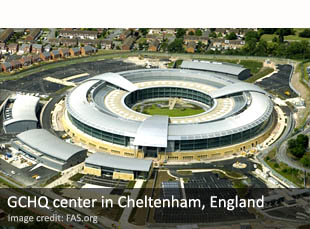
►►GCHQ releases Alan Turing papers. Britain’s signals intelligence agency, GCHQ has released two mathematical papers written by cryptographer Alan Turing after keeping the works secret for over half a century. The intelligence agency believes the handwritten papers were produced by Turing during his time at Bletchley Park, the World War II code-breaking center. The year 2012 marks the centenary of Alan Turing’s birth. Turing, whose work heavily contributing to the Allied war effort, committed suicide in 1954 by taking cyanide. Turing had been convicted of homosexuality, which was then a crime, and was given the choice between prison or chemical castration. The UK government officially apologized over Turing’s treatment in 2009, over 50 years after his death.
►►Britain’s GCHQ sued for ‘racism’. Alfred Bacchus, 42, claims he was bullied by bosses while he was a senior press officer at the Government Communications Headquarters in Cheltenham. He says he wanted to publish an official report in 2010 into race bias inside GCHQ which warned that not enough ethnic minority staff were being recruited to help fight terrorism. It found that black and Asian intelligence officers at GCHQ complained of a racist culture in which they were insulted by white colleagues and challenged over their loyalty to Britain.
►►Ex-GCHQ chief wants more surveillance of Facebook and Twitter. Sir David Omand, an ex-Cabinet Office security chief and former director of Britain’s GCHQ electronic eavesdropping agency, said it was essential that monitoring of social media was put on a proper legal footing. A report by the think-tank Demos, which Sir David co-authored, said existing laws regulating the interception of communications by police and intelligence agencies needed to be overhauled to meet the complexities of social media. However, the ability of state security agencies and the police to intercept social network communications such as tweets must be placed on a clear legal footing, the report says.

News you may have missed #717

Lieutenant General Michael FlynnBy IAN ALLEN | intelNews.org |
►►CIA wants more drone strikes in Yemen. The CIA is seeking permission to launch more airborne drone strikes in Yemen, even when there is a risk the victims might not always be terrorists, The Washington Post reports. The paper quotes an unnamed Obama administration official saying that “there is still a very firm emphasis on being surgical and targeting only those who have a direct interest in attacking the United States”. But critics of the drone program say killings of innocent victims could become more common if the strikes are expanded. The CIA proposal for the “signature strikes” is awaiting a decision by the National Security Council, The Post quotes unnamed US officials as saying.
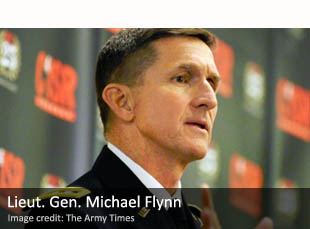
►►US military intelligence critic to lead spy agency. Lieutenant General Michael Flynn, who once blasted the work of US military spies in Afghanistan as “only marginally relevant”, has been nominated to take over the Defense Intelligence Agency, which is the US Pentagon’s intelligence organization. Flynn was a scathing public critic of military intelligence in Afghanistan, where he served as a top intelligence officer in 2010, saying it failed to provide decision makers with a clear picture of conditions on the ground. Flynn is credited with playing an influential role during his tenure at Joint Special Operations Command (JSOC), the secretive headquarters that oversees elite commandos like the team that killed Osama bin Laden in May 2011.
►►Taiwanese man detained for spying for China. A Taiwanese businessman, identified by his surname Cheng, has been detained for allegedly spying for China. He was allegedly recruited by China when he moved to the southeastern coastal province of Fujian to do business a few years ago, prosecutors said. Cheng is accused of trying to lure a former classmate, who is now a military officer, to meet with Chinese officials abroad for money; but the officer turned him in to Taiwanese authorities.