Luxembourg government resigns following spy scandal
July 11, 2013 1 Comment
 By JOSEPH FITSANAKIS | intelNews.org |
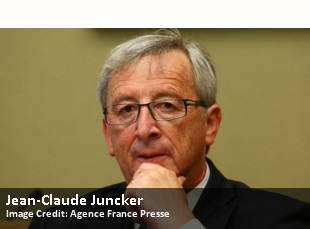
The prime minister of Luxembourg announced his intent to resign on Thursday, after a parliamentary investigation revealed scores of illegal operations conducted by the country’s intelligence service. Jean-Claude Juncker, a longtime member of Luxembourg’s Christian Social People’s Party, is Europe’s longest-serving elected leader, having been in power constantly since 1995. But on Wednesday, the astute center-right politician, who is also President of the Eurogroup —the eurozone’s finance ministers’ group— announced on Wednesday that he would step down, following seven hours of heated debate in the Luxembourg parliament. Juncker announced his intention to resign after the junior partner of his governing coalition, the Luxembourg Socialist Workers’ Party, which is the country’s second-largest, said it could no longer lend its support to the government. The reason is a parliamentary inquiry, which found that the country’s State Intelligence Service (SREL) has been engaging in serious criminal activity. The investigation was launched last year, after a local newspaper alleged that SREL’s Director, Marco Mille, had employed a surreptitious recording device disguised as a watch to record a private conversation with Prime Minister Junkcer. The parliamentary inquiry, which was released last week, found that SREL has been carrying out countless illegal wiretaps around the country and that it maintains detailed secret files on over 13,000 citizens and residents of Luxembourg. The report also alleges that SREL had set up a front company in order to facilitate the transfer of $10 million from a corrupt Russian businessman to a Spanish intelligence operative, as a personal favor to the Russian. The report did not confirm allegations, made in the country’s press, that the Grand Duke of Luxembourg has been a trusted informant of MI6, Britain’s Secret Intelligence Service. Read more of this post















Are Russian spies switching to typewriters to avoid interception?
July 12, 2013 by Joseph Fitsanakis 12 Comments
For the first time in over a decade, a Russian government department has decided to purchase typewriters, allegedly in order to safeguard classified documents against electronic interception. Russia’s Federal Protective Service has reportedly placed an order for the purchase of an estimated 20 typewriters, for 486,000 rubles –roughly US$15,000. The agency, known in Russia by its initials, FSO, is responsible for protecting high-ranking government officials, including the President of the Russian Federation, and is also tasked with operating federal emergency communications systems. It is the institutional descendant of the Soviet KGB’s Ninth Chief Directorate, which ceased to exist in 1992. According to the daily Russian broadsheet Izvestia, the FSO initially considered purchasing the typewriters in 2010, in response to a series of massive leaks of United States government classified documents by whistleblower website WikiLeaks. An unnamed source inside the FSO told the paper that the final decision to purchase the typewriters was made shortly after revelations made last month by former Central Intelligence Agency computer expert Edward Snowden. The self-styled whistleblower told Britain’s Guardian newspaper that British and American intelligence agencies targeted the electronic communications of heads of state and other senior officials during a G20 summit held in London in 2009. A principal target of the alleged spy operation was the then-Russian President Dmitri Medvedev, who headed the Russian delegation at the G20 summit. Interestingly, the FSO source told Izvestia that the initial purchase 20 typewriters will be followed by more orders, as large segments of Russia’s security establishment appear to be switching to typewriters as a means of producing classified documents. Read more of this post
Filed under Expert news and commentary on intelligence, espionage, spies and spying Tagged with communications interception, document security, document storage, News, Russia, Russian Federal Protective Service, SIGINT, typewriters