Chinese defector reveals identities of Chinese undercover spies in Asia and Australia
November 25, 2019 4 Comments
 A Chinese intelligence defector has reportedly given the Australian government information about entire networks of Chinese undercover spies in Hong Kong, Taiwan and Australia, according to reports. The story of Wang “William” Liqiang, made headlines all over Australia during the weekend, culminating in an entire episode of 60 Minutes Australia about him airing on Sunday. The 26-year-old from China’s eastern Fujian province reportedly defected to Australia in October, while visiting his wife and newborn son, who live in Sydney. He is currently reported to be in a safe house belonging to the Australian Security Intelligence Organization (ASIO).
Police in the Chinese city of Shanghai claim that Mr. Wang is a small-time criminal who has been found guilty of using fraudulent documents and has a 15-month suspended prison sentence on his record. In a statement issued on Sunday, China’s embassy in Canberra described Mr. Wang as a “convicted fraudster” who was “wanted by police after fleeing [China] on a fake passport”. But according to reports in the Australian media, Mr. Wang has provided the ASIO with a 17-page sworn statement, in which he details his work as an undercover intelligence officer. He is also said to have shared the identities of senior Chinese intelligence officers in Taiwan and Hong Kong, and to have explained how they organize and implement espionage operations on behalf of Bejing.
In a leading article published on Saturday, The Sydney Morning Herald referred to Mr. Wang as “the first Chinese operative to ever blow his cover” and claimed that he had given the ASIO “a trove of unprecedented inside intelligence” about Chinese espionage operations in Southeast Asia. The newspaper said that the defector had revealed details about entire networks of Chinese intelligence operatives in Taiwan and Hong Kong. He also reportedly provided identifying information about deep-cover Chinese intelligence networks in Australia.
Meanwhile, in an unrelated development, Australian media said yesterday that the ASIO was examining allegations that a Chinese espionage ring tried to recruit an Australian businessman of Chinese background and convince him to run for parliament. According to reports, the spy ring approached Nick Zhao, a successful luxury car dealer, and offered to fund his political campaign with nearly $700,000 (AUS$1 million) if he run as a candidate for the Liberal Party of Australia. Zhao reportedly told the ASIO about the incident last year, shortly before he was found dead in a Melbourne hotel room. His death remains under investigation.
► Author: Joseph Fitsanakis | Date: 25 November 2019 | Permalink
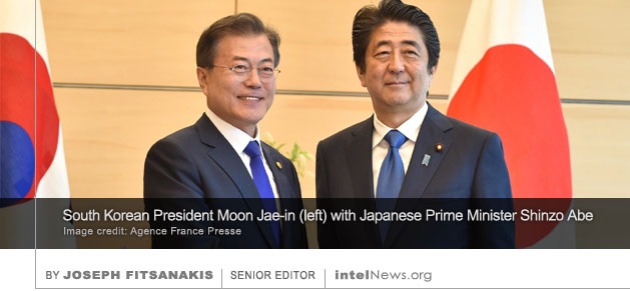 South Korea appears determined to reject calls from the United States to maintain an intelligence-sharing agreement with Japan, as relations between Seoul, Tokyo and Washington continue to experience tensions. The South Korean government has been issuing warnings since August that it will
 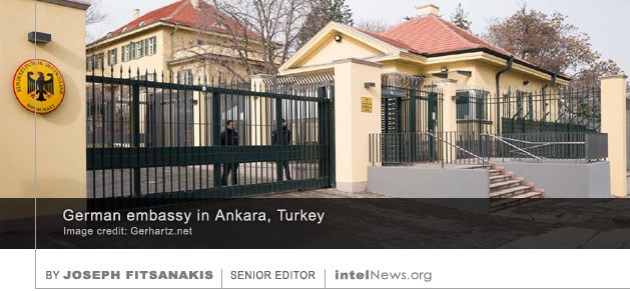 Turkish authorities have charged a lawyer working for the German embassy in Ankara with espionage, further-straining the already tense relationship between the two North Atlantic Treaty Organization allies. German newsmagazine Der Spiegel, which
 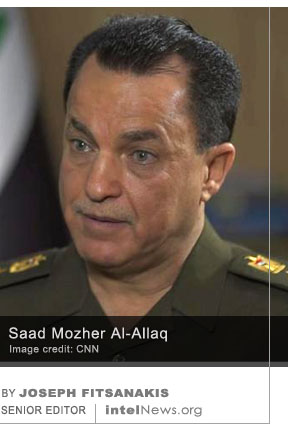 In a rare interview, the head of Iraq’s military intelligence has warned of an impending “catastrophe” as the Islamic State continues to edge ever-closer to rebuilding its networks of fighters and supporters in the Middle East. Lieutenant General Saad Mozher Al-Allaq, head of Iraq’s Military Intelligence Directorate, gave a rare
 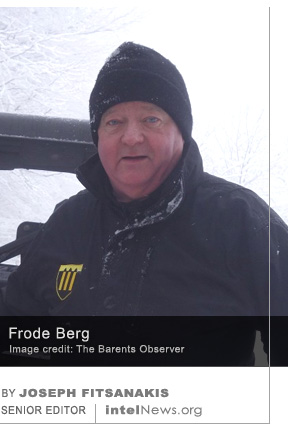 A rare three-way spy-swap has reportedly taken place between Russia and two North Atlantic Treaty Organization (NATO) members, Lithuania and Norway. Rumors of a possible exchange of imprisoned spies between the three countries first
 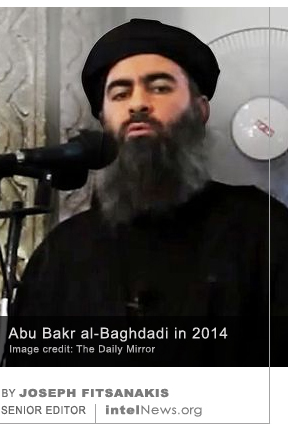 The Islamic State’s Syrian hideout that housed the group’s leader until his demise on October 26, was equipped with a frequently used internet connection, according to Arab media reports. Abu Bakr al-Baghdaid, the self-proclaimed caliph of the Islamic State, was killed by United States soldiers in Barisha, a village in the Syrian province of Idlib, which is located
 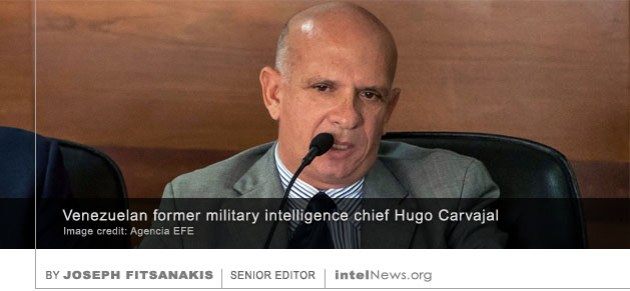 The former director of Venezuela’s military spy agency, who is wanted in the United States for drug trafficking, reportedly disappeared in Spain as authorities there were attempting to extradite him to Washington. Hugo Carvajal is a retired general and former diplomat, who was a member of the late Venezuelan President Hugo Chávez’s inner circle. From 2004 to 2011, under Chávez’s tutelage, Carvajal headed the Directorate General of Military Counterintelligence (DGCIM).
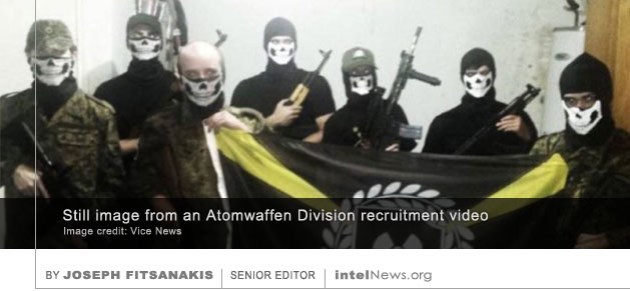 A data dump of unprecedented scale includes usernames, IP addresses and even the content of thousands of private chat logs stolen from an influential neo-Nazi website that is now defunct. The data belonged to IronMarch, which was founded in 2011 by Alexander Mukhitdinov, a Russian far-right activist using the online nom-de-guerre “Slavros”. In the nearly six years of its existence, the website featured some of the most extreme and uncompromising far-right content on the World Wide Web.
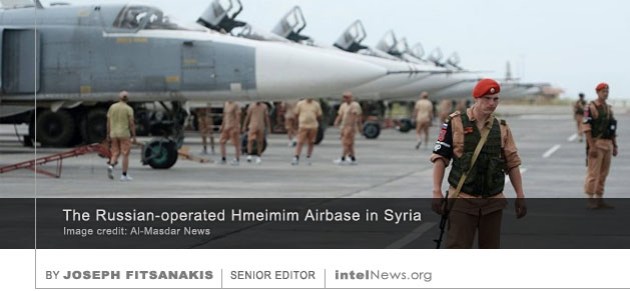 Authorities in Turkey were concerned that Russia might bomb the presidential palace in Ankara in 2015, to retaliate against the downing of a Russian fighter jet by the Turkish military, according to an intelligence report. On November 25 of that year, a Russian Sukhoi Su-24M attack bomber was shot down by a Turkish F-16 fighter jet over the Syrian-Turkish border. Ankara claimed that the Russian aircraft had violated Turkish airspace for longer than five minutes and had failed to respond to 10 warning messages communicated by radio. By the time the Russian plane was fired upon it was nearly 1.5 miles inside Turkish airspace, according to Turkey’s Ministry of Defense. But the Kremlin claimed that the downed aircraft had been flying a mile south of the Turkish border when it was shot down.
 A day after the United States Department of Justice charged two Saudi citizens with engaging in espionage on American soil, Saudi officials hosted the director of the Central Intelligence Agency in Riyadh, reportedly to discuss “the longstanding Saudi-US partnership”.
 United States authorities have charged two employees of the social media firm Twitter and a member of staff of Saudi Arabia’s royal family with spying for Riyadh. The Federal Bureau of Investigation filed a complaint on Wednesday in San Francisco, accusing the three men of “acting as unregistered agents” for Saudi Arabia. The phrase is used in legal settings to refer to espionage.
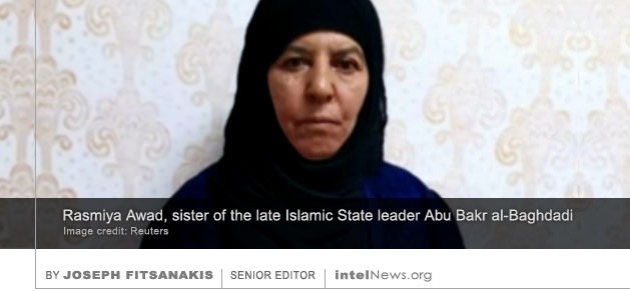 A Turkish government official has described the arrest of the sister of the late Islamic State leader Abu Bakr Al-Baghdadi as “an intelligence goldmine”. The official was referring to the arrest of Rasmiya Awad, an Iraqi citizen, who was reportedly arrested on Monday. Little is known about al-Baghdadi’s sister. She is believed to have been born in 1954, which makes her 65 years old this year.
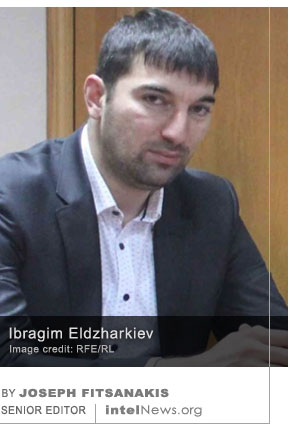 A senior counter-terrorism officer in the Russian police has been gunned down along with his brother in a downtown Moscow street, in what authorities describe as a contract killing. One of the two victims has been named as Ibragim Eldzharkiev (pictured), who headed the Russian Interior Ministry’s Anti-Extremism Center in the Republic of Ingushetia in the Russian Caucasus. His younger brother was reportedly also killed in the attack.
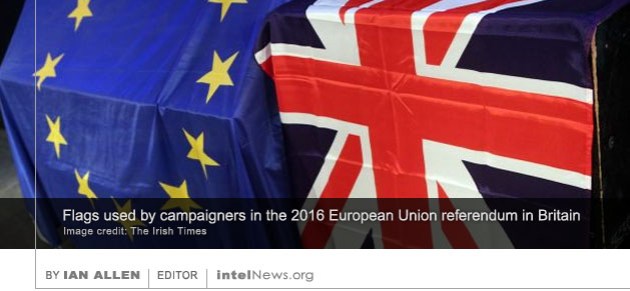 The British government has been accused by opposition parties, and by pro-remain conservative figures, of trying to conceal a report documenting Russian meddling in British politics. The report documents the results of an investigation into Russia’s alleged attempts to influence the outcome of the 2017 general election in the United Kingdom, as well as the result of the 2016 European Union referendum, which ended in victory for the pro-Brexit campaign.







Europol culls thousands of Islamic State online accounts in ‘day of action’
November 26, 2019 by Joseph Fitsanakis Leave a comment
In a press release that appeared on its website on Friday, Europol said that it had managed to locate “a significant portion of key actors within the Islamic State network on Telegram” and “push [them] away from the platform”. The messaging app confirmed the joint “day of action” with Europol and said it took down over 5,000 “terrorist accounts and bots” from its network on November 22 and 23. The company said this was nearly 10 times higher than the usual number of user accounts taken down daily for violating its user agreement.
The BBC said that the removal of the accounts appeared to affect heavily the activities of the Nashir News Agency, an Islamic State propaganda outlet that uses the Telegram app to publicize press releases from the Islamic State. Dozens of online channels and community groups that were moderated by Nashir News Agency editors were also impacted, as their moderators had disappeared from the network. On Saturday, some Telegram users began posting information about replacement accounts for Nashir News Agency press releases, but these too were taken down within hours.
This was the second major “day of action” against online terrorist propaganda that Europol coordinated, with the first one being in April of last year. But critics argue that such efforts are unlikely to have a long-term impact on the ability of terrorist groups to spread online propaganda, unless they are constant and systematic. Meanwhile, Islamic State sympathizers criticized the Telegram service on other social media platforms and warned that moves to silence the group would result in its membership going deeper underground.
► Author: Joseph Fitsanakis | Date: 26 September 2019 | Permalink
Filed under Expert news and commentary on intelligence, espionage, spies and spying Tagged with Europol, Islamic State, Nashir News Agency, News, social networking, Telegram