Western-supported Libyan warlord guilty of war crimes, say investigators

Khalifa HaftarLibya’s most powerful warlord, who was an asset of the United States Central Intelligence Agency before entering the Libyan Civil War, ordered his troops to commit war crimes, according to two American legal experts. Libya has remained in a state of war since 2011, when a popular uprising backed by the West and its allies led to the demise of the country’s dictator, Colonel Muammar Gaddafi. Currently the strongest faction in the ongoing Libyan Civil War is the eastern-based Tobruk-led Government, which is affiliated with the Libyan National Army (LNA). The commander of the LNA is Field Marshal Khalifa Haftar, an old adversary of Colonel Gaddafi, who lived in the United States under Washington’s protection for several decades before returning to Libya in 2011 to launch his military campaign.

But Haftar’s reputation as a military commander is now being challenged by two leading American legal experts. They are Ryan Goodman, a professor and former special counsel to the general counsel of the United States Department of Defense, and Alex Whiting, a Harvard University law professor who served as an international criminal prosecutor at the International Criminal Court. Together they have published a report on the Just Security blog, which is affiliated with several institutions, including the New York University School of Law. The two scholars argue that Haftar has publicly urged his troops to commit war crimes in several instances. Their report references a video that contains a brief given by Haftar in September 2015 to LNA commanders, in which he calls on them to take no prisoners. In a transcript of the LNA leader’s speech, he is reported to have told his audience: “Give no consideration to bringing prisoner[s] here. There is no prison here”. The two legal experts interpret Haftar’s statement as a clear case of “denial of quarter”, which they say is “a firmly settled part of the laws of war”. In another video, recorded in August 2016, Beleed al-Sheikhy, who is a spokesman for the LNA, is seen briefing LNA commanders about an upcoming battle in Ganfouda, a southern suburb of the port city of Benghazi. Al-Sheikhy says in the video that “anyone who is above 14 years of age will never get out [of Ganfouda] alive”. He tells the LNA troops that they should “consider this a confirmed notice”.

In June of this year, a report published by the United Nations suggested that the main reason for the LNA’s military prowess lies in the secret support it receives from the United Arab Emirates and Saudi Arabia. In August, a British-based newspaper claimed that Haftar has been holding secret meetings with Israeli officials since 2015, and that the Mossad, Israel’s intelligence agency, has secretly provided the LNA with military aid, including night vision equipment and various sniper rifles.

Author: Joseph Fitsanakis | Date: 28 September 2017 | Permalink

“External attack” may have caused crash that killed UN secretary general in 1961

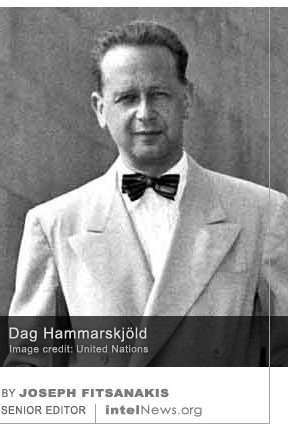
Dag HammarskjöldA deliberate attack by another aircraft may have caused the plane crash that killed the United Nations Secretary General in 1961, according to a report commissioned by the intergovernmental organization. On September 17, 1961, a Douglas DC-6 transport aircraft carrying United Nations Secretary General Dag Hammarskjöld crashed in the British-administered territory of Northern Rhodesia (now Zambia). The crash killed everyone onboard. At the time of his death, Hammarskjöld was flying to the Congo’s mineral-rich Katanga region to meet European-supported chieftains who in 1960 had seceded from the nationalist government of Congolese Prime Minister Patrice Lumumba. Ironically, Lumumba had been assassinated in a Western-backed coup exactly eight months before Hammarskjöld’s death.

Three successive investigations into the crash, conducted by the Rhodesian Board of Investigation, the Rhodesian Commission of Inquiry, and the United Nations Commission of Investigation, pointed to “pilot error” as the most likely cause of the tragedy. However, research carried out in recent years, including by the Hammarskjöld Commission, which was composed of a diplomat and three judges from the Netherlands, the United Kingdom, South Africa, and Sweden, has shown that the crash could have been the result of deliberate actions. In February of this year, following a recommendation by a UN-appointed three-member expert panel, the organization tasked Mohamed Chande Othman, a former Tanzanian chief justice, to research the topic in depth. Othman reportedly delivered his final report to the UN Secretary General António Guterres in August. However, it has not yet been made public.

On Tuesday, however, British newspaper The Guardian said it had seen an executive summary of Othman’s report. Read more of this post
Secret documents passed to the KGB by Kim Philby displayed in Moscow

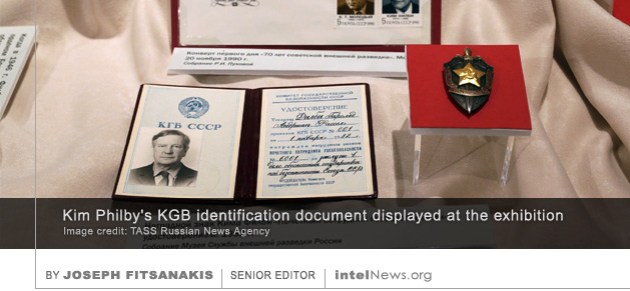
Kim PhilbyThe life of Kim Philby, one of the Cold War’s most recognizable espionage figures, is the subject of a new exhibition that opened last week in Moscow. Items displayed at the exhibition include secret documents stolen by Philby and passed to his Soviet handlers during his three decades in the service of Soviet intelligence. While working as a senior member of British intelligence, Harold Adrian Russell Philby, known as ‘Kim’ to his friends, spied on behalf of the Soviet NKVD and KGB. His espionage lasted from about 1933 until 1963, when he secretly defected to the USSR from his home in Beirut, Lebanon. Philby’s defection sent ripples of shock across Western intelligence and is often seen as one of the most dramatic incidents of the Cold War.
Now a new exhibition in Moscow has put on display some of Philby’s personal belongings, as well as a fraction of the many classified documents he passed on to his Soviet handlers during his 30 years of espionage. Entitled “Kim Philby: His Intelligence Work and Personal Life”, the exhibition is organized by the Russian Historical Society. The majority of the new documents appear to date from 1944, by which time Philby had been working for the NKVD for over a decade. Some of the documents are cables sent by Italian, Japanese or German diplomats prior to and during World War II, which were intercepted by British intelligence. Copies of some of these intercepts, which Philby passed to Moscow, are displayed in the exhibition. One document clearly bears the English-language warning: “Top Secret. To be kept under lock and key: never to be removed from this office”. Another document appears to be part of a report that Philby produced after teaching a seminar for KGB intelligence officers about how to operate in the West. It is dated 1982, by which time Philby had been living in Russia for nearly two decades.

Philby died in the Soviet capital in 1988, aged 76, and was survived by his fourth wife, Rufina Ivanovna Pukhova, whom he met after he defected to the USSR. Pukhova attended the opening of the exhibition in Moscow last week, as did over a dozen of Philby’s students at the former KGB. Russian media reported that the director and several officials of the Foreign Intelligence Service (SVR), one of the KGB’s successor agencies, were also present during the official opening of the exhibition.

Author: Joseph Fitsanakis | Date: 26 September 2017 | Permalink

French-Swiss firm allegedly bribed Islamic State to keep its factory working in Syria

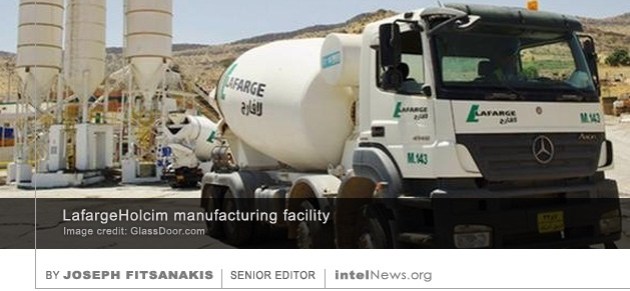
LafargeHolcimThe world’s largest building materials manufacturer, LafargeHolcim, which is headquartered in France and Switzerland, allegedly bribed the Islamic State to keep its factory working in Syria, according to court witnesses. The company specializes in the manufacture of building materials such as cement, concrete and various byproducts. It was formed in 2015 by a merger of France-based Lafarge and Swiss-based Holcim, and currently employs an estimated 120,000 employees in nearly 100 countries around the world.
In 2011, soon after the Syrian Civil War broke out, various militant groups began operating in the area around one of LafargeHolcim’s plants, located in in north-central Syria, 10 miles south of the Syrian-Turkish border. In June of 2016, French newspaper Le Monde published allegations that LafargeHolcim’s subsidiary, Lafarge Cement Syria (LCS), which owns the plant, bribed various militias to stay away from its factory. According to the paper, at least €20,000 (approximately $24,000) went to the Islamic State, which eventually conquered the area around the LafargeHolcim plant. The article further claimed that LCS managers in Syria sent detailed emails to LafargeHolcim executives in Europe about their dealings with various militias, including the Islamic State. LafargeHolcim approved the use of funds to bribe the militias, said Le Monde, in order to allow the factory to remain operational and to avoid having their employees taken hostage.

The newspaper’s allegations prompted the Office of the Public Prosecutor in Paris to launch a preliminary investigation in October of the same year. Eventually, an official complaint was filed by the French Ministry of Finance, which argued that the activities of LCS may have constituted illicit financial relations between a French-owned company and a terrorist group. An official investigation was opened in June of 2017 into whether LafargeHolcim illegally financed terrorist groups through its subsidiaries, Lafarge and LCS. Investigators are also examining claims that the company presented the French government with forged accounting documents in order to hide the bribes it gave to various Syrian armed groups.

Last week, investigators heard from the first time from witnesses, three of whom were LCS employees in 2014, when the company first made contact with Islamic State militants. They allegedly told prosecutors that the French-Swiss company paid approximately $20,000 a month to various armed groups, including al-Qaeda, al-Nusra Front, and the Islamic State. Prosecutors did not discuss details about the witnesses’ testimonies, but Le Monde said it spoke to individuals with direct knowledge of the investigation, who said that the witnesses’ testimonies were particularly damning for LafargeHolcim. The probe continues.

Author: Joseph Fitsanakis | Date: 25 September 2017 | Permalink

Facing skepticism by experts, NSA backs down in global encryption standards debate

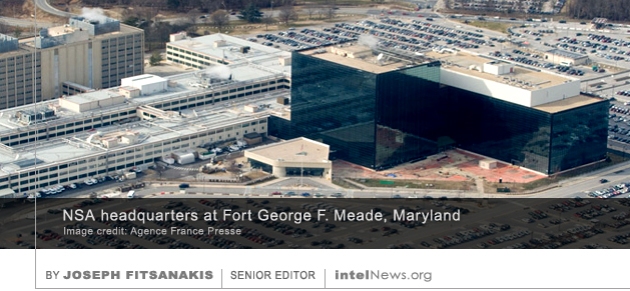
NSARepresentatives from the United States National Security Agency (NSA) withdrew a proposal to introduce new global industry standards for data encryption, after encountering prolonged skepticism by experts representing other Western countries. Some observers have interpreted this development as indicative of the damaged relationship between the NSA and its Western counterparts following revelations by American defector Edward Snowden.
Deliberations for establishing new industry standards for data encryption have been taking place for over three years under the supervision of the International Organization for Standardization (ISO). The ISO is a worldwide standard-setting body founded in 1947, which brings together representatives from national standards organizations. The US delegation, had proposed the adoption of two new data encryption techniques, known as ‘Simon’ and ‘Speck’. The techniques had the approval of the US national standards organization, which is known as the American National Standards Institute (ANSI) . However, it also had the approval of the NSA, America’s signals intelligence agency, whose representatives were members of the US delegation to the ISO. According to the Reuters news agency, the presence of the NSA representatives in ANSI prompted skepticism among other national delegations.

Eventually, encryption experts from countries including Israel, Japan, Germany, and the United Kingdom, rejected ‘Simon’ and ‘Speck’. The reason, according to Reuters, was that they were “worried that the [NSA] was pushing the new techniques not because they were good encryption tools, but because it knew how to break them”. Some commentators believe that this incident illustrates the suspicion with which the NSA is seen by American allies following headline-grabbing revelations made Edward Snowden, a former employee of the NSA who defected to Russia in 2013. Some of Snowden’s most sensational revelations involved alleged NSA operations targeting Germany, France, Israel, Japan, and other American allies. The revelations shocked public opinion in Europe and elsewhere, and resulted in the unprecedented expulsion of the CIA station chief in Berlin —the most senior US intelligence official in the country. ISO delegates are now thought to be working on a revised plan to keep some of ANSI’s proposed standards but enhance them with stronger layers of encryption, said Reuters.

Author: Joseph Fitsanakis | Date: 22 September 2017 | Permalink

Iranian state-backed cyber spies becoming increasingly skilled, says report

Computer hackingA group of cyber spies with close links to the Iranian government is becoming increasingly competent and adept, and could soon bring down entire computer networks, according to a leading cyber security firm. The California-based cyber security company FireEye said that it has been monitoring the operations of the mysterious group of cyber spies since 2013. The company, whose clients include Sony Pictures, JP Morgan Chase and Target, said that the Iranian group appears to be especially interested in gathering secrets from aviation, aerospace and petrochemical companies.
In a detailed report published on Wednesday, FireEye said that the Iranian group has a very narrow target focus. Moreover, it attacks its targets —which are typically companies— in highly customizable ways. The latter includes the use of cleverly designed phishing tools that are designed to attract the attention of the company’s unsuspecting employees. So far, companies that have been targeted include Saudi petrochemical conglomerates, American aviation firms, as well as South Korean and other Southeast Asian companies that have aviation or energy holdings, said FireEye. The security company said it had codenamed the group “APT33”, which stands for “Advanced Persistent Threat #33”. It also said that APT33 was clearly distinct from other known Iranian hacker groups, because of the sophistication of its operations and the quality of its cyber weapons. The cyber security firm said that APT33 was the first Iranian hacker group to be included on a select list of the most capable cyber spy groups from around the world.

Some experts believe that APT33 is run by Iran’s Revolutionary Guard Corps, an irregular branch of the Iranian military, which is seen by many as a state within a state in post-1979 Iran. The FireEye report does not appear conclusive on this point. However, it notes that APT33 has built an offensive cyber arsenal “with potential destructive capabilities”, but that it currently appears to focus solely on intelligence collection, not sabotage or warfare.

Author: Joseph Fitsanakis | Date: 21 September 2017 | Permalink

Australia rejected CIA request to open embassy in North Korea

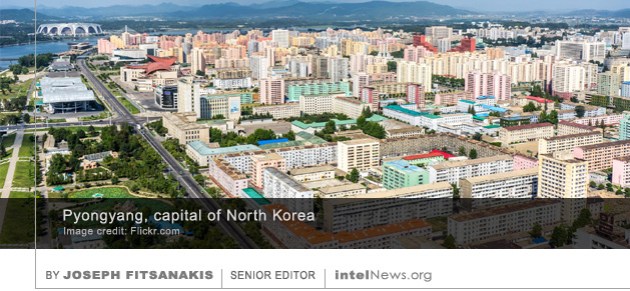
PyongyangAustralia rejected a secret request by the United States Central Intelligence Agency to open an embassy in North Korea, which the Americans hoped to use as a base from where to collect intelligence on the communist state. According to The Australian newspaper, Washington approached the Australian government because it is one of the few pro-Western governments that continue to maintain cordial diplomatic relations with Pyongyang. Up until 1975, Australia was a rare example of a country that hosted embassies of both South Korea and North Korea on its soil. But when Canberra took South Korea’s side in a United Nations vote, the North Koreans objected by shutting down their embassy in Australia. A quarter of a century later, in 2000, Pyongyang reopened its embassy in the Australian capital, only to close it down again in 2008, due to financial constraints.

Throughout that time, Australia has maintained relatively smooth diplomatic relations with North Korea, but has refrained from opening a residential mission in the communist country. Instead, employees of Australia’s embassy in South Korea occasionally travel to the North to perform diplomatic tasks. But in 2014, the US Department of State reached out to Canberra to request that the Australian government consider the possibility of establishing a permanent residential mission in Pyongyang. According to The Australian, the request came from the CIA, which hoped to use the Australian embassy as a base from where to collect intelligence on the isolated country. The US, which lacks an embassy in North Korea, has always found it difficult to collect intelligence there.

The American request was promptly communicated to the then-Prime Minister Tonny Abbott and his Minister of Foreign Affairs, Julie Bishop. Both appeared willing to consider Washington’s proposal. But the civil servants of the Department of Foreign Affairs and Trade, who were tasked with putting together a cost-benefit analysis of the request, came back with a negative response. They allegedly contacted their colleagues working in other countries who maintain permanent residential diplomatic missions in Pyongyang. They told them that their consular employees are kept in complete isolation from North Korean society and government. Additionally, they are subjected to constant surveillance by the North Koreans, who are extremely suspicious of all foreign diplomats. Moreover, Canberra was worried that opening an embassy in Pyongyang would inevitably be seen by the North Koreans as an invitation to reopen their embassy in Australia. It would require significant effort and resources to monitor the activities of North Korean diplomats, who are notorious for abusing their diplomatic status by engaging in illicit activities of all kinds.

Eventually, therefore, the US request was rejected by Australia’s Department of Foreign Affairs and Trade. The latter concluded that Canberra should not proceed with opening a new embassy in Pyongyang, despite the allegedly “strong suggestion” of the CIA. The matter, said The Australian, never reach the cabinet and Washington never brought it up again.

Author: Joseph Fitsanakis | Date: 20 September 2017 | Permalink

Germany’s celebrity spy Werner Mauss on trial for multi-million dollar tax evasion

Werner MaussGermany’s most famous living spy is on trial this week for hiding assets totaling $50 million in offshore bank accounts. He claims the money was given to him by unspecified “Western intelligence agencies” for his services. Werner Mauss became widely known in 1997, when he was arrested in Colombia for using a forged passport. He had traveled to the Latin American country to secure the release of a German woman who had been kidnapped by leftist guerrillas. The Colombian authorities eventually released him, following heavy diplomatic pressure from the German government. But the German media began investigating his background, and it soon became apparent that he was working for the German Federal Intelligence Service.
Following his unmasking in 1997, Mauss enjoyed celebrity status in Germany. Published accounts of his exploits claim that he was directly involved in neutralizing over 100 criminal gangs and that his work led to the capture of 2,000 criminals and spies. Mauss also claims to have helped prevent dangerous chemical substances from falling into the hands of terrorist groups, and that he stopped the Italian Mafia from killing Pope Benedict. Last year, however, Mauss saw his celebrity status diminish after the German government charged him with tax evasion. German prosecutors uncovered several overseas bank accounts belonging to him, which they said contained tens of millions of dollars in hidden income. They alleged that Mauss used the funds to finance a luxurious lifestyle centered on expensive overseas holidays, luxury cars, expensive gifts to women, as well as a private jet.

On Monday, the 77-year-old Mauss made his final plea in a lengthy court case concerning two of his off-shore accounts, located in UBS bank branches in the Bahamas and Luxembourg. The prosecution alleges that he failed to pay tax on assets totaling in excess of $50 million in the decade between 2002 and 2012 alone. Additionally, it is claimed that Mauss traveled from Germany to Luxembourg several times a year, to withdraw approximately $330,000 in cash per month from his secret accounts. But the accused former spy claims that the money was given to him by “Western intelligence agencies” in return for his services against international crime and terrorism, and that he should not have to pay taxes on it. In previous court appearances, he claimed that the money was not his, but belonged to various Western intelligence agencies and he simply used it to carry out intelligence operations.

The trial continues. If Mauss is convicted, he could spend nearly seven years in prison.

Author: Ian Allen | Date: 19 September 2017 | Permalink

South African spy agency can’t account for over $100 million in expenses

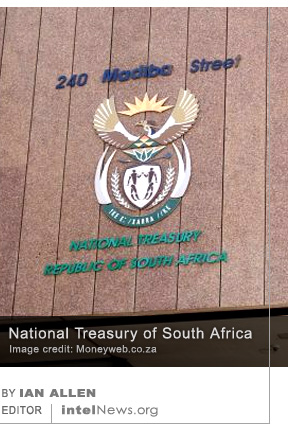
National Treasury of South AfricaSouth Africa’s National Treasury threatened to terminate all funding for covert operations last year, after the country’s spy agency refused to account for tens of millions of dollars in expenses, saying the money had been put to “secret use”. An investigation by two leading South African news outlets, the Afrikaans-language weekly newspaper Rapport and the English-language online news portal News24, has revealed the existence of a major bureaucratic spat between the National Treasury and the State Security Agency (SSA), the country’s primary civilian intelligence organization.
The investigation cited “seven independent sources” with direct involvement and knowledge of the National Treasury and the South African intelligence services. According to the report, National Treasury officials contacted the SSA last year, demanding to know how it used 1.5 billion rand (approximately US $114 million) that it took from government coffers between 2012 and 2016. But the spy agency refused to provide a detailed answer, and said instead that most of the money had been used to fund unspecified “secret operations”, and that its use was therefore classified.

However, the SSA did not realize that National Treasury officials have the same level of security clearance as senior SSA officials, said sources. Consequently, a Treasury probe was launched by Treasury investigators with access to SSA’s activities. The probe uncovered several instances of irregular expenditures and serious mismanagement, said the report. There were repeated instances when funds assigned to non-covert operations were “inexplicably moved to the covert fund” and SSA officials were unable to explain why. There were also numerous cases of abuse of procurement procedures. One source told the News24/Rapport team that “Treasury officials kept asking [SSA officials] how they tender for goods and services, and they kept saying that they can’t tell us, because it is classified information”. At that point, the National Treasury threatened to terminate all funding for intelligence operations unless answers were provided by the SSA leadership. After a series of frantic and tense negotiations, the SSA agreed to change its procurement practices and “at least submit [to National Treasury] a list of suppliers so that there could be a degree of oversight”.

The SSA’s reputation has not emerged unscathed from the broader crisis that has been plaguing South African politics in recent years. In 2014, the Johannesburg-based newspaper City Press alleged that the SSA maintained a secret unit used to target domestic political opponents of South African President Jacob Zuma. The paper also said that senior SSA official Thulani Dhlomo, a close ally of President Zuma, had been placed at the head of the secret unit in 2012. Another leading Johannesburg-based newspaper, The Mail & Guardian, repeated these claims earlier this month.

Author: Ian Allen | Date: 18 September 2017 | Permalink

Saudis say they busted spy ring, foiled suicide attack on defense ministry

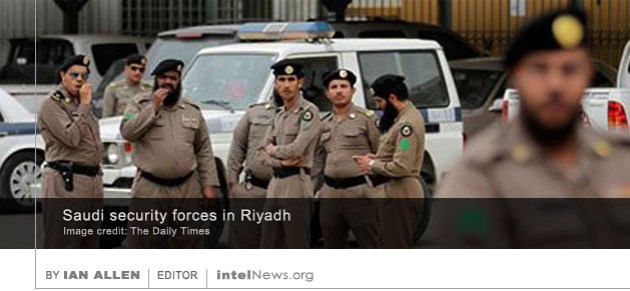
Saudi security forcesOfficials in Saudi Arabia said on Tuesday that they foiled an elaborate suicide attack on the country’s defense ministry headquarters and infiltrated a foreign spy ring in the Kingdom, arresting its members. The near-simultaneous announcements were made by a member of the Presidency of State Security, an intelligence body founded only in July of this year, which is directly accountable to the county’s prime minister.
The government-controlled Saudi Press Agency reported that two Yemeni and two Saudi nationals were arrested in early-morning raids in the capital Riyadh. The four men, said the news agency, were preparing to launch a sophisticated attack against the headquarters of the Ministry of Defense, which is centrally located in the nation’s capital. According to the report, the four would-be attackers had trained in explosives and in the use of suicide belts. Upon searching their safe house in Riyadh, Saudi security officers reportedly found firearms and hand grenades, as well as knives and at least two ready-to-use suicide belts, each weighing in excess of 15 pounds, or 7 kilos. The four men are believed to be members of the Islamic State of Iraq and Syria.

In a near-simultaneous announcement, the Presidency of State Security said that its officers had managed to infiltrate an alleged foreign spy cell. The Reuters news agency quoted an anonymous Saudi government source who said that “a group of people” were arrested in Riyadh for carrying out “intelligence activities for the benefit of foreign parties”. The members of the alleged spy ring had regular “contacts with external entities, including the Muslim Brotherhood”, said the anonymous source, referring to the Egyptian-based group that has branches in many Arab countries. The source added that the leaders of the alleged spy ring had received intelligence training and financial support from two foreign countries, which have not been publicly named.

It was not clear on Wednesday morning whether the two developments —the arrest of the alleged terrorists and the spy ring infiltration— were related.

Author: Ian Allen | Date: 14 September 2017 | Permalink

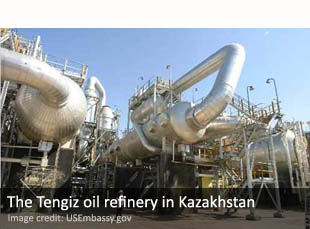
Ex-spy chief jailed as elite power struggle widens in oil-rich Kazakhstan

The Tengiz oil refinery in KazakhstanA former director of Kazakhstan’s feared intelligence agency has been given a lengthy prison sentence, as a ruthless power struggle between rival factions surrounding the country’s president widens. From 2001 to 2006, Nartai Dutbayev directed the Kazakh National Security Committee (KNB), a direct institutional descendant of the Soviet-era KGB. Founded in 1992, the KNB is today directly controlled by Kazakhstan’s authoritarian President, Nursultan Nazarbayev. Many officials serving in senior KNB positions are members of the president’s family, or close friends.
For many years, Dutbayev enjoyed unchallenged power, which was afforded to him by way of his close links to the presidential palace. But in 2006, he resigned from his top KNB post in the aftermath of the murder of popular Kazakh opposition politician Altynbek Sarsenbaev. Ten members of a specialist commando unit within the KNB were found guilty of Sarsenbaev’s murder. He was killed soon after he announced his decision to compete electorally against President Nazarbayev. But Dutbayev was never personally censured by the government. Then, in December of last year, Dutbayev was arrested on charges of “divulging government secrets”. The former spy chief’s trial began in July of this year, but was conducted in its entirety behind closed doors.

This past Monday it was reported that Dutbayev was sentenced to 7 ½ years in prison for espionage on August 24. It is not known why Dutbayev’s sentence was announced to the country’s media more than two weeks after it was formally imposed by the court. Additionally, Kazakh authorities have said nothing about who Dutbayev is believed to have divulged government secrets to, or why. Three alleged accomplices of Dutbayev, including former senior KNB officials Erlan Nurtaev and Nurlan Khasen, were also sentenced to between three and five years in prison for espionage.

Many observers believe that the jailing of the KNB officials is part of a broader power struggle that is currently taking place between rival factions competing to succeed President Nazarbayev. Kazakhstan’s leader has ruled the former Soviet Republic with an iron fist since before its independence from the USSR in 1991. The KNB appears to be a central player in the unfolding power struggle between the country’s governing elites. Almost exactly nine years ago, a Kazakh intelligence officer tried unsuccessfully to abduct another KNB former director, Alnur Musaev, who was living in self-imposed exile in Austria at the time. Many believe that he was acting under Nazarbayev’s direct orders. In 2014, two Kazakh men, believed to be KNB officers, tried unsuccessfully to abduct Viktor Khrapunov, Kazakhstan’s former Minister for Energy and Coal, who also served as mayor of Almati, before leaving Kazakhstan for Switzerland.

Dutbayev is reportedly already in prison. He is believed to be sharing a cell with Serik Akhmetov, Kazakhstan’s former prime minister, who is serving 11 years for alleged corruption.

Author: Joseph Fitsanakis | Date: 12 September 2017 | Permalink

Alleged Israeli spying device concealed inside fake rock found in Lebanon

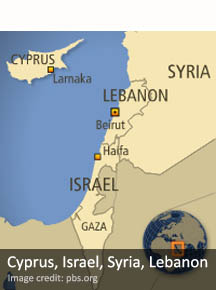
Cyprus, Israel, Syria, LebanonA sophisticated spying device disguised as a rock, which was allegedly planted by Israeli intelligence, was found by Lebanese Army troops on a hill located a few miles from the Lebanese-Israeli border. The discovery was reported early on Saturday by several Lebanese news websites, including Al-Mayadeen and Al-Manar, which are closely affiliated with Hezbollah. Al-Manar said that the spy device had been found in the outskirts of Kfarchouba, a predominantly Shiite Lebanese village, located in Arkoub, 100 miles southeast of Lebanon’s capital, Beirut. Kfarchouba’s location is extremely strategic, as the village overlooks northern Israel on the south and the Golan Heights on the east. It has been bombed by Israel several dimes between the 1970s and today, and is remains heavily militarized.

Reports from Lebanon said that a Lebanese Army patrol found the device hidden inside a fake rock, which had been placed on a hill outside Kfarchouba. The device had been placed in direct view of a major Lebanese military outpost, known as Rawisat. As soon as the device was detected, the patrol reportedly called in the Lebanese Army’s intelligence corps for support. Technical experts soon examined the discovery and determined that it contained a sophisticated thermographic camera. Also known as infrared or thermal imaging cameras, thermographic cameras capture images using infrared radiation, instead of using visible light, as is the case with commonly used cameras. This allows them to capture relatively clear images in the darkness, and are thus used for military operations that require night vision. Some Lebanese websites published photographs showing parts of the alleged spy device, which appear to bear writing in Hebrew.

This is not the first time that alleged Israeli spy devices have been found in southern Lebanon. In September of 2014, one person was killed when a mysterious device found near the Lebanese village of Adloun suddenly exploded as Hezbollah troops were examining it. It was later suggested that the device had been attached by Israeli troops to the Hezbollah-owned telecommunications network that spans southern Lebanon. Hezbollah said that the device had been remotely detonated by an Israeli drone in order to prevent it from being reverse-engineered. Two other devices found by a Lebanese Army patrol in the same region in October of 2009 suddenly exploded, as Lebanese security personnel were approaching. A Lebanese Army official said on Sunday that the device found in Kfarchouba will be dismantled by Lebanese Army engineers.

Author: Joseph Fitsanakis | Date: 11 September 2017 | Permalink

Iraqi Kurds claim they have captured senior Turkish intelligence officers

Cemîl BayikThe Turkish government has refused to comment on reports from Iraq, which suggest that Kurdish forces have captured at least two senior Turkish intelligence officers. News of the arrests first emerged in mid-August, when pro-Kurdish media in Turkey’s Anatolia region claimed that an armed Kurdish group in Iraq had captured two members of the National Intelligence Organization (MİT), Turkey’s principal intelligence agency.
According to the reports, the Turkish intelligence officers had used forged identity papers to travel from eastern Turkey to the northern Iraqi city of Erbil. From there, they went to Sulaimaniyah, a metropolitan center in Iraq’s Kurdish north. Allegedly, the Turkish officers traveled to Iraq in order to assassinate Cemîl Bayik, a co-founder and senior leader of the Kurdistan Worker’s Party (PKK). Founded in 1978, the PKK is a leftwing secessionist paramilitary organization that seeks an independent homeland for Turkey’s Kurdish minority. Iraq’s Sulaimaniyah region is controlled by another Kurdish armed group, the Patriotic Union of Kurdistan (PUK), which has close relations with Iran. But a rival Kurdish group, the Kurdistan Democrat Party (KDP), which is supported by Turkey and opposes the PKK’s secessionist aims, also has a strong presence in the area. It is not known whether KDP forces were aware of —or even assisted— the Turkish intelligence officers in Sulaimaniyah.

Kurdish sources claim that the two Turkish intelligence officers were arrested by PUK forces. Notably, media reports suggest that one of arrestees serves as the MİT’s deputy undersecretary for foreign operations, while the other heads the MİT’s PKK desk. The PUK is now threatening to publish photographs of the two men, which would blow their cover. But there has been no comment on this story from Ankara, where Turkish government officials refuse to confirm or deny that the arrests happened or that the two men are indeed MİT employees. Some observers, however, note that the Turkish government shut down the PUK’s office in the Turkish capital on August 23, and expelled the organization’s representatives. The group has maintained an office in Ankara since 1991, so the Turkish government’s surprising move may signify that the media reports about the arrests of the two MİT officers are indeed accurate.

Author: Joseph Fitsanakis | Date: 08 September 2017 | Permalink

French police officer charged in complex spy case involving Morocco, Algeria

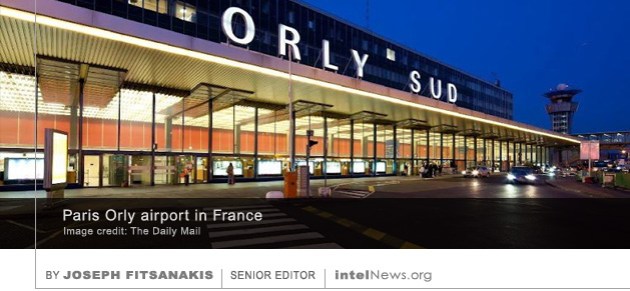
Paris Orly AirportA French police officer has been charged with illegally sharing secret government documents in an espionage case involving France’s border police and diplomats from Morocco and Algeria. According to information published by the French daily Libération, the police officer supplied Moroccan intelligence with classified information about France’s border-control policies and procedures. He also gave the Moroccans information about the movements in France of Moroccan nationals and senior Algerian government officials.
According to the report by Libération, the police officer, identified only as “Charles D.”, was charged on May 31 of this year with corruption and violating secrecy rules. Court documents state that Charles D. gave away classified documents belonging to the Direction centrale de la police aux frontières (DCPAF), a directorate of the French National Police that is in charge of immigration control and border protection across France. He reportedly gave the documents to another man, identified in court documents as “Driss A.”, who worked at Paris’ Orly Airport. It is believed that Driss A. worked as director of the Orly branch of ICTS International, a Dutch-based company that provides security services in several European airports. It is also believed that Driss A. —a Moroccan-born French citizen— was secretly employed by the Deuxième Bureau, Morocco’s military intelligence service. It appears that the Moroccans compensated Charles D with free holidays in Morocco in exchange for his services.

Interestingly, when French counterintelligence officers raided Driss A.’s home in Paris, they found documents detailing the activities of senior Algerian government ministers during their official trips to France. The officials are identified in the documents as Algeria’s former Deputy Prime Minister Noureddine Yazid Zerhouni, Higher Education Minister Tahar Hadjar, and Telecommunications Minister Hamid Grine. The documents appear to have been produced by Algerian intelligence and given initially to the embassy of Algeria in France. No explanation has been given about how these documents fell in Driss A.’s possession. Some observers assume that Driss A., acting as a Moroccan intelligence operative, must have acquired them from a source inside the Algerian embassy in Paris.

Author: Joseph Fitsanakis | Date: 07 September 2017 | Permalink

Probe uncovers massive $3 billion secret bribe fund in Azerbaijan

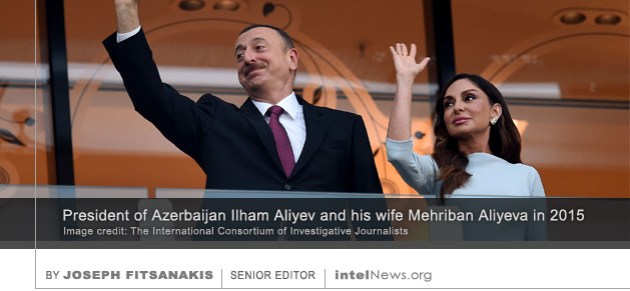
Ilham AliyevAn investigation by a consortium of European newspapers has uncovered details of a massive slush fund worth nearly $3 billion, which was allegedly used by Azerbaijan’s governing elite to bribe officials, business leaders and journalists at home and abroad. The fund was operated out of Baku, the capital of the former Soviet state, which is routinely accused of human-rights abuses. Western countries, including the United States, censure the government of the oil-rich state for its role in systematic abuses. These involve high levels of public- and private-sector corruption, vote-rigging, politically motivated disappearances, and wide curtailment of basic civil liberties. This new information is bound to add to Azerbaijan’s image as a secretive oil-rich state ruled by corrupt elite connected to the country’s President, Ilham Aliyev, and his family.

The existence of the slush fund was revealed by the Organized Crime and Corruption Reporting Project (OCCRP), an international investigative consortium. The OCCRP’s report was published in Tuesday, following a lengthy investigation by members of 17 European news media, including publications in the United States, Britain, Germany, France, Denmark and Belgium. The report states that the fund, which it nicknames “the Azerbaijani Laundromat”, was operational for over two years, from 2012 to 2014. During that time, it participated in “over 13,000 transactions”, many of which were carried out through companies based in the United Kingdom but registered in the British Virgin Islands, Belize and the Seychelles. Payments were processed by the Estonian branch of Danske Bank, a major European banking institution.

According to the OCCRP report, most of the fund’s recipients were politicians, business executives, reporters and other influential people in Western Europe, as well as Turkey and Central Asia. Other recipients included wealthy families in Azerbaijan, who used the funds to finance a luxurious lifestyle, according to the report. Some foreign recipients of the funds were politicians, journalists or lobbyists who have been vocal in supporting Azerbaijan’s government and its policies. Most of the funds are believed to have originated from Azerbaijani-based companies, primarily Baktelecom MMC. But Russian-based companies, including Rosoboronexport, Russia’s state-operated exporter and importer of defense-related technologies, also contributed over $30 million to the slush fund.

Perhaps most controversially, the OCCRP report alleges that some of the secret slash funds originated from senior cabinet members in Azerbaijan, as well as some intelligence officials. It also states that investigators uncovered “ample evidence of [the fund’s] connection to the family of [Azerbaijan’s longtime] President Ilham Aliyev”. Late on Tuesday, a statement issued by President Aliyev’s office rejected the report as “baseless, malicious and […] provocative in nature”. More reactions to the OCCRP report are expected in the coming days.

Author: Joseph Fitsanakis | Date: 06 September 2017 | Permalink