Austrian court acquits Kazakh security officials in double-murder trial

Vadim Koshlyak and Alnur MusaevKazakhstan’s former spy chief and a former presidential bodyguard have been acquitted by an Austrian jury, five months after a co-defendant in their double-murder trial, who was also the Kazakh president’s former son-in-law, was found dead in his Vienna cell. As intelNews has written before, the case centers on the 2007 disappearance of Aybar Khasenov and Zholdas Timraliyev, both of them senior executives of JSC Nurbank, one of Kazakhstan’s largest private banking institutions. Their bodies were found in May of 2011 in a dumping site in Almaty, Kazakhstan’s largest urban center. They had been stuffed in large metallic barrels filled with lime. Both had been tortured and one of them had been raped prior to being killed.

The Kazakh regime of autocratic President Nursultan Nazarbayev accused Rakhat Aliyev of the murder of the two executives. Aliyev, who was Nazarbayev’s former son-in-law, had served for years as Kazakhstan’s deputy foreign minister before being appointed director of the country’s intelligence agency, the National Security Committee, also known as KNB. In 2007, however, Aliyev, who by that time was serving as Kazakhstan’s ambassador in Vienna, divorced the president’s eldest daughter, Dariga Nazarbayeva. He subsequently fell out with the presidential family in spectacular fashion. He was almost immediately stripped of his government positions, including the title of ambassador, and issued with an arrest warrant, while the Kazakh authorities demanded that Austria surrender him to Astana.

However, Austrian authorities rejected two extradition requests by the Kazakhs and decided instead to investigate the case for themselves. They soon arrested Aliyev along with two of his alleged accomplices in the murder of the Nurbank executives. The two, Vadim Koshlyak, a former bodyguard of Nazarbayev, and Alnur Musaev, who like Aliyev is a former director of the KNB, were also residing in Vienna at the time. All three were taken to prison while the Austrian authorities investigated the murders. The plot thickened in February of this year, however, when Aliyev was found hanged in his Vienna cell. The official verdict was suicide, but Aliyev’s family and lawyers have rejected it and they, along with many other exiled critics of Nazarbayev’s regime, have raised questions about possible complicity of the KNB in the killing. As intelNews reported back in 2009, a Kazakh intelligence operative was arrested by Austrian authorities in 2008, as he was trying to kidnap Musaev.

The trial of the two surviving defendants, Koshlyak and Musaev, opened in April of this year in Vienna amidst tight security, involving dozens of judicial guards. Over sixty witnesses testified either in person or via video-link, many of them in disguise in order to conceal their identities. The BBC described the court proceedings as “the most complex and unusual Austria has seen”. Both defendants pleaded not guilty, while their lawyers said they had been framed by the corrupt Kazakh government because they were friends of the late Aliyev. They also said that Kazakh authorities had provided the Austrian prosecutors with false evidence designed to convict Koshlyak and Musaev.

On Friday last week, Musaev was fully acquitted by the jury while Koshlyak was sentenced to two years in jail, of which 14 months were suspended. In accordance with Austrian judicial procedure, the jury gave no reasoning for its decision. The prosecutors said that they plan to appeal the decision.

Author: Joseph Fitsanakis | Date: 14 July 2015 | Permalink: https://intelnews.org/2015/07/14/01-1734/

We must spy because of Turks, ISIS, says outgoing Cyprus spy chief

CyprusThe head of the main intelligence agency of the island state of Cyprus has resigned after an invoice leaked online showed that the agency made several purchases of controversial surveillance software. Andreas Pentaras, who has led the Cyprus Intelligence Service (KYP) since 2013, resigned on Saturday, less than a week after an unidentified group of hackers posted the controversial invoice online. The document, leaked to British broadsheet The Guardian and posted on Cypriot news site Sigmalive, shows that the KYP made numerous purchases of communications surveillance software from an Italian manufacturer with a markedly poor standing among civil-liberties advocates. The company, Hacking Team Ltd, is believed to have sold powerful surveillance software to governments that have documented records of civil-rights violations, including Nigeria, Ethiopia, Saudi Arabia, Azerbaijan and Uzbekistan.

According to technical experts in Cyprus, the software purchased by KYP can intercept data exchanged via cellular phones and other wireless devices. It can also spy on all communications devices connected to the Internet using malware that is undetectable by commonly used antivirus software. Moreover, software supplied by Hacking Team cannot be removed from a compromised cellular device unless it is reset at the factory. Pentaras also came under pressure to resign because the interception of communications is currently outlawed by the Cypriot Constitution. In 2011, the Cypriot parliament amended the Constitution to allow communications interception in extreme circumstances, but the legal interpretation of the amendment has yet to be officially outlined and approved. Technically, therefore, the interception of communications by the KYP remains illegal.

In an official statement issued on Friday, Pentaras said the surveillance software was purchased because of “the need and importance of maintaining a reliable operational intelligence service due to the circumstances caused by the occupation and due to the asymmetric threats caused by the instability in our region”. He was referring to the presence of up to 45,000 Turkish troops in the northern part of the island, which Turkey invaded in 1974 in response to a military coup organized by a group of far-right colonels who ruled Greece at the time. Pentaras was also referring to the arrest last month of a suspected Lebanese Hezbollah operative, who was captured in the Cypriot city of Larnaca while in possession of 67 thousand packages of ammonium nitrate. In September of last year, Pentaras said it was possible that Sunni nationalists in occupied north Cyprus were assisting the Islamic State of Iraq and Syria (ISIS).

According to Cypriot media, the country’s President, Nicos Anastasiades, accepted Pentaras’ resignation, saying he did so “in order to protect the commendable accomplishments of the KYP in recent years”. Late on Saturday, another Cypriot senior official, Public Health Minister Filippos Patsalis, surrendered from his post. Sources from Nicosia said that Patsalis’ resignation was not related to the KYP controversy.

Author: Joseph Fitsanakis | Date: 13 July 2015 | Permalink: https://intelnews.org/2015/07/13/01-1733/

NATO missile system hacked remotely by ‘foreign source’

MIM-104 Patriot missile systemA Patriot missile system stationed in Turkey by the North Atlantic Treaty Organization (NATO) was allegedly hacked by a remote source, according to reports. German magazine Behörden Spiegel said this week that the hacked missile system is owned and operated by the German Army. It was deployed along the Turkish-Syrian border in early 2013, after Ankara requested NATO assistance in protecting its territory from a possible spillover of the civil war in neighboring Syria.

The Patriot surface-to-air missile system was initially built for the United States Army by American defense contractor Raytheon in the 1980s, but has since been sold to many of Washington’s NATO allies, including Germany. The Patriot system consists of stand-alone batteries, each composed of six launchers and two radars. The radars, which are aimed at spotting and targeting incoming missiles, communicate with the launchers via a computer system. The latter was hijacked for a brief period of time by an unidentified hacker, said Behörden Spiegel, adding that the perpetrators of the electronic attack managed to get the missile system to “perform inexplicable commands”. The magazine gave no further details.

Access to the Patriot missile system could theoretically be gained through the computer link that connects the missiles with the battery’s control system, or through the computer chip that guides the missiles once they are launched. Hacking any one of these nodes could potentially allow a perpetrator to disable the system’s interception capabilities by disorienting its radars. Alternatively, a hacker could hypothetically prompt the system to fire its missiles at an unauthorized target. According to Behörden Spiegel, the attack on the missile system could not have come about by accident; it was a concentrated effort aimed at either taking control of the missiles or compromising the battery’s operating system. Moreover, the sophisticated nature of such an attack on a well-protected military system presupposes the availability of infrastructural and monetary resources that only nation-states possess, said the magazine.

Shortly after the Behörden Spiegel article was published, the German Federal Ministry of Defense denied that Patriot missile systems under its command could be hacked. A Ministry spokesman told German newspaper Die Welt that the Ministry was not aware of any such incident having taken place in Turkey or elsewhere.

Author: Joseph Fitsanakis | Date: 10 July 2015 | Permalink: https://intelnews.org/2015/07/10/01-1732/

KGB spy shares details of his escape to Britain in 1985

Oleg GordievskyA Soviet double spy, who secretly defected to Britain 30 years ago this month, has revealed for the first time the details of his exfiltration by British intelligence in 1985. Oleg Gordievsky was one of the highest Soviet intelligence defectors to the West in the closing stages of the Cold War. He joined the Soviet KGB in 1963, eventually reaching the rank of colonel. But in the 1960s, while serving in the Soviet embassy in Copenhagen, Denmark, Gordievsky began feeling disillusioned about the Soviet system. His doubts were reinforced by the Soviet invasion of Czechoslovakia in 1968. It was soon afterwards that he made the decision to contact British intelligence.

Cautiously, Britain’s Secret Intelligence Service (known as MI6) communicated with Gordievsky, and in 1974 he secretly became an agent-in-place for the United Kingdom. Eight years later, in 1982, Gordievsky was promoted to KGB rezident (chief of station) in London. While there, he frequently made contact with his MI6 handlers, giving them highly coveted information on Soviet nuclear strategy, among other things. He is credited with informing London of Mikhail Gorbachev’s imminent ascendency to the premiership of the Soviet Union, long before he was seen by Western intelligence as a viable candidate to lead the country.

But in May of 1985, Gordievsky was suddenly recalled to Moscow, where he was detained by the KGB. He was promptly taken to a KGB safe house in the outskirts of Moscow and interrogated for five hours, before being temporarily released pending further questioning. Remarkably, however, Gordievsky managed to escape his KGB surveillance and reappear in Britain less than a week later. How did this happen? On Sunday, the former double spy gave a rare rare interview to The Times, in which he revealed for the first time the details of his escape to London. He told The Times’ Ben Macintyre that he was smuggled out of the USSR by MI6 as part of Operation PIMLICO. PIMLICO was an emergency exfiltration operation that had been put in place by MI6 long before Gordievsky requested its activation in May of 1985.

Every Tuesday, shortly after 7:00, a British MI6 officer would take a morning stroll at the Kutuzovsky Prospekt in Moscow. He would pass outside a designated bakery at exactly 7:24 a.m. local time. If he saw Gordievsky standing outside the bakery holding a grocery bag, it meant that the double agent was requesting to be exfiltrated as a matter of urgency. Gordievsky would then have to wait outside the bakery until a second MI6 officer appeared, carrying a bag from the Harrods luxury department store in London. The man would also be carrying a Mars bar (a popular British candy bar) and would bite into it while passing right in front of Gordievsky. That would be a message to him that his request to be exfiltrated had been received.

Four days later, Gordievsky used his skills in evading surveillance and shook off (or dry-cleaned, in espionage tradecraft lingo) the KGB officers trailing him. He was then picked up by MI6 officers and smuggled out of the country in the trunk of a British diplomatic car that drove to the Finnish border. Gordievsky told The Times that Soviet customs officers stopped the car at the Finnish border and surrounded it with sniffer dogs. At that moment, a British diplomat’s wife, who was aware that Gordievsky was hiding in the car, came out of the vehicle and proceeded to change her baby’s diaper on the trunk, thus safeguarding Gordievsky’s hiding place and masking his scent with her baby’s used diaper. If it hadn’t been for the diplomat’s wife, Gordievsky told The Times that he might have been caught.

After crossing the Soviet-Finnish border, Gordievsky traveled to Norway and from there he boarded a plane for England. Soviet authorities promptly sentenced him to death, but allowed his wife and children to join him in Britain six years later, after British Prime Minister Margaret Thatcher personally lobbied the Soviet government. Gordievsky’s death penalty still stands in Russia. In 2007, the Queen made Gordievsky a Companion of the Most Distinguished Order of St. Michael and St. George for services rendered to the security of the British state.

Author: Joseph Fitsanakis | Date: 6 July 2015 | Permalink: https://intelnews.org/2015/07/06/01-1729/

Cold War files show secret war between CIA and KGB in Canada

Natalie (Natalka) BundzaA set of declassified intelligence documents from the 1950s and 1960s offer a glimpse into the secret war fought in Canada between American and Soviet spy agencies at the height of the Cold War. The documents were authored by the United States Central Intelligence Agency and declassified following a Freedom of Information Act request filed on behalf of the Canadian newspaper The Toronto Star. According to the paper, they show that Toronto was a major hub of a prolonged espionage conflict fought between the CIA and the Soviet KGB.

Much of the espionage activity by the two spy agencies concentrated on Toronto’s sizable Eastern European expatriate community, especially on immigrants with Ukrainian and Polish roots. In one document dating from 1959, a CIA officer details the profiles of 18 Canadian citizens, most of them Toronto residents, who were suspected by Langley to be working for the KGB. Most of them were believed to be non-official-cover operatives, or NOCs, as they are known in the US Intelligence Community. The term typically refers to high-level principal agents or officers of an intelligence agency, who operate without official connection to the diplomatic authorities of the country that employs them. The declassified document explains that the suspected NOCs had secretly traveled to the USSR after being recruited by the KGB. They were then trained as spies before returning to Canada years later under new identities.

Others, like a naturalized Canadian identified in the documents as Ivan Kolaska, were believed by the CIA to have immigrated to Toronto as part of a broader KGB effort to infiltrate the ranks of the anti-communist Eastern European expatriate community in Canada. Some of these infiltrators were able to settle in Canada, marry locals, get jobs and have families, while living a double life. The Star spoke to one Ukrainian immigrant to Canada whose name features in the declassified CIA files. Natalie Bundza, now 78, worked as a travel agent in 1950s’ Toronto and regularly led tourist groups to communist countries. She was a Ukrainian nationalist and anticommunist, but the CIA believed she was pretending to have these beliefs in order to infiltrate the Ukrainian expatriate community in Toronto. The American agency kept tabs on her and was able to compile a sizable file with information about Bundza’s friends and associates, her travel itineraries, and even the contents of her suitcases she took with her on international trips.

Author: Ian Allen | Date: 3 July 2015 | Permalink: https://intelnews.org/2015/07/03/01-1728/

US spies voiced concerns about Fed database prior to massive hack

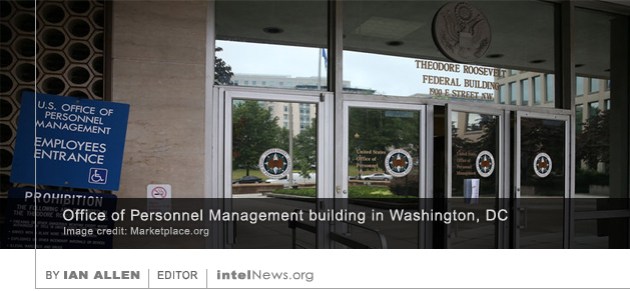
Office of Personnel ManagementUnited States intelligence officials expressed concerns about a federal database containing details of security-clearance applications in the years prior to a massive cyber hacking incident that led to the theft of millions of personnel records. Up to 18 21 million individual files were stolen last month, when hackers broke into the computer system of the US Office of Personnel Management (OPM), which handles applications for security clearances for all agencies of the federal government. The breach gave the unidentified hackers access to the names and sensitive personal records of millions of Americans who have filed applications for security clearances –including intelligence officers.

Until a few years ago, however, Scattered Castles, the database containing security clearance applications for the US Intelligence Community, was not connected to the OPM database. But in 2010, new legislation aiming to eliminate the growing backlog in processing security-clearance applications required that Scattered Castles be merged with the OPM database. The proposed move, which aimed to create a unified system for processing security clearances made sense in terms of eliminating bureaucratic overlap and reducing duplication within the federal apparatus. But, According to the Daily Beast, US intelligence officials expressed concerns about the merging of the databases as early as 2010. The website said that security experts from the Intelligence Community expressed “concerns related to privacy, security and data ownership” emerging from the impending merge. One official told the Daily Beast that there were fears that the “names, Social Security numbers, and personal information for covert operatives would be exposed to hackers”.

However, the merge went ahead anyway, and by 2014 parts of the Scattered Castles databases were gradually becoming accessible through the OPM network. The Daily Beast cited an unnamed US official as saying that there was “no connection between Scattered Castles and the OPM hack”. But when asked whether Scattered Castles was linked to the OPM system, he referred the website to the Federal Bureau of Investigation, which is probing last month’s hack attack.

Author: Joseph Fitsanakis | Date: 1 July 2015 | Permalink: https://intelnews.org/2015/07/01/01-1726/

New documents show US spied ‘on every major French company’

NSANew information published by international whistleblower website WikiLeaks seems to suggest that the United States National Security Agency (NSA) collected information on export contracts by French companies and sought inside information on France’s position in international trade negotiations. According to the website, which published the new material on Monday, the documents appear to suggest concerted efforts by Washington to obtain secret information about the economic policies of the French government and the country’s financial sector.

The WikiLeaks release contains a list of “Information Needs” (IN), which signifies collection requirements on France that are part of the US National Signals Intelligence Requirements List. The latter is updated regularly to reflect wide-ranging intelligence requirements put to the NSA by its customers, who include US policy makers and other members of the US Intelligence Community. The IN list is labeled “2002-204”, which means it was created in 2002 and has been updated ever since. The documents also include an “Essential Elements of Information” (EEI) list, which points to more narrow areas of interest that the NSA’s collection teams are instructed to focus on. The EEI list released by WikiLeaks includes France’s economic relations with the US and other Western countries and France’s dealings with international financial agencies and institutions. It also includes France’s international economic and trade policies, as well as its policy maneuvers in the G-8 and G-20 group of nations.

At one point, the EEI list appears to instruct NSA collection units to target every French-registered company involved in negotiations for international projects or other sales contracts valued at over $200 million. According to WikiLeaks, the target list would inevitably include every major French company, including car makers Peugeot and Renault, banking conglomerate BNP Paribas, as well as Credit Agricole, one of Europe’s leading agricultural credit unions.

Representatives of the US Intelligence Community do not deny spying on foreign companies. But they insist that Washington does not use information collected from such operations to benefit American companies competing for international contracts. However, the latest WikiLeaks revelations are bound to fuel speculation in Europe that US intelligence-collection priorities may include an economic component. Last week, US President Barack Obama had to personally assure his French counterpart, Francois Hollande, that he was not being spied on by the NSA, after WikiLeaks released documents showing that the American spy agency had targeted the communications of three successive French presidents.

Author: Joseph Fitsanakis | Date: 30 June 2015 | Permalink: https://intelnews.org/2015/06/30/01-1725/

Global finance fears grow as Greece faces economic meltdown

GreeceSeveral Western countries issued travel warnings for Greece on Sunday, as the Greek government shut down all banks and imposed capital controls following the breakdown of talks between Athens and the European Union. British and American citizens traveling or living in Greece were advised to have enough cash on hand, as ATMs were quickly running out of currency. In a late-night televised address to the nation, Greek Prime Minister Alexis Tsipras said banks would remain closed until July 6 –the day after Greeks vote in a nationwide referendum on whether to accept the bailout terms proposed to Greece by its creditors. Police tightened security around ATM machines, as lines were reportedly formed in petrol stations in the capital.

The decision to shut down the banks was taken after finance ministers in the eurozone –the a monetary union of 19 European Union (EU) member states that have adopted the euro as their common currency– rejected Athens’ request to prolong a financial-assistance program. The decision could prompt Greece to default on a €1.5 billion payment to the International Monetary Fund, one of Greece’s main creditors. Additionally, the European Central Bank, which oversees Greece’s banking system, refused on Sunday to infuse cash to the Greek banks, in order to accommodate the mass withdrawal of cash by panicked citizens. On Saturday, Greece’s Minister of Finance, Yannis Varoufakis, was not allowed to attend a eurozone meeting in Brussels –a historic first that could mean Greece is close to being kicked out of the eurozone and maybe even the EU as a whole.

Finance ministers of the 18 countries that attended Saturday’s meeting issued a joint statement pledging “to do whatever it takes to stabilize the common currency area” and shield it from possible domino effects caused by the Greek financial meltdown. However, it is difficult to predict what will happen to the financial markets if Greece declares a default, as some of the world’s largest banking institutions share ownership of the country’s mammoth €300 billion debt. Financial analysts warned that the euro will become “increasingly vulnerable” to ripple effects from the Greek crisis, while the London-based Financial Times crisis meeeting the developments in Greece were “expected to trigger a sharp reaction” in the world’s markets this week. The big question, said The Times, is whether the economic fallout from the latest dramatic developments would be limited to Greece or become “a global event”. There was no question, said the paper, that the markets were “at a critical juncture” and that investors were “taking the possibility of contagion very seriously”.

Meanwhile, several European countries announced they will be holding emergency meetings on Monday. German Chancellor Angela Merkel invited German party leaders to a crisis meeting, while the office of French President Francois Hollande said he would be holding a “restricted emergency cabinet meeting” to discuss the developments in Greece. The British government said its ministers were “taking steps” to protect the country from possible economic turbulence in the eurozone –of which the United Kingdom is not a member. British newspaper The Observer said in a lengthy editorial published on Sunday that the Greek crisis, coupled with rising tensions over immigration from the Middle East and North Africa, heightened terrorism fears, as well as the impending British EU referendum, were causing a “perfect storm [of] tension and division at Europe’s core”.

Author: Joseph Fitsanakis | Date: 29 June 2015 | Permalink: https://intelnews.org/2015/06/29/01-1724/

Calls in France to offer asylum, citizenship, to Snowden and Assange

Assange and SnowdenLeaders from all sides of the French political spectrum urged the French government on Thursday to offer political asylum, and even French citizenship, to the American defector Edward Snowden and to WikiLeaks founder Julian Assange. The calls were made in response to news earlier this week that the United States National Security Agency spied on the personal communications of three French presidents from the 1990s to at least 2012. The files were published on Tuesday by the international whistleblower website WikiLeaks. They consist of what the website described as “top secret intelligence reports and technical documents”, which detail NSA spying operations against the French presidency, as well as espionage directed at several French government ministers and at France’s ambassador to the US. As intelNews predicted on Wednesday, the French government’s response to the revelations has been relatively muted. But many French politicians, including one minister in the government of French President Francois Hollande, called for Paris to extend offers of political asylum, and even French citizenship, to Assange and Snowden.

The initial call was issued by Laurent Joffrin, the influential managing editor of Libération, the Paris-based newspaper that partnered with WikiLeaks to release the NSA documents earlier this week. In a leading editorial published in the paper on Thursday, Joffrin said that French protests against NSA spying “have no more effect than scolding a rude toddler”, and added that by offering asylum to Snowden, France would “stand up [to America] and send a clear and effective message to Washington”.

Shortly after Joffrin’s editorial, Jean-Christophe Lagarde, president of the centrist Union of Democrats and Independents in the French Parliament, said that France should have given Snowden political asylum back in 2013, when he originally requested it. Lagarde was quoted in the French press as saying that “the French nation has already been dishonored by refusing to accept Edward Snowden’s request for political asylum when he asked for it in 2013”. Jean-Luc Mélenchon, the leftist member of the European Parliament, agreed with Lagarde, adding that Assange and Snowden must not only receive political asylum in France, but also be given “the French nationality”.

On Thursday afternoon, Jean-Pierre Mignard, a close friend and longtime political advisor to President Hollande, said that “given the service they have rendered to the cause of human freedom, France could accommodate a request for asylum from Assange and Snowden, should they request it”. Mignard added that “French law allows the Republic to grant asylum to any foreign subject who faces persecution for taking action in favor of human freedom”.

When asked by BFM TV, France’s most popular news channel, whether political asylum could be extended to Snowden and Assange, France’s Justice Minister Christiane Taubira said that she was “absolutely shocked by the idea”, because such a course of action would drive a powerful wedge between France and the US, two countries with deep historical ties. But she added that such a move would constitute a strong “symbolic gesture” against espionage, and thus remained on the table as a possible policy maneuver to be adopted by the government of France.

Late on Thursday, however, France’s Prime Minister Manuel Valls indicated that any discussion of an offer of asylum to Assange and Snowden by the government of France was premature. Speaking at a hastily organized press conference to discuss the NSA espionage revelations during an official visit to Colombia, Valls told reporters that the question of offering asylum to the two men “did not arise” during internal government talks. “And in any case”, said Valls, such an initiative “would not address the issue at hand”, namely American espionage against the French presidency. France’s goal is to extract guarantees from Washington that all espionage against French officials would stop, noted the French prime minister. If France offered asylum to Assange and Snowden, American espionage against French targets would likely reach unprecedented levels, he added.

Author: Joseph Fitsanakis | Date: 26 June 2015 | Permalink: https://intelnews.org/2015/06/26/01-1723/

French president calls crisis meeting to discuss US spy revelations

France Hollande ObamaThe president of France has convened an emergency meeting of the country’s highest national security forum in response to revelations that the United States spied on three French presidents. The Conseil de la Défense is to convene in Paris on Wednesday to discuss the emergence of documents that appear to implicate the US National Security Agency (NSA) in spying on Jacques Chirac and Nicolas Sarkozy, who ruled France from 1995 to 2012. The documents further indicate that the NSA may have also targeted the personal communications of Francois Hollande, France’s current head of state.

The files were published on Tuesday by the international whistleblower website WikiLeaks. They consist of what WikiLeaks described as “top secret intelligence reports and technical documents”, which detail NSA spying operations against the French presidency, as well as espionage directed at several French government ministers and at France’s ambassador to the US. WikiLeaks would not indicate whether it acquired the documents from American defector Edward Snowden, who is currently living in Russia. But it said that “French readers can expect more timely and important revelations in the near future”.

The material –termed “Espionnage Élysée” by WikiLeaks– features a list of “selectors”, which includes French government telephone numbers targeted for interception. One of the numbers is identified as belonging to the president of France. The document collection also includes a handful of intelligence briefs, which are presumably based on intercepted communications from the telephone lines listed among the “selectors”. They detail the thoughts and diplomatic maneuvers by French presidents and other senior officials on subjects such as the Greek economic crisis, the Israeli-Palestinian dispute, and the United Nations.

French newspaper Liberation, which partnered with WikiLeaks to release the NSA material, said on Tuesday that the revelation should not surprise anyone in the post-Snowden era, but that it was still likely to cause a significant rift in French-American relations. In 2014, Germany expelled the station chief of the Central Intelligence Agency in Berlin –essentially the highest-ranking American intelligence officer in the country– over revelations that the US spied on the personal communications of Chancellor Angela Merkel.

Liberation contacted the NSA but was told by its spokesman, Ned Price, that the Agency was “not going to comment on specific intelligence allegations”. A spokesman from the Élysée Palace told the paper that an official statement would be issued following the Conseil de la Défense meeting on Wednesday.

Author: Joseph Fitsanakis | Date: 24 June 2015 | Permalink: https://intelnews.org/2015/06/24/01-1721/

Panel to present findings on mysterious death of UN secretary general

Dag HammarskjöldA panel of experts commissioned by the United Nations is about to unveil fresh evidence on the mysterious death in 1961 of UN secretary general Dag Hammarskjöld, who some claim was murdered for supporting African decolonization. The evidence could spark a new official probe into the incident, which has been called “one of the enduring mysteries of the 20th century”.

On September 17, 1961, a Douglas DC-6 transport aircraft carrying United Nations Secretary General Dag Hammarskjöld crashed in the British-administered territory of Northern Rhodesia (now Zambia). The crash killed everyone onboard. Three successive investigations into the crash, conducted by the Rhodesian Board of Investigation, the Rhodesian Commission of Inquiry, and the United Nations Commission of Investigation, viewed “pilot error” as the most likely cause of the tragedy. However, the latter probe, which was closed in 1962, opined that deliberate sabotage could not be ruled out as a likely cause of the tragedy.

Since that time, numerous scholars and independent investigators, such as Swedish development expert Göran Björkdahl and British academic Susan Williams, have raised the possibility that the plane carrying Secretary General Hammarskjöld may have been “shot down by an unidentified second plane”. Several commentators have also pointed to what seemed like eagerness by British colonial administrators in Northern Rhodesia to obscure the details of the incident. One argument is that Hammarskjöld, described as the most independent-minded secretary general in the history of the UN, had angered many world powers due to this fierce support for anti-colonial movements that were sweeping the African continent. Indeed, at the time of his death, Hammarskjöld was flying to the Congo’s mineral-rich Katanga region to meet European-supported chieftains who in 1960 had seceded from the nationalist government of Congolese Prime Minister Patrice Lumumba. Ironically, Lumumba had been assassinated in a Western-backed coup exactly eight months before Hammarskjöld’s own death.

In 2012, the independently funded Hammarskjöld Inquiry Trust appointed an international team of jurists to study all available evidence on the plane crash. The team, called the Hammarskjöld Commission, was composed of a diplomat and three judges from the Netherlands, the United Kingdom, South Africa, and Sweden. The Commission reported in 2013 that “significant new evidence” had emerged, which suggested that American intelligence agencies, notably the National Security Agency and the Central Intelligence Agency, held “crucial evidence” that could help clarify the causes of the crash.

The report by the Hammarskjöld Commission prompted the UN’s current Secretary General, Ban Ki-moon, to appoint a UN-sponsored panel of experts to examine the new evidence and present it before the UN General Assembly. The three-member panel traveled to several countries, including Zambia, the US, Britain and Belgium, to access government, as well as private archives. Its report is expected to be delivered to the UN General Assembly this week. It is said to include written testimony by a Belgian pilot who says he shot down the plane carrying Hammarskjöld by error, while trying to divert it on orders by a government entity. Another witness, a former intelligence officer with the US National Security Agency, is believed to have told the UN experts that he listened to a recording of a pilot who said he shot down the UN Secretary General’s plane.

Once this new evidence is presented, the UN General Assembly will have to vote on whether the UN should hold an official probe into the plane crash. It would mark the first such inquiry since 1962.

Author: Joseph Fitsanakis | Date: 22 June 2015 | Permalink: https://intelnews.org/2015/06/21/01-1719/

German parliament may sue government to access British spy files

Angela Merkel and David CameronA German parliamentary committee investigating spying operations may take the German government to court in order to force it to give up secret documents on Berlin’s intelligence cooperation with Britain. The Committee of Inquiry into Intelligence Operations was set up in 2014, after files leaked by American defector Edward Snowden revealed 1 that the United States had been spying on the telephone communications of German Chancellor Angela Merkel. But the scope of the committee expanded earlier this year, when it emerged that, while being spied upon by the US and Britain, Germany also collaborated 2 with American and British intelligence agencies in order to spy on France and other European countries.

Last week, the German Office of the Federal Prosecutor concluded 3 its criminal investigation into alleged espionage operations by the US National Security Agency against Chancellor Merkel. German officials said they had to drop the probe because of the unwillingness of US government officials to share information on the subject. But the parliamentary committee continues the inquiry on the related subject of Germany’s intelligence cooperation with the Britain and the US. The committee’s chairman, Dr. Patrick Sensburg, said on Thursday that his team of investigators would consider “going to court” in order to force the German government to release all relevant documents. Speaking 4 to the British newspaper The Daily Telegraph, Dr. Sensburg said that the parliamentary inquiry had a right to investigate intelligence cooperation between Berlin and London.

However, as intelNews reported 5 in February, the British government is said to have warned Germany that all intelligence cooperation between the two countries will be terminated should classified information about British intelligence operations be shared with an inquiry. Dr. Sensburg was asked by The Telegraph whether reports of the British warnings were true, but he responded that he was unable to comment on the matter.

Author: Joseph Fitsanakis | Date: 19 June 2015 | Permalink: https://intelnews.org/2015/06/18/01-1718/


  1. J. FITSANAKIS “US surveillance or Merkel’s phone prompts angry German reaction” intelNews [24oct2013] 
  2. J. FITSANAKIS “Airbus to sue Germany for helping US spy on its operations” intelNews [01may2015] 
  3. T. SCHLEIFER “Germany drops probe into U.S. spying on Merkel” cnn [13jun2015] 
  4. J. HUGGLER “German spy inquiry could demand access to British secrets” The Daily Telegraph [18jun2015] 
  5. J. FITSANAKIS “Britain threatens to stop intelligence cooperation with Germany” intelNews [13feb2015] 

Informant ‘got $47m reward’ for clues on MH17 downing over Ukraine

MH17 crashA German investigator, who is probing the downing of a civilian airliner over Ukraine nearly a year ago, says that an informant has claimed a multimillion reward for information pointing to those responsible for the attack. The investigator, Josef Resch, of Lübeck, Germany, says that a binding non-disclosure agreement does not allow him to reveal his client, who offered the $47 million reward. But he told German business magazine Capital that he is hopeful his client will soon reveal the details, since “people who pay that kind of money in exchange for information do not keep it for themselves”. However, he also hinted that his client may be an intelligence agency, who may decide to “deal with the matter without fanfare”.

Resch was speaking in reference to the murder of 295 people in July 2014, who died when the Malaysia Airlines Boeing 777-200 they were on was shot down 1 near the Ukrainian city of Donetsk. The city has a large Russian population and constitutes a major front in the current War in Donbass, which is being fought between the Ukrainian government and pro-Russian Ukrainians. For that reason, the downing of MH17 has become politically contentious: the United States claims 2 that it was shot down by Russian-supported rebels, while Russia accuses 3 the Ukrainian Air Force of deliberately firing on the airliner in order to blame the rebels.

If Resch’s claim is accurate, it would mean that someone with inside knowledge about the identity of the shooters has has come forward with crucial information about the killing of nearly 300 civilians over Donetsk. The size of the award also implies that those offering it are prepared to take some form of action in response to the information. Capital notes 4 that the multimillion award is higher than the amount offered in the past by the government of the United States for information leading to the capture of Osama bin Laden.

Resch told Capital that he is not certain whether the anonymous informant was able to claim the entire reward amount, or just part of it. He also said that he never came in direct contact with the informant, as the latter was represented “by a Swiss middleman” throughout the negotiations.

Author: Ian Allen | Date: 18 June 2015 | Permalink: https://intelnews.org/2015/06/18/01-1717/


  1. J. FITSANAKIS “Ukraine rebels ‘admit downing Malaysia plane’ in phone intercepts” intelNews [18jul2014] 
  2. I. ALLEN “US spies say incriminating flight MA17 recordings are genuine” intelNews [24jul2014] 
  3. I. ALLEN “Russia says it traced Ukraine fighter jet near downed Malaysia plane” intelNews [22jul2014 
  4. J. BRAMBUSCH “Informant zu MH 17 packt aus” Capital [15jun2015] 

Australian spies use paid informants abroad to stop human smuggling

ASISAustralian law enforcement and intelligence agencies routinely use paid informants in Indonesia and Pakistan as part of a decade-old covert war against human traffickers in the Indian Ocean. This information has been revealed by The Australian newspaper in response to reports 1 last week that Australian authorities paid traffickers to turn around a boat transporting asylum-seekers to the country. After the reports came out, many members of the opposition Australian Labor Party blasted the government for bribing human traffickers, and calling the practice “disgraceful” and “unsustainable”. But new information published on Monday shows that, when the Labor Party was in government, it instructed the country’s law enforcement and intelligence agencies to recruit and pay informants from within the human-trafficking networks abroad.

According 2 to The Australian, the use of paid informants is part of a wider secret war between the Australian intelligence and security agencies and the trafficking networks, which began in 2001. This “covert war”, said the paper, is meant to identify the structure and operations of human-trafficking syndicates and stop the constant flow of tens of thousands of asylum-seekers to Australia. According to the paper, the Australian Secret Intelligence Service (ASIS) was the first Australian government agency to begin the practice. It was followed in 2005 by the Australian Federal Police, which also began stationing officers abroad and tasking them with running networks of informants. In 2009, ASIS received $21 million (US$16.5 million) from the Australian government to develop networks of agents in several countries where large human-smuggling cartels are known to operate. The agency used the funds to station officers in several Indonesian cities, as well as in Pakistani capital Islamabad, where it operates in coordination with the Federal Investigations Agency of Pakistan’s Ministry of the Interior.

The Australian quoted an unnamed Australian intelligence official who had access to the intelligence reports from the ASIS anti-smuggling operations. He told the paper that the use of informants who are members of smuggling gangs was the only effective way of eventually “collapsing these networks”. Meanwhile, the government of Australia has refused comment on the allegations of bribing human smugglers.

Author: Joseph Fitsanakis | Date: 17 June 2015 | Permalink: https://intelnews.org/2015/06/17/01-1716/


  1. B. LAGAN “Australia accused of bribing smugglers to take refugees away” The Times [13jun2015] 
  2. C. STEWART “Spies, police have paid Indonesian informers for years” The Australian [16jun2015] 

Murder suspect to give evidence on death of ex-KGB spy in London

Alexander LitvinenkoA Russian former intelligence officer, who is accused by the British government of having killed a former KGB spy in London, has agreed to testify at a public inquiry to be held in the British capital next month. British government prosecutors believe Russian businessman Dmitri Kovtun, who worked for the KGB during the Cold War, poisoned his former colleague in the KGB, Alexander Litvinenko, in 2006. Litvinenko was an officer in the Soviet KGB and one of its successor organizations, the FSB, until 2000, when he defected with his family to the United Kingdom. He soon became known as a vocal critic of the administration of Russian President Vladimir Putin. In 2006, Litvinenko came down with radioactive poisoning soon after meeting Kovtun and another former KGB officer, Andrey Lugovoy, at a London restaurant. He was dead less than two weeks later.

In July of 2007, after establishing the cause of Litvinenko’s death, which is attributed to the highly radioactive substance Polonium-210, the British government officially charged 1 Kovtun and Lugovoy with murder and issued international arrest warrants for their arrest. Soon afterwards, Whitehall announced the expulsion of four Russian diplomats from London. The episode, which was the first public expulsion of Russian envoys from Britain since end of the Cold War, is often cited as marking the beginning of the worsening of relations between the West and post-Soviet Russia.

Since 2007, when they were officially charged with murder, Kovtun and Lugovoy deny the British government’s accusations, and claim that Litvinenko poisoned himself by accident while trading in illegal nuclear substances. The administration of Russian President Vladimir Putin refuses to extradite the two former KGB officers to London, and has denounced the British public inquiry into Litvinenko’s death as “a sham”. However, last March Kovtun unexpectedly wrote to the presiding judge at the inquiry, Sir Robert Owen, offering to testify via a live video link from Moscow. On Monday, Sir Robert issued a statement 2 saying an agreement had been struck between Kovtun and the inquiry, and that the Russian businessman would testify from Moscow, “most likely towards the end of next month”. Kovtun is expected to confirm that he met Litvinenko in London on the day the former KGB spy fell ill, but to insist that he had no role in poisoning him.

Author: Joseph Fitsanakis | Date: 16 June 2015 | Permalink: https://intelnews.org/2015/06/16/01-1715/