In surprise move, US Congress may slash funding for CIA ops in Syria

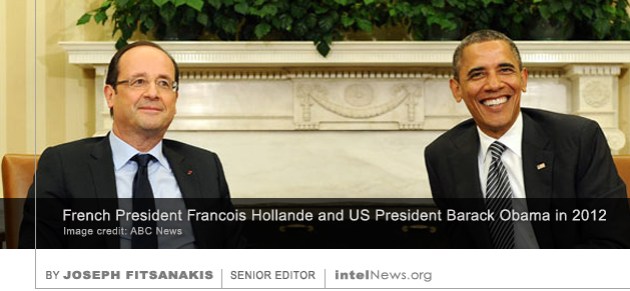
CIAAmerican Congressional lawmakers have voted to cut funding for the Central Intelligence Agency’s secret operations in Syria, in a surprise move that indicates growing concern on Capitol Hill with Washington’s strategy on the Syrian Civil War. The CIA’s involvement in the Syrian Civil War began in 2012, when US President Barack Obama issued 1 a classified presidential finding that authorized Langley to arm and train opposition militias. The clandestine program was initially based in training camps in Jordan, before eventually expanding to at least one location in Qatar. Currently, the CIA’s secret involvement in the Syrian conflict is said 2 to be among the Agency’s most extensive covert operations in the world, and comes at an annual cost that is nearing $1 billion.

But this amount may be cut by as much as 20 percent if the Permanent Select Committee on Intelligence of the US House of Representatives has its way. According to The Washington Post 3, the Committee recently voted to reduce the Agency’s classified funds for the Syria operation as a way of expressing its “concern with [US] strategy in Syria”. It is perhaps indicative of the displeasure on Capitol Hill with Washington’s current policy on Syria that the Committee voted unanimously to slash the CIA’s funding. The Post even quoted the ranking Democrat on the Committee, Adam B. Schiff (CA), who said there was “growing pessimism” among Committee members, who felt that the US would not be in a position to “help shape the aftermath” of the conflict in Syria.

The surprise move by the Congressional intelligence panel will need to be ratified by the House, which will vote on a preliminary intelligence-spending bill this week. The Post said that the measure “provoked concern” in the White House, while CIA officials warned that slashing the CIA’s funding for its Syria operations could seriously hurt rebel groups that are being backed by the US. One unnamed US intelligence official told the paper that Russia and China would continue to fund the regime of Syrian President Bashar al-Assad, even as Congress decided to defund the CIA’s operations in the war-torn Middle Eastern country. The White House declined to respond to questions about the vote.

Author: Joseph Fitsanakis | Date: 15 June 2015 | Permalink: https://intelnews.org/2015/06/15/01-1714/


  1. J. Fitsanakis “Obama authorizes CIA to conduct ‘non-lethal covert action’ in SyriaintelNews [03aug2012] 
  2. G. Miller and K. DeYoung “Secret CIA effort in Syria faces large funding cutThe Washington Post [12Jun2015] 
  3. G. Miller and K. DeYoung “Secret CIA effort in Syria faces large funding cutThe Washington Post [12Jun2015] 

CIA chief paid secret visit to Israel ahead of Iran nuclear deal

John BrennanThe director of the United States Central Intelligence Agency visited Israel in secret last week to discuss the Jewish state’s refusal to endorse an emerging deal with Iran over its nuclear program. Citing “two senior Israeli officials”, the Tel Aviv-based Israeli newspaper Haaretz said on Tuesday that CIA Director John Brennan arrived in Israel last Thursday. Although he was officially hosted by Tamir Pardo, director of Israeli intelligence agency Mossad, Brennan used the opportunity to hold secret meetings with several senior Israeli officials, said Haaretz. Among them were Prime Minister Benjamin Netanyahu, National Security Adviser Yossi Cohen, as well as Major General Hartzl Halevi, who heads Israel’s Military Intelligence Directorate.

According to Haaretz, Brennan’s visit to Israel had been planned “long ahead of time”, and should not be interpreted as a sudden diplomatic move from Washington. However, it came just weeks ahead of a deadline for a far-reaching settlement next month between Iran and six world powers over the Islamic Republic’s nuclear program. If successful, the much-heralded deal will mark the conclusion of ongoing negotiations between the Islamic Republic and a group of nations that have come to be known as P5+1, representing the five permanent members of the United Nations Security Council plus Germany. Israel, however, has strongly criticized the negotiations, referred to as ‘the Geneva pact’. Last year, the Israeli Prime Minister called the pact a “historic mistake” that would enable “the most dangerous regime in the world” to get closer to “attaining the most dangerous weapon in the world”.

It is not known whether Brennan brought with him a message from US President Barack Obama addressed to the Israeli Prime Minister, said Haaretz. On Monday, just 72 hours after Brennan’s departure, another senior American official landed in Tel Aviv —openly this time. It was General Martin Dempsey, Chairman of the US Joint Chiefs of Staff, who was hosted by his Israeli counterpart, General Gadi Eisenkot. Like Brennan before him, General Dempsey met with Prime Minister Netanyahu and Minister of Defense Moshe Yaalon. Haaretz contacted the CIA about Brennan’s secret visit to Israel, but an Agency spokesperson refused to comment.

Author: Joseph Fitsanakis | Date: 10 June 2015 | Permalink: https://intelnews.org/2015/06/10/01-1712/

Swiss reject contract bid by UK-owned internet firm over spy fears

UPC CablecomThe Swiss federal government has rejected a multi-million dollar contract bid by one of the world’s largest broadband Internet service providers, saying it is foreign-owned and could serve as “a gateway for foreign spies”. The company, UPC Cablecom, is headquartered in Zurich, is subject to Swiss law, and is currently the largest broadband cable operator in Switzerland. However, in 2005 it became a subsidiary of the UPC Broadband division of Liberty Global Europe, an international telecommunications and television company based in London, England. It is therefore technically considered a foreign company according to Swiss law. In 2013, UPC Cablecom submitted a bid for a competitive contract to provide broadband Internet services to Swiss government agencies. But in January 2014, the company was informed by Swiss officials that such a contract could not be awarded to a foreign-owned telecommunications service provider such as UPC Cablecom.

Until last week, it had been generally assumed that the decision to exclude UPC Cablecom’s bid on the basis of the company’s foreign ownership had been taken by the officials in charge of evaluating the contract. However, on Friday of last week, the Swiss daily Berner Zeitung reported that the decision to drop UPC Cablecom’s bid had been taken by no other than the Swiss Federal Council. Consisting of seven members representing various cantons and political parties, the Federal Council serves as Switzerland’s collective head of government and effectively operates as the country’s head of state. It was the Federal Council, said Berner Zeitung, that intervened in the contract evaluation proceedings and instructed the Swiss Federal Department of Finance to exclude bids by foreign-owned companies. The argument was that such companies could serve as “potential gateways for foreign intelligence constituencies”, said the paper. It added that the decision had been taken in light of information revealed by American former intelligence operative Edward Snowden, who is currently living in Russia.

The ruling by the Federal Council meant that Swisscom became the sole bidder for the government contract, which is worth 230 million Swiss francs (US $378 million). Meanwhile, UPC Cablecom has filed a complaint with Switzerland’s Federal Administrative Court, claiming that the Federal Council abused its power by intervening in the service contract. The Court’s decision is not expected for several months.

Author: Joseph Fitsanakis | Date: 9 June 2015 | Permalink: https://intelnews.org/2015/06/09/01-1711/

Belgium launches official probe into alleged German-US espionage

BelgacomThe Belgian government has announced the start of an official investigation into allegations that the country’s tele- communications networks were spied on by a consortium of German and American intelligence agencies. A press release issued Friday by the Belgian Ministry of Justice said the minister, Koen Geens, had authorized an examination of claims of espionage by the United States National Security Agency and Germany’s Bundesnach-richtendienst (BND). The statement was referring to EIKONAL, an alleged collaboration between the NSA and the BND, which was revealed last month by Austrian politician Peter Pilz. Pilz told a press conference in Bern, Switzerland, that EIKONAL had targeted European telecommunications carriers for at least four years, from 2005 to 2008. The governments of Switzerland and the Netherlands have already launched their own investigations into EIKONAL.

After speaking with Pilz, Belgian politician Stefaan Van Hecke told Belgian media last month that the BND-NSA consortium had penetrated the network of Proximus, the mobile subsidiary of Belgacom, Belgium’s national telecommunications carrier. Speaking anonymously about the investigation, a Belgian official told the country’s largest French-language newspaper, Sud Presse, that if the alleged espionage is confirmed, it would have “not only legal implications, but will also affect relations between Belgium, Germany and the US”. A Justice Ministry spokeswoman said on Friday that if the allegations of espionage were confirmed “the government would take appropriate action”, but she refused to elaborate.

IntelNews regulars will remember the last time Belgacom surfaced in the news: in 2013, we reported that the company’s technicians had detected an “unidentified virus” that had infected several dozen mainframe computers. The virus specifically targeted telecommunications traffic carried by Belgacom’s international subsidiaries in Africa and the Middle East. Belgium’s Federal Prosecutor’s Office said at the time that the malware’s complexity, coupled with its grand scale, “pointed towards international state-sponsored cyber espionage”.

Author: Ian Allen | Date: 8 June 2015 | Permalink: https://intelnews.org/2015/06/08/01-1710/

Israel, Saudi Arabia, acknowledge holding secret talks on Iran

Dore Gold and Anwar Majed EshkiRepresentatives from Israel and Saudi Arabia have publicly admitted for the first time that they met secretly to discuss their common foe Iran, even though Saudi Arabia does not officially acknowledge Israel’s existence. The admission was made at a symposium held on Thursday at the Council on Foreign Relations, a foreign-policy think tank based in Washington, DC.

According to Bloomberg’s Eli Lake, who covered the event, it featured speeches by Saudi General (ret.) Anwar Majed Eshki, and Israeli career diplomat Dore Gold. Eskhi is a former adviser to Saudi Arabia’s ambassador to the United States, Prince Bandar bin Sultan. Gold is Israel’s former ambassador to the United Nations, and is currently seen as a strong candidate to lead Israel’s Ministry of Foreign Affairs. Lake notes that Eshki gave his speech in Arabic, Gold gave his in English, and that no questions were taken from the audience.

At least five meetings appear to have taken place between senior Israeli and Saudi officials since early 2014, in secret venues located in Italy, India and the Czech Republic. The main purpose of the clandestine meetings was to discuss what Tel Aviv and Riyadh see as Iran’s increasingly powerful role in Middle Eastern affairs, and to explore ways of stopping Tehran from building nuclear weapons.

The admission of the secret meetings between Israeli and Saudi diplomats will not come as a surprise to seasoned Middle East observers. Many have suspected that the two countries, who have historically been bitter enemies, have sought to collaborate behind the scenes against Iran. However, as Lake correctly points out, this week’s acknowledgement is the first time that this collaboration has been openly admitted by the two sides. He quotes one participant at Thursday’s symposium, Israeli General (ret.) Shimon Shapira, who says that Tel Aviv and Riyadh have also discussed “political and economic” means of thwarting Iran’s nuclear ambitions.

This admission, however, does not mean that the Saudis are about to recognize Israel, or that the Israelis are any closer to accepting the Saudis’ 2002 Arab-Israeli peace plan, which Tel Aviv has flatly rejected, says Lake. Admittedly, the rising power of Iran can only do so much to bring Israelis and Arabs closer.

Author: Joseph Fitsanakis | Date: 05 June 2015 | Permalink: https://intelnews.org/2015/06/05/01-1709/

Colombia’s ex-spy chief on trial for 1989 killing of election candidate

Luis Carlos GalánThe former director of Colombia’s intelligence service returned to court this week to face charges of complicity in the assassination of a leading presidential hopeful, who was gunned down in 1989 by a powerful drug cartel. Luis Carlos Galán, a senator and former minister, was tipped to win the 1990 presidential election in which he stood on the Liberal Party ticket. His popularity with the electorate is largely attributed to his uncompromising stance against Colombia’s powerful drug cartels. He had vowed to arrest leading drug lords and send them to the United States to face criminal charges. He would do so, he said, after signing a mutual extradition treaty with Washington. However, Galán was assassinated on August 18, 1989, during a campaign rally in Soacha, a working-class suburb of Colombia’s capital, Bogotá. The assassination took place before thousands of spectators who were present at the rally, and is considered one of the highest-profile political killings in the history of Colombia.

A notorious hitman for the Colombian mafia, John Jairo Velázquez, was convicted of Galán’s killing. Velázquez admitted in court that had been ordered to kill the Liberal Party senator by Pablo Escobar and Jose Gonzalo Rodriguez, the two most senior leaders of the powerful Medellín Cartel. In 2007, a former justice minister and presidential hopeful, Alberto Santofimio, was convicted of helping organize Galán’s murder. He is currently serving a 25-year prison sentence for the killing.

On Monday, another senior government figure, General Miguel Maza Márquez, was taken to court to face charges of complicity in Galán’s assassination. Maza headed Colombia’s highly disreputable Administrative Department for Security (DAS) in the late 1980s, and he has been in jail since 2013, awaiting trial for the murder. The prosecution alleges that Maza appointed a DAS officer who had known links to the Medellín Cartel as the head of security for Galán, and that he did so to “help the hitmen carry out the assassination”. This is the second time Maza is standing trial for Galán’s murder. He faced the same charges in 2012, after surrendering himself to justice in 2009, following two years in hiding. He denies all charges against him.

Author: Ian Allen | Date: 03 June 2015 | Permalink: https://intelnews.org/2015/06/03/01-1708/

Mossad allegedly behind arrest of ‘Hezbollah bomber’ in Cyprus

Larnaca police stationA team of officers from Israel’s Mossad intelligence agency were heading to Cyprus late yesterday to be briefed on the arrest of a dual Lebanese-Canadian citizen, who was found to be in possession of 67 thousand packages of ammonium nitrate. It is not yet clear whether the passports held by the 26-year-old man are genuine. Cypriot police said he used his Canadian passport to enter the Mediterranean island about a week ago. But he was arrested on Wednesday, after police found 420 boxes of ammonium nitrate in the house where he was staying. The boxes amount to nearly 2 tons of the highly flammable fertilizer. They were discovered in the basement of a house in a residential neighborhood of the city of Larnaca, on the southern coast of Cyprus.

On Monday, Kuwaiti daily Al-Jarida said the Lebanese-Canadian man was arrested after Cypriot police were tipped off by the Mossad. The Kuwaiti newspaper, cited “exclusive sources from Israel” in saying that the 26-year-old is thought to be an operative of the Lebanese Shiite militant group Hezbollah. Al-Jarida added that the man is thought to have contacted several Hezbollah operatives in recent months, and that he has even met Hezbollah’s reclusive leader, Sheikh Hassan Nasrallah. Cypriot police are working on the assumption that the ammonium nitrate was going to be used to blow up the Israeli embassy on the island, or to attack Israeli tourists holidaying there. But he was stopped because the Israelis were able to monitor his phone calls to other Hezbollah operatives, said Al-Jarida.

The Kuwaiti newspaper’s claims appeared to be confirmed on Monday morning, as the alleged Hezbollah operative was brought under heavy police protection to the Larnaka District Court. The authorities then promptly admitted a request by the prosecutor to conduct the proceedings behind closed doors, due to “concerns pertaining to the national security of the state”. Meanwhile, a local Cypriot newspaper, the Famagusta Gazette, said a team of Mossad officers were on their way to the island to be briefed by the police and possibly speak to the detainee. Speaking to reporters on Monday, Israel’s Minister of Defense, Moshe Yaalon, said the house in Larnaka was a “Hezbollah hideout” that served as a safe house for the Shiite group’s “international terrorism network”.

Author: Ian Allen | Date: 02 June 2015 | Permalink: https://intelnews.org/2015/06/02/01-1707/

Army colonel who joined ISIS was trained in the United States

Gulmurod KhalimovA former army colonel and police commander in Tajikistan, who features in a new Islamic State propaganda video, was trained in counterterrorism by the United States government, according to officials. Until earlier this year, Colonel Gulmurod Khalimov was a commander in Tajikistan’s Special Purpose Mobile Units. Known commonly as OMON, these elite units are a cross between anti-riot corps and counterterrorism forces. They date from the Soviet era and are common features of the law enforcement architecture of most former Soviet republics, including Tajikistan, whose population is 98 percent Muslim.

The government of Tajikistan launched an extensive search campaign in April of this year, following the mysterious disappearance of Colonel Khalimov. But the police commander reappeared on Wednesday in a video published online by the militant group Islamic State, which also known as the Islamic State of Iraq and al-Sham (ISIS). In the video, Khalimov is seen wearing a black ISIS combat uniform and brandishing a sniper rifle. Speaking in Russian, he warns Russian and American citizens that ISIS will “find your towns, we will come to your homes and we will kill you, God willing”. He also states in the video that he participated in a number of counterterrorist training programs on American soil between 2003 and 2007. At least one of these programs, which were presumably funded by Washington, took place in the US state of Louisiana. Khalimov adds —without providing details— that it was the things he experienced during these training programs that led him to join ISIS.

On Saturday, a spokeswoman for the US Department of State told CNN that Khalimov was indeed among an elite group of Tajik counterterrorism operatives who took part in five training courses funded by the US government. The funding was reportedly provided under the Department of State’s Diplomatic Security and Anti-Terrorism Assistance program, which is designed to “train candidates in the latest counterterrorism tactics”. Ironically, these tactics are meant to be employed against groups like ISIS, which Khalimov appears to have joined. A report on CNN notes that counterterrorism experts are now concerned that Khalimov’s defection to ISIS will give the group invaluable insider’s knowledge of counterterrorism techniques, as taught by US instructors.

Author: Joseph Fitsanakis | Date: 01 June 2015 | Permalink: https://intelnews.org/2015/06/01/01-1706/

Switzerland to probe claims it was spied on by US, German agencies

SwisscomThe office of the Swiss Federal Prosecutor has launched an investigation into claims that the country’s largest telecommunications provider was spied on by a consortium of German and American intelligence agencies. The spy project was reportedly a secret collaboration between Germany’s BND (Bundesnachrichtendienst) and America’s National Security Agency (NSA). According to Austrian politician Peter Pilz, who made the allegations on Wednesday, the BND-NSA collaboration was codenamed EIKONAL and was active from 2005 to 2008. Speaking during a press conference in Bern, Switzerland, Pilz said many European phone carriers and Internet service providers were targeted by the two agencies.

Among EIKONAL’s targets, said Pilz, was Swisscom AG, Switzerland’s largest telecommunications provider and one of the successor companies to the country’s national carrier, the PTT (short for Post, Telegraph, Telephone). The government of Switzerland still retains a majority of Swisscom shares, which makes the Bern-based company the closest thing Switzerland has to a national telecommunications carrier. Under the EIKONAL agreement, the BND accessed Swisscom traffic through an interception center based in Frankfurt, Germany. From there, said Pilz, the intercepted data was transferred to a BND facility in Bad Aibling to be entered into NSA’s systems. Pilz shared numerous documents at the press conference, among them a list of key transmission lines that included nine Swisscom lines originating from Zurich and Geneva.

Switzerland’s Office of the Federal Prosecutor said on Wednesday that a criminal investigation was already underway into Peter Pilz’s claims, and that the Swiss Federal Intelligence Service was in contact with Swisscom and other actors targeted by EIKONAL. Meanwhile, Pilz refused to answer questions about where he got the documents about the alleged spy operation. He said, however, that he did not think Swisscom was aware of the BND-NSA actions against it. The company issued a statement on Wednesday saying it had “no agreements with the NSA, the BND, or any other foreign intelligence agency that permit eavesdropping” on company lines.

Author: Ian Allen | Date: 28 May 2015 | Permalink: https://intelnews.org/2015/05/28/01-1705/

Judge orders release of key testimony from Rosenberg spy case

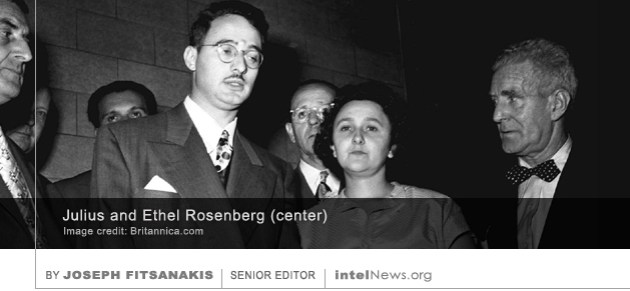
Julius and Ethel RosenbergA United States district judge has ordered the release of the last major piece of sealed evidence in one of the most important espionage cases of the Cold War. The case led to the execution in 1953 of an American couple, Julius and Ethel Rosenberg, who were convicted of conspiring to spy for the Soviet Union. The Rosenbergs were arrested in 1950 for being members of a larger Soviet-handled spy ring, which included Ethel’s brother, David Greenglass. Greenglass later told a US court that he firmly believed the USSR should have access to nuclear technology and actively tried to give Moscow information on the Manhattan Project. Greenglass agreed to testify for the US government in order to save his life, as well as the life of his wife, Ruth, who was also involved in the spy ring. He subsequently fingered Julius Rosenberg as a courier and recruiter for the Soviets, and Ethel as the person who retyped the content of classified documents before they were surrendered to their handlers. This piece of testimony from Greenglass was used as the primary evidence to convict and execute the Rosenbergs.

However, although historians are confident that Julius Rosenberg was indeed an active member of the Soviet spy ring, there are doubts about Ethel. Many suggest that her involvement with her husband’s espionage activities was fragmentary at best, and that she refused to cooperate with the Federal Bureau of Investigation in an ill-judged attempt to protect her husband. The argument goes that Ethel was put to death as a warning to Moscow, as well as to intimidate other American spies, rather than on the basis of actual evidence of her involvement in espionage. Many years after the Rosenbergs’ execution, Greenglass claimed he had lied about Ethel’s role in the spy affair in order to protect his wife, who was the actual typist of the espionage ring.

The debate over Ethel Rosenberg’s fate will undoubtedly by rekindled by US District Judge Alvin Hellerstein’s decision last week to unseal Greenglass’ testimony. The documents could not be made public while Greenglass was alive, because he objected to their release. But he died last year in a nursing home in New York, so his testimony can now legally be made available to the public. In making his decision known, Judge Hellerstein said Greenglass’ testimony was a “critical piece of an important moment in our nation’s history”. The United States government is legally permitted to block the release of the documents should it decide to do so. But when a White House spokesperson was asked about the subject by the Associated Press, she decline to comment.

Author: Joseph Fitsanakis | Date: 26 May 2015 | Permalink: https://intelnews.org/2015/05/26/01-1703/

Defectors provide rare glimpses of North Korean spy operations

Kim Dong-sikTwo high-profile North Korean defectors, who used to work for the country’s spy agencies, have spoken publicly about the use of espionage by one of the world’s most impenetrable intelligence communities. Kim Dong-sik and Kang Myong-do told American television network CNN last Friday that human intelligence officers —the technical term for spy recruiters— are highly sought after in North Korea. Kim said he was selected for special-operations training while he was still in high school, and in 1981 he was admitted to an elite intelligence academy in Pyongyang. While there, he was trained in the use of firearms and explosives, as well as in martial arts and underwater diving, among other skills. CNN did not elaborate on the identity of the North Korean agency that trained Kim, but it was almost certainly the Special Operation Force of the Korean People’s Army, which is believed to be among the largest such outfits in the world.

It was only after years of training, said Kim, that he was told he was going to be a spy. Most likely, that meant he was detailed to the Reconnaissance General Bureau, a military-intelligence agency that resembles the United States Central Intelligence Agency’s Special Activities Division. He told CNN that he was not permitted to be captured alive by adversary agencies, and that his loyalty to the North Korean regime would be questioned if he failed to commit suicide at the conclusion of an aborted mission. Kim said his first mission abroad took him to South Korea, where he helped exfiltrate a North Korean intelligence officer named Lee Sun-sil, who had been working in the South as a non-official-cover operative for over a decade. His second mission involved trying to recruit South Koreans who were believed to be sympathetic toward Pyongyang. In 1995, however, he was captured alive during his third mission to South Korea, after failing to commit suicide as per his operational instructions. For that, he said, his entire family was executed back in North Korea, though his claim is admittedly difficult to verify.

CNN spoke to another high-profile North Korean defector, Kang Myong-do, son-in-law of the country’s former Prime Minister, Kang Song-san, who died in 2007. Kang, who was once described by The New York Times as “the most damaging defector ever to escape from North Korea”, used to work for the United Front Department, a civilian intelligence outfit that is subordinate to the ruling Workers’ Party of Korea. He told CNN that there are probably “hundreds” of North Korean intelligence officers operating in the United States at any given point, and that their main goal is to “recruit Korean-Americans who lean towards supporting North Korea”. He added that Pyongyang sees intelligence officers as crucial assets in its confrontation with its adversaries, and that it treats them exceedingly well when they are loyal. In North Korea, “spies are treated on the same level as generals”, he said.

Russian whistleblower who died in 2012 may have been poisoned

Aleksandr PerepilichnyA Russian businessman, who died in London while assisting a Swiss probe into a massive money-laundering scheme, may have been poisoned with a substance derived from a highly toxic plant, an inquest has heard. Aleksandr Perepilichny was an influential Moscow investment banker until he fled Russia in 2009, saying that his life had been threatened after a disagreement with his business partners. A few months later, having moved to an exclusive district in Surrey, south of London, Perepilichny began cooperating with Swiss authorities who were investigating a multi-million dollar money-laundering scheme involving senior Russian government officials. The scheme, uncovered by a hedge fund firm called Hermitage Capital Management (CMP), and described by some as the biggest tax fraud in Russian history, defrauded the Russian Treasury of at least $240 million. The case made international headlines in 2009, when one of its key figures, a CMP lawyer named Sergei Magnitsky, died in mysterious circumstances while being held in a Russian prison. After Magnitsky’s death, Perepilichny said he too had been warned in no uncertain terms that his name featured on a Russian mafia hit list.

On November 10, 2012, having just returned to his luxury Surrey home after a three-day trip to France, Perepilichny went out to jog. He was found dead later that evening, having collapsed in the middle of a side street near his house. He was 44. A postmortem examination by police concluded that he had died of natural causes and pointed to the strong possibility of a heart attack. However, lawyers representing the late businessman’s family told a pre-inquest hearing on Monday that, according to new medical evidence, Perepilichny stomach was found to have traces of a poisonous plant. The shrub-like plant, known as gelsemium, is extremely rare and mostly grows in remote parts of China. One of the lawyers, Bob Moxon-Browne, claimed at the hearing that gelsemium is a “known weapon of assassination [used] by Chinese and Russian contract killers”. The Perepilichny family’s legal team said that further forensic tests are to be carried out, so that the claim of poisoning can be examined in more detail.

Nazi letter to one of history’s greatest double spies found in Tokyo

Richard SorgeA congratulatory letter sent by a senior Nazi official to Richard Sorge, a German who spied for the USSR, and is sometimes credited with helping Moscow win World War II, has been found in Japan. The letter was sent by Joachim von Ribbentrop, a senior German Nazi Party member and Adolf Hitler’s Minister of Foreign Affairs. It is directly addressed to Sorge, who was himself a member of the Nazi Party, but spied for the USSR throughout the 1930s and early 1940s.

Born in what eventually became Soviet Azerbaijan to a German father and a Russian mother, Sorge fought as a German soldier in World War I and received commendations for his bravery. But he became a communist in the interwar years and secretly went to Moscow to be trained as a spy by the Fourth Directorate of the Soviet Red Army, which was later renamed GRU —Soviet military intelligence. He then traveled back to Germany as a non-official-cover principal agent for the USSR, joined the Nazi Party and became a journalist for Die Frankfurter Zeitung, one of Germany’s leading newspapers at the time. When the paper sent him to Tokyo to be its Japan correspondent, Sorge struck a friendship with German Ambassador to Tokyo Eugen Ott, who eventually hired him as his trusted press secretary and advisor. It was from him that Sorge found out that Hitler was preparing to violate his non-aggression pact with the USSR, and promptly notified Moscow. His warnings, however, were dismissed as fantastical by Soviet leader Joseph Stalin, whose government was caught by complete surprise by the eventual German onslaught. Several months later, when Sorge told Moscow that German ally Japan was not planning to invade Russia from the east, Stalin took the tip seriously. The information provided by Sorge partly allowed Stalin to move hundreds of thousands of Soviet troops from the Far East to the German front, which in turn helped beat back the Nazi advance and win the war.

The letter was found by Yoshio Okudaira, a document expert working for Japanese antique book dealer Tamura Shoten in Tokyo. It was among a stack of World War II-era documents brought to the antique dealer by a resident of the Japanese capital. The documents belonged to a deceased relative of the man, who was reportedly unaware of their contents or significance. According to the Deutsche Welle news agency, the letter was addressed to Sorge on the occasion of his 43rd birthday, and is dated 1938. It was written by von Ribbentrop’s personal secretary and includes a signed black-and-white photograph of Hitler’s foreign-affairs minister. The accompanying note commends the double spy on his “exceptional contribution” to the Third Reich as press secretary of the German embassy in Tokyo.

Okudaira, the document expert who realized the significance of the letter, said it is of historical interest because it confirms the high level of trust that the Nazi Party had in Sorge, who was never suspected by Berlin or by his German colleagues in Tokyo of having any connection with the Soviet government. However, Sorge’s espionage was eventually uncovered by Japanese counterintelligence, who promptly arrested and tortured him severely, before executing him in November of 1941. In 1961, the Soviet government awarded him posthumously the title of Hero of the Soviet Union, which was the country’s highest distinction during the communist era.

Al-Qaeda still a more serious threat than ISIS, says ex-CIA official

Al-Qaeda in YemenAl-Qaeda and its affiliates continue to pose the most serious unconventional threat to American security, despite the meteoric rise of the Islamic State of Iraq and al-Sham, according to a former senior official in the United States Central Intelligence Agency (CIA). Michael Morell, who was deputy director of the CIA, and served twice as the Agency’s acting director, did not deny that the Islamic State, also known as ISIS, poses a significant threat to the security of the US. However, the militant group “is not the most significant threat to the homeland today”, he said. Morell made the comment while speaking on Monday at the National Press Club in Washington, DC, while promoting his new book, The Great War of Our Time: An Insider’s Account of the CIA’s Fight Against Al Qa’ida.

The former CIA official told his audience that the most serious unconventional threat to the US continues to come from three al-Qaeda groups, all of which remain far cogent and willing to engage the US on its home soil. According to Morell, the three groups consist of the so-called ‘al-Qaeda Central’ in Afghanistan and Pakistan, as well as its Syrian branch, known as the Khorasan Group, and its Yemen affiliate, which goes by al-Qaeda in the Arabian Peninsula (AQAP). He added that the last three serious efforts to strike the US with the intent of causing mass casualties all came from AQAP. Morell was referring to the 2009 so-called ‘underwear bomber’ and the 2010 ‘ink-cartridge bomb plot’, as well as the ‘plastic suicide vest bomb pot’ in 2012, all of which were unsuccessful. The former CIA official said that, unlike ISIS, al-Qaeda has “the ability to bring down an airliner in the US tomorrow”. Most importantly, he added, unlike ISIS, al-Qaeda has shown willingness to confront America on its home soil.

Morell’s argument echoed similar comments expressed in September 2014 by the then-Director of the US National Counterterrorism Center, Matthew Olsen. Olsen, who held the US’ most senior counterterrorism post until his retirement last year, opined at a forum in Washington that ISIS did not currently pose a direct threat to America or Western Europe. He added that the risk of a “spectacular, al-Qaeda-style attack” on American or European targets by ISIS was negligible, saying that ISIS was “significantly more limited than al-Qaeda”, especially in the run-up to 9/11.

German spies helped US find bin Laden, claims German newspaper

BND headquarters in BerlinBy JOSEPH FITSANAKIS | intelNews.org
German intelligence gave the United States a tip of “fundamental importance” about the whereabouts of al-Qaeda founder Osama bin Laden, which helped the Americans locate him in Pakistan, according to a German media report. Germany’s leading tabloid newspaper, Bild am Sontag, said in its Sunday edition that the tip allowed the Central Intelligence Agency to corroborate separate intelligence tips pointing to the possibility that the wanted Saudi terrorist may have been hiding in the Pakistani city of Abbottabad. Citing an unnamed “American intelligence official”, Bild said the tip was given to the CIA by its German equivalent, the Bundesnachrichtendienst, known in Germany as BND. It said the critical information originated from an agent handled by the BND inside Pakistan’s Inter-Services Intelligence directorate (ISI). The agent was an officer of the ISI but had secretly worked as an agent of the BND “for years”, said the German newspaper.

The tip was eventually communicated by the Germans to the CIA, and was used by the American agency to corroborate information from a number of other sources, which eventually led to the decision to send a Special Forces team to kill the al-Qaeda leader. According to the German paper, the CIA was already leaning toward the view that bin Laden was hiding in Abbottabad. However, the BND tip was “of fundamental importance” in enabling the CIA to make up its mind as to bin Laden’s whereabouts, said Bild. Moreover, the BND’s Pakistani agent allegedly told the German agency that the ISI leadership was protecting bin Laden while holding him under house arrest. If true, the Bild information would seem to confirm allegations made by American reporter Seymour Hersh and security expert R.J. Hillhouse that Pakistani leaders had secretly imprisoned the al-Qaeda founder in Abbottabad. The Bild article goes on to claim that German intelligence used its Bad Aibling Station listening posts to monitor the Pakistani government’s communications so as to help ensure that the planned American attack on bin Laden’s compound was not being anticipated by Islamabad.

However, in reporting on Bild’s allegations, German newsmagazine Der Spiegel questions the validity of the tabloid newspaper’s argument. Why, it asks, would the BND’s Pakistani agent approach his German handlers with the information about bin Laden’s whereabouts, instead of going directly to the Americans? Had the agent followed the latter course of action, he or she could have been able to claim the lucrative reward offered by the US Department of State in exchange for information that would help locate the al-Qaeda founder.