Did Outside Spy Agencies Know About Kim Jong Il’s Death?

Kim Jong Il lies in state in PyongyangBy JOSEPH FITSANAKIS* | intelNews.org |
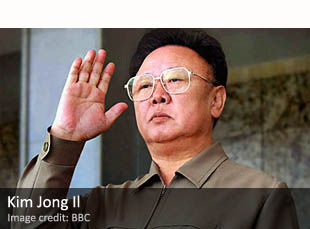
According to KCNA, North Korea’s state news agency, Premier Kim Jong Il died at 8:30 am on Saturday, December 17. However, government media did not announce the startling news until early Monday morning, that is, nearly 50 hours after the “Dear Leader’s” sudden passing. Assuming that North Korean reports of the time and location of Kim’s death are truthful, the inevitable question for intelligence observers is: did anyone outside North Korea receive news of Kim Jong Il’s death during the 50 hours that preceded its public announcement? In times like this, most Westerners tend to look at the Central Intelligence Agency, National Security Agency, MI6, DGSE, or any of the other recognizable acronyms that dominate American and European news reports. The reality is, however, that despite their often-mythical status, Western intelligence agencies tend to be limited in their global reach, which is usually heavily concentrated on selected adversaries, like Russia, or China. These agencies therefore tend to rely on their regional allies to get timely and accurate information on smaller nations that are often difficult to penetrate. In the case of North Korea, Western spy agencies depend heavily on actionable intelligence collected by South Korean and Japanese spies. Read more of this post

Spy agencies scramble for clues after North Korean leader’s death

Kim Jong IlBy JOSEPH FITSANAKIS* | intelNews.org |
Even though rumors had been rife for quite some time about North Korean leader Kim Jong Il’s worsening health, his death startled intelligence agencies the world over. In typical fashion, North Korean state media announced yesterday that “the dear leader” had died on Saturday onboard a train during one of his usual field trips, “due to immense mental and physical strain caused by his […] building of a thriving nation”. A period of national mourning has been declared in the country until December 29. In the hours following the startling announcement, which Time magazine dubbed “a nightmare before Christmas”, no unusual activity was observed in the North, while early Monday reports from North Korean capital Pyongyang stated that traffic was “moving as usual”. Moreover, despite longstanding rumors about Kim Jong Il’s ill health, few intelligence analysts in South Korea, Japan, or the United States have been observing overt signs of political instability, or a leadership crisis. However, despite the apparent calm in the North, intelligence agencies around the world have gone on high alert, led by those in South Korea, which has remained technically at war with the North since 1950.  South Korean President Lee Myung-bak reportedly placed the country’s military on emergency alert on Sunday, and has ordered government officials to remain in capital Seoul and “maintain emergency contact” with their office staff. French sources said that one of the first outcomes of an emergency National Security Council meeting that took place in Seoul on Sunday was to request that the American Pentagon, which maintains nearly 30,000 troops in South Korea, steps up aerial surveillance over the North. Japan has also stepped up its intelligence-gathering operations in North Korea, and its Prime Minister, Yoshihiko Noda, instructed his government to “closely share information” on North Korea with the United States, South Korea, and —notably— China. Read more of this post
News you may have missed #648

Academi HQ

►►IntelNews editor interviewed on RT. IntelNews senior editor, Dr Joseph Fitsanakis, was interviewed yesterday on the main news program of the popular international news channel RT. The interview, concerning the rebranding of private security company Xe Services (formerly Blackwater) to Academi, can be watched here (watch video at the bottom of the page).
►►Contractors making a killing working in UK cyberdefense. Britain has spent more than £100 million ($160 million) in the past year on consultants to combat cyber espionage and the growing use of the internet by terrorists. Now, members of Parliament are investigating the soaring costs of employing private contractors, some paid the equivalent of £150,000 a year, three times the average wage at GCHQ, the UK’s signals intelligence agency.
►►Japan launches second spy satellite. Japan’s space agency, JAXA, has launched an intelligence-gathering satellite, its second this year. Japan launched its first pair of spy satellites in 2003, prompted by concerns over North Korea’s missile program. It currently has four optical information-gathering satellites in orbit. Officials refused to provide details of the capabilities of the most recently launched satellite.

News you may have missed #634

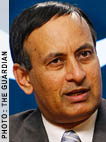
Husain Haqqani

Husain Haqqani

►►Korean ex-soldier investigated for spying. Police suspect that a former South Korean Army soldier, Kim, 34, whose full name was undisclosed to the media, crossed through Shenyang, northeastern China, into the North and handed over information gathered during and after his military service. This is the second case involving alleged North Korean spying on the South in as many days.
►►Pakistan ambassador to US resigns over spy memo row. Islamabad’s ambassador to Washington, Husain Haqqani, has resigned after a confrontation between Pakistan’s military and the civilian government of President Asif Ali Zardari. His resignation follows reports of an offer by the Pakistani government to the United States to rein in the army and its spy agency, Inter-Services Intelligence. Zardari’s government was accused of treachery over the proposal, which was made in a memo delivered to the US military chief, Admiral Mike Mullen.
►►US says ‘no proof’ of Libyan ex-spy chief’s capture. It emerged earlier this week that former Libyan intelligence chief Abdullah al-Senussi had been captured. But the United States now says there is no proof he is in custody. According to Susan Rice, the US envoy to the United Nations, Libyan authorities “were not able to confirm that Senussi was in anybody’s custody”.

News you may have missed #633

Abdullah al-Senussi

Al-Senussi

►►Is Britain secretly assisting the CIA’s drone campaign? In the latest casualties from America’s hidden war in Pakistan, two British nationals, Ibrahim Adam and Mohammed Azmir, have reportedly been killed by drone missiles. The death of two men already known to UK authorities raises serious questions about the role that the British intelligence services are playing in the CIA’s unmanned drone war.
►►Gaddafi’s intelligence chief captured. Libya’s interim authorities have captured the last totem of the Gaddafi regime, seizing former intelligence chief Abdullah al-Senussi in the country’s southern desert. The arrest means that all leading figures from the Gaddafi regime have now been killed, captured or driven into exile.
►►South Korea says it caught North spy. A North Korean spy has been arrested after arriving in South Korea posing as a refugee, according to South Korean authorities. The latter claim to have found during a routine background check that the man, surnamed Kim, was assigned to the North’s military intelligence command and had received espionage training.

News you may have missed #616

CSIS seal

CSIS seal

►►S. Koreans say several N. Korean assassination bids stopped. South Korea has arrested several North Korean agents for plotting to assassinate anti-Pyongyang activists, according to Won Sei-Hoon, head of South Korea’s National Intelligence Service, who spoke to the parliament’s intelligence committee. Earlier this month, Seoul prosecutors charged a North Korean agent with trying to murder Park Sang-Hak, an outspoken activist in Seoul, with a poison-tipped weapon.
►►MI5 inspectors’ website shut down after security blunder. A new website for the former High Court judges responsible for oversight of MI5, MI6 and wiretapping has been shut down after it emerged that anyone could edit any page of it. The security blunder forced the Intelligence Services Commissioner, Sir Mark Waller, and the Interception of Communications Commissioner, Sir Paul Kennedy, to pull the plug on their new website.
►►Report urges Canadian spies to share more info with diplomats. Canada’s spy agency needs to share more information with the Department of Foreign Affairs so the department is better prepared for negative reactions to Canadian intelligence work overseas, according to a new report by Canada’s Security Intelligence Review Committee. The Committee, which reports to Parliament on the work of the Canadian Security Intelligence Service, found the organization had “limited exchanges” with Canada’s diplomats on its operations.

News you may have missed #606

Gaza Freedom Flotilla raid

2010 Flotilla raid

►►N. Korea planned to trade nukes for full ties with US. North Korea in 2008 indicated it would retain its nuclear bombs until the end of the six-party talks as a final bargaining chip for attaining full diplomatic relations with the United States, according to US diplomatic cables leaked recently by the anti-secrecy group WikiLeaks.
►►Judge refuses to sanction CIA for destroying torture tapes. A federal judge won’t hold the CIA in contempt for destroying videotapes of detainee interrogations that included the use of a torture technique known as waterboarding, ruling instead that the spy agency merely committed “transgressions” for its failure to abide by his court order. The Obama administration has kept its promise to the CIA.
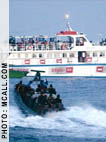
►►Turkey says NATO members will not share intelligence with Israel. Turkey has says it is certain that NATO member states will keep their promise of not sharing the Alliance’s intelligence within with Israel. Turkish-Israeli relations badly damaged last year, after Israeli naval commandos stormed a Turkish ship carrying humanitarian aid to Gaza to breach the naval blockade, killing nine Turkish civilians.

South Korea charges North Korean agent caught carrying ‘poison-tipped needle’

Park Sang-hak

Park Sang-hak

By JOSEPH FITSANAKIS | intelNews.org |
The South Korean government has formally pressed charges against a North Korean defector, whom it accuses of trying to kill an outspoken anti-Pyongyang activist living in the South, with the use of a poison-tipped needle. As intelNews reported last month, a man identified only as ‘Ahn’ was arrested at a subway station in southern Seoul, as he tried to assassinate Park Sang-Hak. The alleged target of the assassination is a high-profile North Korean defector known for spearheading an imaginative —and often controversial— propaganda campaign directed against the government of North Korea. In one recent case, Park, along with his wife and children, employed dozens of inflatable helium balloons to smuggle thousands of leaflets, dollar bills, solar-powered radios, and DVDs into North Korea. According to the Korean Central Prosecutor’s Office in Seoul, Park’s activities prompted Pyongyang to employ ‘Ahn’, a North Korean former Special Forces commando, to try to kill the anti-communist propagandist. According to South Korean officials, ‘Ahn’, has operated as a North Korean sleeper agent ever since his relocation to Seoul, in the late 1990s. In the summer of 2011, ‘Ahn’ contacted Park and eventually managed to arrange a meeting with him at a suburban subway station in the South Korean capital for September 3. However, several days prior to the arranged rendezvous, Park received notice from South Korea’s National Intelligence Service (NIS) that ‘Ahn’ was out to either kidnap or kill him. The alleged North Korean agent was arrested at the subway station at the time of his meeting with Park. South Korean government prosecutors claim that NIS agents found a poison-tipped needle in ‘Ahn’s’ possession, which they plan to use as evidence at his upcoming closed-door trial. Read more of this post

Seoul arrests N. Korean defector for ‘planning assassination’

Park Sang-hak

Park Sang-hak

By JOSEPH FITSANAKIS | intelNews.org |
South Korean authorities have announced the arrest of a North Korean defector, who is accused of planning to assassinate another defector involved in intensive propaganda operations against the North. A man identified only as “Ahn” was reportedly detained earlier this month after arranging a meeting with Park Sang-hak. Park is a high-profile North Korean defector, known for spearheading an imaginative —and often controversial— propaganda campaign directed against the government of North Korea. In one recent example, Park, his wife and children, used dozens of inflatable helium balloons to smuggle thousands of leaflets, dollar bills, solar-powered radios, and DVDs into North Korea. The nature of Park’s operations, which tend to be designed to attract worldwide media attention, is often the cause of diplomatic rifts between Pyongyang and Seoul, which does not formally endorse Park’s actions. The Associated Press spoke to two South Korean officials, who refused to be named; although they confirmed news of Ahn’s arrest, they refused to discuss a report by South Korea’s Yonhap News Agency, and now the BBC, according to which Ahn “had a poison-tipped needle on him” when he was detained by South Korean counterintelligence officers. This is the second time in recent months that South Korea has arrested North Korean defectors on suspicion of planning assassination operations. In April of 2010, Seoul announced that two North Koreans, who had defected to the South a few months earlier, had admitted to being intelligence officers on a Pyongyang-sponsored mission to assassinate a North Korean former senior official. The official, Hwang Jang-yop, is a former secretary of the Korean Workers’ Party and the ideological architect of juche, the philosophy of self-reliance, which is North Korea’s officially sanctioned state dogma. Read more of this post

News you may have missed #578

Syria

Syria

►►CIA agent who helped kill Che wants payout from Cuba. This is from the “news that isn’t” department: Gustavo Villoldo, a Cuban-born CIA operative, who helped track down and kill Che Guevara in Bolivia, has won $2.8 billion in damages from the Cuban government, for confiscating his family property after the 1959 revolution. But he is unlikely to ever collect the money because Cuba does not recognize US court rulings.
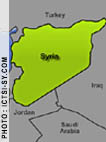
►►Cheney wanted Bush to destroy suspected Syrian nuke site. Former US Vice President Dick Cheney says in a new memoir that he urged President George W. Bush to bomb a suspected Syrian nuclear reactor site in June 2007. But, he wrote, Bush opted for a diplomatic approach expressed misgivings. Eventually Israeli jets bombed the site. Cheney’s account of the discussion appears in his autobiography, In My Time: A Personal and Political Memoir, which is to be published by Simon & Schuster next week.
►►South Korea indicts five for spying for North. Five South Koreans, including a former parliamentary aide, have been indicted for allegedly spying for North Korea, in connection with the Wangjaesan spy ring.

News you may have missed #565 (United States edition)

DHS seal

DHS seal

►►Secret watch-list proposal causes US privacy groups protests. The US Department of Homeland Security (DHS) is planning to duplicate the FBI’s Terrorist Screening Database to expand an extensive database called Watchlist Service. The proposed database will include names, birthdays, photos and biometrics of targeted individuals. But the DHS has proposed to exempt the database from Privacy Act provisions, which means that a person can never know if they are on it.
►►US blacklists Syrian banks over WMD ties. The Obama administration unveiled punitive measures on Wednesday against two Syrian financial institutions for their alleged ties to nuclear proliferation in Syria and North Korea. The government-run Commercial Bank of Syria and a subsidiary, the Syrian-Lebanese Commercial Bank, are now prohibited from engaging in transactions with US individuals and from accessing any assets under US control. The US Department of the Treasury alleges that the banks have carried out transactions on behalf of the Scientific Studies and Research Center in Syria and the Tanchon Commercial Bank in North Korea, both of which the US blacklisted several years ago for supporting “WMD proliferation activities”.
►►FBI revises surveillance exam after cheating revelations. About a year ago, the US Federal Bureau of Investigation revealed that hundreds of its agents were caught having cheated on an examination about new surveillance guidelines (known as Read more of this post

News you may have missed #561

Francis Gary Powers

Francis G. Powers

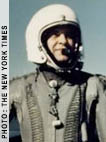
►►US to phase out U-2 spy plane after 50 years. After more than 50 years gathering intelligence 13 miles above the ground, the United States’ U-2 spy planes will be phased out and replaced by unmanned drones by 2015, according to reports this past week. The classified U-2 program came to light in 1960, when a Soviet surface-to-air missile brought down a U-2 flown by CIA pilot Gary Powers, who parachuted to safety but was soon captured.
►►Security company unearths ‘massive’ cyberespionage operation. A widespread cyberespionage campaign stole government secrets, sensitive corporate documents, and other intellectual property for five years from more than 70 public and private organizations in 14 countries. This is according to Dmitri Alperovitch, vice president of threat research at the cyber-security firm McAfee, who uncovered the alleged plot. The operation, dubbed SHADY RAT, targeted the United Nations and the United States, among other national and international entities.
►►South Korea expands spy ring investigation. South Korean authorities have expanded the controversial investigation into the alleged Wangjaesan spy ring, to include Read more of this post

High-level spy-ring arrests send shockwaves in S. Korea

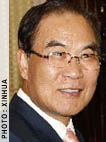
Lim Chae-jung

Lim Chae-jung

By JOSEPH FITSANAKIS | intelNews.org |
South Korean prosecutors have indicted or are questioning dozens of alleged members of a North Korean spy ring, in what is said to be the country’s largest espionage case in over a decade. Seoul’s political establishment has been rocked by the espionage scandal, which allegedly involves several trade unionists, academics, and at least ten members of the country’s opposition Democratic Party. According to security officials, the suspects were members of an underground organization called Wangjaesan, after Mount Wangjae which is a revered national monument in North Korea. The official indictment claims that Wangjaesan was handled by operatives of Office 225 of the North Korean Workers’ Party Korea, which is tasked with overseeing the activities of sleeper agents operating in South Korea. The organization was allegedly headed by a man identified only as ‘Kim’, who owned a South Korean electronics import-export company, and routinely traveled to China and Japan, where he purportedly met his North Korean handlers. Aside from ‘Kim’, South Korean counterintelligence investigators are reportedly questioning close to ten senior members of the Federation of Korean Trade Unions, several academics, as well as at least a dozen opposition political figures. Among the latter are members of South Korea’s leftwing Democratic Labor Party, widely considered as the political wing for the Korean Confederation of Trade Unions. Read more of this post

News you may have missed #552

Nikolai Kuznetsov

Nikolai Kuznetsov

►►This just in: South Korea arrests five for spying for North. South Korean prosecutors have arrested five people on charges of “setting up an underground communist group on the instructions of an espionage unit of North Korea’s ruling Workers Party”, a report from South Korea’s Yonhap news agency said on Friday. According to the report, South Korean authorities are “investigating about 20 other people including union activists and opposition party members”. We will publish more information as it comes in.
►►Some US intel analysts believe al-Qaeda near collapse. Citing classified intelligence reports and closed-door Capitol Hill briefings from the CIA, the National Counterterrorism Center and other agencies, some US officials are telling The Washington Post that bin Laden’s death has “pushed al-Qaida to the brink of collapse”. One official told the paper that al-Qaeda is now “largely incapable” of mass-casualty attacks against the United States. Could the ‘Leon Panetta Legacy Committee’ be the source of this report?
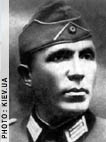
►►Russia and Ukraine commemorate legendary Soviet spy. Russia and Ukraine are celebrating 100 years from the birth of legendary Soviet spy Nikolai Kuznetsov. Kuznetsov, who operated in Nazi-occupied Ukraine, uncovered Read more of this post

News you may have missed #548 (China edition)

NIS HQ

By IAN ALLEN | intelNews.org |
►►China detains Korean spy officers. It emerged last week that Chinese authorities have kept in detention for nearly a year two South Korean NIS intelligence officers, who were caught collecting information about North Korea on Chinese soil. It appears that the Chinese did share the information with the North Koreans, because usually the North Korean news agency would have announced this when the officers were first arrested. Of course, NIS denied the Chinese report. ►►US intelligence on China declassified. George Washington University’s National Security Archive has published a series of declassified US intelligence reports on China, spanning the period from 1955 until 2010. In one report authored in 2005, US intelligence analysts speculate that Beijing might be trying to develop a capability to incapacitate Taiwan through high-power microwave and electromagnetic radiation, so as not to trigger a nuclear retaliation from the US. ►►IMF investigators see China behind computer hacking. Back in June, intelNews reported on a massive and sophisticated cyberattack on the computer systems of the International Monetary Fund, which experts claimed was “linked to a foreign government”. Read more of this post