News you may have missed #846

North and South KoreaBy IAN ALLEN | intelNews.org |
►►Cuba confirms it hid weapons on seized N. Korean ship. Cuba has admitted being behind a stash of weapons found on board a North Korean ship seized in the Panama Canal. The ship was seized by Panama last week after “undeclared military cargo” was found hidden in a shipment of sugar. United Nations sanctions prohibit the supply of arms to North Korea in the continuing dispute over its nuclear program. But the Cuban foreign ministry said the ship was carrying “obsolete arms” from Cuba “for repair” in North Korea.
►►British undercover officers stole identities of dead children. Britain’s Metropolitan Police Service, which is responsible for policing most of the city of London, has admitted that its undercover police officers expropriated the identities of at least 43 dead children. But police officials refused to inform the children’s families at the time, saying the practice was considered “essential to protect covert officers who were working inside dangerous extremist groups”.
►►Snowden has ‘thousands’ of damaging NSA documents. The Guardian’s Glenn Greenwald, who first reported on the disclosures of former CIA employee Edward Snowden, has said that the self-styled whistleblower has “literally thousands of documents” in his possession, which are essentially an “instruction manual for how the NSA is built”. The information could allow someone to evade or mimic NSA surveillance tactics, the journalist said.

News you may have missed #845

Lianne PollakBy IAN ALLEN | intelNews.org |
►►Mideast envoy Blair’s adviser is former Israeli intel officer. Former British Prime Minister Tony Blair is an official Middle East envoy for the Quartet, the group that represents the US, Russia, the United Nations and Europe. In his role as a mediator in the Israeli-Palestinian dispute, he is supposed to be politically neutral. But it turns out that one of his principal advisors, Lianne Polak, is an Israeli former army intelligence officer who has led intelligence teams in the Israel Defense Forces.
►►Who is the New Egyptian Intelligence Minister? Last week, a presidential order saw the appointment of General Muhammad Farid as the new head of Egypt’s General Intelligence Service. A profile of this unknown person reveals the close ties he had with those at the top of the Mubarak administration. His previous role was as the chairman of the Administrative Control Authority, which deals with investigating corruption in governmental agencies and public funds, as well as fighting organized crime. Farid was appointed to this role in 2004 by Hosni Mubarak.
►►Five unanswered questions about the NSA’s surveillance programs. Although the US government has disclosed some additional details about the programs in response to the leaks, important questions remain about the nature and scope of the surveillance programs. They include: 1. What other data is being collected under the USA PATRIOT Act? 2. How broad are the programs? 3. What’s the legal rationale? 4. Is the NSA still collecting email records? 5. Are there other programs that we don’t know about?
News you may have missed #844 (analysis on Snowden leak)

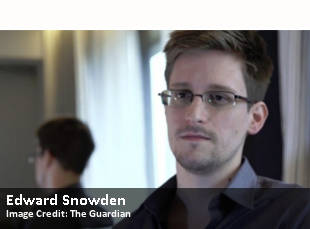
Edward SnowdenBy IAN ALLEN | intelNews.org |
►►Daniel Ellsberg: Snowden was right to flee US. “Many people compare Edward Snowden to me unfavorably for leaving the country and seeking asylum, rather than facing trial as I did. I don’t agree. The country I stayed in was a different America, a long time ago”, says Pentagon Papers whistleblower Daniel Ellsberg. And he continues: “I hope that he finds a haven, as safe as possible from kidnapping or assassination by US Special Operations forces, preferably where he can speak freely”.
►►NSA ‘in bed’ with German intelligence says Snowden. The fugitive US whistleblower Edward Snowden alleged on Sunday that the National Security Agency was “in bed together” with German intelligence despite claims by politicians in Chancellor Angela Merkel’s coalition that they were shocked by the extent of American spying in Germany. Snowden claimed that the NSA provided German intelligence, with analysis tools to help the organization monitor data flowing through Germany.
►►Can Snowden fly from Moscow to Caracas without being stopped? How can Snowden get from Moscow’s Sheremetyevo Airport, where he’s been holed up for nearly two weeks, to Venezuela, Bolivia or Nicaragua, which have indicated that they are willing to offer him political asylum? Former CIA analyst Allen Thomson took to Google Earth to answer the question of whether there’s a route Snowden might take that would allow him to fly from Moscow to, say, Caracas without crossing, as he puts it jokingly, the airspaces of “los Yanquis and their running dogs”.

US spies on Germany, EU agencies, as much as on China and Iraq

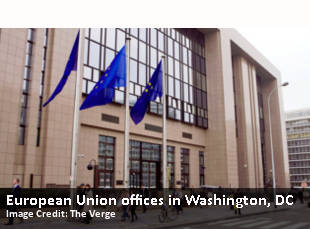
European Union offices in Washington, DCBy JOSEPH FITSANAKIS | intelNews.org |
America spies on the communications of German and other European Union agencies with the same intensity it spies on China and Iraq, documents show. German newsmagazine Der Spiegel aired these claims on Sunday, based on documents it said it obtained from American whistleblower Edward Snowden. Snowden, a former technical expert with the Central Intelligence Agency, remains holed up inside the transit section of Moscow’s Sheremetyevo International Airport, as Russian authorities have rejected repeated requests by Washington to extradite him to the US. According to Spiegel, American intelligence operatives placed interception equipment in the offices of the European Union’s representation in Washington, DC, before infiltrating the building’s computer network. Similar methods were aimed at the EU’s official representation to the United Nations in New York, and even in Brussels, Belgium, where the EU is headquartered. In a separate article, also published on Sunday, Der Spiegel said the National Security Agency, America’s foremost communications interception agency, monitors data from over half a billion communications exchanges taking place in Germany each month. The data is derived from telephone calls, emails, mobile text messages, and even chat transcripts, said the newsmagazine. The information appears to suggest that United States communications intelligence agencies are far more active in Germany than in any other of the EU’s 28 member states. Late on Sunday, a spokeswoman at the Office of the German Federal Prosecutor told Spiegel that the question of whether German citizens’ rights have been violated by illegal American intelligence activities is currently being looked at, and that “criminal charges” relating to the spying revelations “appear likely”. Read more of this post

Snowden flees to Russia despite US passport revocation

Edward SnowdenBy JOSEPH FITSANAKIS | intelNews.org |
An American former intelligence contractor, who leaked classified information about intelligence operations, was able to leave Hong Kong for Russia on Sunday, despite having his United States passport revoked. Earlier this month, Edward Snowden, a former technical assistant for the Central Intelligence Agency, disclosed the existence of PRISM, a clandestine electronic surveillance program operated by the US National Security Agency (NSA). Shortly before leaking information about US intelligence operations to the world’s media, Snowden traveled to Hong Kong, a territory under the control of the People’s Republic of China. Last week, Washington charged Snowden, a self-described whistleblower, under the Espionage Act, and revoked his American passport, in an attempt to prevent him from leaving Hong Kong. But reports emerged on Sunday that Snowden had boarded an Aeroflot flight from Honk Kong to Russian capital Moscow, despite the revocation of his American passport. US authorities claim that Snowden’s transfer to Moscow occurred after Washington revoked his American passport, which raises the question of how the former CIA employee was able to exit Chinese territory. Several reports suggest that Snowden was accompanied by “unidentified diplomats” as he left Hong Kong for Moscow. Previously, the US had applied considerable diplomatic pressure on China, requesting Snowden’s extradition. But Hong Kong allowed the American fugitive to board a plane to Moscow, saying it had been given “no legal basis to restrict Mr. Snowden from leaving”. Read more of this post

Skype set up secret project to enable government snooping

SkypeBy IAN ALLEN | intelNews.org |
Skype, the world-famous company that provides Internet-based communications between registered users, set up a secret project five years ago to facilitate persistent requests by government agencies to listen in on users’ phone calls. The New York Times revealed the secret project, codenamed Project CHESS, on Wednesday, citing individuals with inside knowledge of the program, who asked to remain anonymous so as “to avoid trouble with the intelligence agencies”. For many years, it was believed that the US National Security Agency (NSA) and other intelligence agencies had found it impossible to intercept Skype’s instant messaging and voice traffic. This was because, like other voice-over-Internet protocol (VOIP) communications providers, Skype uses technology that converts audio signals to data, and transports them through most of the Internet infrastructure in binary, rather than audio, format. Furthermore, Skype uses very complex algorithms to encrypt its customers’ communications. The company had repeatedly pointed to the technical complexities of VOIP communications in arguing that it was often technically impossible to facilitate communications interception requests by government authorities. In 2009, rumors began to circulate in the cybersecurity community that Skype’s VOIP encryption system had been cracked. It now seems that, around that time, the company, which was then still owned by eBay, was already negotiating with the United States government in order to help intelligence agencies gain access to its users’ communications. Read more of this post

Analysis: PRISM revelations harm US political, financial interests

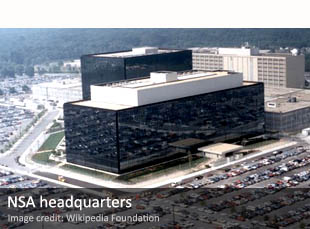
NSA headquartersBy JOSEPH FITSANAKIS | intelNews.org |
Ever since June 6, when Edward Snowden, a former United States Central Intelligence Agency (CIA) technician, exposed a vast communications spying system called PRISM, observers have focused on the ramifications of this controversy inside America. But in an excellent analysis written for ComputerWorld magazine’s New Zealand edition, Taylor Armerding points out that Snowden’s revelation could result in extensive international blowback for the United States, in both the political and economic realms. Armerding quotes Toronto University political science professor Ron Deibert, who argues that this latest revelation of massive communications interception activity by the National Security Agency (NSA) carries with it “unintended consequences […] that will undermine US foreign policy interests”. Deibert points out that the spy scandal has the potential to undercut America’s role and influence in global Internet governance. In the words of renowned security expert Bruce Schneier, many around the world are beginning to view the US as “simply too untrustworthy to manage the Internet”. Even policymakers and ordinary users friendly to Washington are worried about what they perceive as the “huge disadvantages” of their dependence on US-managed Internet networks that host the content of social media sites, cloud computing databases, or telecommunications exchanges, says Deibert. But the biggest potential damage to US interests, argues Armerding, is not political, but economic. “It is not just personal information that is being swept into the NSA’s massive databases”, he notes; “it is corporate data as well”. Indeed, the vast foreign and domestic spying represented by PRISM poses a direct threat to the global competitiveness of the American technology sector. Read more of this post

UK/US spy agencies targeted heads of state at London G20 meeting

NSA/GCHQ listening station in Menwith HillBy JOSEPH FITSANAKIS | intelNews.org |
British and American intelligence agencies targeted the communications of heads of state and other senior officials during a G20 summit held in London in 2009, according to documents. The summit was hosted by the then British Prime Minister Gordon Brown and was attended by delegates from 20 major world economies, including then Russian President Dmitry Medvedev, who was specifically targeted in the spy operation. British newspaper The Guardian, which published the information, said that delegates had their personal computers and cellular telephones monitored during a joint effort by the US National Security Agency (NSA) and Britain’s General Communications Headquarters (GCHQ). The two agencies, which are tasked with intercepting communications signals on behalf of their respective governments, maintain a jointly administered listening base inside the Royal Air Force station in Menwith Hill near Harrogate, North Yorkshire. According to one of the documents, entitled “Russian Leadership Communications in support of President Dmitry Medvedev at the G20 summit in London —Intercept at Menwith Hill station”, the listening facility was utilized to spy on the communications of the Russian President during his stay in London. The targeting began as soon as President Medvedev and the Russian delegation arrived in the British capital on April 1, and continued for several days. The top-secret document, which was shared between British, American, Australian, Canadian, and New Zealand intelligence services, noted “a change in the way Russian leadership signals have been normally transmitted” through satellite links from the Russian embassy in London. Another set of documents, also published by The Guardian, indicate that some G20 summit delegates were “tricked into using Internet cafes [that] had been set up by British intelligence agencies” in order to intercept their email communications. Read more of this post

Secretive US cyber unit has been spying on China for 15 years

NSA headquartersBy JOSEPH FITSANAKIS | intelNews.org |
A secretive cyberattack unit within the United States National Security Agency (NSA) has been engaged in protracted offensive cyberespionage operations against China for nearly 15 years. The revelation, made this week by veteran NSA watcher Matthew M. Aid, appears to confirm recent allegations made by Chinese government officials that Beijing’s secrets come under regular attack by US government-sponsored hackers. It also agrees with claims made by several intelligence observers, including this blog, that America’s cyber-security posture is not purely defensive. According to Aid’s article, published this past Monday in Foreign Policy, China’s allegations that it has been the target of sustained cyberespionage attacks by the US “are essentially correct”. Citing “a number of highly confidential sources”, Aid alleges that the NSA maintains a substantial “hacker army”. These ‘cyberwarriors’ allegedly operate under the NSA’s Office of Tailored Access Operations, known inside NSA simply as TAO. Its personnel is said to have successfully penetrated the Chinese government’s telecommunications networks and servers since the late 1990s, generating “some of the best and most reliable intelligence information” gained by Washington. It does so through computer network exploitation (CNE) techniques, such as surreptitious hacking, password exploitation, and even by compromising Chinese network security technicians. Aid alleges that TAO works closely with the Central Intelligence Agency (CIA) and the Federal Bureau of Investigation (FBI), through a small “clandestine intelligence gathering unit”. The latter employs CIA and FBI operatives who perform what are known as “off-net operations”, a term that refers to physical break-ins of Chinese and other foreign diplomatic facilities, in order to compromise the security computer hardware. Read more of this post

News you may have missed #842 (world reaction to Snowden leak)

Edward SnowdenBy IAN ALLEN | intelNews.org |
►►Chinese media focus on Snowden leaks. The front pages of Chinese state media were covered Thursday with the allegations of ex-CIA employee Edward Snowden, who says the US government has been hacking computers in China for years. Speaking to media in Hong Kong, where he is currently staying, Snowden said the US has been hacking computers in Hong Kong and mainland China since 2009. He said targets include public officials, businesses and the Chinese University of Hong Kong. Those claims by Snowden were the top story on most of China’s major news portals on Thursday
►►Switzerland furious about Snowden’s charge that CIA spies on Swiss banks. One of the many lurid details in The Guardian’s remarkable interview with NSA whistleblower Edward Snowden was his account of what initially prompted him to leak: namely a CIA tour in Switzerland, where CIA officers recruited Swiss banking officials. The Snowden disclosure could not come at a worse time for the Swiss government, which is trying to convince parliament to back its emergency plan that would allow Swiss banks to turn over data on tax evaders to the US government.
►►Is Russia considering giving asylum to Snowden? Asked if the 29-year-old could claim asylum from Russia, a spokesman for President Vladimir Putin told the newspaper Kommersant: “If such a request is received, it will be considered”. Any attempt by the Kremlin to give refuge to Mr Snowden, amid calls for his prosecution under the US Espionage Act, is likely to infuriate the White House and provoke a major diplomatic standoff.

News you may have missed #841 (Snowden leak analysis)

Edward SnowdenBy IAN ALLEN | intelNews.org |
►►US officials defend spy programs as safeguards against terror. Intelligence officials sought to convince US House lawmakers in an unusual briefing that the government’s years-long collection of phone records and Internet usage is necessary for protecting Americans —and does not trample on their privacy rights. The parade of FBI and intelligence officials who briefed the entire House on Tuesday was the latest attempt to soothe outrage over NSA programs which collect billions of Americans’ phone and Internet records.
►►Some in US intelligence see Chinese behind Snowden leak. Former CIA officer Bob Baer told CNN that some US intelligence officials “are seriously looking at [the revelations made by Edward Snowden] as a potential Chinese covert action. Hong Kong is controlled by Chinese intelligence”, Baer told CNN Sunday evening. “It’s not an independent part of China at all. I’ve talked to a bunch of people in Washington today, in official positions, and they are looking at this as a potential Chinese espionage case”.
►►Leak highlights risk of outsourcing US spy work. The explosive leak uncovering America’s vast surveillance program highlights the risks Washington takes by entrusting so much of its defense and spy work to private firms, experts say. Edward Snowden, the 29-year-old man whose leak uncovered how spy agencies sift through phone records and Internet traffic, is among a legion of private contractors who make up nearly 30 percent of the workforce in intelligence agencies. From analyzing intelligence to training new spies, jobs that were once performed by government employees are now carried out by paid contractors, in a dramatic shift that began in the 1990s amid budget pressures.

Ex-CIA technician who leaked Verizon court order comes forward

Edward SnowdenBy JOSEPH FITSANAKIS | intelNews.org |
Last week, British newspaper The Guardian revealed a secret court order that enables the United States government to collect the telephone records of millions of customers of Verizon, one of America’s largest cellular phone service providers. On the morning of Sunday, June 9, the individual responsible for leaking the secret court order came forward on his own volition. He is Edward Snowden, a former technical assistant for the US Central Intelligence Agency (CIA). The 29-year-old computer expert, who has been working for the National Security Agency (NSA) for the last four years, told The Guardian that he decided to leak the injunction because he felt it posed “an existential threat to democracy”. He added that he was not motivated by money in disclosing the document. Were he after money, he said, he “could have sold these documents to any number of countries and gotten very rich”. In a video published on The Guardian’s website, Snowden told the paper that his disillusionment with America’s “federation of secret law, unequal pardon and irresistible executive powers” began even before 2007, when he was stationed under diplomatic cover at the CIA station in Geneva, Switzerland. He finally decided to act three weeks ago, he said, after careful consideration of the ramifications of his decision for his life and career.

Read more of this post

News you may have missed #836

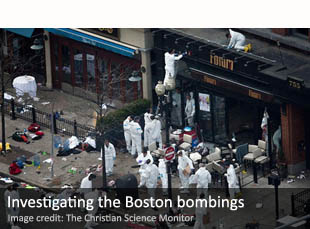
Investigating the Boston bombingsBy IAN ALLEN | intelNews.org |
►►NSA guide explains how to access private info on Google. In 2007, the US National Security Agency produced a book to help its spies uncover intelligence hiding on the World Wide Web. The 643-page tome, called Untangling the Web: A Guide to Internet Research (.pdf), has just been released by the NSA following a FOIA request filed in April by MuckRock, a site that charges fees to process public records for activists and others. Although the author’s name is redacted in the version released by the NSA, Muckrock’s FOIA indicates it was written by Robyn Winder and Charlie Speight.
►►Are the EU’s unofficial spy services growing out of control? Since its founding, the European Union has been building its own spy programs, often triggered by specific needs, in an ad-hoc manner, without strategy and without a coherent concept about their structure, methods, and people. Unofficially, the has been building an intelligence apparatus of six services so far, some of them brand new, populated already by 1,300 specialists. But because they are technically not conducting covert operations, they simply deny being intelligence services.
►►Hearing on Boston bombings exposes intelligence failures. The US House Committee on Homeland Security’s hearing on the Boston Marathon bombings on Thursday amounted to more than the usual political posturing: it exposed clear deficiencies in communications among intelligence- and law-enforcement agencies. whatever the cause of the intelligence breakdown, the failure to share vital information —and the continued finger-pointing between agencies yesterday— shows the need to improve coordination.

News you may have missed #819 (UKUSA edition)

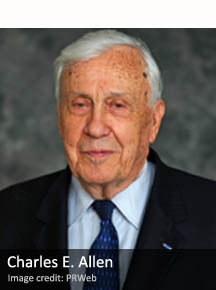
Charles E. AllenBy IAN ALLEN | intelNews.org |
►►Aussie spies’ exemption from Freedom of Information laws to end? Currently, all Australian intelligence agencies are exempt from the operation of federal Freedom of Information (FOI) legislation that allows the public and journalists to seek access to government records. But now Australian Information Commissioner John McMillan has called for the intelligence agencies to no longer be exempted from FOI laws. Professor McMillan and FOI Commissioner James Popple have made the recommendation in a 97-page submission to the review of FOI laws by former Defence Department secretary and diplomat Allan Hawke.
►►US spy agencies move towards single super-cloud. The US intelligence community is developing a single cloud computing network to allow all its analysts to access and rapidly sift through massive volumes of data. Now in its eighth month, the goal of the effort is to connect the Central Intelligence Agency’s existing cloud to a new cloud run by the National Security Agency. This NSA-run network consists of five other intelligence agencies and the FBI. Both of these clouds can interoperate, but the CIA has its own unique needs because it must work with human intelligence, which necessitates keeping its cloud slightly separate, according to Charles Allen, formerly Undersecretary of Homeland Security for intelligence and analysis.
►►Canadian Army struggles with intelligence-gathering. The Canadian Army is trying to hold on to its intelligence-gathering capability and its ability to disrupt spying in the face of budget strain, according to documents from the Canadian Department of National Defence. The Canadian Press, which obtained the documents, says the Army is “anxious to protect HUMINT network and to better resource its counterintelligence abilities”, but is worried that its shrinking budget in the post-Afghanistan War era will cause “degradation” in those disciplines.

News you may have missed #799

Russell TiceBy IAN ALLEN | intelNews.org |
►►Is NSA using UK spy base to guide predator drones? Surrounded by farmland and sheep, hundreds of National Security Agency staff go to work every day at RAF Menwith Hill, where they eavesdrop on communications intercepted by satellite dishes contained in about 30 huge golf ball-like domes. Menwith Hill has been used by the NSA since the 1960s; but lately there is growing disquiet in Britain over whether intelligence gathered at the base is being used to help with the CIA’s controversial clandestine drone strikes. And the British government is keeping mum.
►►Aussie envoy seduced by spy feared her phone was bugged. Former senior Austrade commissioner to Hanoi Elizabeth Masamune, who recently admitted before an Australian court that she had sexual relations with a Vietnamese intelligence officer, told police she feared her Hanoi offices were bugged. In her statement during the trial of eight former Reserve Bank company executives on bribery charges, she said that after receiving a call from a journalist she recalled “being concerned of the level of information which she had. I was also more concerned about whether my phone was being monitored”, she said.
►►NSA whistleblower describes beating polygraph test. Russell Tice, the National Security Agency whistleblower who helped blow the lid open on warrantless wiretapping conducted by the federal government on US citizens post-9/11, says that he took between 12 and 15 polygraph tests during his nearly 20-year-long government career. The tests mellowed over time, Tice says, and they may have also gotten easier to beat. Tice, who is no longer at the NSA, says he, along with those still in contact with at the agency, marvel at how easy it is to beat the lie detector.