CIA believed Yugoslavia was on the brink of going nuclear in 1975
November 23, 2017 1 Comment
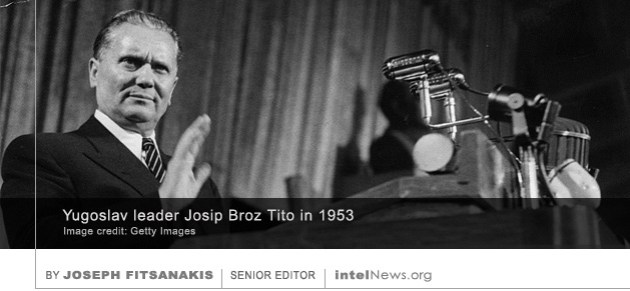 The United States Central Intelligence Agency believed that Yugoslavia was on the brink of becoming a nuclear-armed state in 1975, due partly to assistance from Washington, according to newly declassified documents. The documents, which date from 1957 to 1986, were unearthed by Dr Filip Kovacevic, a Montenegrin expert on American foreign policy who teaches at the University of San Francisco in California. He accessed the documents in October of this year, after filing a Freedom of Information Act request with the CIA in 2016. In response, the spy agency sent Dr Kovacevic eight different files consisting of 84 pages of formerly classified scientific studies, analytical estimates and other reports.
The documents show that the CIA placed the beginning of the Yugoslav nuclear program at the end of World War II. At that time, the multi-ethnic Balkan country became the focus of an intense campaign for influence by the two emerging superpowers, the United States and the Soviet Union. But Yugoslavia’s communist leader, Josip Broz Tito, opted for a policy of nonalignment, refusing to side with Washington or Moscow. It was at that time that Tito began to explore the creation of a nuclear arsenal, which he hoped would enable Yugoslavia to remain independent amidst the pressures of the Cold War. Interestingly, his plans were quietly supported by the US, which invited Yugoslav physicists and engineers to study and conduct research at American universities. Washington also sent teams of geologists to conduct surveys across Yugoslavia in 1952. These and subsequent surveys detected substantial uranium deposits in northern and southern Yugoslavia, which were deemed sufficient to fuel several nuclear bombs. Two decades later, an American manufacturing company, Westinghouse Nuclear, was contracted by Belgrade to build Yugoslavia’s first nuclear power plant in Slovenia.
The papers unearthed by Dr Kovacevic suggest that in 1975 the CIA was convinced that Yugoslavia was technically and financially capable of building an atomic weapon within four years. In a study entitled “Prospects for Further Proliferation of Nuclear Weapons”, the spy agency said that Belgrade had made remarkable technical strides in the area of nuclear research and production in 15 years, partly with America’s support. The only question was whether the Yugoslav leadership would decide to go nuclear, something that the CIA’s analysts warned that it would be difficult to ascertain, as President Tito was unpredictable in his decision-making. Eventually, the Yugoslav leader opted to beef up his country’s conventional forces instead of going nuclear. As Tito’s health worsened in the latter half of the 1970s, ethnic rivalries between competing officials took center stage, and the nuclear weapons question lost its immediacy. Tito died in 1980, and almost immediately the country began to sink under the weight of deepening ethnic tensions.
According to Dr Kovacevic, the CIA documents show that the agency kept close tabs on Yugoslavia’s nuclear ambitions throughout the Cold War. Moreover, CIA analysts appeared to have detailed, accurate and up-to-date information about the Yugoslav nuclear program, on which they based their —broadly accurate— estimates. Crucial pieces of information came from the CIA’s “well-organized network of informants” who were placed “across the country’s institutions” and provided the US with highly dependable intelligence on Tito’s nuclear plans, said Dr Kovacevic.
► Author: Joseph Fitsanakis | Date: 23 November 2017 | Permalink
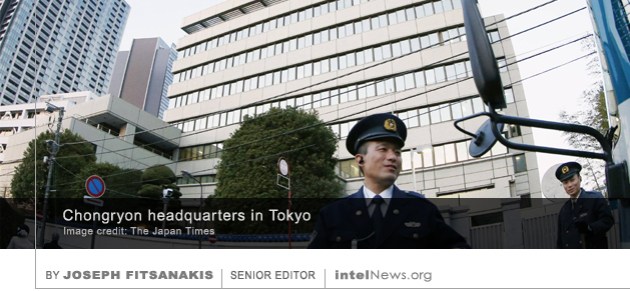 Students who have pledged allegiance to North Korea are being taught advanced courses in nuclear physics and control engineering in Japan, which violates United Nations sanctions, according to human rights campaigners. The students take classes at Korea University, a higher-education institution located in in Kodaira, a western suburb of the Japanese capital Tokyo. The University is funded directly by the government of North Korea through Chongryon, a pro-Pyongyang organization otherwise known as the General Association of Korean Residents in Japan. The group represents tens of thousands of ethnic Koreans living in Japan, who are ideologically affiliated with Pyongyang.
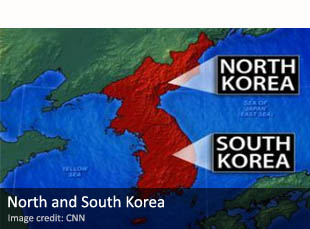
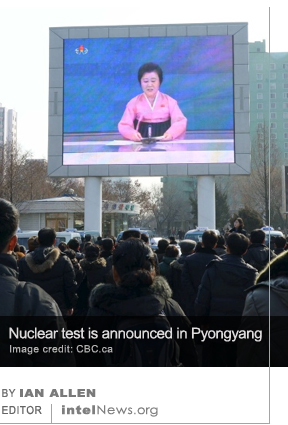 Intelligence agencies outside North Korea, including those of South Korea and the United States, are skeptical of Pyongyang’s claims that it conducted a successful test of a hydrogen bomb. On the surface, North Korea’s
 By IAN ALLEN | intelNews.org |










 intelNews.org

Norwegian intelligence warns of new types of nuclear weapons developed by Russia
February 9, 2021 by Joseph Fitsanakis Leave a comment
But according to Focus 2021, the NIS’ annual assessment of ongoing security challenges, the New START treaty is insufficient to cover some of the new nuclear weapons that are being developed by the Russian Armed Forces. In an interview with The Barents Observer, NIS Director Vice Admiral Nils Andreas Stensønes, warned that, among other notable changes, the new Russian nuclear weapons “fly low or travel underwater”. This makes them extremely difficult to be detected by existing missile defense systems, he said.
The NIS report notes that the new Russian nuclear weapons are not yet operational. However, the Russian military is currently testing and developing them across military bases situated in northern Russia, some of which are located near Norwegian territory. Among these weapons is the Poseidon, which is described as a “nuclear-powered, nuclear-tipped underwater mega-drone”. Another concern for the NIS is the Burevestnik, a nuclear-powered cruise missile, which is reported to have global reach and is said to be able to evade existing missile defense systems.
► Author: Joseph Fitsanakis | Date: 09 February 2021 | Permalink
Filed under Expert news and commentary on intelligence, espionage, spies and spying Tagged with New START, News, Nils Andreas Stensønes, NIS (Norway), Norway, nuclear proliferation, Russia