News you may have missed #681

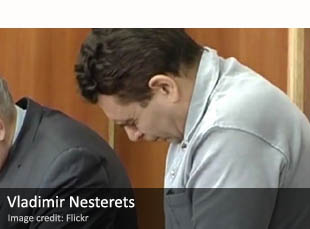
Vladimir NesteretsBy IAN ALLEN | intelNews.org |
►►Mossad ‘bolsters activity in Tunisia’. The Mossad has bolstered its activity in several Tunisian cities since the start of the revolt that ousted President Zine El Abidine Ben Ali last January, Tunisian magazine Al-Musawar has reported. According to the magazine, the Israeli intelligence agency has been working with its US-based counterpart, the CIA, to revive its spy network in post-revolution Tunisia.
►►US ‘used quake’ to send Special Forces into Pakistan. The US Pentagon used the Kashmir earthquake of 2005 to send operatives from the Joint Special Operations Command (JSOC) into Pakistan, reveals a new book by D.B Grady and Marc Ambinder, entitled The Command: Deep Inside the President’s Secret Army. The authors claim that dozens of CIA operatives and contractors entered Pakistan using valid US passports and posing as construction and aid workers, thus avoiding the requisite background checks from Pakistan’s Inter-Services Intelligence spy agency.
►►Russian officer convicted of spying for CIA. A Russian military court last week convicted Lt. Col. Vladimir Nesterets of providing the CIA with secret information on Russia’s new intercontinental ballistic missiles and sentenced him to 13 years in prison. The officer pleaded guilty to passing on that classified information in exchange for money, said the Federal Security Service, the main agency that replaced the Soviet-era KGB. Russia’s RIA Novosti news agency quoted the officer’s wife, Irina, as saying she could not understand the guilty plea because her husband had told her he did nothing wrong and had not betrayed his country.
News you may have missed #678

Hakan FidanBy IAN ALLEN | intelNews.org |

►►Russia ‘exposed 199 spies’ last year. Outgoing Russian President Dmitry Medvedev said Tuesday that Russian counterintelligence had exposed 199 spies working for foreign powers last year. He was speaking at a meeting of the Federal Security Service. He also urged the FSB to “take extra measures to protect Russian interests” and reinforce the country’s borders in the Arctic.
►►Germany expels four Syrian diplomats. As tensions mount between Western nations and Syria, the German authorities said Thursday that they had ordered the expulsion of four Syrian diplomats after arresting two men accused separately of spying on opponents of President Bashar al-Assad. The four diplomats —three men and a woman who were not identified by name— have been given three days to leave Germany.
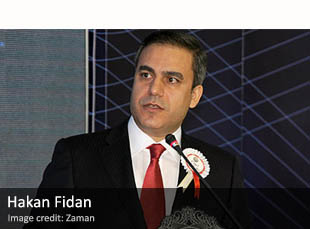
►►Turkey summons spy chief over talks with Kurds. Prosecutors have summoned Hakan Fidan, head of Turkey’s National Intelligence Agency (MİT), as well as his predecessor, Emre Taner, for questioning, over reports of secret peace talks in Norway between Turkish intelligence agents and Kurdish militant leaders. Predictably, MİT has appealed the move.

News you may have missed #675

Maria del Pilar HurtadoBy IAN ALLEN | intelNews.org |
►►Panama refuses to extradite Colombian ex-spy chief. Panama’s foreign ministry cited the Inter-American Convention on Human Rights, an international accord on asylum and Panamanian law, as reason for denying Colombia’s request to extradite Maria del Pilar Hurtado, who faces charges in Bogota over an illegal wiretapping scandal. Currently enjoying asylum in Panama are former presidents of Guatemala, Jorge Serrano Elias; and Ecuador, Abdala Bucaram; as well as erstwhile Haitian military strongman Raoul Cedras.
►►Russian spy chief to visit Syria. Russian Foreign Minister Sergei Lavrov said on Saturday he and Foreign Intelligence Service (SVR) head Mikhail Fradkov will visit Syria and meet with President Bashar al-Assad on February 7. The visit will be made on instructions from Russian President Dmitry Medvedev. Lavrov did not reveal any details of the upcoming the visit.
►►US spy chief: ‘we don’t know if Iran is building a bomb’. At a hearing of the Senate Select Committee on Intelligence last Tuesday, James Clapper, the US Director of National Intelligence, released the following statement: “We assess Iran is keeping open the option to develop nuclear weapons, in part by developing various nuclear capabilities that better position it to produce such weapons, should it choose to do so.  We do not know, however, if Iran will eventually decide to build nuclear weapons”.

News you may have missed #673

Jeffrey Paul DelisleBy IAN ALLEN | intelNews.org |
►►Israel outsources intelligence-gathering to rightwing groups. The government and military of Israel have unofficially outsourced some of their intelligence work to private organizations that monitor anti-Israel incitement in the Palestinian media and are associated with right-wing politics, according to several high-ranking government and military sources.
►►NATO report finds Pakistan spies help Taliban. The BBC says it has seen a NATO report stating that the Taliban in Afghanistan are being directly assisted by Pakistani security services. The leaked report, derived from material from 27,000 interrogations with more than 4,000 captured Taliban, al-Qaeda and other foreign fighters and civilians, also claims Pakistan knows the locations of senior Taliban leaders. The US said exactly the same thing last September.
►►Another Russian diplomat ‘leaves’ Canada. Another Russian diplomat has left Canada. Dmitry Gerasimov, a consular officer with the Russian government’s office in Toronto, left in January. He is the second diplomat that the Russian embassy in Canada acknowledges has quit this country in January. The other was Colonel Sergey Zhukov, the defense attaché for the Russian government in Ottawa. All totaled, six Russian diplomats that have been dropped from Ottawa’s list of recognized foreign representatives in the last 11 days. It’s not clear which, if any, of recent these exits can be tied to the Jeffrey Paul Delisle spy controversy.

Ex-KGB spy Litvinenko was working for MI6 when he died

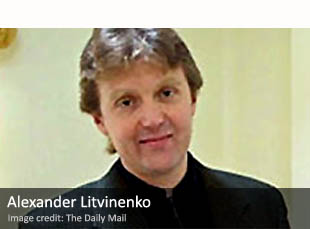
Alexander LitvinenkoBy JOSEPH FITSANAKIS | intelNews.org |
Confidential documents leaked to the British press show that a leading medical examiner wants to reinspect the 2006 death of a former Soviet intelligence officer, in light of new revelations. Alexander Litvinenko was an employee of the Soviet KGB and its successor organization, the FSB, who in 2000 defected with his family to the United Kingdom. He soon became known as an increasingly vocal critic of the administration of Russian President Vladimir Putin. In 2006, Litvinenko came down with radioactive poisoning soon after meeting a former colleague, Andrey Lugovoy, in a London restaurant. The latter is believed by British authorities to have assassinated Litvinenko “with the backing of the Russian state”. Although much of the case remains shrouded in mystery, an important new clue was added to the equation in October, when Litvinenko’s widow publicly admitted that her husband had been a paid employee of British intelligence services MI5 and MI6. Marina Litvinenko told British tabloid newspaper The Mail on Sunday that Alexander had advised both agencies on “combat[ing] Russian organized crime in Europe”. She had previously denied rumors that her husband had been working for British intelligence when he was killed —ostensibly by the Russian government. The revelation appears to have prompted a British coroner to request that the medical investigation into Litvinenko’s death be reopened. Documents leaked to The Mail on Sunday appear to show that Andrew Reid, a coroner at St Pankras Hospital in London, has formally requested that both MI5 and MI6 release all of their internal files on Litvinenko, in the context of a new investigation. Read more of this post

News you may have missed #673

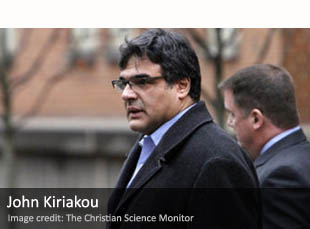
John KiriakouBy IAN ALLEN | intelNews.org |
►►Canada arrest shows spy times have changed in Russia. There are aspects of the spy case of Canadian Sub-Lt. Jeffery Delisle that differ substantially from spy cases dating back to Cold War espionage waged by the now-defunct Soviet system. As a sign of changing times, the Russian media has acknowledged Delisle was allegedly spying for them —something that would never be admitted in Soviet times when the KGB and GRU were in ascendency.
►►US court upholds S. Korean ex-spy’s asylum ruling. Kim Ki-sam, who left South Korea’s state spy agency in 2000, applied for asylum in the US in 2003, saying he would face persecution and prosecution if he was forced to return to South Korea because he had revealed information about secret operations to help then-President Kim Dae-jung win the Nobel Peace Prize. A US court has now upheld a 2008 ruling to grant him political asylum.
►►Kiriakou’s wife resigns from CIA. Heather Kiriakou, who has served as a top analyst at the Agency, resigned Tuesday amid accounts that she had been pressured to step down after her husband —John Kiriakou, a former agency employee— was charged with leaking classified information to the press. Two sources in direct contact with the Kiriakous told The Washington Post that Heather had submitted her resignation under pressure from superiors at the CIA.

News you may have missed #672

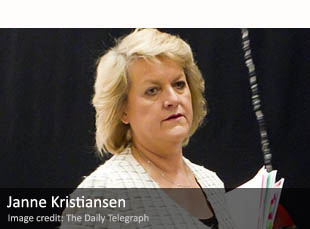
Janne KristiansenBy IAN ALLEN | intelNews.org |
►►Russian military intelligence to ‘change tactics’. Russian military intelligence is adjusting its work methods in response to the “worsening international situation”, Igor Sergun, the head of GRU —the country’s largest espionage agency— has told President Dmitry Medvedev. Currently, the GRU’s main focus is on “hot spots where terrorist and extremist groups are acting, regions with crisis situations, and also the sources and possible routes of illegal proliferation of nuclear materials and the components of weapons of mass destruction”, Sergun told Medvedev.
►►Norway spy chief quits in secrecy gaffe. Norway’s head of intelligence Janne Kristiansen has handed in her resignation because she said too much during a parliamentary hearing. According to a transcript, Ms Kristiansen, who until now headed the country’s Police Security Service (PST), told the hearing that Norway had agents working in Pakistan. According to reports Pakistan has asked the government of Norway to explain Kristiansen’s remarks.
►►Review of Australia’s spy community released. Public findings of the first independent review of Australia’s intelligence community in eight years were released on January 25. The 2011 Independent Review of the Intelligence Community acknowledges and justifies the Australian spy agencies’ unprecedented growth since September 11, which saw some agencies increasing their funding almost 500 per cent in a decade. Meanwhile, David Irvine, Director of the Australian Security Intelligence Organization, said in a rare public talk that future Australian spies would be recruited “from within our newly arrived migrant communities”.

News you may have missed #669

Raoul WallenbergBy IAN ALLEN | intelNews.org |
►►UK admits using fake rock to spy on Russians. Britain has admitted for the first time that it was caught spying when Russia exposed its use of a fake rock in Moscow to conceal electronic equipment. Russia made the allegations in January 2006, but Britain has not publicly accepted the claims until now. Jonathan Powell, then Prime Minister Tony Blair’s chief of staff, told a BBC documentary it was “embarrassing”, but “they had us bang to rights”. He added: “clearly they had known about it for some time”.
►►New book examines forgotten CIA officer Jim Thompson. The CIA’s longtime man in Southeast Asia, Jim Thompson, fought to stop the agency’s progression from a small spy ring to a large paramilitary agency. Now a new book, The Ideal Man: The Tragedy of Jim Thompson and the American Way of War, by Joshua Kurlantzick, examines the life and exploits of the man known as “Silk King” Jim.
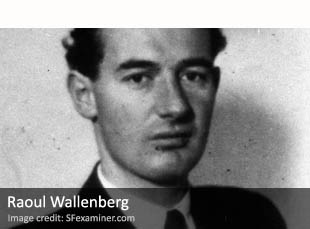
►►Sweden to probe fate of WWII hero Wallenberg. Raoul Wallenberg (pictured) was a shrewd businessman who, in the summer of 1944, was posted as Sweden’s ambassador in Budapest, Hungary. He was also an American intelligence asset, having been recruited by a US spy operating out of the War Refugee Board, an American government outfit with offices throughout Eastern Europe. He was abducted by Soviet intelligence officers in the closing stages of World War II, and his fate is one of the unsolved mysteries of 20th century espionage. Now Sweden says it will open a new probe into his disappearance.

Canada reportedly expels Russian diplomats over spy affair

Jeffrey Paul DelisleBy JOSEPH FITSANAKIS | intelNews.org |
Canadian government officials have refused to confirm or deny media reports that Ottawa expelled several Russian diplomats recently in connection with an alleged espionage affair. The alleged expulsions are reportedly connected with the case of Royal Canadian Navy Sub-Lieutenant Jeffrey Paul Delisle. Earlier this week, Delisle became the first person to be charged under Canada’s post-9/11 Security of Information Act, for allegedly passing protected government information to an unspecified foreign body. According to media reports, Delisle, who had top-level security clearance, worked at Canada’s ultra-secure TRINITY communications center in Halifax. Canadian authorities have refused to reveal the country for which Delisle allegedly spied. But late last night, CTV revealed that the names of two Russian diplomats and two technicians stationed at the embassy of the Russian Federation in Ottawa had been quietly dropped from the list of recognized diplomatic officials in Canada. The list, which is approved periodically by the Canadian Ministry of Foreign Affairs and International Trade, contains the names of all foreign diplomats legally permitted to operate in Canada. One of the missing names, that of Lieutenant Colonel Dmitry V. Fedorchatenko, bears the title of the embassy’s Assistant Defense Attaché. Russian consular officials in Canada rejected speculation that the missing diplomats were expelled by the Canadian government in connection with the Delisle affair. It appears that Canadian counterintelligence investigators had been monitoring Jeff Delisle for quite some time, perhaps even before 2010. If Delisle acted —as he is reported to have done— as an unregistered foreign agent of Russia, it is certainly not surprising that he was a naval officer. He was probably selected by the Russians because he was a member of the Royal Canadian Navy. Ever since Canada joined NATO, in the late 1940s, its tactical contribution to the Organization has been mostly naval. Read more of this post

News you may have missed #654

Aleksandr ShlyakhturovBy IAN ALLEN | intelNews.org |
►►Anonymous hacks intel analysis firm StratFor. The loose-knit hacking movement Anonymous claimed Sunday via Twitter that it had stolen thousands of credit card numbers and other personal information belonging to clients of intelligence analysis firm Stratfor. The company had apparently failed to encrypt its customers’ credit card account information. The hackers announced their intention to use the credit cards for charitable donations.
►►CIA Inspector General clears assistance with NYPD. Back in August, The CIA denied allegations by the Associated Press that it helped the New York Police Department conduct covert surveillance on New York Muslims. The agency said the report “mischaracterized the nature and scope” of the CIA’s support for the NYPD. Now a report by the office of the CIA Inspector General, the CIA’s internal watchdog, has concluded that there was “no evidence that any part of the agency’s support to the NYPD constituted ‘domestic spying’”. The Associated Press notes that it is not clear if this report opens the door for other municipal police departments nationwide to work closely with the CIA in the war on terrorism.
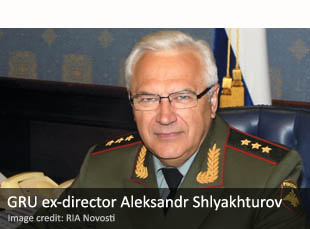
►►Russia replaces head of military spy agency. After denying initial rumors, Russia’s Defense Ministry said on Monday that “Major General Igor Sergun has been appointed head of the GRU [Russia’s Main Intelligence Directorate] through a Kremlin decree”. Sergun replaces Aleksandr Shlyakhturov, who had spearheaded a shake-up of the service since his appointment in 2009. The state RIA Novosti news agency quoted a ministry spokesman suggesting that Shlyakhturov had reached retirement age. No other reason was given for the move. Incidentally, if you are wondering how spies are faring in Dmitri Medvedev’s and Vladimir Putin’s administration, read this enlightening analysis by Mark Galeotti, Professor of Global Affairs at New York University.

News you may have missed #652

Amir Mirzaei HekmatiBy IAN ALLEN | intelNews.org |
►►Kremlin accused of covert tactics against opposition. The Kremlin says it will allow opposition groups to hold rallies, but cases of alleged preemptive arrests and phone-tapping show that it may be still seeking to defeat the protest movement. For previous intelNews coverage of civil liberties in Russia see here.
►►Iran releases two Kuwaitis accused of spying. Iran’s semi-official Mehr news agency says that two Kuwaitis detained In Iran for spying last month have been cleared of their charges and released. The report quoted Iran’s ambassador to Kuwait, Ruhollah Qahremani, as saying the men had illegally worked as journalists in Iran while traveling on tourist visas, but initial speculation that they were spies “had been wrong”.
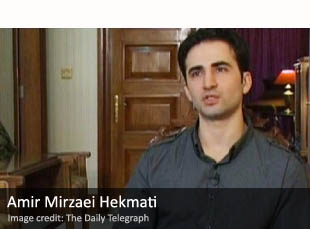
►►US sources deny spy charges for American detained in Iran. Amir Mirzaei Hekmati (pictured), from Arizona, who has been captured in Iran allegedly on a CIA mission, has not received any intelligence training from the US military, according to Pentagon sources. Also, one of Hekmati’s colleagues claims the Iranian-American helped develop an electronic translator for US troops but “wouldn’t have been involved in espionage”.

News you may have missed #651

Chris VanekerBy IAN ALLEN | intelNews.org |
►►Israel defense minister forbids spy official’s lecture. Israel’s Defense Minister Ehud Barak has refused to allow the head of research for Military Intelligence, Brigadier General Itai Baron, to lecture at the annual conference of Israel’s ambassadors unless the lecture is deemed ‘unclassified’. The conference deals with diplomatic and security issues and public affairs, and the lectures are given by senior Israeli government and military officials.
►►CIA agrees to look into OSINT FOIA request. Open Source Works, which is the CIA’s in-house open source analysis component, is devoted to intelligence analysis of unclassified, open source information. Oddly enough, the directive that established Open Source Works is classified. But in an abrupt reversal, the CIA said that it will process a Freedom of Information Act request by intelligence historian Jeffrey Richelson for documents pertaining to Open Source Works.
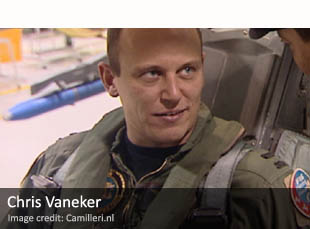
►►Dutch former pilot convicted of espionage. A court in The Hague has sentenced former F-16 pilot Chris Vaneker to five years in jail after finding him guilty of selling state secrets to a Russian diplomat. Vaneker wanted half-a-million euros for the information he was trying to sell to the military attaché at the Russian embassy in The Hague. The pilot and the Russian diplomat were arrested in March.

Does Iran have access to satellite jamming technology?

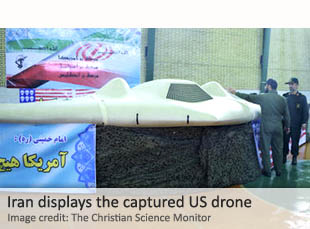
Iran displays captured US droneBy JOSEPH FITSANAKIS | intelNews.org |
A European intelligence official has said that Iran downed an unmanned American surveillance aircraft earlier this month by remotely sabotaging its satellite navigation system. The official, who has not been named, told The Christian Science Monitor that the Iranians used a state-of-the-art laser system to effectively “blind” the American spy satellite that guided the drone’s global positioning system (GPS). In doing this, Iran’s military was able to remotely skyjack the aircraft and assume control over its navigational system. The paper also published an exclusive interview with an Iranian electronic warfare specialist, who claimed he was part of a team that hacked into the drone’s communication frequency and reprogrammed its GPS data. Eventually, the Iranian specialists managed to cause the unmanned aircraft to switch into autopilot mode, and guided it to land relatively smoothly on Iranian territory, where it was eventually captured intact by Iranian authorities. If this is true, it will mark the first-ever indication that the Iranian state is in possession of sophisticated satellite jamming technology. In an important development, Iran’s Minister of Foreign Affairs, Ali Akbar Salehi, told Iran’s government-run IRNA news agency on Saturday that the American drone was brought down by Iranian armed forces, without any foreign assistance. If this is so, then does it mean that the Iranians developed the state-of-the-art jamming system themselves? Read more of this post

News you may have missed #649

María del Pilar Hurtado

María Hurtado

►►US-Russian tensions over stranded Kosovo aid convoy. A stranded aid convoy of more than 20 Russian trucks was stopped Tuesday by US soldiers at a Kosovo border with Serbia, increasing tensions in the volatile region. American forces say they believe the convoy’s cargo consisting of canned food, blankets, tents and power generators appears, is intended for minority Serbs, who reject Kosovo’s statehood, and have been blocking roads in the Serb-run north of the country to prevent Kosovar authorities from taking control.
►►IRA spy in Irish police was ‘open secret’. Former British army agent Kevin Fulton, also known as Peter Keeley, who infiltrated the IRA in the 1980s, has said it was an open secret in the IRA that it had a “friend” among the gardaí (Irish police) in Dundalk. Speaking to the Smithwick Tribunal, he named the “friend” as retired detective sergeant Owen Corrigan. See here for previous intelNews coverage of this issue.
►►Colombia asks Panama to extradite ex-spy chief (again). Panama’s Foreign Ministry says Colombia has asked it to extradite former Colombian intelligence director Maria del Pilar Hurtado (pictured) to face conspiracy, wiretapping and abuse of authority charges. Hurtado headed Colombia’s now-defunct DAS domestic intelligence agency in 2007 and 2008.

Newspaper reveals name of Russian ‘spy’ expelled from Britain

Mikhail Repin

Mikhail Repin

By JOSEPH FITSANAKIS | intelNews.org |
In December of 2010, the British government quietly ordered the expulsion of a diplomat from the Russian embassy in London, whom it accused of “activities incompatible with his diplomatic status” —technical terminology implying espionage. Moscow quickly responded with an expulsion of a British diplomat stationed in the Russian capital. The tit-for-tat incident saw no publicity, and neither man was named, as is customary in such cases. But, in its Saturday edition, British newspaper The Daily Telegraph identified the expelled Russian diplomat as Mikhail Viktorovich Repin, Third Secretary in the Political Section at the Russian embassy in London. The paper said that Repin, a fluent English speaker, was a junior officer of the political directorate of the SVR, Russia’s Foreign Intelligence Service, operating under standard diplomatic cover. Repin arrived in London in late 2007, shortly after the British government expelled four Russian diplomats in connection with the fatal poisoning of former KGB officer Alexander Litvinenko, who had defected to Britain. A “tall, suave, urbane young man”, “Michael”, as he identified himself, quickly became a permanent fixture on the embassy reception circuit and the various events hosted by London-based organizations and think tanks. He specifically joined —and regularly attended meetings of— the Royal United Services Institute, the International Institute of Strategic Studies, and Chatham House —formerly known as the Royal Institute of International Affairs. Most people that met him in those gatherings took him for “a fast-track civil servant, defense industry high flier or political adviser”, says The Telegraph. Read more of this post