Canada reportedly expels Russian diplomats over spy affair

Jeffrey Paul DelisleBy JOSEPH FITSANAKIS | intelNews.org |
Canadian government officials have refused to confirm or deny media reports that Ottawa expelled several Russian diplomats recently in connection with an alleged espionage affair. The alleged expulsions are reportedly connected with the case of Royal Canadian Navy Sub-Lieutenant Jeffrey Paul Delisle. Earlier this week, Delisle became the first person to be charged under Canada’s post-9/11 Security of Information Act, for allegedly passing protected government information to an unspecified foreign body. According to media reports, Delisle, who had top-level security clearance, worked at Canada’s ultra-secure TRINITY communications center in Halifax. Canadian authorities have refused to reveal the country for which Delisle allegedly spied. But late last night, CTV revealed that the names of two Russian diplomats and two technicians stationed at the embassy of the Russian Federation in Ottawa had been quietly dropped from the list of recognized diplomatic officials in Canada. The list, which is approved periodically by the Canadian Ministry of Foreign Affairs and International Trade, contains the names of all foreign diplomats legally permitted to operate in Canada. One of the missing names, that of Lieutenant Colonel Dmitry V. Fedorchatenko, bears the title of the embassy’s Assistant Defense Attaché. Russian consular officials in Canada rejected speculation that the missing diplomats were expelled by the Canadian government in connection with the Delisle affair. It appears that Canadian counterintelligence investigators had been monitoring Jeff Delisle for quite some time, perhaps even before 2010. If Delisle acted —as he is reported to have done— as an unregistered foreign agent of Russia, it is certainly not surprising that he was a naval officer. He was probably selected by the Russians because he was a member of the Royal Canadian Navy. Ever since Canada joined NATO, in the late 1940s, its tactical contribution to the Organization has been mostly naval. Read more of this post

News you may have missed #654

Aleksandr ShlyakhturovBy IAN ALLEN | intelNews.org |
►►Anonymous hacks intel analysis firm StratFor. The loose-knit hacking movement Anonymous claimed Sunday via Twitter that it had stolen thousands of credit card numbers and other personal information belonging to clients of intelligence analysis firm Stratfor. The company had apparently failed to encrypt its customers’ credit card account information. The hackers announced their intention to use the credit cards for charitable donations.
►►CIA Inspector General clears assistance with NYPD. Back in August, The CIA denied allegations by the Associated Press that it helped the New York Police Department conduct covert surveillance on New York Muslims. The agency said the report “mischaracterized the nature and scope” of the CIA’s support for the NYPD. Now a report by the office of the CIA Inspector General, the CIA’s internal watchdog, has concluded that there was “no evidence that any part of the agency’s support to the NYPD constituted ‘domestic spying’”. The Associated Press notes that it is not clear if this report opens the door for other municipal police departments nationwide to work closely with the CIA in the war on terrorism.
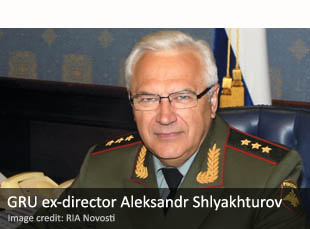
►►Russia replaces head of military spy agency. After denying initial rumors, Russia’s Defense Ministry said on Monday that “Major General Igor Sergun has been appointed head of the GRU [Russia’s Main Intelligence Directorate] through a Kremlin decree”. Sergun replaces Aleksandr Shlyakhturov, who had spearheaded a shake-up of the service since his appointment in 2009. The state RIA Novosti news agency quoted a ministry spokesman suggesting that Shlyakhturov had reached retirement age. No other reason was given for the move. Incidentally, if you are wondering how spies are faring in Dmitri Medvedev’s and Vladimir Putin’s administration, read this enlightening analysis by Mark Galeotti, Professor of Global Affairs at New York University.
News you may have missed #652

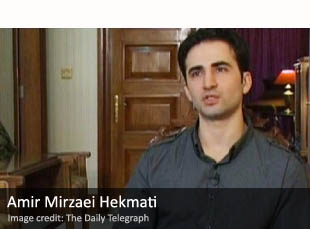
Amir Mirzaei HekmatiBy IAN ALLEN | intelNews.org |
►►Kremlin accused of covert tactics against opposition. The Kremlin says it will allow opposition groups to hold rallies, but cases of alleged preemptive arrests and phone-tapping show that it may be still seeking to defeat the protest movement. For previous intelNews coverage of civil liberties in Russia see here.
►►Iran releases two Kuwaitis accused of spying. Iran’s semi-official Mehr news agency says that two Kuwaitis detained In Iran for spying last month have been cleared of their charges and released. The report quoted Iran’s ambassador to Kuwait, Ruhollah Qahremani, as saying the men had illegally worked as journalists in Iran while traveling on tourist visas, but initial speculation that they were spies “had been wrong”.
►►US sources deny spy charges for American detained in Iran. Amir Mirzaei Hekmati (pictured), from Arizona, who has been captured in Iran allegedly on a CIA mission, has not received any intelligence training from the US military, according to Pentagon sources. Also, one of Hekmati’s colleagues claims the Iranian-American helped develop an electronic translator for US troops but “wouldn’t have been involved in espionage”.

News you may have missed #651

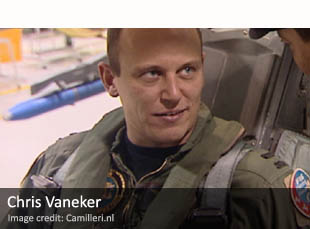
Chris VanekerBy IAN ALLEN | intelNews.org |
►►Israel defense minister forbids spy official’s lecture. Israel’s Defense Minister Ehud Barak has refused to allow the head of research for Military Intelligence, Brigadier General Itai Baron, to lecture at the annual conference of Israel’s ambassadors unless the lecture is deemed ‘unclassified’. The conference deals with diplomatic and security issues and public affairs, and the lectures are given by senior Israeli government and military officials.
►►CIA agrees to look into OSINT FOIA request. Open Source Works, which is the CIA’s in-house open source analysis component, is devoted to intelligence analysis of unclassified, open source information. Oddly enough, the directive that established Open Source Works is classified. But in an abrupt reversal, the CIA said that it will process a Freedom of Information Act request by intelligence historian Jeffrey Richelson for documents pertaining to Open Source Works.
►►Dutch former pilot convicted of espionage. A court in The Hague has sentenced former F-16 pilot Chris Vaneker to five years in jail after finding him guilty of selling state secrets to a Russian diplomat. Vaneker wanted half-a-million euros for the information he was trying to sell to the military attaché at the Russian embassy in The Hague. The pilot and the Russian diplomat were arrested in March.

Does Iran have access to satellite jamming technology?

Iran displays captured US droneBy JOSEPH FITSANAKIS | intelNews.org |
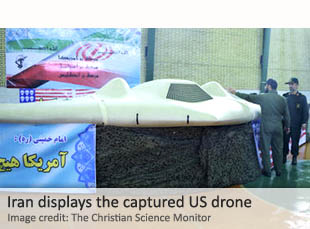
A European intelligence official has said that Iran downed an unmanned American surveillance aircraft earlier this month by remotely sabotaging its satellite navigation system. The official, who has not been named, told The Christian Science Monitor that the Iranians used a state-of-the-art laser system to effectively “blind” the American spy satellite that guided the drone’s global positioning system (GPS). In doing this, Iran’s military was able to remotely skyjack the aircraft and assume control over its navigational system. The paper also published an exclusive interview with an Iranian electronic warfare specialist, who claimed he was part of a team that hacked into the drone’s communication frequency and reprogrammed its GPS data. Eventually, the Iranian specialists managed to cause the unmanned aircraft to switch into autopilot mode, and guided it to land relatively smoothly on Iranian territory, where it was eventually captured intact by Iranian authorities. If this is true, it will mark the first-ever indication that the Iranian state is in possession of sophisticated satellite jamming technology. In an important development, Iran’s Minister of Foreign Affairs, Ali Akbar Salehi, told Iran’s government-run IRNA news agency on Saturday that the American drone was brought down by Iranian armed forces, without any foreign assistance. If this is so, then does it mean that the Iranians developed the state-of-the-art jamming system themselves? Read more of this post

News you may have missed #649

María del Pilar Hurtado

María Hurtado

►►US-Russian tensions over stranded Kosovo aid convoy. A stranded aid convoy of more than 20 Russian trucks was stopped Tuesday by US soldiers at a Kosovo border with Serbia, increasing tensions in the volatile region. American forces say they believe the convoy’s cargo consisting of canned food, blankets, tents and power generators appears, is intended for minority Serbs, who reject Kosovo’s statehood, and have been blocking roads in the Serb-run north of the country to prevent Kosovar authorities from taking control.
►►IRA spy in Irish police was ‘open secret’. Former British army agent Kevin Fulton, also known as Peter Keeley, who infiltrated the IRA in the 1980s, has said it was an open secret in the IRA that it had a “friend” among the gardaí (Irish police) in Dundalk. Speaking to the Smithwick Tribunal, he named the “friend” as retired detective sergeant Owen Corrigan. See here for previous intelNews coverage of this issue.
►►Colombia asks Panama to extradite ex-spy chief (again). Panama’s Foreign Ministry says Colombia has asked it to extradite former Colombian intelligence director Maria del Pilar Hurtado (pictured) to face conspiracy, wiretapping and abuse of authority charges. Hurtado headed Colombia’s now-defunct DAS domestic intelligence agency in 2007 and 2008.

Newspaper reveals name of Russian ‘spy’ expelled from Britain

Mikhail Repin

Mikhail Repin

By JOSEPH FITSANAKIS | intelNews.org |
In December of 2010, the British government quietly ordered the expulsion of a diplomat from the Russian embassy in London, whom it accused of “activities incompatible with his diplomatic status” —technical terminology implying espionage. Moscow quickly responded with an expulsion of a British diplomat stationed in the Russian capital. The tit-for-tat incident saw no publicity, and neither man was named, as is customary in such cases. But, in its Saturday edition, British newspaper The Daily Telegraph identified the expelled Russian diplomat as Mikhail Viktorovich Repin, Third Secretary in the Political Section at the Russian embassy in London. The paper said that Repin, a fluent English speaker, was a junior officer of the political directorate of the SVR, Russia’s Foreign Intelligence Service, operating under standard diplomatic cover. Repin arrived in London in late 2007, shortly after the British government expelled four Russian diplomats in connection with the fatal poisoning of former KGB officer Alexander Litvinenko, who had defected to Britain. A “tall, suave, urbane young man”, “Michael”, as he identified himself, quickly became a permanent fixture on the embassy reception circuit and the various events hosted by London-based organizations and think tanks. He specifically joined —and regularly attended meetings of— the Royal United Services Institute, the International Institute of Strategic Studies, and Chatham House —formerly known as the Royal Institute of International Affairs. Most people that met him in those gatherings took him for “a fast-track civil servant, defense industry high flier or political adviser”, says The Telegraph. Read more of this post

News you may have missed #646

Syed Ghulam Nabi Fai

Syed Fai

►►Analysis: Reorganizing Colombia’s disgraced spy agency. One former director of Colombia’s Administrative Department of Security, or DAS, has been convicted of conspiring to kill union activists. A former high-ranking manager is accused of collaborating with death squads to assassinate a television humorist. Dozens of agents have been implicated in what prosecutors call a systematic effort to illegally spy on the Supreme Court and opposition politicians, which some former DAS agents said was done with US equipment and funding. The new man in charge, however, Ricardo Giraldo, is an affable bankruptcy lawyer and former university professor, and his role is decidedly different from his predecessors’: namely to dismantle the agency.
►►Russian site snubs FSB request to block opposition networking. Russia’s top social networking site on Thursday defiantly rejected a request by the Federal Security Service to block opposition groups from using it to organize street protests accusing the authorities of rigging this week’s election. Over 45,000 people in Moscow alone have pledged on Facebook and the Russian site, VKontakte, to join fresh protests on Saturday against the 12-year rule of Vladimir Putin and the victory of his United Russia party in last Sunday’s parliament vote.
►►American citizen admits he took Pakistan spy money. Ghulam Nabi Fai, who is accused of working in Washington for Pakistan’s Inter-Services Intelligence (ISI) directorate, to lobby for Kashmiri independence, has pleaded guilty to secretly receiving millions of dollars from Pakistan’s spy agency in violation of US federal laws.

Russian spy agencies accused of hacking election monitor sites

FSB officer

FSB officer

By JOSEPH FITSANAKIS | intelNews.org |
Election monitors have accused Russia’s domestic intelligence service of launching a series of coordinated hacking attacks on opposition websites, timed to coincide with last Sunday’s elections. On that day, Russians voted —as they have done every five years since 1991— to determine the composition of the Duma, the country’s lower house. Election results show an unprecedented 14 percent drop for Prime Minister Vladimir Putin’s United Russia party, coupled with an equally sharp rise in the Communist Party share of the votes, which doubled to about 20 percent. But the election drew strong condemnations from international election monitors, including the Organization for Security and Cooperation in Europe, which said that the campaign was “slanted in favor of the ruling party”. Now Russian opposition organizations are accusing the government of launching a series of “massive” distributed denial of service (DDoS) attacks against their websites on the night of the elections. Websites affected include the prominent opposition magazine The New Times, the Ekho Moskvy radio station, the Russian arm of the Livejournal blogging website, business daily Kommersant, popular online news portal Slon.ru, as well as the Western-financed political watchdog group Golos. All of these outlets were simultaneously attacked on Sunday evening; their servers were bombarded with data that overwhelmed their computer systems and eventually knocked them offline. Liliya Shibanova, who directs Golos, told a news conference in Moscow late on Sunday night that the organization’s Internet and telephone systems, including an election violation hotline, had been blocked. She claimed that only Russia’s Federal Security Service (FSB), successor to the domestic intelligence wing of the Soviet-era KGB, had the resources required to launch such a massive attack. Read more of this post

News you may have missed #639 (Katia Zatuliveter edition)

Katia Zatuliveter

Katia Zatuliveter

►►Russian woman accused of spying wins right to stay in UK. Katia Zatuliveter, 26, who was accused by British counterintelligence service MI5 of being a spy for Russia, has won a court appeal against her planned deportation. A panel of the UK’s Special Immigration Appeals Commission, which included the former MI5 director general Sir Stephen Lander, ruled that MI5’s suspicions about Zatuliveter had been reasonably held, but were wrong.
►►Zatuliveter espionage case reveals MI5 fears. MI5, the security service, will be hugely disappointed that the Special Immigration Appeals Commission has overturned the government’s attempt to deport Katia Zatuliveter on allegations that she spied for Russia. But senior figures at the domestic intelligence service will have no regrets about undertaking their yearlong attempt to secure the expulsion of an individual who has given them ample grounds for suspicion.
►►How big is the threat from Russian spies? There may well be Russian spies operating in Britain today, but Katia Zatuliveter –who has won an appeal against deportation– is not one of them, and the failure of the case against her is an embarrassing blow to a security service for whom the Russians were once the top target.

News you may have missed #635

Vitaly Shlykov

Vitaly Shlykov

►►UK to support Colombia’s new intelligence agency. The UK has announced that it will provide help and advice on the implementation of Colombia’s new national intelligence agency. Colombian President, Juan Manuel Santos, along with National Security Adviser, Sergio Jaramillo, met with the director of Britain’s secret service MI6 to exchange experiences in intelligence to implement the new National Intelligence Agency of Colombia (ANIC). ANIC is supposed to replace the DAS, Colombia’s disgraced intelligence agency, which has been stigmatized by colluding with paramilitary groups and spying on union leaders, journalists and opposition politicians.
►►US intelligence to train analysts with videogames. The US intelligence community’s research group, the Intelligence Advanced Research Projects Agency (IARPA), has handed over $10.5 million to Raytheon BBN Technologies to start work on the Sirius program. The initiative aims to create a series of so-called “serious games” that would help intelligence analysts improve their objectivity and reasoned judgment when confronted with complex or culturally foreign scenarios.
►►Soviet spy who spent years in Swiss prison dies at 77. Vitaly Shlykov served for 30 years in the Main Intelligence Directorate of the Russian General Staff, known as GRU. During his career, he made frequent trips to the West on a false American passport. One of his duties was to maintain contacts with Dieter Felix Gerhardt, a senior officer of the South African Navy who was working as a Soviet spy. In 1983, Shlykov was arrested in Zurich while carrying about $100,000 in cash to hand over to Gerhardt’s wife. Soviet intelligence was unaware that Gerhardt and his wife had been arrested a few weeks earlier and had told interrogators about the meeting in Switzerland.

News you may have missed #627

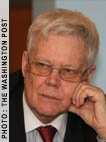
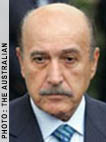
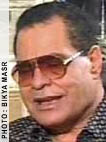
Omar Suleiman

Omar Suleiman

►►Egyptian ex-spy chief appointed security adviser to Saudi Crown Prince. Saudi Arabia’s Crown Prince Nayef bin Abdul Aziz has appointed Egypt’s former Director of General Intelligence, Omar Suleiman, as his security advisor. From 1986 until his forced resignation in spring this year, Suleiman had been the main conduit between Washington, Tel Aviv and the government of Hosni Mubarak.
►►Russia’s spy chief in rare interview. It is very rare that the men that run Russia’s powerful intelligence services give detailed interviews. But that’s just what Alexander Shlyakhturov, the head of military intelligence service, known as the GRU, did earlier this month with the Russian newspaper Rossiyskaya Gazeta.
►►US intel agencies brace for budget cuts. After seeing spending double over a decade, US intelligence agencies are bracing for about $25 billion in budget cuts over the next 10 years. “We’re going to have less capability in 10 years than we have today”, said Director of National Intelligence James Clapper, who sits atop the 16 departments, agencies and offices that comprise the US intelligence community and spend a combined $80 billion a year.

News you may have missed #626

Katia Zatuliveter

Katia Zatuliveter

►►Analysis: On largely forgotten CIA officer Jim Thompson. The CIA’s longtime man in Southeast Asia, Jim Thompson, fought to stop the agency’s progression from a small spy ring to a large paramilitary agency. He was in many ways unique, but by the 1950s and early 1960s he would become part of a larger, growing, and much less idealistic machine, one that would expose his naiveté –and punish him for it. Interesting historical analysis from Foreign Policy.
►►Court blocks naming NATO official who had affair with alleged Russian spy. We have written before that Katia Zatuliveter, who is accused by British MI5 of being a spy for Russia, has admitted having a four-year affair with Liberal Democrat MP Mike Hancock, as well as with a Dutch diplomat and a NATO official. The latter, a German diplomat, was pictured in a newspaper last week. However, his face was obscured because of the terms of a court order that means he cannot be identified.
►►Promises made about Colombia’s new spy agency. Colombia’s disgraced DAS intelligence agency has finally been dissolved. Now the government’s senior National Security adviser, Sergio Jaramillo, has said that Colombia’s new intelligence service will focus on combating “government infiltration by criminal organizations”. I guess it doesn’t hurt to be ambitious.

News you may have missed #625

Ahmed Al Hawan

Ahmed Al Hawan

►►Egypt’s most famous spy dies at 74. Egypt’s most famed spy on Israel, Ahmed Al Hawan, 74, has died after a long fight with illness, local media reported on Wednesday. Al Hawan worked for the Egyptian intelligence service during the years that followed Egypt’s military defeat by Israel in 1967. He supplied the Israelis with mistaken and misleading information that was crucial in Egypt’s war with Israel in 1973.
►►Analysis: Dark days for Taiwan’s spies. When Taiwan’s government last month announced budget cuts in military intelligence, the Ministry of National Defense (MND) insisted operations against mainland China would not be affected. However, media paint a vastly different picture, suggesting Taiwan’s future leaders will be completely deaf and blind to secretive developments across the Taiwan Strait.
►►US cyberespionage report names adversaries. A US intelligence report released last week concluded China and Russia are “the most aggressive collectors” of US economic information and technology online. But the report also states that America’s “allies and partners“, including the “French and the Israelis” are also stealing the s vital industrial and commercial secrets by infiltrating computer networks.

News you may have missed #624

Viktor Bout

Viktor Bout

►►Russia angry at Viktor Bout’s US guilty verdict. Moscow has reacted angrily to the guilty verdict handed down to Russian arms dealer Viktor Bout by a court in the United States. Bout, a former Soviet military intelligence (GRU) officer, was arrested in a sting operation in Bangkok, Thailand, in March of 2008. At the time of his arrest, he and his two collaborators were negotiating a complex weapons deal with two informants posing as representatives of the Revolutionary Armed Forces of Colombia (FARC), Latin America’s largest leftist paramilitary group.
►►Symposium examined Reagan’s use of intelligence. The CIA released more than 200 declassified documents it prepared for US President Ronald Reagan during a symposium last week at the Ronald Reagan Presidential Library in Simi Valley, California. The CIA conference, entitled “Ronald Reagan, Intelligence, and the End of the Cold War“, included a discussion by American and Soviet former spies.
►►Suspected Chinese spy loses bid to rejoin Canada civil service. Haiyan Zhang, worked as a senior communications analyst with the Privy Council Office in Ottawa. She was fired when Canada’s spy agency questioned her “loyalty to Canada” over suspicion she was spying for China. Now she has lost her fight to return to the civil service.