News you may have missed #622

SVR seal

SVR seal

►►Russian spies in Germany focused on politics and military. A married couple arrested on suspicion of spying for Russia is believed to have been gathering information on political developments and military affairs, according to German newsmagazine Der Spiegel. The two have been identified as Andreas and Heidrun Anschlag. German prosecutors accuse them of spying for SVR, the successor to the KGB’s First Chief Directorate.
►►Israel releases spy who gave information to Iran. Israel has released Nahum Manbar, who was sentenced to 16 years in prison in 1997, after he was convicted of harming state security and selling information and supplies to create chemical weapons to Iran. Israel’s Attorney General Yehuda Weinstein approved the early release of Manbar on Monday, one and a half years before the end of his sentence. This was the third time Manbar had requested to be released early.
►►FBI releases Russian illegals’ photos and videos. Documents released Monday, including photos, videos and papers, offered new details about the FBI’s decade-long investigation into a ring of Russian sleeper agents who, US officials say, were trying to burrow their way into American society to learn secrets from people in power. The investigation was apparently code-named Operation GHOST STORIES because six of the 10 Russian agents had assumed the identities of dead people. If you are wondering what these spies are doing now, read this informative update from the Associated Press.

Alleged Russian spies in Germany used low-tech methods to evade detection

Anna Chapman

Anna Chapman

By JOSEPH FITSANAKIS | intelNews.org |
A couple arrested in Germany last week on suspicion of working for Russian intelligence, was using low-tech radio communications to receive orders from Moscow, according to media reports. The two arrestees have been identified as Andreas and Heidrun Anschlag; German prosecutors accuse them of spying for SVR, the successor to the KGB’s First Chief Directorate (PGU), responsible for foreign operations and intelligence collection abroad. They are said to have worked as non-official-cover operatives for the KGB and SVR since at least 1990, when they entered Germany from Mexico, using forged Austrian travel documents. Authorities in Germany say that Heidrun Anschlag, 51, was caught by German police in the act of listening to encrypted radio messages from Moscow. German investigators are reportedly puzzled by the fact that, in the Internet age, when most intelligence operatives employ digital secure communications, the Anschlags insisted on using a low-tech method that mostly died with the end of the Cold War. But intelNews readers will remember the case of former United States State Department analysts Walter and Gwendolyn Myers, who were arrested in 2009 for spying on the US for Cuba for over 30 years. Shortly after the Myers’ arrest, we wrote that the couple appeared to have avoided capture for decades, precisely because their communications with the government of Cuba were too low-tech to be detected by sophisticated US monitors. The latter tend to focus on scanning for encrypted satellite or microwave communications which —among other hi-tech means— are now the communication method of choice for modern clandestine spy networks. But some intelligence agencies, including —apparently— the SVR, appear to insist on using old-school oral cipher signals, based on straightforward number-to-letter codes, which they broadcast to their agents over predetermined shortwave frequencies at specified times. Read more of this post

News you may have missed #615

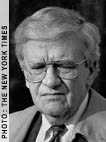
Clair E. George

Clair E. George

►►Ex-KGB spy Litvinenko’s widow seeks donations. The widow of Alexander Litvinenko has appealed for donations to help expose her husband’s murderers. Marina Litvinenko said she has to know the truth about the Russian ex-KGB spy’s death in London on November 23, 2006. He died of radioactive Polonium 210 poisoning in London’s University College Hospital. He had fallen ill shortly after drinking tea during a meeting with former KGB contacts at a West End hotel.
►►Memorial ceremony for controversial CIA figure. Clair George, who died in August from cardiac arrest at 81, has a rare status in CIA lore. He was the first high-ranking agency official to be found guilty of felony charges while carrying out official duties. Despite the public outrage about CIA actions during the Iran-Contra affair, George remained a popular figure among agency alumni because they believe his loyalty never faltered.
►►Taiwan intelligence agency accused of wasting money. Taiwan’s military-intelligence body has come under fire after one of its agents returned as a Le Cordon Bleu-certified chef following a so-called undercover mission in France. The agent, whose U$42,000 tuition for the cooking classes in France was sponsored by the military, has now lent his Le Cordon Bleu certificate to someone else for a fee, according to reports.

German commandos arrest couple ‘spying for Russia’

Russian and German flags

Russia & Germany

By JOSEPH FITSANAKIS | intelNews.org |
Members of an elite German commando unit have arrested a man and a woman, on suspicion of having spied for Russia for over two decades. A statement issued by the German prosecutor’s office does not name the couple, nor does it explicitly identify them as Russian spies. It says simply that they are “suspected of having worked in Germany over a long period of time for a foreign intelligence agency”. But an article in Germany’s leading newsmagazine, Der Spiegel, identifies the couple as “Andreas A.” and “Heidrun A.”, and claims that the two have spied for Russian intelligence since at least 1988. The newsmagazine reports that the suspected spies were caught separately in the towns of Balingen and Marburg, located in the states of Baden-Wuerttemberg and Hesse respectively. It also suggests that the two were apprehended by members of Germany’s GSG-9, the elite counter-terrorism and special operations unit of the German Federal Police, and that the woman was actually caught in the act of listening to a coded radio message. Both were found to be in possession of forged Austrian passports, as well as —apparently fake— birth certificates stating that they were born in Argentina (Andreas) and Peru (Heidrun). Following the Spiegel article, Germany’s Federal Prosecutor confirmed that two people had indeed been arrested on suspicion of espionage activities on behalf of a foreign country. If a Russian connection is established, it will be the first international espionage case linking Russia and Germany since the latter’s reunification in 1990. If they are followed by convictions, the arrests could constitute a much needed success story for the German intelligence community, whose reputation has lately been damaged by several unsavory media stories. Read more of this post

Trial of ‘Lord of War’ weapons smuggler underway in New York

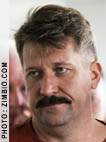
Viktor Bout

Viktor Bout

By JOSEPH FITSANAKIS | intelNews.org |
He is considered the world’s most notorious weapons smuggler; dubbed ‘the merchant of death’, his life’s story inspired the Hollywood blockbuster Lord of War. But his trial, which is currently underway in New York, has so far gone largely unnoticed by the world’s media. Viktor Bout, a former Soviet military intelligence (GRU) officer, was arrested in a sting operation in Bangkok, Thailand, in March of 2008. At the time of his arrest, he and his two collaborators were negotiating a complex weapons deal with two individuals who said they were representatives of the Revolutionary Armed Forces of Colombia (FARC), Latin America’s largest leftist paramilitary group. However, the interested buyers turned out to be informants of the United States Drug Enforcement Administration (DEA), which was employing them as part of a sophisticated sting operation. Bout was arrested by the Thai Royal Police and was imprisoned in Bangkok, before being extradited to the United States last year. He is now being tried in Manhattan for attempting to supply arms to the FARC, including machine guns, rocket-propelled grenade launchers, and even two airplanes. Earlier this week, the jury heard excerpts from recorded conversations between Bout, his accomplices, and the DEA informants, in which the Russian weapons merchant is heard saying that he and the FARC “have the same enemy” —namely the Americans. Bout voiced this comment in response to a DEA informant’s exclamation that the FARC wanted to use the weapons supplied by Bout “to knock down those American sons of bitches”. The deal was never completed, as it was interrupted by Thai police officers, who stormed into the hotel room and captured a stunned Bout. In another sequence in the recordings, Bout is heard saying that he plans to convince the defense minister of an unidentified country to facilitate the transfer of weapons to the FARC by providing him with official documentation. Read more of this post

News you may have missed #613 (court case edition)

Katia Zatuliveter

Katia Zatuliveter

►►Russian accused spy admits affair with British MP. Katia Zatuliveter, 26, who is accused by British counterintelligence service MI5 of being a spy for Russia, has admitted having a four-year affair with Liberal Democrat MP Mike Hancock, 66, while she worked as his parliamentary researcher. She also admitted that before meeting Mr Hancock she had affairs with a NATO official and a Dutch diplomat. However, she has denied working as a spy or targeting Mr Hancock in a honey trap operation.
►►Trial for ex-CIA officer accused of leaking secrets delayed. The trial for Jeffrey Sterling, a former CIA officer charged with leaking classified defense information has been delayed. Opening arguments were expected to begin this week, but the trial was postponed on Monday after prosecutors said they intended to appeal the judge’s decision to strike two witnesses.
►►UK justice secreary plans closed-door terrorism trials. Intelligence gathered by British intelligence agencies MI5 and MI6, even if obtained by torture, will never be disclosed in court proceedings, under proposals announced by British justice secretary Kenneth Clarke. The proposals have been welcomed by the security and intelligence agencies, but criticized by civil rights groups for promoting “secret justice”.

Canada memos decry use of Canadian passports by Russian spies

Canadian passport

Canadian passport

By JOSEPH FITSANAKIS | intelNews.org |
In June of 2010 media headlines were dominated by news of a Russian spy ring in the United States that was busted by the Federal Bureau of Investigation. On June 27, eleven people, all sleeper agents of the SVR, Russia’s Foreign Intelligence Service, were arrested in early morning raids across several US states. The arrestees, who included media sensation Anna Chapman, were later exchanged for four alleged CIA agents serving time in Russian jails. What is less known however, is the fact that four of the members of the busted spy ring were claiming to be Canadian citizens. SVR operative Natalia Pereverzeva was caught using a forged Canadian passport under the fake name ‘Patricia Mills’. Two other SVR officers, Andrei Bezrukov and Elena Vavilova, were claiming Canadian nationality under the forged names Donald Heathfield and Tracey Foley. A fourth alleged member of the spy ring, ‘Christopher Metsos’, was apprehended in Cyprus, after using a forged Canadian passport to enter the Mediterranean island. He later disappeared, having skipped bail. Now, sixteen months after the arrests of the Russian spies, The Canadian Press has acquired several hundred pages of memoranda and internal emails from Canada’s Department of Foreign Affairs and International Trade (DFAIT). Substantial portions of the documents, which were acquired through Canada’s Access to Information Act, remain censored; but The Press reports that they show that employees of DFAIT’s Passport Canada office held “urgent meetings and high-level briefings” in the days following the FBI arrests, in order to address the revelations concerning SVR’s illegal use of Canadian passports. In the documents, Canadian officials opine that the use by Russian spies of forged Canadian travel documents poses a “troubling threat to the integrity of Canadian [passports] and identity security”. Read more of this post

News you may have missed #609

Ilan Grapel

Ilan Grapel

►►Questions over Chinese spy hang over Putin visit. The arrest of a Chinese spy in Moscow has cast a cloud over Vladimir Putin’s two-day visit to Beijing. Tong Shengyong was arrested last October for allegedly trying to buy plans to the Russian S-300 anti-aircraft missile system. But perplexingly, the news of his arrest only emerged last week, in what appears to have been a deliberate leak by Russia’s Federal Security Service (FSB).
►►Egypt steps up charges against suspected Israel spy. Egypt’s State Security Prosecutor has added additional criminal offenses against alleged Israeli spy Ilan Grapel. Meanwhile, there are indications that Egypt seeks the release of 78 Egyptian prisoners held in Israeli jails in return for Grapel. Israel may agree with the proposal.
►►CIA to be last out of Afghanistan. US Special Forces and the CIA are girding for the moment when Afghanistan’s security rests once again with them, working together with Afghan forces against the Taliban. Recent remarks from the White House suggest the CIA and special operations forces will be hunting al-Qaida and working with local forces long after most US troops have left.

News you may have missed #607

Shakil Afridi

Shakil Afridi

►►Ex-worker sues US spy agency for anti-Islamic bias. Mahmoud Hegab, a former employee of the super-secretive US National Geospatial-Intelligence Agency, says he lost his security clearance because his wife attended an Islamic school and worked for a Muslim charity, Alexandria-based Islamic Relief USA.
►►Russia says China still spies the old-fashioned way. Russia’s Federal Security Service (FSB), issued a rare statement last week, claiming it had arrested Tong Shengyong, a Chinese citizen who, posing as a translator for official delegations, was working under the direction of the Chinese government in an attempt to buy state secrets from Russians about Russia’s S-300 missile system. It now says that the Tong case shows that China continues to employ an old standby in the tradecraft playbook: outright bribery.
►►Pakistan panel says doctor who aided CIA should face charges. Pakistani doctor Shakil Afridi, who ran a vaccination program for the CIA to help track down Osama bin Laden, should be put on trial for high treason, a Paksitani government commission said Thursday.

Russia reveals arrest of Chinese national on spy charges

FSB officer

FSB officer

By JOSEPH FITSANAKIS | intelNews.org |
Russian counterintelligence officials have revealed the arrest of an alleged Chinese intelligence operative, who has reportedly been imprisoned in Moscow for nearly a year and is awaiting trial on espionage charges. Russia’s FSB domestic intelligence agency said on Wednesday that it arrested Chinese national Tong Shengyong on October 28 last year. In a press statement, the FSB said that Tong’s professional cover was that of an “interpreter for official delegations”, but that in reality he was operating in Russia on an assignment from China’s Ministry of Public Security. The Ministry is the principal police and security authority of the People’s Republic of China, and is considered one of the world’s largest intelligence organizations. The FSB claims that Tong allegedly used his high-level contacts in Moscow and elsewhere to routinely solicit Russian nationals, offering to purchase from them information relating to Russian missile systems. According to the FSB, Tong was particularly interested in the S-300 long-range surface-to-air missile system, which developed for the Soviet Air Defense Forces as protection against American aircraft and cruise missiles. The Soviet-era system has since been replaced by the more advanced S-400, but China, which has historically been Russia’s largest weapons procurer, is already in possession of several S-300s, which it purchased from Moscow in the 1990s. Beijing is therefore desperate to access classified manuals that would allow it to repair and modify S-300s currently in its possession, without giving in to Russia’s insistence to upgrade to the post-Soviet S-400. Moreover, during the past decade, China has begun developing its own missile system technology, which some say is loosely based on Russian blueprints. Read more of this post

News you may have missed #603

Syed Ghulam Nabi Fai

Syed Fai

►►Turkey has names of Israeli soldiers who attacked Gaza Flotilla. According to Turkish media, government officials succeeded in amassing the list of 174 names of officers and soldiers involved in the 2010 MV Mavi Marmara attack, by planting intelligence agents inside Israel. Turkish government officials have denied the reports.
►►Ex-MI5 chief to hear deportation case of alleged spy. A British judge has ruled that Sir Stephen Lander, former director of MI5, Britain’s domestic intelligence service, can help to decide whether Katia Zatuliveter should be deported from the UK for allegedly spying for Russia. Zatuliveter, a Russian citizen who worked as an assistant to former British Member of Parliament Mike Hancock, may be deported on the basis of espionage evidence gathered by MI5.
►►Analysis: Pakistan’s spy plot to influence Washington. Syed Ghulam Nabi Fai came to the US on Saudi money with hopes of helping people in the disputed Indian territory of Kashmir. But he found himself spending millions on behalf of Pakistan’s notorious Inter-Services Intelligence and, now, under arrest. An excellent article by The Atlantic‘s Kim Barker, Habiba Nosheen, and Raheel Khursheed.

News you may have missed #591

David Irvine

David Irvine

►►UK Prime Minister criticizes Russia over murdered spy. British Prime Minister David Cameron criticized Russia on Monday over its refusal to hand over Andrei Lugovoy, a former KGB agent suspected in the 2006 poisoning death of former Russian spy Alexander Litvinenko in London. He also rejected a call from Russia for the restoration of links between the two countries’ intelligence agencies. But the two sides did “set aside their political differences […] to sign multi-million dollar business deals”. Oh, well.
►►Aussie spy agency investigating more terror threats than ever. The Australian Security Intelligence Organization has trebled in size over the past decade and now has unprecedented powers. In a rare interview, ASIO Director General David Irvine says he is worried about the potential of an attack similar to the recent shootings and bombings in Norway.
►►‘Cuban Five’ spy member seeks return home after prison. Rene Gonzalez, a former Cuban intelligence officer convicted of spying in the US, wants a federal judge to permit his return to Cuba after his release from prison next month. But US government prosecutors say Gonzalez never showed remorse for his crimes and that there’s no justification for him to go to Cuba.

News you may have missed #566 (analysis edition)

Jeffrey Richelson

Jeffrey Richelson

►►Stuxnet virus opens new era of cyberwar. Well-argued article by quality German newsmagazine Der Spiegel on Stuxnet, the sophisticated computer virus that attacked the electronic infrastructure of Iran’s nuclear program last year. The article argues that, in terms of strategic significance, the virus, which is widely considered a creation of Israeli intelligence agency Mossad, is comparable to cracking Germany’s Enigma cipher machine by Polish and British cryptanalists during World War II.
►►The fallout from the Turkish Navy’s recent spy scandal. Recently, the Turkish High Criminal court indicted members of an alleged spy ring operating inside the Turkish Navy. According to the indictment, members of the ring stole more than 165,000 confidential documents and obtained dozens of surveillance records and classified military maps. Its biggest customers were allegedly the intelligence services of Israel, Greece and Russia.
►►New edition of classic intelligence handbook published. A new edition of Jeffrey Richelson’s encyclopedic work on Read more of this post

Did Russian secret services avert military coup in Sverdlovsk?

Vladimir Kvachkov

V.V. Kvachkov

By JOSEPH FITSANAKIS | intelNews.org |
The Russian intelligence services arrested members of an illegal paramilitary unit that planned an armed insurrection in one of central Russia’s biggest cities. According to reports from Yekaterinburg, the administrative capital Russia’s Sverdlovsk province, leaders of the alleged paramilitary unit hoped that their action would lead to a nationwide rebellion, eventually resulting in a military coup in Moscow. Several people were arrested by security forces of the FSB, Russia’s Federal Security Service a few days before August 2, the day when the alleged insurrection was to have taken place. Sources from the FSB say that the plotters were working on a four-step plan of action. First, they planned to attack the FSB’s Sverdlovsk district command center, the Russian Ministry of the Interior’s regional headquarters, as well as the offices of Russia’s Ministry of Emergency Situations, and capture or kill all senior staff. They would then blow up key power stations around Yekaterinburg, effectively shutting down the city’s electricity network. Taking advantage of the widespread confusion among the regional security apparatus and the population, they would move to seize local weapons depots. The alleged insurrection plan called for distributing the seized weapons among members of Yekaterinburg’s urban poor, in an attempt to widen the base of the rebellion. The plan’s final step viewed a widening insurrection in Yekaterinburg as a spark that would trigger similar Libya-style uprisings across Russia, resulting in a coup that would depose the current government in Moscow and replace it with a transitional military regime. According to news reports, the FSB arrested several leaders of the alleged insurrection, including former members of the Russian military, who are said to be linked with the People’s Militia, an insurrectionist group composed by former military and intelligence officials, led by Colonel Vladimir Kvachkov. Kvachkov, a retired Colonel in the Russian Military Intelligence Directorate (GRU), was arrested in December of 2010 on charges of planning “an armed rebellion for the forceful seizure of power in Russia”. Read more of this post

News you may have missed #560 (new books edition)

Khalil al-Balawi

Khalil al-Balawi

►►New book on CIA’s Khost bomb disaster. Washington Post reporter Joby Warrick has authored a new book, examining the December 31, 2009, killing of seven CIA operatives by Jordanian doctor Humam Khalil al-Balawi in Khost, Afghanistan. In the book, entitled The Triple Agent, Warrick quotes several “anonymous” sources from within CIA and Jordan’s General Intelligence Department (GID), which was involved in running al-Balawi. Aside from blaming GID, Warrick says the CIA’s Amman station chief was partly responsible for the botched operation.
►►Hollywood producer was Mossad spy, says new book. The book Confidential: The Life of Secret Agent Turned Hollywood Tycoon Arnon Milchan, says that Milchan was a full-fledged operative for Israel’s now-defunct intelligence agency, Lakam. The agency, which was also known as Israel’s Bureau of Scientific Relations, collected scientific and technical intelligence abroad. It was disbanded in 1986 following the arrest of US Navy analyst Jonathan Pollard for engaging in espionage on behalf of Israel. The book’s authors, Meir Doron and Joseph Gelman, argue that Milchan, who produced such movies as Love and Other Drugs and Knight and Day, worked for Israeli intelligence by supervising government-backed accounts and front companies that financed “the special needs of the entirety of Israel’s intelligence operations outside the country”.
►►Book alleges US-Russian spy swap deal. In 2010 the CIA considered a swap deal that would have delivered to Moscow two Americans currently imprisoned in the US for spying for Russia. This information is included Read more of this post