Botched CIA mission in Siberia revealed

Ulan Ude

Ulan Ude

By JOSEPH FITSANAKIS | intelNews.org |
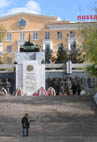
Five American “tourists” temporarily detained in 2001 by Russian border agents were in fact CIA agents on a covert mission to Siberia, court documents have revealed. The five were among thirteen agents traveling to Siberia on a chartered CIA flight. They were detained in the far-eastern Russian city of Petropavlovsk by Russian authorities, because Langley had failed to secure visas for them in time for their departure. The Americans’ CIA cover was revealed last week during a court case involving alleged fraud by a US government contractor involved in the operation. The CIA group was apparently traveling to Ulan Ude, Siberia in order to purchase two Russian helicopters for use in CIA missions in Afghanistan. Read more of this post
DNI responses to Senate questions declassified

Dennis Blair

Dennis Blair

By JOSEPH FITSANAKIS | intelNews.org |
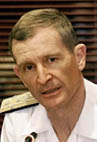
Don’t bother reading through the 40 pages (.pdf) of responses given last February by the US Director of National Intelligence (DNI) to questions by the Senate Select Committee on Intelligence. There’s not that much new information in it, and it turns out DNI Dennis C. Blair even resorted to plagiarizing part of an article on an alleged Russian attack on US satellites originally printed in Russian newspaper Nezavisimaya Gazeta, with no attribution. Instead, you can save time by taking a look at the observations made on the 40-page document by Steven Aftergood, editor of the Federation of American Scientists’ Secrecy News bulletin. It was, in fact, a Freedom of Information Act request by Aftergood that prompted the release of the document in the first place. Read more of this post

Russians helped Lebanon bust Israeli spy ring, claims site

FSB agent

FSB agent

By JOSEPH FITSANAKIS | intelNews.org |
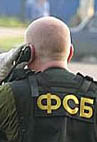
Israeli website DEBKAfile claims that the Federal Security Service of the Russian Federation (FSB) is the primary counterintelligence force behind the busting of the Al-Alam spy ring in Lebanon, which intelNews has been monitoring since February, when it first erupted. The website, known for its contacts with intelligence circles, says that it was Russian, not French, surveillance technology that helped uncover the spy ring. The article cites “Western intelligence sources in the Middle East”, who apparently revealed that a specialist FSB unit was commissioned by Hezbollah, the Shia Islamic political and paramilitary organization that controls large parts of Lebanon, to root out the massive spy ring. The unit then proceeded to do so “with the help of super-efficient detection systems”, DEBKAfile claims. Read more of this post

News you may have missed #0053

  • [UNCONFIRMED] Saudi opposition group claims Prince Bandar under house arrest. Saad al-Faqih, head of the Saudi opposition group Islamic Reform Movement, claims that Saudi Prince Bandar bin Sultan, the kingdom’s former ambassador to the United States, and a close ally of the Bush family and former CIA leadership, is under house arrest after reportedly trying to “provoke 200 agents working for the Saudi security service to stage a coup against King Abdullah”.
  • Ukrainian diplomat expelled from Russia named. An Ukrainian source has named one of the two Ukrainian diplomats to be expelled by Russia as part of the tit-for-tat row as Igor Berezkin. The expulsions follow a similar move by Ukrainian authorities who requested that Russia’s consul general in Odessa, Alexander Grachev and a senior counselor at the Russian embassy, Vladimir Lysenko, leave Ukraine over accusations that they had been involved in work in violation of their diplomatic status (i.e. espionage).
  • Book claims Secret Service took psychic’s advice. Ronald Kessler claims in a new book that the US Secret Service changed a motorcade route for the first President George Bush based on a psychic’s vision that he would be assassinated.

Bookmark and Share

News you may have missed #0048

Bookmark and Share

News you may have missed #0039

  • Russians suspect sabotage behind ICBM test failure. The FSB is investigating the reasons behind the test failure earlier this month of a Russian Navy Bulava-30 (SS-NX-30) sea-based intercontinental ballistic missile, which disintegrated 28 seconds after launch. The Russian Navy developed the ICBM specifically to avoid future US ballistic missile defenses.
  • CIA kept bin Laden son’s death secret for months. US officials think that Saad bin Laden was killed in a Predator drone strike earlier this year in Pakistan, but CIA has tried to keep the news secret, allegedly in an attempt to confuse al-Qaeda. You may recall that some time ago intelNews reported that some in US intelligence believed Saad had been given government protection in Iran.
  • US DNI sees signs of North Korean succession. The Open Source Center of the US Directorate of National Intelligence adds its voice to widespread speculation that Kim Jong il may be preparing to hand power to his third son, Kim Jong Un.

Bookmark and Share

Could Order 65 signify the end of communications privacy in Russia?

FSB agent

FSB agent

By IAN ALLEN | intelNews.org |
As of July 21, Russian postal services and Internet providers are required by law to provide Russian intelligence agents with on demand access to the dispatch information and content of private correspondence. This is stipulated in Order 65, which the Russian government and the Russian Ministry of Communications made public on July 6.  Apart from granting automatic communications inspection rights to officers of the Federal Security Service (FSB) and seven other intelligence and security organizations of the Russian state, the new law requires all Russian post office sorting facilities to set up “special rooms where security officers will be able to open and inspect private mail”. Additionally, all Internet service providers are now required to grant the FSB and other intelligence and security agencies complete access to their electronic databases. Read more of this post

News you may have missed #0032

Bookmark and Share

News you may have missed #0027

  • Former KGB captain still fighting deportation from Canada. IntelNews has been keeping an eye on the case of Mikhail Alexander Lennikov, whose deportation from Canada has been ordered by a court. Lennikov, a former KGB captain, claims that if deported back to Russia he will be treated as a defector by the FSB. IntelNews has also learned that Lennikov now maintains a public blog, which he updates daily.
  • New book claims Errol Flynn worked as a Nazi spy. The Australian-born star, who became a Hollywood legend in the 1930s, was known for his anti-Semitic views. But now a new book claims that declassified CIA files prove Flynn collaborated with German Nazi intelligence in gathering information on German socialists who fought in the Spanish Civil War.
  • Iranian spying allegations nonsensical, says France. French Foreign Minister Bernard Kouchner said that Tehran’s claims that 23-year-old French student Clotilde Reiss was a spy in Iran are “stupid”. “Do you think my country would be so naive and shorthanded as to send a 23-year-old woman to spy in Iran? That’s stupid, it’s not possible”, said Mr. Kuchner during a visit to Lebanon.
  • Interesting account of Israel’s only spy history memorial. Matti Friedman, of The Associated Press, has written an interesting account of the little known Israel Intelligence Heritage and Commemoration Center in Tel Aviv.

Bookmark and Share

Sex video prompts British diplomat’s resignation

Hudson video

Hudson video

By JOSEPH FITSANAKIS | intelNews.org |
The British Foreign Office has confirmed that one of its officials stationed in Russia has resigned following the emergence of video footage which shows him cavorting with two prostitutes. British diplomatic sources have identified that James Hudson, a member of Her Majesty’s Diplomatic Service, is indeed the man shown having sex with prostitutes in a black-and-white surveillance film, which was probably shot in a brothel in the Russian city of Ekaterinberg. Mr. Hudson was Britain’s Deputy Consul General in the city, also known as Yekaterinburg, which is a major industrial center and is described as “a key outpost for British trade”. The explicit video, which was anonymously posted on a Russian news website under the title “Adventures of Mr Hudson in Russia”, is thought to have been shot by agents of Russia’s Federal Security Service (FSB) in what is known in espionage circles as a “honey trap”. Read more of this post

Kremlin dismayed after US retains Kyrgyz air base

Bakiyev

Bakiyev

By JOSEPH FITSANAKIS | intelNews.org |
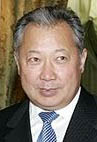
The recent decision by the Kyrgyz government to halt the eviction of US forces from the Manas air base has been hailed as a foreign policy success for the US government, and a rare defeat for Russia’s resurgence. Russian foreign ministry officials admitted earlier this week that the Kyrgyz reversal was a setback for Moscow’s plans and hinted that the Kremlin had been deceived by the government of Kyrgyz President Kurmanbek Bakiyev. As intelNews reported last February, Kyrgyzstan had announced that it would expel US forces from Manas, which experts have described as the “primary logistics hub” for the US military’s operations in Afghanistan. The decision of the Kyrgyz government came soon after it received an unprecedented $2.2 billion in Russian loans and aid. But President Bakiyev changed his mind after the US government agreed to “triple its rent for Manas”, and –it appears— cease its criticism of Kyrgyzstan’s rapidly deteriorating human rights record. Read more of this post

How many spy drones did Russia purchase from Israel?

MK II UAV

MK II UAV

By IAN ALLEN | intelNews.org |
Back in April, intelNews reported on a $53 million agreement between Russia and Israel to provide Moscow with three Israeli-made intelligence-gathering drones. Much was made at the time of the purchase of those unmanned aerial vehicles (UAVs), which was interpreted as an indirect admission by Moscow that its armed forces severely lacked aerial intelligence. The purchase of the three Israel-made drones was reportedly designed to cover immediate needs, while the Russians were working on a plan to start building their own UAVs. It turns out, however, that neither the Israelis nor the Russians were quite upfront in their public announcement of the deal. Last April the two sides said that Russia would receive “three unmanned aircraft” from Israel Aerospace Industries (IAI). In reality, $53 million is much too high a fee to purchase just three UAVs. This puzzled Washington, which does not want to see Russia improve its aerial reconnaissance capabilities. The US Pentagon thus sought –and subsequently received– assurances from Israel that it was not planning to sell Moscow its state-of-the art, super-expensive Heron UAV model. But the Americans were correct to be suspicious of the high cost of the deal. Russian media now reports that the Russians will be receiving, not three, but twelve UAVs for their $53 million. Read more of this post

News you may have missed #0007

  • German counterintelligence chief accuses Russia of commercial spying. Burkhard Even, Germany’s director of counterintelligence at the Federal Office for the Protection of the Constitution, has told German newspaper Die Welt am Sonntag that Russian spies have intensified espionage operations on the German energy sector to help Russian firms gain commercial advantages. On May 26, intelNews reported on similar accusations by the German Association for Security in Industry and Commerce (ASW). Its director told Mitteldeutsche Zeitung that the targeting of German research and commercial enterprises by mainly Chinese and Russian agents is so extensive that it usually costs the German economy over €20 billion per year, and it may be costing as high as €50 billion per year since 2007.
  • Spanish intelligence agents kicked out of Cuba. Spanish newspaper ABC reports that the recently expelled officers of Spain’s National Intelligence Centre (CNI) were secretly recorded at Havana cocktail parties “making derogatory comments about the Castro brothers and other [Cuban] government officials”. 
  • Proposed US bill would boost congressional oversight of covert spy programs. Key lawmakers in Washington have endorsed a proposed bill that would force the president to make fuller disclosure of covert spy programs. The legislation, which has already been approved by the House Intelligence Committee, would force the president to disclose classified operations to all members of Congress’ intelligence oversight panels. 
  • Report claims CIA, Mossad scoring points against Hezbollah. A new report claims American and Israeli intelligence organizations have scored notable recent successes against Hezbollah, in places such as Azerbaijan, Egypt and Colombia.

New book examines KGB poison lab

Lugovoy

Lugovoy

By JOSEPH FITSANAKIS | intelNews.org |
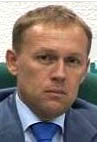
Former Soviet military intelligence officer Boris Volodarsky has given an extensive interview to Radio Svoboda (RFE/RL’s Russian language service) about his newest book, KGB Poison Factory: From Lenin to Litvinenko. At the heart of his book is the 2006 murder of Alexander Litvinenko, a former KGB intelligence officer who had defected and was living with his family to the UK, until he came down with a fatal dose of polonium 210. Volodarsky agrees with most intelligence experts that Litvinenko’s murder carries with it all the marks of a KGB assassination operation. But the former intelligence officer, who now lives in Vienna and London, believes Litvinenko’s poisoning was not carried out by Andrey Lugovoy, as is claimed by British authorities, but by an unknown member of the KGB’s mysterious “C” directorate. Lugovoy, who is wanted in Britain for Litvinenko’s murder, served in the KGB and in Russia’s Federal Protective Service (FSO) from 1987 to 1996, and is currently a member of the Russian Duma. Volodarsky’s interview is available in Russian here.

German security group sees rise in industrial, commercial spying

By JOSEPH FITSANAKIS | intelNews.org |
A major German corporate security group has echoed recent warnings by the German government that foreign industrial and commercial espionage in Germany is on the increase. Last week, the general manager of the German Association for Security in Industry and Commerce (ASW), Dr. Berthold Stoppelkamp, told German newspaper Mitteldeutsche Zeitung that the targeting of German research and commercial enterprises by mainly Chinese and Russian agents is so extensive that it usually costs the German economy over €20 billion per year, and it may be costing as high as €50 billion per year since 2007. Dr. Stoppelkamp said that, although these covert activities are government-managed, they aim to assist individual Chinese or Russian firms competing against German companies for international contracts. Read more of this post