Western spy agencies ‘sharing intelligence’ with Syrian rebels

Robert MoodBy JOSEPH FITSANAKIS | intelNews.org |
A British newspaper has cited defense sources claiming that British and American intelligence agencies are passing vital information to Syrian rebels fighting to overthrow the country’s government. British tabloid The Daily Star quoted “a British defense source” who said that most of the raw intelligence on Syria is picked up by sophisticated British and American satellites monitoring Syrian communications. Once gathered and assessed by intelligence analysts in Washington and London, the information is passed on to operatives of the United States Central Intelligence Agency and Britain’s MI6, who are allegedly operating on the ground in Syria. They in turn communicate actionable intelligence to rebel leaders in Syria, who are fighting the government of Syrian President Bashar al-Assad. According to the British tabloid, information passed on to rebel leaders includes detailed satellite imagery of Syrian pro-government troop movements around the country, as well as the contents of intercepted communications between senior Syrian military commanders and their subordinates in the field. The Star quotes one unnamed British government source who claims that the satellites are so sophisticated that they allow British and American eavesdroppers to identify the individuals whose voices are heard in the intercepted communications, with the aid of advanced voice recognition systems. The intelligence has reportedly enabled rebel commanders to evacuate locations targeted by government forces, and may also have allowed the rebels to organize successful counterstrikes in response to offensives conducted by troops loyal to Damascus. Washington-based publication The Hill contacted the CIA and the White House but their spokespersons refused to comment on what they called “an ongoing intelligence operation” in Syria. A spokesman from the British Foreign and Commonwealth Office would only tell The Star that “all actions remain on the table”.   Read more of this post

News you may have missed #721

Yuval DiskinBy IAN ALLEN | intelNews.org |
►►US spies clash with military over outsourcing spy satellites. Members of the US intelligence community and the military are finding themselves on opposite sides regarding the future of American spy satellites. Since the US first began using satellites to collect intelligence data, the government largely relied on its own technology. But in recent years, as private companies have developed sophisticated satellites of their own, Washington has been increasingly relying on commercial sources for spy missions. Now senior intelligence officials have urged the Obama administration to move away from relying on commercial satellite imagery.
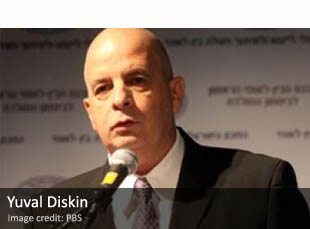
►►Israeli ex-spy criticizes plans for war with Iran. Many Israeli retired officials have criticized Prime Minister Benjamin Netanyahu’s government, but the censure from Yuval Diskin, who stepped down as head of the Shin Bet domestic intelligence service last year, was especially harsh. “I have no faith in the prime minister, nor in the defense minister”, Diskin said in the remarks broadcast by Israeli media on Saturday. “I really don’t have faith in a leadership that makes decisions out of messianic feelings”. Speaking in New York, former Mossad Director Meir Dagan said simply that Diskin “spoke his own truth”.
►►Litvinenko’s widow still waiting for answers. In 2000, after Vladimir Putin became President of the Russian Federation, KGB/FSB officer Alexander Litvinenko fled with his family to the UK, where they claimed political asylum and, later, British citizenship. During his time in London, Litvinenko consulted for MI5 and MI6, worked at a corporate security agency, and wrote two books, including Blowing Up Russia, which alleged that the Russian apartment bombings of 1999 were organized by the FSB, to justify war with Chechnya and sweep Putin into power. He died in 2006 of radioactive poisoning. Six years on, Litvinenko’s widow, Marina, says she is still waiting for answers.
News you may have missed #720

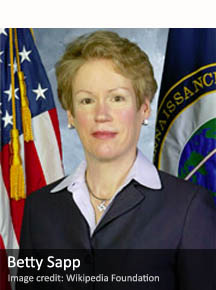
Betty SappBy IAN ALLEN | intelNews.org |
►►Lebanese national wanted for spying for Israel. A Lebanese military court has issued an arrest warrant for a Lebanese national suspected of spying for Israel. The judge in the case accused the suspect, whose name is yet to be released, of being in touch with Israel and passing on information about Ron Arad, an Israeli Air Force weapon systems officer who went missing in 1986.
►►Article sheds light on UK Home Office’s ex-spy official. An article in The Sunday London Times examines the role of Charles Farr, a former MI6 officer, who is considered as “the heart” of the British Home Office’s security policy. Farr, who joined MI6 some time in the 1980s, and served in South Africa and Jordan among other places, directs the Office’s Security and Counter-Terrorism unit. He is now in charge of the Home Office’s Communications Capabilities Development Programme, an attempt to augment online government surveillance. One former official, who had a showdown with Farr over policy, tells The Times: “He’s almost messianic. He’s like he’s on a mission to protect the nation. When you disagree with him he gets very emotional. He’s one of these guys who goes white and shakes when he loses his temper”.
►►First woman tapped to lead US spy satellite agency. For the first time in its storied history, the secretive builder and operator of America’s spy satellites, the National Reconnaissance Office, will be run by a woman. Betty Sapp, currently principal deputy director at the spysat agency, will move up one slot and replace NRO Director Bruce Carlson, who many credit with turning around the agency’s problem-plagued acquisition system. While Sapp is the first woman to lead the NRO, she is the second woman to lead one of the major intelligence agencies. Letitia “Tish” Long, director of the National Geospatial Intelligence Agency, gets to claim the honor of first woman to break that glass ceiling.

News you may have missed #712

Abdel Hakim BelhajBy IAN ALLEN | intelNews.org |
►►New US spy satellite could include ‘domestic surveillance. Last week, a new US spy satellite was launched into orbit as part of a secretive military program enabling the surveillance of Earth from space. An official at the Vandenberg base told The Los Angeles Times that the NROL-25 was part of a “national security payload”, which could mean it is to be used for any number of purposes, possibly including domestic surveillance.
►►US steps up intelligence and sabotage missions in Iran. American intelligence agencies are ramping up intelligence and sabotage missions focused on Iran’s nuclear program, according to The Washington Post. Officials from the National Security Agency have increased efforts to intercept email and electronic communications coming from Tehran, according to reports in The Post‘s Sunday edition. The CIA and other agencies have also ramped up sabotage missions in the country, geared toward disrupting Iran’s ongoing nuclear work, the paper reports.
►►MI6 ‘considers paying off’ Libyan official. Britain’s MI6 chiefs allegedly plan to offer more than £1 million ($1.6 million) hush money to a Libyan who claims British spies sent him to be tortured by the Gaddafi regime. The Secret Intelligence Service is scrambling to prevent Abdel Hakim Belhaj releasing details of his case following the revelation that a Labour Party minister sanctioned his extraordinary rendition —contravening UK policy on torture.

News you may have missed #700: analysis edition

Tal DekelBy IAN ALLEN | intelNews.org |
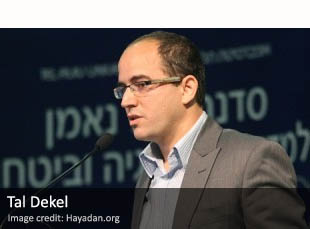
►►Egypt struggles to advance spy satellite program. Since Egyptian technicians lost touch two years ago with an observation satellite they hoped would help carry the country into the “space club”, the country has struggled to make progress in gaining intelligence satellite capabilities, but it remains committed to the program. This is according to Tal Dekel, a research fellow at Tel Aviv University’s Yuval Ne’eman Workshop for Science, Technology and Security. He said few are aware of the extent of Egypt’s satellite program: “People talk about the Iranians, but no one talks about Egypt’s program, which includes much more than a satellite”.
►►China spying on Taiwan despite thaw. When Taiwanese security personnel detained a suspected spy for China at a top secret military base last month, they may have had a sense of déjà vu. Four suspected spies have been detained in Taiwan during the last fourteen months. The cases show that China is seeking information about systems that are integral to Taiwan’s defenses and built with sensitive US technology. A major breach could make Taiwan more vulnerable to Chinese attack.
►►US intel says water shortages threaten stability. Competition for increasingly scarce water in the next decade will fuel instability in regions such as South Asia and the Middle East that are important to US national security, according to an intelligence report from the US Director of National Intelligence. The report, drafted principally by the Defense Intelligence Agency, reflects a growing emphasis in the US intelligence community on how environmental issues such as water shortages, natural disasters and climate change may affect US security interests.

News you may have missed #694

Hakan FidanBy IAN ALLEN| intelNews.org |
►►India’s spy satellite to be launched in April. The Radar Imaging Satellite, or RISAT-1, is a wholly Indian-built spy-surveillance satellite that can see through clouds and fog and has very high-resolution imaging. The Indian Space Research Organisation (ISRO) has said that RISAT-1 is slated for launch in April. The satellite would be used for disaster prediction and agriculture forestry, and the high-resolution pictures and microwave imaging “could also be used for defense purposes”.
►►GCHQ staff could risk prosecution for war crimes. British law firm Leigh Day & Co. and the legal action charity Reprieve are launching the action against Britain’s foreign secretary William Hague, accusing him of passing on intelligence to assist US covert drone attacks in Pakistan. Human rights lawyers have said that civilian staff at GCHQ, Britain’s signals intelligence agency, could also be at risk of being prosecuted for war crimes.
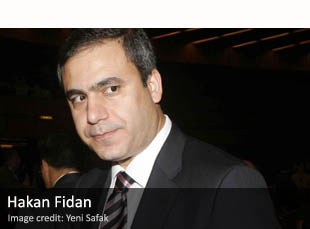
►►Turf war between Turkey’s top spy and police commander? A news report appeared yesterday, which claimed that there was a rift between Turkish intelligence agency MİT Undersecretary Hakan Fidan and National Police Chief Mehmet Kılıçlar, over intelligence sharing in the fight against the terrorist Kurdistan Workers’ Party (PKK). But the two agencies issued a rare joint statement calling media reports “unsubstantiated”.

News you may have missed #658

Carlos SoriaBy IAN ALLEN | intelNews.org |
►►Britain reveals names of officers killed in covert mission. Captain Tom Jennings, of the Special Boat Service, and Squadron Leader Anthony Downing, died when their vehicle was targeted by the Taliban near the Afghan capital Kabul. The UK Ministry of Defence has not released further details “due to the covert nature of the mission”. However, special forces are known to be used to escort MI6 officers and other British intelligence officials for meetings with sources or to persuade Taliban commanders to change sides.
►►New Turkish satellite to ‘zoom in’ on Israel. Until now, only the United States had the technology capable of taking satellite images greater than two meters per pixel resolution in the Middle East, and American law stopped US companies from distributing the pictures to non-US clients. But that is about to change, as Turkey is putting the finishing touches to its Gokturk military satellite, which is scheduled to launch within the next two years.
►►Argentine ex-spy chief shot dead. Carlos Soria (pictured), Argentina‘s former spy chief, was killed in a New Year’s Day shooting at his country house in Patagonia. He was just weeks into his job in the key oil-producing southern province of Rio Negro, when he was shot “after a family argument” at his farmhouse near the town of General Roca. Soria was a member of the ruling Peronist party and a former head of the Argentine intelligence services, under ex-president Eduardo Duhalde in 2002.

Does Iran have access to satellite jamming technology?

Iran displays captured US droneBy JOSEPH FITSANAKIS | intelNews.org |
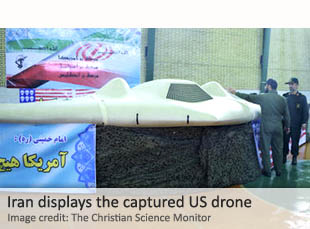
A European intelligence official has said that Iran downed an unmanned American surveillance aircraft earlier this month by remotely sabotaging its satellite navigation system. The official, who has not been named, told The Christian Science Monitor that the Iranians used a state-of-the-art laser system to effectively “blind” the American spy satellite that guided the drone’s global positioning system (GPS). In doing this, Iran’s military was able to remotely skyjack the aircraft and assume control over its navigational system. The paper also published an exclusive interview with an Iranian electronic warfare specialist, who claimed he was part of a team that hacked into the drone’s communication frequency and reprogrammed its GPS data. Eventually, the Iranian specialists managed to cause the unmanned aircraft to switch into autopilot mode, and guided it to land relatively smoothly on Iranian territory, where it was eventually captured intact by Iranian authorities. If this is true, it will mark the first-ever indication that the Iranian state is in possession of sophisticated satellite jamming technology. In an important development, Iran’s Minister of Foreign Affairs, Ali Akbar Salehi, told Iran’s government-run IRNA news agency on Saturday that the American drone was brought down by Iranian armed forces, without any foreign assistance. If this is so, then does it mean that the Iranians developed the state-of-the-art jamming system themselves? Read more of this post

News you may have missed #648

Academi HQ

►►IntelNews editor interviewed on RT. IntelNews senior editor, Dr Joseph Fitsanakis, was interviewed yesterday on the main news program of the popular international news channel RT. The interview, concerning the rebranding of private security company Xe Services (formerly Blackwater) to Academi, can be watched here (watch video at the bottom of the page).
►►Contractors making a killing working in UK cyberdefense. Britain has spent more than £100 million ($160 million) in the past year on consultants to combat cyber espionage and the growing use of the internet by terrorists. Now, members of Parliament are investigating the soaring costs of employing private contractors, some paid the equivalent of £150,000 a year, three times the average wage at GCHQ, the UK’s signals intelligence agency.
►►Japan launches second spy satellite. Japan’s space agency, JAXA, has launched an intelligence-gathering satellite, its second this year. Japan launched its first pair of spy satellites in 2003, prompted by concerns over North Korea’s missile program. It currently has four optical information-gathering satellites in orbit. Officials refused to provide details of the capabilities of the most recently launched satellite.

News you may have missed #642

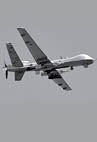
Predator drone

Predator drone

►►Australia concerned China using civilian satellites to spy. Concerns that China may use civilian satellite tracking stations to monitor Australian military operations have been dismissed by the Swedish Space Corporation. The company owns and operates two satellite tracking stations 400 km north of the West Australian capital, Perth. One was used by the China Satellite Launch Company last month in China’s first space docking operation.
►►Did Iran capture US stealth drone intact? For the second time this year, the Iranian government is claiming it forced down a stealthy US Air Force spy drone. Only this time, it says it bagged the RQ-170 “with little damage” by jamming its control signal —a potentially worrying development for American forces heavily reliant on remote-controlled aircraft. A US official, who asked not to be named, told Reuters that “there is absolutely no indication up to this point that Iranians shot down this drone”.
►►Canadian Mounties spied on native protest groups. Canada’s federal government created a vast surveillance network in early 2007 to monitor protests by First Nations, including those that would attract national attention or target “critical infrastructure” like highways, railways and pipelines, according to RCMP documents. The RCMP intelligence unit reported weekly to approximately 450 recipients in law enforcement, government, and unnamed “industry partners” in the energy and private sector. The news follows revelations last month of the RCMP’s largest-ever domestic intelligence operation, aimed against G8 and G20 protesters.

News you may have missed #639

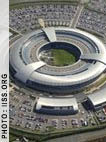
GCHQ

GCHQ

►►GCHQ will sell cyberdefense tech to private firms. The GCHQ, Britain’s signals intelligence agency, is to market some of its security technologies to companies in the private sector, in an attempt to bolster defenses against the foreboding threat of cyberwarfare. The UK government’s “cyber security strategy”, which was unveiled this month, has earmarked £650 million in public funding to set up a four-year National Cyber Security Program, a percentage of which will be used to collaborate with private companies. Click here for an excellent analysis on the public-private cybersecurity collaboration in Britain.
►►Was there a coup attempt in Trinidad? Many in Trinidad and Tobago were expressing skepticism yesterday about an alleged assassination plot, which Prime Minister Kamla Persad-Bissessar said had been uncovered against her and several of her ministers. Police said nearly a dozen people had been arrested, including members of the army and police, but authorities have not given more details, citing the need to maintain security in operations to dismantle the plot.
►►US Senators resist $7 Billion in spending cuts for spy satellites. The Obama Administration wants to stop incessant spending by Defense Department contractors, especially those who have wasted billions of US taxpayers’ money in failed spy satellite projects. But the contractors’ friends in Congress, including lawmakers on the US Senate Intelligence Committee, are trying to stop the White House from cutting a $7 billion commercial satellite program being developed by GeoEye Inc. and DigitalGlobe Inc. What else is new?

News you may have missed #599

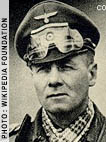
Erwin Rommel

Erwin Rommel

►►SAS planned to kill Nazi Field Marshal Rommel. The veil of secrecy surrounding Britain’s SAS special forces unit has been partially lifted to allow the publication of a new book detailing daring attacks behind Nazi lines in the Second World War. The book features an order for an ambitious but unsuccessful mission to kill or kidnap Nazi Field Marshal Erwin Rommel just after D-Day in 1944.
►►CIA says global-warming intelligence is ‘classified’. Two years ago, the US Central Intelligence Agency announced it was creating a center to analyze the geopolitical ramifications of “phenomena such as desertification, rising sea levels, population shifts and heightened competition for natural resources”. But whatever work the Center on Climate Change and National Security has done remains secret.
►►Japan sends new spy satellite into orbit. Japan at present has a total of three information-gathering satellites in orbit. All three are optical, which means they are able to capture images in broad daylight and in clear weather. The new spy satellite is said to replace one which is almost at the end of its useful life. The country is also planning to launch in two years time, radar satellites which can capture objects at night and in cloudy weather.

News you may have missed #498

  • US claims Iran helping Syria crackdown. Iran is secretly helping Syrian President Bashar al-Assad put down pro-democracy demonstrations, according to US officials, who say Tehran is providing gear to suppress crowds and assistance blocking and monitoring protesters’ use of the Internet, cellphones and text-messaging.
  • Frenchmen arrested in Pakistan. One of the French citizens is of Pakistani origin and the other is a Caucasian convert to Islam; the two had apparently intended to travel to Pakistan’s North Waziristan region, where al-Qaida’s top command is based, for terrorist training, according to a US official.
  • Did US blow up its old spy satellite? The US military’s huge reconnaissance satellite Lacrosse 2, which was launched 20 years ago, has been reported by amateur satellite observers as missing in action –a sign that the classified spacecraft may have been purposely destroyed in Earth’s atmosphere.

West directs spies, information-warfare at Libya

Libyan rebels

Libyan rebels

By JOSEPH FITSANAKIS | intelNews.org |
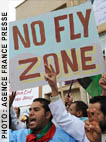
Along with airborne surveillance and the bombing of targets, Western nations in charge of imposing a no-fly-zone over Libya are directing their intelligence and information-warfare arsenals against the Libyan regime. British newspaper The Daily Mail reports that MI6, the UK’s primary external intelligence agency, is sharing with the British military its lists of telephone numbers belonging to senior Libyan military officials. The latter are now receiving calls from British civilian or military intelligence officers prompting them to defect. The paper cited “a senior source” who claimed MI6 is warning senior Libyan military officers that the Royal Air Force has “the GPS coordinates” of their command posts and that “it could be fatal to remain loyal to the Libyan leader” Muammar al-Gaddafi. Presumably, the calls are conducted in the Arabic language. They also do not appear to be pre-recorded, unlike those directed by the Israel Defense Forces at Palestinians during the 2008-2009 Israel-Gaza conflict. The “senior source” told The Mail that the same technique “worked in Iraq” in convincing senior military commanders to either defect or —in most cases— abandon their posts. Read more of this post

News you may have missed #476