Russia accuses its top Arctic scientist of giving China submarine secrets
June 16, 2020 Leave a comment
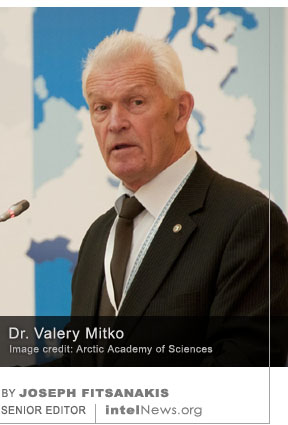 Russian prosecutors have accused one of the country’s most respected hydroacoustics specialists, and globally recognized expert on the Arctic region, of spying for Chinese intelligence. This development highlights the competitive relationship between the two neighboring countries, who in recent years have tended to work together against what they perceive as a common threat coming from the United States.
The scientist in question is Dr. Valery Mitko, a St. Petersburgh-based hydroacoustics researcher, who is also president of Russia’s Arctic Academy of Sciences. Investigators with the Federal Security Service (FSB), Russia’s domestic security and counterintelligence agency, are accusing Dr. Mitko, 78, of having provided classified documents to Chinese intelligence.
The FSB first detained Dr. Mitko in February, when he returned from a stint as a visiting professor at Dalian Maritime University. Located in China’s northeastern Liaoning province, near the North Korean border, Dalian Maritime University is considered China’s foremost higher-education institution on maritime subjects, with many of its research projects funded directly by the Chinese Ministry of Transport. According to sources, Dr. Mitko gave a series of lectures at Dalian University in early 2018.
Upon arriving back to Russia from China, Dr. Mitko was detained and placed under house arrest. The FSB now claims that the Russian scientist gave the Chinese classified information relating to the underwater detection of submarines. The agency alleges that Dr. Mitko received payments in return for sharing this information with Chinese spies. However, Dr. Mitko’s lawyers argue that the information he shared with the Chinese “came from open sources”, and that he never knowingly came in contact with Chinese intelligence operatives.
There have been several arrests of Russian academics in recent years, who have been accused by the FSB of providing China with classified information. Last week saw the release from prison of Vladimir Lapygin, a 79-year-old avionics researchers, who was jailed in 2016 for allegedly giving China classified information on Russian hypersonic aircraft designs. In 2018, Russian authorities charged Viktor Kudryavtsev, a researcher at a Russian institute specializing in rocket- and spacecraft design, with passing secret information on spacecraft to researchers at the Von Karman Institute for Fluid Dynamics in Belgium. The FSB claimed that some of that information ended up in Chinese hands.
If convicted of the crime of espionage against the Russian state, Dr. Mitko faces a prison sentence of up to 20 years. He denies the charges against him.
► Author: Joseph Fitsanakis | Date: 16 June 2020 | Permalink
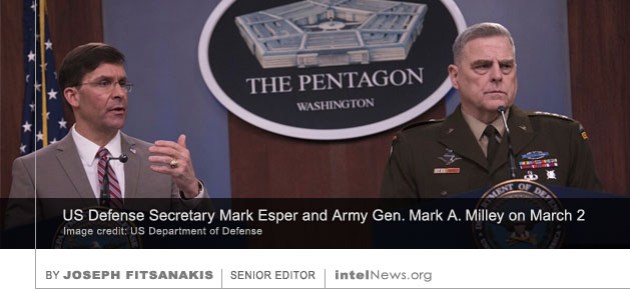 The United States Department of Defense is working under the assumption that the COVID-19 epidemic will seriously affect the life of the country for “at least several months”, and might cause “political chaos” in parts of the world. This was stated during a virtual town hall for members of the US Armed Forces, which was hosted on Tuesday by Defense Secretary Mark Esper and Joint Chiefs of Staff Chairman General Mark Milley.
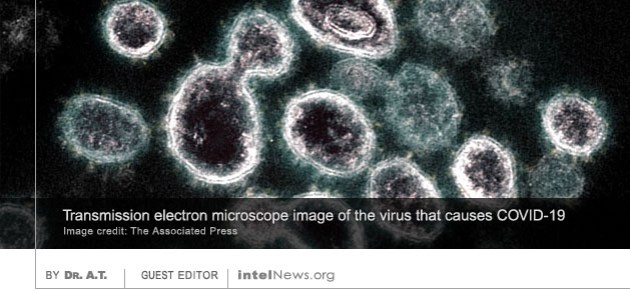 Ever since the emergence of the novel coronavirus, in December of last year, prominent public health scientists have consistently
  The chemical structure and action mechanism of a top-secret family of nerve agents known as novichoks may soon be available to a wider pool of researchers through its inclusion into the Chemical Weapons Convention (CWC) list of the Organization for the Prohibition of Chemical Weapons (OPCW). The term novichok (meaning ‘newbie’ in Russian) was given by Western scientists to a class of rarely used nerve agents that were developed in the Soviet Union and Russia between 1971 and the early 1990s.
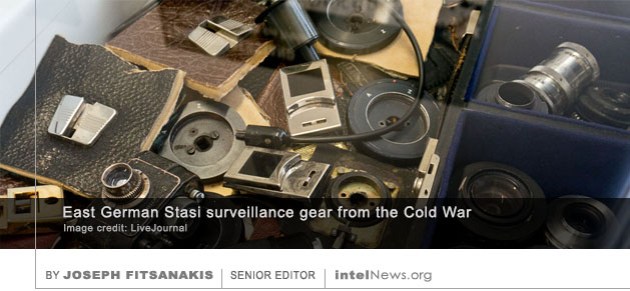 State-sponsored industrial espionage aimed at stealing foreign technical secrets may boost a country’s technological sector in the short run, but ultimately stifles it, according to the first study on the subject. The study is based on over 150,000 declassified documents belonging to the East German Ministry for State Security, known as Stasi. The now-defunct intelligence agency of communist-era East Germany was known for its extensive networks of informants, which focused intensely on acquiring technical secrets from abroad.
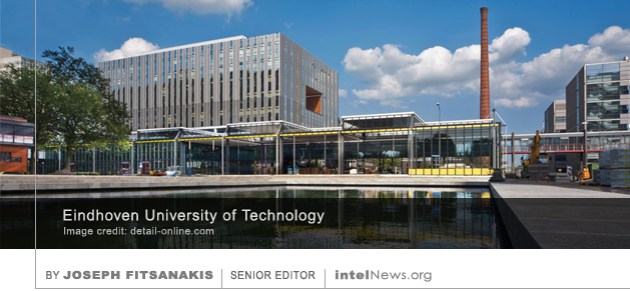 The German and Dutch governments allegedly joined forces to investigate a Russian supercomputer specialist, who studied in Germany and Holland, suspecting him of passing technical information to Russian intelligence. German weekly newsmagazine Der Spiegel, which published the report in its current issue, identified the physicist only as “Ivan A.” and said that the 28-year-old man was a member of a physics laboratory affiliated with the Max Planck Institute in the western German city of Bonn.











 intelNews.org
COVID-19 prompts spy agencies’ mission shift that is ‘reminiscent of the space race’
September 7, 2020 by Joseph Fitsanakis Leave a comment
According to The New York Times, “every major spy service around the globe is trying to find out what everyone else is up to” in coronavirus research, and “to steal information about vaccine research”. Much of this biomedical espionage is taking place in international bodies, such as the United Nations and the World Health Organization (WHO), where spies try to access useful data from rival countries. The paper said that the Central Intelligence Agency and other Western spy agencies are closely watching their rivals, including Chinese and Russian operatives, inside the WHO.
Meanwhile, the Federal Bureau of Investigation is “has moved to protect [American] universities and corporations doing the most advanced work” on the virus, including the University of North Carolina (UNC). The paper said that UNC’s Epidemiology Department came under a sustained attack by foreign hackers recently, as have major American pharmaceutical research companies, including Gilead Sciences, Novavax and Moderna. In other cases, foreign spies have tried to gain physical proximity to biomedical researchers. According to The Times, part of the reason why the administration of US President Donald Trump decided to shut down the Chinese consulate in Huston in July, was because it believed Chinese spies had used it as a base from where to make contacts with American biomedical researchers.
Officially, America’s stance on the coronavirus espionage race is purely defensive. But, according to The Times, American spy agencies are also trying to find out what Russian, Chinese and Iranian scientists have in their possession, in an attempt to see if is stolen. As they do that, “they could encounter information on those countries’ research and collect it”, said the paper.
► Author: Joseph Fitsanakis | Date: 07 September 2020 | Permalink
Filed under Expert news and commentary on intelligence, espionage, spies and spying Tagged with biomedical intelligence, biosecurity, Coronavirus, COVID-19, News, scientific intelligence