South Korea announces most high-profile defection from North since Korean War

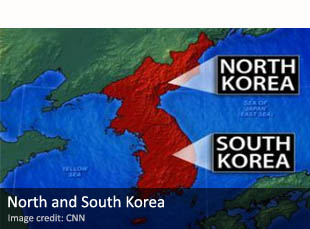
North and South KoreaA North Korean intelligence official who sought refuge in South Korea last year is the most high profile defector to the South since the end of the Korean War in 1953, according to authorities in Seoul. An announcement issued by the South Korean government last week said the defector is a colonel in the Korean People’s Army who worked for the Reconnaissance General Bureau, a military-intelligence agency that resembles the United States Central Intelligence Agency’s Special Activities Division.

The initial announcement was made by a spokesman representing South Korea’s Ministry of Unification, which is the department of the government that is responsible for working towards the reunification of Korea. He said that the agency could not find any records of defectors that were of a more senior rank since the end of all-out hostilities in the Korean War. However, he declined to provide further details about the identity of the colonel and the details of his defection. Another spokesman, from South Korea’s Ministry of National Defense, confirmed the high-profile defection but said he had not been authorized to release further information on the case. But he said that the Reconnaissance General Bureau had defected to the South “last year”, without giving a precise timeline. He added that the North Korean colonel was providing South Korea with details about Pyongyang’s intelligence operations against the South.

Prior to this latest case, the most high-profile defection to the South of a North Korean government figure was that of Hwang Jang-yop, a senior Pyongyang official who was seen as the architect of ‘juche’, the official state ideology of North Korea. During a visit to Beijing, China, in 1997, Hwang entered the embassy of South Korea and asked for political asylum. He died in South Korea in 2010.

It is extremely rare for Seoul to acknowledge defections from North Korea; the South Korean government typically cites privacy and security concerns in response to questions about defectors. The unusual step of announcing the defection of the North Korean colonel several months after the fact led some opposition liberal figures in South Korea to accuse the conservative government of trying to use the case in order to win votes in last Wednesday’s legislative elections. The election was an upset victory for the liberal Minjoo party, which managed to deny the conservative Saenuri Party a majority in the parliament.

Author: Ian Allen | Date: 17 April 2016 | Permalink

Senior South Korean officials’ cell phones hacked by North: report

NIS South KoreaDozens of cell phones belonging to senior government officials in South Korea were compromised by North Korean hackers who systematically targeted them with texts containing malicious codes, according to reports. The National Intelligence Service (NIS), South Korea’s primary intelligence agency, said the cell phone penetrations were part of a concerted campaign by North Korea to target smart phones belonging to South Korean senior government officials. Once they managed to compromise a cell phone, the hackers were able to access the call history stored on the device, the content of text messages exchanged with other users and, in some cases, the content of telephone calls placed on the compromised device. Moreover, according to the NIS, the hackers were able to access the contact lists stored on compromised cell phones, which means that more attacks may be taking place against cell phones belonging to South Korean government officials.

The breach was considered critical enough for the NIS to host an emergency executive meeting with the security heads of 14 government ministries on Tuesday, in order to update them on the situation and to discuss ways of responding to the crisis. According to Korean media, the emergency meeting took place on Tuesday and lasted for over three hours. During the meeting the NIS told ministry representatives that the North Korean operation was launched in late February and was ongoing as of early this week. It specifically targeted government officials and appeared to concentrate on their cell phones, instead of their office phones –probably because the latter are known to be equipped with advanced anti-hacking features. The government employees’ cell phones were reportedly attacked using text messages and emails containing links to web sites that downloaded malicious codes on the users’ phones.

The NIS did not specify the precise purpose of the hacking operation, nor did it explain whether the attacks were informed by an overarching strategic goal. The officials targeted work for a variety of government ministries, but there is no clarification as to whether any operational or administrative links between them exist. The NIS did say, however, that approximately a fifth of all attacks against cell phones were successful in compromising the targeted devices.

Author: Joseph Fitsanakis | Date: 10 March 2016 | Permalink
S. Korea police says professor was secret handler of N. Korea spies

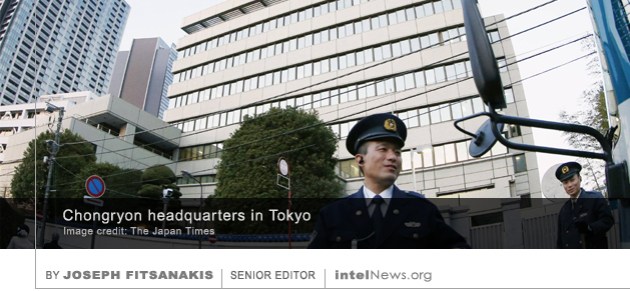
Chongryon A Korean resident of Japan, who was arrested in South Korea for credit card fraud, was allegedly a handler of North Korean sleeper agents operating in South Korea, Japan and China, according to police in Seoul. Pak Chae Hun, 49, was arrested on Tuesday at his home in Seoul by officers of the Public Security Bureau of the Metropolitan Police Department. A statement issued by South Korean police said Pak was until recently an associate professor at Korea University, a higher-education institution based in the Japanese capital Tokyo. The University is funded directly by the government of North Korea through Chongryon, a pro-Pyongyang organization otherwise known as the General Association of Korean Residents in Japan. The group represents tens of thousands of ethnic Koreans living in Japan, who are ideologically affiliated with Pyongyang.
Pak was initially investigated for purchasing computer hardware in Japan using a credit card he had obtained from a Korean company using a false identity and date of birth. But when South Korean police authorities raided his home, they found encrypted messages written on scraps of paper. Further investigations detected encrypted email messages sent to Pak from Japan. According to government sources in Seoul, the messages turned out to contain instructions from Office 225 of the North Korean Workers’ Party Korea, which is tasked with overseeing the activities of sleeper agents operating in South Korea. South Korean authorities now claim Pak was regularly receiving encrypted instructions from Pyongyang, which he relayed to North Korean agents in China and South Korea.

South Korean sources said Pak also provided North Korean agents with telephone devices, as well as cash and ATM cards, which they used to withdraw cash from banks in South Asia. Police sources in Seoul say Pak was recruited by North Korean spies over 15 years ago and regularly traveled to China to meet North Korean agents there. The former professor is now facing fraud charges, while South Korean authorities are considering the possibility of charging him with espionage, even though he was not caught in the act of spying against South Korea.

Author: Joseph Fitsanakis | Date: 03 February 2016 | Permalink

South Korean lawmakers accuse North of helping Islamic State

Syria North KoreaA powerful South Korean parliamentary committee has accused the North Korean government of ties to the Islamic State, an allegation that is vehemently denied by Pyongyang. On November 18, members of the Intelligence Committee of the National Assembly of Korea stated in a press conference that they believed North Korea had “possible ties to ISIS”. They were referring to the Islamic State of Iraq and Syria, which calls itself Islamic State. On Monday, North Korea’s state-run media blasted the South Korean allegations as “slander and fabrications”, and said they threatened to derail collaboration efforts between Seoul and Pyongyang.
The North Korean website Uriminzokkiri, which provides content from the Korean Central News Agency, accused Seoul of “carelessly tossing around claims of connections to terrorist groups”, in order to bring the two neighboring countries “closer to war”. Tensions remain high in the Korean Peninsula, despite an agreement that was struck in August between the two sides. In the preceding months, Pyongyang had threatened to carry out all-out invasion of South Korea, accusing Seoul of harboring aggressive intentions against it. A report in Uriminzokkiri warned that the August agreement “would be undone” if the South persisted in alleging that North Korea provided assistance to ISIS.

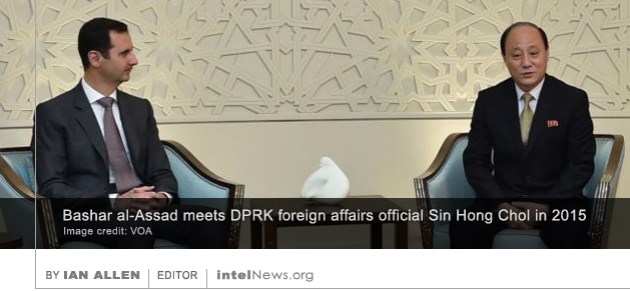
It should be noted that the Intelligence Committee of South Korea’s National Assembly has not given evidence of its claims that Pyongyang is supporting ISIS. Additionally, the North Korean regime is believed to be a strong international ally of Syrian President Bashar al-Assad, who is a primary adversary of ISIS. The two countries have longstanding military and commercial ties. It is believed that North Korean technicians aided in the construction of Syria’s al-Kibar nuclear facility, which was bombed by Israeli jets in Operation ORCHARD in 2007. Today, North Korea is among a small number of countries that maintain fully staffed embassies in Syrian capital Damascus. In September of this year, the government of Syria dedicated a park in the capital to Kim Il Sung, North Korea’s late leader.

Author: Ian Allen | Date: 10 November 2015 | Permalink

South Korean spy’s suicide reportedly linked to wiretap controversy

NIS South KoreaA suicide note found next to the body of a South Korean intelligence officer mentions a phone hacking scandal that has caused controversy in the country. The 45-year-old man, identified only as “Lim” by South Korean authorities, worked for the country’s primary intelligence organization, the National Intelligence Service (NIS). He was found dead late on Saturday morning inside his car, which had been parked on a deserted rural road on the outskirts of South Korean capital Seoul. According to local reports, authorities found a metal plate with burnt-out coal inside his car, which had been locked from the inside. Finding no apparent marks on his body, the police have ruled his death a suicide.

The man reportedly left a three-page handwritten note on the passenger seat of his car, which is said to contain his will and a list of the reasons that drove him to kill himself. South Korean media cited a “senior government insider” who said that among the reasons mentioned in the suicide note is a controversial phone tapping scandal that has made national news in recent days. According to the insider, the program is identified in the letter as a wiretapping scheme “of national importance”.

The program appears to refer to the the disclosure made this month by a group of unidentified hackers that exposed the dealings of a surveillance software manufacturer with a markedly poor civil-liberties record. The disclosure, made by British newspaper The Guardian, shows that the Italian company, Hacking Team Ltd, is believed to have sold powerful surveillance software to governments with a history of civil-rights violations, including Nigeria, Ethiopia, Saudi Arabia, Azerbaijan and Uzbekistan. Among the customers, however, are a number of countries with stronger civil-rights protections, including South Korea and Cyprus, which is a member of the European Union. Cyprus’ intelligence chief resigned earlier this month as a result of the disclosure. According to technical experts, the software sold by Hacking Team can intercept data exchanged via cellular phones and other wireless devices. It can also spy on all communications devices connected to the Internet using malware that is undetectable by commonly used antivirus software. Moreover, software supplied by Hacking Team cannot be removed from a compromised cellular device unless it is reset at the factory.

NIS authorities in Seoul issued a press statement last week, claiming that the phone hacking software had been used only against North Korean targets abroad, including agents of Pyongyang operating around the world. But human rights organizations, as well as opposition parties in South Korea, said they believed the software had been used to monitor domestic dissent. Earlier this year, a former director of NIS was jailed for organizing an online propaganda campaign to dissuade citizens to vote for the liberal opposition. The NIS issued a statement last week saying that it would be willing to share the operational details and records of the controversial software with lawmakers in order to dispel rumors that it was used against domestic political activity.

Author: Ian Allen | Date: 20 July 2015 | Permalink: https://intelnews.org/2015/07/20/01-1738/

News you may have missed #890

Kim Kuk-giBy IAN ALLEN | intelNews.org
►►US DEA agents given prostitutes and gifts by drug cartels. US Drug Enforcement Administration agents allegedly had “sex parties” with prostitutes hired by Colombian drug cartels overseas over a period of several years, according to a report released Thursday by the Justice Department. Former police officers in Colombia also alleged that three DEA supervisory special agents were provided money, expensive gifts and weapons from drug cartel members. Seven of the 10 DEA agents alleged to have participated in gatherings with prostitutes and received suspensions of two to 10 days.
►►Polish lieutenant accused of spying for Russia. A Polish Air Force pilot allegedly copied several thousand flight plans for F-16 fighters and handed them to Russian intelligence. According to Polish media, the airman was arrested by authorities last November, but the information has only recently emerged. The pilot was allegedly suspended from his duties, his passport was confiscated, and he was banned from leaving the country. Some reports suggest that soon after the arrest of the lieutenant, a Russian diplomat was expelled from the country for spying.
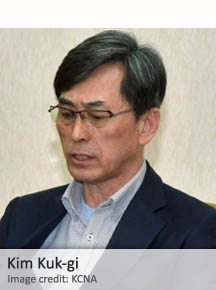
►►North Korea claims arrest of South Korean spies. North Korea said it had arrested two South Koreans engaged in espionage. The two arrested men, identified as Kim Kuk-gi (see photo) and Choe Chun-gil, were presented at a press conference in Pyongyang attended by journalists and foreign diplomats. A North Korean media report said Kim and Choe had gathered information about North Korea’s “party, state and military secrets”. It was not immediately clear where or when the two men were arrested. In Seoul, the country’s intelligence agency said the charge that the two men were working for the agency was “absolutely groundless”.

South Korea’s ex-spy chief jailed for interfering in elections

Won Sei-hoonBy IAN ALLEN | intelNews.org
The former director of South Korea’s intelligence agency has been jailed for directing intelligence officers to post online criticisms of liberal politicians during a recent presidential election campaign. Won Sei-hoon headed South Korea’s National Intelligence Service (NIS) from 2008 to 2013, during the administration of conservative President Lee Myung-bak. Since his replacement in the leadership of NIS, Won has faced charges of having ordered a group of NIS officers to “flood the Internet” with messages accusing liberal political candidates of being “North Korean sympathizers”.

Prosecutors alleged that Won initiated the Internet-based psychological operation because he was convinced that “leftist adherents of North Korea” were on their way to “regaining power” in the South. The illegal operation took place during the 2012 presidential election campaign, which was principally fought by Moon Jae-in, of the liberal-left Democratic Party, and Park Geun-hye, of the conservative Saenuri party. Park eventually won the election and is currently serving South Korea’s eleventh President. The court heard that a secret team of NIS officers had posted nearly 1.5 million messages on social networking sites, such as Twitter and Facebook, in an effort to garner support for the Saenuri party candidate in the election.

Last September, a court in Seoul had sentenced Won to two and a half years in prison, which was much shorter than the maximum five-year penalty he was facing if found guilty. But the judge had suspended the sentence, arguing that there was no direct proof that Won directly sought to alter the outcome of the presidential election. On Monday, however, the Seoul High Court overruled the earlier decision, saying that Won had directly breached election laws and that the violation was sufficient for a prison sentence. In reading out its decision, the judge said that “direct interference [by the NIS] with the free expression of ideas by the people with the aim of creating a certain public opinion cannot be tolerated under any pretext”. Won was transferred directly from the court to prison, where he will serve his sentence.

Spy satellites detect new nuclear weapons plant in North Korea

Yongbyon Nuclear Scientific Research CenterBy IAN ALLEN | intelNews.org
A brand new nuclear weapons production plant detected by spy satellites in North Korea would enable the recluse Asian country to double its uranium-based nuclear warheads, according to intelligence sources. South Korean daily newspaper JoongAng Ilbo said the plant was detected by spy satellites equipped with infrared cameras, which are able to sense heat emissions released by gas centrifuges. The latter are essential in separating uranium-235 isotopes from the predominant uranium-238 isotope, which constitutes over 99 percent of natural uranium and cannot be weaponized. JoongAng Ilbo quotes an unnamed South Korean intelligence official, who said the data collected by the spy satellites indicate that Pyongyang has activated a new centrifuge facility inside the Yongbyon Nuclear Scientific Research Center. Located approximately 60 miles north of the capital Pyongyang, Yongbyon is North Korea’s major nuclear facility, which was used to produce the fissile material for North Korea’s first nuclear weapon test in 2006. Prior to the establishment of the newly detected plant on the site, the facility was believed to contain around 2,000 centrifuges. The new facility is thought to have added significantly to North Korea’s existing capacity to enrich uranium, as it appears from its architecture and size that it contains several hundred operational centrifuges. South Korean and Western officials estimate that North Korea has the capacity to produce up to five nuclear warheads, though many doubt that the country’s nuclear engineers have been able to miniaturize the warheads so as to mount them on a long-rage delivery system. In 2012, a court in Ukraine sentenced two North Korean citizens to eight years in prison on charges of trying to obtain secret technical information about missile engines. News media contacted South Korean’s Ministry of Foreign Affairs, which oversees surveillance operations against the North’s nuclear program, but received no answer regarding the discovery of the new production facility.

South Korean court convicts ex-spy director of interfering in elections

Won Sei-hoonBy IAN ALLEN | intelNews.org
A former director of South Korea’s intelligence agency has been convicted in court of directing intelligence officers to post online criticisms of liberal politicians during a presidential election campaign. Won Sei-hoon headed South Korea’s National Intelligence Service (NIS) from 2008 to 2013, during the administration of conservative President Lee Myung-bak. Since his replacement in the leadership of NIS, Won has faced charges of having ordered a group of NIS officers to “flood the Internet” with messages accusing liberal political candidates of being “North Korean sympathizers”. Prosecutors alleged that Won initiated the Internet-based psychological operation because he was convinced that “leftist adherents of North Korea” were on their way to “regaining power” in the South. The illegal operation took place during the 2012 presidential election campaign, which was principally fought by Moon Jae-in, of the liberal-left Democratic Party, and Park Geun-hye, of the conservative Saenuri party. Park eventually won the election and is currently serving South Korea’s eleventh President. The court heard that a secret team of NIS officers had posted nearly 1.5 million messages on social networking sites, such as Twitter and Facebook, in an effort to garner support for the Saenuri party candidate in the election. On Thursday, a court in Seoul sentenced Won to two and a half years in prison, which was much shorter than the maximum five-year penalty he was facing if found guilty. In reading out its decision, the court said on Thursday that “direct interference [by the NIS] with the free expression of ideas by the people with the aim of creating a certain public opinion cannot be tolerated under any pretext”. The new jail conviction comes right after the defendant completed a 14-month sentence stemming from charges of accepting bribes in return for helping a private company acquire government contracts. Read more of this post

Korean spy charged with forging Chinese files attempts suicide

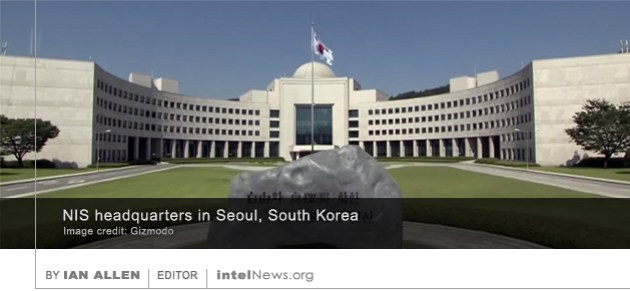
NIS headquarters in Seoul, South KoreaBy I. ALLEN and J. FITSANAKIS | intelNews.org
A South Korean intelligence officer, who was charged earlier this month with deliberately forging Chinese government documents, tried to kill himself inside a car on Sunday, according to local media. The officer, identified in reports only by his last name, Kwon, was fingered last week by South Korean media as the source of a set of documents used in a court case against a man accused of spying for North Korea. Yoo Woo-sung, a prominent North Korean defector living in the South, was arrested last year on charges of espionage. Government prosecutors accused Yoo of collecting information on at least 200 North Korean defectors living in the South while working for the Seoul city government. The prosecution produced a number of Chinese transit documents showing that Yoo had entered North Korea repeatedly from China, ostensibly in order to transport information to his handlers in Pyongyang. However, in a dramatic turn of events, the case against Yoo collapsed in August of 2013; this was followed by allegations that some of the documents presented to the court by the prosecutors had been forged. It now appears that the forged documents, which were travel records allegedly issued by the Chinese government, had been given to the prosecution by South Korea’s National Intelligence Service (NIS). Court documents surfaced last week identifying Kwon (named initially as ‘Kim’) as one of the sources of the forged documents. Kwon fervently denied the accusations, claiming that he too had been duped by a Chinese asset who gave him the forms. He also argued that that the asset was probably working for Chinese intelligence. On Sunday, however, Kwon apparently tried to kill himself at his home in a suburb of Seoul. Read more of this post

South Korean spy charged with forging Chinese government records

North and South KoreaBy IAN ALLEN | intelNews.org
Authorities in South Korea have charged an intelligence officer with forging Chinese government documents that were used in a court case against a man accused of spying for North Korea. IntelNews readers will remember the case of Yoo Woo-sung, a prominent North Korean defector living in the South, was arrested last year on charges of espionage. In May of that year, court documents revealed that Yoo had been arrested following testimony from his own sister, also a North Korean defector. She had apparently been sent to the South by the North Korean intelligence services, and tasked with collecting information on North Korean defectors living across the border. Prosecutors accused Yoo of collecting information on at least 200 North Korean defectors living in the South, while he worked for the Seoul city government. Yoo maintained his innocence throughout his trial. However, his protestations appeared untenable once the South Korean prosecution produced a number of Chinese transit documents showing that he had entered North Korea repeatedly from China, ostensibly in order to transport information to his handlers in Pyongyang. However, in a dramatic turn of events, the case against Yoo collapsed in August of 2013 amidst allegations that some of the documents presented to the court by the prosecutors had been forged. It now appears that the forged documents, which were travel records allegedly issued by the Chinese government, had been given to the prosecution by South Korea’s National Intelligence Service (NIS). Read more of this post

South Korean ex-spy chief jailed for accepting bribes

Won Sei-hoonBy IAN ALLEN | intelNews.org
One of the most powerful figures in South Korea’s intelligence establishment has been sentenced to prison for accepting bribes in return for helping a private company acquire government contracts. Won Sei-hoon headed South Korea’s National Intelligence Service (NIS) from 2008 to 2013, during the administration of President Lee Myung-bak. The once supremely powerful organization, founded in 1961 as the Korean Central Intelligence Agency, was intimately involved in the murky South Korean politics of the Cold War era, during which the country’s political life was dominated by bloody military coups and political repression. In the late 1980s, a process of democratization began in the NIS, and in recent years many intelligence observers believed that the agency had managed to shed its controversial reputation. On Wednesday, however, a court in South Korean capital Seoul sentenced Won to two years in prison for receiving kickbacks from the private sector while heading the NIS. Won was accused of having taken over $150,000 from Hwang Bo-yeon, former director of Hwangbo Construction, in exchange for lobbying the government to award construction contracts to the company. Regular readers of this blog will recall that Won is also standing accused of having meddled in the 2012 Presidential Election. According to the official indictment in the case, Won is said to have ordered a group of NIS officers to “flood the Internet” with messages accusing liberal political candidates of being “North Korean sympathizers”. Prosecutors allege that Won initiated the Internet-based psychological operation because he was convinced that “leftist adherents of North Korea” were on their way to “regaining power” in the South. Read more of this post

Revealed: North Korean leader’s aunt defected to the US in 1998

Kim Jong-un surrounded by generalsBy JOSEPH FITSANAKIS | intelNews.org
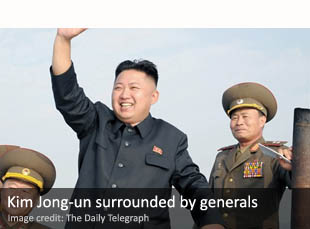
The maternal aunt of North Korean leader Kim Jong-un secretly defected to the United States with her husband in 1998, a South Korean newspaper has alleged. Ko Yong-suk is the younger sister of the North Korean supreme leader’s mother, Ko Yong-hui, who died of breast cancer in 2004, aged 51. As a young man, Kim studied at the prestigious International School in Berne, Switzerland, from 1996 to 2001. Along with him, the North Korean government sent to Switzerland his aunt and her husband, ostensibly to look after him. However, Ko and her husband vanished without trace in early May 1998. It was generally assumed that they had been recalled back to Pyongyang by the North Korean regime. But on Tuesday, a report in South Korea’s JoongAng Daily said that the couple secretly visited the United States embassy in Geneva and requested political asylum. The paper cited a former “senior official” in South Korea’s National Intelligence Service (NIS), who was privy to the information about the couple’s defection. It also cited an unnamed South Koran diplomat who was stationed in Berne at the time of the alleged defection. The former NIS official told JoongAng that Washington granted Ko and her husband asylum and spirited them away to an American military base in Frankfurt, Germany. There they were debriefed before being flown to the United States. The official said that the two defectors underwent months of questioning about the inner circle of North Korea’s ruling elite. The NIS source told the South Korean paper that, at the end of that process, the couple underwent “cosmetic surgery to conceal their identities” before being given new names by the US government. Read more of this post

News you may have missed #852

North and South KoreaBy IAN ALLEN | intelNews.org
►►Did US deny entry to German author because he criticized the NSA? Questions have arisen after the German author Ilija Trojanow was denied entry to the United States, apparently without reason. Trojanow had been invited to a German language convention in the US city of Denver. However, he was left stranded at Salvador da Bahia airport, in Brazil. A colleague of the writer claims his call for clarity about US spying activity is the answer. A spokeswoman for Trojanow’s publisher said he was on his way back to Germany on Tuesday.
►►Analysts stress ‘sophisticated tradecraft’ after Iranian spy arrested in Israel. Israeli officials over the weekend released details regarding the arrest of an Iranian-Belgian citizen accused of conducting extensive espionage against Israeli and American targets inside the Jewish state, deepening concerns regarding the scope and sophistication of Iranian intelligence tradecraft. Ali Mansouri, in his mid-50s, was arrested on September 11 at Tel Aviv’s Ben-Gurion Airport by the Shin Bet intelligence service. One Israeli military correspondent observed that, in the case of Mansouri, “Iran followed the playbooks of the most advanced intelligence agencies in the world”.
►►Northern spy lifts cloak on Koreas’ deadly rivalry. Kim Dong-sik is a North Korean agent captured in the South in 1995. He underwent four years of interrogations before joining the South Korean military counterintelligence command. He is now an analyst at the Institute for National Security Strategy, a research organization affiliated with the National Intelligence Service. His tale, detailed in a new memoir, provides a rare, firsthand look at the often lethal spy war that the rival Koreas waged for decades and that many fear may persist today.

Australian civil servant accused of spying denied access to evidence

Embassy of South Korea in AustraliaBy IAN ALLEN | intelNews.org |
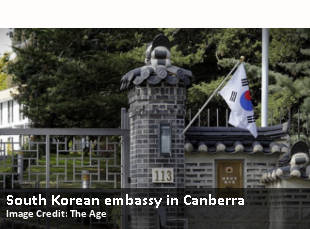
Australia’s Federal Court has rejected a bid by a senior civil servant to view the evidence the government is using to accuse him of espionage. Until September of 2011, Dr. Yeon Kim was a career civil servant with the Australian Bureau of Agricultural and Resource Economics and Sciences (ABARES). His specialization in international trade policy required a security clearance, which Kim had possessed since 2001. But in 2011, he was sacked and had his security clearance revoked for allegedly holding clandestine meetings with officers of South Korea’s National Intelligence Service (NIS). The Australian government accuses Kim of meeting repeatedly with Hoo-Young Park, an employee of the South Korean embassy in Canberra, who had been declared to the Australian government as an NIS liaison officer. According to court documents, three other NIS officers serving under diplomatic cover in Australia, Bum-Yeon Lee, Sa-Yong Hong, and a third man named Kim, were involved in collecting intelligence on Australian trade secrets. The Australian Security Intelligence Organisation (ASIO), which detained Kim, said that he willingly participated in the “foreign interference” operation by the NIS. For several months now, Kim has been contesting the Australian government’s legal case against him in the Federal Court. His legal team recently requested that the Court annul two certificates issued by the Australian attorney general, designed to bar the defense from accessing evidence against Kim. The certificates were originally submitted by government prosecutors during an earlier Administrative Appeals Tribunal hearing. But the Court declined the request, saying the defense waited too long to challenge the certificates. In issuing the ruling, Justice Lindsay Foster said Kim’s legal team should have requested that the certificates be declined during the original hearing. The judge censured Kim’s defense lawyers for “stand[ing] by and watch[ing] while the certificates were [originally] deployed”, adding that it would undermine the integrity of the legal process to allow the certificates to be challenged at this late stage. Read more of this post