Revealed: British government minister spied for Czechoslovakia
June 29, 2012 2 Comments
 By JOSEPH FITSANAKIS | intelNews.org |
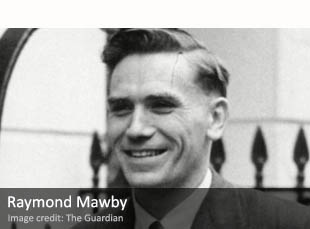
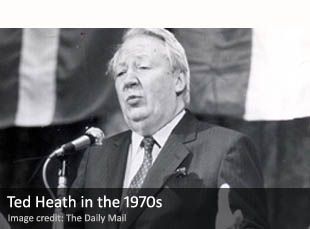
The BBC has uncovered evidence that a Conservative Party minister was a longtime paid informant for Czechoslovakia’s Cold-War-era secret intelligence service. The discovery was made earlier this month by the BBC’s security correspondent, Gordon Corera, while visiting the declassified archives of the Czechoslovakian ŠtB to investigate an alleged attempt to blackmail British Conservative politician Edward Heath in the 1970s. Corera’s discovery shows that Raymond Mawby, who was a Tory Member of Parliament from 1955 until 1983, spied for the ŠtB in return for money for nearly a decade, starting in 1961. The BBC describes Mawby, who served as assistant Postmaster General from 1963 to 1964, and rose to the rank of junior minister in 1963, as “an unusual Tory”, since he was “a working class trade unionist” from Devon. Indeed, his extensive ŠtB file, uncovered by the BBC, shows that he was not as loyal to conservative values as one might think. Mawby was first approached by Czechoslovakian intelligence in November 1960, while attending a cocktail reception at the Czechoslovakian embassy in London. His contacts with his ŠtB handlers became more frequent during the following year when, operating under the codename Laval, he began providing them with political information from the British Houses of Commons, in exchange for regular payments of £100. By 1964, he was on a £400 monthly retainer by the ŠtB, in return for supplying the Czechoslovaks with documents from Parliament, details about the personal lives of his colleagues, and lists of Parliamentary committee members. In one instance, Mawby even supplied his foreign handlers with a hand-drawn floor plan of the office of the Prime Minister at 10 Downing Street. Read more of this post
 By JOSEPH FITSANAKIS | intelNews.org |








 intelNews.org
Communist-era spy allegations surface in Czech political wrangling
December 2, 2013 by Ian Allen Leave a comment
Allegations that a senior Czech political figure was a government informant during the country’s communist period may disrupt the emergence of a national governing coalition. The Social Democratic Party won 20.5 percent in last October’s parliamentary election, emerging as the leading party in the Czech Republic’s fragmented political scene. The center-left party has said it is planning to form a governing coalition by reaching out to the centrist Christian Democratic Union, as well as a new center-right party calling itself ANO 2011 (Ano stands for ‘yes’ in Czech). The new party says it aims to end corruption in the country, abolish immunity from prosecution for elected parliamentarians, tackle unemployment, and improve the Czech Republic’s crumbling infrastructure. The party has also said it is willing on principle to join a wider government coalition, providing it is offered control of the country’s finance ministry. A leading contender for the ministerial position is ANO’s founder and main financial backer, Andrej Babiš. A business tycoon, who made his fortune importing and exporting fertilizers, Babiš is the Czech Republic’s second richest man, with an estimated fortune of $2 billion. His spectacular entrance into Czech politics was confirmed when ANO, which he founded in 2011, came in second in last October’s elections, receiving 18 percent of the national vote and gaining 47 seats in parliament. However, plans for a three-party coalition have been halted by allegations that Babiš may have been an informant for Czechoslovakia’s StB secret police during the 1980s. The claims first emerged in a Slovak newspaper shortly before last October’s elections, but failed to prevent ANO and Babiš from making a spectacular entry into Czech national politics. Later, however, the media allegations were substantiated by Slovakia’s Institute of National Memory, which provides public access to previously classified records of the StB and other Czechoslovak intelligence agencies during the country’s communist period. The Institute says that Babiš, who was a card-carrying member of the Communist Party of Czechoslovakia, had regular contact with the StB in the 1980s. At that time he was living in North Africa working for Petrimex, a Czechoslovakian government-owned international trade company. Read more of this post
Filed under Expert news and commentary on intelligence, espionage, spies and spying Tagged with Andrej Babiš, ANO 2011, Cold War, Czech Republic, Czechoslovakia, history, Institute of National Memory (Slovakia), News, Petrimex, Slovakia, StB (Czechoslovakia)