After dropping charges, US prosecutors broaden indictment against Saudi spies
July 30, 2020 4 Comments
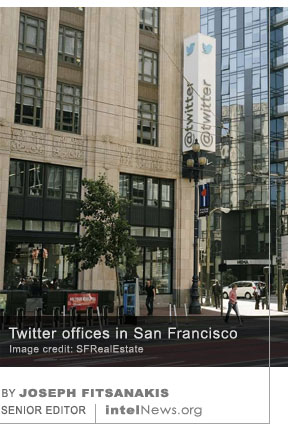 Two days after dropping charges against three Saudi men for spying on American soil, United States prosecutors submitted a new indictment that restates the two original charges and adds five more. The original complaint was filed by the Federal Bureau of Investigation in November of last year in San Francisco, California. It accused three men of “acting as unregistered agents” of Saudi Arabia since 2015. The phrase is used in legal settings to refer to espionage.
According to the FBI, the Saudi government allegedly contacted Ali Alzabarah, a 35-year-old San Francisco-based network engineer working for Twitter. Ahmed Almutairi (also known as Ahmed Aljbreen), a “social media advisor” for Saudi Arabia’s royal family, arranged for Alzabarah to be flown to Washington to meet an unidentified member of the Saudi dynasty. He and another Twitter employee, 41-year-old Ahmad Abouammo, were allegedly given money and gifts by the Saudi government. These were given in return for the email addresses, IP addresses and dates of birth of up to 6,000 Twitter users who had posted negative comments about the Saudi royal family on social media.
Earlier this week, however, US government prosecutors filed a motion to drop the charges against the three men. The two-page filing did not offer a reason behind this sudden decision by the US government. Interestingly, however, it included a request to have the charges against the three men dismissed “without prejudice”, meaning that the US government could decide to file new charges against them in the future.
This has now happened, as the US government has filed fresh charges against the three men. In addition to the two original charges, the men have now been charged with acting as agents for a foreign government without notifying the US attorney general. They have also been charged with conspiracy to commit wire fraud, committing wire fraud and money laundering, aiding and abetting, and destroying, altering or falsifying records in a federal investigation. The indictment also specifies the financial rewards Abouammo allegedly received from the Saudi government in return for his services. These included a wire transfer for $200,000 to a shell company and associated bank account in Lebanon, as well as a luxury watch valued at $20,000.
► Author: Joseph Fitsanakis | Date: 30 July 2020 | Permalink
 In a surprising move, the United States government is seeking to dismiss espionage charges it filed last year against three men, including a member of staff of Saudi Arabia’s royal family, who were caught spying on American soil. Last November, the Federal Bureau of Investigation
 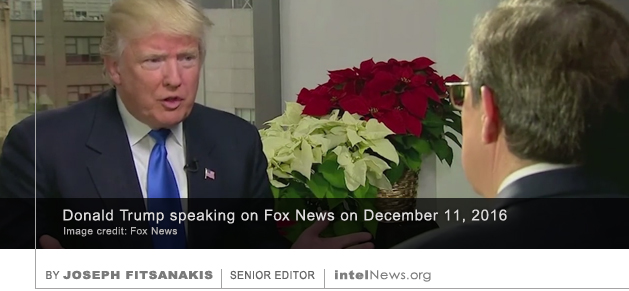 With nearly 53 million Twitter followers, United States President Donald Trump could easily be described as the most social-media-friendly American leader in our century. It is clear that Trump uses Twitter to communicate directly with his followers while circumventing mainstream media, which he views as adversarial to his policies. However, according to former Central Intelligence Agency analyst Nada Bakos, foreign intelligence agencies are among those paying close attention to the president’s tweets. Bakos spent 20 years in the CIA, notably as the Chief Targeter of the unit that tracked down Abu Musab al-Zarqawi, the founder of al-Qaeda in Iraq, which later evolved into the Islamic State of Iraq and Syria. In a June 23
  An internet website that offered free URL shortening services appears to have been a front created by British intelligence in order to spread messages and monitor activists involved in protests in Iran and the Arab world. The website was used heavily during the Iranian presidential election protests of 2009, which became known as the Iranian Green Movement. After a brief hiatus, the website was used again in 2011, as the Arab Spring revolts in North Africa and the Middle East were intensifying. The information pointing to the use of the website comes from documents leaked by Edward Snowden, the American former intelligence employee who has been granted political asylum in Russia.












 intelNews.org
Dutch hacker says he logged into Trump’s Twitter account by guessing password
October 23, 2020 by Ian Allen 1 Comment
A DUTCH ETHICAL COMPUTER hacker and cybersecurity expert claims to have logged into the personal Twitter account of United States President Donald Trump, reportedly after guessing his password. The hacker, Victor Gevers, took several screenshots of the private interface of Trump’s Twitter account, and shared them with Dutch news media, before contacting US authorities to notify them of the breach.
Trump attributes much of his popularity and electoral success to social media, and is especially fond of Twitter as a means of communication. He has tweeted nearly 20,000 times since 2015 (including re-tweets), with at least 6,000 of those tweets appearing in 2020 alone. His personal account, which uses the moniker @realDonaldTrump, has almost 90 million followers.
But Gevers, a self-described ethical computer hacker, cybersecurity researcher and activist, said he was able to guess the American president’s password and log into his Twitter account after four failed attempts. The hacker claims that Trump’s password was “maga2020!”. According to Gevers, Trump’s account did not require a two-factor authentication log-in process, which usually requires a password coupled with a numeric code that is sent to a user’s mobile telephone. As a result, Gevers said he was able to access Trump’s private messages on Twitter and —had he wanted to— post tweets in the name of the US president. He could also change Trump’s profile image, had he chosen to do so.
The Dutch hacker took several screenshots of the webpages he was able to access and emailed them to Volkskrant, a Dutch daily newspaper, and Vrij Nederland, an investigative monthly magazine. Shortly after accessing Trump’s account, Gevers said he contacted the US Computer Emergency Readiness Team (US-CERT), which operates under the Department of Homeland Security’s Cybersecurity and Infrastructure Security Agency. He said the US president’s password was changed “shortly after”, and that he was then contacted by the US Secret Service.
Also on Thursday, a Twitter spokesman said the company’s security team had seen “no evidence to corroborate” Gevers’ claim. He added that the San Francisco, California-based social media company had “proactively implemented account security measures for a designated group of high-profile, election-related Twitter accounts in the United States, including federal branches of government”. Such measures included “strongly” encouraging such accounts to enable two-factor authentication, said the spokesman. But he did not specify whether Trump’s account had activated this feature. The White House also denied Gevers’ claim, calling it “absolutely not true” and adding that it would “not comment on security procedures around the president’s social media accounts”.
► Author: Ian Allen | Date: 23 October 2020 | Permalink
Filed under Expert news and commentary on intelligence, espionage, spies and spying Tagged with computer hacking, Donald Trump, News, social networking, Twitter, Victor Gevers