Analysis: Will COVID-19 cause food shortages in the United States?
April 8, 2020 2 Comments
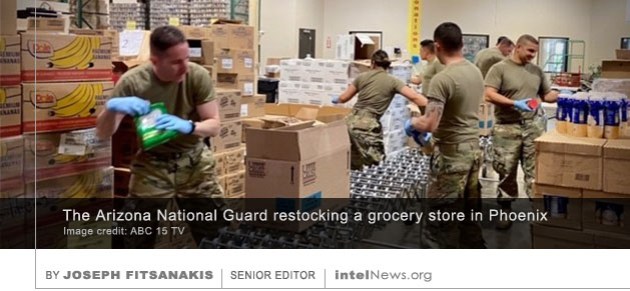 The food supply chain in the United States has so far been able to endure the pressures caused by SARS-CoV-2. Grocery stores across the nation remain generally well-stocked, even if in some cases (like in Nevada and Arizona), the National Guard has been brought in to help with restocking. Shortages in certain types of foods, such as canned soup or pasta, are the result of unprecedented demand, rather than a breakdown in the food supply chain. Overall, therefore, there are no signs of systematic food shortages across the nation. However, disruptions —some of them severe— are likely to be experienced in the coming weeks.
COVID-19 IMPACT ON FARMS
Disruptions are likely to be felt first in the area of fresh produce, for two reasons. First, because large agricultural facilities are beginning to experience major shortages in personnel, as seasonal farmworkers —most of them from Central and South America— are unable to travel north due to the cessation of international travel in the Americas. Second, because —just like medical personnel across the country— agricultural workers are facing severe shortages in personal protective equipment (PPE), which is essential for keeping them healthy in a pandemic. Until now, major  COVID-19 outbreaks have been occurring in densely populated urban centers. But as the disease continues to spread, it is only a matter of time before the virus reaches rural farming areas and enters farms, which are the beginning of the food supply chain. Many automated agricultural facilities, such as grain and soybean operations in the American Midwest, do not require large numbers of human laborers, and will thus suffer little disruption from the spread of the pandemic. However, this is not the case with fruits and vegetables, such as tomatoes or grapes, which require human pickers to extract them. The progression of the disease in rural regions of Florida and California, which produce over 20% of total US agricultural value, will be a critical factor. As an illustration, is worth pointing out that two farms in California supply over 85% of all carrots in the US market. If COVID-19 affects the production and distribution capacity of global producers of fresh fruits and vegetables, like the Florida-based Fresh Del Monte Produce, the ramifications are likely to be felt across the world for more than a year.
AGRICULTURAL DISRUPTIONS IN WESTERN EUROPE
Western Europe, which is ahead of the US in the spread of the disease, is already experiencing unprecedented disruptions in agricultural production. The closing of international borders has prevented millions of seasonal farmworkers from Eastern Europe, whom agricultural facilities in Western Europe rely on to pick fruits and vegetables each year, from traveling west. Italy and Britain hav e begun issuing calls for unemployed workers to form “land armies” and volunteer to pick produce in farms. The French government has called “for hairdressers, waiters, florists and others temporarily unable to work” due to the pandemic “to head to the nation’s fields and start picking”. And in Germany, the authorities have launched a website that solicits volunteers to work in farms across the nation. However, as only 16,000 have volunteered so far, the German government is now working on a plan to allow undocumented immigrants to make up the remaining 284,000 farmworkers that are needed to salvage this year’s crop.
DISRUPTION IN THE GLOBAL FOOD EXPORT SYSTEM
It is unrealistic to expect that these glitches will not eventually make their way to the US. Moreover, just like Western Europe, the US relies heavily on imported foods. The global nature of the pandemic is also beginning to cause major disruptions in food exports, as air and ship cargo dwindles dramatically. Already, the shortage of refrigerated containers used to transport meat and other food supplies from China to North America has prompted a drop in imports of over 25%. Meanwhile, India, which is the world’s largest exporter of rice, has completely halted exports due to logistical problems and labor shortages caused by the pandemic. The world’s second and third largest exporters of rice, Thailand and Vietnam, are likely to soon follow suit. Kazakhstan, which is among the world’s largest exporters of wheat flour, has now banned all exports of that product. Brazil, the largest exporter of coffee, sugar and soybeans in the world, has warned that it is facing an unprecedented shortage of farmworkers, truck drivers, and even spare parts for farm equipment. And Russia, which is the world’s largest exporter of wheat, has said that it will soon be forced to severely restrict exports for the same reasons as Brazil. These developments prompted the United Nations Food and Agriculture Organization to warn last week that food shortages, coupled with growing trade barriers between nations, “will create extreme volatility” in global food supply. Read more of this post
 The United States Department of State has designated a Russian white supremacist organization a Specially Designated Global Terrorist (SDGT) group. This
 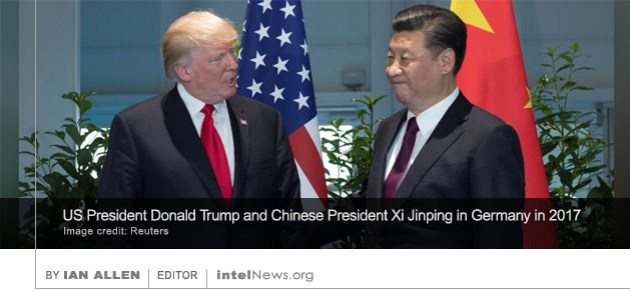 The United States Intelligence Community has concluded that the Chinese government intentionally withheld and even fabricated crucial data about infections and deaths from COVID-19, according to reports. Consequently, the official numbers relating to the novel coronavirus outbreak in China allegedly represent a considerable under-reporting of both total cases and total deaths.
 The National Operations Center of the United States Department of Homeland Security (DHS) is relocating to an emergency facility after a member of its staff tested positive for COVID-19, the illness caused by the novel coronavirus. The information was
  The government of Saudi Arabia may be exploiting a decades-old tracking system embedded in the global mobile telecommu- nications network in order to spy on its citizens as they travel abroad, a report suggests. The report was
  The administration of United States President Donald Trump is considering the possibility of expelling from the country dozens of Chinese diplomats, journalists, and others, who are believed to be undercover spies. The expulsions relate to a spiraling information war between Washington and Beijing, which has erupted in recent weeks as a result of the COVID-19 pandemic.
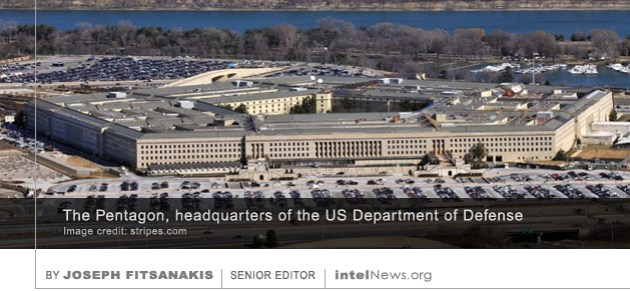 For the first time in the modern history of the United States, the Department of Defense has been given standby orders to ensure the “continuity of government”, in response to the COVID-19 pandemic. These extraordinary measures, which include evacuating White House officials to remote quarantined locations, and devolving the nation’s leadership to “second-tier officials”, were originally meant for the aftermath of a nuclear war.
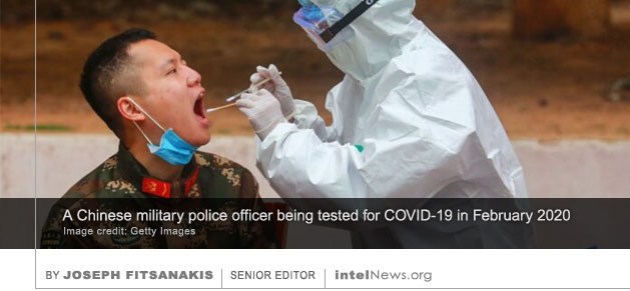 Military forces around the world are scrambling to contain the impact of COVID-19 on military readiness, as the virus continues to infect troops and commanders at an alarming rate. On Tuesday, the Polish government
 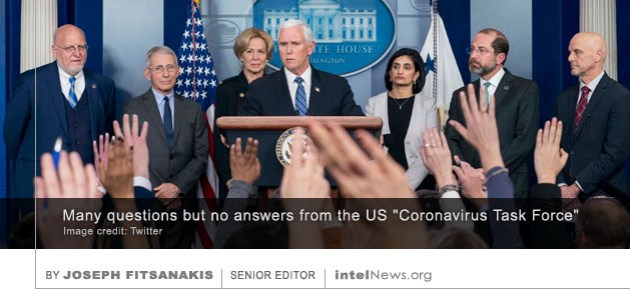 The coronavirus (COVID-19) is quickly becoming the greatest security challenge of our time. The ease of transmission and
 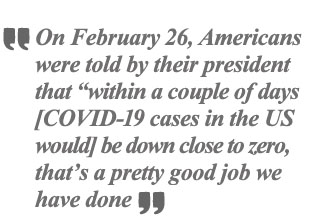 viewing experience. Such astounding manifestations of mediocrity would be somewhat tolerable if they came alongside actionable information that Americans could use to protect themselves and the future of their country —preferably something beyond “washing your hands for at least 20 seconds”.
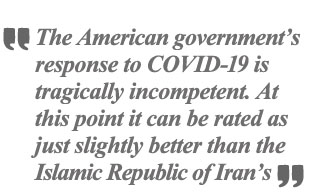 extensive transportation network that links the two nations. Over 1.2 million Taiwanese either live permanently or work in China, while nearly 3 million Chinese citizens visit Taiwan every year. Even more ominously, the COVID-19 outbreak occurred right before the Lunar New Year, which is the busiest travel season for both Chinese and Taiwanese holidaymakers.
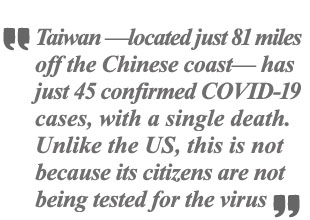 well as tourists and immigrants, who had traveled to the Wuhan region during the previous month. Using this big-data analytics approach, Taiwanese authorities were able to generate real-time alerts that were sent to individual doctors for use during clinical visits, so that clinical symptoms could be matched with patients’ travel histories.
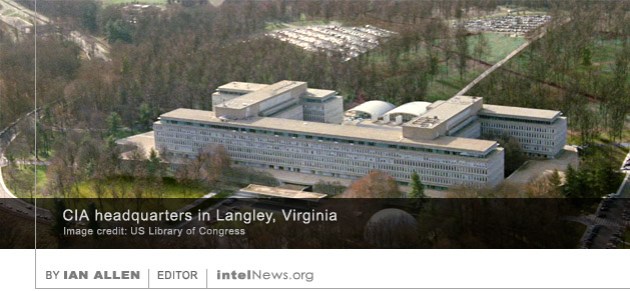 A leading Chinese cybersecurity firm has accused the United States Central Intelligence Agency of using sophisticated malicious software to hack into computers belonging to the Chinese government and private sector for over a decade.
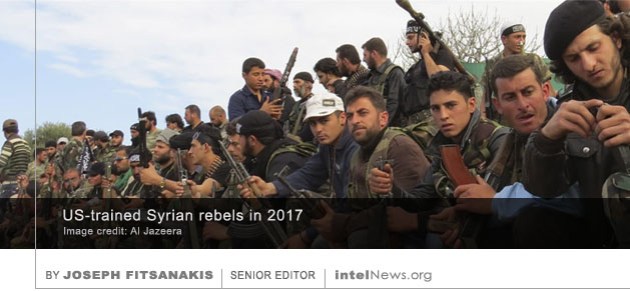 The United States government is unable to account for nearly $716 million in weapons it gave to various Syrian groups during the war against the Islamic State, according to a Department of Defense audit. The weapons were procured under the Counter Islamic State of Iraq and Syria Train and Equip Funds (CTEF) program, which was administered by the US Pentagon in 2017 and 2018. The CTEF program cost the US taxpayer a total of $930 million.
 The United States Federal Bureau of Investigation has arrested a Mexican man, who is accused of spying in the city of Miami on behalf of the Russian government. Local media reports suggest that the target of the man’s spying was a Russian defector who gave American authorities information about Russian espionage activities on US soil.
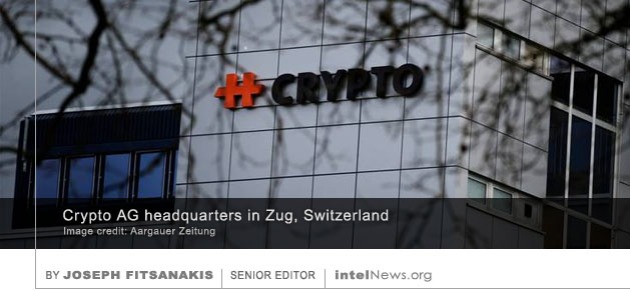 Switzerland is reeling from the shock caused by revelations last week that Crypto AG, the world’s leading manufacturer or cryptologic equipment during the Cold War, whose clients included over 120 governments around the world, was a front company owned by the United States Central Intelligence Agency.






 intelNews.org
US considers pulling CIA from Afghan front lines to help salvage Taliban peace deal
April 20, 2020 by Joseph Fitsanakis 1 Comment
But armed violence between the two sides has since peaked, prompting many to question the viability of planned peace deal. In response to this development, the White House is now reported to be considering a plan to limit the CIA’s presence in the Central Asian country. This was demanded by the Taliban early on in the negotiations, alongside the planned withdrawal of American troops from the country. In return the Taliban had pledged no break all ties with international terrorist groups, including al-Qaeda.
The US had previously agreed to withdraw its troops from the country, but had ruled out pulling back CIA personnel —which are believed to number in the several hundreds in Afghanistan. A major reason for rejecting the Taliban demand is that the CIA supports, arms and trains several proxy forces throughout the country. These include the Khost Protection Force (KPF), a 6,500-strong unit of elite Afghan soldiers, which has a strong presence in Taliban strongholds like Ghazni, Paktia and Khost. These forces do not operate under the command of the Afghan government, but are instead directly controlled by the CIA.
Reports in August of 2019 claimed that the CIA would retain “a strong presence on the ground in Afghanistan”, even if American troops were to leave the country following a peace deal with the Taliban. But this is now under review, according to US officials who spoke anonymously to The New York Times. The paper said on Sunday that “the deliberations over the CIA presence” were now “part of larger discussions about pulling back international forces” from the country. One possible course of action revolves around a plan to limit the presence of the CIA to the grounds of the US embassy in Kabul, said The Times.
► Author: Joseph Fitsanakis | Date: 20 April 2020 | Permalink
Filed under Expert news and commentary on intelligence, espionage, spies and spying Tagged with Afghanistan, CIA, News, Taliban, United States