Crowdfunding campaign seeks release of CIA’s mind control program files

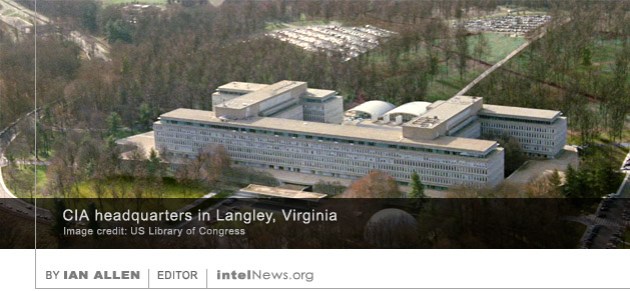
CIA headquartersAn online fundraising campaign is seeking to secure the release of over 4,000 pages of documents relating to a controversial mind control program developed by the United States Central Intelligence Agency. The project, referred to as MKNAOMI/MKULTRA in US government files, was a joint effort by the CIA and the US Department of Defense to study the effects of substances such as heroin and LSD on the human brain. It began in 1953 and over the years involved the work of hundreds of scientists, many of whom were not aware they were working on a CIA project. But it was hurriedly shut down in 1976, once post-Watergate investigations by the US Congress revealed that it led to the death of at least one person and involved the application of drugs on hundreds of nonconsenting subjects. Several lawsuits relating to MKULTRA have been filed in US courts in recent years.

In 2004, the Black Vault, a volunteer website specializing in publishing declassified government documents, released tens of thousands of pages that were released by the CIA following a lengthy Freedom of Information Act (FOIA) application. The agency released the file along with an 85-page index that listed the file’s contents. But in 2016, a Black Vault reader noticed that some of the listings contained in the file were missing from the documents. Working through the news aggregation and discussion website Reddit, a group of readers identified all the irregularities in the released documents and notified Black Vault’s owner, John Greenwald. Greenwald then contacted the CIA and, following a two-year exchange with the agency’s FOIA desk, he was told that the missing pages would require a separate FOIA request. The reason, according to the CIA, is that the original FOIA request had requested documents pertaining to “mind control”, whereas the missing pages related to “behavioral modification”, which is a separate topic.

The CIA told Greenwald that releasing the pages pertaining to “behavioral modification” would require a payment of $425.80, at 10 cents per page. After failing to convince the CIA that it should release the pages for free, because they should have been included in the original 2004 FOIA petition, Greenwald decided to launch a crowdfunding campaign. He used the popular crowdfunding website GoFundMe to request $500 toward a new FOIA and related expenses. By Wednesday night, the campaign had exceeded the amount requested by Greenwald. The owner of the Black Vault website now says that he is preparing to file a FOIA for 4,358 pages about MKULTRA that are missing from the original 2004 document release.

Author: Ian Allen | Date: 16 August 2018 | Permalink
ISIS remains strong with 30,000 members in Iraq and Syria, experts warn

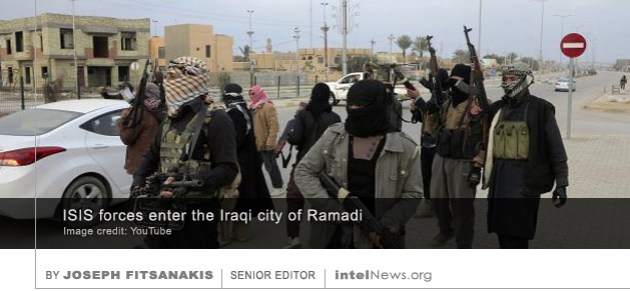
ISIS forces in RamadiThe Islamic State has recovered from some of its recent defeats in the battlefield and has as many as 30,000 committed members in Iraq and Syria, according to two reports by American and United Nations experts. Last month, the Iraqi government announced that the war against the group, which is also known as the Islamic State of Iraq and Syria (ISIS) had been won. The statement was echoed by the United States President Donald Trump, who said that the war against the militant Sunni group was “98 percent” over. But now two new reports, one produced by the United States Department of Defense and the other by an expert UN panel, warn that both ISIS and al-Qaeda remain powerful, popular and dangerous in Iraq, Syria, and many other regions of the world.
The UN report was published on Monday by the organization’s Analytical Support and Sanctions Monitoring Team, which is tasked with monitoring the impact of UN-imposed international sanctions. The report recognizes that ISIS has suffered unprecedented military defeats in Iraq and Syria in the past year, and that many of its most hardened fighters are dead or have abandoned the conflict zones in the region. But it warns that the militant organization is now morphing into a “covert version” of its former self and that its organizational core remains mostly intact in both Iraq and Syria. What is more, ISIS’ center is backed by as many as 30,000 unreconstructed members, who are split roughly equally between the two countries. The US Pentagon report, which was delivered this week to Congress states that ISIS has as many as 17,100 fighters in Iraq and another 14,000 in Syria. Many of those surviving fighters are citizens of dozens of different countries around the world, according to the report. Some of them are still engaged in armed fighting, while others are “hiding out in sympathetic communities and urban areas”, mostly in Iraq, the UN report states.

There are also tens of thousands of ISIS fighters and supporters in Libya, Afghanistan, Egypt, and in several West African and Southeast Asian countries, according to the reports’ authors. These fighters are led by commanders who remain in contact with senior ISIS leaders and continue to revere Abu Bakr al-Baghdadi as the group’s central figure. In addition to ISIS, al-Qaeda also remains strong and dangerous, according to the UN report. Its regional structure “continues to show resilience” and in some regions of the world it is far stronger than ISIS. These include several regions of Africa, including areas of Somalia and the Sahel, as well as in Yemen, where al-Qaeda is believed to command as many as 7,000 armed fighters at the moment.

Author: Joseph Fitsanakis | Date: 15 August 2018 | Permalink

US-backed alliance in Yemen war bribes, recruits al-Qaeda warlords, report finds

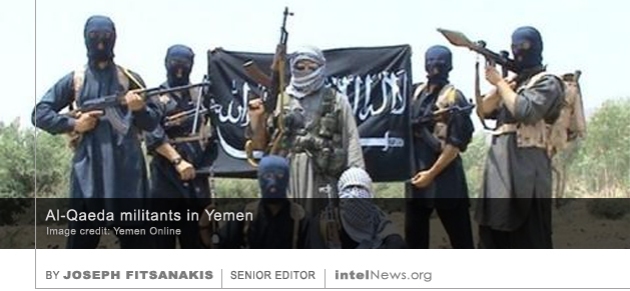
Al-Qaeda in YemenYemeni militias backed by Saudi Arabia, the United States and the United Arab Emirates are actively paying off al-Qaeda-allied factions to abstain from the fighting, and are recruiting al-Qaeda members to fight against Shiite rebels, according to a new investigative report. Ever since 2015, when the civil war in Yemen broke out, the US, along with its Arab allies UAE and Saudi Arabia, has supported Sunni troops in their war against Shiite Houthi rebels. The latter are believed to be supported by Iran, and the US-backed coalition is engaged in an effort to curtail what it sees as Iranian expansionism in the Middle East.
But Iranian-supported fighters are just one of the many well-armed factions involved in the Yemeni Civil War, which Washington is ostensibly against. Another such faction is Al-Qaeda in the Islamic Peninsula (AQAP), believed to be the strongest surviving branch of the group that carried out the attacks of September 11, 2001. For several years now, the US-led coalition in Yemen has argued that its forces have severely limited AQAP’s strength and ability to fight, and that the group’s territorial control has been shattered. But a new investigative report published on Monday by the Associated Press argues that the reason why AQAP’s activities appear to have decreased in Yemen, is that its commanders are being bribed by US-backed Sunni militias and that its fighters are being recruited to fight against the Houthis. As strict Sunni Salafists, AQAP members view the Shiite Houthis as apostates and enemies of Islam. They are therefore “effectively on the same side as the Saudi-led coalition” in Yemen, note the editors of the Associated Press report. Citing “interviews with two dozen officials, including Yemeni security officers, militia commanders, tribal mediators and […] members of al-Qaeda”, the report’s authors say that US-backed Sunni militias “actively recruit al-Qaeda militants […] because they’re considered exceptional fighters”.

The Associated Press report also claims that the Sunni coalition has struck a series of secret agreements with AQAP, under which it paid off its fighters to abandon several Yemeni towns that were under their control. Upon leaving, these AQAP fighters were allowed to take with them tons of military equipment and valuables, including cash. In one case, AQAP was bribed to abandon the port city of Mukalla, Yemen’s fifth-largest urban center, and its fighters were allowed to keep their weapons and up to $100 million in looted cash deposits, said the Associated Press. In another case, AQAP militants were paid off to leave several towns in Yemen’s Abyan province, and 250 of them were incorporated into the so-called Security Belt, a Sunni militia backed by the government of the UAE. The AQAP fighters reportedly told their Security Belt commanders that they would “unite with the devil [himself] in the face of Houthis”.

The Associated Press notes that there is no evidence that funds supplied to Yemeni Sunni militias by the US have ended up into the hands of AQAP. Additionally, the US government has repeatedly denied accusations by Russia, Syria, and others that it supports various al-Qaeda factions. However, the Associated Press argues that the US Pentagon has been privy to the secret agreements between the Sunni militias and AQAP, which some say may end up strengthening al-Qaeda’s most formidable local branch anywhere in the world.

Author: Joseph Fitsanakis | Date: 08 August 2018 | Research credit: M.A. | Permalink

US fired Moscow embassy employee who may have spied for Russia

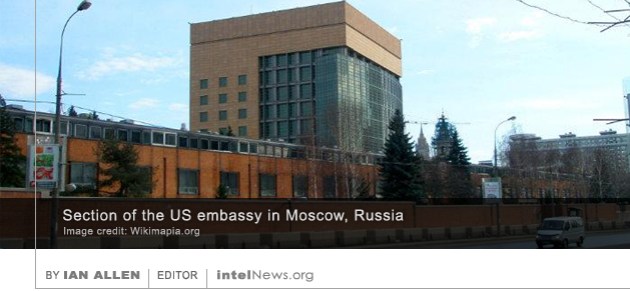
US embassy in RussiaA female Russian national who worked for the United States Secret Service in Moscow was quietly dismissed in 2017, amidst concerns that she was spying for Russia. British newspaper The Guardian, which broke the story last week, did not name the Russian woman. But it said that she had worked at the US Embassy in Moscow “for more than a decade”, most recently for the Secret Service –a federal law enforcement agency that operates within the Department of Homeland Security. The Secret Service has several missions, the most important of which is to ensure the physical safety of America’s senior political leadership.
Throughout her Secret Service career, the Russian woman is thought to have had access to the agency’s email system and intranet network, said The Guardian, citing “an intelligence source”. She could also potentially have had access to “highly confidential material”, said the paper, including the daily schedules of America’s past and current presidents and vice presidents, as well as their family members’ schedules.

The unnamed Russian national first came under suspicion in 2016, said The Guardian, during a routine security review conducted by two counterintelligence staff members at one of the Department of State’s Regional Security Offices (RSO). These reviews usually take place every five years and scan the background and activities of employees at American embassies abroad. The review showed that the unnamed Russian national was holding regular meetings with officers of the Federal Security Service (FSB), Russia’s domestic intelligence service. In January of 2017, the Department of State reportedly shared its findings with the Secret Service. But the latter waited until several months later to fire the Russian woman, having decided to do so quietly, said The Guardian.

According to the paper, instead of launching a major investigation into the State Department’s findings, the Secret Service simply dismissed the woman by revoking her security clearance. The paper said that the Russian national’s dismissal took place shortly before the US embassy in Moscow was forced to remove or fire over 750 employees as part of Russia’s retaliation against economic sanctions imposed on it by Washington. That coincidence helped the Secret Service “contain any potential embarrassment” arising from claims of espionage, said The Guardian. The paper contacted the Secret Service and was told that “all Foreign Service nationals” working for the agency “are managed accordingly to ensure that […US] government interests are protected at all times”. Their duties, therefore, are “limited to translation, interpretation, cultural guidance, liaison and administrative support. This is of particular emphasis in Russia”, said a Secret Service spokesman, who refused to discuss specific cases.

Author: Joseph Fitsanakis | Date: 07 August 2018 | Research credit: S.F. | Permalink

Facebook says efforts to subvert upcoming US elections resemble ‘new arms race’

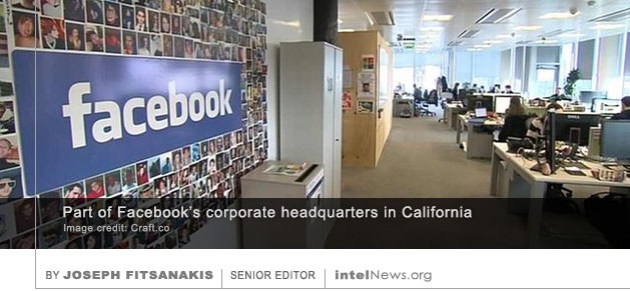
FacebookFacebook has said it is involved in an “arms race” against “bad actors” as it announced on Tuesday the removal of accounts that allegedly tried to subvert the upcoming mid-term elections in the United States. The social-media giant said its security division had identified 32 profiles and pages that were set up for the sole purpose of disrupting, subverting or otherwise influencing the American political process. At least seven more accounts were shut down on the Instagram platform –which is also owned by Facebook– for the same reasons. In the past 14 months, the suspect accounts generated nearly 10,000 posts and were liked or followed by over 290,000 users, said Facebook.

In addition to producing memes that aimed to stir existing racial, political and religious tensions in American society, the suspect accounts are also believed to have generated approximately 150 paid advertisements, spending around $11,000 for that purpose. Moreover, close to 30 public events were organized, advertised and hosted by the suspect pages throughout the US in the past 14 months. One such event was subscribed to by 4,700 users, with another 1,400 users stating that they would attend.

In a preliminary report posted on its online newsroom, Facebook said it was too early in the investigation to identify the party or parties behind the alleged effort to influence the US mid-term elections. Its security team had detected “one instance” of a connection between this latest operation and the Russian-based Internet Research Agency (IRA), which Facebook identified as being one of the main sources behind efforts to influence the 2016 US presidential elections. But the report cautioned that the instigators of this latest attempt to influence the US political process had gone to great pains to hide their identities, affiliations and geographical coordinates. For instance, they routinely employed virtual private networks in order to disguise their internet protocol addresses. They also used third parties to purchase advertisements on Facebook and Instagram. These and many other tactics severely limited the ability of security technicians to attribute these efforts to specific countries, governments or companies, said Facebook.

Using unusually strong language to describe its ongoing probe, Facebook said that the exploitation of its platform for sinister political purposes resembled “an arms race” and that constantly changing tactics were needed to combat it. In addition to removing the suspect accounts, Facebook said it was working closer with law enforcement and leading online security firms in order to analyze and eliminate threats from what it described as “bad actors”. It added that it was “investing heavily” in more people and better technology in order to eliminate those who were trying to weaponize its communication platform for sinister goals.

Author: Joseph Fitsanakis | Date: 01 August 2018 | Permalink

US diplomats secretly met with Taliban without Afghan government

TalibanIn a dramatic change to longstanding policy, senior United States diplomats have reportedly held secret meetings with Taliban leaders without the presence –and presumably knowledge– of the Afghan government. For over a decade, the Taliban have refused to negotiate with the Afghan government, which they view as a puppet regime controlled by Washington. They have instead sought to speak directly with the United States, without Kabul’s mediation. In 2015, the United States sought to initiate peace talks with the Taliban in the Qatari capital Doha, but the effort collapsed after the Afghan government denounced it and demanded a seat at the table. The negotiation process has remained dormant since then.

Last week, however, The Wall Street Journal reported that a series of unannounced meetings have been taking place between a delegation of senior Taliban officials and an American team led by Alice Wells, principal deputy assistant secretary of the US Department of State’s Bureau of South and Central Asian Affairs. On Saturday, The New York Times confirmed the story, saying that meetings between the two sides were being held in Qatar, where the Taliban maintain an informal diplomatic mission. Citing “two senior Taliban officials”, The Times said that the American diplomats have been meeting with members of the Taliban’s political commissariat. But the paper said it had no information about the substance or progress of the talks. If The Times’ claims are accurate, they would mark a dramatic reversal of longstanding US policy on the Taliban. Since 2001, Washington has consistently argued that any negotiation process involving the Taliban would be “Afghan-owned and Afghan-led”. Therefore, direct talks between Washington and the Taliban without Kabul’s mediation would mark a major shift in America’s security strategy in Afghanistan and beyond.

The New York Times said it contacted the US Department of State in Washington, seeking clarification about the alleged talks. But a spokesman refused to discuss the claims and insisted that “any negotiations over the political future of Afghanistan will be between the Taliban and Afghan government”. However, The Times noted that the spokesman did not expressly deny the existence of the talks with the Taliban.

Author: Joseph Fitsanakis | Date: 31 July 2018 | Permalink

Iran warns of repercussions as US intensifies campaign against Tehran

IRGC IranIranian military officials have warned of extracting “revenge from foreign intelligence services”, as Reuters reported that an aggressive campaign against Tehran has been launched by Washington. On Sunday, the Reuters news agency said that senior officials in the administration of US President Donald Trump had launched a concerted offensive “meant to foment unrest” in the Islamic Republic. Citing information from “more than half a dozen current and former officials”, Reuters said that the US offensive is directly supported by President Trump’s Secretary of State Mike Pompeo and his National Security Adviser John Bolton. Both officials are known for their aggressive stance against the Iranian government.
The campaign, said Reuters, is meant to “work in concert” with President Trump’s push to “economically throttle Iran”. The US leader announced a series of economic sanctions on the Islamic Republic and has intensified his critical statements against Tehran after May of this year, when Washington pulled out of the Iran nuclear agreement. Known as the Joint Comprehensive Plan of Action (JCPOA), the international agreement was reached in 2015 between Iran and a group of nations known as the P5+1, namely the five permanent members of the United Nations Security Council plus Germany. As part of the deal, Iran agreed to halt its nuclear weapons program in exchange for an end to economic sanctions by the West. But President Trump abandoned the agreement, saying it was a form of appeasing Tehran.

According to Reuters, Washington’s campaign involves the spreading of information that “paints Iranian leaders in a harsh light” and in some cases makes claims about Tehran that are “exaggerated”. For example, said Reuters, some social media posts by the US Department of State’s Farsi-language news service claim that Iran is close to al-Qaeda, despite the fact that Shiite Islam, which is Iran’s state religion, is viewed as a heresy by Sunni members of al-Qaeda. Other –perhaps more believable– accusations include claims that the leaders of Iran are wasting funds released by the JCPOA instead of using it for their people’s welfare, and that Tehran funds the Taliban in Afghanistan.

Meanwhile, a spokesman for the Islamic Revolutionary Guard Corps (IRGC), arguably the most powerful branch of the Iranian Armed Forces, issued a warning on Sunday against “foreign intelligence services”. The spokesman, Brigadier General Ramezan Sharif, said Iran would take revenge on foreign spy services “who try to disrupt the security of Iran’s borders”. He was referring to an armed attack that took place on Saturday in Iran’s northwestern Marivan region, near the Iran-Iraq border. The attack concentrated on an Iranian military compound in the village of Dari and culminated with the bombing of an IRGC arms depot. According to Iranian media reports, the explosion killed 11 Iranian border guards. Reuters said it contacted the White House and the Department of State about the alleged campaign against Iran, but that both declined to comment.

Author: Joseph Fitsanakis | Date: 23 July 2018 | Permalink

US intelligence officials called to resign despite Trump’s Russia retraction

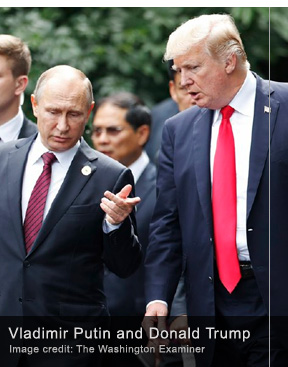
Putin and TrumpSeveral American former intelligence officials have called on their active colleagues to resign despite President Donald Trump’s retraction of his remarks about Russia’s alleged meddling in the 2016 presidential elections. On Tuesday, the US president issued an unusual retraction and correction of his public statement on Monday in Helsinki, Finland, in which he appeared to side with the Kremlin over his own Intelligence Community’s views. The Office of the Director of National Intelligence (ODNI), which is the coordinating body of the US Intelligence Community, has said that Russia tried to systematically interfere in the 2016 US presidential elections. According to the ODNI, the Kremlin’s goal was to augment the already heightened discord in American political life and deepen the mistrust between the electorate and state institutions, including Congress and the White House.
But President Trump dismissed those conclusions on Monday, while speaking alongside Russian President Vladimir Putin following the US-Russia summit in the Finish capital. During the joint press conference of the two leaders, the US president was asked to publicly adopt the US Intelligence Community’s conclusion that Russia interfered in the 2016 elections. But instead of doing so, Trump said his Russian counterpart had strongly denied the American accusations. “My people came to me”, said Trump, referring by name to his Director of National Intelligence (DNI) Dan Coats, and “said they think it’s Russia”. However, Trump continued, “President Putin […] just said it’s not Russia. I will say this, I don’t see any reason why it would be”. Following strong criticism of that comment, much of it from his own supporters, the US president retracted it on Tuesday in Washington, saying he misspoke in Helsinki. According to Trump, he said “would” when he meant to say “wouldn’t”.

The US president’s odd retraction came just hours after DNI Coats –a Trump appointee– issued a rare public statement rejecting Trump’s comments in Helsinki. “We have been clear in our assessments of Russian meddling in the 2016 election and their ongoing, pervasive efforts to undermine our democracy”, said Coats, adding that his office’s conclusion had been based on “unvarnished and objective intelligence”. Coats’ predecessor, former ODNI James Clapper, said during an interview with CNN on Tuesday that, if he still led the ODNI and had been “publicly thrown under the bus” by the president in that manner, he “would have stepped down in a heartbeat”. Read more of this post

Judge rules that Trump’s tweet did not disclose top-secret CIA operation in Syria

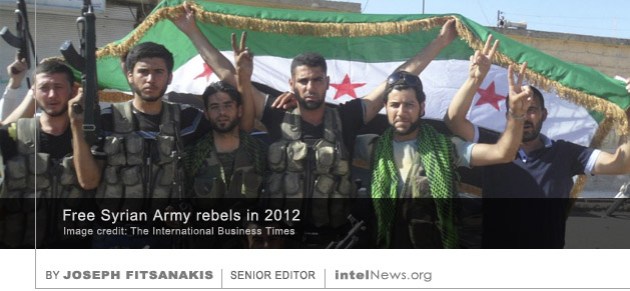
Free Syrian ArmyA United States federal judge ruled on Monday that a tweet by President Donald Trump did not inadvertently disclose a top-secret program by the Central Intelligence Agency to aid rebel groups in Syria. The lawsuit, brought by The New York Times, centered on news reports published in 2017 by Reuters, The Washington Post, and others, claiming that the US president had terminated an extensive CIA program that provided assistance to rebel forces engaged in the Syrian Civil War. The program was reportedly initiated by US President Barack Obama, who in 2015 instructed the CIA to assist armed groups operating under the umbrella of the Free Syrian Army. Aside from training, the CIA assistance reportedly included the provision of light and heavy ammunition, such as antitank missiles, mines and grenades.
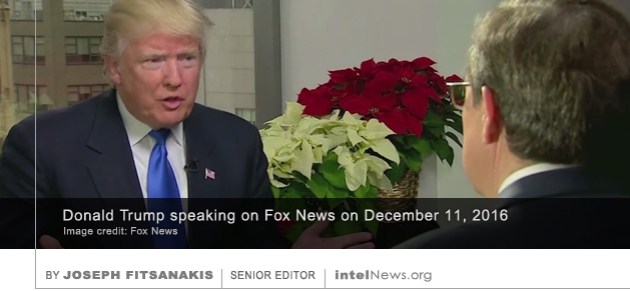
But President Trump allegedly terminated $1 billion program soon after he took office. Last July, the president openly disputed an account by The Washington Post’s Greg Jaffe and Adam Entous, which claimed that Trump had ended the program as a concession to Russia. In a tweet, Trump said: “The Amazon Washington Post fabricated the facts on my ending massive, dangerous, and wasteful payments to Syrian rebels fighting Assad”. Shortly afterwards, another newspaper, The New York Times, filed a Freedom of Information Act (FOIA) request, arguing that the president’s tweet had effectively disclosed the existence of the covert CIA program and seeking full details from the government. But the CIA rejected the The New York Times’ rationale, at which point the paper took the case to court.

But on Monday, US District Court Judge Andrew Carter Jr. dismissed the paper’s argument. In a 20-page decision, posted online by the US-based news website Politico, Judge Carter said that President Trump’s tweet had been too vague and ambiguous to be considered as effectively declassifying the secret CIA program. At no point did the US president “make an unequivocal statement, or any statement for that matter, indicating that he was declassifying information”, said the judge. Additionally, Trump’s tweet and other public statements on the matter did not undermine the legal authority of the US government to continue to keep details about the CIA program under wraps. According to Politico, which reported on Judge Carter’s decision, this development will make it difficult for other FOIA filers to use Trump’s tweets as justification for seeking information about secret government programs. Meanwhile, The New York Times said on Monday that it would seek to appeal Judge Carter’s decision.

Author: Joseph Fitsanakis | Date: 04 July 2018 | Permalink

Trump’s Twitter feed is ‘gold mine’ for foreign spies, says ex-CIA analyst

Trump 2016With nearly 53 million Twitter followers, United States President Donald Trump could easily be described as the most social-media-friendly American leader in our century. It is clear that Trump uses Twitter to communicate directly with his followers while circumventing mainstream media, which he views as adversarial to his policies. However, according to former Central Intelligence Agency analyst Nada Bakos, foreign intelligence agencies are among those paying close attention to the president’s tweets. Bakos spent 20 years in the CIA, notably as the Chief Targeter of the unit that tracked down Abu Musab al-Zarqawi, the founder of al-Qaeda in Iraq, which later evolved into the Islamic State of Iraq and Syria. In a June 23 editorial in The Washington Post, Bakos argues that President Trump’s “Twitter feed is a gold mine for every foreign intelligence agency”.
All intelligence agencies, explains Bakos, build psychological profiles of foreign leaders. These profiles typically rely on information collected through intelligence operations that are “methodical, painstaking and often covert”. The final product can be crucial in enabling countries to devise strategies that counter their adversaries, says Bakos. But with Trump, covert intelligence-collection operations are not needed in order to see what is on his mind, since “the president’s unfiltered thoughts are available night and day”, she claims. The former CIA analyst points out that President Trump’s tweets are posted “without much obvious mediation” by his aides and advisors, something that can be seen by the frequency with which he deletes and reposts tweets due to spelling and grammatical errors. These unfiltered thoughts on Twitter offer a “real-time glimpse of a major world leader’s preoccupations, personality quirks and habits of mind”, says Bakos.

Undoubtedly, she argues, foreign intelligence agencies are utilizing President Trump’s tweets in numerous ways while building his personality profile. The most obvious ways are by performing content analysis of his tweets, which could then be matched against information collected from other sources about major US policy decisions. Additionally, foreign intelligence agencies could identify media sources that the US president seems to prefer, and then try to feed information to these sources that might sway his views. Countries like Saudi Arabia and Russia may have done so already, claims Bakos. The US president’s views, as expressed through Twitter, could also be compared and contrasted with the expressed views of his aides or senior cabinet officials, in order to discern who he agrees with the least. It is equally useful to analyze the issues or events that the US president does not tweet about, or tweets about with considerable delay. One could even derive useful information about Trump’s sleeping patterns based on his tweets, says the former CIA analyst.

Bakos does not go as far as to suggest that the US president should abstain from social media. But she clearly thinks that the US leader’s use of social media is too impulsive and potentially dangerous from a national-security perspective. She also laments that, throughout her career in the CIA, she and her team “never had such a rich source of raw intelligence about a world leader, and we certainly never had the opportunity that our adversaries (and our allies) have now”, thanks to Trump’s incessant social media presence.

Author: Joseph Fitsanakis | Date: 03 July 2018 | Permalink

Chinese shipbuilding boss gave CIA aircraft carrier secrets, reports claim

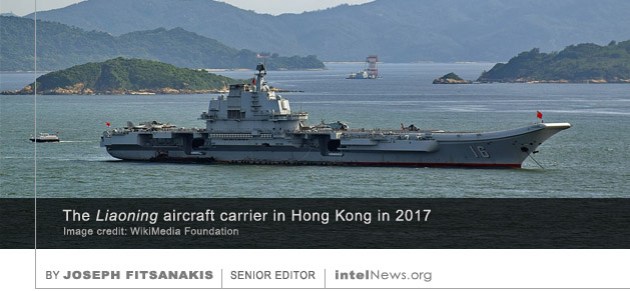
Liaoning aircraft carrier ChinaOne of China’s most senior shipbuilding executives, who has not been seen in public for nearly two weeks, has been charged with giving secrets about China’s aircraft carriers to the United States. Sun Bo, 57, is general manager of the China Shipbuilding Industry Corporation (CSIC), China’s largest state-owned maritime manufacturer, which leads nearly every major shipbuilding project of the Chinese navy. Most notably, Sun headed the decade-long retrofitting of the Liaoning, a Soviet-built aircraft carrier that was commissioned to the Chinese Navy’s Surface Force after the collapse of the Soviet Union.
The ship arrived at the CSIC’s Dalian shipyard in northeastern China in 2002. Work on the vessel was completed in 2012. Today CSIC heads the construction of so-called Type 001A, China’s first home-built aircraft carrier, which is said to be modeled largely on the Liaoning. The company is also spearheading the construction of numerous Chinese Navy frigates, latest-generation destroyers, and numerous other vessels. Earlier this year, it was announced the CSIC would build the Chinese Navy’s first nuclear-powered aircraft carrier.

As the second most senior official of China’s largest and most important shipbuilder, Sun has supervised all of the company’s projects during the past two decades. But Sun effectively disappeared after June 11, when he made his last known public appearance at a CSIC event. On June 17, a brief notice posted on the company’s website stated that Sun had been placed under investigation for “gross violation of laws and [Communist] Party [of China] discipline”. The brief notice said that the probe of Sun’s activities was led by China’s National Supervision Commission and the Communist Party of China’s Central Commissariat for Discipline Inspection, but provided no further details.

It has now been reported by multiple Chinese news websites that Sun is under investigation not simply for graft, but for far more serious activities involving espionage. Specifically, it is claimed that Sun was recruited by the United States Central Intelligence Agency because of his supervisory role in China’s aircraft carrier building programs. He is believed to have provided the CIA with information about the decade-long retrofitting of the Liaoning. More importantly, there are reports that Sun gave the CIA blueprints and other technical specifications of the Type 001A, which is currently under construction at a top-secret facility. The Hong Kong-based English-language news website Asia Times said on Thursday that, given the sensitive nature of the charges against Sun, it is unlikely that the Chinese government would reveal the outcome of the investigation of the CSIC executive.

Author: Joseph Fitsanakis | Date: 22 June 2018 | Permalink

US imposes sanctions on companies for helping Russian spy agencies

YantarThe United States has for the first time imposed economic sanctions on a number of Russian companies, which it says helped the Kremlin spy on targets in North America and Western Europe. On Monday, the US Department of the Treasury said it would apply severe economic restrictions on a number of Russian firms that work closely with the Kremlin. One of the companies was identified as Digital Security, which Washington says has been helping Russian intelligence agencies develop their offensive cyber capabilities. Two of Digital Security’s subsidiaries, Embedi and ERPScan, were also placed on the US Treasury Department’s sanctions list. Monday’s statement by the Treasury Department named another Russian firm, the Kvant Scientific Research Institute, which it described as a front company operated by the Russian Federal Security Service (FSB).
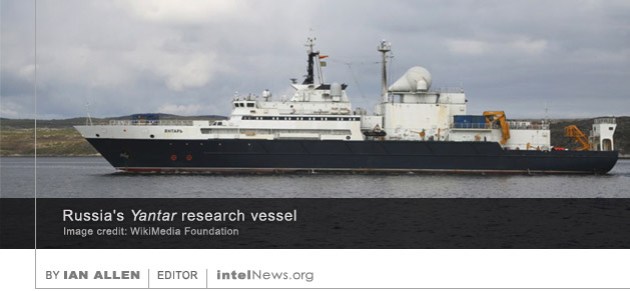
But the Russian firm that features most prominently in Monday’s announcement is Divetechnoservices, an underwater equipment manufacturer. The US alleges that the FSB paid the company $15 million in 2011 to design equipment for use in tapping underwater communications cables. According to Washington, equipment designed by Divetechnoservices is today used by a fleet of Russian ships that sail on the world’s oceans searching for underwater communications cables to tap. One such ship, according to reports, is the Yantar (pictured), ostensibly an oceanic research vessel, which Washington says is used to detect and tap into underwater communications cables.

In addition to Divetechnoservices, the US Treasury has named three individuals who will face economic sanctions due to what Washington says is their personal involvement with the underwater hardware manufacturer. They are: Vladimir Yakovlevich Kaganskiy, the company’s owner and former director; Aleksandr Lvovich Tribun, who serves as Divetechnoservices’ general director; and Oleg Sergeyevich Chirikov, identified as the manager of Divetechnoservices’ underwater surveillance program. These men —all Russian citizens— will not be able to enter into business relationships with American companies or citizens. On Tuesday, Russia’s Ministry of Foreign Affairs dismissed the latest round of US sanctions as an act of desperation. The White House would fail in its effort to “force the Russian Federation to change its independent course of action in the international arena”, said the Russian Ministry of Foreign Affairs.

Author: Ian Allen | Date: 13 June 2018 | Permalink

China gave ex-CIA officer “hundreds of thousands of dollars in cash” to spy on US

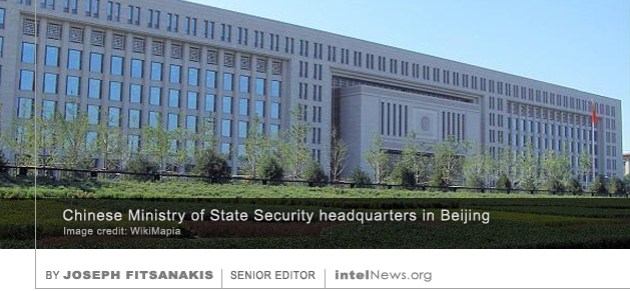
 Chinese Ministry of State SecurityChinese intelligence operatives gave a former officer of the United States Central Intelligence Agency “hundreds of thousands of dollars in cash” in exchange for carrying out espionage, according to court papers. The Federal Bureau of Investigation arrested Jerry Chun Shing Lee, 53, on January 15, accusing him of possessing classified information that included lists of real names of foreign assets and addresses of CIA safe houses. Lee, 53, was reportedly arrested after a lengthy FBI sting operation, which included creating a fictional job in the US in order to entice Lee to travel to New York from Hong Kong, where he had been living after leaving the CIA in 2007.
Lee is now scheduled to appear before a US circuit court judge on Friday morning, in order to be officially charged with one count of conspiracy to deliver national defense information to aid a foreign government and two counts of unlawfully retaining information pertaining to national defense. According to the indictment, in April of 2010 Lee met two officers of China’s Ministry of State Security. The meeting allegedly took place in Shenzhen, a city in southern China that borders Hong Kong. During that encounter, the indictment claims that Lee was offered “a gift of $100,000 in cash” in exchange of providing the Ministry of State Security with information about his career in the CIA. He was also told by the two Chinese intelligence officers that China would “take care of him for life” if he continued to cooperate with them.

In May of 2010, Lee deposited about $17,000 into one of his HSBC accounts in Hong Kong. Court documents allege that the deposit was the first of many that followed, and that they amounted to “hundreds of thousands of dollars”. These deposits continued to occurr until the end of 2013, when Lee made his last substantial cash deposit in Hong Kong. Throughout that time, Lee received regular written instructions from the Ministry of State Security, asking him to provide information about CIA operations. Lee did so at least 21 times, says the indictment. In one instance, he drew the floorplan of a CIA facility abroad and gave it to the Chinese, according to the indictment. Lee is expected to plead not guilty on Friday.

Author: Joseph Fitsanakis | Date: 16 May 2018 | Permalink

Joint US-Iraqi intelligence operation used cell phone app to trap senior ISIS figures

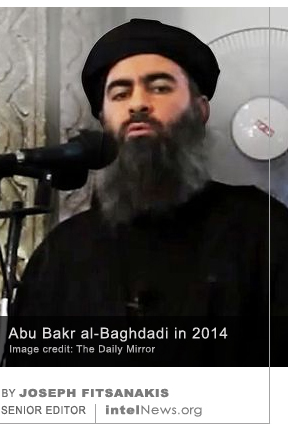
Abu Bakr al-BaghdadiAn joint operation conducted by American and Iraqi intelligence officers employed a popular messaging app on the phone of a captured Islamic State commander to apprehend four very senior figures in the organization, according to reports. The Reuters news agency said on Thursday that the ambitious intelligence operation began in February, when Turkish authorities captured a close aide to Abu Bakr al-Baghdadi, the Iraqi-born leader of the group known as Islamic State of Iraq and Syria (ISIS). According to Hisham al-Hashimi, security advisor to the government of Iraq, the ISIS aide was Ismail al-Eithawi, also known by his alias, Abu Zaid al-Iraqi. Iraqi officials claim that al-Eithawi was appointed by al-Baghdadi to handle the secret transfer of ISIS funds to bank accounts around the world.

It appears that al-Eithawi had managed to escape to Turkey when the United States-led coalition shattered ISIS’ self-proclaimed caliphate. But he was captured by Turkish counterterrorism forces and handed over to Iraqi authorities. Baghdad then shared the contents of al-Eithawi’s cell phone with US intelligence officers. The latter were able to help their Iraqi counterparts utilize the popular messaging app WhatsApp, a version of which was installed on al-Eithawi’s cell phone. According to al-Hashimi, the Iraqis and Americans made it seem like al-Eithawi was calling an emergency face-to-face meeting between senior ISIS commanders in the area. But when these Syria-based commanders crossed into Iraq to meet in secret, they were captured by Iraqi and American forces.

According to al-Hashimi, those captured include a Syrian and two Iraqi ISIS field commanders. More importantly, they include Saddam Jamal, a notorious ISIS fighter who rose through the ranks to become the organization’s governor of the Euphrates’ region, located on Syria’s east. Al-Hashimi told reporters on Thursday that Jamal and al-Eithawi were the most senior ISIS figures to have ever been captured alive by US-led coalition forces. The Iraqi government advisor also said that al-Eithawi’s captors were able to uncover a treasure trove of covert bank accounts belonging to ISIS, as well as several pages of secret communication codes used by the militant group.

Author: Joseph Fitsanakis | Date: 11 May 2018 | Permalink

US government prosecutors confirm CIA officer passed information to China

CIAA case officer in the United States Central Intelligence Agency, who was arrested in January of this year for violating the Espionage Act, shared classified information with China, according to an official indictment. The Federal Bureau of Investigation arrested Jerry Chun Shing Lee, 53, on January 15, accusing him of possessing classified information that included lists of real names of foreign assets and addresses of CIA safe houses. Lee, 53, was reportedly arrested after a lengthy FBI sting operation, which included creating a fictional job in the US in order to entice Lee to travel to New York from Hong Kong, where he had been living after leaving the CIA in 2007. However, the initial FBI complaint did not indict Lee for passing the top-secret information to anyone. There was speculation at the time that this was because the FBI had not been able to conclusively prove that Lee carried out espionage.

On Tuesday, however, Lee was formally indicted on conspiracy to gather and deliver national defense information to aid a foreign government. That charge came in addition to a previously stated charge of unlawfully retaining material related to American national defense. The indictment repeats earlier allegations that Lee was found to be in possession of classified documents that included the real names of CIA assets (foreign citizens who are recruited by CIA case officers to spy for the United States abroad) and the locations of “covert facilities” –safe houses that are typically used by CIA personnel to meet with assets in privacy. In what can be described as the most descriptive allegations that have surfaced against Lee, the indictment proceeds to claim that he was approached by two Chinese intelligence officers in 2010, three years after he left the CIA. The officers allegedly offered to give Lee a substantial amount of money in exchange for access to classified information. Additionally, according to the court documents, Lee was provided by his Chinese handlers with email addresses that he could use to communicate with them covertly, and did as instructed “until at least 2011”.

The documents further state that Lee made “numerous […] cash deposits”, which he struggled to explain when questioned by American counterintelligence officials. On several instances, Lee lied during questioning in order to cover up his financial activities, according to the indictment. Lee’s defense lawyer, Edward MacMahon, told the court on Tuesday that his client was “not a Chinese spy”, but “a loyal American who loves his country”. He also pointed out that Lee served in the US military and the CIA. The Chinese government has made no comment about the case.

Author: Joseph Fitsanakis | Date: 10 May 2018 | Permalink