News you may have missed #845

Lianne PollakBy IAN ALLEN | intelNews.org |
►►Mideast envoy Blair’s adviser is former Israeli intel officer. Former British Prime Minister Tony Blair is an official Middle East envoy for the Quartet, the group that represents the US, Russia, the United Nations and Europe. In his role as a mediator in the Israeli-Palestinian dispute, he is supposed to be politically neutral. But it turns out that one of his principal advisors, Lianne Polak, is an Israeli former army intelligence officer who has led intelligence teams in the Israel Defense Forces.
►►Who is the New Egyptian Intelligence Minister? Last week, a presidential order saw the appointment of General Muhammad Farid as the new head of Egypt’s General Intelligence Service. A profile of this unknown person reveals the close ties he had with those at the top of the Mubarak administration. His previous role was as the chairman of the Administrative Control Authority, which deals with investigating corruption in governmental agencies and public funds, as well as fighting organized crime. Farid was appointed to this role in 2004 by Hosni Mubarak.
►►Five unanswered questions about the NSA’s surveillance programs. Although the US government has disclosed some additional details about the programs in response to the leaks, important questions remain about the nature and scope of the surveillance programs. They include: 1. What other data is being collected under the USA PATRIOT Act? 2. How broad are the programs? 3. What’s the legal rationale? 4. Is the NSA still collecting email records? 5. Are there other programs that we don’t know about?
News you may have missed #844 (analysis on Snowden leak)

Edward SnowdenBy IAN ALLEN | intelNews.org |
►►Daniel Ellsberg: Snowden was right to flee US. “Many people compare Edward Snowden to me unfavorably for leaving the country and seeking asylum, rather than facing trial as I did. I don’t agree. The country I stayed in was a different America, a long time ago”, says Pentagon Papers whistleblower Daniel Ellsberg. And he continues: “I hope that he finds a haven, as safe as possible from kidnapping or assassination by US Special Operations forces, preferably where he can speak freely”.
►►NSA ‘in bed’ with German intelligence says Snowden. The fugitive US whistleblower Edward Snowden alleged on Sunday that the National Security Agency was “in bed together” with German intelligence despite claims by politicians in Chancellor Angela Merkel’s coalition that they were shocked by the extent of American spying in Germany. Snowden claimed that the NSA provided German intelligence, with analysis tools to help the organization monitor data flowing through Germany.
►►Can Snowden fly from Moscow to Caracas without being stopped? How can Snowden get from Moscow’s Sheremetyevo Airport, where he’s been holed up for nearly two weeks, to Venezuela, Bolivia or Nicaragua, which have indicated that they are willing to offer him political asylum? Former CIA analyst Allen Thomson took to Google Earth to answer the question of whether there’s a route Snowden might take that would allow him to fly from Moscow to, say, Caracas without crossing, as he puts it jokingly, the airspaces of “los Yanquis and their running dogs”.

World reaction to Snowden’s spying revelations continues

Edward SnowdenBy JOSEPH FITSANAKIS | intelNews.org |
Governments around the world continue to issue sharp official reactions to the revelations of large-scale spying by the United States, as Washington attempts to minimize the diplomatic fallout from the disclosures. The President of the European Commission, Jose Manuel Barroso, told a session of the European Parliament on Tuesday that, if confirmed, the claims of US espionage against European Union institutions would be “very disturbing”. He was referring to allegations, aired last week by German newsmagazine Der Spiegel, that America spies on the communications of many of its allies, including European Union (EU) agencies, with the same intensity it spies on China and Iraq. The claims were based on documents supplied by American whistleblower Edward Snowden, a former technical expert with the Central Intelligence Agency, who is currently believed to be in Russia. Numerous EU officials have contacted the US with requests for clarification, while EU ambassadors are scheduled to hold a meeting in Brussels, Belgium, on Thursday, to discuss how to commonly respond to Der Spiegel’s revelations. Some of the strongest criticisms against US intelligence policies have been issued by German officials, as some business figures in the country are raising concerns about US economic espionage against German financial interests. Christian Social Union politician Hans Michelbach reminded participants in a German parliamentary session this week that the EU may be a political ally of the US, but “is indeed a strong competitor in the global economy”. He added that business circles in Berlin are concerned that US intelligence collection aimed at German businesses would give Washington “dishonest advantages”. In Italy, the country’s Minister of Foreign Affairs, Emma Bonino, attended a special parliamentary session on Thursday, in which she assured those present that the Italian embassy in Washington was not being spied upon by US intelligence services. She noted that Italy’s “secret services have not unearthed elements of espionage in our [Washington] embassy”. The government of India, meanwhile, expressed strong concerns on Wednesday over reports that US intelligence services have especially targeted nearly 40 diplomatic missions in Washington, including that of India. Ministry of External Affairs spokesman Syed Akbaruddin said New Delhi would “take up the issue with US authorities”. But the strongest reactions to Snowden’s revelations have come from the government of Bolivia. Read more of this post

US spies on Germany, EU agencies, as much as on China and Iraq

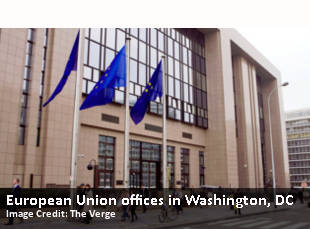
European Union offices in Washington, DCBy JOSEPH FITSANAKIS | intelNews.org |
America spies on the communications of German and other European Union agencies with the same intensity it spies on China and Iraq, documents show. German newsmagazine Der Spiegel aired these claims on Sunday, based on documents it said it obtained from American whistleblower Edward Snowden. Snowden, a former technical expert with the Central Intelligence Agency, remains holed up inside the transit section of Moscow’s Sheremetyevo International Airport, as Russian authorities have rejected repeated requests by Washington to extradite him to the US. According to Spiegel, American intelligence operatives placed interception equipment in the offices of the European Union’s representation in Washington, DC, before infiltrating the building’s computer network. Similar methods were aimed at the EU’s official representation to the United Nations in New York, and even in Brussels, Belgium, where the EU is headquartered. In a separate article, also published on Sunday, Der Spiegel said the National Security Agency, America’s foremost communications interception agency, monitors data from over half a billion communications exchanges taking place in Germany each month. The data is derived from telephone calls, emails, mobile text messages, and even chat transcripts, said the newsmagazine. The information appears to suggest that United States communications intelligence agencies are far more active in Germany than in any other of the EU’s 28 member states. Late on Sunday, a spokeswoman at the Office of the German Federal Prosecutor told Spiegel that the question of whether German citizens’ rights have been violated by illegal American intelligence activities is currently being looked at, and that “criminal charges” relating to the spying revelations “appear likely”. Read more of this post

Australia fears Asia backlash over PRISM surveillance revelations

David IrvineBy JOSEPH FITSANAKIS | intelNews.org |
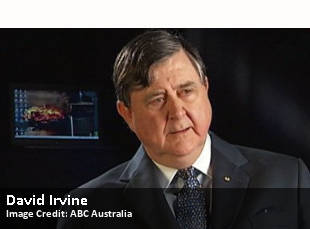
The government of Australia is concerned that American whistleblower Edward Snowden may leak classified information that could damage Australia’s relations with its Asian neighbors, including China and Malaysia. Early this month, Snowden, a former technical assistant for the United States Central Intelligence Agency (CIA), disclosed the existence of PRISM, a clandestine electronic surveillance program operated by the US National Security Agency (NSA). Information provided by Snowden to British newspaper The Guardian suggests that Washington routinely shares PRISM intelligence with Canada, New Zealand, the United Kingdom and Australia. These four countries, along with the United States, are signatories to the so-called UKUSA agreement, a multilateral accord for cooperation in signals intelligence (SIGINT) collection, which was established secretly in 1946. Australian media reported on Wednesday that the Australian Parliament’s Joint Committee on Intelligence and Security had been briefed by senior intelligence officials on Australia’s role in PRISM. The Sydney Morning Herald said that David Irvine, Director of the Australian Security Intelligence Organisation, and Ian McKenzie, who heads Australia’s Defence Signals Directorate, were among those who briefed the parliamentary Committee. Its members were reportedly told that the disclosures about PRISM were likely to damage Canberra’s relations with several Asian countries, in ways that are difficult to predict. One unidentified Australian intelligence official told The Herald that Snowden had “very wide access” to classified information held by the NSA, and that some of it probably includes “much detail of communications intelligence cooperation between the US and Australia”. One source went as far as to say that Snowden’s disclosures have already “damaged […] Australia’s intelligence capabilities”. Read more of this post

Snowden flees to Russia despite US passport revocation

Edward SnowdenBy JOSEPH FITSANAKIS | intelNews.org |
An American former intelligence contractor, who leaked classified information about intelligence operations, was able to leave Hong Kong for Russia on Sunday, despite having his United States passport revoked. Earlier this month, Edward Snowden, a former technical assistant for the Central Intelligence Agency, disclosed the existence of PRISM, a clandestine electronic surveillance program operated by the US National Security Agency (NSA). Shortly before leaking information about US intelligence operations to the world’s media, Snowden traveled to Hong Kong, a territory under the control of the People’s Republic of China. Last week, Washington charged Snowden, a self-described whistleblower, under the Espionage Act, and revoked his American passport, in an attempt to prevent him from leaving Hong Kong. But reports emerged on Sunday that Snowden had boarded an Aeroflot flight from Honk Kong to Russian capital Moscow, despite the revocation of his American passport. US authorities claim that Snowden’s transfer to Moscow occurred after Washington revoked his American passport, which raises the question of how the former CIA employee was able to exit Chinese territory. Several reports suggest that Snowden was accompanied by “unidentified diplomats” as he left Hong Kong for Moscow. Previously, the US had applied considerable diplomatic pressure on China, requesting Snowden’s extradition. But Hong Kong allowed the American fugitive to board a plane to Moscow, saying it had been given “no legal basis to restrict Mr. Snowden from leaving”. Read more of this post

Analysis: PRISM revelations harm US political, financial interests

NSA headquartersBy JOSEPH FITSANAKIS | intelNews.org |
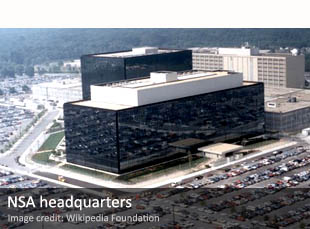
Ever since June 6, when Edward Snowden, a former United States Central Intelligence Agency (CIA) technician, exposed a vast communications spying system called PRISM, observers have focused on the ramifications of this controversy inside America. But in an excellent analysis written for ComputerWorld magazine’s New Zealand edition, Taylor Armerding points out that Snowden’s revelation could result in extensive international blowback for the United States, in both the political and economic realms. Armerding quotes Toronto University political science professor Ron Deibert, who argues that this latest revelation of massive communications interception activity by the National Security Agency (NSA) carries with it “unintended consequences […] that will undermine US foreign policy interests”. Deibert points out that the spy scandal has the potential to undercut America’s role and influence in global Internet governance. In the words of renowned security expert Bruce Schneier, many around the world are beginning to view the US as “simply too untrustworthy to manage the Internet”. Even policymakers and ordinary users friendly to Washington are worried about what they perceive as the “huge disadvantages” of their dependence on US-managed Internet networks that host the content of social media sites, cloud computing databases, or telecommunications exchanges, says Deibert. But the biggest potential damage to US interests, argues Armerding, is not political, but economic. “It is not just personal information that is being swept into the NSA’s massive databases”, he notes; “it is corporate data as well”. Indeed, the vast foreign and domestic spying represented by PRISM poses a direct threat to the global competitiveness of the American technology sector. Read more of this post

Swiss parliament halts US tax deal following CIA espionage claims

Swiss National Council chamberBy JOSEPH FITSANAKIS | intelNews.org |
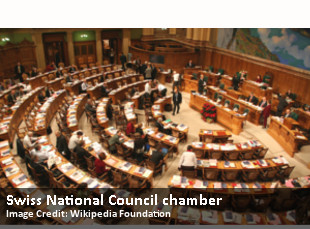
The lower house of the Swiss parliament has voted to stop considering a legislation designed to help the United States identify tax evaders, just days after a former Central Intelligence Agency (CIA) employee revealed an espionage operation targeting a Swiss bank executive. The legislation, which was drafted by the government of Switzerland, is aimed at addressing demands by Washington for Swiss banks to turn over to US authorities the identities of American tax dodgers. It is believed that tens of thousands of wealthy Americans manage to evade their tax obligations each year by exploiting strict Swiss banking privacy laws, which effectively shield them from US internal revenue authorities. The legislation has already been approved by the upper house of the Swiss Federal Assembly (the Council of States), but it needs to be cleared by the lower house (the National Council) before it can be officially enacted. Interestingly, the legislation was halted in the lower house just days after American intelligence whistleblower Edward Snowden revealed a US espionage operation aimed at recruiting a Swiss bank official. Snowden, a former technical assistant for the CIA, disclosed the existence of PRISM, a clandestine national security electronic surveillance program operated by the United States National Security Agency (NSA). In addition to PRISM, Snowden, 29, spoke about a CIA operation in 2007, when he was allegedly stationed under diplomatic cover at the CIA station in Geneva, Switzerland. Read more of this post

Secretive US cyber unit has been spying on China for 15 years

NSA headquartersBy JOSEPH FITSANAKIS | intelNews.org |
A secretive cyberattack unit within the United States National Security Agency (NSA) has been engaged in protracted offensive cyberespionage operations against China for nearly 15 years. The revelation, made this week by veteran NSA watcher Matthew M. Aid, appears to confirm recent allegations made by Chinese government officials that Beijing’s secrets come under regular attack by US government-sponsored hackers. It also agrees with claims made by several intelligence observers, including this blog, that America’s cyber-security posture is not purely defensive. According to Aid’s article, published this past Monday in Foreign Policy, China’s allegations that it has been the target of sustained cyberespionage attacks by the US “are essentially correct”. Citing “a number of highly confidential sources”, Aid alleges that the NSA maintains a substantial “hacker army”. These ‘cyberwarriors’ allegedly operate under the NSA’s Office of Tailored Access Operations, known inside NSA simply as TAO. Its personnel is said to have successfully penetrated the Chinese government’s telecommunications networks and servers since the late 1990s, generating “some of the best and most reliable intelligence information” gained by Washington. It does so through computer network exploitation (CNE) techniques, such as surreptitious hacking, password exploitation, and even by compromising Chinese network security technicians. Aid alleges that TAO works closely with the Central Intelligence Agency (CIA) and the Federal Bureau of Investigation (FBI), through a small “clandestine intelligence gathering unit”. The latter employs CIA and FBI operatives who perform what are known as “off-net operations”, a term that refers to physical break-ins of Chinese and other foreign diplomatic facilities, in order to compromise the security computer hardware. Read more of this post

News you may have missed #842 (world reaction to Snowden leak)

Edward SnowdenBy IAN ALLEN | intelNews.org |
►►Chinese media focus on Snowden leaks. The front pages of Chinese state media were covered Thursday with the allegations of ex-CIA employee Edward Snowden, who says the US government has been hacking computers in China for years. Speaking to media in Hong Kong, where he is currently staying, Snowden said the US has been hacking computers in Hong Kong and mainland China since 2009. He said targets include public officials, businesses and the Chinese University of Hong Kong. Those claims by Snowden were the top story on most of China’s major news portals on Thursday
►►Switzerland furious about Snowden’s charge that CIA spies on Swiss banks. One of the many lurid details in The Guardian’s remarkable interview with NSA whistleblower Edward Snowden was his account of what initially prompted him to leak: namely a CIA tour in Switzerland, where CIA officers recruited Swiss banking officials. The Snowden disclosure could not come at a worse time for the Swiss government, which is trying to convince parliament to back its emergency plan that would allow Swiss banks to turn over data on tax evaders to the US government.
►►Is Russia considering giving asylum to Snowden? Asked if the 29-year-old could claim asylum from Russia, a spokesman for President Vladimir Putin told the newspaper Kommersant: “If such a request is received, it will be considered”. Any attempt by the Kremlin to give refuge to Mr Snowden, amid calls for his prosecution under the US Espionage Act, is likely to infuriate the White House and provoke a major diplomatic standoff.

News you may have missed #841 (Snowden leak analysis)

Edward SnowdenBy IAN ALLEN | intelNews.org |
►►US officials defend spy programs as safeguards against terror. Intelligence officials sought to convince US House lawmakers in an unusual briefing that the government’s years-long collection of phone records and Internet usage is necessary for protecting Americans —and does not trample on their privacy rights. The parade of FBI and intelligence officials who briefed the entire House on Tuesday was the latest attempt to soothe outrage over NSA programs which collect billions of Americans’ phone and Internet records.
►►Some in US intelligence see Chinese behind Snowden leak. Former CIA officer Bob Baer told CNN that some US intelligence officials “are seriously looking at [the revelations made by Edward Snowden] as a potential Chinese covert action. Hong Kong is controlled by Chinese intelligence”, Baer told CNN Sunday evening. “It’s not an independent part of China at all. I’ve talked to a bunch of people in Washington today, in official positions, and they are looking at this as a potential Chinese espionage case”.
►►Leak highlights risk of outsourcing US spy work. The explosive leak uncovering America’s vast surveillance program highlights the risks Washington takes by entrusting so much of its defense and spy work to private firms, experts say. Edward Snowden, the 29-year-old man whose leak uncovered how spy agencies sift through phone records and Internet traffic, is among a legion of private contractors who make up nearly 30 percent of the workforce in intelligence agencies. From analyzing intelligence to training new spies, jobs that were once performed by government employees are now carried out by paid contractors, in a dramatic shift that began in the 1990s amid budget pressures.

Ex-CIA technician who leaked Verizon court order comes forward

Edward SnowdenBy JOSEPH FITSANAKIS | intelNews.org |
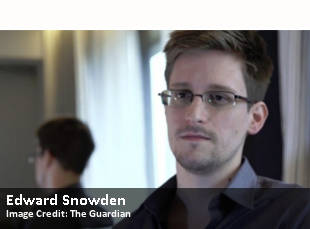
Last week, British newspaper The Guardian revealed a secret court order that enables the United States government to collect the telephone records of millions of customers of Verizon, one of America’s largest cellular phone service providers. On the morning of Sunday, June 9, the individual responsible for leaking the secret court order came forward on his own volition. He is Edward Snowden, a former technical assistant for the US Central Intelligence Agency (CIA). The 29-year-old computer expert, who has been working for the National Security Agency (NSA) for the last four years, told The Guardian that he decided to leak the injunction because he felt it posed “an existential threat to democracy”. He added that he was not motivated by money in disclosing the document. Were he after money, he said, he “could have sold these documents to any number of countries and gotten very rich”. In a video published on The Guardian’s website, Snowden told the paper that his disillusionment with America’s “federation of secret law, unequal pardon and irresistible executive powers” began even before 2007, when he was stationed under diplomatic cover at the CIA station in Geneva, Switzerland. He finally decided to act three weeks ago, he said, after careful consideration of the ramifications of his decision for his life and career.

Read more of this post

News you may have missed #840

John KiriakouBy IAN ALLEN | intelNews.org |
►►S. Korea prosecutors might seek ex-spy chief’s arrest. Prosecutors said Monday they will decide sometime this week whether to seek an arrest warrant against Won Sei-hoon, who headed South Korea’s National Intelligence Service (NIS) for about four years until early this year. He is suspected of ordering agents to post a slew of politically sensitive comments on the Internet in order to sway public opinion in favor of the ruling party candidate prior to the December 19 national election. Won, who headed the NIS under former President Lee Myung-bak, has been barred from leaving the country pending investigation.
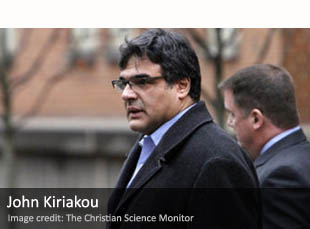
►►CIA self-described whistleblower writes about life in prison. In 2012, former CIA officer John Kiriakou pleaded guilty to violating the Intelligence Identities Protection Act. In January of this year, he was sentenced to 30 months in a low security prison in Loretto, Pennsylvania. In a letter released by his lawyer, Kiriakou describes his day-to-day life behind bars, from his own tiny cell to an almost anthropological study of the lunchroom and the relatively rare prison fights.
►►Comment: End the spy budget secrecy in Israel. Since the establishment of the Israeli state, the security establishment has enjoyed confidentiality with regard to the details of its budget, justified by the need to keep secrets from enemy intelligence services. This lack of transparency has impaired public scrutiny of security expenditure, which represents a large chunk of the Israeli economy. When the watchful eye is distant, the temptation is great to inflate job slots, exaggerate salary increments and hike up pension conditions.

News you may have missed #838 (analysis edition)

Predator droneBy IAN ALLEN | intelNews.org |
►►Delisle spy case barely caused ripples between Canada and Russia. The arrest of Jeffrey Delisle, a Canadian naval officer spying for Russia, did little to discourage Canada from welcoming that country’s defense chief to a Newfoundland meeting of Arctic nations last year. The visit underscored the puzzling lengths to which the Canadian government went to carry on a business-as-usual relationship with the one-time Cold War adversary. Most other planned military contacts between the two nations last year —including participation in the anti-terrorism exercise Operation Vigilant Eagle— also remained curiously normal.
►►Don’t believe the hype on Chinese cyberespionage. Within a day of each other, The Washington Post published a shocking list of US defense programs whose designs have reportedly been stolen by Chinese cyberattacks, and ABC news said the plans for Australia’s spy headquarters were also stolen by Chinese hackers. It makes China sound like a secret-sucking cyber espionage machine, but is that really the case? The knee-jerk interpretation to this disclosure (and others) is that China is a powerhouse of cyber espionage capable of stealing whatever secrets they want and that the US is powerless to stop them. This seems very unlikely.
►►US Predator drone program quietly shifted from CIA to DoD. The White House has quietly shifted lead responsibility for its controversial armed drone program from the CIA to the Defense Department. In a landmark speech last week at National Defense University in Washington, US President Barack Obama offered some clues into the status of the program, opaquely signaling it will now primarily be conducted by the United States military.