Ex-CIA officer John Kiriakou’s indictment made simple

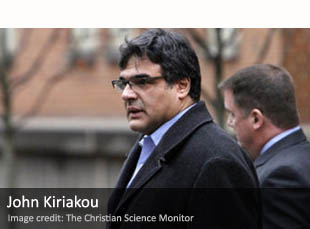
John KiriakouBy JOSEPH FITSANAKIS | intelNews.org |
On Monday, the United States Department of Justice charged former Central Intelligence Agency officer John Kiriakou with leaking classified government information to reporters and deceiving a CIA review board. An FBI press release accused Kiriakou of repeatedly providing secrets to journalists between 2007 and 2009, and said the former CIA officer would be tried under the Espionage and the Intelligence Identities Protection Acts. The latter forbids the disclosure of the identities of undercover intelligence personnel, which is precisely what Kiriakou is accused of having done. An American of Greek descent, Kiriakou joined the CIA in 1990 and did tours in Greece, Pakistan, and elsewhere, before retiring in 2004. While in Pakistan he commanded the CIA team that helped capture senior al-Qaeda logistician Abu Zubaydah. In 2010 he published a memoir titled The Reluctant Spy.  Two years earlier, Kiriakou had made international headlines by becoming the first US intelligence official to publicly acknowledge that a terrorism suspect —in this case Zubaydah— had indeed been waterboarded while in CIA custody. Speaking on ABC News, the former CIA officer recognized that waterboarding was torture, but said it was “necessary” in the “war on terrorism”. In subsequent interviews, however, he questioned whether any actionable intelligence had been extracted from waterboarding, and opined that torturing terrorism detainees “caused more damage to [America’s] national prestige than was worth it”. Kiriakou’s skepticism, at a time when the incoming President, Barack Obama, publicly condemned waterboarding as torture, worried the CIA. Eventually, the Obama Administration backed down on its public proclamations about torture, and ruled out criminal prosecutions of CIA personnel. But he Agency didn’t forget Kiriakou’s role. Read more of this post

News you may have missed #669

Raoul WallenbergBy IAN ALLEN | intelNews.org |

►►UK admits using fake rock to spy on Russians. Britain has admitted for the first time that it was caught spying when Russia exposed its use of a fake rock in Moscow to conceal electronic equipment. Russia made the allegations in January 2006, but Britain has not publicly accepted the claims until now. Jonathan Powell, then Prime Minister Tony Blair’s chief of staff, told a BBC documentary it was “embarrassing”, but “they had us bang to rights”. He added: “clearly they had known about it for some time”.
►►New book examines forgotten CIA officer Jim Thompson. The CIA’s longtime man in Southeast Asia, Jim Thompson, fought to stop the agency’s progression from a small spy ring to a large paramilitary agency. Now a new book, The Ideal Man: The Tragedy of Jim Thompson and the American Way of War, by Joshua Kurlantzick, examines the life and exploits of the man known as “Silk King” Jim.
►►Sweden to probe fate of WWII hero Wallenberg. Raoul Wallenberg (pictured) was a shrewd businessman who, in the summer of 1944, was posted as Sweden’s ambassador in Budapest, Hungary. He was also an American intelligence asset, having been recruited by a US spy operating out of the War Refugee Board, an American government outfit with offices throughout Eastern Europe. He was abducted by Soviet intelligence officers in the closing stages of World War II, and his fate is one of the unsolved mysteries of 20th century espionage. Now Sweden says it will open a new probe into his disappearance.

News you may have missed #668

John McLaughlinBy IAN ALLEN | intelNews.org |

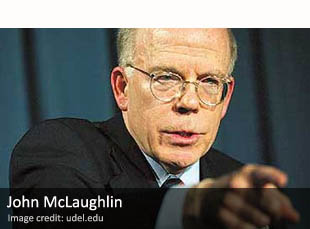
►►Ex-CIA chief says war against Iran would be ‘very bad option’. Former CIA acting director John McLaughlin (pictured) said the United States can engage Iran through diplomacy, sanctions or military action, but warned the latter choice “would be a very bad option”. Speaking during a panel discussion in Washington Tuesday, McLaughlin said direct military action with Iran could grow to involve Hezbollah, the militant group based in Lebanon.
►►US warns Israel on Iran strike. US defense leaders are increasingly concerned that Israel is preparing to take military action against Iran, over US objections, and have stepped up contingency planning to safeguard US facilities in the region in case of a conflict. The US wants Israel to give more time for the effects of sanctions and other measures intended to force Iran to abandon its perceived efforts to build nuclear weapons.
►►Iran tightens security for scientists after killing. The nature of the extra security was not disclosed, but it was reported a day after Iran’s Parliament speaker, Ali Larijani, an outspoken promoter of Iran’s nuclear independence, said that investigators had identified and detained an unspecified number of suspects in the assassination of Mostafa Ahmadi Roshan, the deputy director at the Natanz enrichment site.

US admits African war crimes suspect Charles Taylor was CIA agent

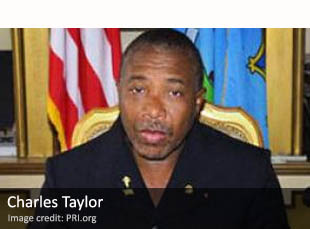
Charles TaylorBy JOSEPH FITSANAKIS | intelNews.org |

Editor’s note: Since publishing this story, The Boston Globe issued a correction, which includes the following: “This story drew unsupported conclusions and significantly overstepped available evidence when it described former Liberian President Charles Taylor as having worked with US spy agencies as a “sought-after source’’ […]. The Globe had no adequate basis for asserting otherwise and the story should not have run in this form”.

Ever since his 2006 arrest for war crimes, Liberia’s former President, Charles Taylor, has consistently claimed that he was an agent of the United States Central Intelligence Agency. Now declassified US government documents have officially confirmed that Taylor was indeed an agent of the CIA and the US Defense Intelligence Agency for several decades. The 63-year-old, who ruled his West African homeland from 1997 to 2003, is currently being tried at the United Nations Court in The Hague on multiple counts of civilian murders, rapes, and deploying underage soldiers during a brutal civil war in neighboring Sierra Leone. Rumors that Taylor was being protected by Washington started surfacing in 2003, after he left Liberia and was given protection in US-allied Nigeria, despite his indictment by the UN Special Court for Sierra Leone. In July 2009, intelNews reported Taylor’s claim that his 1985 “escape” from the Plymouth County maximum security Correctional Facility in Massachusetts, which allowed him to return to Liberia and take over the country through a military coup, took place with US government assistance. His persistent claims led The Boston Globe newspaper to file a Freedom of Information Act (FOIA) request, which has resulted in the declassification of nearly 50 separate documents covering “several decades” of Taylor’s work for the CIA and the DIA. The documents confirm that both agencies employed Taylor as an agent beginning in the early 1980s, long before he became Liberia’s ruler. But the FOIA release does not contain details of Taylor’s work for US intelligence, in an alleged effort to “protect intelligence sources and methods” and so as not to “harm national security”, according to The Boston Globe. Read more of this post

News you may have missed #667

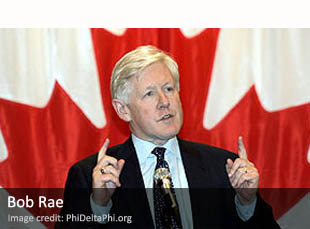
Bob RaeBy IAN ALLEN | intelNews.org |
►►Canadian authorities spied on political leader. The Royal Canadian Mounted Police spied on Bob Rae, current leader of Canada’s Liberal Party, when he was a student, and likely amassed a personal dossier on him, newly declassified documents reveal. Really, is there anyone in Canada who has not been spied on by the RCMP?
►►US intel community says Taliban want Afghanistan back. The Associated Press cites “two current and one former US official” who said anonymously that the classified Afghan National Intelligence Estimate declares the Afghanistan War “at a stalemate“, and says NATO security gains are “far outweighed by corruption at all levels of Afghan government”.
►►Canadian naval officer charged with espionage. A member of the Royal Canadian Navy has become the first person charged under the country’s post-9/11 secrets law for allegedly passing protected government information to an unknown foreign body. Sub-Lt. Jeffrey Paul Delisle, 40, was charged Monday under the Security of Information Act, which came into effect in 2001.

Bush “did nothing” about Mossad using US passports to recruit terrorists

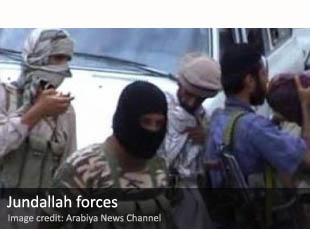
Jundallah ForcesBy JOSEPH FITSANAKIS | intelNews.org |
Current and former American intelligence officials have accused Israeli spy operatives of posing as US citizens to recruit members of a Pakistani terrorist group in a covert war against Iran. In an explosive exposé, the respectable US-based journal Foreign Policy has revealed that officers of Israel’s Mossad intelligence agency used forged US passports to pose as American personnel of the Central Intelligence Agency. They used their fake American identities to contact members of Pakistan-based terrorist group Jundallah, which is responsible for numerous brutal strikes against civilian targets in Iran. Jundallah (soldiers of God) is an extremist militant organization that claims to be fighting for the rights of Sunni Muslims in Iran. Most of its members belong to the Baluch ethnic group, which is concentrated along the Iranian-Pakistani border. The Foreign Policy article cites interviews conducted over the past 18 months with six anonymous US government officials, including two serving intelligence officers and at least two others who “have monitored Israeli intelligence operations from senior positions inside the US government”. They told the journal that, in 2007, during the concluding years of the administration of President George W. Bush, the CIA discovered that the Mossad was using forged US passports and US currency to court and fund Jundallah operatives, in a series of secret meetings in London, England. One US government source told Foreign Policy that American officials “were stunned by the brazenness” of the Mossad, saying: “it’s amazing what the Israelis thought they could get away with […]. They apparently didn’t give a damn what we thought”. A retired CIA officer told the journal that Agency analysts drafted official memoranda that made their way “up the US intelligence chain of command”, eventually reaching the White House. The CIA officer added that President Bush “went absolutely ballistic” when briefed on the Mossad operation. Read more of this post

News you may have missed #665

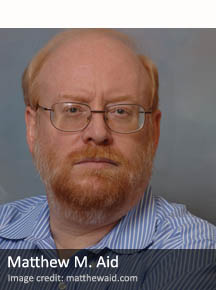
Matthew M. AidBy IAN ALLEN | intelNews.org |
►►Joseph Fitsanakis interviewed on ABC Radio National. IntelNews‘ own Dr Joseph Fitsanakis was interviewed on Friday by reporter Suzanne Hill, for ABC Radio National’s flagship evening news program ‘PM‘. In the interview, which was about the assassination of Iranian nuclear scientist Mostafa Ahmadi-Roshan, Fitsanakis points the finger at the Mossad, and explains why he doesn’t believe the United States had anything to do with the killing. You can listen to the interview here. The transcript is here.
►►India releases diplomat jailed for spying. Last April, Madhuri Gupta, second secretary at the Indian high commission in Islamabad, Pakistan, was arrested for working for Pakistan’s ISI spy agency. She apparently had a “relationship of personal affection” with an aide of her Pakistani handler. On Tuesday, she was granted bail by an Indian court, after 21 months in prison.
►►Matthew Aid interviewed about his new book. Matthew M. Aid, author of The Secret Sentry, has written a new book, Intel Wars: The Secret History of the Fight Against Terror. You can listen to an extensive interview he gave on January 11 on NPR’s Fresh Air, in which Aid outlined his view that “overlapping jurisdictions, bureaucratic policies and a glut of data have crippled the intelligence community in its war against would-be terrorists”.
►►British spies to be cleared on torture allegations. The British government, including Scotland Yard and the Crown Prosecution Service, has just finished a four-year inquiry into the country’s security and intelligence services, sparked by allegations by terrorist suspects released from Guantanamo Bay, that they were severely tortured. The results have not yet been announced. But British media report that, according to information from trusted sources, the inquiry has concluded that (…drumroll…) there is no evidence that officers from either MI5 or MI6 were aware of the mistreatment of prisoners.

US Pentagon computers cannot be protected, says NSA head

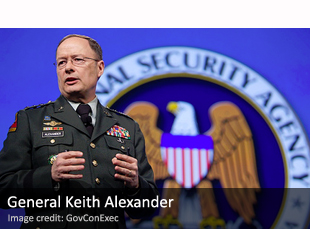
General Keith AlexanderBy JOSEPH FITSANAKIS | intelNews.org |
The man in charge of America’s most powerful intelligence agency says the United States Department of Defense computer network is so disordered and chaotic that it cannot be defended from cyberattacks. General Keith Alexander directs the National Security Agency, America’s wealthiest intelligence institution, which expert James Bamford has described as “the world’s most powerful spy agency”. As America’s foremost signals intelligence agency, the NSA is largely responsible for protecting the integrity, security and cohesion of the country’s public and restricted military communications networks, including computer networks. To do so, it consumes an annual budget that dwarfs those of most other intelligence agencies, and employs entire armies of computer security experts and other professionals. But, according to General Alexander, who also heads the US Pentagon’s new Cyber Command, there is not much his army of cyberwarriors can do to either prevent or repel possible large-scale cyberattacks directed against the DoD’s computer networks. The NSA chief was speaking yesterday at the International Conference on Cyber Security, a high-profile gathering of experts at New York’s Fordham University. He told the conference, which is sponsored by the Federal Bureau of Investigation, that the Pentagon’s computer infrastructure is too anarchic and chaotic to be successfully defended from cyberespionage, cyberterrorism, or cyberwarfare assaults. He said the DoD computer system consists of so many interconnected networks —over 15,000 in all— that the NSA “can’t see them all [let alone] defend them all”. As a result, said Alexander, the DoD’s current communications infrastructure “is indefensible”. Read more of this post

Comment: Drawing Careful Conclusions from the Iran Assassination

Mostafa Ahmadi-Roshan's carBy JOSEPH FITSANAKIS* | intelNews.org |
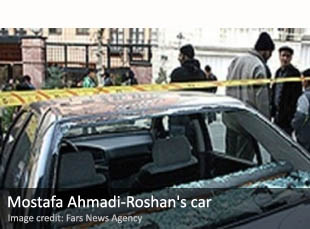
The body of Iranian academic Mostafa Ahmadi-Roshan was still warm when officials in Tehran began accusing Israel and the United States of having planned his assassination. Leveling such accusations without offering adequate proof is certainly unstatesmanlike; but even hasty conclusions can be logical, and even sworn enemies of the Iranian government would find it difficult to point at other possible culprits. Keeping in mind that, at this early stage, publicly available information about the assassination remains limited, are there conclusions that can be drawn with relative safety by intelligence observers? The answer is yes. Roshan, 32, was a supervisor at Iran’s top-secret Natanz fuel enrichment plant. His scientific specialty was in the technology of gas separation, the primary method used to enrich uranium in Iran’s nuclear energy program. His assassination, which took place in broad daylight amidst Tehran’s insufferable morning traffic, was a faithful reenactment of the attacks that killed two other Iranian nuclear scientists in November of 2010. A motorcycle, practically indistinguishable from the thousands of others that slide maniacally between cars in the busy streets of the Iranian capital, made its way to the car carrying Ahmadi-Roshan. As the driver kept his eyes on the road, the passenger skillfully affixed a magnetic explosive device to the outside surface of the targeted vehicle, next to where Ahmadi-Roshan was sitting. By the time the blast killed the scientist, as well as the car’s driver, and injured a third passenger, the motorcyclists were nowhere to be found. Two-and-a-half hours later, when the report of Ahmadi-Roshan’s assassination was making its way through the newsroom of Iran’s state-owned Fars news agency, the assassins were making their way to Dubai, Oman, Qatar, or various other destinations around the Middle East. Read more of this post

News you may have missed #664

Hakan FidanBy IAN ALLEN | intelNews.org |
►►Iran nuclear defector’s family spared deportation from Canada. Family members of a top defector who worked for Iran’s nuclear energy program have been temporarily spared deportation from Canada, after claiming they will be tortured by Iran’s secret police. The defector, his daughter and mother, have not been identified in media reports. The names of their lawyers were not made public either.
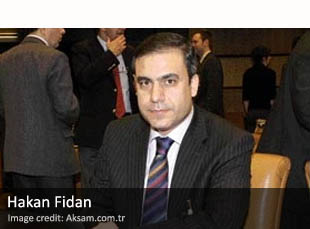
►►Turkish spy services to be “among world’s largest”. Turkey commemorates the 85th anniversary of its National Intelligence Organization, known as MİT. The agency’s undersecretary, Hakan Fidan (pictured), told Turkish media that within the next two to three years, they aim to become one of the largest intelligence services in the world, and that they are “synthesizing the CIA-FBI model”.
►►Analysis: New rules for CIA drones in Pakistan. The current pause in CIA drone strikes in Pakistan (55 days and counting) is now the longest during Barack Obama’s presidency. The break in drone strikes was enforced by Islamabad after NATO killed 24 Pakistani soldiers in November. The break coincided with a major policy reappraisal by Washington, and it has given Islamabad room to refocus on its own strategic needs. In the coming weeks CIA drone attacks are expected to resume in Pakistan. But according to leaks and hints, there are likely to be far fewer strikes, and far fewer casualties.

US expels Venezuelan diplomat over cyberespionage allegations

Livia Acosta NogueraBy JOSEPH FITSANAKIS | intelNews.org |
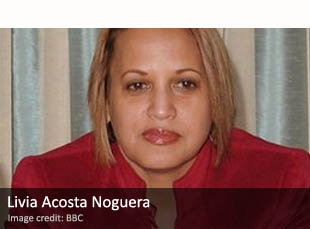
The United States has ordered the immediate expulsion of the head of the Venezuelan consulate in Miami, over allegations that she helped coordinate a cyberattack against US government targets in 2008. The diplomat, Livia Acosta Noguera, was declared “persona non grata” (an unwelcome person) by the US Department of State last Friday, and was given 72 hours to leave the country. State Department officials refused to discuss the reasons for Acosta’s expulsion. But the BBC said that the expulsion order was prompted by a letter sent last month to US Secretary of State Hillary Clinton by four members of the US Congress. The letter’s authors reportedly raised concerns about a documentary aired in December by Univision, a US-based Spanish-language broadcaster, titled “The Iranian Threat”. According to reports, the documentary alleged that Acosta was part of a multinational team of diplomats from Venezuela, Iran and Cuba, who, while stationed in Mexico in 2008, helped orchestrate a cyberespionage operation against US targets. The alleged operation was aimed at computer servers belonging to the US government computer, including some at the Department of Defense, the National Security Agency, the Central Intelligence Agency, and the White House. Computer servers at several nuclear power plants across the US were also reportedly targeted. The documentary exposé, which later appeared in print in US-based Spanish-language newspaper El Nuevo Herald, included allegations that Acosta is in fact a member of the Bolivarian Intelligence Service, Venezuela’s foremost external intelligence agency. Read more of this post

Did cell phone companies help India spy on the United States?

Page from the Lords of Dharamraja document leakBy JOSEPH FITSANAKIS | intelNews.org |
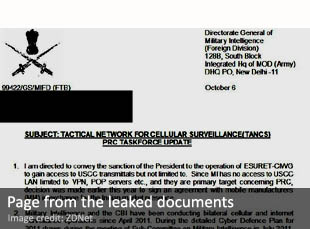
Leaked documents acquired by a computer hacker collective appear to show that international cell phone manufacturers helped Indian intelligence agencies spy on the United States, in return for access to the Indian cellular phone market. The documents, which are written in English, were posted online on Saturday by a group of Indian hackers calling themselves Lords of Dharamraja. In a statement, the group said they obtained the documents by breaking into the computer servers of Indian Military Intelligence, after managing to acquire the source code of Symantec Corporation, makers of Norton antivirus software. According to the documents, the companies arm-twisted to assist Indian intelligence agencies to spy on the US included Apple, Nokia, and Research in Motion, the company that builds BlackBerry devices. The documents also appear to show that Indian intelligence agencies were particularly eager to spy on the United States-China Economic and Security Review Commission. Established by the US Congress in 2000, the Commission is tasked with researching and reporting on the national security implications of bilateral trade between the US and China. Allegedly, the cellular telephone makers provided Indian intelligence agencies with backdoor access to personal phones used by Commission members. These back doors allegedly allowed the Indian Military Intelligence Directorate and India’s Central Bureau of Investigation to spy on Commission members beginning in April of 2011. Read more of this post

News you may have missed #661

Reza KahliliBy IAN ALLEN | intelNews.org |
►►Britain increases pay for key intelligence staff. Having seen many of its key intelligence staff lured away by tech heavyweights like Google and Microsoft, the UK government is apparently offering bonuses and payouts to key intelligence staff to ensure they don’t leave their jobs at the Government Communication Headquarters (GCHQ). The UK Cabinet Office has stated that the bonuses to be paid to its key staff have been already given the green light.
►►Ex-CIA spy sees split in Iran’s Revolutionary Guards. Reza Kahlili (codenamy WALLY) is the pseudonym used by an Iranian defector to the US, who claims to have worked as a CIA agent in the 1980s and early 1990s. Kahlili (pictured), who says he was a member of the Islamic Revolutionary Guard Corps (IRGC), the ideological protectors of Iran’s 1979 Islamic Revolution, argues that a serious split is developing within the IRGC, with one faction favoring the overthrow of the government.
►►A rare look at Fort Bragg’s Special Warfare Center. The US Special Warfare Center at Fort Bragg is a CIA-approved paramilitary training facility, aimed at members of the US Army Green Berets, Navy SEALs and Marine Corps special operators. The piece claims –rather unconvincingly– that the Center is “an illustration of how special operations and intelligence forces have reached an easier coexistence, after early clashes where CIA officers accused the military operators of ineptly trying to run their own spy rings overseas without State Department or CIA knowledge”.

News you may have missed #659

China and PakistanBy IAN ALLEN | intelNews.org |
►►China wants military bases in Pakistan. An Indian intelligence report leaked in the country’s press appears to reveal that China and Pakistan are in secret negotiations to allow Beijing to build military bases on Pakistani soil. The report states that “China’s desire for a military presence in Pakistan has been discussed by the political and military leadership of that country in the recent months. China’s deepening strategic penetration of Pakistan and joint plans to set up […] oil pipelines/rail/roads as well as naval and military bases are a matter of concern”.
►►Turkey ‘almost shot down’ Israeli spy drone. An Israeli drone flying over Turkey was nearly intercepted by Turkish aerial defense forces, an Istanbul-based media outlet reported on Tuesday. According to the report, “by the time the order [to shoot down the Israeli drone] was given, [it] had already left the area”. A spokesperson for the Israel Defense Forces refused to comment on the Turkish report.
►►Analysis: Global apparatus for drone killing emerges under Obama. “The Obama administration’s counterterrorism accomplishments are most apparent in what it has been able to dismantle, including CIA prisons and entire tiers of al-Qaeda’s leadership. But what the administration has assembled, hidden from public view, may be equally consequential”. Excellent analysis by Greg Miller, who argues that “the rapid expansion of the drone program has blurred long-standing boundaries between the CIA and the military”.

US gave N. Ireland police weapons, spy equipment, despite Congress ban

Royal Ulster Constabulary forces in the 1980sBy JOSEPH FITSANAKIS | intelNews.org |
Declassified documents show that thousands of American-made weapons, as well as spy equipment, ended up in the hands of Northern Ireland’s police force in the 1980s, despite a strict ban enacted by Congress. The ban was passed in 1979, following strong pressure by organized groups in the Irish-American community. The latter accused Northern Ireland’s police, known as the Royal Ulster Constabulary (RUC), of severe human rights violations and systematically excluding Catholic recruits. But internal government documents released in Northern Ireland this week, reveal that thousands of pieces of American-made weaponry, as well as surveillance equipment, continued to get into the hands of the RUC, despite the official ban. According to the documents, which were released under the UK’s 30-year declassification rule, the RUC eventually managed to collect all 6,000 Ruger revolvers it had ordered from American manufacturers before 1979, when the Congressional ban was enacted. The weapons continued to be shipped to Northern Ireland by way of “third-party suppliers”, who sent them secretly and in small quantities, so as not to arouse suspicion. The documents also state that the RUC was able to “receive [from the United States] some US equipment for surveillance work which is arguably more sensitive than guns”. The documents do not specify if the White House was aware that the Congressional ban against selling weapons to the RUC was being broken, or if the weapons were being surreptitiously smuggled by the British government, which hid the shipments from Washington. But The Belfast News Letter, which accessed the declassified documents, said it spoke to “one former senior RUC officer” who said that “the Reagan Administration was aware of the shipments” and had “turned a blind eye to the issue”. Read more of this post