Did Mossad kill German politician involved in Iran-Contra scandal?

Uwe Barschel

Uwe Barschel

By JOSEPH FITSANAKIS | intelNews.org |
Accusations of Israeli involvement in the suspicious death of a German politician have been revived, following new autopsy evidence revealed by a medical examiner. The case involves the death of Christian Democratic Union politician Uwe Barschel, who on October 11, 1987, was found dead in the bathtub of room 317 of the Beau-Rivage hotel in Geneva, Switzerland. His sudden death occurred less than a month after he was forced to resign from the post of Governor of West Germany’s Schleswig-Holstein state, following his involvement in a dirty-tricks campaign against his rival Björn Engholm, of Germany’s Social Democratic Party. Swiss authorities, based on an initial postmortem that revealed lethal levels of barbiturates in Barschel’s system, ruled the death a suicide. But now Dr Hans Brandenberger, who was one of the toxicological experts that examined Barschel, claims that he is possession of new evidence that points to murder as the cause of the German politician’s death. Read more of this post

Did FSB leak Russian double spy’s name to the media?

SVR seal

SVR seal

By JOSEPH FITSANAKIS | intelNews.org |
The revelation that a double agent betrayed the ten Russian deep-cover spies, who were arrested in the United States last summer, may have been leaked to the media as part of a turf war between two rival Russian spy agencies. On November 11, Russian newspaper Kommersant disclosed that a senior officer in Russia’s Foreign Intelligence Service (SVR) had defected to the United States shortly before the arrest of ten Russian deep-cover spies by the FBI, on June 27, 2010. The paper identified the alleged double agent as “Colonel Shcherbakov”, believed by veteran KGB officer Oleg Kalugin to be Aleksandr Vasilyevich Shcherbakov. The Kommersant disclosure was later confirmed by no other than Russian President Dmitry Medvedev. But who leaked Shcherbakov’s name to Kommersant, and why? According to Pavel Felgenhauer, military and intelligence correspondent for Russia’s Novaya Gazeta newspaper, the leak originated from within the Russian intelligence establishment. Specifically, Felgenhauer suggests that it was Russia’s Federal Security Service (FSB) that leaked the information to the media, in an attempt to score points against the SVR. Read more of this post

Israel intelligence source warns of West Bank collapse

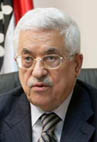
Mahmoud Abbas

Mahmoud Abbas

By JOSEPH FITSANAKIS | intelNews.org |
A senior source inside Israel’s intelligence community has warned that the continuing building of Israeli settlements in the Occupied Territories could cause the rapid collapse of the Fatah government in the West Bank. Speaking anonymously to the BBC, the intelligence official cautioned that Palestinian President Mahmoud Abbas, “is tired and fed up”, and that if he “continued to be humiliated” by Israel’s refusal to halt illegal settlement construction he might “step down and return home”. This would terminate the ongoing negotiations between Israel and Fatah, mediated by Washington, and could bring down the Fatah government in the West Bank, in a chaotic process that would ultimately “be a major setback for Israel”, said the official. Israeli settlements in East Jerusalem, the West Bank, and elsewhere, lack international recognition, and in recent years Israel has been pressured by its allies, including the United States, to stop residential expansion into the Palestinian Territories. Read more of this post

News you may have missed #451 (history edition)

News you may have missed #450

  • Nuke bomb material found in Georgia black market. Highly enriched uranium that could be used to make a nuclear bomb is on sale on the black market along the fringes of the former Soviet Union, according to evidence emerging from a secret trial in the Republic of Georgia.
  • CIA Director warns against leaks. Asserting that lives have been endangered and sources compromised by “a damaging spate of media leaks” in recent months, CIA Director Leon E. Panetta reminded the spy agency’s employees Monday that unauthorized disclosures of classified information “cannot be tolerated”.
  • US issues new unclassified information policy. The White House has issued an executive order to establish a uniform policy for handling “controlled unclassified information” (CUI), which is information that is restricted from disclosure because it involves personal privacy, proprietary data or law enforcement investigations not relating to national security.

News you may have missed #449

  • Damning report on CIA attack on missionary plane. US Central Intelligence Agency officers involved with a secret counternarcotics mission in the Peruvian jungle routinely violated agency procedures, tried to cover up their mistakes, and misled Congress immediately after a missionary plane was accidentally shot down in 2001, according to a blistering CIA internal report released on Monday.
  • Israeli legislators call on US to release Jewish spy. Members of the Israeli Knesset are calling on US President Barack Obama to pardon American-born spy Jonathan Pollard, having been jailed in a maximum-security facility since 1985. George Bush refused to pardon Pollard in the last days of his presidency.
  • Analysis: Britain’s MI6 operates a bit differently than CIA. “Like the CIA, MI6 has a website, but while the U.S. agency site is only in English, MI6’s is also in Arabic, Russian, French, Spanish and Chinese. Another sign of British sophistication: while the CIA site has games and quizzes for kids, the MI6 site gives short tests to allow potential recruits to assess their analytical and administrative skills”. Interesting comparative assessment by Walter Pincus.

US considering CIA targeted killings in Yemen

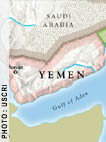
Yemen

Yemen

By JOSEPH FITSANAKIS | intelNews.org |
The White House is considering an unprecedented expansion of operations by the Central Intelligence Agency in Yemen, following last week’s foiled toner cartridge bomb plot. There are reports that the plot, which appears to have originated in Yemen, and was foiled through a last-minute tip from Saudi intelligence, may tip the balance in Washington in favor of those wishing to enhance the CIA’s activities in Yemen’s Sunni areas. According to The Wall Street Journal, the Obama Administration is close to authorizing the CIA’s use of unmanned drones to bomb suspected targets in Yemen, something that the Agency has been doing for over a year in Pakistan. But there also appears to be a wider consensus forming in favor of authorizing covert targeted killings inside Yemen by Special Forces operating on the ground under Langley’s command. This consensus appears to be forming in both civilian and military circles in Washington, despite fears that such tactics may backlash, leading to a severance of ties between the United States and the Yemeni government of President Ali Abdullah Saleh. The Journal article mentions that the White House is now considering authorizing the CIA to conduct targeted killings “even without the explicit blessing of the Yemeni government”. Read more of this post

News you may have missed #447

  • UK MI6 chief speaks publicly for the first time. Sir John Sawers, the head of Britain’s Secret Intelligence Service, also known as MI6, has delivered what he said was the first public address by a serving chief of the agency in its 101-year history.
  • WikiLeaks to release secret Russia, China logs. Whistleblower website WikiLeaks, which has published hundreds of US war logs, is preparing to release secret files from Russia and China, Russian newspaper Kommersant said on Tuesday.
  • Renegade CIA agent’s papers acquired by NYU. The private papers of the late Philip Agee, the disaffected CIA operative whose unauthorized publication of agency secrets 35 years ago was arguably far more controversial than anything WikiLeaks has produced, have been obtained by New York University, which plans to make them public next spring.

WikiLeaks documents reveal CIA’s role in Iraq

CIA HQ

CIA HQ

By IAN ALLEN | intelNews.org |
Along with unprecedented inside information on American military operations in Iraq, the 400,000 US military reports recently released by whistleblower site WikiLeaks provide several interesting snippets of the role of the Central Intelligence Agency in that ongoing conflict. Wired magazine’s Danger Room blog correctly notes that, unlike Afghanistan, where the CIA’s role has been relatively clear almost from the very start of the US invasion, the Agency’s function in Iraq has been something of a mystery for most outside observers. There has even been some speculation that the CIA has been sidelined in Iraq by a host of Pentagon-managed special operations outfits, including the Joint Special Operations Command. But the WikiLeaks documents, which are primarily composed of incident reports authored by US troops on the ground in Iraq, include frequent references to operations by “Other Government Agency” or “OGA” —a term usually reserved for the CIA in internal military documents. Collectively, the reports referring to OGA activities reveal significant paramilitary functions performed by CIA personnel until as recently as 2009. Read more of this post

News you may have missed #446

  • American pleads guilty to spying for China. Glenn D. Shriver acknowledged on Friday that he accepted $70,000 from Chinese spies as he attempted to secure jobs with the CIA and US Foreign Service that would have allowed him to expose US government secrets. He apparently spent two years going through the CIA hiring process and reached the final security screenings. But US intelligence sources say Shriver was discovered very early in the hiring process.
  • Obama widens CIA operations in Pakistan. The US is pushing to expand secret CIA operations in Pakistan. But Islamabad is so far rebuffing US requests to allow additional CIA officers and special operations military trainers to enter the country.
  • US spy balloons blew towards Iran. The latest WikiLeaks revelations show that on two occasions in 2006 American JLens spy balloons broke from their moorings in Iraq and drifted toward the Iranian airspace. No information on the balloons’ fate is reported in the war logs. Did Iran get hold of them?

Proposed US-Chinese telecom deal worries US legislators

Huawei HQ

By IAN ALLEN | intelNews.org |
Three US Congress members have raised security concerns about a proposed deal between American and Chinese telecommunications companies, claiming that it could facilitate Chinese espionage in the United States. The proposed collaboration is between US-based Sprint-Nextel and Cricket Wireless, and Chinese hardware manufacturers ZTE Corporation and Huawei Technologies. But three US Senators, Jon Kyl (R-AR), Susan Collins (R-ME), Joe Lieberman (I-CT), have written to US Federal Communications Commission (FCC) Chairman Julius Genachowski, claiming that the ZTE and Huawei are effectively controlled by China’s civilian and military intelligence establishment. According to the legislators, if the proposed deal goes through the Chinese government may be able to use ZTE and Huawei to “manipulate switches, routers, or software embedded in American telecommunications networks so that communications can be disrupted, intercepted, tampered with, or purposely misrouted”. Read more of this post

News you may have missed #445

  • WikiLeaks files show Iranian involvement in Iraq. The latest WiliLeaks release of nearly 392,000 US military reports from Iraq shows, among other things, that Iran was a major combatant in the Iraq War. According to the documents, Tehran’s elite Quds Force trained Iraqi Shiite insurgents and imported weapons like Explosively Formed Projectile bombs into Iraq for use against civilians, Sunni militants and US troops.
  • WikiLeaks founder on the run. Julian Assange’s fate seems as imperiled as that of Private Bradley Manning, the 22-year-old former Army intelligence operative under detention in the US for leaking Iraq and Afghan war documents to WikiLeaks. Last Monday, Mr. Assange’s bid for a residence permit in Sweden was rejected. His British visa will expire early next year.
  • Money problems of US spies may threaten US security. Elizabeth Bancroft The executive director of the US Association of Former Intelligence Officers, has suggested that government agencies should monitor intelligence service employees with security clearances, who may have fallen into bankruptcy during the ongoing economic crisis. Spy agencies are worried that financial problems might leave these employees open to bribery or blackmail.

News you may have missed #444

News you may have missed #443

  • First budget cuts in a decade for UK spy agencies. Spending on Britain’s intelligence agencies is set to fall by 7%, for the first time in more than a decade. This is be expected to force MI5, MI6 and GCHQ to cap staff numbers, merge some of their operations, and scrap plans to modernize some of their buildings. Looks like even more British spies will be moving to Australia.
  • South Koreans arrested for trying to defect to North. Three South Koreans, including a medical doctor, are being investigated after allegedly trying to defect to North Korea from China. It is extremely unusual for South Koreans or other nationals to attempt to defect to the North.
  • Plame calls Fair Game movie ‘accurate portrayal’. CIA agent Valerie Plame has said the movie Fair Game, based on her book, is a “really good, accurate portrayal of what we went through, both personally and in the political maelstrom that we live through”. The Bush administration was accused of blowing Plame’s cover as retaliation after her diplomat husband openly challenged the reasoning behind the Iraq War.

Iran admits some of its nuclear scientists spied for the West

Ali Akbar Salehi

Ali Akbar Salehi

By JOSEPH FITSANAKIS | intelNews.org |
A top-level Iranian government official has admitted that some scientists and technicians in Iran’s nuclear energy program were successfully lured into spying for Israeli and Western intelligence agencies in the past. The disclosure, which was characterized as “stunning” by the Associated Press, marked the first-ever open admission by the Iranian government that the country’s nuclear energy program has been penetrated by foreign spies. It was made last weekend by Ali Akbar Salehi, Iran’s Vice President and Director of the country’s Atomic Energy Organization. According to the Iranian government-controlled Fars News Agency, Vice President Salehi told an audience that individual scientists and technicians working in Iran’s nuclear program had used their access to classified relevant information to benefit from “foreign purchases and commercial affairs”. Read more of this post